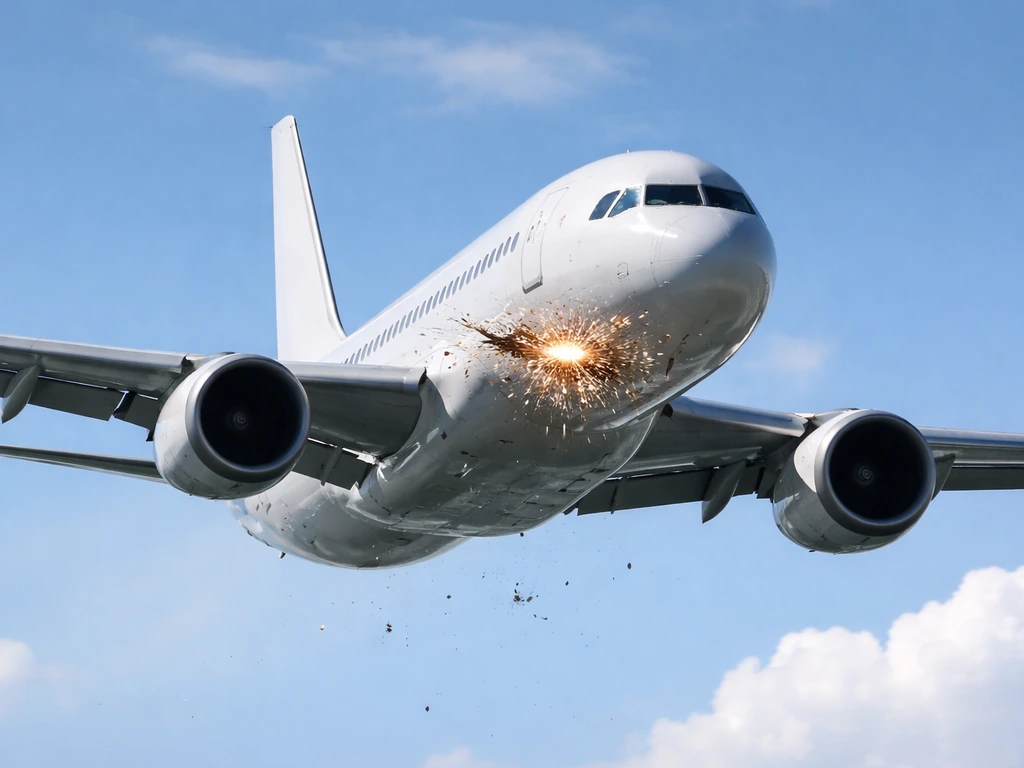
Pull over safely, turn on your hazard lights, and take a breath. Hitting a bird while driving is more common than most people realize, with estimates suggesting between 89 million and 340 million birds die in U.S. vehicle collisions every year. Your next few minutes matter, but the situation is very manageable if you follow the right steps: check for safety first, then assess the bird, handle it correctly if needed, protect your own health, and know who to call.
What to Do If You Hit a Bird While Driving: Steps

Maya Chen
25 Apr 2026
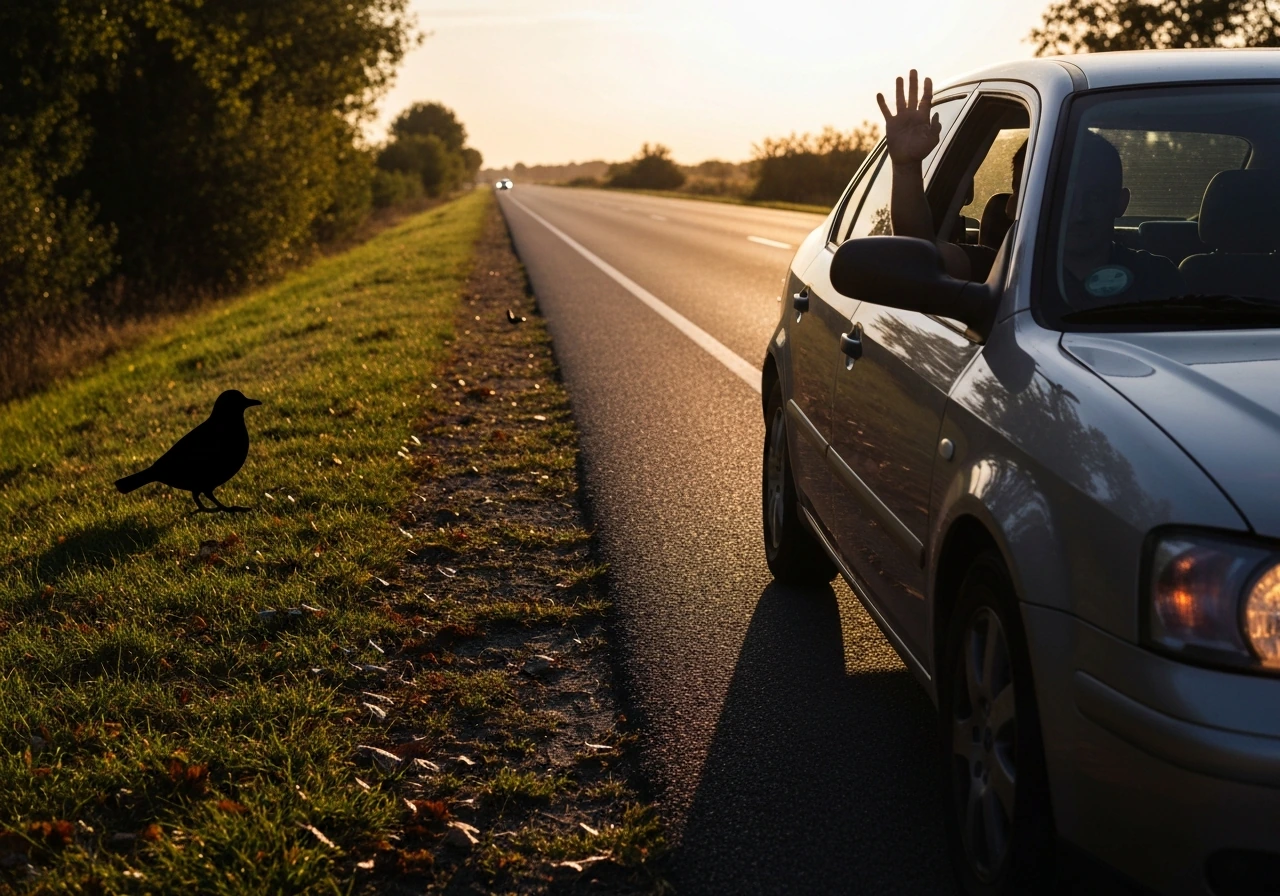
Immediate safety steps after hitting a bird
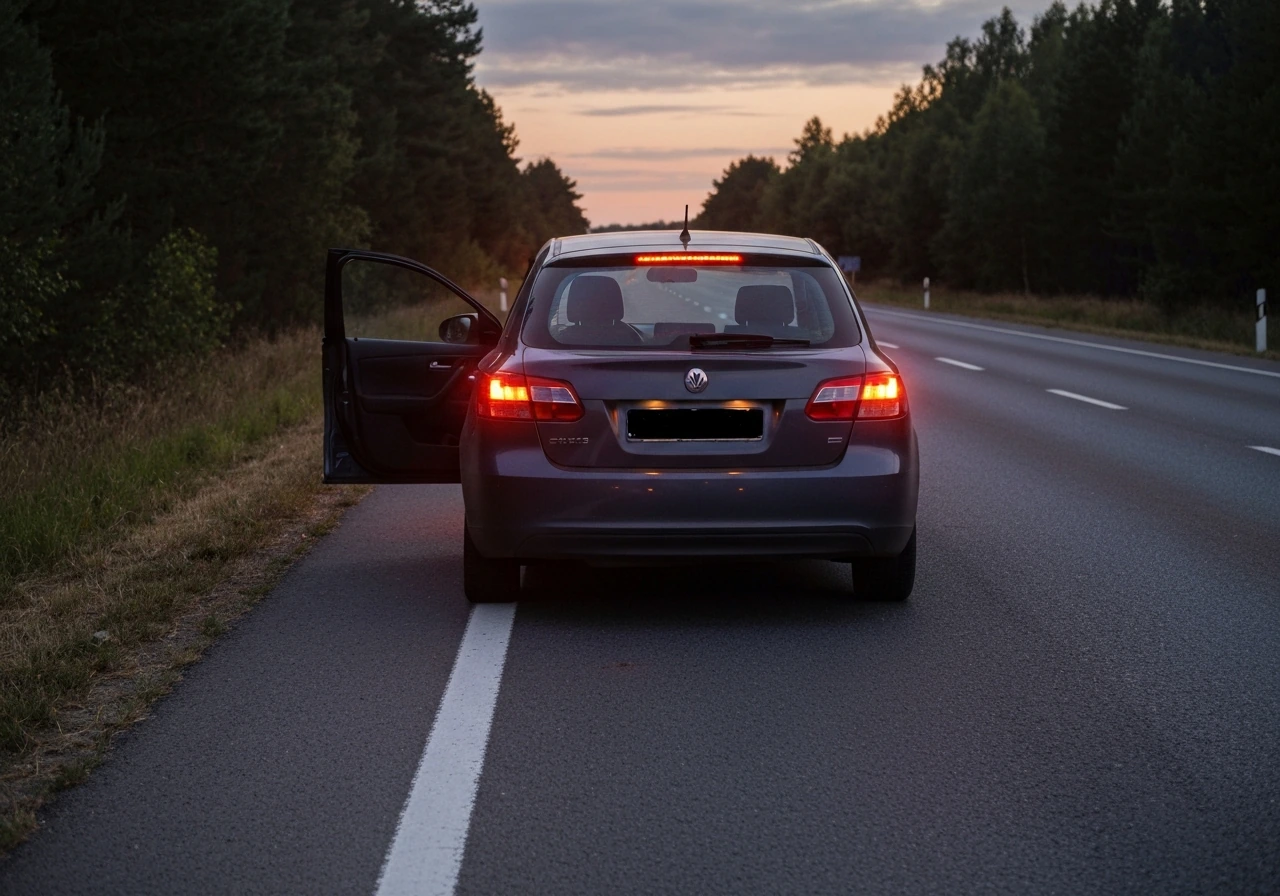
Your first priority is you and other drivers, not the bird. If you want to stop and check, signal and pull completely off the road, ideally onto a shoulder or parking area well away from moving traffic. The moment you stop, turn on your hazard lights. All 50 states have Move Over laws, which require other drivers to move over or slow down for vehicles with flashing hazard lights, so keeping those on the whole time you're stopped matters.
Don't get out of your car until you've confirmed it's safe to do so. If you have reflective triangles, road flares, or cones in your car, set them out behind your vehicle to give other drivers more warning. On a busy road or highway, it may genuinely not be safe to exit, and no bird is worth getting hit by traffic.
Once you're safely out, approach the area slowly and calmly. Sudden movement can startle a stunned bird into traffic or cause it to injure itself further. Walk toward it from the side rather than looming directly overhead.
Assessing the bird: alive, injured, or dead
Before you touch anything, just watch for a moment. You're looking for clear signs of life and checking what you're dealing with.
A dead bird is still and shows no movement, breathing, or eye activity. If it's clearly dead, you can move it off the road using a bag or gloves to avoid direct contact, and that's essentially all that needs to happen physically.
A stunned bird might look dead at first. It may be upright or slightly slumped, blinking slowly, or breathing visibly. These birds often recover on their own within 15 to 30 minutes if left in a safe, quiet spot away from traffic and predators. Don't assume a still bird is dead.
An injured bird will often show one or more of these signs:
- A drooping or unevenly held wing
- Inability to stand or keep balance
- Open-mouthed or labored breathing, or tail bobbing with each breath
- Visible bleeding or an open wound
- Lying on its side and unresponsive
- Head tilting to one side
If you see any of those signs, the bird needs professional help. That distinction, stunned versus injured, is what determines your next move.
What to do if the bird is injured: safe handling and basic triage
If the bird clearly needs help, your job is to contain it safely and get it to a licensed wildlife rehabilitator as quickly as possible. Never try to capture or transport a wild animal without professional guidance, and it is illegal to take it home to care for it or keep it as a pet get it to a licensed wildlife rehabilitator. You are not the veterinarian here, and that's the right mindset to have.
How to contain the bird
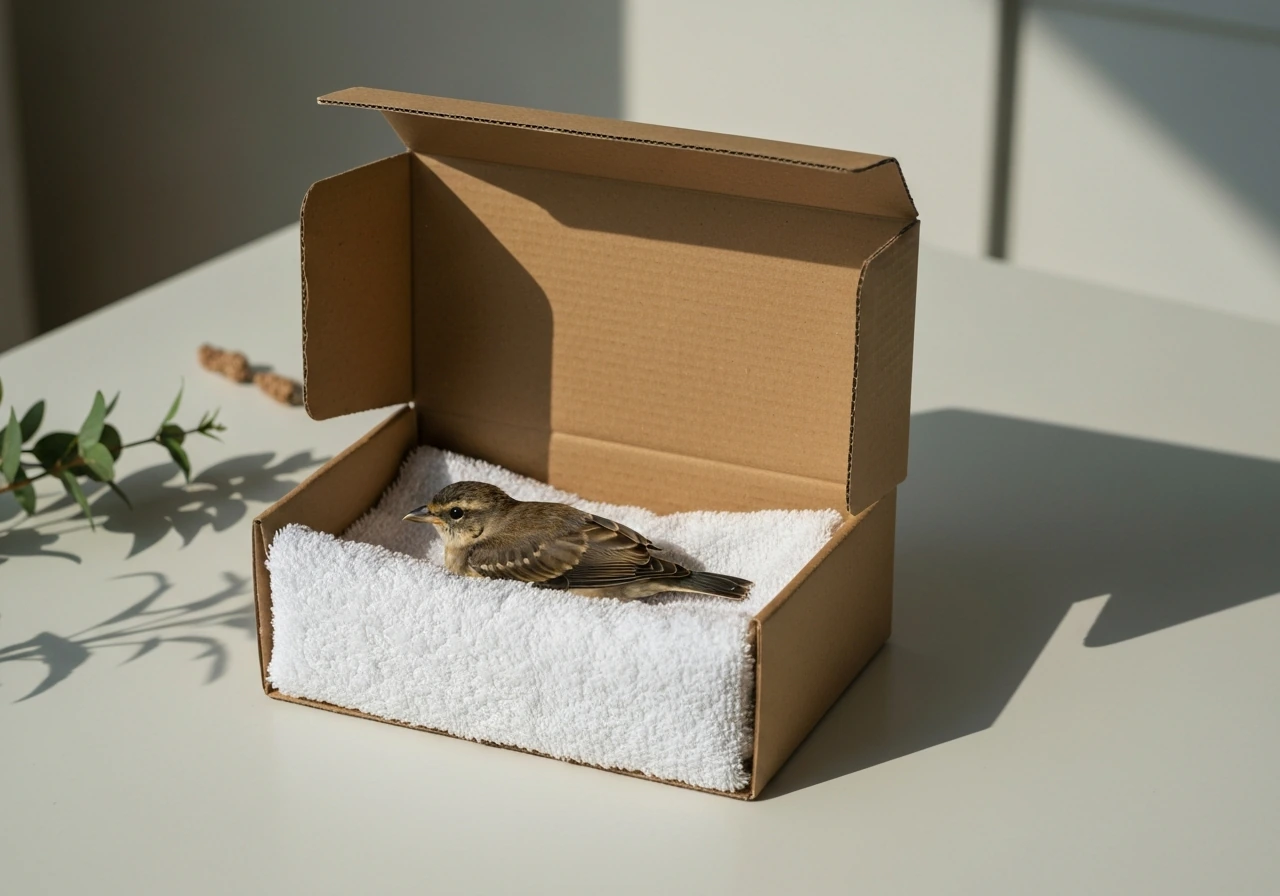
- Find a cardboard box or any secure container with a lid. If you have nothing, a paper bag works in a pinch.
- Line the bottom with a non-looping towel, a piece of cloth, or paper towels so the bird can grip without sliding.
- Cover the bird loosely with a light cloth or towel first, then gently scoop it up from beneath with both hands. Covering its eyes calms most birds significantly.
- Place it in the box, close the lid (leave small air holes if the box is fully sealed), and keep the container in a warm, quiet, dark space, ideally inside your car away from direct sun or A/C vents.
Keep the box as still and quiet as possible while you drive. Stress is a real killer for injured birds, and keeping things calm and dark reduces it substantially.
The most important rule: do not feed or give water
This one is critical. Do not give the bird any food or water unless a licensed rehabilitator tells you to. Feeding an injured bird the wrong thing can make it seriously ill or cause aspiration, where it inhales liquid into its lungs. Never put anything into the bird's mouth. This rule comes directly from wildlife rehab guidance, and it's one of the most common well-meaning mistakes people make.
Your goal is simply: contained, warm, dark, quiet, and get help fast.
What NOT to do: common mistakes and myths
- Don't feed or give water to the bird, even if it seems dehydrated or hungry.
- Don't try to splint a broken wing yourself. Improper handling can cause more damage.
- Don't keep the bird as a pet or hold onto it longer than necessary to get it to a rehabilitator.
- Don't release a visibly injured bird back into the wild and hope for the best. A bird that can't fly or stand will not survive on its own.
- Don't assume a still bird is definitely dead before looking for breathing or eye movement.
- Don't panic about touching a bird meaning you'll get seriously ill. The actual risk is low if you take basic precautions (more on this below).
- Don't use a cage or container with bars or mesh that the bird's feet or feathers can get caught in.
One common misconception worth addressing directly: many people assume that if a bird is hit by a car, it's definitely dead or unsaveable. That's not always true. Some birds recover from significant collisions, especially if they get proper care quickly. Whether a bird can survive a vehicle strike depends heavily on the species, the impact, and how fast it gets professional attention.
Health and hygiene precautions for the driver
Here's the honest picture on health risk: touching a wild bird briefly, with basic precautions, carries a low risk of illness for most healthy adults. You don't need to panic. But you do need to take sensible hygiene steps.
What to actually be aware of
The two main concerns with wild birds are Salmonella and avian influenza (bird flu). Both are real but avoidable with common-sense precautions. The CDC notes that people can be exposed to avian influenza by touching contaminated surfaces (saliva, mucus, or feces) and then touching their eyes, nose, or mouth, or by breathing in virus droplets or dust. Salmonella from bird feces is a similar contact-then-face-touch risk.
The practical takeaway: don't touch your face while handling the bird or cleaning up, and wash your hands thoroughly with soap and water as soon as you're done. That single step handles the majority of your risk.
Protective steps worth taking

- Use gloves if you have them, even garden gloves or a plastic bag over your hands. Avoid direct contact with blood, feces, or body fluids.
- Do not handle the bird with bare hands if there is visible blood or fluids on it if you can help it.
- Wash hands with soap and water immediately after any handling, even if you used gloves.
- If feathers, blood, or fluids got on your car's exterior, use disposable gloves to clean the area and dispose of the materials in a sealed bag. Wash your hands after.
- If you were scratched or bitten, wash the wound with soap and water and consider contacting your doctor, especially if the wound is deep.
Most drivers who hit a bird have no physical contact with it at all, and the risk from any brief, incidental contact is genuinely low. The precautions above are practical, not emergency-level measures.
Next steps: who to contact and how to prevent repeat harm
Finding wildlife help fast
If you have an injured bird in a box, your next call is to a licensed wildlife rehabilitator. These are the people trained and permitted to legally care for injured wild birds. Here's how to find one quickly:
- Search 'Animal Help Now' online or use their app for your location. This tool connects you to the nearest facility that accepts injured wildlife and lets you confirm they can take your specific bird before you arrive.
- Your state's Department of Fish and Wildlife or DNR typically maintains a directory of licensed rehabilitators. Many states, like Wisconsin, have searchable online maps.
- Local humane societies and animal control offices can often connect you to a rehabilitator or at minimum give you a next step.
- The Wildlife Center of Virginia (reachable seven days a week during listed hours) and similar regional centers can advise you by phone even if you're not in their area.
Call before you show up. Not every facility accepts every species, and confirming acceptance first saves you a wasted trip with a stressed animal in the car.
Check your car while you're at it
After addressing the bird, take a quick look at your vehicle. If you notice any vehicle damage, you can also check whether does car insurance cover bird damage under your policy before you file a claim. Bird strikes can occasionally cause real damage: cracked windshields, dented hoods, broken mirrors, or debris in grilles. If there's visible damage, document it with photos right away. Depending on your policy, hitting a bird may be covered under your comprehensive auto insurance, since animal strikes are typically classified as non-collision incidents. Checking what your specific policy covers is worth doing before you file anything. Checking whether bird damage is covered by homeowners insurance can help you understand what to expect before you file a claim bird damage covered by homeowners insurance.
Preventing future strikes
Bird strikes on roads often happen in the same locations repeatedly, especially near water, fields, or wooded areas where birds are active at low altitudes. If you hit a bird in a specific spot, slow down when you drive through that area again, particularly at dawn and dusk when birds are most active and light conditions are poor. Keeping your windshield clean and your headlights working properly also helps you spot birds earlier.
You can also report wildlife strike locations to your state DOT or wildlife agency. Some states track this data to identify high-risk corridors where road modifications or wildlife crossing installations might reduce future incidents. It takes two minutes and genuinely contributes to reducing the problem over time.
FAQ
What if the bird looks stunned but not obviously injured, should I still call someone right away?
If the bird is stunned but upright and breathing or blinking, do not immediately assume it needs euthanasia or is hopeless. The safer approach is to place it in a secure, dark, quiet container and minimize handling, then contact a licensed wildlife rehabilitator for instructions. Many stunned birds can recover within about 15 to 30 minutes when left calm and away from traffic.
What should I do if I cannot safely pull over or get out to check the bird?
If you cannot leave your car because of heavy traffic or the risk of oncoming vehicles, prioritize safety and keep hazard lights on. If the bird is moving, you can still contact a wildlife rehabilitator to ask whether to attempt relocation or to leave it and they can advise based on the specific situation (road type, distance to shoulder, apparent injuries). If the bird is already in a hazardous lane, consider only a brief, safety-first move if you can do it without putting yourself in danger.
Is it okay to give the bird water or put a small amount of food in its mouth?
Do not give any food, water, or medications, and do not try to “cure” an injury with home remedies. Even small amounts of wrong food or water can cause aspiration into the lungs. The most helpful thing you can do is keep the bird contained, warm enough to prevent chilling, and out of light, then get professional help quickly.
How should I prepare a container or box if I need to move the bird?
If you brought a container, line it with something that does not shed fibers into the bird’s airways, and keep the inside simple, dark, and still. Avoid fluffy bedding that can trap claws or stick to feathers. Make sure the container has ventilation and that it cannot tip easily during transport.
What signs mean I should treat the bird as injured rather than just stunned?
If the bird is bleeding heavily, has broken posture (wings or legs held at odd angles), cannot stand, has trouble breathing, or shows major lethargy, treat it as injured and seek professional help. For an injured bird, your job is containment and fast transport, not observation for “progress,” especially if breathing looks labored or it seems unable to right itself.
What hygiene steps should I take after handling the bird or cleaning up?
No. When you pick up or handle a wild bird, you can create contamination on your hands and clothing. After handling, avoid touching your face, remove gloves carefully if you used them, and wash hands thoroughly with soap and water as soon as possible. If blood, saliva, or feces got on clothing, change the clothing and wash it separately.
If the bird is clearly dead, do I need to do anything besides moving it safely?
If the bird is dead, you generally only need to move it off the roadway to reduce collision risk for other drivers. Use gloves or a bag to avoid direct contact. There is no need for prolonged handling, and you should still avoid touching your face during cleanup.
How can I avoid startling the bird into flying or running back into traffic?
Use a calm approach and avoid sudden overhead movement. Approach from the side at a walking pace, and if the bird is moving, keep it from reentering traffic by using a quick, controlled plan to contain it rather than chasing it. The goal is fewer startle responses and less energy expenditure.
When should I report the bird strike, and what details should I include?
Whether you should report depends on your state and local options, but reporting the location to your state DOT or wildlife agency is generally most useful when you can provide a precise spot (road name, direction, nearby landmark, mile marker if available) and the approximate time of day. This helps agencies identify repeated hotspots and consider corridor-specific changes.
What should I document for insurance if the strike might have damaged my car?
If you suspect bird-strike damage, take photos of the exact areas affected (windshield, hood, mirrors, grille) soon after the incident while conditions are safe. Then contact your insurer to ask whether it qualifies under comprehensive coverage, and keep the receipt or documentation from any tow or repair. Do not delay filing if your insurer has a time window.
Next Article
Bird Causes Plane Crash? Risk, Mechanisms, Myths, Prevention
Whether bird strikes can cause plane crashes, how they happen, real risk data, debunked myths, and prevention steps