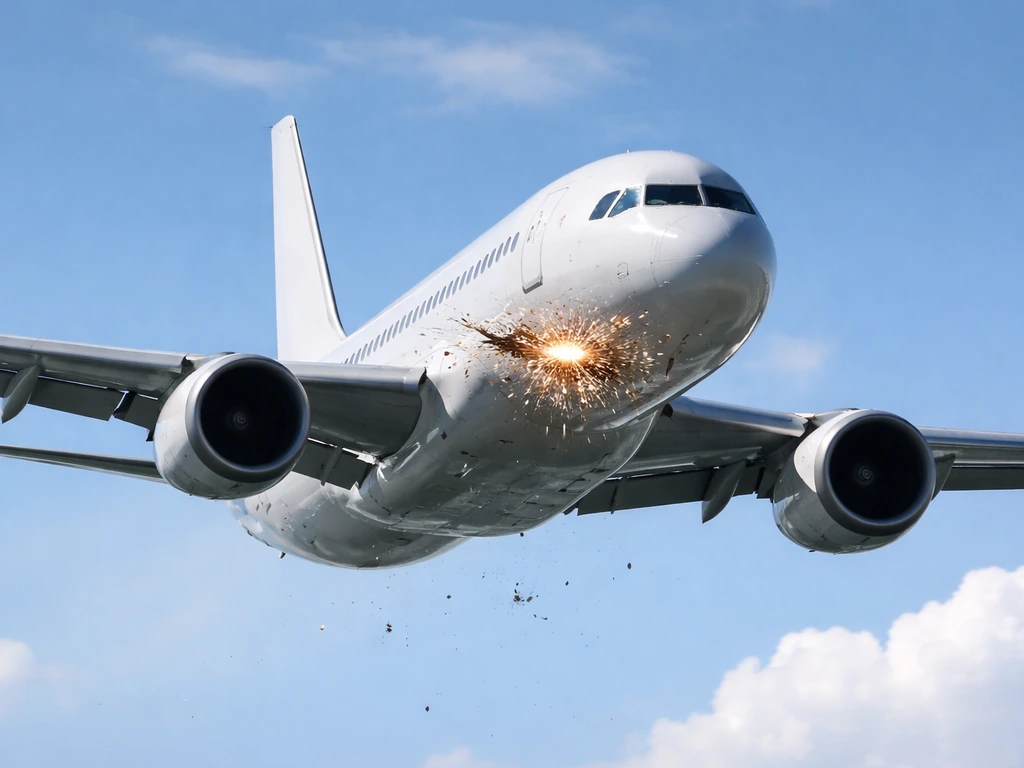
Bird strikes happen regularly, but they don't happen on every flight or at every window because birds and aircraft (or buildings) occupy the same airspace only briefly, and a combination of bird behavior, engineering standards, and environmental factors keeps most potential collisions from actually occurring. They're a real, tracked hazard, but the conditions that produce a strike are more specific than most people assume.
Why Don’t Bird Strikes Happen More Often? Causes and How to Reduce Risk

Maya Chen
28 Apr 2026
What a bird strike actually is, and why they're still relatively rare
A bird strike is any collision between a bird and an aircraft, a building window, or another man-made structure. In aviation, the FAA tracks them through its National Wildlife Strike Database, which has been collecting voluntary reports from airports, aircrew, and air traffic personnel since 1990. Because reporting is voluntary, the database almost certainly undercounts the true total, yet it still shows that strikes remain a small fraction of the roughly tens of millions of aircraft movements that happen each year in the U.S. The FAA expresses risk as strikes per 100,000 aircraft movements, and even accounting for underreporting, that rate is low.
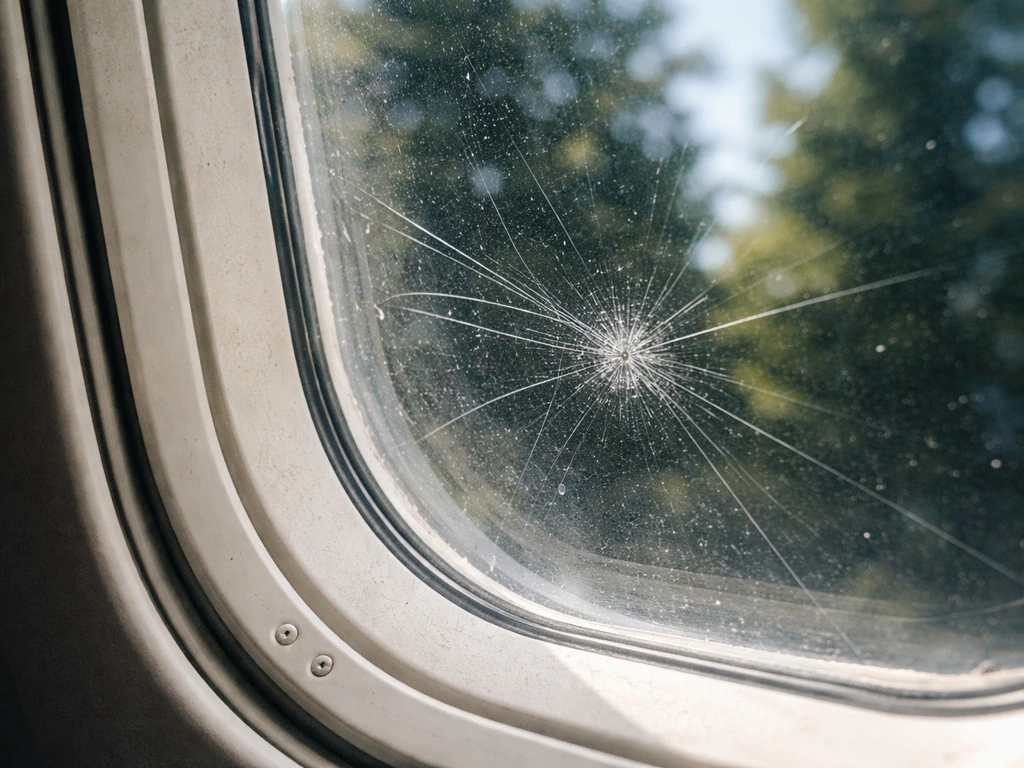
For windows, the numbers are harder to pin down with precision, but researchers estimate hundreds of millions of birds die from window collisions annually in North America. That sounds alarming until you consider how many windows exist and how many birds are in flight on any given day. Most individual windows, most of the time, are not collision hazards because the lighting, angle, surrounding vegetation, and bird flight paths don't line up in exactly the wrong way.
What actually causes a bird strike
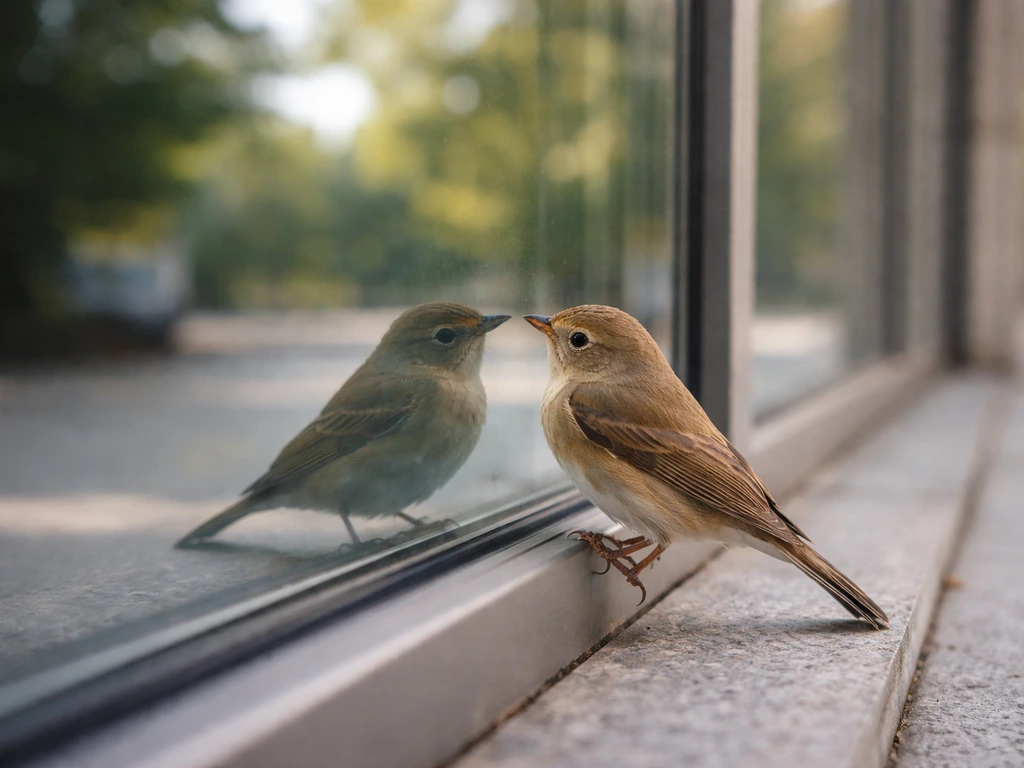
The core problem is a perception failure. Birds don't recognize glass or moving aircraft as threats in the way they recognize a hawk. Glass that reflects sky and trees looks like open sky and trees to a bird. A window that you can see straight through looks like a clear flight path. An aircraft at approach speed doesn't give a bird the right visual cues to trigger an evasive response. The strike happens not because the bird is careless but because the hazard is genuinely invisible to it.
For aviation, the risk clusters in very specific flight phases. The FAA reports that about 61% of strikes with fixed-wing civil aircraft happen during descent, approach, and landing roll, and another 36% happen during takeoff and initial climb. Only about 3% occur en route at cruising altitude. Birds concentrate near the ground, near food sources, near water, and near the vegetation that airports often border. That's where takeoffs and landings happen too, which is why the overlap is so predictable.
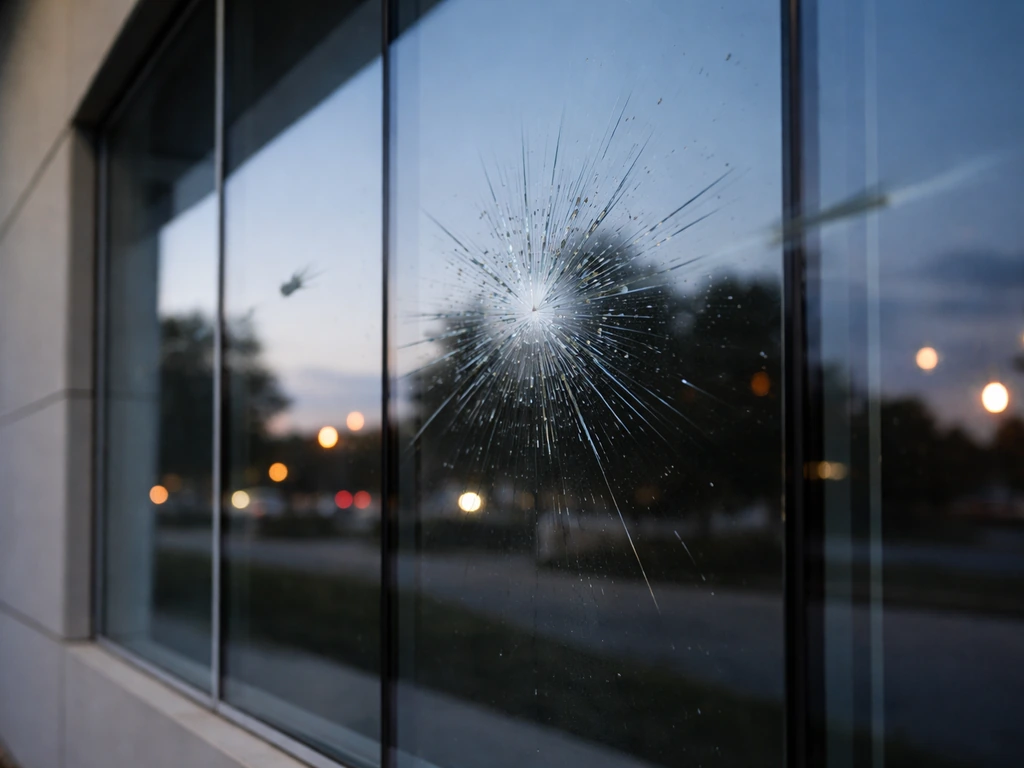
For windows and buildings, the main contributors are reflective glass that mimics habitat, transparent panes that look like open space, proximity to feeders and trees that bring birds close, and artificial light at night. In a peer-reviewed study in ScienceDirect, the influence of artificial light at night on bird-building collision patterns is analyzed alongside polarized light. Peer-reviewed research has shown that artificial light at night is one of the strongest predictors of where nocturnal migrants stop over, meaning lit buildings in urban areas can pull birds directly into collision zones during migration.
Why they don't happen more often
The honest answer is that several overlapping factors keep overall collision rates lower than the sheer number of birds and structures would suggest.
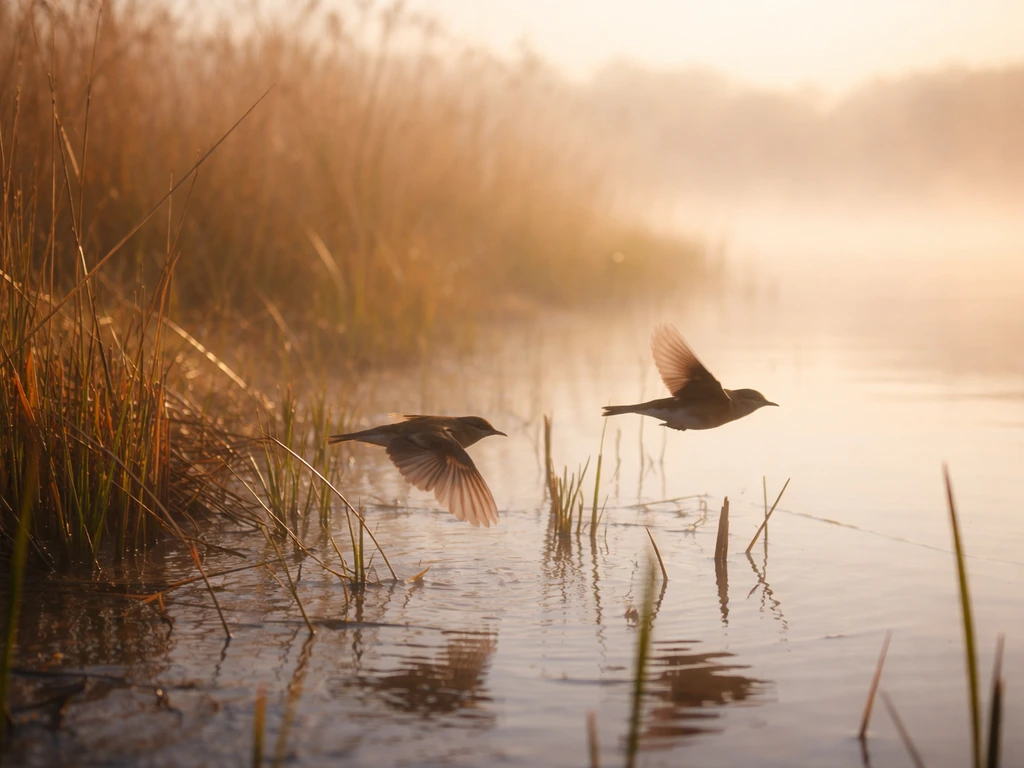
- Bird behavior and timing: Most birds fly low and close to cover. Most species travel at dawn and dusk or, for migrants, at night. The window of overlap with aircraft or the precise angle needed to produce a dangerous window reflection is narrow.
- Risk thresholds in aviation: Aircraft are designed around bird-strike standards. FAA airworthiness rules require that planes survive impact with birds of specified masses under test conditions. Rotorcraft standards, for example, require continued safe flight after striking a 2.2-lb bird. This doesn't prevent strikes, but it prevents many strikes from becoming catastrophic events.
- Natural visibility cues: In many situations, birds do see and avoid hazards. A bird flying through open country detects aircraft by motion and sound and often veers off. The problem arises when something masks that detection, like a perfectly reflective window or a rapid, low-altitude approach.
- Habitat-specific exposure: Not every bird species is equally likely to be near an airport or a large glass building. Ground-feeding sparrows, high-flying raptors, and deep-forest species each have very different exposure profiles. The species that collide most are those whose ranges, migration routes, and habitat preferences bring them into human-modified environments.
- Managed intervention: Airports and major buildings increasingly use deterrents, habitat modification, lighting controls, and monitoring programs. The FAA's formal wildlife hazard management guidance exists precisely because sustained effort is what keeps the rate manageable.
Human and environmental variables that push the risk up or down
Lighting is one of the most controllable variables. Artificial light at night disrupts bird circadian rhythms, alters activity patterns during hours when birds would normally rest, and attracts migrating birds toward urban areas where collision risk is highest. Research on common swifts found that intensive artificial light at night promoted activity throughout the night in nesting birds. For buildings and homes, turning off or shielding unnecessary lights during peak migration periods (typically spring and fall) is one of the most direct ways to reduce exposure.
Glass type and placement matter significantly. A mirrored facade on a sunny morning facing a tree line creates a nearly perfect trap: birds see a reflection of habitat with no indication that glass is in the way. The same window on a cloudy day, or on a side of the building facing a bare wall, is far less dangerous. Seasonal variation in sun angle, leaf cover, and migration timing means collision risk at any given window fluctuates throughout the year.
Feeder and planting placement affect exposure differently than most people expect. Canadian government guidance notes that feeders placed further from glass can actually increase strike risk because birds build up more speed before impact. Very close placement (within about 3 feet) means a bird that does hit can't build up lethal velocity. Beyond about 30 feet, birds have enough clearance to recognize and avoid the glass. The dangerous middle zone is roughly 3 to 30 feet from a window.
When strikes are more likely to be serious
Not all strikes are equally dangerous, and the FAA tracks severity explicitly on its wildlife strike report form. In aviation, the seriousness of a strike depends on the size of the bird, the speed and phase of flight, and which part of the aircraft is hit. Engine ingestion of a large bird at takeoff speed is far more serious than a small bird hitting the fuselage at low speed. Academic research confirms that impact energy scales with bird mass and velocity, and that only a subset of strikes produce significant damage given the combination of aircraft design, flight conditions, and bird size.
For window collisions, seriousness to the bird depends on speed, angle of impact, and species. Most strikes that kill birds do so immediately from impact trauma. The birds that survive are often stunned and vulnerable to secondary predation if not moved to a safe, quiet space to recover. Large, fast-moving birds hitting large glass surfaces head-on are at highest risk. Small birds hitting windows at glancing angles often survive, though not always without injury.
Peak risk periods for windows and buildings align with migration seasons, particularly spring (March through May) and fall (August through November) in North America. Night-migrating songbirds are especially vulnerable, since artificial light can pull them off course and toward lit structures.
If you want to understand how serious a strike event might be in an aviation context, the related questions of whether a bird strike qualifies as an incident or an extraordinary circumstance depend on the documented damage and circumstances, and those are worth understanding separately. Whether a bird strike counts as an extraordinary circumstance depends on the specific facts, including the severity of the damage and operational context is a bird strike an extraordinary circumstance.
A bird strike warning, meanwhile, helps pilots and airport teams recognize and respond to heightened risk conditions during critical phases of flight what is a bird strike warning. By understanding how dangerous are bird strikes in different scenarios, you can better judge when prevention matters most. Whether a bird strike is a formal incident often hinges on the documented damage and surrounding circumstances bird strike qualifies as an incident.
What you can actually do today to reduce the risk
Most of the effective interventions for home windows are straightforward, but the details matter. The single most important point: treatments need to go on the outside surface of the glass. Research has directly confirmed that window films improve bird avoidance only when applied to the exterior, because the problem is exterior reflections and the appearance of pass-through space, not what's visible from inside.
- Apply external window treatments: External films, tape patterns, decals, or netting applied to the outside surface break up the reflective or transparent appearance of glass. Internal decals (including those hawk silhouettes) don't work for daytime collisions because they don't address exterior reflections.
- Space markers densely enough: Decals or tape strips need to be close enough together that birds can't interpret the gaps as flyable space. A practical guideline from wildlife management sources is spacing of about 2 inches or less between markers. A few widely-spaced hawk stickers do very little.
- Move feeders to the right distance: Place feeders either within 3 feet of the window (so birds can't build lethal velocity) or more than 30 feet away (so birds have enough space to recognize and avoid the glass). The 5-to-20-foot range is the most dangerous placement.
- Manage outdoor lighting at night during migration: Turn off interior lights that shine outward, use motion-activated rather than always-on exterior lighting, and consider downward-facing fixtures. Even drawing blinds on brightly lit rooms at night can reduce how much light spills outward and attracts migrants.
- Use screens or netting on the exterior: Fine mesh netting installed a few inches in front of the glass stops birds before they can hit the surface. This is one of the most consistently effective solutions because it works regardless of lighting angle.
- Trim or reposition vegetation thoughtfully: Dense plantings right up against a window increase traffic near the glass. Leaving a buffer zone between prime bird habitat (dense shrubs, feeders) and large windows reduces the number of birds flying at full speed toward the glass.
- Check for and report aviation strikes: If you're a pilot or airport operations employee, using the FAA's voluntary wildlife strike reporting system helps build the data that drives ongoing mitigation improvements. Under-reporting keeps the true frequency underestimated.
The bottom line is that bird strikes, whether at windows or in aviation, aren't random bad luck. They happen when specific conditions align: the wrong lighting, the wrong glass surface, the wrong feeder placement, or the wrong flight phase. Most of those conditions are manageable. The reason strikes don't happen more often is partly natural (bird behavior and habitat separation) and partly engineered (aircraft standards, airport management, window treatments). The more of those manageable factors you control, the more you push your own risk toward the lower end of what's already a relatively uncommon event.
FAQ
If bird strikes are tracked, why do they still seem surprisingly common in news, but still low by statistics?
News often highlights individual events with dramatic damage or injuries, but the underlying metrics are standardized per flight movement. Also, many strikes are minor (small birds, low-speed impacts, or damage limited to paint and antennas) and never become widely reported, especially if they occur away from active observation areas.
Why don’t birds just avoid aircraft the way they avoid predators?
Birds rely on visual and motion cues, but aircraft present a moving target with lighting and angles that can look like background or distant terrain. Rapid approach during takeoff, climb, approach, and landing reduces the time window for a bird to interpret the threat and change course, even if the bird sees the aircraft.
Do bird strikes only happen at airports, or can they happen far from runways?
Strikes can occur anywhere birds and aircraft share airspace, but the highest overlap is near the ground where birds forage and where aircraft are slowest and moving through predictable flight paths. En-route strikes are less common statistically, but they do happen, especially when weather and bird concentration align (for example, during migration or after storms).
What is the most important change for reducing bird-window strikes at my home?
Prioritize exterior-facing treatments, not interior ones. Window films, decals, or other visual modifications generally work only when they disrupt what birds see from outside, because reflections and the illusion of open space are the main problem.
Are bird decals and window film effective if I can see them from inside, but birds might not “notice” them?
If a treatment mainly blocks or distorts interior views but leaves exterior reflections largely unchanged, effectiveness can drop. The key test is whether it changes the outside appearance of the glass from a bird’s perspective, including on bright sunny days when reflections mimic habitat.
How far should a feeder be from a window to reduce strike risk?
Aim to avoid the risky middle zone. Guidance commonly cites higher risk around roughly 3 to 30 feet from windows, with different tradeoffs on either side; best results often come from combining feeder distance with exterior window treatments and reducing nearby vegetation.
Does putting a feeder very close to a window always make collisions safer?
It can reduce lethal speed buildup, but it still creates a direct impact hazard and increases the number of birds exposed at your property. Many homeowners see better overall outcomes by using feeders in a way that removes the “middle zone” effect, then pairing it with exterior deterrents.
Why does risk seem worse at certain times of year even if I do everything right?
Migration timing and seasonal sun angle change what birds interpret as habitat, and artificial lights can pull nocturnal migrants off course. That means a treatment that works well in summer can underperform in spring or fall unless you also manage lighting intensity and direction.
If I reduce nighttime lights, will that help even if my building does not face open sky?
Yes, because it is the light spill into the sky-facing and flight-relevant directions that matters for attracting migrants and changing activity. Shielding or turning off unnecessary outdoor lights during peak spring and fall migration can reduce the chance that birds concentrate near the facade.
In aviation, are all bird strikes handled the same way operationally?
No. Severity depends on bird size, aircraft speed, flight phase, and impact location. That is why guidance often focuses on documented damage and aircraft operability, since the same strike can range from a minor event to an operationally significant hazard.
How can airport teams reduce bird strikes beyond general deterrence?
They typically target the specific drivers of bird presence, such as habitat management around runways, changes to attractants, and timing-focused measures during high-risk flight phases. Deterrence also needs to be coordinated with observation and reporting so teams can adjust when bird species or patterns shift.
What should I do if a bird hits my window, and will it always survive?
Many birds die from trauma on impact, especially with larger species and head-on impacts. If a bird appears stunned and you choose to intervene, place it in a quiet, dark, ventilated container and keep pets away, then contact a local wildlife rehabilitator as soon as possible for species-appropriate care.
Next Article
Bird Causes Plane Crash? Risk, Mechanisms, Myths, Prevention
Whether bird strikes can cause plane crashes, how they happen, real risk data, debunked myths, and prevention steps