
The short answer: very few birds can actually kill a healthy adult eagle, and documented cases are rare. The species most likely to seriously injure or kill an eagle are other large raptors, specifically great horned owls and golden eagles, and almost always under specific conditions like nest defense or attacks on eaglets. If you are looking for a clean list and honest context, here it is.
What Bird Can Kill an Eagle or Bald Eagle? Real Predators

Maya Chen
9 Apr 2026
Birds that can kill eagles: the direct answer
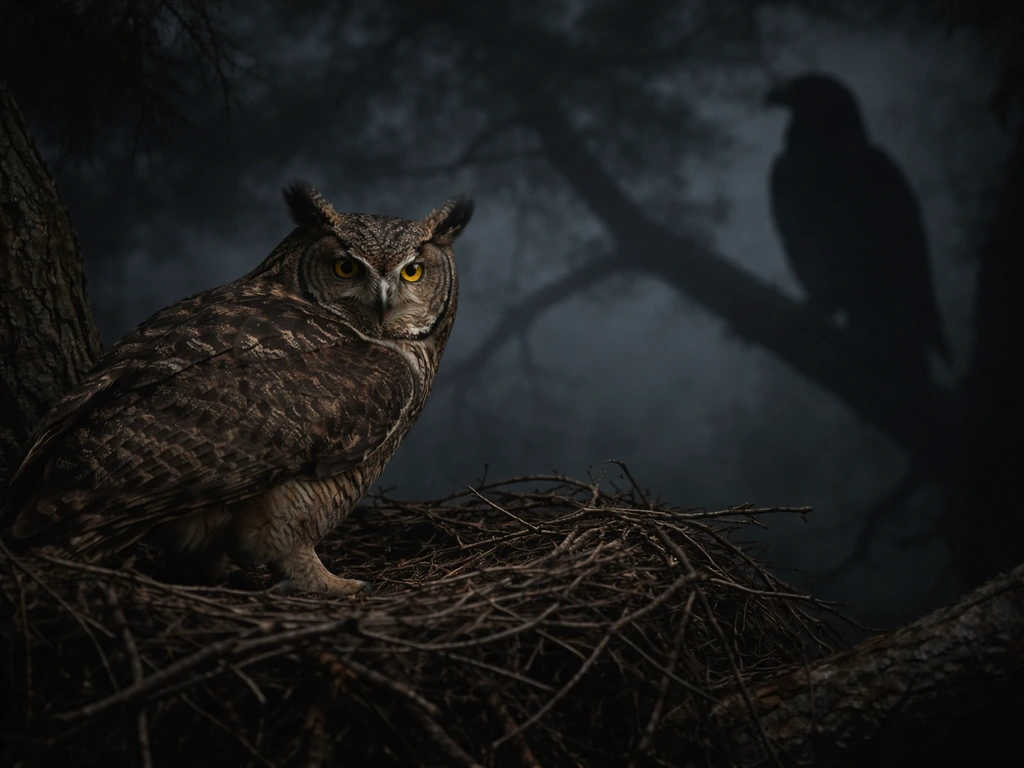
Great horned owls are the most credible avian threat to eagles, particularly to young or nesting birds. They are aggressive nocturnal hunters and have been documented raiding raptor nests for chicks. Golden eagles and bald eagles also fight each other, and Birds of the World notes that bald eagles sometimes attack golden eagles in competitive flight interactions, meaning the reverse can and does happen too. Ravens and large corvids will mob eagles relentlessly, but mobbing rarely results in a kill of a healthy adult. Outside of those three, there are no well-documented bird species that routinely kill eagles.
The honest context here matters. Most birds that "kill" eagles are doing so opportunistically, against eaglets or injured adults, not in head-to-head fights with a healthy, full-grown bird. An adult bald eagle has a wingspan of around 6 to 8 feet and can weigh up to 14 pounds. That is a serious animal, and most other birds simply cannot overpower one in good condition.
The most likely attackers and how they do it
Great horned owls
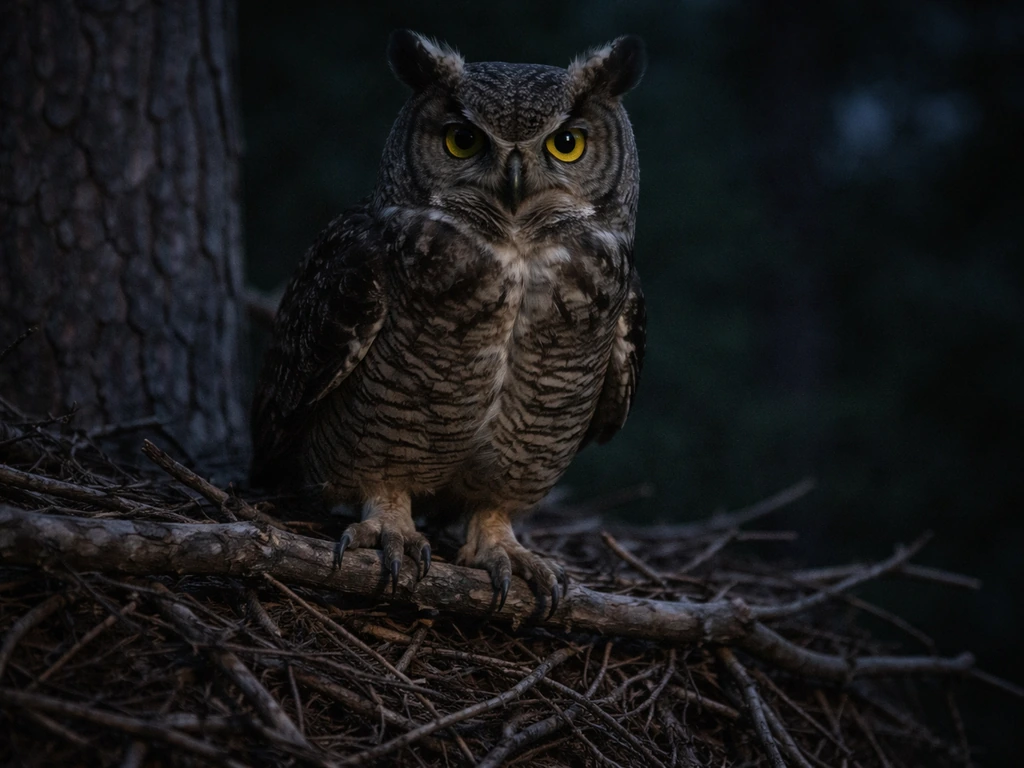
Great horned owls are probably the single biggest avian threat to eagle nests. They are active at night when eagles are roosting and not on guard, they have extraordinarily powerful talons, and they are fearless defenders of their own territory. Audubon has documented great horned owls snatching osprey chicks from nests at Hog Island, with bald eagles also present in those nest interactions. Audubon also describes a real incident at Hog Island in which a female osprey defended her remaining chick after a great horned owl attack. The same dynamic applies to eagle nests: owls will go after eggs and eaglets when adults are away or distracted. A direct kill of a healthy adult eagle by a great horned owl is not well-documented, but attacks on nestlings and fledglings are real.
Golden eagles
Golden eagles are the most aerially capable raptors in North America and are genuinely dangerous to bald eagles. Territorial overlap between the two species creates friction, and combat has been recorded. Bald eagles and golden eagles will fight over food, nesting sites, and airspace. what bird are eagles afraid of is a question that actually has a real answer here: golden eagles rank at the top of that list, and bald eagles in close contact with them show clear avoidance behavior.
Other eagles and large raptors
In regions outside North America, larger eagle species like the harpy eagle (wingspan up to 6.5 feet, weight up to 20 pounds) are powerful enough to dominate or kill smaller eagle species. Harpy eagles are among the most formidable raptors on earth. If you have ever wondered which bird can kill a lion, the discussion of sheer raptor power puts harpy eagle attacks on other birds into perspective. Within North America, though, no raptor aside from golden eagles is a realistic threat to a healthy adult bald eagle.
Ravens and corvids
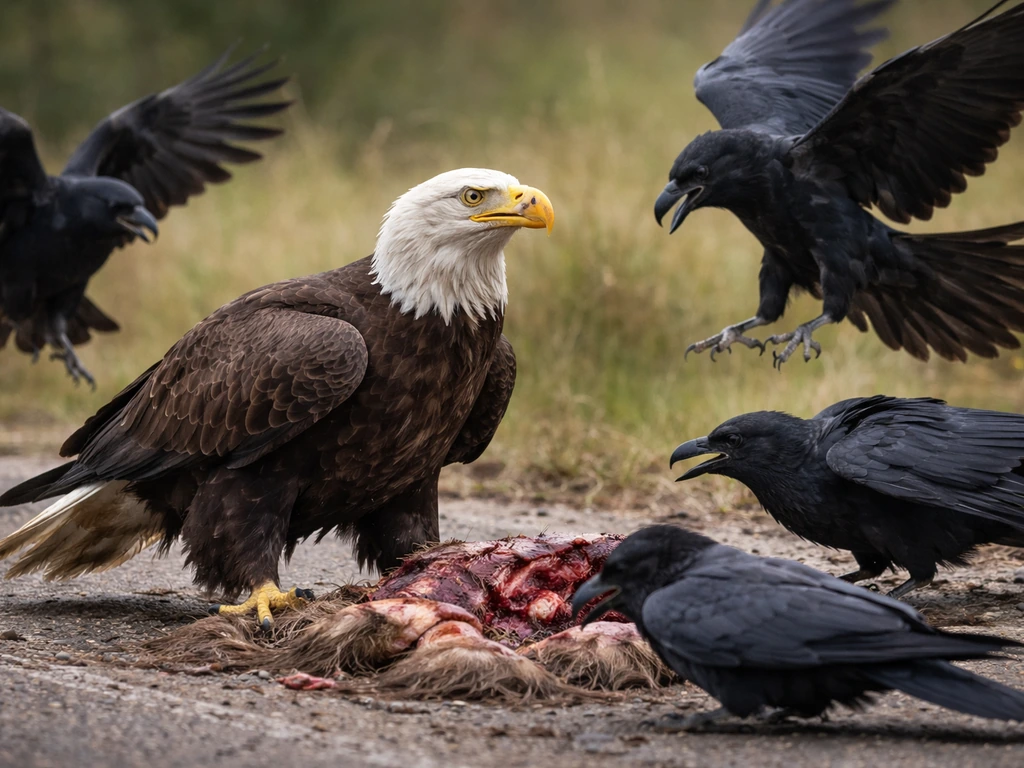
Ravens mob eagles constantly, especially around food sources. Mobbing is disruptive and can cause an eagle to drop prey, but it rarely causes physical harm to a healthy adult. Multiple ravens working together could theoretically injure a weakened bird, but killing an adult eagle this way is not documented in the scientific literature.
Bald eagles versus other eagle species: does it matter?
For most people in North America, the bald eagle is the relevant bird, so let's focus there. Bald eagles are large, but they are not the largest or most aggressive raptors globally. They tend to be opportunistic feeders and scavengers rather than pure hunters, which means they sometimes find themselves in conflict with more aggressive species over food.
Compared to golden eagles, bald eagles are generally considered less aggressive in direct combat. Golden eagles are built for taking large prey, and their talons and attack style are more suited to overpowering other birds. Bald eagles compensate with size and persistence, but in a direct territorial confrontation, golden eagles often win.
For eagles outside North America, such as African fish eagles, white-tailed eagles, or Philippine eagles, the competitive landscape changes based on local predator communities. The general principle still holds: large owls and larger competing eagle species are the primary avian threats, with direct predation most common against juveniles and nestlings.
How eagles actually die in the wild
If you searched for "what bird can kill an eagle" because you want to understand eagle mortality in general, predation by other birds is actually a minor factor. The big killers are human-related and environmental causes.
A major necropsy study of 1,490 dead bald eagles in Michigan spanning 1986 to 2017 found that vehicular trauma was the leading cause of death, accounting for 36% of cases (532 birds). Lead poisoning came in at 12% (176 birds). A broader USGS study of 2,980 bald eagle and 1,427 golden eagle carcasses submitted to the National Wildlife Health Center between 1975 and 2013 found similar patterns, with trauma, poisoning, and disease dominating the findings. Predation by other birds was not among the leading causes.
Illegal shooting is also a documented major killer. USGS research specifically highlights illegal shooting along power lines as a leading cause of bald eagle death. Eagles perch on power poles near open areas where they hunt, making them visible and unfortunately accessible targets.
| Cause of Death | Details / Scale |
|---|---|
| Vehicular trauma | 36% of bald eagle deaths in Michigan study (1986–2017); eagles struck by vehicles near roadkill feeding sites |
| Lead poisoning | 12% of Michigan bald eagle deaths; eagles ingest lead fragments from gut piles and carcasses left by hunters |
| Illegal shooting | USGS-documented leading cause; power line perches make eagles visible targets |
| Rodenticide poisoning | Documented in multiple raptor species; a bald eagle in Arlington, MA was killed by rodenticides in 2023 |
| Electrocution | Occurs at power infrastructure; documented across raptor species including bald eagles |
| Starvation / disease | Affects young, injured, or displaced birds; parasites and infections documented in eagle necropsies |
| Predation by other birds | Primarily eaglets and injured adults; healthy adult predation is rare and poorly documented |
Rodenticide poisoning is worth calling out separately because it often surprises people. Mass Audubon documented a bald eagle killed by rodenticides in Arlington, Massachusetts in 2023, the same mechanism that kills great horned owls and other raptors that eat poisoned rodents. Eagles scavenging poisoned carcasses face the same risk.
Does any of this actually matter for your yard, pets, or feeders?
If you are a backyard birder or a pet owner near eagle territory, the predation question runs in the other direction: eagles are a threat to your animals, not the other way around. Bald eagles can and do take small pets, ducks, and chickens. Understanding how predators interact can actually protect your birds at home. For example, knowing what bird kills pigeons is useful if you keep pigeons or doves in an area with active raptor pressure.
If you live near an active eagle nest, proximity itself is the concern. The Pennsylvania Game Commission recommends keeping at least 1,000 feet from an active nest, roost, or feeding area, watching for signs like vocalizing or the eagle moving away as indicators you are too close. Indiana DNR guidelines similarly suggest a minimum of 330 feet for nest viewing. USDA APHIS has published disturbance avoidance guidance that formalizes these buffers into a recommended framework for anyone whose activities might affect nesting eagles.
The federal Bald and Golden Eagle Protection Act, administered by the U.S. Fish and Wildlife Service, makes it illegal to disturb eagles, harass them, or interfere with their nesting sites. This includes nest take, which is removing nesting substrate, and can result in territory abandonment. U.S. Fish & Wildlife Service guidance explains that the Bald and Golden Eagle Protection Act protects eagles from disturbance or harassment that can cause injury, decrease productivity, or lead to nest abandonment, including a regulatory definition of “disturb” at 50 CFR 22.6 disturbance that can cause injury, decrease productivity, or lead to nest abandonment. If your property or project is anywhere near an active eagle nest, you need to know this law exists before you do anything.
For people interested in nest predation dynamics more broadly, it is worth knowing that the same owls and raptors that threaten eagle nests also interact with other species. what animal destroys bird nests is a practical question for anyone trying to protect nesting birds, because the answer includes great horned owls, raccoons, and corvids alongside eagles themselves.
Myths, reality, and what to actually do
Common myths
- Myth: Small birds can kill eagles by mobbing them. Reality: Mobbing is a defense behavior that can drive eagles away, but it does not kill healthy adult eagles.
- Myth: Any large bird of prey is a danger to an adult eagle. Reality: Only golden eagles and great horned owls have credible documented conflicts with bald eagles that result in injury or death.
- Myth: Eagles have no natural predators and are invincible. Reality: Eaglets and juveniles face real predation risk, and even adults are vulnerable when injured, sick, or weakened by starvation.
- Myth: Eagles mostly die from fighting other birds. Reality: Vehicles, lead poisoning, illegal shooting, and electrocution are far more common causes of eagle death than bird-on-bird predation.
What the research actually shows about avian predators
The bird world has some genuinely dramatic predation dynamics that go beyond eagles. If you are curious how far avian predation goes, what bird kills seagulls and which bird kills snake are both questions with real, evidence-based answers that follow the same pattern: it is usually large raptors, and it usually happens under specific conditions where size or circumstances favor the attacker. The same is true for eagles as victims. And just as some raptors are known for their hunting technique, what bird drops its prey to kill it is a useful reminder that bird predation strategies are far more varied and calculated than most people assume.
Practical next steps
- If you have found an injured eagle: Do not approach or handle it. Contact your state wildlife agency or a licensed wildlife rehabilitator immediately. Injured eagles can be dangerous and are federally protected.
- If you are concerned about eagles near your pets: Bring small pets indoors during active eagle hours (morning and late afternoon). Cover outdoor animal enclosures with hawk netting.
- If you are near an active eagle nest: Stay at least 1,000 feet away. Watch for stress behaviors like vocalizing, wing spreading, or the eagle leaving the nest. If you need to work closer, check USFWS permit requirements first.
- If you are seeing increased raptor activity around your feeders or yard: Remove rodenticide products from your property. Lead-poisoned and rodenticide-poisoned raptors can secondarily poison other wildlife and are a documented cause of eagle and owl deaths.
- If you need to report a dead eagle or suspected illegal killing: Contact USFWS Law Enforcement or your state game commission. Eagle deaths from illegal shooting are federally investigated, and reporting matters.
FAQ
If few birds can kill a healthy adult eagle, what situations make it more likely?
Yes, but the evidence is limited. If an eagle is injured, old, starving, or caught at a vulnerable moment (for example, adults away from the nest), other raptors and corvids may manage lethal outcomes. The key caveat is condition, because documented, repeatable kill behavior against healthy, full-grown eagles is uncommon.
When are eagles most vulnerable to the main avian predators like great horned owls?
Great horned owls are more likely to attack during the night because their hunting overlaps with when eagles roost and are less able to respond. For nest areas, the most relevant risk window is when incubation or brooding keeps adults away long enough for the owl to exploit a brief distraction or absence.
Can mobbing ever lead to a real kill of an eagle?
Mobbing by ravens and other corvids is usually about driving an eagle away, not about overpowering it. However, mobbing can lead to accidental or indirect harm (the eagle dropping prey, tangles with branches, or repeated stress), and a debilitated eagle could be more vulnerable to cumulative effects.
Why do golden eagles matter so much for bald eagle survival in some regions?
Golden eagles can be a threat mainly when they and bald eagles overlap territorially and compete for the same resources (prey, nest sites, airspace). In areas without that overlap, they may ignore each other. Avoidance behavior is common when individuals are in close contact, so not every encounter escalates.
Does the answer to “what bird can kill an eagle” change depending on where you live?
Yes. The main “other bird” threats shift by location. In regions outside North America, different large raptors, including other eagle species and powerful forest owls, may dominate or take juveniles more often, depending on the local predator and prey community.
How does human disturbance near a nest increase risk of nest predation?
For nest predation, the most actionable detail is to treat any human approach as potential distraction. Eagles may temporarily leave or reduce vigilance if they perceive disturbance, which increases the window for predators that hunt from cover (especially at night for great horned owls).
If I find a dead eagle, how can I tell whether it was killed by another bird versus other causes?
In general, it is hard to blame a single “bird” for eagle deaths. The dominant causes are trauma, poisoning (including lead and rodenticides), and disease, which means a dead eagle may not have died from predation at all. If you find a carcass, do not handle it, and consider reporting to wildlife authorities if applicable in your area.
What practical steps reduce the chance that an eagle will take pets or poultry?
If you are managing pets or livestock near eagle territory, focus on preventing opportunistic attacks rather than trying to deter a predator you cannot reliably identify. For example, keep small animals indoors at peak raptor activity times, use secure enclosures, and remove easy attractants like uncovered feed that brings in raptors.
How do rodenticides indirectly harm eagles even if eagles are not hunting in the area?
If you suspect rodenticide risk, treat it as an indirect predator problem. Eagles can be poisoned by scavenging dead rodents or poisoned carcasses, so reducing rodenticide use, switching to targeted, enclosed bait systems, and cleaning up carcasses can lower risk to multiple raptors, not just eagles.
Do eagles always fight back when threatened by another big raptor?
Generally, eagles avoid direct conflict unless there is a payoff (food, nesting site, or territorial pressure). That means an eagle may appear fearless but still choose distance or retreat rather than fighting, especially if the competing raptor is more specialized for combat (notably in the golden eagle context).
What signs mean I am too close to an active eagle nest or roost?
Protective buffers are not just about respecting wildlife, they also reduce the chance of illegal disturbance and abandonment risk. As a practical rule, if you see the eagle changing behavior in response to you (calling more, moving away from the nest, or repeatedly re-approaching), you are likely too close and should increase distance and observation time limits.
Why are juveniles more likely targets than healthy adult eagles?
It can happen, but it is not a “go-to” outcome. Other raptors may injure juveniles or fledglings more often than adults, partly because smaller birds are easier to catch in the first place. So if your goal is to protect nesting birds, concentrate on deterring nest access and lowering disturbance rather than expecting to stop direct adult-adult fights.
Next Article
Bird Causes Plane Crash? Risk, Mechanisms, Myths, Prevention
Whether bird strikes can cause plane crashes, how they happen, real risk data, debunked myths, and prevention steps