
A cat can absolutely cause a bird's death through fear and stress, but it's rarely a simple case of being 'scared to death' in the way people imagine. The more common and urgent killers are physical injury and bacterial infection from cat bites, even tiny puncture wounds that look harmless through the feathers. Stress alone can be dangerous for birds with underlying conditions or after prolonged chasing, but if a cat has touched or grabbed a bird, that interaction is a potential medical emergency no matter how fine the bird looks right now.
Can a Cat Scare a Bird to Death? Facts, Risks, and What to Do

Maya Chen
4 May 2026
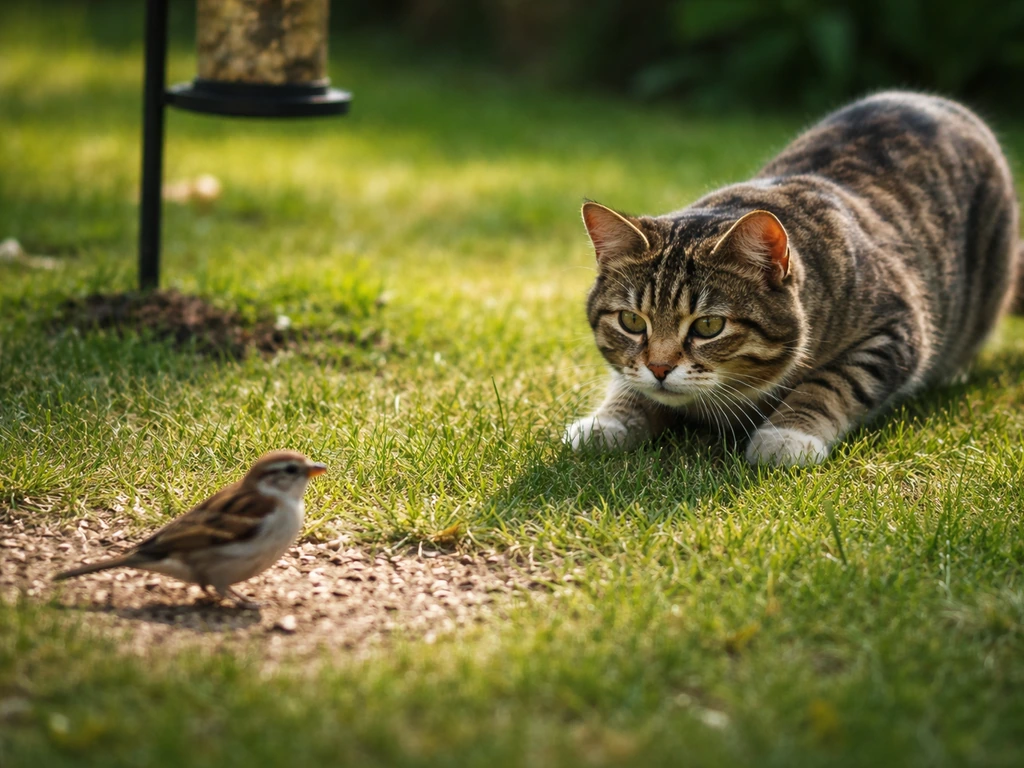
How cats actually harm birds: it's more than just predation
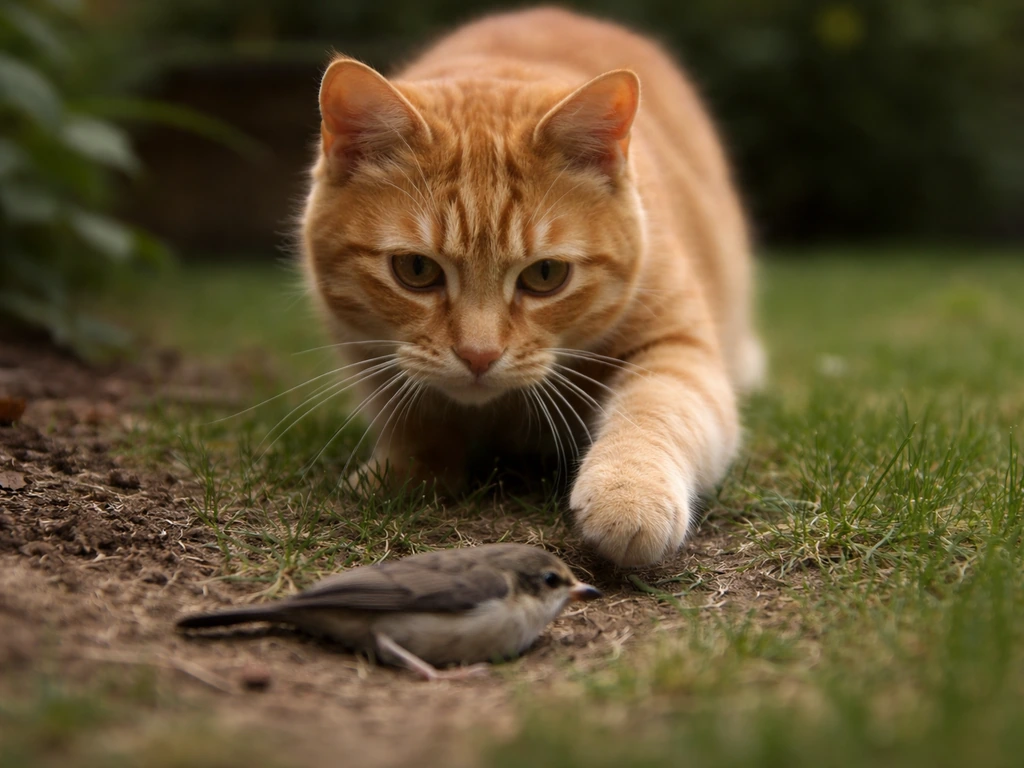
When people worry about a cat scaring a bird, they're usually picturing a sudden fright and a bird dropping dead. That's not really how it works. The genuine dangers from cat-bird encounters fall into a few distinct categories, and understanding them changes how you respond.
Direct predation is the most obvious one. Free-ranging domestic cats are one of the leading human-associated causes of bird mortality in the United States, killing a staggering number of birds each year according to research published in Nature Communications. Free-ranging domestic cats are estimated to kill between about 1.3 and 4.0 billion birds annually in the contiguous United States killing a staggering number of birds each year. But birds that survive the initial grab are not necessarily safe. A study on wild birds in veterinary practice found that of birds rescued alive from cats' mouths, roughly 40% died from the direct effects of the bite injuries, and around 60% died from infection with a bacterium called Pasteurella multocida, which lives naturally in a cat's mouth.
That infection timeline is what makes cat bites so insidious. Symptoms can appear within about 12 hours of a bite. A bird that walks away from a cat encounter looking uninjured can be dead by the next morning from sepsis spreading from a pinhole wound hidden under its feathers. This is the real killer in most cat-bird encounters, and it's why 'the bird flew away, so it must be fine' is not a safe conclusion.
Beyond bites, cats harm birds through repeated chasing that leads to exhaustion, through harassment that disrupts feeding and nesting, and through stress-induced physiological responses that can be seriously dangerous on their own.
Bird stress responses and when they turn dangerous
Birds are prey animals, and their nervous systems are wired for a fast, intense fear response. When a cat appears, a bird's heart rate spikes, stress hormones flood its system, and it tries to escape. Most of the time, a healthy bird handles that and recovers fine once the threat is gone.
But there are situations where that stress response becomes life-threatening on its own. Capture myopathy is a condition where extreme exertion from panic or prolonged chasing causes muscle damage severe enough to be fatal. Birds that are already sick, injured, or nutritionally depleted are far more vulnerable to stress-induced collapse. Very small birds and nestlings have almost no physiological reserve to draw on.
There's also a phenomenon called tonic immobility, sometimes called 'playing dead,' where a bird freezes completely when grabbed. This can look like death but is actually a fear response. The danger is that prolonged handling or a second stress event can push a bird that's already on the edge into genuine shock. Shock in birds can result from trauma, blood loss, severe infection, dehydration, or respiratory failure, all of which can follow a cat encounter, and it is genuinely life-threatening.
So while being purely 'scared to death' by a visual scare alone is rare for a healthy adult bird, stress absolutely plays a role in bird deaths after cat encounters, especially when combined with physical injury or repeated exposure. If you are trying to figure out why your cat killed a bird, the most common causes are fear stress, bite injuries, and the infections that can follow. The sibling topic of whether you can scare a bird to death explores the physiology of fear responses in more depth if you want to dig into that angle.
What to do right now if a bird was exposed to a cat
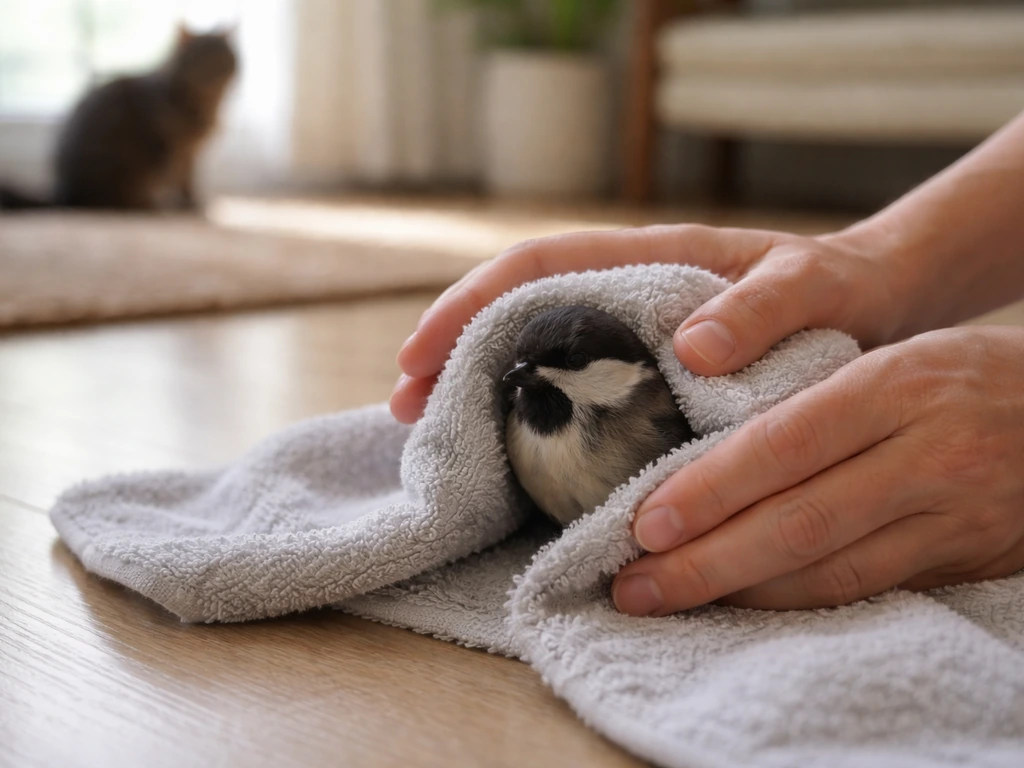
Speed matters here. If a cat has touched, grabbed, or even just had prolonged close contact with a bird, treat it as an emergency and act immediately. If you suspect your cat injured a bird, focus on getting it to wildlife rehab quickly and watching closely for hidden bite injuries and shock what should i do about my bird killing cat.
- Separate the bird from the cat immediately. Get the cat indoors or in another room. Even the cat's presence causes additional stress.
- Use a towel or gloves to gently pick up the bird. Minimize how much you handle it, and cover its head lightly with the towel, which reduces panic.
- Place the bird in a shoebox or small cardboard box lined with a soft cloth or paper towels. Poke small air holes in the lid.
- Keep the box warm (around 85 to 90°F, or simply in a warm room away from drafts), dark, and completely quiet. A warm heating pad set to low under half the box works well.
- Do not give the bird food or water. This is critical. Feeding or watering an injured bird in shock can cause aspiration or make things worse.
- Do not try to 'nurse' the bird yourself or apply any first aid to wounds.
- Contact a licensed wildlife rehabilitator or avian vet immediately. Even if the bird looks okay, Pasteurella infection can be treated successfully with antibiotics if caught early, but only a vet can prescribe them. Find a rehabilitator through your state wildlife agency or the National Wildlife Rehabilitators Association.
- If the bird hasn't recovered within one to two hours and you can't reach a rehab center, take it to the nearest emergency vet and explain it was caught by a cat.
The dark, warm, quiet environment does two things: it reduces the stress that's actively harming the bird, and it allows you to observe whether it's improving on its own. If it's alert, gripping the box, and trying to stand after an hour, that's a good sign. If it's lying on its side, eyes closed, breathing rapidly, or unresponsive, that's an emergency.
Signs of illness or injury after a cat encounter
The tricky part with cat-bite injuries is that feathers hide wounds well. You might see nothing on the outside while internal damage or infection is already developing. Still, there are signs to watch for.
- Visible puncture wounds, bleeding, or broken feathers in a pattern consistent with teeth or claws
- Drooping wings or an inability to stand or perch
- Eyes partially or fully closed when the bird should be alert
- Labored, open-mouth breathing or tail bobbing with each breath
- Fluffed-up feathers (a classic sign a bird is trying to conserve heat due to illness or shock)
- Discharge from the beak, eyes, or nostrils
- Tilted head or loss of coordination
- No improvement or worsening condition within one to two hours in the box
Any of these signs means the bird needs professional care right away. Even the absence of obvious symptoms is not reassurance enough after a cat has grabbed a bird. Wildlife rehabilitation data shows that many birds admitted after cat encounters still die even with treatment, which underscores how important early intervention is. Don't wait to see if the bird 'pulls through' on its own.
Prevention: keeping cats from attacking or harassing birds
The most effective prevention strategy is the most obvious one: keep cats indoors. An indoor cat has zero opportunity to catch birds. If you have an outdoor or indoor-outdoor cat, there are several practical steps you can take to meaningfully reduce predation.
Collar-based deterrents
Bell collars can reduce predation on birds, though they don't eliminate it. Cats sometimes learn to move without ringing the bell. A more effective option supported by USGS research is the Birdsbesafe collar cover, a brightly colored fabric ruff that makes the cat much more visible to birds, which can detect colors in the UV spectrum that cats cannot hide. USGS also published an evaluation of the Birdsbesafe® collar cover testing cats over multiple weeks during bird breeding seasons A more effective option supported by USGS research is the Birdsbesafe collar cover. A 2022 study in Frontiers in Ecology and Evolution found that combining a colorful collar cover with a bell provided meaningful reduction in bird predation in a European setting. Neither method is perfect, but both are better than nothing.
Timing and supervision
Cats are most effective hunters around dawn and dusk, which also happens to be when birds are most active and vulnerable. Keeping cats in during these windows, especially during spring nesting season when fledglings are on the ground, significantly reduces risk. Never leave a cat unsupervised in a yard where you're actively trying to attract birds.
Making your yard safer for birds
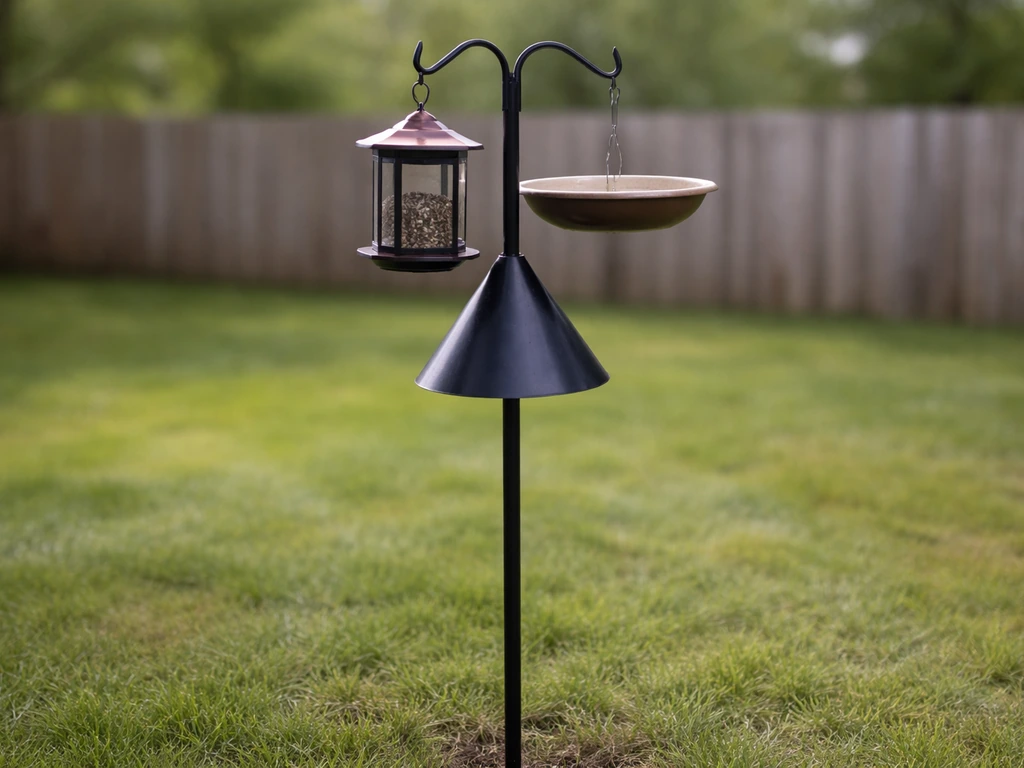
- Place bird feeders and birdbaths at least five to six feet off the ground and away from surfaces a cat can jump from
- Use baffles (cone-shaped guards) on feeder poles to prevent cats from climbing up
- Clear dense low shrubs near feeders where cats can hide and ambush birds
- Use motion-activated water sprinklers to deter neighborhood cats from entering bird areas
- If you have pet birds in outdoor aviaries, make sure the enclosure is built with heavy-gauge wire mesh that a cat cannot tear, bend, or reach through
For pet bird owners specifically
If you have both a cat and a pet bird in your home, never give them unsupervised access to each other, even if they seem to 'get along.' A single swipe or bite from a cat, even playful, can deliver Pasteurella to a pet bird with the same fatal potential as a wild encounter. Keep them in separate rooms when you can't actively watch them.
Myths vs facts about cat-bird interactions
| Myth | Fact |
|---|---|
| A bird flew away after the cat grabbed it, so it's fine | Not necessarily. Pasteurella infection can develop within 12 hours and be fatal even after a bird appears to escape normally |
| Cats only kill birds they physically catch | Prolonged chasing causes exhaustion and stress that can be dangerous, especially for small or already-weakened birds |
| A bell collar will stop my cat from catching birds | Bells reduce predation but don't eliminate it. Cats can learn to move silently, and quick lunges don't require much movement |
| Birds can literally be scared to death just by seeing a cat | Very rare in healthy adults. Stress-related death is more likely when combined with physical contact, injury, or repeated harassment |
| If there's no visible wound, there's no injury | Feathers hide bite wounds easily. Internal injuries and infection from tiny punctures are the main killer in cat-bite cases |
| Wild birds and pet birds respond differently to cats | Both are vulnerable to Pasteurella infection from cat bites. Pet birds may tolerate more proximity, but one bite or scratch is equally dangerous |
| Neighborhood feral cats don't cause significant bird mortality | Free-ranging cats, including ferals, account for a substantial share of annual bird deaths in the U.S., making them one of the most significant human-associated threats to bird populations |
The fear that a cat can simply 'scare' a bird to death overstates the pure psychological threat while often understating the very real physical danger. If you're a backyard birder trying to understand cat predation patterns, a bird owner worrying about your cat and parrot coexisting, or someone who just found a bird after a cat encounter, the practical takeaway is the same: physical contact between a cat and a bird is a potential emergency, even when it looks minor. If you are wondering, “should i punish my dog for killing a bird,” remember that punishment does not fix the underlying risk, and the better focus is on prevention and immediate veterinary or wildlife care when needed physical contact between a cat and a bird is a potential emergency. Reduce exposure before something happens, and act fast when it does.
FAQ
If a bird seems fine after a cat encounter, can it still die later?
Yes. Hidden bite punctures under feathers can lead to infection and sepsis that may start within about half a day. This is why you should treat any grabbed or close-contact event as urgent even if the bird looks alert at first.
Does a cat need to bite for “cat scare” to be dangerous?
It’s less likely than after a grab, but prolonged chasing or repeated harassment can still be life-threatening for very small birds, nestlings, and birds that are already ill or depleted. If a bird is exhausted, breathing rapidly, or unable to right itself, seek help.
What symptoms mean I should seek emergency wildlife or veterinary care immediately?
Get immediate care if the bird is unresponsive, very weak, lying on its side with no improvement, breathing hard or rapidly, has open-mouth breathing, bleeding, swollen areas under feathers, or you see a sudden decline within hours.
How should I transport a bird that may have been injured or stressed by a cat?
Use a small, dark, quiet container lined to prevent slipping, keep the bird warm but not overheated, and minimize handling. Avoid water or food unless a professional advises it, since aspiration and extra stress can worsen outcomes.
Can I administer first aid at home for a cat-related bird injury?
Do not try to clean puncture wounds or apply topical antibiotics unless instructed by a wildlife professional. Feather-covered wounds often need professional flushing, antibiotics, and monitoring for shock, and early delays are risky.
Is “shock” after a cat encounter always obvious?
No. Birds can deteriorate quickly without dramatic external injuries. If the bird is not steadily improving after about an hour in a calm container, or if it seems to worsen, treat it as an emergency.
If my cat only chased and didn’t catch the bird, what should I do?
Still monitor closely. Watch for exhaustion, abnormal breathing, inability to stand, or unusual quietness. For nestlings or very small species, err on the side of contacting a wildlife rehabilitator even without visible injury.
How long should I wait to see if the bird recovers on its own before getting help?
Don’t wait for a full day. If there’s any sign of stress that doesn’t quickly settle, or the bird is not improving within roughly an hour, contact wildlife rehab or a vet for guidance.
Can a cat scratch alone transmit infection to a bird?
Potentially, yes. Scratches or tiny punctures can introduce bacteria even when they seem minor and are hard to see through feathers. Any direct contact that involved claws scraping or grabbing should be treated seriously.
Does a bird that “played dead” after being grabbed need treatment even if it later looks normal?
Yes. Tonic immobility can delay the recovery signal, and the initial stress and handling can push an injured bird into shock later. If the bird had been physically held or seized, professional assessment is safer than observation alone.
What’s the best prevention step if I keep cats and want to protect birds?
Keep cats indoors, especially during dawn and dusk and during spring nesting when fledglings are vulnerable. If outdoor access is unavoidable, use multiple measures together rather than relying on one device.
Are bell collars enough to stop cats from killing birds?
They can reduce success rates, but they do not prevent all predation. Cats may learn to stalk quietly despite bells, so pairing visibility tools like a colorful collar cover with bells, plus keeping cats in at peak hunting times, is more effective.
If I have a pet bird and a cat in the same home, can they be supervised together occasionally?
Even with supervision, don’t allow unsupervised contact and be cautious, because a single swipe or bite can transmit bacteria with fatal consequences. Separate rooms or barriers are safer when you can’t watch continuously.
Should I punish my cat for killing or attacking a bird?
Punishment usually doesn’t address the underlying predation risk and can increase stress in the cat, which may worsen stalking behavior. Focus on management changes, such as indoor housing, time-restricted outdoor access, and barriers.