
Bird strikes are genuinely dangerous in specific scenarios, but for most passengers on most flights, they are a manageable and well-studied hazard rather than a routine catastrophe. From 1990 to 2023, wildlife strikes with U.S. civil aircraft caused 357 human injuries total. That is a serious number, but spread across tens of millions of flights, it puts the actual passenger risk into perspective. The real danger lives in a handful of specific conditions: large birds, critical flight phases, and engine ingestion. Understanding those factors tells you everything you need to know.
How Dangerous Are Bird Strikes for People and Aircraft

Maya Chen
2 May 2026
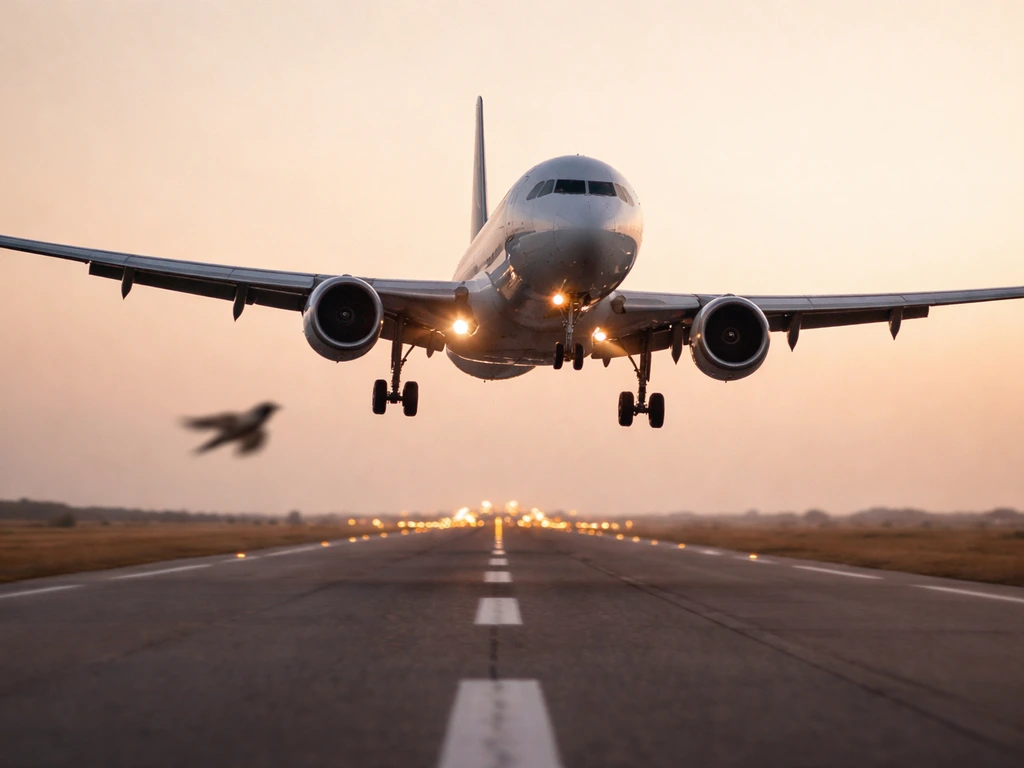
What counts as a bird strike and where it happens
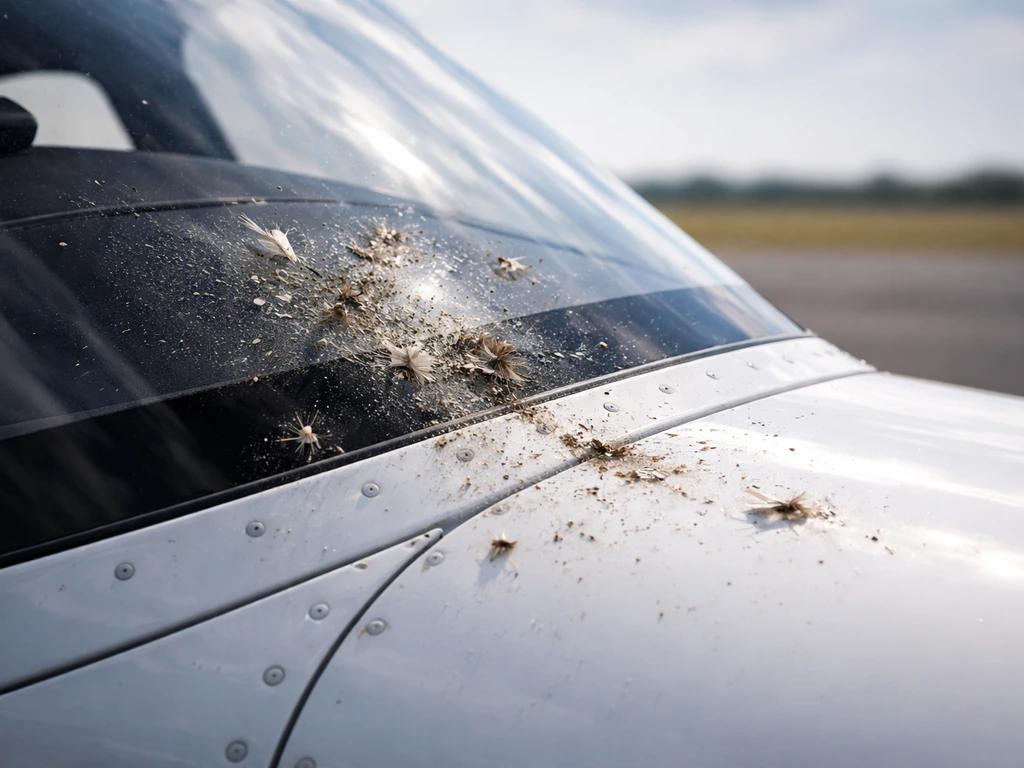
In aviation, a bird strike is officially defined as a collision between a bird (or other wildlife) and an aircraft that is in flight or on a takeoff or landing roll. That definition, used by ICAO and mirrored by EASA and the FAA, requires actual evidence: physical remains, feathers, blood, damage to the aircraft, or a dead bird found on the movement area. It is not just a near-miss or a pilot report of birds in the area.
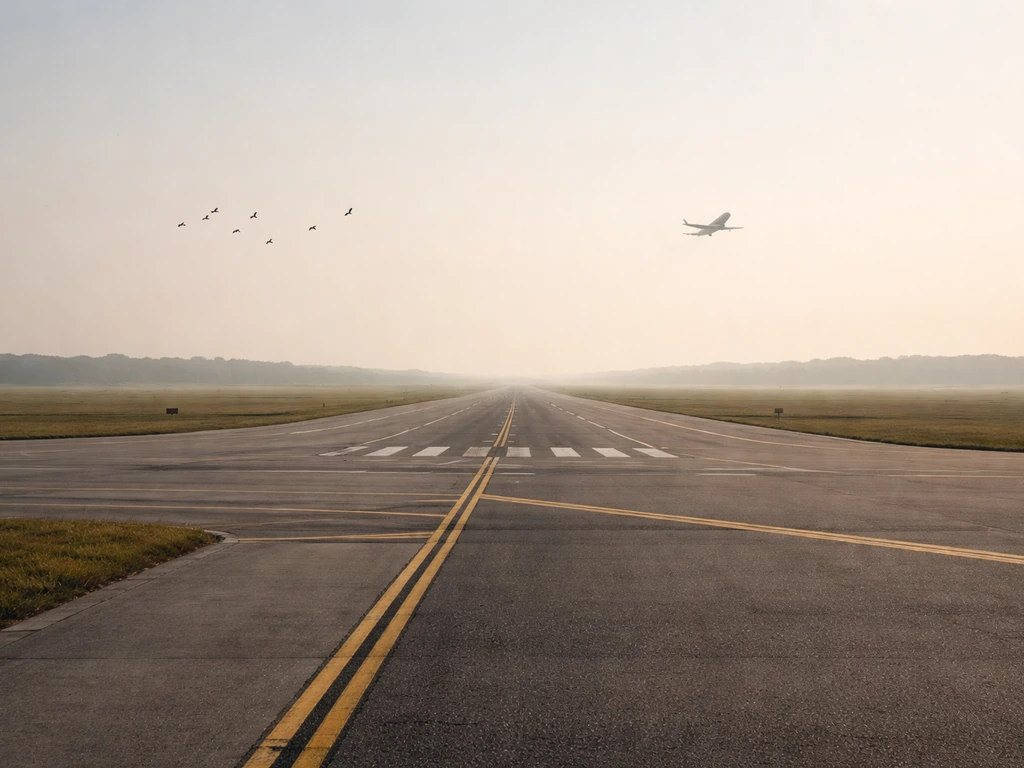
More than 90% of reported bird strikes occur at or below 3,000 feet AGL (above ground level). That makes sense because birds spend most of their time at low altitudes, and aircraft are most vulnerable during the phases where they are climbing through or descending into that zone. During migration seasons, higher-altitude strikes do happen, but they are far less common. The FAA notes that roughly 62% of strikes occur during the day, 30% at night, and about 8% at dawn or dusk.
This article focuses on aircraft bird strikes, which is the context where human safety risk and damage costs are most significant. The same term is sometimes used loosely to describe birds hitting vehicles or buildings, but those situations carry different risk profiles and are covered separately.
How dangerous bird strikes actually are
The range of outcomes is enormous, which is part of why the topic generates so much confusion. On one end, a small bird hitting the fuselage at cruise altitude may leave a dent and nothing more. On the other end, a large bird ingested into a jet engine at low altitude during takeoff can cause engine failure, forcing an emergency landing or, in rare cases, a catastrophic accident.
The FAA's wildlife strike database covering 1990 to 2022 logged 276,846 wildlife strikes with U.S. civil aircraft. Only a fraction of those caused aircraft damage, and injuries to people were rarer still. Wildlife strikes are estimated to cost over $900 million annually in damage to U.S. civil and military aircraft combined. That financial toll reflects hull repairs, engine overhauls, and operational disruptions, not primarily human casualties.
Where injury and death have occurred, the mechanism is almost always indirect: the bird impact causes a system failure (most critically, engine failure or loss of windshield integrity), which then creates the dangerous situation. Direct human injury from a bird coming through a cockpit window is rare but has happened. Passenger cabin penetration is extremely rare given aircraft structural design.
Engine ingestion vs. airframe impacts
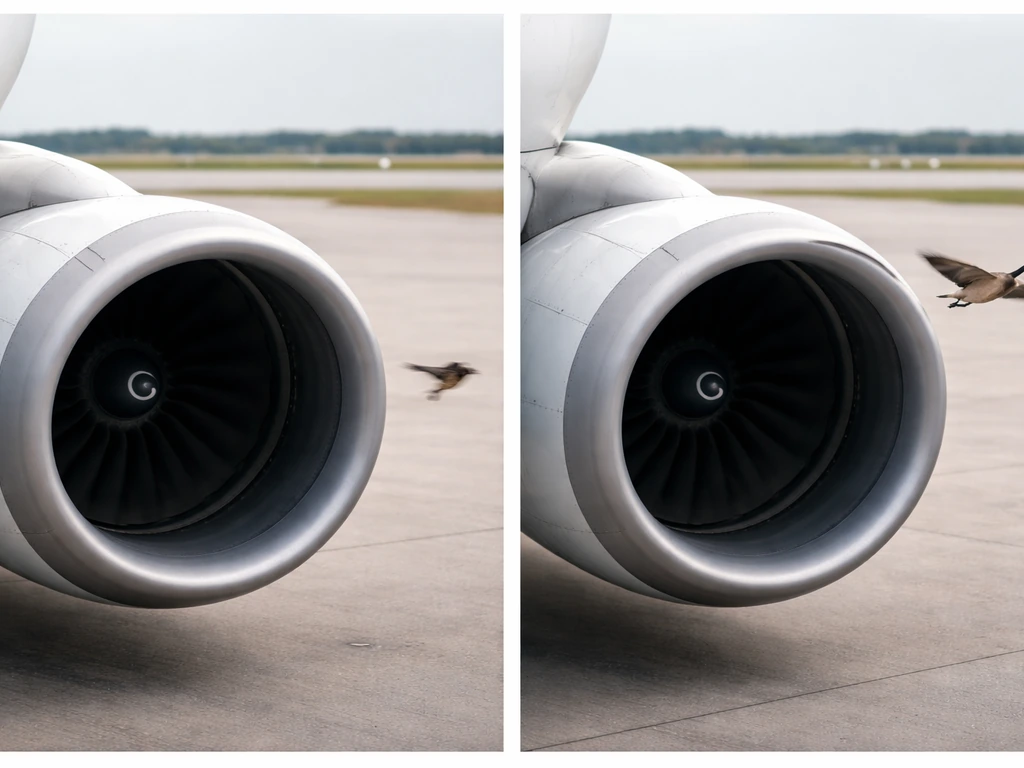
Engine ingestion is the scenario that aviation safety professionals worry about most. A bird pulled into a turbofan engine can damage or destroy fan blades, cause a compressor stall, and in severe cases result in engine shutdown. Modern aircraft are certified to demonstrate continued safe flight and landing after certain bird impact events. U.S. certification standard 14 CFR 25.631, for example, sets structural requirements including the ability to continue safe flight after an 8-pound bird impact under specified conditions. Engines have separate ingestion standards. That said, these are minimum certification thresholds, not guarantees against all scenarios.
Airframe impacts outside of the engine, such as strikes to the nose, leading edges, or fuselage, are far more common and generally less severe. Windshield strikes on the flight deck are more serious because they can injure the crew directly or impair visibility. A windshield rated for bird impact may crack without shattering, maintaining pressurization and structural integrity, but damage to crew situational awareness is still a real concern.
How likely is it? Putting the statistics in context
The number that tends to alarm people is 276,846 strikes over about three decades. Read differently, that averages out to roughly 8,400 strikes per year across all U.S. civil aviation. Commercial aviation carries hundreds of millions of passengers annually, so any individual passenger's statistical exposure to a damaging strike is very low. Most strikes produce no damage at all, and the ones that do usually result in repairs rather than emergencies.
The FAA also notes that the damaging strike rate at Part 139-certificated airports (major commercial airports) has increased over the analyzed period, reflecting both more birds and more flights, as well as better reporting. Better reporting inflates the raw numbers without necessarily reflecting a proportional jump in actual danger. The National Wildlife Strike Database was only established in the 1990s, so historical comparisons before that period are not reliable.
For context, three bird groups account for 75% of reported strikes in the U.S.: waterfowl (31%), gulls (26%), and raptors (18%). These are larger birds capable of causing more significant damage than the small songbirds that make up the bulk of bird populations near airports. That species skew matters a lot when thinking about real-world risk.
What makes a bird strike worse or safer
Not all bird strikes are equal. Several factors interact to determine whether an impact is a minor nuisance or a serious safety event.
| Factor | Lower risk | Higher risk |
|---|---|---|
| Bird size/weight | Small passerines (under 1 lb) | Large waterfowl, geese, raptors (4–15+ lbs) |
| Flight phase | Cruise altitude (above 3,000 ft AGL) | Takeoff roll, initial climb, final approach |
| Aircraft speed | Lower ground speed on landing | High-speed takeoff or low-altitude climb |
| Impact location | Fuselage body, wing leading edge | Engine intake, cockpit windshield |
| Number of birds | Single bird | Flock (multiple ingestions possible) |
| Species behavior | Solitary, low-density birds | Flocking species (starlings, geese, gulls) |
Takeoff is the most dangerous phase. The aircraft is at full thrust, near maximum weight, at low altitude with limited options for an aborted climb, and moving at high speed through the exact altitude band where birds concentrate. A flock of Canada geese on a runway departure path is a genuinely serious hazard, which is why the U.S. Fish and Wildlife Service and airport operators spend significant resources managing goose populations near airports. The 2009 US Airways Flight 1549 ditching in the Hudson River following a double-engine bird strike on departure from LaGuardia remains the most high-profile example of how severe the worst-case scenario can get.
Bird mass matters enormously because kinetic energy scales with the square of velocity. A 12-pound goose hitting an aircraft doing 150 knots on takeoff delivers a dramatically higher impact force than a 2-ounce sparrow hitting the same aircraft. This is why certification standards specifically test for larger bird scenarios, not just average bird sizes.
Myths and facts worth clearing up
There is a lot of misinformation floating around about bird strikes, so here are the claims worth addressing directly.
- Myth: Bird strikes are rare events that almost never happen. Fact: They happen thousands of times per year in the U.S. alone. Most are minor, but they are not rare.
- Myth: Modern jets can handle any bird strike without incident. Fact: Aircraft are designed to survive specific impact scenarios under certification standards, but there are no guarantees for all real-world combinations of bird mass, flock size, speed, and impact location.
- Myth: Bird strikes only matter at takeoff and landing. Fact: Over 90% occur below 3,000 feet AGL, which includes initial climb and final approach, not just the runway. Migration-related high-altitude strikes also happen.
- Myth: Small birds are not a risk. Fact: Individually, small birds pose low structural risk. In flocks (like European starlings), multiple ingestions can overwhelm an engine's bird ingestion tolerance.
- Myth: Passengers are usually injured in bird strikes. Fact: From 1990 to 2023, only 357 human injuries were recorded in U.S. civil aviation wildlife strikes, out of hundreds of thousands of reported events.
- Myth: There is nothing pilots can do to avoid bird strikes. Fact: Pilots receive bird activity notices (NOTAMs), adjust flight paths during migration, use lighting and speed adjustments, and coordinate with airport wildlife managers. Prevention is an active ongoing effort.
What to do as a passenger if a strike occurs
If you are a passenger and you hear or feel what might be a bird strike, the most important thing is to stay calm and follow crew instructions. A bird strike warning is an operational alert or guidance that helps crews and airports recognize and respond to wildlife strike risk during flight and on the airfield. In the vast majority of cases, the crew will assess the situation, communicate with air traffic control, and either continue normally or divert to the nearest suitable airport as a precaution. You may hear a loud bang, see a flash, or notice a change in engine sound. None of those by themselves indicate the flight is in immediate danger.
Your practical steps as a passenger are straightforward. Keep your seatbelt on when seated, which is always good advice regardless of bird strikes. Follow any crew announcements. Do not block aisles or interfere with crew movements. If an emergency is declared, follow the brace position and evacuation instructions exactly as the crew directs.
After landing, if you observed or experienced what you believe was a bird strike, you can report it. The FAA encourages reporting through FAA Form 5200-7 (Bird/Other Wildlife Strike Report), and airlines have their own reporting procedures. Reporting matters because it feeds the national database that informs wildlife hazard management decisions at airports. If you are curious whether a particular event qualifies as a reportable incident, that question touches on related reporting definitions covered in the context of how aviation classifies such events.
Reducing risk: what airports, operators, and property owners can do
For anyone involved in airport operations, airfield management, or property adjacent to flight paths, bird hazard mitigation is an active and evidence-based field. The FAA, ICAO, and EASA all provide guidance frameworks, and the strategies fall into a few consistent categories.
Habitat management
This is the most effective long-term tool. Birds concentrate near airports because of food, water, and shelter. Removing those attractants reduces bird presence more reliably than deterrents alone. Practical steps include maintaining grass at heights that are unattractive to foraging birds (typically 7 to 14 inches, which discourages large flocking species), eliminating standing water, removing berry-producing vegetation, and filling in drainage features that attract waterfowl. FAA wildlife management guidance explicitly frames habitat manipulation as a primary mitigation strategy.
Active deterrence
Deterrence tools include acoustic devices (propane cannons, distress calls), visual deterrents (pyrotechnics, lasers in appropriate conditions), trained falconry programs, and vehicle patrols. These work best as part of an integrated program rather than as stand-alone fixes. Birds habituate quickly to static deterrents that are not varied in type, timing, and location.
Lethal control and professional escalation
For persistently dangerous species or high-density populations that cannot be managed through habitat changes and deterrents alone, lethal control (typically conducted by USDA Wildlife Services under appropriate permits) is a recognized last-resort tool. The USDA APHIS airport wildlife hazard program describes coordination with the FAA and airports to reduce wildlife hazards, including mitigation support from qualified wildlife biologists (QAWB) USDA Wildlife Services. This is a regulatory and safety decision that should be made with professional guidance, not something to attempt independently. If you manage property near an airport with chronic bird hazard issues, coordinating directly with airport wildlife managers and USDA Wildlife Services is the right escalation path.
Reporting and data
One of the most underused tools is consistent reporting. Every reported strike adds to the FAA's National Wildlife Strike Database, which helps airport managers identify high-risk species, locations, and seasons at their specific facilities. Airports required to have Wildlife Hazard Management Plans under FAA Advisory Circular 150/5200-32C use this data to prioritize actions. If you are on the operations side, reporting every qualifying strike, not just the dramatic ones, is a genuine contribution to safety.
The honest bottom line is this: bird strikes are a real, well-documented hazard that the aviation industry takes seriously and manages actively. They are dangerous under specific conditions, particularly large birds during takeoff and engine ingestion events. Because the FAA treats certain bird impacts as extraordinary circumstances only when the specific conditions make the event unusually severe, severity depends on factors like bird size and whether an engine is involved is a bird strike an extraordinary circumstance. For the average passenger, the statistical risk of personal injury is very low, but not zero. Understanding the factors that drive severity, knowing what to do if one happens, and supporting mitigation efforts on the ground are all practical ways to engage with the real risk rather than either dismissing it or overstating it.
FAQ
If I hear a loud bang or see a flash, does that automatically mean the plane is in immediate danger from a bird strike?
No. Those signs can occur from minor impacts or system responses, crews may still keep the flight on the same plan. Immediate danger is assessed by whether there are indications of thrust loss, abnormal engine indications, structural damage, warning lights, or cockpit visibility problems, so you should treat it as a cue to listen for crew instructions rather than assume severity.
How can I tell the difference between a harmless strike and an event that could affect safety?
Look for functional cues, not just sight or sound. Indicators that increase concern include a change in engine noise or EICAS/ECAM alerts, engine vibration, unusual control behavior, loss of windshield integrity, smoke or fire indications, or an emergency declaration and abnormal checklists. Passengers usually will not have enough information to judge directly, which is why crew and maintenance indications drive the response.
Are bird strikes more dangerous at night or during dawn and dusk?
Most strikes happen at or below 3,000 feet, and the day-night pattern affects how often impacts are reported (more occur during the day). Night flights can still involve serious hazards because an engine ingestion event does not care about lighting, but visibility conditions often change how birds are detected and how quickly crews can visually confirm what happened.
What matters more for risk, bird size or flight speed?
Flight speed and mass both matter, speed often dominates because impact energy rises sharply with velocity. That means a mid-sized bird at a fast takeoff or climb speed can be more hazardous than a larger bird at lower speed, which is one reason certification tests focus on larger bird scenarios at representative high-energy conditions.
If a bird hits the wing or fuselage, is that always less dangerous than an engine strike?
Often it is less severe, but not always. Airframe impacts can still create control surface damage, aerodynamic concerns, or windshield issues depending on where contact occurs. Engine ingestion is the scenario that can rapidly escalate because it can quickly lead to thrust loss or engine shutdown, but crews still evaluate any impact that could affect structure or controllability.
Can bird strikes happen while cruising above 3,000 feet, and are they more serious when they do?
They do happen, but they are less common since most strikes are at lower altitudes. When they occur at higher altitude, they can still be serious if an engine is involved, but they are statistically rarer overall and usually reported less frequently.
Does the FAA or airline treat every reported bird strike the same way?
No. There are different categories, from non-damaging impacts to events that cause measurable damage, require inspections, or trigger maintenance actions. If you report as a passenger, you are adding useful observations, but whether it becomes an operationally significant event depends on what was found during inspection and any related aircraft system indications.
If I’m on the ground near an airport and a bird strike happens, who should report it?
If you are an airport worker or involved in operations, reporting goes to the airport’s wildlife hazard management process (often aligned with Wildlife Hazard Management Plans). If you are a member of the public who observed an aircraft impact and damage, reporting to the FAA using the bird or wildlife strike report process can still help feed the national database, but follow local airport rules about access and safety.
Should passengers keep their seatbelt on after takeoff and before landing specifically because of bird strikes?
Seatbelts are not a bird strike specific safety measure, but they are important whenever the aircraft is in the air and whenever the seatbelt sign is on. If an abnormal event occurs, injuries from turbulence, sudden braking, or emergency maneuvers are more likely causes of harm than the strike itself, so keeping the belt fastened when seated is still the practical choice.
What’s the best passenger action if a bird strike happens and the crew announces possible diversion or inspection?
Stay attentive to the crew’s messages, remain seated with your belt fastened if instructed, and avoid blocking aisles so attendants can do their jobs. If the crew says they are diverting or need additional inspection time, there is typically a structured maintenance response, so your role is mainly calm compliance with instructions rather than trying to self-diagnose what happened.
Do habitat controls and deterrents around airports actually work reliably, or do birds just adapt?
They can be effective, but birds habituate quickly to static deterrents. Programs that combine habitat modification (reducing food and standing water) with active, varied deterrence tend to perform better than relying on a single device or a predictable schedule. That is why integrated, data-driven wildlife hazard management matters.
Is it reasonable to blame a bird strike on pilot error or poor maintenance?
Usually no. Bird presence and aircraft-bird overlap are influenced by seasonal migration, local habitat, and species behavior, even with mitigation. In most cases the safety response focuses on confirming damage, inspecting engines and structures as needed, and preventing recurrence through airport wildlife management rather than attributing fault to flight crew decisions.