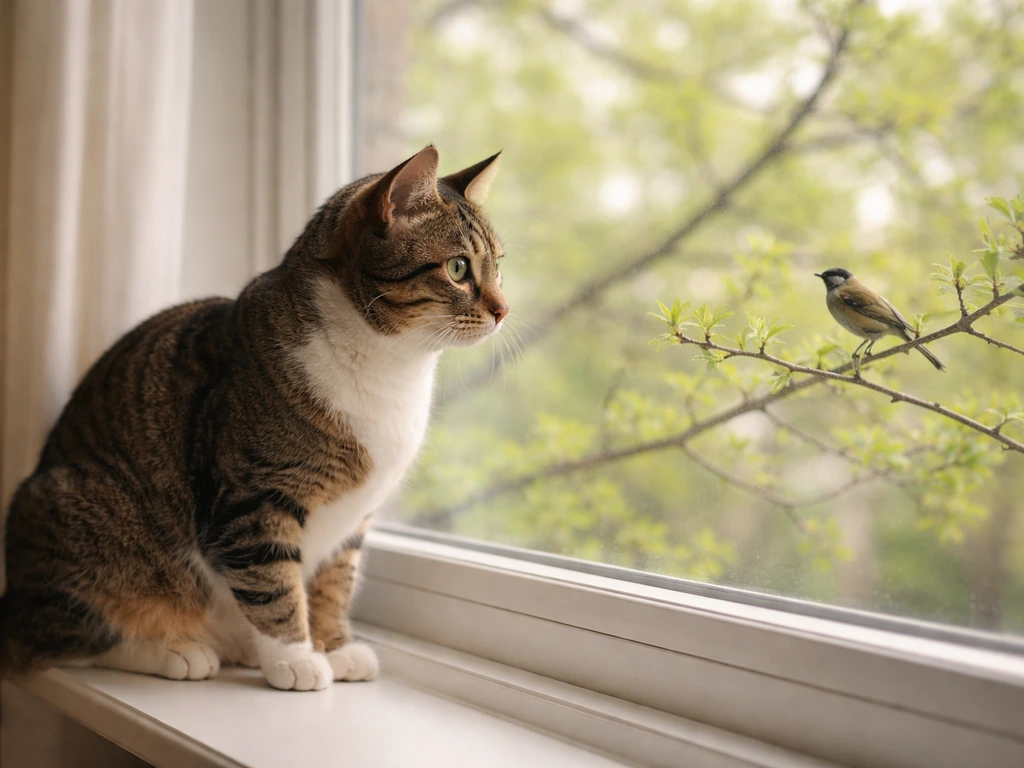
Most birds that attack cats are defending a nest, not hunting your cat as prey. The short list of real offenders includes red-tailed hawks, northern goshawks, great horned owls, crows, gulls, and terns. True predation on cats is rare and limited to the largest raptors. The far more common scenario is a bird dive-bombing, pecking, or raking a cat that wandered too close to eggs or chicks during nesting season, which runs roughly January through August depending on species. Because cats can increase or decrease predation pressure around nesting sites, it can be relevant to how bird populations change over time.
What Bird Attacks Cats? Risks, Scenarios, and What to Do

Maya Chen
3 May 2026
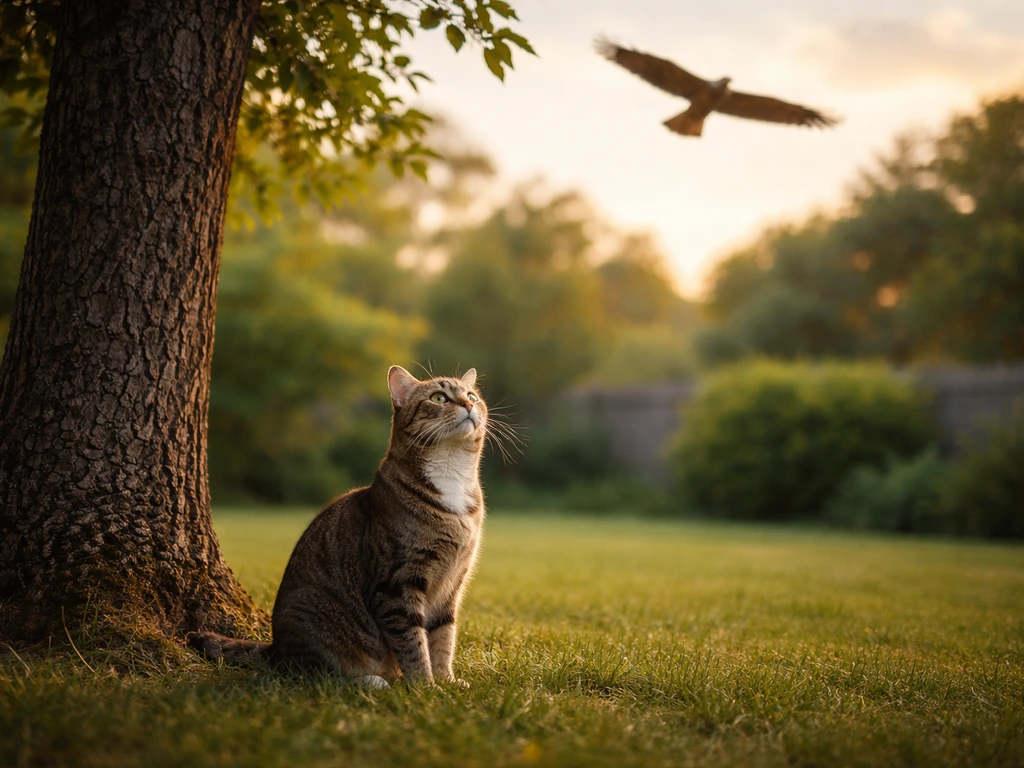
Which birds realistically attack cats
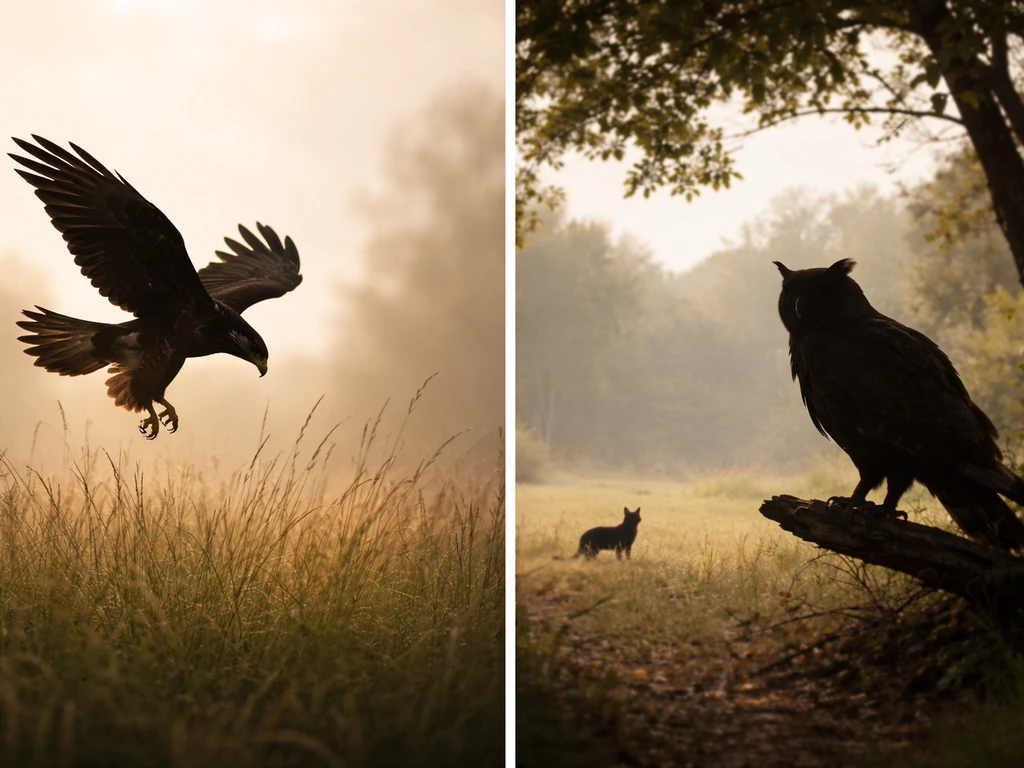
There are two genuinely different situations here: defensive birds that see your cat as a threat, and large predatory birds that might actually try to take a small cat. Both are real, but they're not equally common.
Defensive attackers (the most common scenario)
- Red-tailed hawks and broad-winged hawks: Will dive-bomb and strike with talons when cats come near nest trees, sometimes drawing blood.
- Northern goshawks: One of the more aggressive hawks. Known to pursue and hit intruders repeatedly until they leave the territory.
- Crows and ravens: Highly social, intelligent, and willing to mob perceived predators. A pair can become an organized harassment campaign against a cat that repeatedly passes through their territory.
- Gulls and terns: Will swoop suddenly, peck, and defecate on anything near a grounded chick. The RSPCA specifically notes this is almost always triggered by chicks that have left or fallen from nests.
- Mockingbirds and red-winged blackbirds: Small but fearless. They can peck and scratch exposed skin or eyes if a cat sits under a nest tree.
Predatory attackers (rare but real)
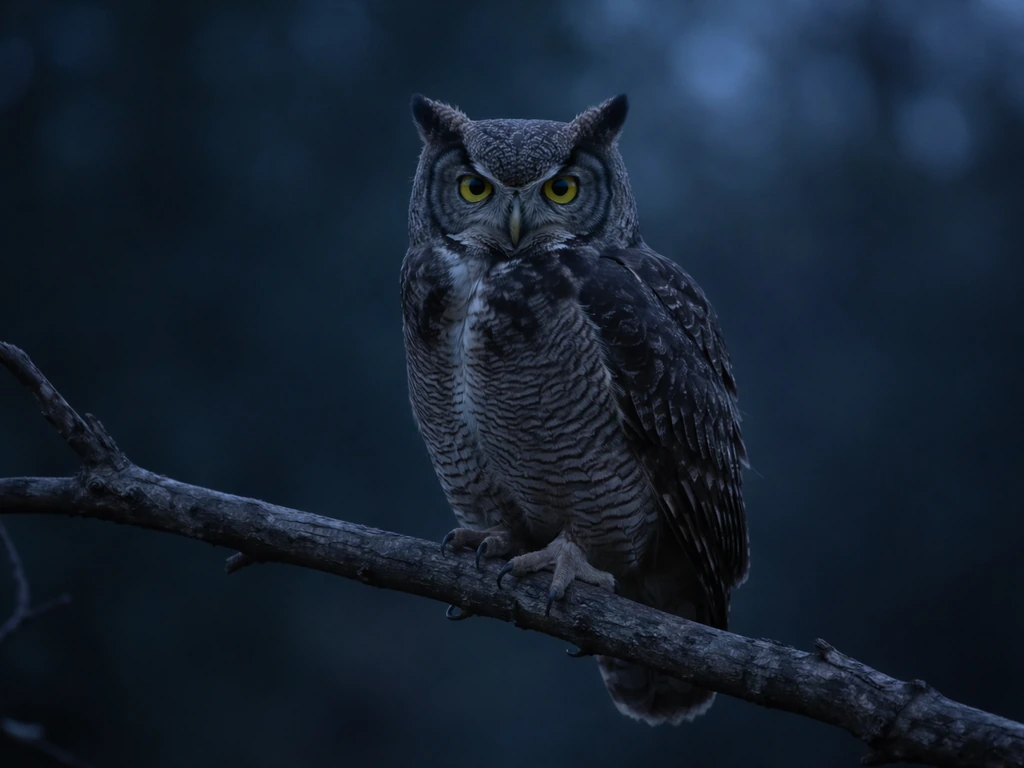
Great horned owls are the primary raptor documented as occasionally preying on small cats and unattended puppies. They hunt at night and are powerful enough to do serious damage quickly. Golden eagles are capable as well, but encounters with domestic cats are genuinely uncommon. If your cat is missing overnight and you live in an area with great horned owls, predation is worth considering, though it is not the statistically likely explanation.
How attacks happen: defense vs. actual predation
Understanding what's driving the attack helps you respond correctly. Some cats may respond to bird-related sounds differently, so it can help to observe how your cat reacts to bird calls or noises. Defensive attacks follow a predictable escalation. The bird first calls loudly, hisses, or makes warning passes. If the cat (or person) doesn't leave, it lunges or dive-bombs, targeting the head, neck, or back. Talons, wings, and the bill are all used. This is not random aggression. It is a calculated response to a perceived threat near eggs or young, and it stops when the threat leaves.
Predatory attacks work differently. There's no warning. A great horned owl comes in fast and silent, targeting the neck or back of the head. If you weren't watching, you may not realize what happened until you find your cat injured or don't find your cat at all. These attacks happen almost exclusively at dusk, dawn, or overnight, which is another reason keeping cats indoors at night matters.
Nesting season is the single biggest risk multiplier. Aggression peaks during the nestling period, which lasts about two weeks for most backyard nesters, but species that raise multiple broods mean the cycle can repeat in spring and again in mid-to-late summer. The same nest site may be aggressively defended season after season.
It's also worth noting that some bird behavior around cats isn't aggression at all. Crows sometimes follow cats out of curiosity or to scavenge anything the cat flushes. If you are also wondering why a bird might chase a squirrel instead of just hunting, the answer usually comes down to territorial behavior and food-related motivation why would a bird chase a squirrel. And some birds attack reflective surfaces or windows, mistaking their reflection for a rival. That's a separate problem entirely, unrelated to your cat.
Immediate first aid and what to watch for
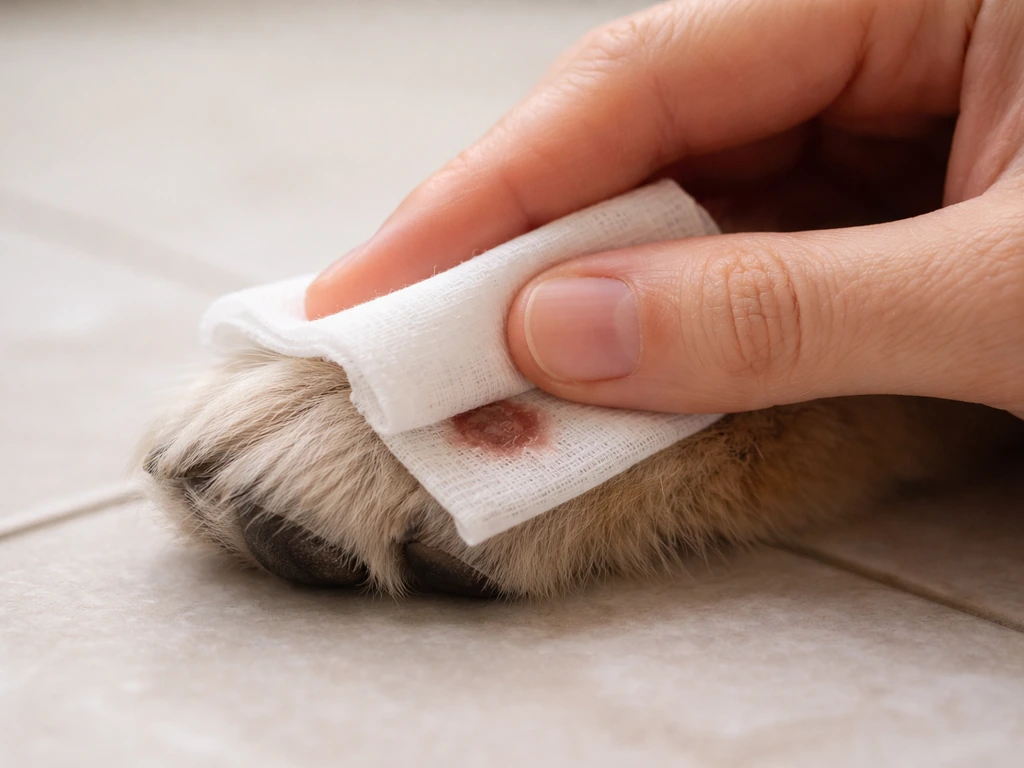
If your cat has just been struck or pecked, do this in order. Stay calm, get the cat inside, and do a systematic check before assuming nothing is wrong. Cats hide pain well.
- Control any bleeding first. Apply gentle, firm pressure with a clean cloth. Most small peck wounds bleed more than they deserve alarm, but don't skip this step.
- Check for puncture wounds. Part the fur carefully. Talon punctures are small and easy to miss but can be deep. Check the neck, back, shoulders, and face.
- Clean surface wounds gently. Use diluted chlorhexidine or diluted povidone-iodine solution, working from the wound edge outward. Do not use hydrogen peroxide. It is toxic to healing tissue and will make recovery slower, not faster.
- Do not probe or flush deep puncture wounds yourself. That's a vet job. Cover loosely and get moving.
- Check the eyes immediately. If the cat is squinting, holding one eye closed, or you see redness, cloudiness, or discharge, treat it as urgent. Eye injuries from beaks or talons can deteriorate fast. Significant swelling or inability to open the eye warrants emergency care. Mild redness with no other symptoms can typically wait up to 48 hours for a vet appointment if the cat seems otherwise fine.
- Keep the cat quiet and warm while you assess and make calls.
What to monitor over the next 24 to 72 hours
Puncture wounds are notorious for looking minor on the surface while developing serious infections underneath. Pasteurella bacteria (also found in cat and dog bites) can produce aggressive soft-tissue inflammation that shows up as early as 8 to 12 hours after a wound and almost always within 24 hours. Watch for swelling, heat, redness spreading from the wound, discharge, or any sign your cat is in more pain than immediately after the incident.
- Lethargy or hiding more than normal
- Not eating or drinking by the next morning
- Wound site becoming more swollen, warm, or discharging fluid
- Limping or protecting one area
- Fever (ears feel very hot, cat seems dull)
- Eye symptoms worsening at any point
Any of these means a vet visit, not a wait-and-see approach.
Reducing risk from diseases and injuries
The infection risk from bird-inflicted wounds is real but manageable. Dirty or puncture wounds generally need antimicrobial treatment, and your vet may take a culture from a deep wound to identify the right antibiotic rather than guessing. For pet first aid after a wound or bite, the AVMA recommends safety-focused wound care guidance and arranging veterinary care as appropriate Dirty or puncture wounds generally need antimicrobial treatment. Don't skip the vet visit for anything that breaks the skin significantly, even if the cat seems fine the same day.
Avian influenza (H5N1) has been a concern in recent years. The general risk to domestic cats from a single bird encounter is considered low. That said, if your cat attacks or is attacked by a wild bird during a known HPAI outbreak in your area, your vet should know about the exposure. The CDC advises monitoring for fever and illness after direct contact with potentially infected birds. It is not a reason to panic, but it is a reason to mention it when you call the clinic.
Parasites (mites, lice) can transfer during close contact with wild birds, particularly if the cat catches or is held against a bird. Check your cat's coat in the days following any contact, and mention it to your vet if you notice unusual scratching.
Keep your cat's vaccines and parasite prevention current. This is not just a bird-attack consideration, but it is the single most practical baseline protection against a range of secondary infections.
Preventing bird–cat conflicts at home
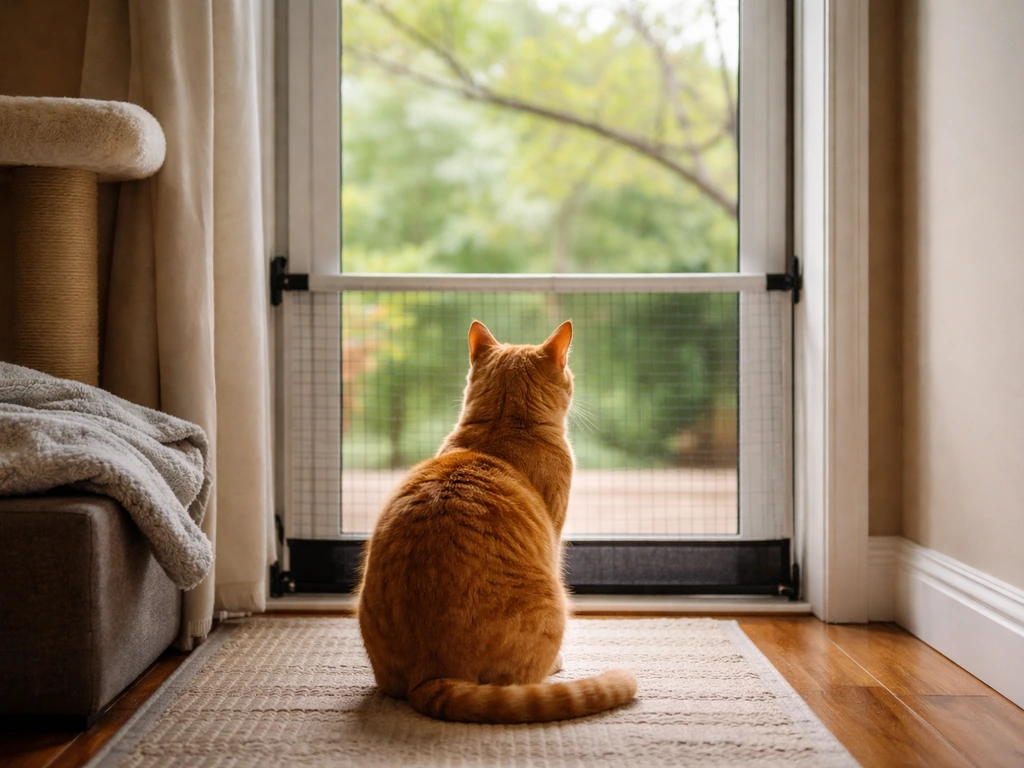
The most effective thing you can do is keep your cat inside or supervised during active nesting. Aggression peaks when chicks are in the nest, which typically lasts about two weeks per brood. If you know there is an active nest in your yard, that's a two-week window to manage your cat's outdoor time, not a permanent restriction.
Cat management
- Keep cats indoors overnight, especially in great horned owl territory. Owls hunt at dusk, dawn, and through the night.
- Supervise outdoor time during active nesting periods. A supervised cat is far less likely to wander under a nest tree.
- Use a covered outdoor cat enclosure (catio) if your cat needs outdoor time. It protects against swooping birds and keeps birds safer from the cat as well.
- Walk cats on a harness and leash near known nesting areas.
Making your yard less attractive to defensive birds
Don't feed wildlife near your home, including gulls, crows, and waterfowl. Birds that associate your yard with food become bolder and less fearful of people and pets. USDA APHIS specifically advises against wildlife feeding for exactly this reason. Also bring in pet food and water containers at night to avoid attracting both wildlife and emboldening birds that are already around.
For persistent gull or crow problems, use a combination of deterrents rather than relying on any single approach. Birds habituate to repeated stimuli quickly. Rotating visual deterrents, sound deterrents, and modifying what's attracting them in the first place works better than one method alone.
One thing to know before you try to remove a nest yourself: in the U.S., removing active nests of most native birds requires a federal permit under the Migratory Bird Treaty Act. The U.S. Fish and Wildlife Service is clear that removal is only permitted when there is a documented health, safety, or property-damage justification. The practical advice is to let the nesting cycle finish and then deter birds from returning to that site next season.
When to call a vet or wildlife professionals
Call your vet the same day if your cat has any puncture wounds, eye involvement, is limping, or is not acting normally after an attack. Don't wait for symptoms to worsen. If wounds look infected, if your cat is feverish or lethargic within 24 hours, or if eye symptoms appear or get worse at any point, that's an emergency, not a scheduled appointment.
Call a wildlife professional or your state's USDA Wildlife Services office if: the same bird or group of birds is repeatedly attacking people or pets (not just one defensive incident near a nest), you suspect a raptor has been injured in the encounter, or you're seeing behavior that seems unusual outside of nesting season. Wildlife Services offers technical help for resolving wildlife conflicts and can advise on legal deterrent options specific to your area.
If you find an injured raptor after an encounter, don't handle it without guidance. Raptors have powerful talons and can cause serious injury to humans even when weakened. Contact a licensed wildlife rehabilitator for advice before approaching.
Repeated attacks on the same cat from the same bird almost always mean the cat keeps returning to a territory with active nesting or young. That's a management problem you can solve by adjusting when and where your cat goes outside, not something that requires removing the bird.
FAQ
Can a bird attack my cat even if I cannot see a nest?
Yes, a cat can attract defensive attacks even without seeing a nest. If the cat is stalking, climbing near hedges, or repeatedly entering the same corner of a yard, it can signal risk to birds protecting eggs or chicks that you cannot see from ground level.
What should I look for if a bird attack seems minor but my cat is acting off?
Often, but not always. If the cat is limping, hiding more than usual, or holding the head low, treat it as an injury until a vet says otherwise, even if there is no obvious bleeding.
When is a bird attack an emergency even if I only see a scratch?
If the bird hit the face, there is any eye exposure (water splashes, peck near the eye, watery eye, squinting), or you see puncture points on the head or neck, contact your vet same day. Eye wounds and deep neck injuries can worsen quickly.
Should I disinfect a puncture wound at home after a bird peck?
Avoid rinsing deep puncture wounds with strong disinfectants (like hydrogen peroxide or alcohol), because they can damage tissue and make it harder for clinicians to evaluate. Instead, gently blot, keep the cat still, and get veterinary guidance right away.
What is the right sequence to stop repeated bird attacks without making it worse?
Do not try to chase the bird away while your cat is outside near that spot, because sudden movement can trigger another dive. Bring your cat in calmly first, then deter the bird from a distance using changes that reduce access to the area.
How long does bird aggression usually last in a backyard?
For most nesting-related conflicts, the highest-risk period is roughly the two-week nestling stage, then sometimes a second surge occurs with multiple broods or later re-nesting. If you see repeated aggression, assume the “window” may be longer than two weeks.
Can I safely let my cat outside during nesting season if I use deterrents or barriers?
Covering a small area with netting or using a secure enclosure can work, but make sure it is actually escape-proof and does not trap your cat. For many homes, supervised outdoor time during high-risk hours is simpler and safer than trying to block every flight path.
Could a bird attacking the window be related to my cat, and how should I handle it?
Yes. If your cat watches from windows, the bird may attack its reflection, and it can also happen even when the cat never goes outdoors. Treatments like adjusting window reflections, adding decals, or changing the viewing angle can prevent repeated hits.
What besides bird-feeding can cause gulls, crows, or other birds to keep returning to my yard?
Not feeding wildlife is the big lever, but also remove cues that make birds linger, like uncovered garbage, dropped pet food, and water features that are easy to access. Birds habituate quickly, so you may need several consistent changes over days, not a one-time fix.
If I think a raptor is injured after an encounter, can I transport it myself?
Keep your contact limited to professionals. If you must move near an injured raptor, wear protective clothing and do not attempt restraint, because even weakened raptors can inflict puncture wounds with talons.
How soon after a bird encounter should I check for mites or other parasites?
Yes, parasites are a practical concern after close contact. Check for scratching, redness, scabs, and any visible mites or lice, and tell the vet about the specific bird or the cat’s contact so they can recommend the right treatment for your cat’s situation.