
Yes, cats are strongly attracted to bird sounds, but not because they "enjoy" them the way you might enjoy music. The reaction is almost entirely driven by predatory instinct. When a cat hears a bird call, its brain is essentially doing a quick calculation: potential prey nearby. What follows is arousal, focus, and often the urge to hunt. Understanding that distinction matters a lot, especially if you care about what happens to the birds in your yard.
Do Cats Like Bird Sounds? What It Means and How to Keep Birds Safe

Maya Chen
16 Apr 2026
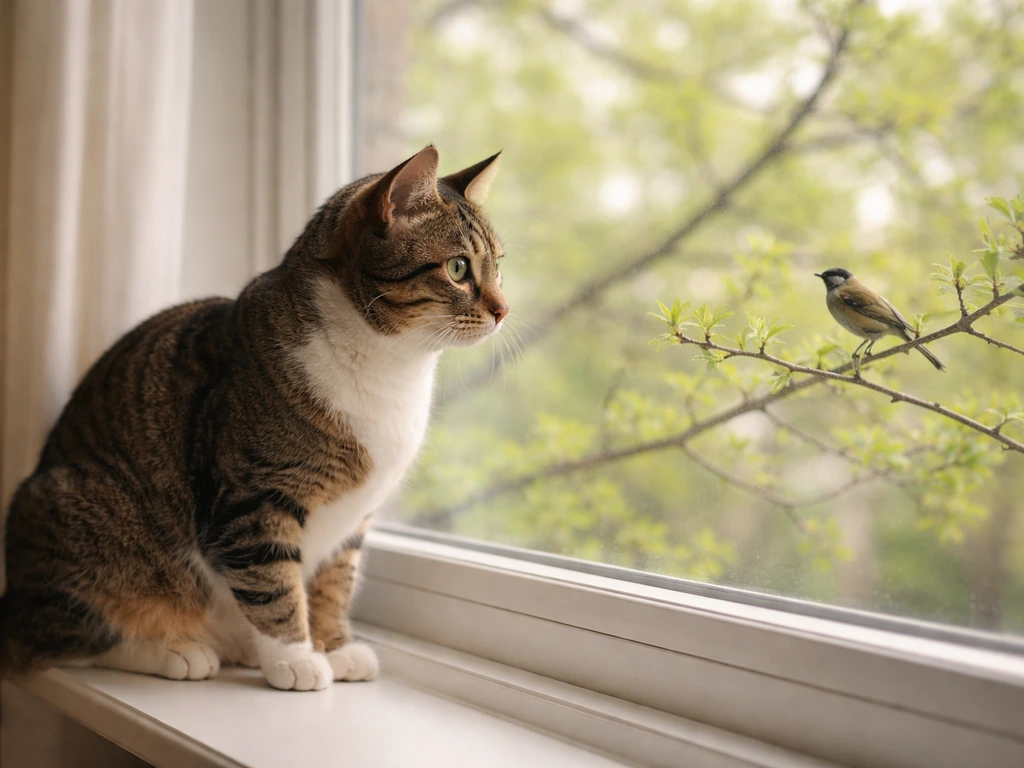
Why cats react to bird noises
Cats are obligate predators, and their sensory systems are finely tuned to pick up cues that signal prey. Bird sounds, particularly high-pitched chirps and rapid calls, fall squarely in the acoustic range that triggers a cat's orienting response: ears rotate, pupils dilate, body freezes, and full attention locks onto the source. Research using auditory playback methods shows that this "attraction" is best measured as orienting and fixation behavior, not as a subjective emotional state like enjoyment.
This is a key point worth repeating: your cat isn't "enjoying" the bird sounds. The cat is being stimulated into a predatory state. The sounds activate what behaviorists call the prey sequence, a chain of instinctive behaviors that runs from stalk through chase, catch, kill, and eat. Even a bird call heard through a closed window can kick off that sequence in your cat's nervous system, without the cat ever leaving the couch.
Because this is instinct, not preference, the reaction is essentially involuntary. A calm, well-fed, totally relaxed cat will still perk up and fixate when it hears a blue jay outside. That's not a personality quirk. It's biology.
The chattering thing: what it is and why cats do it
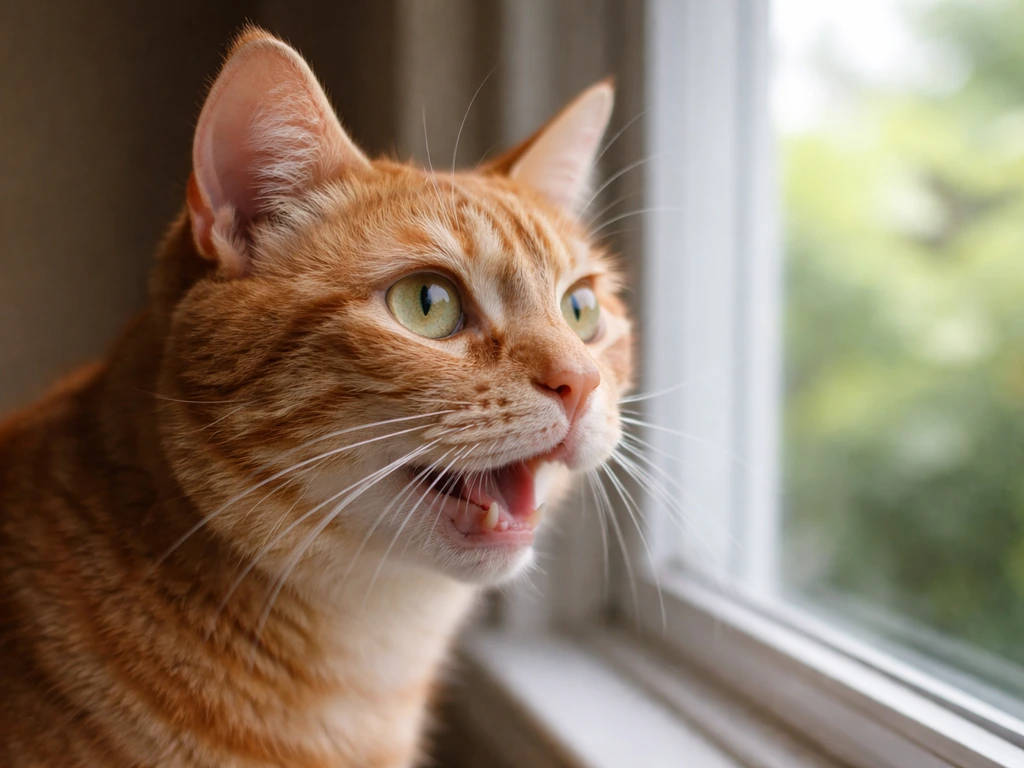
If you've ever watched a cat stare at a bird through a window and make a weird stuttering, chittering sound, you've seen chattering (sometimes called chirping or twittering). It sounds almost like the cat is trying to imitate the bird, and that observation turns out to be behaviorally relevant.
Behaviorists have proposed three main explanations for this sound, and they're not mutually exclusive. First, it may reflect pure excitement or frustration: the cat sees prey it cannot reach, and the chattering is a release valve for that pent-up arousal. Second, some researchers suggest it may be a form of prey mimicry, the cat producing sounds similar to its target to potentially lure it closer. Kinship describes cat chattering as potentially [prey mimicry](https://www.
kinship. com/cat-behavior/why-do-cats-chatter), where the cat produces sounds similar to its target to lure it closer. Third, and perhaps most compellingly, the rapid jaw movement involved in chattering appears to be a motor preparation behavior, essentially a dry run of the killing bite a cat uses on small prey. As cat behaviorists have put it, the teeth-chattering is the closest the cat can physically get to having prey in its mouth when it can't actually reach it.
What chattering is not: communication with the bird, singing, or a sign the cat "likes" birds as companions. A 2025 study on domestic cat vocalizations confirmed that cat sounds are highly context-dependent and should be interpreted as behavioral responses rather than social language. The chirping your cat does at a robin outside is predatory arousal, full stop.
This behavior is completely normal and not a cause for alarm on its own. It just tells you your cat's predatory drive is fully online.
What this means for bird safety
Here's where the rubber meets the road. A cat that reacts intensely to bird sounds is a cat with a primed hunting drive, and that matters enormously if that cat has access to the outdoors. The impact cats have on bird populations is well documented and serious. Domestic and feral cats are among the leading human-linked causes of bird mortality globally, and a single outdoor cat with a strong predatory drive can kill dozens of birds per year.
The dynamic works like this: a cat hears birds, its predatory sequence activates, and if it has outdoor access, it will pursue. The sound-triggered arousal you see through the window is the same arousal that drives active hunting outside. A cat that chatters excitedly at birds on a feeder and then gets let out into the yard is a direct threat to those birds.
It's also worth noting that the predatory relationship between cats and birds isn't entirely one-sided. Certain bird species will actively attack cats, particularly during nesting season, and understanding why a bird would attack a cat in the first place helps you see the full picture of what happens when cats and birds share territory. The conflict runs in both directions.
What to do right now about your cat's reaction to bird sounds
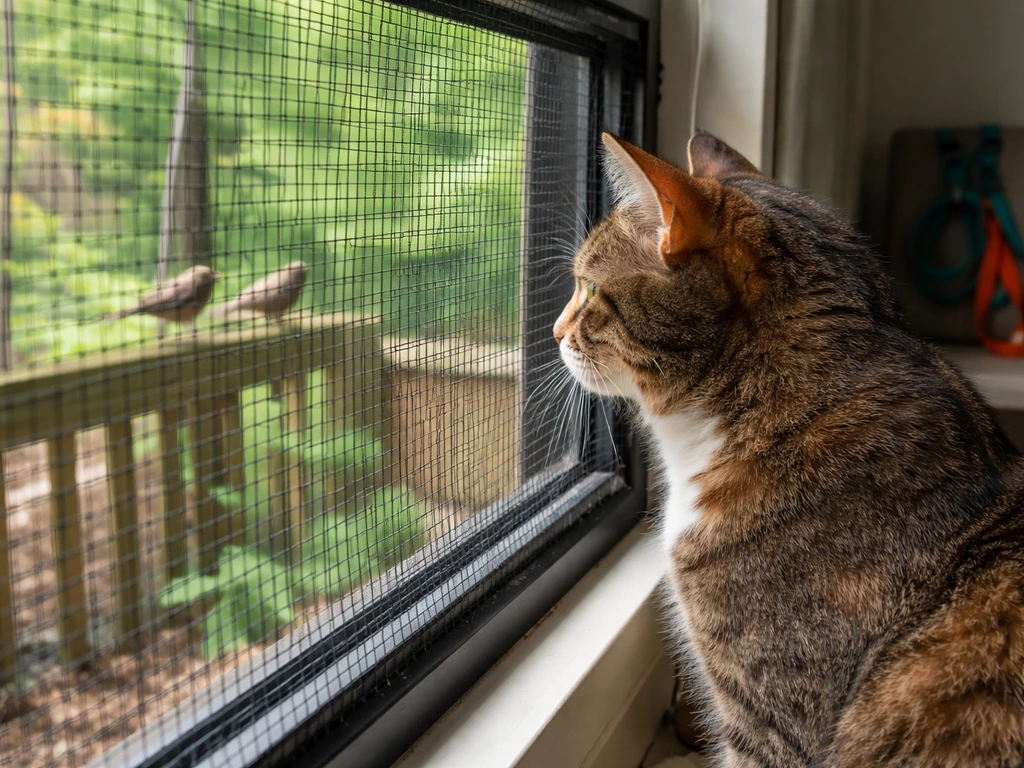
The single most effective step you can take today is to limit your cat's outdoor access, especially unsupervised access. Every major wildlife and bird conservation organization is consistent on this point: keeping cats indoors is the only fully reliable way to prevent them from killing birds. Audubon also emphasizes that keeping cats indoors is the most reliable way to reduce the avian mortality risk posed by outdoor cats, and it discusses catios as a compromise approach. This isn't about shaming cat owners. It's just the most honest answer.
If your cat currently goes outside, consider transitioning to supervised outdoor time only, or look into a catio (an enclosed outdoor enclosure) as a compromise that gives your cat fresh air and stimulation without exposing birds to risk. Even reducing unsupervised time makes a measurable difference.
Inside the house, you can manage the intensity of your cat's bird-sound exposure. Moving bird feeders out of direct window sight lines reduces the constant visual and acoustic triggering. You can also use window films or screens that reduce the cat's view of birds without blocking your own light. These aren't perfect solutions, but they lower the daily level of predatory arousal your cat is experiencing.
If your cat does go outside, a collar with a bell is one of the better-studied mitigation tools available. A 2022 study found that colorful collar covers combined with bells meaningfully reduced the number of birds and other wildlife that domestic cats caught and brought home. It's not foolproof, but it gives birds an acoustic warning that a predator is nearby, which matters a lot when you consider how silently cats typically move.
Practical alternatives: keeping your cat satisfied indoors
The key insight here is that your cat doesn't need to hunt birds. It needs to complete the predatory sequence, and you can provide that through play and environmental design. When a cat gets to stalk, chase, and "catch" something in a controlled indoor setting, the same instinctive need gets met, just without a bird being killed in the process.
Wand toys that move unpredictably are especially effective because they mimic the erratic movement of prey. Play in short, focused sessions, and make sure the session ends with the cat successfully "catching" the toy a few times. That completion of the sequence is what actually satisfies the drive. Stopping play while the cat is still frustrated just leaves the arousal unresolved.
Puzzle feeders and hide-and-seek food placements are another solid option. Scattering small portions of food around the house so the cat has to search for it mimics the foraging and hunting components of the prey sequence in a low-intensity way. It's easy to set up and it keeps cats engaged throughout the day rather than fixating on the window.
It's also worth thinking about the broader dynamics of your outdoor space. Just as birds chase squirrels to defend territory and resources, birds are constantly navigating threats in the environment around your home. Designing your yard with bird safety in mind (feeders placed high and away from cover where cats can hide, dense shrubs moved away from feeding areas) reduces the risk even when you can't control every variable.
Quick comparison: indoor enrichment options
| Option | What it satisfies | Effort level | Best for |
|---|---|---|---|
| Wand toy play sessions | Chase, catch, kill phases of prey sequence | Medium (needs your participation) | High-drive cats with strong bird fixation |
| Puzzle feeders | Foraging and search behavior | Low (set up once, refill) | Cats that fixate on window birds throughout the day |
| Hide-and-seek food placement | Stalking and searching | Low | Any indoor cat needing daily stimulation |
| Catio/supervised outdoor enclosure | Environmental exploration, fresh stimuli | High (setup cost) | Cats that are difficult to transition fully indoors |
| Window film/feeder relocation | Reduces triggering, lowers arousal baseline | Low | All cats with bird-window fixation |
When the reaction might be something to check out
Most cats that chatter at birds or stare intently out windows are exhibiting completely normal predatory behavior. But there are situations where the reaction crosses a line into something worth discussing with a vet or a certified cat behaviorist.
Watch for these signs that something more may be going on:
- The cat can't be redirected at all once it fixates on a bird sound, even with food or play
- The behavior is repetitive and ritualistic, the cat returning to the same spot and running through the same motions again and again regardless of whether birds are actually present
- The cat seems distressed rather than aroused: vocalizing excessively, pacing, or showing signs of anxiety after birds leave
- The cat is pouncing at or tracking things that aren't there, which can indicate neurological issues or compulsive behavior patterns
- Any sudden change in how intensely your cat responds to bird sounds compared to its normal baseline
Compulsive or anxiety-driven behaviors in cats can look a lot like intense predatory arousal on the surface, but they have different causes and need different responses. A veterinarian can rule out pain, neurological issues, or other medical contributors, and a cat behaviorist can help you figure out whether what you're seeing is normal hunting instinct or something that needs structured intervention.
The bottom line on all of this: your cat liking bird sounds is really your cat being triggered into a hunting state by acoustic prey cues. That's normal, it's hardwired, and it's not something you can or should try to eliminate. What you can do is manage the environment so that hunting drive gets expressed through play rather than actual predation, and keep the birds in your yard a lot safer in the process.
FAQ
Do cats like bird sounds through closed doors or windows, even if they never see the bird?
Yes. The auditory cue alone can trigger orienting and fixation, and that can escalate into hunting behavior if the cat later gets access outdoors. Visual contact often increases intensity, but sound can start the predatory sequence even with no direct sightline.
Will a “calm” or well-fed cat still react to bird calls?
Often yes. Predatory orienting and ear-fixation can happen regardless of hunger level, because the response is largely instinct-driven. What changes is how quickly the cat transitions from alert staring to active hunting behaviors.
Does bird-sound exposure make my cat more “aggressive” or train it to hunt better?
Bird sounds can increase arousal and focus, but they do not behave like a reward that reliably trains hunting skill by themselves. The bigger risk comes when those repeated arousal episodes are followed by opportunities to stalk and catch outdoors, which reinforces the behavior through experience.
Are bells on a collar enough to protect birds if my cat is an active bird watcher?
Bells can reduce success, but they are not foolproof, especially for cats that stalk carefully or learn movement patterns. Use bells as one layer, and pair them with indoor time, a catio, and reducing window sightlines for the best protection.
Does covering the cat’s view of birds actually help if the cat can still hear them?
It can help a lot. Cutting visual triggering reduces the likelihood that the cat advances from fixation to chase, even if the cat still hears calls. The article’s window films and feeder placement changes work best when they reduce both sight and constant cue repetition.
My cat chatters at birds but never hunts indoors. Should I stop the behavior or is it safe?
Chattering is normal predatory arousal, and it is not automatically a problem indoors. The practical move is to redirect it into controlled prey-like play that ends with a successful “catch,” so the predatory sequence completes without a real target being killed.
How can I tell whether the reaction to bird sounds is normal predation or anxiety/pain?
Look for patterns beyond the trigger, such as restlessness, pacing, aggression that seems out of proportion, hiding, vocalizing when birds are not present, or inability to settle afterward. A vet can rule out pain or neurological issues, and a certified cat behaviorist can help distinguish instinctive hunting from compulsive stress behavior.
If I bring the cat inside at night, will it reduce bird deaths significantly?
Often, yes. Many cats hunt more effectively when they have unsupervised access. Limiting outdoor time, especially during peak bird activity or when supervision is hardest, directly reduces the number of opportunities for stalking and capture.
Do puzzle feeders or hide-and-seek feeding fully replace the need to hunt birds outdoors?
They can substantially reduce fixation by giving the cat a safe outlet for stalking and foraging instincts, but they are not a 100% replacement for outdoor hunting opportunities if the cat still gets free access outside. For most households, the strongest results come from combining enrichment with reduced or supervised outdoor access.
What play style works best if my cat is strongly triggered by rapid bird calls?
Choose toys that move unpredictably and in short, bursty bursts, then end the session only after the cat successfully captures or grips the toy a few times. Stopping while the cat is still frustrated can leave the arousal unresolved, increasing the chance it will search for the original trigger next.
Next Articles

Bird Causes Plane Crash? Risk, Mechanisms, Myths, Prevention
Whether bird strikes can cause plane crashes, how they happen, real risk data, debunked myths, and prevention steps

Can a Plane Crash Because of a Bird? Facts and Safety
Understand if a bird strike can crash a plane, what it damages, how often it happens, and what airports do to prevent it

Can a Bird Crash a Plane? Risks and What to Do
Can a bird crash a plane? Learn how bird strikes happen, real risk levels, and what to do if one occurs.