
If you've found an albatross on the ground that can't fly or is clearly disoriented, the most important things you can do right now are: keep your distance, minimize noise and handling, get it into a ventilated box lined with a towel, and call a licensed wildlife rehabilitator or your nearest wildlife authority immediately. Do not offer food or water, do not try to launch it into the air, and do not attempt to treat it yourself. Everything else follows from those basics.
Albatross Bird Crash Landing: What to Do Right Now
Maya Chen
30 Apr 2026
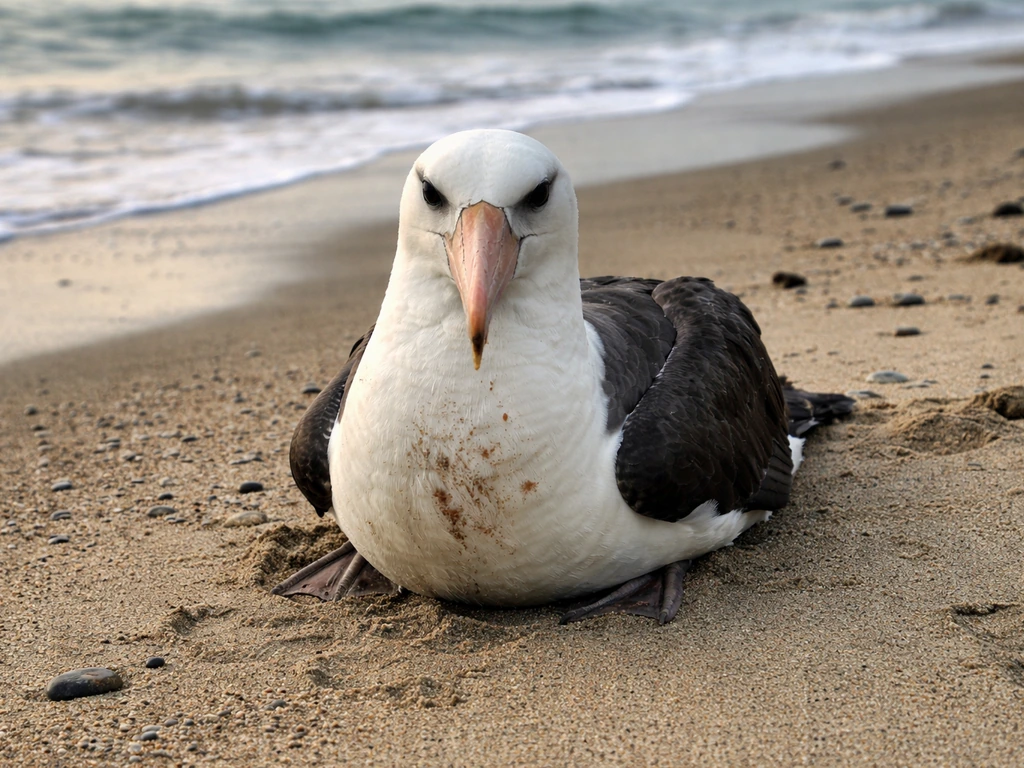
First response: keep the bird safe and stabilize the situation
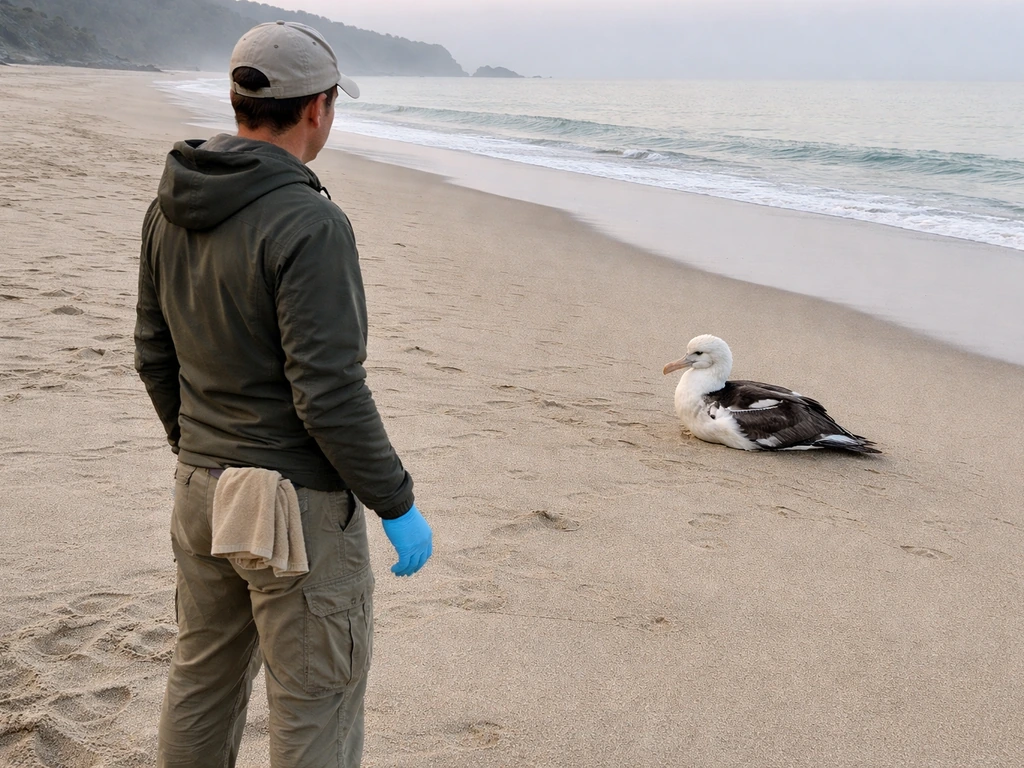
Your first job is to reduce stress, not to fix the bird. Albatrosses are large, powerful seabirds and they are extremely vulnerable to stress-related complications when injured. The New Zealand Department of Conservation explicitly warns that seabirds are prone to stress-induced decline, meaning that unnecessary handling, noise, or stimulation can make an already bad situation much worse.
Step one: back away. Give the bird several feet of space and observe quietly. Alaska Fish & Game advises leaving the area quickly and quietly to minimize disturbance while you figure out your next move. If the bird is in immediate danger (on a road, near a dog, in the surf), you'll need to act, but otherwise slow down and assess before approaching.
Step two: prepare a container before you touch the bird. A sturdy cardboard box with ventilation holes cut in the top (not the sides) works well. Line it with a towel or paper towels. The box should be large enough for the bird to sit upright but not so large that it can thrash around. Make sure the lid closes securely.
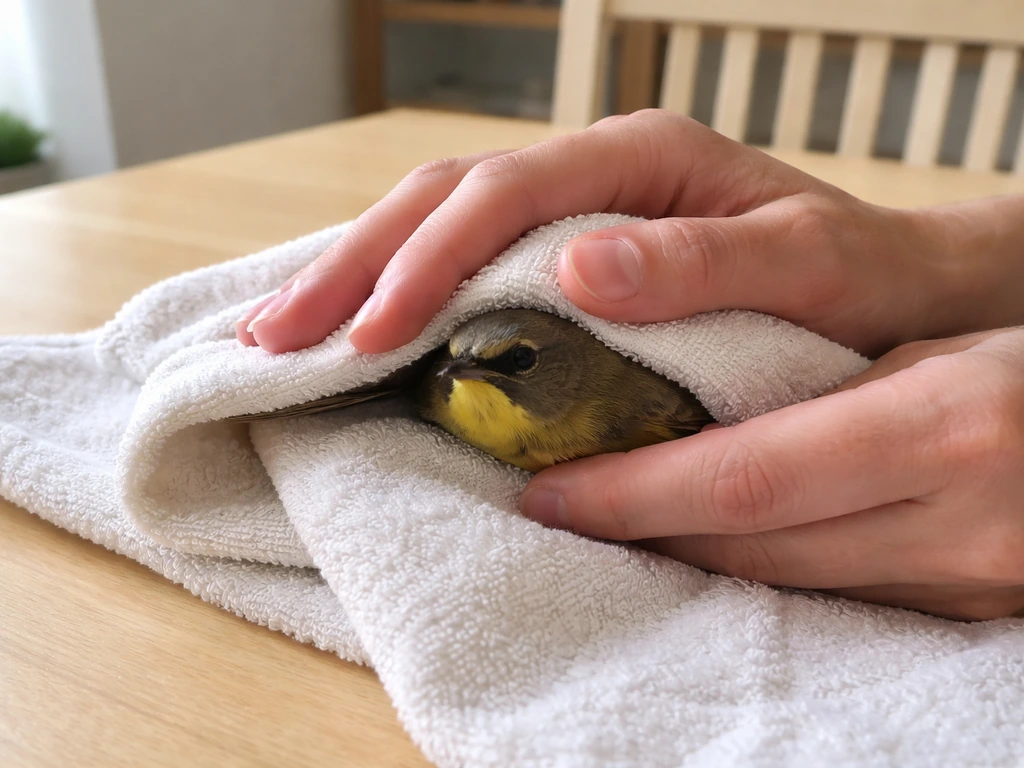
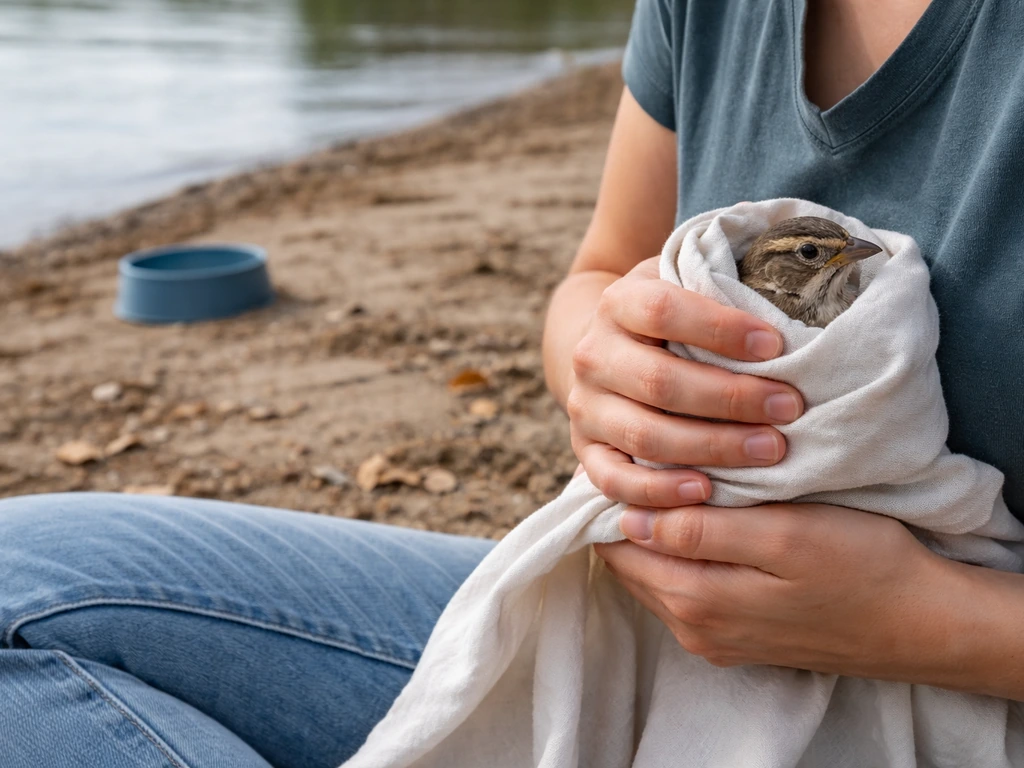
Step three: cover the bird with a light cloth or towel before picking it up. NOAA advises covering a seabird's head and eyes with a cloth to calm it, without obstructing breathing, before restraint. Keep the wings folded in their natural closed position as you place the bird into the box. Then close the box, put it somewhere warm, dark, and quiet (a car trunk or a closet works), and call for help.
Assess injuries and recognize shock and trauma in albatrosses
You don't need to be a vet to recognize that a bird is in serious trouble. Here are the signs that tell you this bird needs professional care urgently, not later.
- Cannot hold its head up or keep its eyes open
- Sitting with its body flat on the ground rather than upright
- Wings drooping unevenly or hanging at an odd angle (possible fracture)
- Visible bleeding, bone exposure, or wounds
- Breathing with its beak open (a sign of overheating or severe respiratory distress)
- Legs appear tangled, broken, or unable to bear weight
- Feathers are matted with oil, fuel, or an unknown substance
- No response to your presence when you approach slowly
Any one of these signs means the bird is in shock or has a significant injury. A bird that can hold its head up, watch you, and attempt to move away under its own power may be exhausted but not critically injured. Even so, exhaustion in a seabird far from water is a medical situation. Don't leave it and hope it recovers on its own.
Watch for open-mouth breathing once the bird is in the box. The New Zealand DOC rehabilitation guide specifically flags this as a sign of overheating during warming. If you see it, move the box somewhere slightly cooler and make sure the ventilation holes are clear.
What to do and what not to do: handling, feeding, water, and restraint
This is where most well-meaning rescuers make mistakes. The instinct to feed a distressed bird or give it water is almost universal, and it's almost always wrong. Unless otherwise instructed by a permitted wildlife rehabilitator or veterinarian, do not feed or give water to the animal. Here's a clear breakdown.
Do these things
- Use a towel or cloth to cover the bird's head and body before picking it up
- Keep the wings folded naturally against the body during handling
- Place the bird in a ventilated, towel-lined cardboard box with holes in the top
- Keep the box in a warm, dark, quiet location away from people and pets
- Use a heating pad set to low, placed under half the box only, so the bird can move away from the heat if needed
- Wear gloves when handling (nitrile or leather work gloves)
- Call a wildlife rehabilitator or wildlife authority before doing anything else you're unsure about
- Document what you observed: location, time, behavior, and any possible cause
Do not do these things
- Do not offer food or water under any circumstances unless a licensed rehabilitator tells you to
- Do not attempt to launch the bird into the air or push it toward the water to 'help it fly'
- Do not use human medications, antiseptics, or first aid products on the bird
- Do not put the bird in a container with no ventilation
- Do not let children or pets near the box
- Do not handle the bird more than necessary; each interaction adds stress
- Do not try to remove hooks, fishing line, or netting yourself if entanglement is present
- Do not wash an oiled bird yourself; premature washing can be fatal (more on this below)
The no-food-or-water rule applies across all wildlife rehab guidance from Sea Biscuit Wildlife Shelter, the Wildlife Center of Virginia, Pelican Harbor Seabird Station, and Bonorong Wildlife Rescue. It seems counterintuitive, but an injured bird with an impaired swallowing reflex can aspirate water into its lungs. A bird in shock also cannot properly digest food. Let the professionals make that call.
How to get the right help fast
Speed matters here. The faster you get this bird to someone trained to treat it, the better the outcome. Here's how to move quickly.
- Search 'wildlife rehabilitator near me' or visit your state or national wildlife agency's website for a certified rehabilitator directory. In the U.S., your state fish and wildlife agency usually maintains a list.
- In the U.S., you can call the Virginia Department of Wildlife Resources helpline (1-855-571-9003, Mon–Fri 8am–4:30pm) as a starting point if you are unsure who to contact in your area.
- For coastal or offshore situations, contact the U.S. Coast Guard, local harbor patrol, or NOAA's regional office. Albatrosses are protected under the Migratory Bird Treaty Act, so federal contacts are appropriate.
- Organizations like International Bird Rescue operate regional oiled-wildlife response teams with veterinarians and biologists on staff. If the bird appears oiled or contaminated, contact them directly.
- If you are outside the U.S., contact your national wildlife authority or the nearest seabird or marine wildlife rescue organization.
- While waiting for help or transport, keep the bird in the dark, quiet box. Do not check on it repeatedly.
Preparing for transport and what to document
Before you leave for the rehab center, write down or photograph the following. Rehabilitators use this information to understand what happened and make treatment decisions faster.
- Exact location where you found the bird (GPS coordinates if possible, or a detailed address)
- Time and date
- What the bird was doing when you found it (sitting, flopping, tangled, unconscious)
- Suspected cause if visible (fishing line, oil, near a structure it may have hit, storm conditions)
- Any visible injuries you noticed without handling the bird
- Whether the bird is banded (look for a metal or colored ring on the leg)
During transport, keep the box secured so it doesn't slide, keep the car quiet and the temperature moderate, and avoid stopping to check on the bird. The less stimulation during transport, the better.
Common causes of crash landing and what to check at the scene
Albatrosses don't land on the ground voluntarily unless something has gone seriously wrong. Some well-known examples include air-crash bird incidents, such as the Jeju air crash, where seabirds may be found grounded and need prompt wildlife help Jeju air crash bird. A T45 crash bird strike is another serious scenario that can injure birds and requires prompt, careful contact with trained wildlife help.
Plane bird strike news can be a useful reminder that birds and aircraft can interact unexpectedly, so fast action matters when an injured bird is involved. Understanding what happened helps the rehab team treat the right problem and helps you assess whether the scene itself is hazardous to you or other wildlife. In rare cases, aircraft bird strikes can also lead to crash landings that require similar rapid response and professional help.
A South Korea plane crash involving a bird strike can produce similar urgent trauma, so getting the right trained help quickly matters South Korea plane crash bird strike.
| Cause | What you might see | What to check without touching |
|---|---|---|
| Storm exhaustion | Bird is alert but cannot fly; no obvious injuries | Look for wet, matted feathers; check weather history for recent severe storms |
| Collision with structure or vessel | Head tilt, disorientation, asymmetric wing droop, bleeding | Check nearby windows, masts, lights, or building glass for impact marks |
| Fishing gear entanglement | Line, netting, or hook visible on body, wings, or legs | Do not remove; note the type of gear and photograph it for the rehab team |
| Oil or fuel contamination | Feathers clumped and matted, oily sheen, chemical smell | Do not touch the oil directly; note color, smell, and source if visible |
| Plastic ingestion (internal) | No external injuries but bird is unable to stand or fly | Look for plastic debris nearby; the bird may have been foraging in polluted water |
| Bycatch or boat interaction | Hook in beak, wing, or foot; possible line attached | Do not attempt removal; photograph and report to NOAA or Coast Guard |
The American Bird Conservancy notes that fishing line and plastic netting can wrap around body parts and restrict movement, which is a more common cause of albatross stranding than many people realize. NOAA also tracks albatross bycatch as a significant threat, particularly for species like the Short-tailed Albatross in U.S. waters. If fishing gear is involved, reporting to NOAA Fisheries is important beyond just getting the bird help.
If you're near a boat or fishing vessel, similar concerns apply as with other seabird collision scenarios covered in articles on aircraft bird strikes and vessel interactions. The cause matters because entanglement, contamination, and blunt trauma each require very different medical responses.
Longer-term outcomes: recovery expectations, rehab basics, and release
Be realistic about what's possible. Some albatrosses that crash-land recover fully and are released. Others have injuries that are not survivable, or that require months of professional care. The outcome depends on the cause, how quickly the bird received proper care, and the severity of internal versus external injuries.
Rehabilitation for a seabird is not quick. International Bird Rescue explains that oiled birds, for example, go through a stabilization phase before any washing occurs, then a progressive conditioning phase using warm and cold water pools to restore waterproofing. That process alone can take days to weeks. A bird that was released too early without restored waterproofing will not survive on open water.
For injuries like wing fractures or entanglement wounds, recovery timelines vary widely. Some birds recover in a few weeks. Others need surgical intervention and months of physical conditioning before they're strong enough to fly and fish again. Albatrosses in particular are highly specialized for open-ocean life and require a high standard of physical fitness before release.
Release decisions are made entirely by the licensed rehabilitator or supervising veterinarian. They will assess flight strength, weight, waterproofing (for aquatic birds), and overall condition before clearing a bird for release. Your role as a citizen rescuer ends at drop-off. That's the right outcome. You got the bird to people who can actually help it.
Myths and disease safety: what's the actual risk to you?
One of the most common reasons people hesitate to help an injured seabird is fear of disease. That hesitation is understandable, but it's based more on anxiety than on accurate risk assessment. Here's what's actually true.
The CDC advises avoiding direct contact with sick or dead wild birds and avoiding surfaces contaminated with bird saliva, mucus, or feces. OSHA recommends avoiding unprotected contact with birds and bird secretions and washing hands thoroughly afterward. None of this means you can't safely help an injured albatross. It means you handle it sensibly.
Wear gloves. Nitrile disposable gloves work fine. If the bird is visibly sick rather than just injured (and especially in the current avian influenza environment), Maine CDC guidance recommends adding a medical facemask and eye protection as well. After handling, wash your hands with soap and water for at least 20 seconds. That combination reduces your risk substantially.
If you got saliva, blood, or feces on your skin, wash it immediately with soap and water. If you're concerned about avian influenza exposure, contact your local health department to ask whether monitoring or reporting is appropriate. In most cases involving a brief, gloved handling of an injured bird, the answer will be no, but it's always fine to ask.
On the oil and contamination side: if the bird has visible oil on its feathers, avoid direct skin contact. Wear gloves and wash your hands and any exposed skin after handling. Do not attempt to clean the bird yourself. As mentioned above, premature washing of an oiled seabird can kill it, and you don't have the equipment or expertise to do it safely. Get the bird to International Bird Rescue or an equivalent oiled-wildlife response organization.
The bigger myth to bust here is that helping an injured wild bird is inherently dangerous. It isn't, if you take basic precautions. The risk of doing nothing to a grounded albatross (predation, dehydration, exposure, secondary collision) vastly outweighs the marginal risk of a gloved, brief, careful handling followed by a thorough handwash. Treat it like any situation where you might contact an animal: use common sense, use gloves, clean up afterward. If you need to understand a reported incident involving a Southwest Airlines bird strike today, check local airport and airline updates for verified information.
FAQ
What if I am the only person available and the rehab center is far away, can I keep the albatross overnight?
Yes, you can provide temporary containment, keep it warm and dark but not overheated, and maintain ventilation holes. Do not feed or water. Check that the box stays quiet and secure, and call the wildlife authority as soon as you can to confirm timing and transport instructions.
How warm is “somewhere warm” for an albatross in a box?
Aim for a comfortably warm ambient area rather than a heat source. Avoid placing the box directly on a heater, in direct sun, or next to a defroster vent, because seabirds can overheat during warming. If the bird shows open-mouth breathing, move it slightly cooler and ensure ventilation openings are unobstructed.
Can I give the bird water by pouring it slowly near its beak, or with a drop on the tongue?
No. Even small amounts can be aspirated if swallowing is impaired, which can worsen breathing rapidly. Stick to containment, minimal handling, and professional transfer.
Should I try to move the albatross to “safer ground” if it is near a road or in the surf?
If it is in immediate danger, you may need to relocate it, but keep movements minimal and protect it from further disturbance. Use a light cloth cover for calm, place it into the ventilated box promptly, and prioritize transport over extended scene adjustments.
How do I know whether the bird is sick versus just injured?
Look for active signs like open-mouth breathing during warming, inability to stand, severe disorientation, or repeated collapse. “Visibly sick” generally means abnormal behavior plus signs of illness, not just injury-related shock. If it appears to have disease concerns, increase PPE (gloves plus face protection) and notify the relevant wildlife or public health contacts as appropriate.
Do I need to report the incident even after I transport the bird?
Often yes. Provide the rehabilitator details (time found, exact location, whether fishing gear, boats, power lines, or aircraft vicinity were involved). If fishing line or netting is suspected, reporting to NOAA Fisheries can help address ongoing bycatch risks beyond the single bird.
What if there is fishing gear around the albatross, can I cut the line free?
Do not attempt to cut or remove entanglement while the bird is loose on the ground. Entanglement can involve more injury than you can see, and pulling can worsen trauma. Contain the bird first, then let trained responders manage the gear removal safely.
Can I transport the albatross in a carrier without towels or with the lid left slightly open for airflow?
You should line the box and ensure it is stable and secure. A slightly open lid can increase stimulation and risk thrashing. Ventilation should come from prepared openings (top ventilation holes) with the bird protected by the towel cover.
What should I photograph or write down for the rehabilitator?
Capture the location (near landmark or coordinates), the surrounding hazards (roadway, surf, boats, fishing activity, visible fishing line or net), the condition you observed (position, bleeding, oil sheen), and the exact time you found it and when it was placed in the box. These details often speed up triage decisions.
Is it okay to let other people or pets get close to take photos?
No. Minimize crowding and keep noise and stimulation low. Distance reduces stress and lowers the risk of secondary injuries from dogs, loud sounds, or people inadvertently bumping the bird.
If the bird looks alert and can move, do I still need to call a rehabilitator right away?
Yes. Albatrosses can appear responsive yet still be in serious condition, especially if they are grounded due to trauma, exhaustion, or internal injury. Professional assessment is needed, and “not critical” externally can still be medically urgent.
Should I bring the bird to a vet directly instead of a wildlife rehabilitator?
In many cases you should still prioritize licensed wildlife rehabilitation or your nearest wildlife authority first, because they know seabird stabilization needs and release criteria. If a wildlife authority instructs you to go to a specific facility, follow that direction, and keep the bird contained and undisturbed during transport.
What if I find an albatross dead instead of alive?
Do not handle it bare-handed. Avoid direct contact with biological fluids and contaminated surfaces. Report it to the appropriate wildlife authority or public health guidance in your area so they can advise on next steps and potential disease monitoring.