If you're searching "airplane bird strike today," you're probably trying to figure out one of three things: whether a specific incident just happened near you or on your flight, how serious it actually is, or what you should do right now. Here's the short answer: most bird strikes are minor, get handled quickly by trained crews, and pose almost zero risk to people on the ground. But that doesn't mean you should ignore the situation. This guide walks you through exactly what to check, what to do, and how to separate the real risks from the myths.
Airplane Bird Strike Today: What It Means and What to Do

Maya Chen
13 Apr 2026
What "airplane bird strike today" usually means (and what to check first)
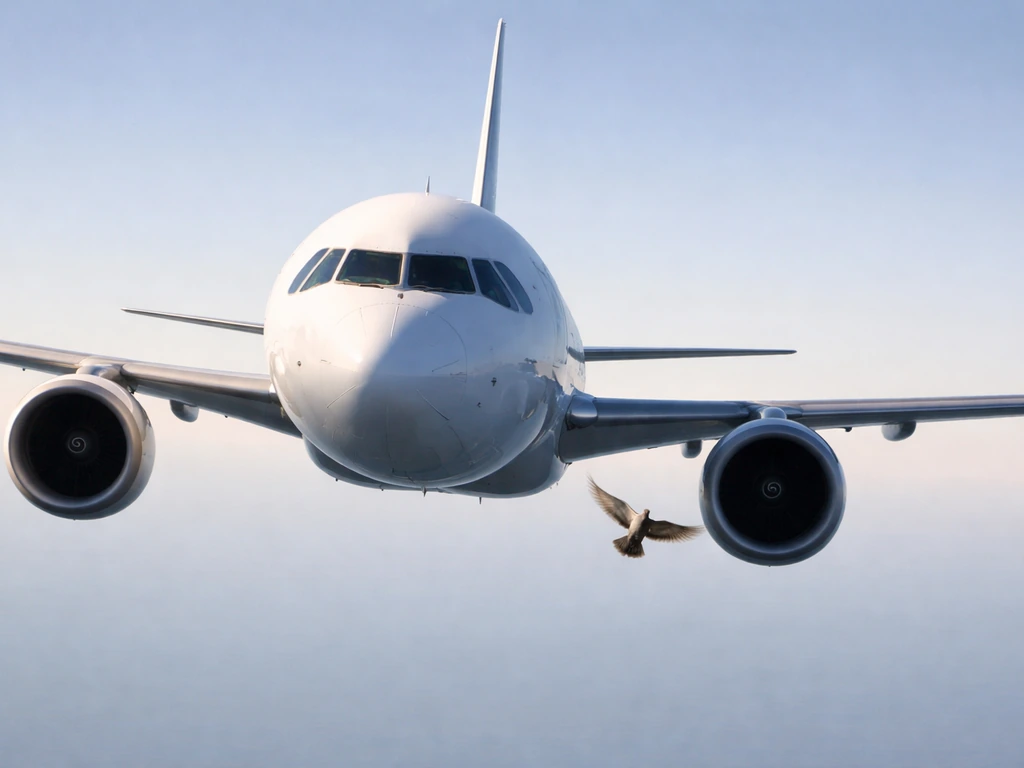
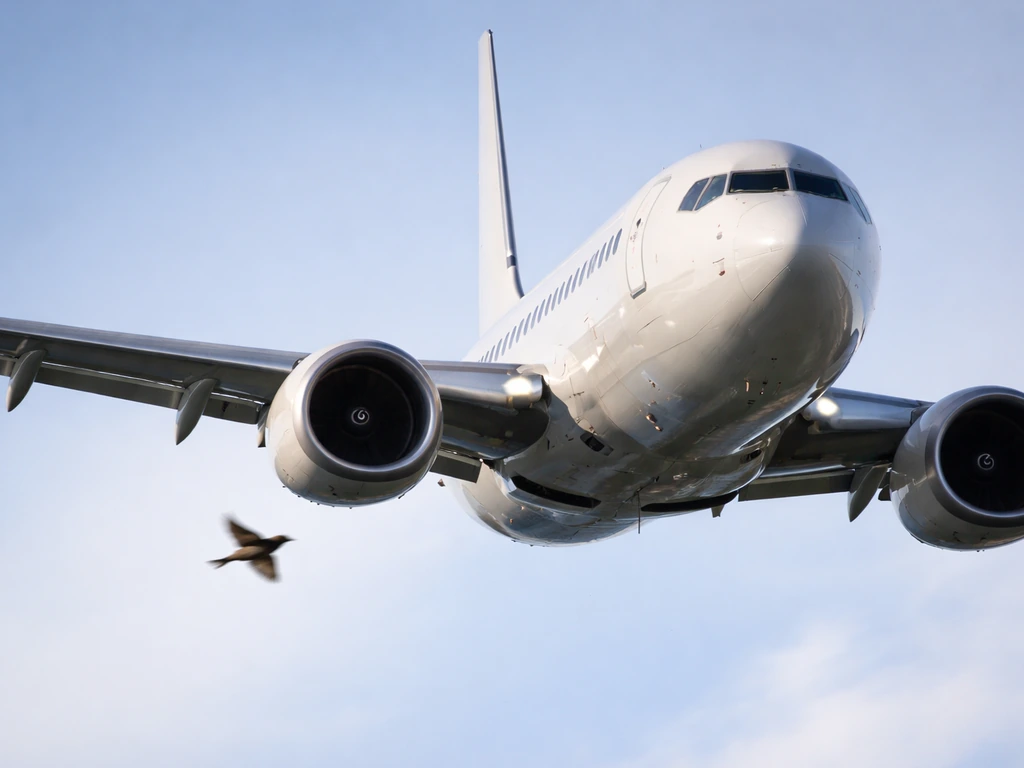
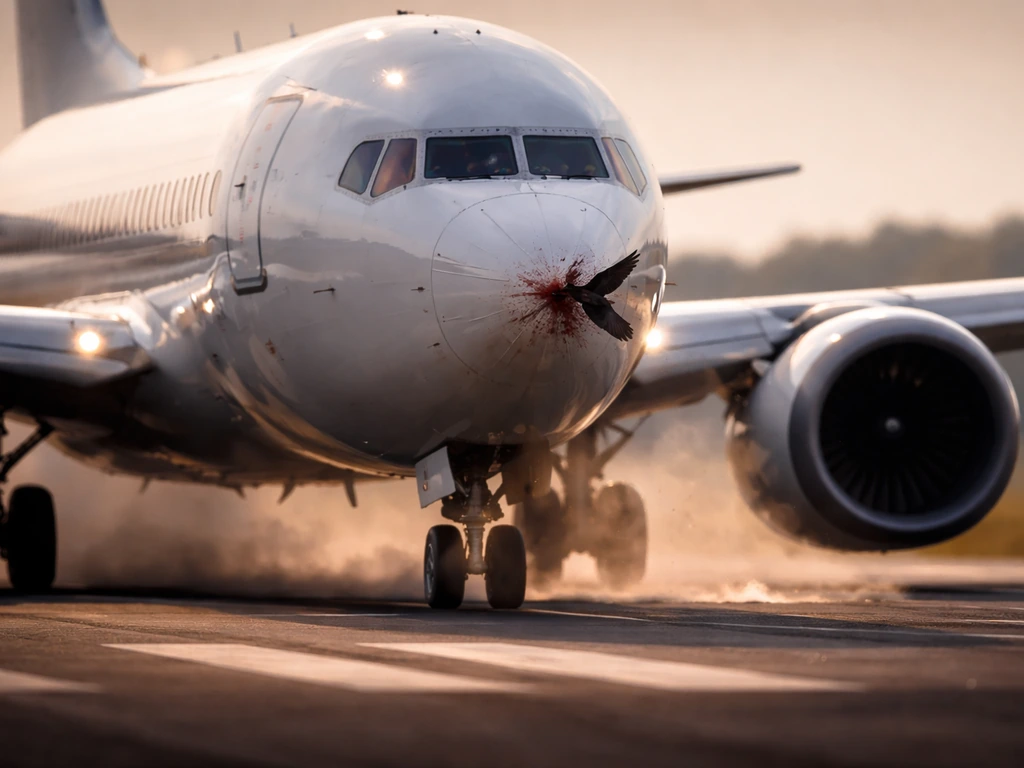
When this phrase spikes in search traffic, it usually means one of two things: a specific incident just made the news, or someone personally witnessed or experienced a strike and wants to understand it. A bird strike is simply a collision between a bird (or a flock) and an aircraft, most commonly during takeoff, approach, or low-altitude flight. They happen thousands of times a year across the U.S. alone, and the overwhelming majority are minor, with no structural damage and no injuries.
To find out if a specific incident happened today, start with these sources in order: the FAA's official safety news channels, airport operations announcements, and reputable aviation news outlets. If you heard something locally or saw something at the airport, check the airport's official social media pages or website first. For breaking aviation safety news, plane bird strike news is worth bookmarking as a quick reference for interpreting what the headlines actually mean.
Avoid drawing conclusions from social media posts or videos alone. Eyewitness clips often circulate before any official assessment has been done, and they almost never tell you the full story about severity or outcome.
If you're on the ground near an aircraft after a strike
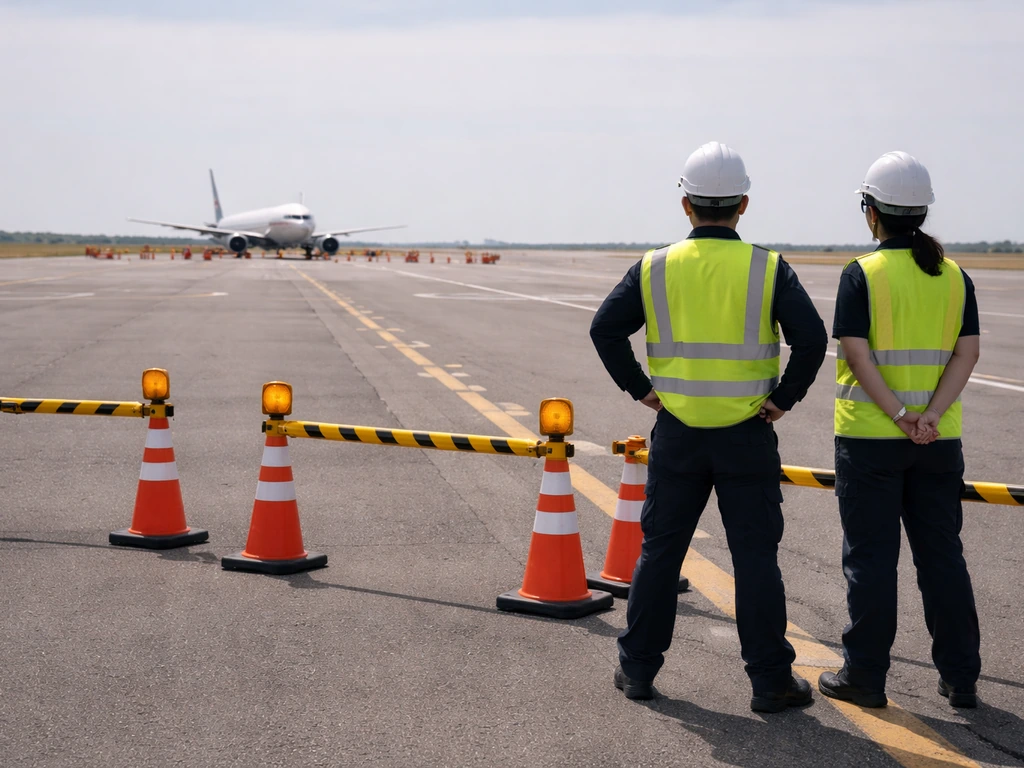
If you're at an airport, near a runway, or close to an aircraft that just had a bird strike, your immediate job is simple: stay out of the way and let trained personnel handle it. Do not approach the aircraft. Airport operations and maintenance crews follow a strict protocol, and civilian presence near an aircraft under assessment creates confusion and safety hazards.
If you're in a public area like a terminal or observation deck and you see an aircraft making an emergency stop or being diverted, move away from the immediate gate or ramp area calmly. Listen for instructions from airport staff. There is no airborne hazard to bystanders from a bird strike, no toxic cloud, no explosion risk from the bird itself. The main hazard on the ground is personnel and equipment moving quickly around the aircraft.
If bird remains or debris are visible on the ground near the aircraft, do not touch them. Airport wildlife staff will collect feather and tissue samples for identification, often using the FAA's Feather Identification Program to determine the species involved. This data feeds directly into the FAA Wildlife Strike Database and helps airports improve their hazard management.
If a bird strike just happened on your flight
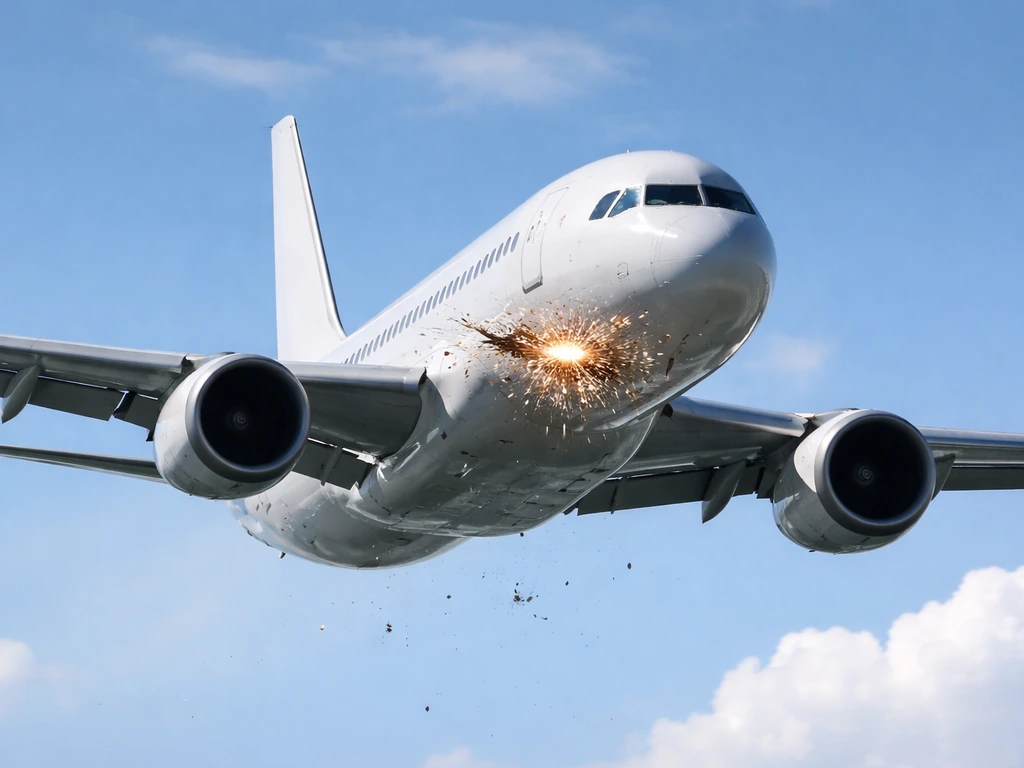
If you're a passenger and a bird strike just occurred, the first thing to understand is that the flight crew is trained specifically for this. You'll likely hear a loud thump or see a flash near an engine or windshield, and sometimes a brief fire or smoke trail from an engine. That's alarming to witness but it's a known event with a practiced response.
Your job as a passenger is to follow crew instructions immediately and without delay. That means: keep your seatbelt fastened, stay seated, do not use your phone to film unless you're fully secure, and listen for the brace command if one is given. If the plane diverts or makes an emergency landing, follow the evacuation guidance you were given at the start of the flight.
For crew members, standard procedure involves assessing engine performance immediately, declaring an emergency if needed, and communicating with air traffic control. The decision to divert, continue, or return depends on which engine is affected (or if both are), altitude, proximity to an airport, and the specific aircraft type. Serious multi-engine strikes are rare but they do happen, as seen in high-profile cases like the Jeju Air incident, and the Jeju Air crash bird situation is a useful reference for understanding how catastrophic versus routine strikes differ.
After landing, passengers may be asked to remain on the aircraft or evacuate while a ground inspection takes place. Cooperate fully. Don't assume everything is fine just because the landing was smooth.
How bird strikes are assessed after the fact

Once the aircraft is safely on the ground, a formal assessment begins. Maintenance crews inspect the engines, airframe, cockpit windows, and any other surfaces that may have sustained damage. Engine ingestion strikes are taken most seriously because they can cause blade damage, compressor stalls, or complete engine failure depending on the bird size and the number of birds involved.
Passenger and crew injuries from bird strikes are uncommon but not impossible. Most injuries result from the startle response, turbulence, or emergency maneuvers, not from the bird itself. If you were on the flight and you feel any physical symptoms after landing (dizziness, chest tightness, neck or back pain from a sudden movement), get evaluated by the medical staff that should be on site for any declared emergency landing.
Reporting is mandatory for commercial aviation and standardized through the FAA. The official document used is blank" rel="noopener noreferrer">FAA Form 5200-7, the "Bird and Other Wildlife Strike Report," which captures data on species, number of birds, aircraft type, phase of flight, damage level, and more. The form even supports photo attachments so that physical evidence from the strike site can be uploaded. General aviation pilots and airport staff can also file these reports, and the data rolls into the FAA Wildlife Strike Database, which is one of the most comprehensive records of its kind in the world. The FAA says it has received more than 300,000 strike submissions through its National Wildlife Strike Database, including 22,372 in 2024 blank" rel="noopener noreferrer">data rolls into the FAA Wildlife Strike Database.
The FAA's Advisory Circular AC 150/5200-32C outlines the importance of consistent reporting and provides guidance on how airports and operators should use that data for wildlife hazard management. If you're trying to verify that a specific incident was reported, the FAA database is publicly searchable, though it can take some time for new records to appear.
How likely is a bird strike? Risk factors you should know
Bird strikes are more common than most passengers realize. The FAA database records over 17,000 strikes annually in the U.S. alone, and that figure is considered an undercount because not all incidents get reported, especially in general aviation. However, the rate of strikes that cause significant damage or injuries is a small fraction of that total.
Several factors raise or lower the risk on any given day:
- Time of year: Spring and fall migration seasons dramatically increase bird activity at low altitudes, which overlaps with aircraft approach and departure paths. Strikes peak in August through November.
- Time of day: Dawn and dusk are high-risk periods because many bird species are most active then and because reduced light makes visual detection harder for pilots.
- Airport location: Airports near bodies of water, agricultural fields, or landfills attract large numbers of birds like gulls, starlings, and Canada geese, all of which have caused serious strike events.
- Aircraft type and size: Larger aircraft with big turbofan engines face higher ingestion risk. Smaller aircraft are more vulnerable to windshield and airframe damage per strike.
- Altitude: About 90% of strikes occur below 3,500 feet, with the highest concentration below 500 feet during takeoff and landing.
- Bird species and flock size: Large birds like Canada geese or turkey vultures and dense flocks of smaller birds like starlings represent the highest hazard categories.
Military aircraft face their own set of unique risk profiles at low altitudes and high speeds. The T-45 crash bird strike cases illustrate how training aircraft operating at low altitude can be especially vulnerable to strike events that would be far less dangerous to a large commercial airliner at cruise altitude.
How airports and airlines work to prevent bird strikes
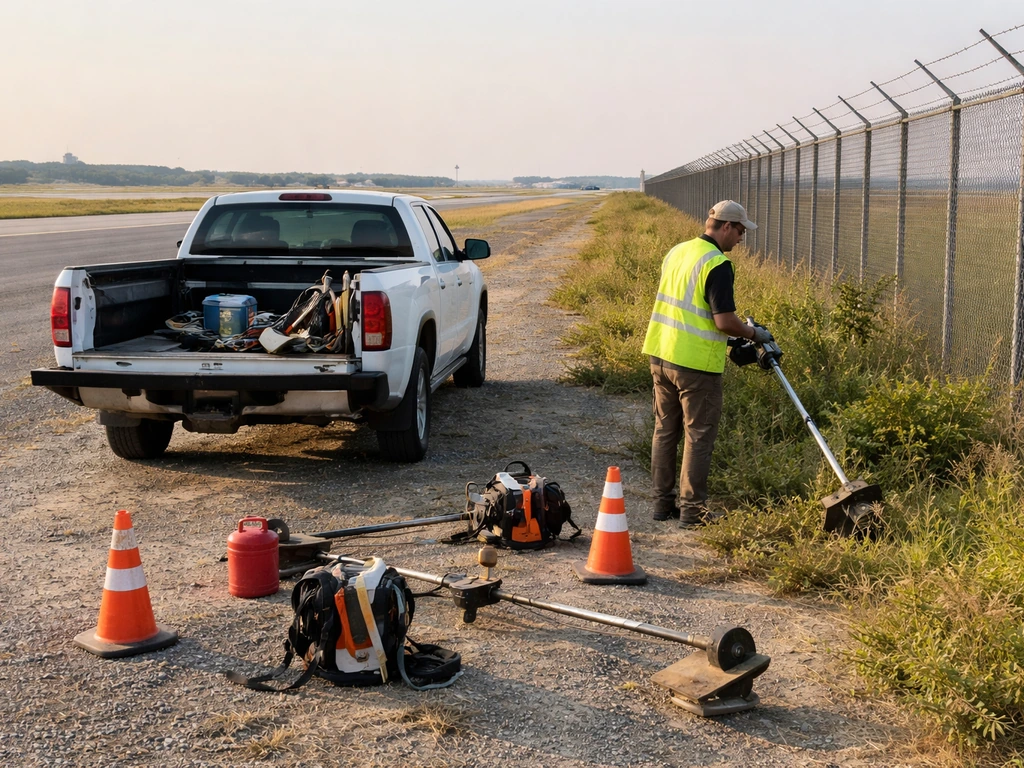
Airports with significant wildlife activity are required by the FAA to develop formal Wildlife Hazard Management Plans. These plans are based on site-specific assessments of local bird and animal populations and include a range of active deterrence methods.
Common prevention strategies include: habitat modification (removing standing water, mowing grass to reduce cover), pyrotechnics and distress calls to disperse flocks, trained falconers who fly raptors near runways, radar-based bird detection systems, and coordinated cull programs for particularly hazardous species in extreme cases. Some airports use Border Collies specifically trained to patrol runways and discourage bird landings without causing permanent harm.
Airlines themselves contribute through crew training on bird hazard recognition, reporting culture that keeps the FAA database accurate, and maintenance protocols that ensure engines are inspected after suspected strikes even if no damage is immediately visible.
As an individual, if you're a pilot or airport worker, the most useful thing you can do is file a report every time you observe a strike, even minor ones. Consistent reporting builds the data picture that makes airports safer. If you're a passenger and you observed or experienced a strike, note what you can (date, flight number, approximate phase of flight) and encourage the crew to document it if they haven't indicated they're doing so.
It's also worth knowing that bird strike prevention isn't limited to large international hubs. Regional carriers deal with the same hazards, as Southwest Airlines bird strike today searches routinely show, because short-haul routes involve more takeoff and landing cycles per aircraft per day, which multiplies exposure.
Myths vs. facts: disease, contamination, and "toxic" birds
One of the most common fear responses after a bird strike is worry about disease or toxic contamination. It's worth addressing this directly and honestly.
| Concern | The Reality |
|---|---|
| Bird remains in an engine spread disease through the cabin air | False. Engine temperatures during and after operation are high enough to destroy biological material almost instantly. Cabin air recirculation does not pass through engine components. |
| Bird blood or feathers on the aircraft exterior are a hazard to passengers | False. Passengers have no contact with the aircraft exterior. Ramp workers who handle contaminated surfaces should wear gloves as standard practice, not because of elevated disease risk but as a general hygiene precaution. |
| Birds involved in strikes may carry avian influenza or West Nile virus, putting passengers at risk | Extremely unlikely in any practical sense. Transmission of avian influenza to humans requires prolonged, direct contact with infected material. A mid-air collision changes nothing about that risk profile for people inside the aircraft. |
| Eating food served on a flight after a bird strike could expose you to contamination | No. Food preparation and serving areas inside the aircraft have no connection to external bird strikes. |
| Some birds are "toxic" and make the crash more dangerous | No bird species commonly found in North America or Europe produces toxins that would affect aircraft, crew, or passengers in a strike scenario. This is a genuine myth with no basis in ornithology or aviation safety data. |
The real health concern after a bird strike is mechanical, not biological. The danger is whether the aircraft can fly safely, not whether a bird carried something harmful. That distinction matters because it keeps your focus on the right question.
There's a related fear that birds crashing into hard structures (whether aircraft, windows, or other objects) somehow releases hazardous material. Anyone curious about the physics of bird-structure collisions can find useful context in how even large seabirds handle difficult landings, like the way an albatross bird crash landing illustrates the limits of bird anatomy under stress, which has nothing to do with toxicity.
Finding reliable information about a bird strike happening today
If you want to know about a specific incident right now, here's a practical checklist of where to look and how to evaluate what you find.
- Check the FAA's official website and its Notices to Air Missions (NOTAMs) for airport-specific safety alerts. The FAA Wildlife Hazard Mitigation page provides background and links to the publicly accessible Wildlife Strike Database for historical context.
- Check the airport's official website or social media accounts. Airports with active incidents will typically post operational updates within minutes.
- Look for reporting from established aviation news outlets rather than general news aggregators. Aviation-specific journalists understand what a "precautionary landing" actually means versus an emergency landing, and won't conflate the two.
- If you have a flight today and are concerned, call the airline directly rather than relying on social media. Airline customer service lines have access to real-time operational data about specific flights.
- Be cautious about viral video. A clip of smoke from an engine after a bird strike looks dramatic but doesn't tell you anything about the outcome, severity, or what came next.
- For incidents involving specific carriers or high-profile events, check whether official investigations have been opened by the NTSB (National Transportation Safety Board), which handles serious accidents and incidents in the U.S.
Context matters enormously when reading bird strike news. A single-engine ingestion on a twin-engine jet at 3,000 feet during approach is a very different event from a windshield impact at cruise altitude. The South Korea plane crash bird strike investigation is a good example of how the same initial headline ("bird strike") can describe everything from a routine precautionary diversion to a major accident, depending on the specifics.
For international incidents, the relevant investigating body changes: the AAIB covers the UK, the BEA covers France, and most countries have their own equivalent. When searching for current information, adding the name of the regulatory body to your search along with the flight number or airport code will get you to official sources faster than general searches.
The bottom line: bird strikes are a well-documented, well-managed aviation hazard. The systems in place, from FAA reporting and database management to airport wildlife programs and crew training, exist precisely because these events happen regularly. When one happens today, near you or on your flight, the right response is to follow official guidance, get information from official sources, and avoid filling information gaps with fear. The data is on your side.
For anyone wanting to go deeper on a specific incident type, like how strikes have played out on Air India plane crash bird strike flights, looking at official investigation reports is the most reliable way to understand what actually happened versus what the initial headlines suggested.
FAQ
How can I tell from headlines whether “bird strike” meant precautionary action or something seriously damaged?
Look for phrases tied to engine performance and inspection outcomes. If the report mentions an engine shutdown, “uncontained” damage, structural repairs, or a full inspection with deferred return-to-service, that usually indicates more than a routine precaution. If it only mentions a loud sound, minor damage, or a brief delay with no evacuation, it is more likely a low-severity event.
If I saw birds hit the plane, should I assume the aircraft is unsafe to fly again today?
Not automatically. Aircraft can be cleared after a bird strike once maintenance performs required inspections and, if needed, runs checks on the affected engine(s) and critical surfaces. The key is whether the airline states the aircraft was inspected and released for service, not whether the strike was witnessed.
Is there any toxic smoke or air quality risk to passengers after a bird strike?
Usually no. Bird remains can be messy, but they do not create a typical “toxic cloud” hazard. If there was an actual engine fire or strong smoke in the cabin, you might be asked to evacuate or receive medical checks for smoke exposure, and you should follow that guidance rather than general assumptions.
What should I do if I’m standing at an observation area and security asks me to move back?
Comply immediately and move to the instructed distance. Even when there is no airborne hazard, personnel and vehicles can be repositioned quickly for safety inspections, and the immediate ramp or gate area is controlled for that reason.
Should passengers help by taking photos or collecting feathers or debris?
No. Do not approach the aircraft and do not pick up remains. Photos and videos from a safe location can be helpful for situational awareness, but evidence collection should be handled by airport wildlife and maintenance teams so samples are not contaminated or lost.
If a bird strike happens on approach, why would the crew still divert even if it seems “minor”?
Bird impacts can be deceptive. A strike that looks small may still affect engine blades, compressor sections, or windshield integrity, and some aircraft procedures require an on-ground assessment before continuing. Diversion also depends on where the aircraft is in the flight profile, proximity to maintenance capability, and whether there are additional birds or follow-on indications.
Can bird strikes happen at cruise altitude, or is it mostly takeoff and landing?
They occur most often during takeoff, approach, and low-altitude phases, but they can happen at higher altitudes too. When they do, the likely reasons include migration paths, weather-driven bird movement, or unusually high local bird activity along the route.
What symptoms after landing should passengers treat as a reason to get checked?
If you feel new or worsening issues after the event, especially dizziness, chest tightness, persistent shortness of breath, faintness, or neck and back pain from sudden movement, request medical evaluation. The main injury mechanism is usually the startle response, turbulence, or emergency maneuvers, but medical staff should still assess concerns.
Will my seat location matter for injury risk during a bird-strike-related emergency maneuver or evacuation?
It can. If there is turbulence, hard braking, or a brace command, people seated near the front or in areas with more abrupt motion may feel it more strongly. During evacuation, exit row placement affects how quickly you can move and whether you need assistance, so follow crew instructions for exits and brace posture.
How long does it usually take before a bird strike is searchable in FAA records?
There is often a delay because reports must be reviewed, entered, and sometimes supplemented with photos or follow-up details. If you check too soon after the incident, it may not appear yet, but it can show up later once the record is processed.
If a general aviation pilot experiences a bird strike, who should report it?
Typically, the pilot and/or the airport wildlife or operations staff can file standardized strike reports. The important part is consistent documentation (species if known, aircraft type, phase of flight, damage level, and time/place), because that is what feeds hazard management decisions.
If multiple engines are involved, does that always mean the event was catastrophic?
No. Multiple-engine ingestion is rare, but the outcome can vary widely depending on bird size, number of birds, time since impact, altitude, and available diversion options. The presence of a serious emergency does not automatically map to a specific damage severity without maintenance findings.
Can bird strike risk be worse on certain days or weather conditions?
Yes. Bird movement often increases around sunrise and sunset, during seasonal migration, and with weather changes that concentrate birds. Also, airports with nearby water sources or recently altered landscaping can see spikes in local bird activity even when the region otherwise looks the same.
What’s the safest way to “verify” a specific airplane bird strike today without relying on rumors?
Match the incident you heard to concrete identifiers like flight number, airport code, and time window. Then confirm through official safety updates, airport operations statements, and the relevant country’s investigator body if it is significant. If you cannot find those anchors, treat social posts as unverified context rather than proof of what happened.