
No, a bird cannot break the sound barrier. Not even close. The fastest bird ever recorded in a dive tops out around 242 mph, and breaking the sound barrier requires hitting roughly 767 mph at sea level. That gap is not a technicality, it is physically insurmountable for any living bird. Here is what is actually going on, why people get confused, and what the physics really says.
Can a Bird Break the Sound Barrier? The Physics Answer

Maya Chen
23 Mar 2026
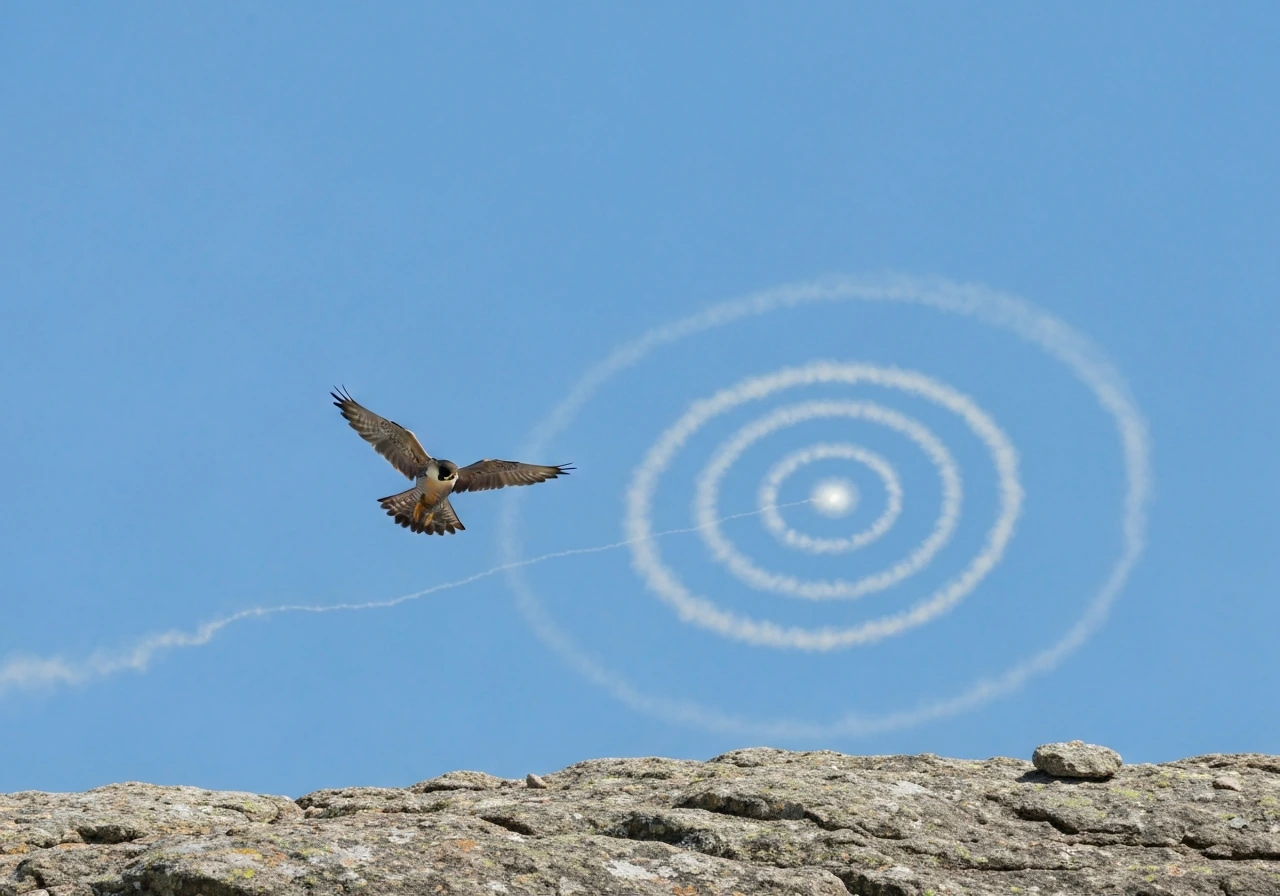
What 'breaking the sound barrier' really means for birds
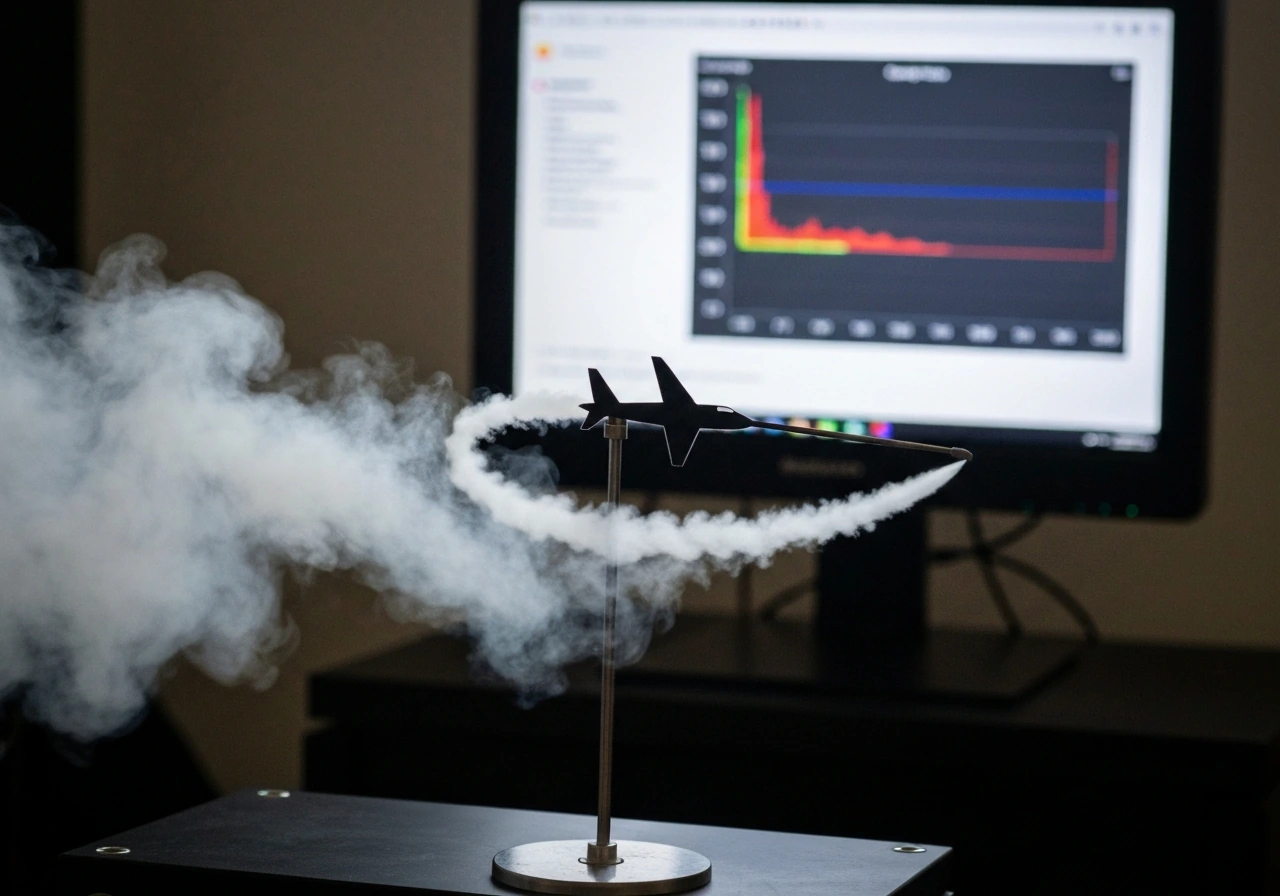
The sound barrier is not a wall or a threshold you can nudge past with a little extra effort. It is a precise physical condition. When an object moves through air, it pushes pressure waves ahead of it. At subsonic speeds those waves have time to propagate outward and the air can 'get out of the way.' As the object accelerates toward the speed of sound, those pressure waves start piling up. Once the object exceeds the speed of sound, the pressure disturbances can no longer escape forward and they merge into a shock wave. That shock wave, trailing behind the object, is what produces a sonic boom.
The speed of sound is not a fixed number. In dry air at 20°C it is about 343 meters per second, which works out to roughly 767 mph. At higher altitudes where the air is colder, the speed of sound drops a little, around 670 mph at 30,000 feet. To produce a sonic boom audible on the ground, you need to be traveling at least around Mach 1.12, which is approximately 750 mph at that altitude. The Mach number is simply the ratio of your speed to the local speed of sound, so Mach 1 means you are exactly matching it, and anything above Mach 1 is supersonic.
At transonic speeds (roughly Mach 0.8 to just below Mach 1), air compression effects start getting complicated. Pockets of supersonic flow can form over a wing even before the whole aircraft hits Mach 1. Once you cross into supersonic flow, shock waves form unavoidably, and no amount of aerodynamic shaping eliminates them entirely. This is all well understood from decades of aviation research. None of it is remotely accessible to a biological creature made of bone, muscle, and feathers.
Could any bird realistically exceed the speed of sound
No. The numbers are not even in the same ballpark. The fastest reliably recorded bird speed is about blank" rel="noopener noreferrer">242 mph, clocked for a peregrine falcon during a vertical stoop (dive). IEEE Spectrum also frames that “Frightful” peregrine falcon dive at 242 mph as the fastest recorded speed of any creature, with measurement and engineering context blank" rel="noopener noreferrer">242 mph, clocked for a peregrine falcon during a vertical stoop (dive).. That is an extraordinary feat of biology. But 242 mph is still only about 31% of what would be needed to reach the speed of sound at sea level. You would need to more than triple the peregrine's record speed to even reach Mach 1.
MIT has made this comparison explicitly: the peregrine's top speed of around 200 mph falls so far short of the roughly 770 mph needed for a sonic boom that the question is not even a close call. The physics are clear. A bird's muscle-powered flight system simply cannot generate or sustain anywhere near the energy required. No bird has the thrust-to-weight ratio, the structural tolerance for compressibility loads, or the aerodynamic design needed for supersonic travel.
Bird bones are lightweight and hollow, which is great for flight but not for absorbing the structural forces that come with transonic and supersonic airflow. A bird body approaching Mach 1 would face compressibility effects, shock-induced pressure changes, and aerodynamic loads that its skeleton and feathers are simply not built to survive. The biology fails before the physics ever becomes relevant.
Flight speed vs dive/stoop: the limits in practice
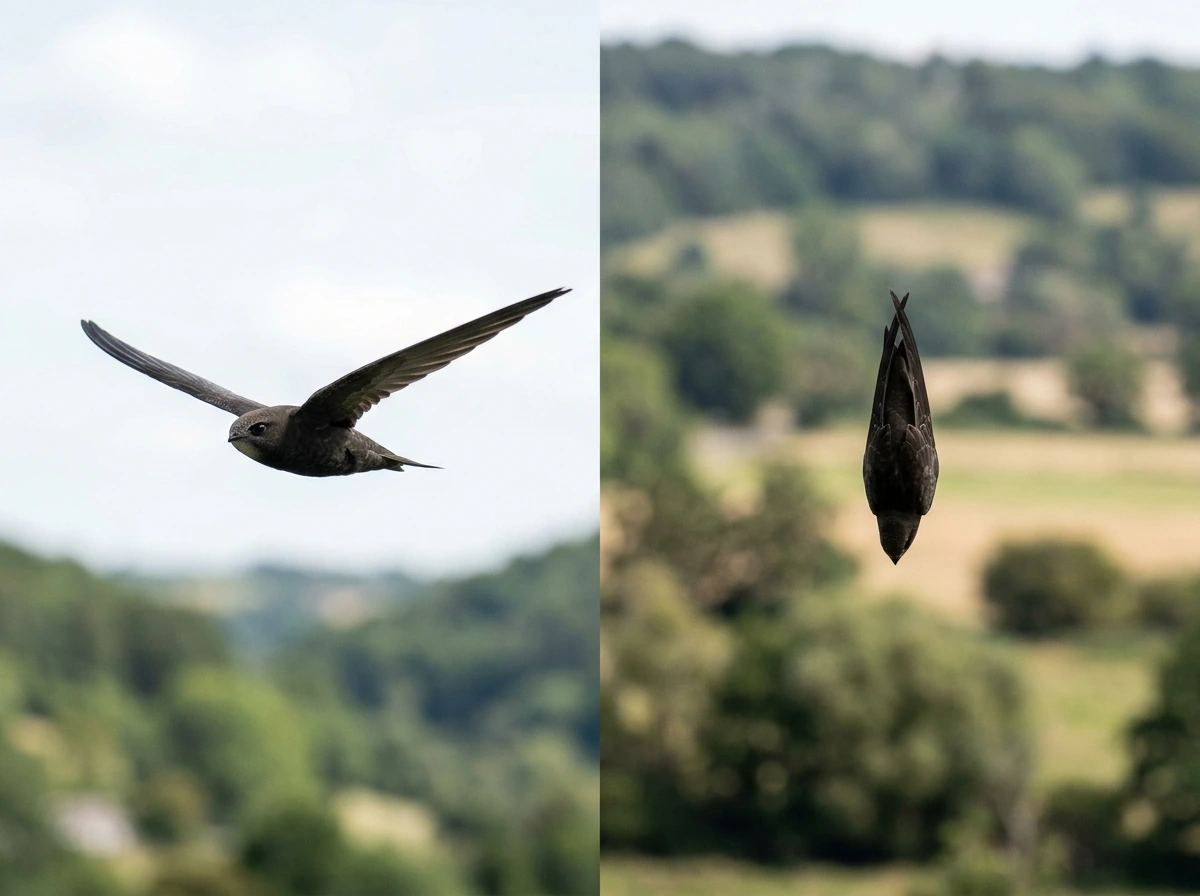
It helps to separate two different kinds of bird speed: level powered flight and gravity-assisted dives. Most birds cruise at well under 60 mph in level flight. Even swift species like common swifts and golden eagles top out in the low hundreds under their own power. The extreme speeds like 242 mph for a peregrine only happen during a stoop, where the bird folds its wings and effectively uses gravity to accelerate while falling.
Research published in Nature's Communications Biology journal shows that peregrine falcons achieve stoop speeds in the range of roughly 39 to 51 meters per second (about 87 to 114 mph) in controlled measurements, with the 242 mph figure representing a peak recorded extreme. During a stoop, the bird is also constantly managing its morphology, adjusting feather position and body shape to avoid stalling and to control its trajectory. This is not a passive freefall. It is an active, precisely controlled maneuver. And it still falls roughly 525 mph short of the sound barrier.
| Speed Type | Example | Approximate Speed | % of Speed of Sound (sea level) |
|---|---|---|---|
| Level powered flight (fast bird) | Common swift | ~70 mph | ~9% |
| Level powered flight (large raptor) | Golden eagle | ~80–100 mph | ~10–13% |
| Stoop/dive (typical peregrine) | Peregrine falcon | ~87–114 mph | ~11–15% |
| Stoop/dive (peak recorded) | Peregrine falcon 'Frightful' | ~242 mph | ~32% |
| Speed of sound (sea level, 20°C) | Mach 1 | ~767 mph | 100% |
| Sonic boom threshold (30,000 ft) | Mach 1.12 | ~750 mph | ~98% |
The table makes the gap obvious. Even the most extreme recorded bird speed does not get a third of the way to Mach 1. There is no scenario, no altitude trick, no larger or more powerful bird species, that bridges that gap with biological flight.
Myths and common confusion
The main reason people search this question is a mix of viral videos, misread headlines, and a genuine misunderstanding of what a sonic boom actually is. Here are the most common pieces of confusion worth clearing up directly.
Myth: A bird's wing flap or feather snap makes a 'mini sonic boom'
Some birds make sharp cracking or popping sounds with their wings, like the club-winged manakin's wing click or the loud snap of a startled pigeon taking off. These are mechanical sounds, not sonic booms. A sonic boom requires the entire object to exceed the speed of sound through the surrounding medium. A feather snapping at the tip of a wing does not produce a shock wave. This is similar to how a whip crack works: the tip of the whip can exceed Mach 1 and create a small shock, but that is a tiny flexible tip moving at extreme speed, not the whole bird.
Myth: Birds can break the sound barrier in a long enough dive
Gravity is not enough. In a real freefall dive, drag increases with the square of velocity, so as a bird speeds up, air resistance grows rapidly and caps the maximum speed well below supersonic. Terminal velocity in a dive for even a streamlined bird body tops out nowhere near Mach 1. You would need a propulsion system producing sustained thrust, like a jet engine, to overcome compressibility drag near Mach 1.
Myth: If a bird flies fast enough it creates a sonic boom you can hear
A sonic boom is the specific result of shock waves produced by supersonic travel. It is not simply a very loud sound caused by fast movement. Any loud noise a bird makes, whether a wing beat, a collision, or a screech, is not a sonic boom. Sonic booms require Mach 1 or greater, full stop. As peer-reviewed research on aircraft noise confirms, sonic booms are a specific supersonic shock phenomenon, not just a category of loud sound.
Myth: Viral videos show birds creating sonic booms
Videos circulating online that claim to show birds 'breaking the sound barrier' are either misidentified footage of jet aircraft, CGI, or birds creating sharp wing-crack sounds that have been mislabeled. There is no verified video of any bird exceeding Mach 1. The physics simply do not allow it.
What a bird can do instead: fastest species and realistic performance
Birds are genuinely remarkable fliers even without approaching supersonic speeds. The peregrine falcon's 242 mph stoop is the fastest self-powered movement of any animal ever recorded. In level flight, the white-throated needletail (a swift) has been clocked around 105 mph. The golden eagle can hit 150 to 200 mph in a dive. These are extraordinary numbers by any biological standard.
What makes peregrine stoops especially impressive is not just the speed but the control. Research shows they use vortex dynamics and precise feather morphology changes to maintain stability and steer accurately during a stoop, then decelerate and maneuver at the last moment to strike prey. The aerobatics involved are genuinely sophisticated. They just happen at speeds that are a fraction of what would be needed to even approach the transonic regime.
- Peregrine falcon (stoop): up to ~242 mph, fastest recorded for any animal
- White-throated needletail (level flight): ~105 mph, fastest in sustained horizontal flight
- Golden eagle (dive): ~150–200 mph
- Common swift (level flight): ~70 mph in sustained flight
- Speed of sound at sea level: ~767 mph, roughly 3x the peregrine's peak
The takeaway is that birds are optimized for agility, endurance, and precision, not raw speed. Their bodies are not built for the compressibility forces and structural stresses that come with transonic flight. They do not need to be. A peregrine hits its prey effectively at 150 mph. There is no evolutionary pressure to reach 767 mph.
Why people ask, and what to do if a bird crashes
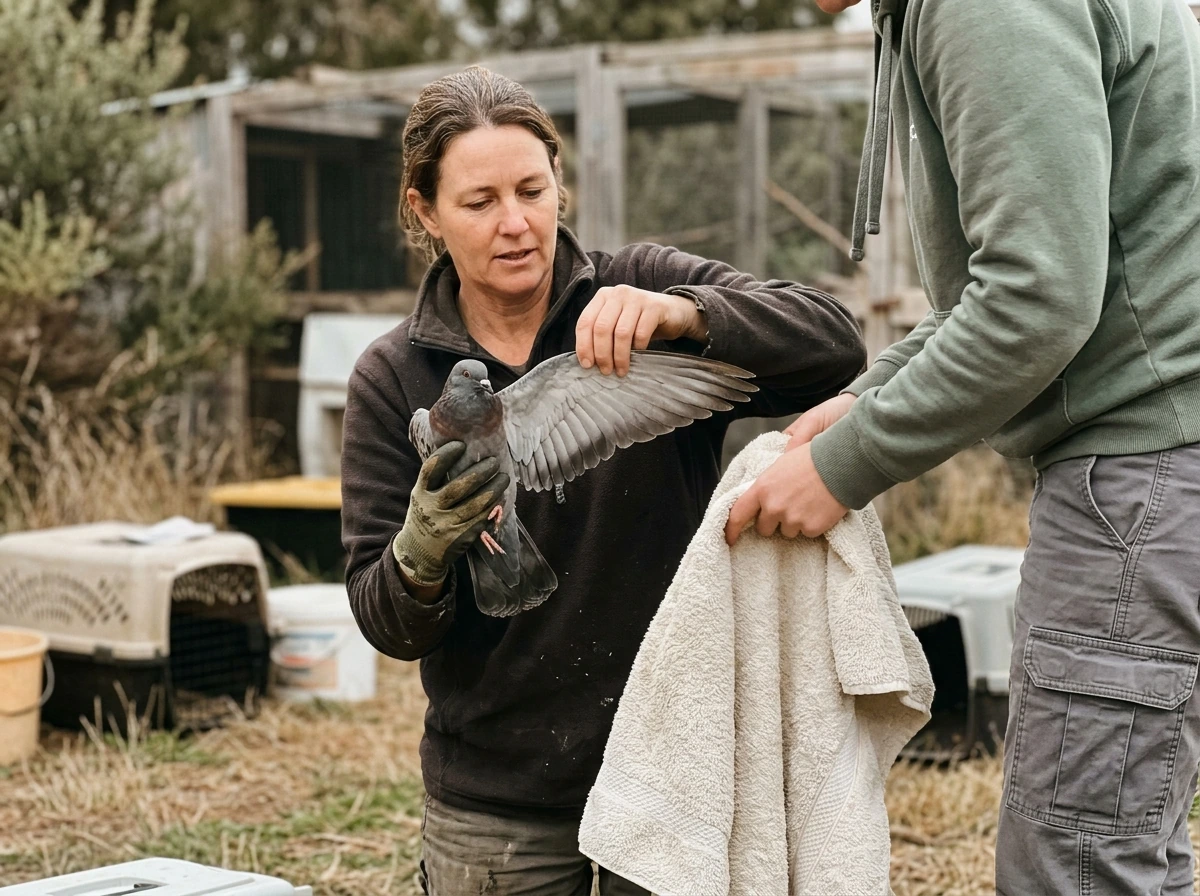
Sometimes this question comes up because someone witnessed a bird hit something at high speed, like a window, a car, or another surface, and heard a loud bang. That can absolutely sound dramatic and even feel like something extreme happened. But even a peregrine diving at 200 mph into a hard surface would be a collision, not a sonic event. The danger is very real for the bird, though, and worth knowing how to handle.
Window strikes are one of the most common causes of serious bird injury. If you find a bird that has clearly hit a window, a vehicle, or another hard surface at speed, here is what to do. why does a bird fly into a window.
- Do not leave the bird on the ground exposed to predators. Gently place it in a small cardboard box with air holes, lined with a soft cloth. Keep it in a quiet, dark, warm location.
- Do not feed it or give it water. An injured bird may aspirate liquids and feeding can cause harm.
- Check for obvious emergency signs: bleeding, visible broken bones, very labored or hoarse breathing, or complete inability to stand. Any of these mean the bird needs urgent professional care.
- Contact a licensed wildlife rehabilitator as soon as possible. The U.S. Fish and Wildlife Service recommends reaching out to a local licensed wildlife rehabilitation facility, which you can find through state wildlife agencies or the National Wildlife Rehabilitators Association.
- If the bird appears stunned but has no obvious injuries, give it 15 to 30 minutes in the dark, quiet box. Some birds recover from the concussion and can be released. If it does not recover or worsens, get it to a rehabilitator.
Audubon's guidance is clear: the best outcome for a window-strike bird comes from prompt professional help, not home treatment. Do not try to splint bones or administer medications. Your job is to minimize stress, keep the bird safe, and get it to someone qualified.
...if a bird enters a building, those are covered in detail elsewhere on this site... If you are wondering what happens if bird enter into house, that is covered in the practical section on handling building entry. bird flying into house good luck</a> The short version is that window glass creates reflections that birds cannot distinguish from open sky, and it is a very common and preventable cause of bird mortality. If a bird hits your window or suddenly enters a building, the related guidance on what to do after you see <a data-article-id="07656D71-A3AC-4FDA-878E-3A47AA5A4112">bird flying into house good luck can help you respond safely. The bird's crash into your window has nothing to do with speed records. It is a visibility and perception problem.
The bottom line: no bird has ever broken the sound barrier, no bird ever will under its own power, and the physics make it impossible with any biological flight system we know of. What birds can do is still genuinely impressive, and if one ends up injured near you, knowing how to help is worth far more than the speed debate.
FAQ
If a bird hits a window and sounds like an explosion, is that a sonic boom?
Yes, but only if it is a mechanical shock or collision sound, not a shock wave from supersonic flight. If a bird makes a loud bang while hitting glass or a surface, the sound comes from impact and rapidly moving air around the collision point, not from the bird exceeding Mach 1 through undisturbed air.
Could a bird break the sound barrier at high altitude where the speed of sound is lower?
A sonic boom depends on the bird traveling faster than the local speed of sound, which changes with air temperature and altitude. However, even the most favorable conditions (lower speed of sound at colder, higher-altitude air) reduce the required speed by only a fraction, not enough to bridge the several-times gap between bird speeds and Mach 1.
What if a bird could briefly reach Mach 1, would it keep going?
No. Birds do not have the propulsion needed to stay near Mach 1. At those speeds, compressibility effects and drag rise sharply, so even if a body briefly reached transonic conditions, it would decelerate quickly without sustained thrust (like a jet) to maintain supersonic flow.
Why do some birds make loud wing cracks, but they are not sonic booms?
The club-winged manakin and other wing snapters can create cracking sounds, but those are localized tip motions or structural vibrations. A true sonic boom requires the entire moving disturbance to outrun pressure waves in the surrounding air, producing a shock front, not just a fast-moving feather or wing segment.
How can I tell the difference between a sonic boom and just hearing a loud noise?
A “sound barrier” idea sometimes gets confused with the sound itself. You can hear a sonic boom from an aircraft, but the boom is tied to shock waves and geometry, not to hearing “loud sound” at the moment the object passes you. If you are hearing a loud noise from a nearby bird, it is overwhelmingly more consistent with impact or alarm calls than with Mach 1 flight.
Can slow-motion or viral videos prove a bird exceeded the speed of sound?
No, because the statement refers to speed through air (Mach number), not distance traveled or time. Even if a bird were “fast” in a video, the frame rate, angle, and misidentification can easily overestimate speed. Without controlled measurements, there is no credible way to infer Mach number from typical viral footage.
If I find a bird that struck a window, what should I do right away?
Bird collisions can be deadly to the bird and hazardous to people nearby, but the immediate “what to do” is about injury care, not speed analysis. Support the bird gently, keep it warm and dark, minimize handling stress, and get it to qualified wildlife rehabilitation rather than trying home splints or medication.
Could a larger or stronger bird species possibly do it?
No bird physiology that is powered by muscle has demonstrated even transonic performance in the real world, and the structural loads in the transonic regime are a key barrier. Even replacing feathers with denser structure would not solve the thrust-to-weight and aerodynamic stability requirements needed for supersonic flight.