
In a real bird box, it is completely normal to find that some nestlings thrive while others in the exact same box die or show signs of illness. This is not a fluke or a mystery. It comes down to a combination of individual vulnerability, micro-position inside the box, pathogen or parasite exposure timing, and the physical environment of the box itself. Each of those factors can vary enough between individuals, or even between breeding seasons, to produce very different outcomes from what looks like an identical situation.
In Bird Box, Why Are Some Not Affected? Causes and Fixes

Maya Chen
22 Apr 2026
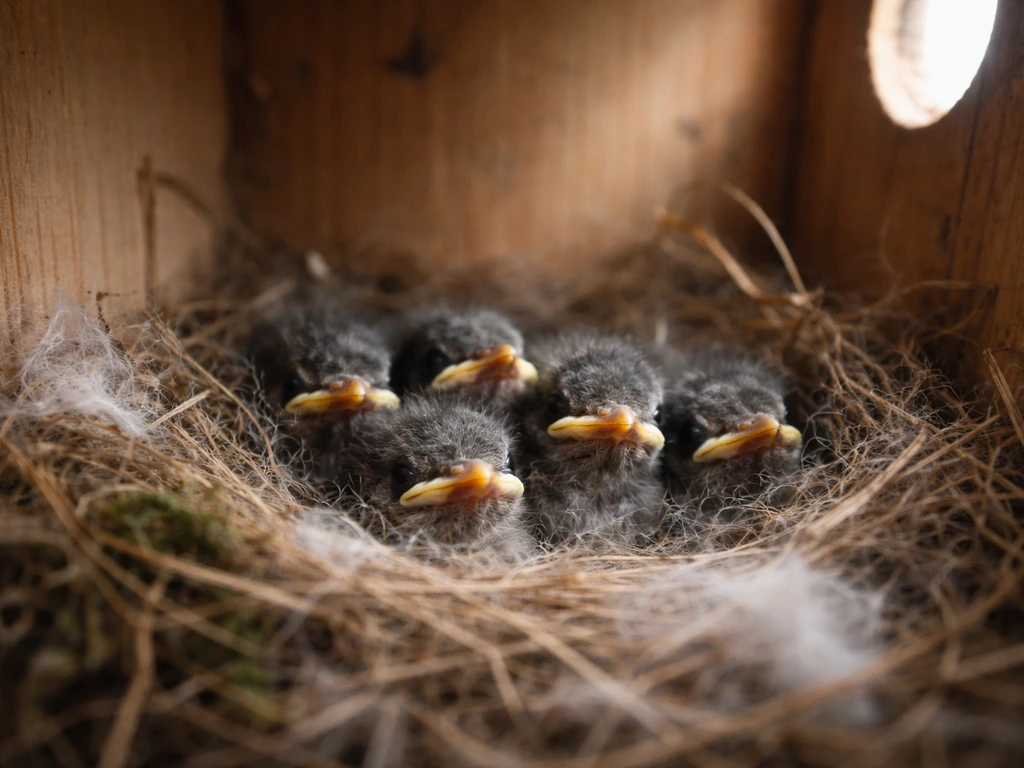
What 'not affected' actually means in bird box situations
When people say a bird seems 'not affected,' they usually mean one of a few things: the bird fledged successfully with no observed health problems, it showed no visible symptoms while others in the same box did, or it survived an event (heat spike, parasite infestation, nest soiling) that appeared to harm its nestmates. In nest monitoring, the formal outcome for a healthy brood is simply an empty nest after fledging, sometimes recorded as an unknown outcome if the monitor could not verify the final state. What looks like immunity is more often a combination of lower exposure, better body condition, and a more favorable micro-position in the box.
It is also worth being clear about what 'not affected' is not. It does not mean the bird was immune, it does not mean the hazard was absent, and it does not mean the same bird would survive the same conditions in a future season. Consistent monitoring across visits, where you record specific symptoms and causes rather than assuming a single explanation covers all outcomes, is the most reliable way to understand what is actually happening in a given box.
How exposure risk works inside a bird box
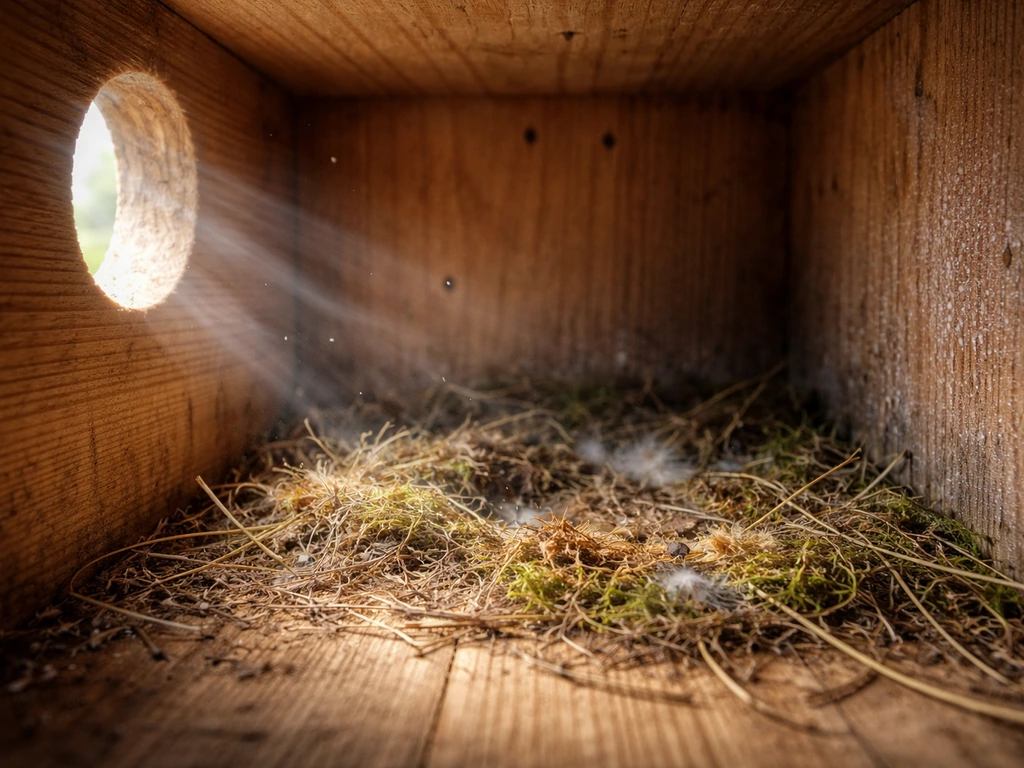
A bird box is not a uniform environment. Temperature, humidity, airflow, and contact with soiled nesting material all vary depending on where exactly a nestling is sitting. The bird pressed against the wall near a ventilation gap gets different airflow than the one buried in the center of the nest cup. The one at the top of the pile during a heat event is exposed to the hottest air.
The one at the bottom has the most contact with accumulated fecal matter and any parasites living in the nest material. If you are asking what the virus in Bird Box is, the key issue is often the types of pathogens and parasites present in that nest material rather than a single named virus parasites living in the nest material.
Bacterial loads in nest boxes can differ by cavity use and even vary across years in the same box. That means two broods using the same structure can face very different microbial environments depending on how well the box was cleaned, how much old material remains, and what the weather has been like. So when one season's brood does fine and the next has losses, the box itself may be the constant and the microbial load the variable.
Disease and parasite transmission within a brood also depends on timing and contact rate. A nestling that fledges a day or two before peak mite population growth avoids a level of infestation that its later-leaving sibling may not. Ectoparasite success in nest boxes is driven not just by the initial transmission event but by what happens afterward, specifically the microclimate in the nest and the physical condition of the host. In a wild bird ectoparasite system, mite population growth after transmission was influenced by nest microclimate (temperature and humidity), nest characteristics, and host body condition microclimate in the nest and the physical condition of the host. These are not fixed quantities across a brood.
Individual factors: age, health, behavior, and position
Within a single nest, nestlings are not equally matched. The oldest and largest chicks in a brood tend to outcompete smaller ones for food, which directly affects body condition. Lower body condition is linked to greater parasite impact and reduced ability to invest in immune defense. A well-fed nestling with a healthy gut microbiota is genuinely better equipped to handle the same parasite or pathogen load than a smaller, food-stressed sibling.
Behavior matters too. Dominant nestlings tend to position themselves favorably during feeding and may spend less time in contact with heavily soiled nest material. Birds close to fledging age are more mobile and can shift away from hazards like overheated corners or wet patches of the nest floor. Very young nestlings have none of that flexibility.
Age is also a direct vulnerability factor for heat stress. Nestlings in the first week of life cannot thermoregulate and are entirely dependent on ambient temperature and the brooding parent. On hot days when box interior temperatures can exceed 107°F, a young nestling has almost no buffer. An older nestling that can pant, move, or is only days from fledging has a meaningfully better chance of surviving the same temperature spike.
Box design and environment change outcomes more than most people realize
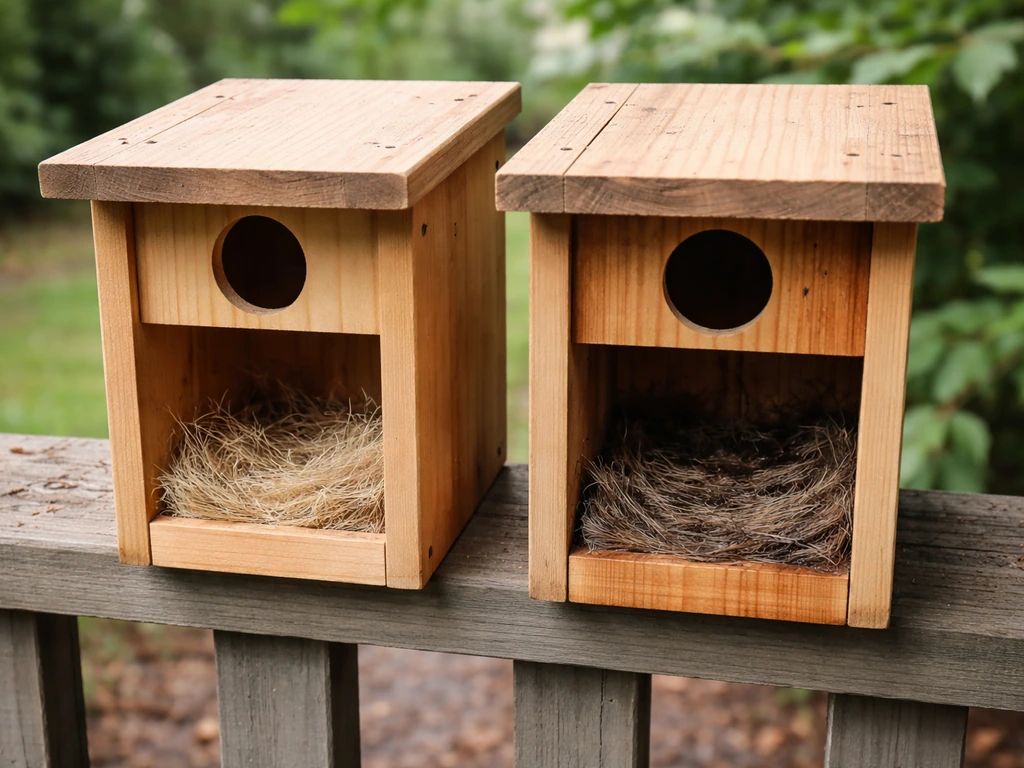
The physical design of the box determines the internal microclimate, and the internal microclimate is one of the strongest predictors of whether nestlings live or die. Research has documented that cavity nest temperatures can be more than 6 degrees Fahrenheit hotter than the outside air, with interior temperatures reaching lethal levels on warm days. Whether a nestling survives a heat event often comes down to whether the box has adequate ventilation and whether it is facing into afternoon sun.
Humidity inside the box matters for parasite pressure. Experimental work has shown that higher humidity inside nest cavities directly increases ectoparasite abundance. A box with poor drainage that traps moisture creates a more parasite-friendly environment, which means nestlings in a wet box face higher mite burdens than nestlings in a well-drained, drier box with identical initial conditions.
Basic construction features matter enormously here. A box with at least four drainage holes (each roughly 3/8 inch) in the floor prevents standing water from soaking the nest. Ventilation gaps or holes near the top of the side walls allow hot air to escape rather than build up. Without those features, two birds in two different boxes, facing the same weather conditions, can have dramatically different outcomes.
| Box Variable | Effect on Nestlings | Recommended Standard |
|---|---|---|
| Floor drainage holes | Prevents moisture buildup, reduces parasite-friendly humidity | At least four 3/8-inch holes |
| Side ventilation gaps | Prevents lethal heat buildup, improves airflow | Gaps or holes near top of side walls |
| Box orientation/shade | Reduces interior temperature on hot days | Avoid afternoon western sun exposure |
| Nest material cleanliness | Reduces bacterial and ectoparasite load | Remove old nesting material each season |
| Box interior volume | Affects crowding, heat distribution, and competition | Species-appropriate dimensions |
Food, hygiene, and why disease doesn't spread equally
It is a common misconception that if one nestling in a box gets sick, all of them will. If you are wondering why the creatures in Bird Box kill, the short answer is that the real-world outcomes come from predictable stressors like parasites, pathogens, and habitat microclimate rather than one single cause why do the creatures in bird box kill.
Pathogen and parasite transmission within a brood depends on contact rate, timing, and individual immune status, none of which are uniform. A nestling that fledges early has less cumulative exposure. One that received more food from the parents has a stronger immune response. One that happened to be in a drier, cooler part of the nest had a less hospitable environment for parasites to reproduce on its feathers or skin.
Fecal contamination of the nest is a major but controllable factor. As a brood ages, fecal sac removal by parents becomes less efficient and nest soiling increases. The nestlings with the most contact with soiled material face higher bacterial and parasite exposure. This is one reason why late-stage monitoring needs to be done carefully and quickly, because disturbing a nest close to fledging can cause premature departure that puts nestlings at risk before they are ready.
Box hygiene between seasons is not optional. Old nesting material can harbor mites, bacteria, blow fly larvae, and other parasites that survive the winter and infest the next brood before parents have any chance to respond. Scalding or disinfecting the box after the breeding season, and removing all old material before the next season, breaks that cycle. The fact that a box was used successfully for years before a bad season is not evidence that cleaning is unnecessary; it may mean parasite pressure has been quietly building and finally crossed a threshold.
Practical troubleshooting: what to check right now
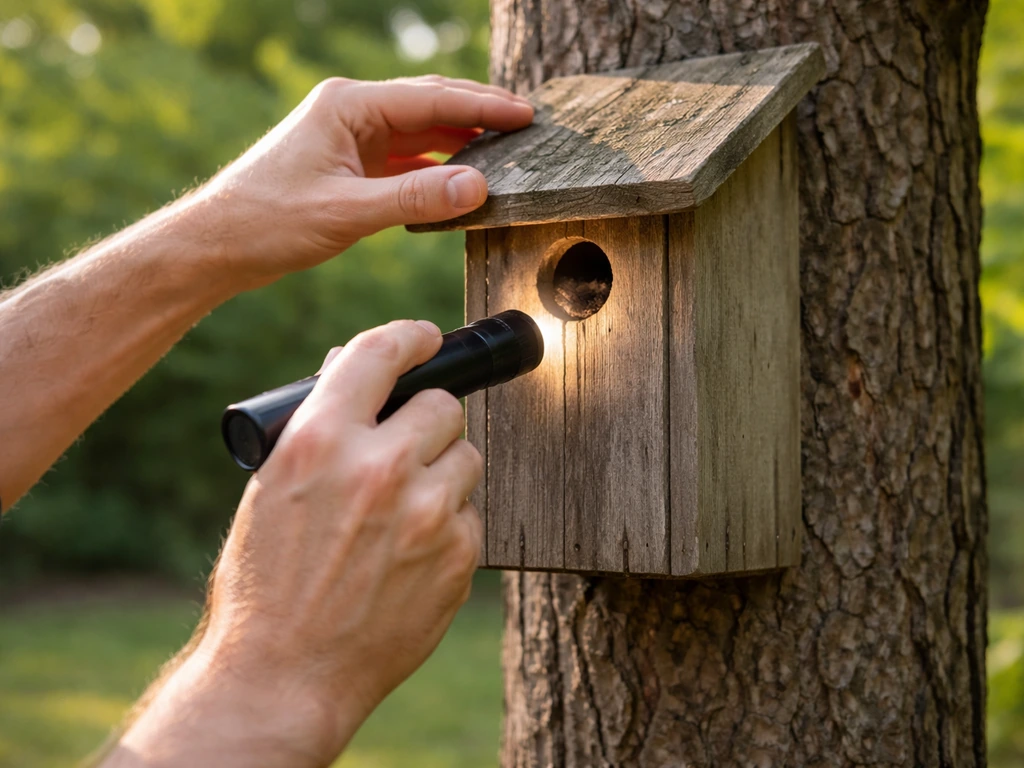
If you have a bird box where some birds are thriving and others are not, or where you have had unexplained losses, work through this checklist. Move carefully and minimize disturbance, especially if there are live nestlings in the box. This is also why the bird box monster cannot just go inside and take over a nest in the way many people imagine why can't the bird box monster go inside.
- Check box orientation and shade: Is the box facing afternoon sun? Direct western or southern exposure on hot days can push interior temperatures to lethal levels. Adding shade with a baffle or relocating the box is a direct intervention.
- Inspect the floor for standing water or soaked nesting material: Is water pooling inside? Check that drainage holes are clear and adequate. Wet nests increase humidity and parasite pressure.
- Look for mites or ectoparasites: Check the inside walls of the box near the nest rim. Tiny red or brown mites moving on the wood surface are a sign of infestation. Pale or anemic-looking nestlings, or birds that seem restless and itchy, are a behavioral clue.
- Check for foul odor or heavily soiled material: A strong ammonia smell or visible fecal buildup indicates hygiene conditions that favor bacterial growth and can suppress immune function in younger nestlings.
- Look for dead nestlings and record the pattern: Are the dead birds the smallest or youngest in the brood? Are deaths clustered at one end of the nest? Patterns point to specific causes, for example heat deaths tend to affect the whole brood, while competition-related deaths often affect only the smallest.
- Review the nest history: Was this box cleaned after last season? Is there old nesting material present under the current nest? If yes, parasites from last season may have persisted.
- Assess the box construction: Does it have drainage holes, ventilation gaps, and appropriate entry hole size? Missing features may need to be added before the next season.
- If nestlings are sick or injured, contact a licensed wildlife rehabilitator: Do not attempt to treat nestlings yourself. If you can reach the nest and a nestling has fallen, placing it back in the nest is appropriate. For birds with visible injuries, bleeding, or shivering, or if you have confirmed a parent is dead, professional help is the right call.
- After the season ends, clean the box properly: Remove all old nesting material, then clean the interior with a diluted bleach solution (1 part bleach to 10 parts water) or scald with boiling water to kill any remaining parasites. Dry completely before the next season.
When you record what you observe, be specific. If multiple nestlings show different symptoms or causes of death, record each one separately with its own observed signs rather than assigning a single cause to the whole group. Inconsistent outcomes across a brood almost always reflect multiple interacting factors, and tracking them carefully is the only way to know which intervention will actually help.
The bottom line is that there is no single reason why some birds in a box are affected and others are not. If you are wondering why people kill themselves in Bird Box, the same idea applies: there is rarely a single cause and outcomes depend on many interacting factors no single reason.
It is a combination of where they sit, how old and healthy they are, how clean and well-ventilated the box is, and how much parasite or pathogen pressure has built up over time. That built-up parasite and pathogen pressure is one big reason bird box creatures may die after the same season begins parasite pressure has built up over time. If you are wondering can the monsters in bird box be killed, the key is reducing built-up parasite and pathogen pressure through good cleaning and proper box maintenance between broods.
To understand how the bird box monster kills, focus on the real-world drivers like heat, parasites, and infection pressure that vary by position and conditions where they sit, how old and healthy they are, how clean and well-ventilated the box is. If you are also asking why can't the bird box monster go inside, the key comparison is that the outcome depends on micro-position, ventilation, and exposure conditions just like disease and parasite pressure do.
Most of those variables are within your control, especially the design and hygiene of the box itself.
FAQ
If only some nestlings die, how can I tell whether it was heat, parasites, or infection rather than “everything at once”?
Use symptom timing and pattern. Heat stress often shows abrupt losses after very hot afternoons and may involve birds in the top or sun-facing parts. High ectoparasite pressure usually correlates with later-stage soiling, poor grooming, or visible mites, with gradual declines. Bacterial or viral syndromes tend to produce consistent signs across multiple positions, but you still need to record each nestling separately because different micro-areas can shift the dominant cause.
Can a nestling be “not affected” even if it looked healthy at first but later had problems after fledging?
Yes. “Not affected” in monitoring usually means no visible problems during the nest period. A bird can survive to fledging while still being weakened, which can show up as reduced body condition or survival after leaving. If you can, compare fledglings’ relative size, alertness, and any observed dehydration or persistent begging weakness before labeling them unaffected.
Do some chicks get protected simply because they are bigger or older, or is it more about where they sit in the nest?
Both, but the balance matters. Larger, older nestlings usually receive more food and start with better condition, which improves resilience. However, micro-position can override that advantage during heat or wetness events, for example a smaller chick buried in the dampest section can face higher parasite and bacterial exposure than a larger chick near a drier edge.
What’s the most common monitoring mistake that makes it seem like “some are affected and some aren’t” when the real cause is uncertainty?
Assigning one cause to an entire brood based on one observation. If multiple nestlings have different signs, treat them as separate cases and note their position in the nest, age estimate, and what changed that day (weather spike, wet nest, cleaning disturbance). This prevents you from missing mixed drivers like heat plus mite pressure.
Could a “successful” brood still come from a box that has harmful parasite pressure, but the timing just favored survival?
Yes. If peak parasite reproduction coincides with some chicks leaving earlier, the surviving birds can mask the underlying pressure. That’s why two seasons can look very different even in the same box, and why you should track whether losses, if any, cluster around specific dates relative to heat and humidity patterns.
If I find mites or dirty nest material, should I assume all nestlings will be affected next time?
Not necessarily. Mites and soiling raise the risk, but outcomes also depend on host age, ventilation, moisture retention, and how quickly the nest becomes heavily contaminated. A drier, well-ventilated cavity and well-fed nestlings can reduce the severity. The practical step is to act on cleaning and drainage after the breeding season rather than predicting outcomes from one visual cue.
How quickly can a late disturbance (for example, checking near fledging) turn “unaffected” nestlings into losses?
Disturbance close to fledging can trigger premature departure or stress, and that can increase mortality for the youngest or least mobile chicks. If you must check, do it briefly, minimize handling, and avoid disrupting the nest cup more than necessary, because the paper-thin margin is often within hours near the end of the nestling period.
What box-design detail most often explains why different nestlings in the same box experience different outcomes?
Drainage and ventilation together. Poor drainage traps moisture, which boosts parasite abundance, while inadequate vents allow hot air to build up, increasing heat stress. Even when two chicks share the same box, the one pressed into wetter areas and the one positioned toward sun-facing or poorly ventilated zones can face very different microclimates.
Is it possible that “some are not affected” because they had fewer exposures, not because they had stronger immunity?
Yes. Lower exposure can look like immunity. A chick that fledges earlier, receives less time in contact with soiled nesting material, or sits in a drier or cooler micro-region may survive without mounting a stronger immune response. When evaluating a case, focus on cumulative exposure indicators like soiling level and where each chick spent time.