
If you searched "why do people kill themselves in Bird Box," you're most likely asking about the Netflix film and its meme-driven association with suicide, not about birdhouses or anything related to actual birds. This article will clear up what the phrase means, where it comes from, and, more importantly, what to do if you or someone you know is struggling with thoughts of self-harm.
Why Do People Kill Themselves in Bird Box: Myths and Help

Maya Chen
9 Apr 2026

What "Bird Box" actually means here
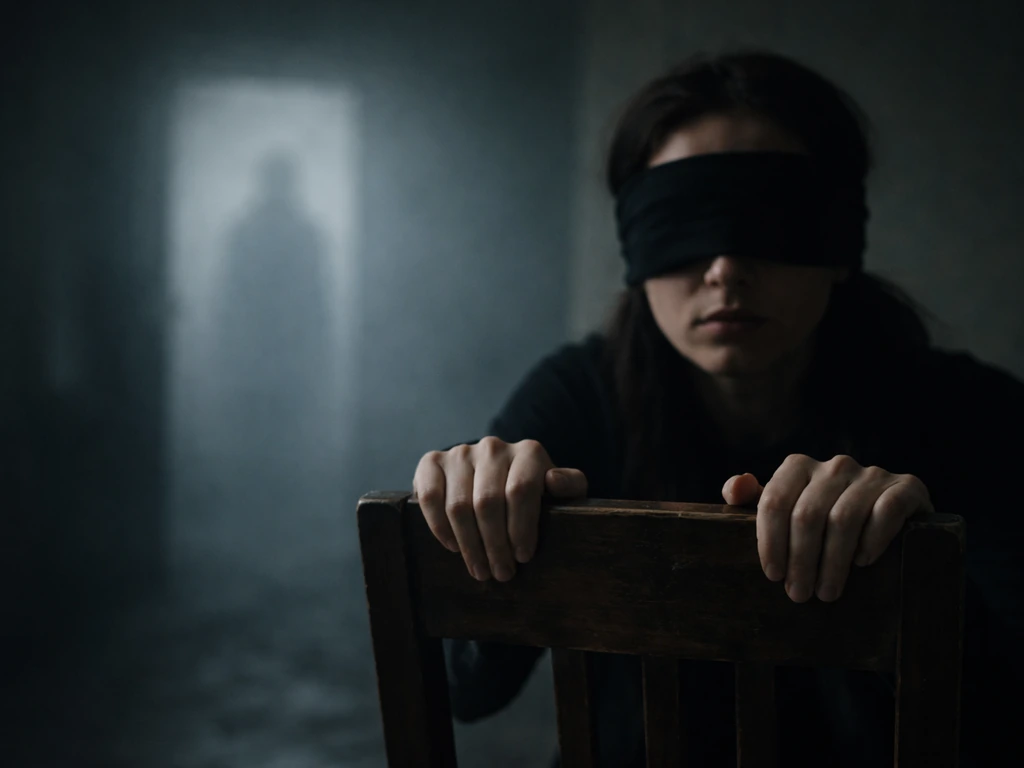
Bird Box is a Netflix supernatural horror film (and later a sequel) where an invisible entity drives anyone who looks at it to immediately die by suicide. The film's central plot mechanic, that seeing the creature is fatal, turned into a widely shared internet meme almost overnight after its release. Lines like "you die if you look" were repurposed as jokes, reaction images, and viral content across Twitter, TikTok, and YouTube.
This meme culture is the reason the phrase "why do people kill themselves in Bird Box" exists as a search query. People are trying to understand the film's plot, the monster's mechanism, or the internet joke, not a literal bird-related cause of death. To be completely clear: no real bird, birdhouse, or bird-related health risk causes suicidal behavior. That idea exists only in fictional, supernatural storytelling. If you want to understand why the creatures in Bird Box kill on a narrative level, that's a question about movie lore, not biology or public health.
The "Bird Box Challenge" added another layer to the discourse. It was a real-world trend where people blindfolded themselves to perform everyday tasks, mimicking characters in the film. Know Your Meme describes the Bird Box Challenge as blank" rel="noopener noreferrer">blindfolding oneself to complete tasks inspired by Bird Box. YouTube updated its platform guidelines specifically because of safety concerns tied to this challenge, including incidents on transit and railways. The Washington Post reported that Netflix warned fans during the Bird Box Challenge meme wave not to get hurt “due to memes.” blank" rel="noopener noreferrer">including incidents on transit and railways. That challenge was about physical danger from blindfolded stunts, not about any actual bird or environmental exposure causing self-harm.
Why suicide content shows up in Bird Box discussions
Suicide is the literal plot mechanism in the film, so it shows up in fan discussions, wiki pages, Reddit threads, and social media constantly. blank" rel="noopener noreferrer">A Reddit FilmTheory post about Bird Box offers an explanation for the recurring outcomes and how viewers interpret the mechanism behind deaths and “immunity.”. When people wonder why some people don't die in Bird Box, they're trying to understand why certain characters are immune, which is a plot point the movie deliberately leaves ambiguous. But for someone in a vulnerable place, repeated exposure to that content, especially when it's framed humorously or casually, can have real psychological weight.
The World Health Organization has solid evidence showing that how suicide is depicted in media and online spaces affects real-world behavior. Sensationalized or normalized portrayals, especially ones that treat suicide as an inevitable or even darkly funny outcome, can increase risk in people who are already struggling. That's not a fringe concern. It's why responsible reporting guidelines exist, and it's worth keeping in mind when thinking about what pulls certain people toward this content in the first place.
The question of why some characters in Bird Box are not affected by the entity is also one that gets asked a lot. In the story, certain individuals described as mentally ill are immune. This framing has been criticized, and it's worth noting that in real life, mental illness is a risk factor for suicide, not a protective one. The film's mythology doesn't reflect reality, and treating it as a guide to understanding real suicide risk would be a mistake.
Debunking the myths: no bird, no virus, no monster
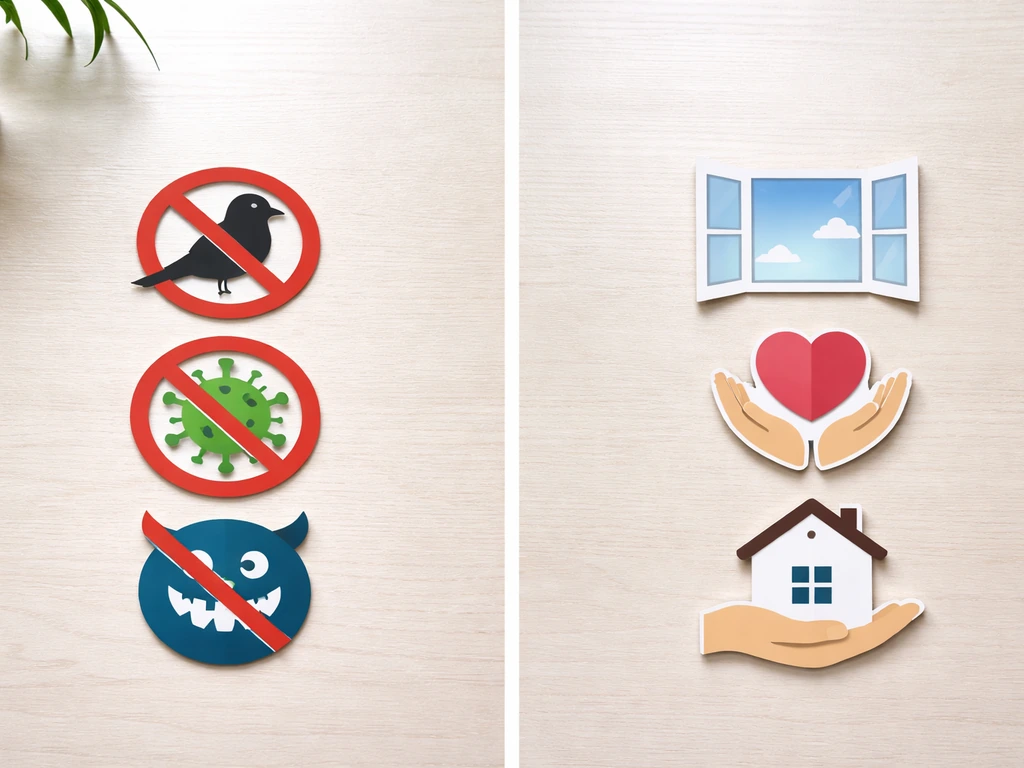
Let's be direct about what Bird Box is not. It is not a documentary. There is no virus, toxin, or environmental agent transmitted by birds that causes suicidal behavior. Some people search terms like what the virus in Bird Box is, expecting a biological explanation, but the film's entity is explicitly supernatural. The birds in the story are actually used as warning devices, not sources of harm. They react to the invisible creature's presence, which is a plot mechanic, not a real-world phenomenon.
The question of how the Bird Box monster kills comes up often in fan discussions. The answer is purely fictional: the entity shows victims something psychologically unbearable, triggering immediate self-destruction. There is no real-world parallel. No bird species, no zoonotic disease, and no environmental exposure replicates this mechanism. The CDC's guidance on suicide clusters focuses on social contagion through media and community dynamics, not on anything biological involving birds or animals.
People also ask whether the monsters in Bird Box can be killed, and the answer the film gives is essentially no, which adds to the sense of hopelessness the story is designed to evoke. That feeling of inescapability is powerful in horror fiction. It's worth recognizing when that fictional tone starts bleeding into how someone actually feels about their own life.
One more common question is why the Bird Box monster can't go inside enclosed spaces, which again is a plot device used to create tension. None of this maps onto any real risk mechanism. If someone is using Bird Box framing to describe their own emotional state, that's worth taking seriously as a signal, but the solution has nothing to do with blindfolds or monsters.
Warning signs to watch for
Real suicide risk doesn't come from fictional entities. It comes from a combination of factors: depression, previous attempts, a sense of hopelessness, recent loss or painful change, isolation, and sometimes increased substance use. No single factor predicts risk for any one person, but a cluster of warning signs is always worth taking seriously.
Here are the signs that mental health organizations consistently point to as signals someone may be in crisis:
- Talking about wanting to die or wanting to kill themselves
- Saying things like "everyone would be better off without me" or "I won't be a problem much longer"
- Looking up methods or giving away important possessions
- Withdrawing from friends, family, or activities they used to enjoy
- Increased use of alcohol or drugs
- Dramatic mood swings, agitation, or acting recklessly
- Expressing feelings of being trapped or that there's no way out
- Talking about feeling like a burden to others
SAMHSA notes that risk increases when the behavior is new or has recently escalated, especially if it seems connected to a specific painful event. You don't need a full checklist to justify concern. If something feels off, treat it seriously.
What to do right now if you're worried about someone
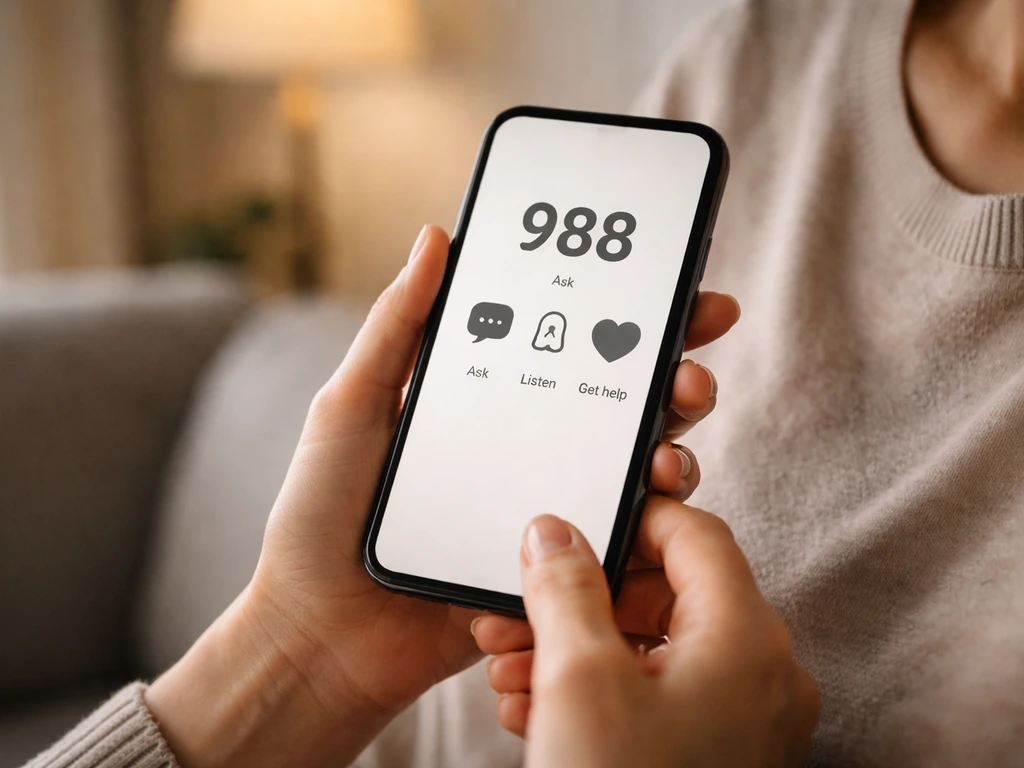
The most important thing to know is that asking someone directly if they are thinking about suicide does not plant the idea. The CDC and SAMHSA both confirm this. Asking directly, in a calm and caring way, actually opens a door that can save someone's life. Don't dance around it. Something like "I've noticed you seem really low lately, and I need to ask, are you thinking about hurting yourself?" is a reasonable, kind thing to say.
When you ask, listen without judgment. Don't minimize what they're saying or try to argue them out of it. Samaritans' guidance is clear on this: validate and stay present. You don't have to have answers. You just have to not leave them alone with it.
- Ask directly and calmly if they are thinking about suicide
- Listen without dismissing or minimizing their feelings
- Do not leave them alone if you believe the risk is immediate
- Encourage them to call or text 988 (US) together, or offer to help them make contact
- If there is immediate danger, call emergency services (911 in the US) right away
- Follow up afterward, even a brief check-in matters
Even if the person doesn't have a specific plan, that doesn't mean the risk is low. Samaritans emphasizes that anyone showing signs of serious distress benefits from connecting with a counselor or crisis line, not just people who are in immediate danger.
Where to get help right now
If you're in the US and you or someone you know is in crisis, the most direct resource is 988. You can call, text, or chat at 988lifeline.org. It's confidential, available 24/7, and staffed by crisis counselors who will assess the situation and provide real support. SAMHSA confirms that 988 is for both people who are personally struggling and people who are worried about someone else.
| Resource | How to reach them | Who it's for |
|---|---|---|
| 988 Suicide & Crisis Lifeline (US) | Call or text 988, or chat at 988lifeline.org | Anyone in crisis or worried about someone |
| Samaritans (US, 988-linked) | Call 988 or text HOME to 741741 | Emotional support, peer connection, immediate crisis |
| Samaritans (UK) | Call 116 123 (free, 24/7) | Anyone struggling emotionally, not only suicidal crisis |
| Crisis Services Canada | Call 1-833-456-4566 or text 45645 | Anyone in distress or worried about someone in Canada |
| Emergency services | Call 911 (US/Canada) or 999 (UK) | Immediate, imminent danger to life |
If you're outside those countries, searching "crisis line" plus your country name will surface local resources. Most countries have a 24/7 phone option. The key point is that you don't need to be at a breaking point to call. These lines exist for people who are struggling and for people who are worried about someone else.
How to talk to someone you're worried about
A few practical things make a real difference when you're trying to support someone. First, pick a private, quiet moment rather than bringing it up in a group or in passing. Second, come in with concern, not accusations. "I've been worried about you" lands differently than "you seem like you might do something stupid." Third, don't promise to keep suicidal thoughts a secret. If someone's life is at risk, that takes priority over confidentiality.
Samaritans advises staying supportive and present even after the immediate conversation. Mental health crises don't resolve in one talk. Checking in regularly, even with a simple message, signals that you haven't forgotten and that the person still matters to you.
If the person refuses help or insists they're fine despite clear warning signs, you can still contact a crisis line yourself to get guidance on what to do next. You don't need the person's permission to seek advice about how to help them. Crisis counselors are trained for exactly this situation and can walk you through what steps make sense given what you're seeing.
The Bird Box meme is a piece of pop culture. Real suicide risk is a medical and human reality that responds to real intervention: connection, conversation, and professional support. Those tools work. The monster in the movie can't be stopped, but the risk in real life can be reduced, one honest conversation and one phone call at a time.
FAQ
If someone jokes “Bird Box” when they’re struggling, does that mean I should treat it like a suicide threat?
Yes. Even if they intend it as a meme, you should take the emotion underneath seriously. Ask directly about self-harm thoughts in plain language, and if you notice escalating risk, contact a crisis line for guidance right away.
Is it okay to ask “Are you thinking about suicide?” even if I’m worried I’ll make it worse?
Yes. Asking directly does not “put the idea” in someone’s head. Use a calm, non-judgmental tone (for example, “Are you thinking about hurting yourself?”) and then listen to what they say.
What if they say they are thinking about self-harm, but they refuse help or deny a plan?
Do not rely on the absence of a plan as proof they are safe. Encourage professional support anyway, and if you cannot keep them safe or risk seems imminent, contact emergency services or a crisis line for step-by-step instructions.
How should I bring it up if we just watched Bird Box or keep seeing it online together?
Separate the content from the person. Say something like, “I’m not worried about the movie, I’m worried about you.” Then ask about their current feelings and safety, especially if they have recently changed behavior, isolated, or seemed hopeless.
What are the most important warning signs to watch for besides “talking about suicide”?
Look for behavior changes such as recent escalation, giving away possessions, increased substance use, sudden calm after a period of distress, or strong statements of hopelessness. Any cluster of signs is enough to justify reaching out.
If I’m not sure whether this is serious, should I still call 988 (US) or a local crisis line?
Yes. You can call even if you are unsure. Crisis counselors can help you assess urgency and decide whether to talk with the person, involve another support, or seek emergency help.
What should I do in the moment if the person says they might act on their thoughts soon?
Stay with them if possible, remove or reduce access to anything they could use to harm themselves if you can do so safely, and contact a crisis line or emergency services. Do not leave them alone to “sleep it off.”
If they are a minor or I’m supporting a friend at school, who can I involve?
Start with a crisis line for guidance, then involve a trusted adult such as a parent/guardian, school counselor, or designated mental health staff. If you believe they are in immediate danger, contact emergency services.
Can social media exposure to suicide-related content affect risk even for someone not actively suicidal?
It can. Normalizing or sensationalizing portrayals can increase distress or reinforce hopeless thinking in vulnerable people. If someone seems affected, reducing exposure and shifting to supportive, reality-based conversations can help.
What if the person says they are fine after I ask them about self-harm?
Treat it as a starting point, not a finish line. Continue checking in, ask follow-up questions about how they’re coping, and watch for ongoing warning signs. If you still see risk indicators, seek advice from a crisis line even if they minimize it.
Next Article
Bird Causes Plane Crash? Risk, Mechanisms, Myths, Prevention
Whether bird strikes can cause plane crashes, how they happen, real risk data, debunked myths, and prevention steps