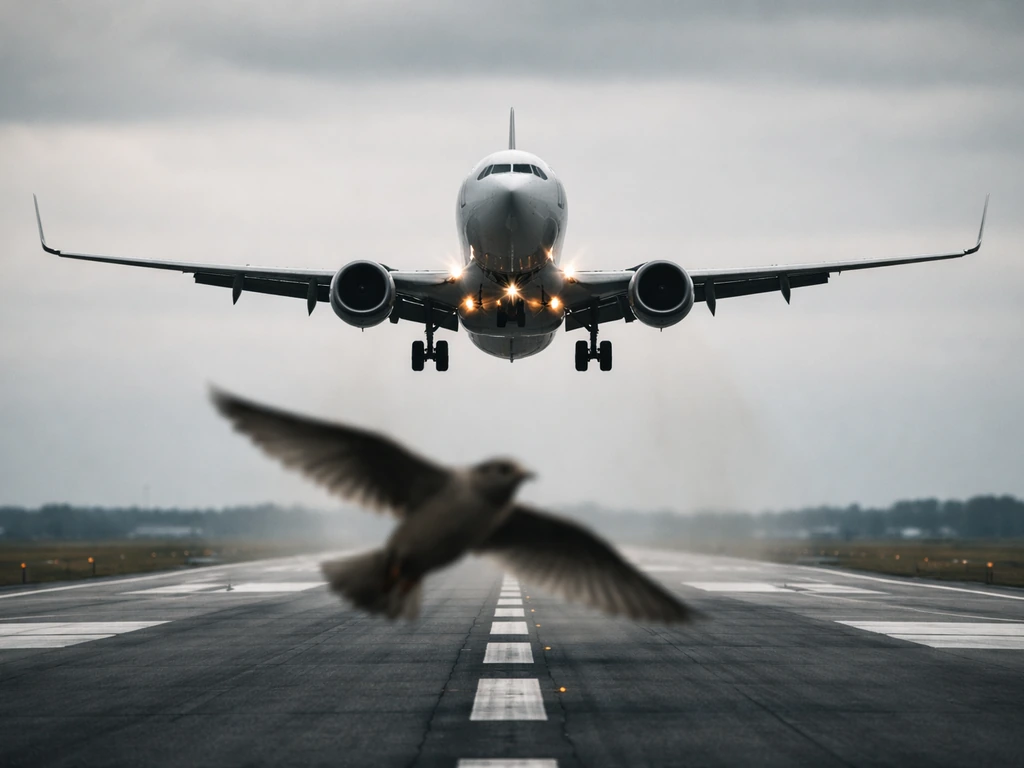
Yes, a bird can crash a plane, but it rarely does. The more accurate picture is this: bird strikes happen thousands of times a year in the U.S. alone, most cause little or no damage, and the aviation system is deliberately engineered to survive them. That said, a handful of strikes each year do cause serious outcomes, a small number have caused fatal accidents historically, and the risk is real enough that the FAA, ICAO, EASA, and airport operators worldwide spend considerable effort managing it.
Can a Bird Crash a Plane? Risks and What to Do

Maya Chen
14 May 2026
Can birds really bring down aircraft? What "crash" actually means here
When people ask whether a bird can crash a plane, they usually mean one of two very different things: can a bird cause the plane to go down entirely, or can a bird cause serious damage that creates an emergency? Both answers are technically yes, but at very different rates of probability.
The NTSB uses specific definitions here. An aviation "accident" requires substantial damage to the aircraft or serious injury or death. A bird strike that dents a leading edge or cracks a radome is typically classified as an "incident." A bird strike that destroys an engine, injures crew, or forces an emergency landing crosses into accident territory. Most bird strikes never reach accident level.
The most famous example is US Airways Flight 1549 in January 2009. A flock of Canada geese was ingested into both engines on takeoff from LaGuardia, causing near-total loss of thrust. The crew ditched the aircraft on the Hudson River with no fatalities. The NTSB found that large bird ingestion into both engines simultaneously was the probable cause. That outcome, a controlled ditching with everyone surviving, is actually a best-case scenario for what could have been catastrophic.
Historically, outcomes have been worse. The FAA's lessons-learned records include an Eastern Air Lines Lockheed Electra event involving substantial loss of life following engine failure caused by bird ingestion, and a DC-10 incident involving multiple gull ingestions that led to engine disintegration and fire. These events are part of why modern certification standards exist, not evidence that today's aircraft are equally vulnerable.
Under FAA regulations (14 CFR § 25.631), transport-category aircraft must be designed to sustain bird strike damage and still meet continued safety objectives. EASA's CS-E 540 standard similarly requires that after a foreign-matter ingestion event affecting more than one engine, the aircraft must still be capable of continued safe flight and landing. The certification bar is specifically about survivability, not just about the strike happening.
How bird strikes happen: engines, windshields, and damage patterns
Not all bird strikes are equal, and where the bird hits matters enormously for what happens next.
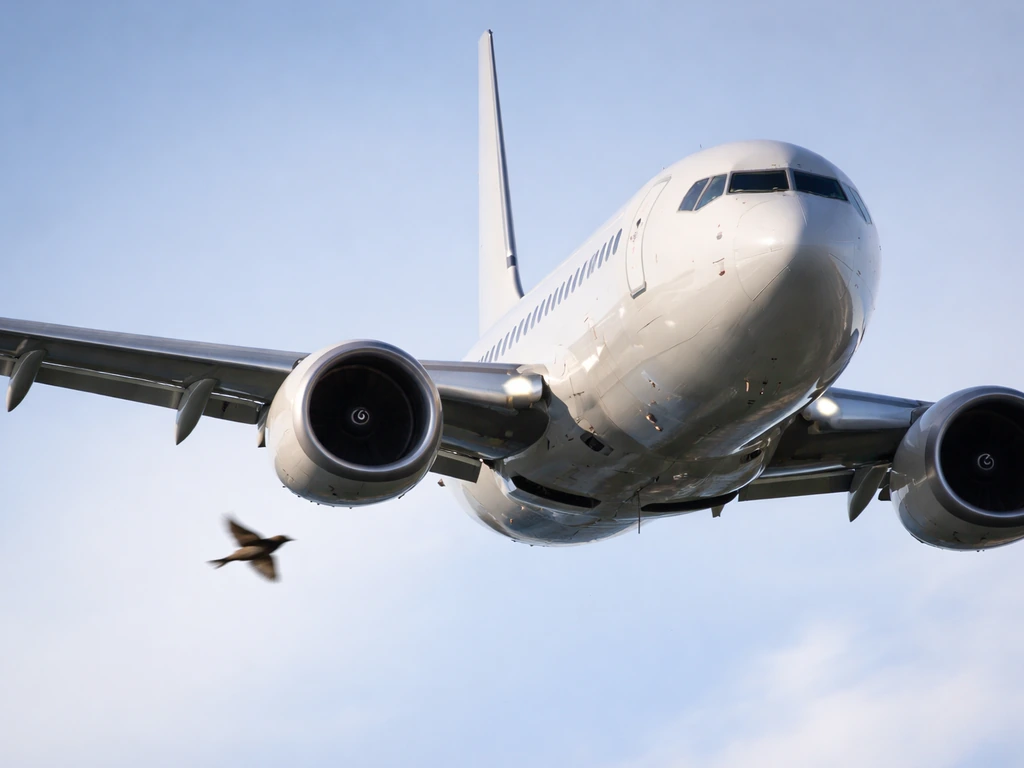
Engine ingestion is the most dangerous scenario. A bird pulled into a jet engine at high speed can shatter fan blades, cause compressor stalls, and in severe cases lead to engine fire or complete failure. The risk goes up dramatically with bird size and with the number of engines involved. Twin-engine aircraft have less redundancy than four-engine aircraft, and ingestion events that knock out both engines simultaneously (like Flight 1549) are what push a strike from incident into potential catastrophe.
Windshield and airframe strikes are more common but usually less dangerous. A large bird hitting a windscreen at cruise speed can crack or fracture it, which is a serious distraction and can cause injury, but the aircraft typically remains flyable. The FAA's rotorcraft lessons-learned records do include a Sikorsky S-76 case where a bird fractured a windscreen, moved engine condition levers in the impact, and contributed to loss of control, showing that cockpit geometry and aircraft type can change the severity pathway significantly.
Other common impact points include the nose, leading edges of wings, and landing gear doors. These usually cause repairable structural damage rather than immediate flight hazards, though they drive a large share of the estimated $900 million in annual damage to U.S. civil and military aircraft that USFWS has documented.
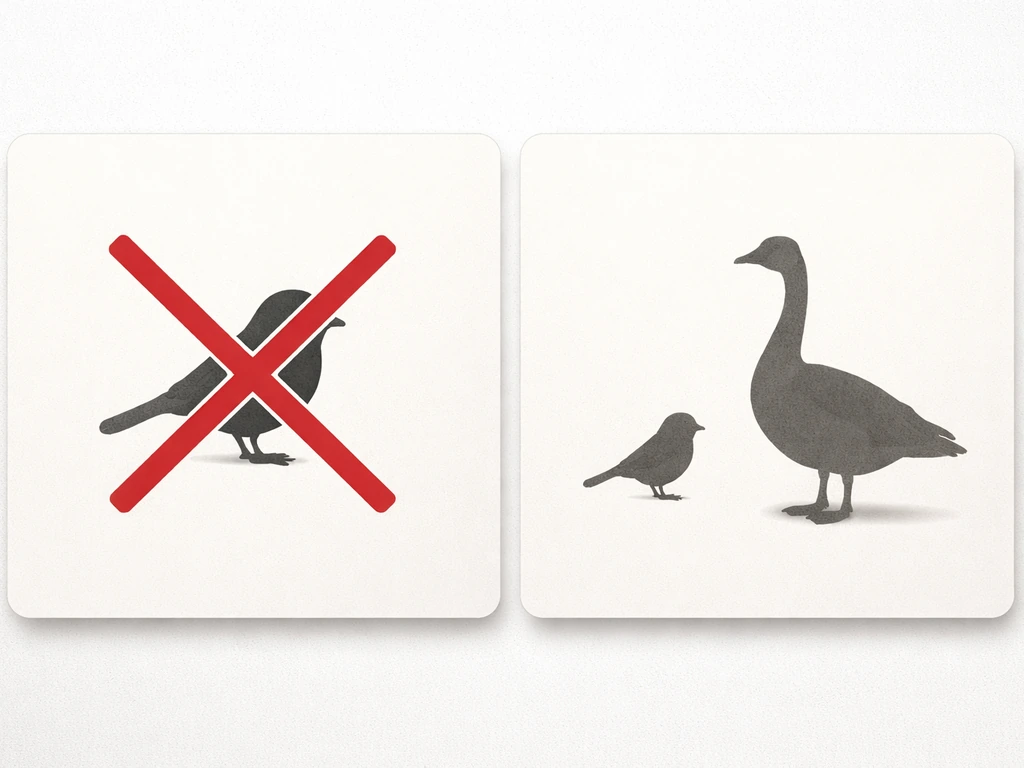
Bird species and size also shape outcomes significantly. Waterfowl like ducks and geese make up only about 4% of reported U.S. bird strikes but are responsible for 27% of strikes that cause actual aircraft damage, according to FAA data. Small songbirds hit aircraft far more often but rarely cause structural damage. This is why airports near wetlands, migration corridors, or open water warrant extra attention in wildlife hazard management.
How often severe bird-strike crashes actually occur

The FAA's Wildlife Strike Database tracks bird and wildlife strikes to U.S. civil aircraft from 1990 onward, and the trend data is genuinely reassuring. Damaging strikes have fallen as a share of total reported strikes, from 6% in 1996 to 3.7% in 2024. The average body mass of birds involved in reported strikes has dropped 64% between 2000 and 2024, partly reflecting better habitat management near airports and smarter targeting of high-risk species.
Thousands of bird strikes are reported in the U.S. every year, but the vast majority result in no damage and no effect on flight. The serious ones, those causing engine failure, structural damage requiring significant repair, or injury to crew or passengers, are a small fraction. Fatal accidents caused primarily by bird strikes are rare events measured over decades, not annual occurrences.
That said, the $900 million annual damage figure reflects just how real the cumulative hazard is, even if individual catastrophic events are uncommon. The risk is not zero, and it is not evenly distributed. It concentrates around takeoff and landing phases (when aircraft fly low, where birds are), around airports near wetlands or open fields, and during seasonal bird migrations when large flocks move through airspace.
Why it's taken so seriously: aviation mitigation and bird management near airports
The aviation industry does not treat bird strikes as an acceptable background risk to just absorb. There is a structured, multi-layer system designed to reduce both the frequency and severity of strikes, and it operates at every level from international certification standards down to individual airport groundskeeping.
At the certification level, aircraft are tested and designed to survive strikes from defined bird masses at defined speeds. Engine certification includes ingestion testing. Windshield certification requires resistance to bird impact at cruise speeds. These requirements come from both FAA (14 CFR § 25.631 and related rules) and EASA standards.
At the airport level, U.S. regulations under 14 CFR § 139.337 require certain airports to have Wildlife Hazard Management Plans, including wildlife hazard assessments conducted by qualified wildlife biologists. When a wildlife hazard is detected, airports must take immediate action to reduce it. This means active habitat management: controlling grass height, draining standing water, removing food sources, and using deterrents like distress calls, pyrotechnics, and trained falconry birds.
Detection technology has improved significantly. Avian radar systems can now track bird movements around airports in real time, giving controllers and airport wildlife managers advance warning of large flocks on approach paths. Specialized UAS (drone) systems are also used to scare wildlife away from runways. The UK CAA's CAP 772 guidance requires aerodrome operators to maintain a Bird Control Management Plan and continuously review habitat and land management to reduce attractiveness to birds.
Reporting is the foundation of all of this. The FAA collects strike reports via Form FAA 5200-7 and maintains a publicly accessible Wildlife Strike Database going back to 1990. ICAO's Bird Strike Information System (IBIS) collects international data. The data drives mitigation: airports with high strike rates or specific species problems can identify the problem and target interventions. This is why even minor strikes that cause no damage are supposed to be reported.
Myths vs. facts people consistently get wrong
| Common myth | What the evidence actually shows |
|---|---|
| Any bird can bring down a plane | Size and species matter enormously. Small birds rarely cause significant damage. Large waterfowl (geese, ducks) cause a disproportionate share of serious damage. |
| Bird strikes are a modern, growing problem | Reporting has increased (meaning more strikes are recorded), but the share of reported strikes causing actual damage has fallen from 6% in 1996 to 3.7% in 2024. |
| Aircraft aren't designed to handle bird strikes | FAA and EASA certification standards specifically require that transport aircraft survive defined bird strikes and remain capable of continued safe flight and landing. |
| If a bird hits an engine, the plane goes down | Modern jet engines are designed to ingest certain bird masses without catastrophic failure. Single-engine incidents are managed routinely. Dual-engine ingestion events (like Flight 1549) are rare and even those have been survived. |
| Bird strikes only happen at high altitude | The vast majority of bird strikes occur during takeoff, climb, approach, and landing, when aircraft are at lower altitudes where birds actually live and fly. |
| Nothing can be done to reduce strike risk | Habitat management, radar detection, deterrents, and wildlife hazard management plans have measurably reduced damaging strikes at managed airports. |
It's also worth noting that the question of whether a bird can take down a plane, whether bird strikes have caused crashes, and what makes some strikes catastrophic while others are trivial are all genuinely related questions. The honest answer to all of them is: yes it can happen, it has happened, it is rare, and it is being actively managed.
What to do if you witness or suspect a bird strike
If you are a passenger on an aircraft and you think a bird strike has occurred (you hear or feel a loud thump, see something hit the engine or windshield, or notice unusual engine noise), the right response is simple: stay calm, keep your seatbelt fastened, and let the crew manage it. The flight crew is trained for this. They will assess the situation, declare an emergency if needed, and follow established procedures. Your job is to not add to their workload.
If you are a pilot and you experience or suspect a bird strike, the FAA's Aeronautical Information Manual (AIM 7-5-3) directs you to report it using FAA Form 5200-7. This applies even when there is no apparent damage. The report should include the location, altitude, species if known, number of birds, and any effect on flight. Reporting is not bureaucratic box-checking: it feeds the national database that drives mitigation planning at airports.
If you are on the ground near an airport and you witness what appears to be a bird strike, or you observe large concentrations of birds on or near runways, the appropriate step is to contact the airport operations center. Airport staff and wildlife managers can respond with deterrents. Do not enter restricted airport areas to investigate.
If you find a bird that appears to have been struck by an aircraft (near an airport perimeter, for example), you can report it to the airport or to local wildlife authorities. Species identification of struck birds supports wildlife hazard assessments, which is why the FAA's strike report form includes fields for species when known.
How to reduce bird strike risk in your area
If you live near an airport, or you manage property near one, there are practical things you can do to reduce the attractiveness of the area to birds, particularly large waterfowl that carry the highest damage risk.
- Do not feed birds or other wildlife near airports. USDA APHIS specifically warns that feeding wildlife near airports increases the number of birds in the area and directly raises the risk of bird-aircraft collisions.
- Manage standing water on your property. Ponds, flooded fields, and retention basins attract waterfowl. If you are near an airport, draining or covering standing water reduces the local waterfowl population significantly.
- Avoid planting berry-producing shrubs or trees that produce seed crops attractive to large flocks, particularly within a few miles of an airport.
- Keep grass on your property at a height that discourages foraging by large birds. Short grass is actually more attractive to geese; taller grass (around 10 inches or more) tends to deter them.
- If you operate a business or manage land near an airport, engage with the airport's wildlife hazard management team. Many airports actively work with adjacent landowners to coordinate habitat management.
- Report any unusually large concentrations of birds near airport property to the airport operations center. Early notification gives wildlife managers time to respond before a flock moves onto active runways.
These steps won't guarantee zero risk, and most individual actions have modest impact compared to what airports do at scale. But the FAA's wildlife management guidance explicitly recognizes that local attractants drive much of the problem, and community-level awareness and cooperation genuinely contribute to the overall mitigation picture. The FAA has noted that education and participation from people outside the airport fence line supports the reporting and habitat management work that has helped cut damaging strike rates in half over the past three decades.
The bottom line: a bird can crash a plane, it has happened, and the risk is real. It is also one of the most actively managed hazards in aviation. It is also one of the hazards that prompts strict bird-strike management at airports, because can a bird take down a plane is exactly what mitigations aim to prevent. Modern aircraft are certified to survive it, airports are required to plan for it, and decades of data-driven mitigation have made severe outcomes significantly rarer than they once were. That combination of honest risk acknowledgment and systematic management is exactly why you can board a flight knowing this hazard exists and still feel confident in the safety system built around it.
FAQ
How often do bird strikes become serious enough to affect the flight, not just cause minor damage?
Even though there are thousands of strikes reported each year, only a small percentage lead to damaging outcomes like cracked radomes, engine shutdown, or structural repairs. If a bird strike causes unusual vibration, engine changes that the crew cannot stabilize normally, or visible damage, crews treat it as potentially serious and may land as a precaution.
If a bird hits an engine, will it always cause total engine failure?
No. An engine can continue running with partial damage, but the risk depends on bird size, where ingestion occurs (fan versus compressor), engine type, and how many birds enter at once. Crews monitor parameters for stalls, surge, abnormal EGT or N1/N2 changes, and then decide whether to shut down and divert.
Can a bird strike at cruising altitude be more dangerous than one on approach?
Approach and takeoff are generally higher risk because birds are more likely at low altitude and aircraft fly slower and closer to bird habitat. However, a cruise strike can still be dangerous if it impacts an engine or critical systems, so flight crews follow emergency checklists regardless of phase of flight.
What if I see a bird near the runway or during taxi, should the flight be canceled?
Usually, the flight is not canceled automatically because bird activity can be time-dependent and runway management can reduce risk. Airport wildlife teams may increase deterrence and adjust departures, and pilots may request additional checks if they suspect a hazard persists.
What should a passenger do if they suspect the bird hit an engine but they are not sure?
Tell a flight attendant, but do not call attention to it repeatedly once the crew has acknowledged you. The crew may verify indications, listen for abnormal sounds, and decide whether to communicate an emergency. Keep your seatbelt fastened until instructed otherwise.
If a plane lands safely after a bird strike, does that mean there is no risk to continue the flight later?
Not necessarily. Damage can be limited but still require inspection before departure, especially for leading edges, windshields, pitot/static instruments, or any engine fan/compressor components. The operator may remove the aircraft from service until maintenance findings are complete.
Do pilots have to report bird strikes even if there is no visible damage?
Yes. Reporting is expected even when damage is not apparent, because the database helps identify patterns by airport, species, and altitude. A “near miss” report can still improve wildlife hazard management for that location.
What details matter most when reporting a bird strike to help airport mitigation?
Location (airport and which runway or approach path if known), phase of flight, approximate altitude or airspeed, time of day or season, number of birds, and any species identification. If you only know “small birds” versus “geese/ducks,” include that, because even coarse species grouping can steer habitat management.
Can aircraft manufacturers or airlines reduce the risk without changing aircraft design?
Yes, a lot of mitigation comes from operational and airport-side measures. Airlines can benefit from improved dispatch decision-making around known migration periods, while airports can adjust grass height, standing water, and deterrent schedules to reduce attractants that drive repeated strikes.
What should I do if I find a bird near the airport that may have been struck?
Notify the airport or local wildlife authorities, and do not handle the carcass in restricted areas unless you are authorized. If handling is permitted, avoid damaging the specimen, since accurate species ID supports the airport’s hazard assessments and response planning.
Next Article
Can a Bird Take Down a Plane? Bird Strike Reality
Bird strikes can damage engines and controls; they rarely bring planes down. Learn risks, myths, and what to do next.