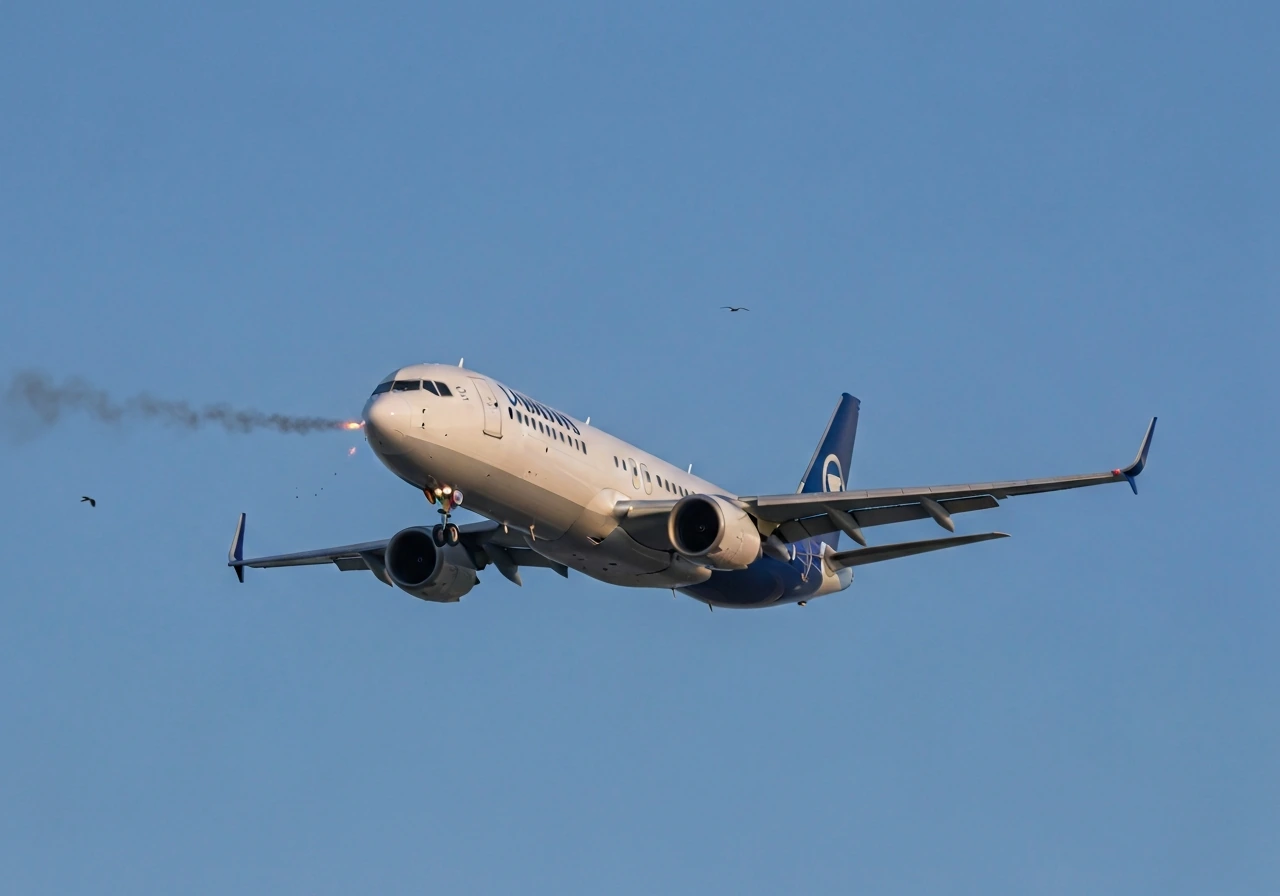
Yes, a bird can take down a plane, but it is genuinely rare and requires a very specific set of circumstances to happen. Yes, a bird can take down a plane, but it is genuinely rare and requires a very specific set of circumstances to happen can a bird crash a plane.
Can a Bird Take Down a Plane? Bird Strike Reality

Maya Chen
23 Apr 2026
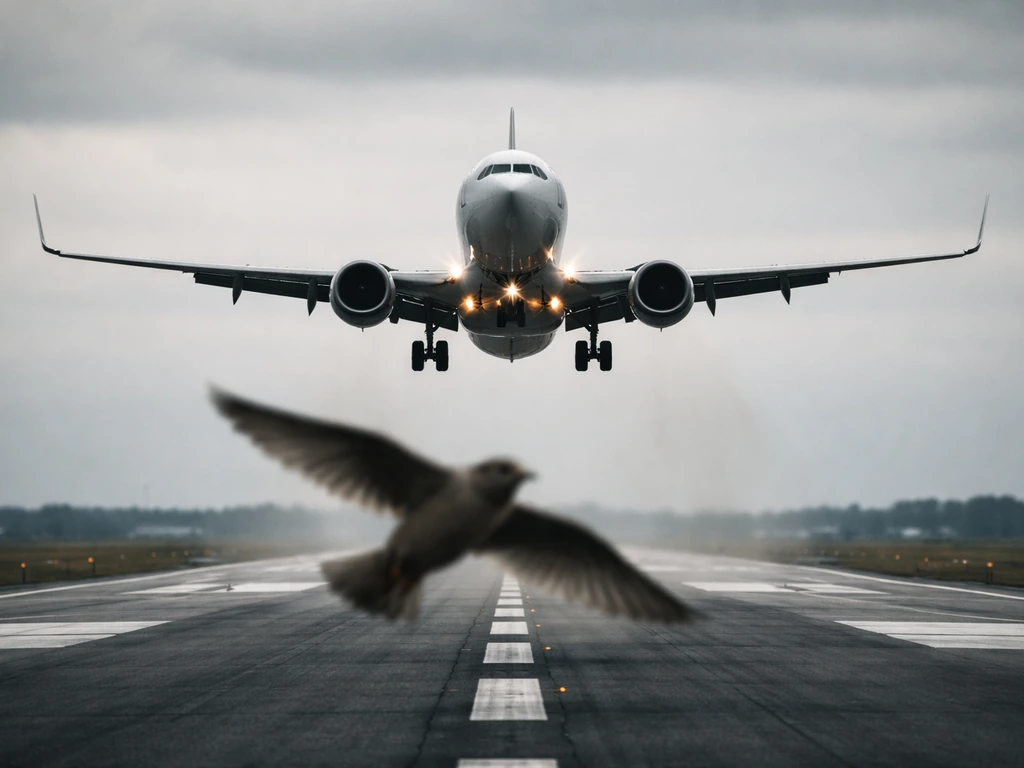
Yes, a bird can take down a plane, but it is genuinely rare and requires a very specific set of circumstances to happen bird causes plane crash. The vast majority of bird strikes cause little or no damage. Out of hundreds of thousands of strikes reported to the FAA each year, only a small fraction cause meaningful aircraft damage, and actual crashes or forced landings tied directly to birds are uncommon events.
The one scenario where the risk becomes real is multiple large birds ingested into both engines at a critical phase of flight, which is exactly what happened to US Airways Flight 1549 in 2009.
How bird strikes actually damage aircraft
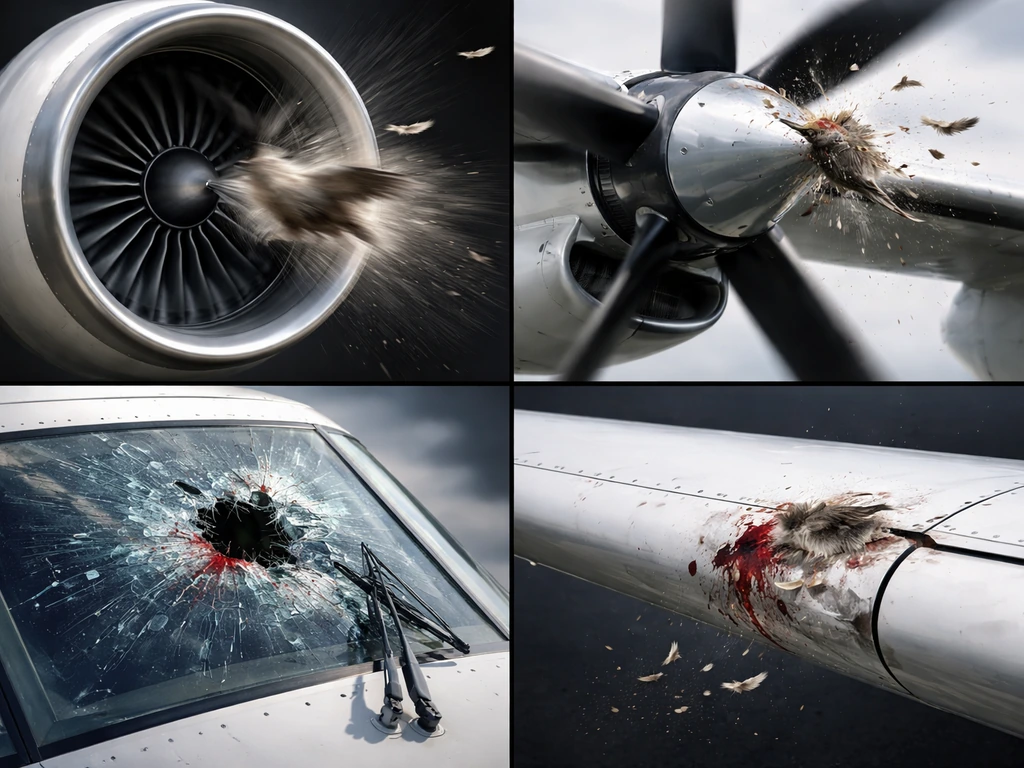
There are four main ways a bird strike causes a problem for an aircraft, and they vary a lot in severity.
- Engine ingestion: A bird gets pulled into a turbofan or turboprop engine. Depending on the bird's size and where in the engine it hits, this can range from a loud bang and minor compressor damage to partial or complete loss of thrust in that engine.
- Windshield impact: A high-speed strike can crack or destroy the flight deck windscreen, injuring crew and compromising visibility and pressurization.
- Sensor and probe damage: Pitot tubes, angle-of-attack sensors, and other external probes can be damaged or clogged, giving pilots false or missing flight data.
- Airframe and control surface damage: Strikes to the fuselage, wings, or tail can dent or puncture structure, and in rare cases affect control-related components.
Engine ingestion is consistently identified by the FAA as the most serious of these. Modern turbofan engines are certified to tolerate ingesting a certain size of bird and still maintain enough thrust for a safe landing, but that certification has limits. It is tested against specific bird sizes and quantities, and a flock of large birds ingested simultaneously can exceed what the design is built to handle.
Aircraft structure is not designed to absorb these impacts passively. Under rules like 14 CFR § 25.631, transport aircraft must demonstrate that after a bird strike, the airplane can still be safely controlled and landed. That is a meaningful protection, but it is a design standard, not a guarantee that every real-world impact falls within the tested parameters.
When a bird strike can actually bring a plane down
The scenario that leads to a serious outcome almost always involves multiple large birds ingested into both engines, usually during takeoff or initial climb when the plane is slow, low, and has almost no margin for error. That is exactly what happened with US Airways Flight 1549. An Airbus A320 climbing out of LaGuardia flew through a flock of Canada geese. Birds were ingested into both CFM56 engines, causing near-total loss of thrust in both. Captain Sullenberger ditched the plane on the Hudson River. The NTSB described it as not a typical bird strike event, meaning it represented the rare convergence of large bird species, full flock ingestion, dual-engine involvement, and a critical flight phase.
A single-engine ingestion on a twin-engine jet is serious and triggers emergency procedures, but most aircraft can fly and land safely on one engine. The danger escalates sharply when both engines are compromised, especially close to the ground. At altitude with time to troubleshoot and divert, even a dual-engine strike gives pilots more options. Near the ground at low speed, options narrow fast.
Windshield strikes are another pathway to a serious incident, particularly if the strike injures or incapacitates a crew member. These are uncommon but documented, and they are most dangerous in small general aviation aircraft where there may be only one pilot.
Which birds, flock sizes, and conditions increase the risk
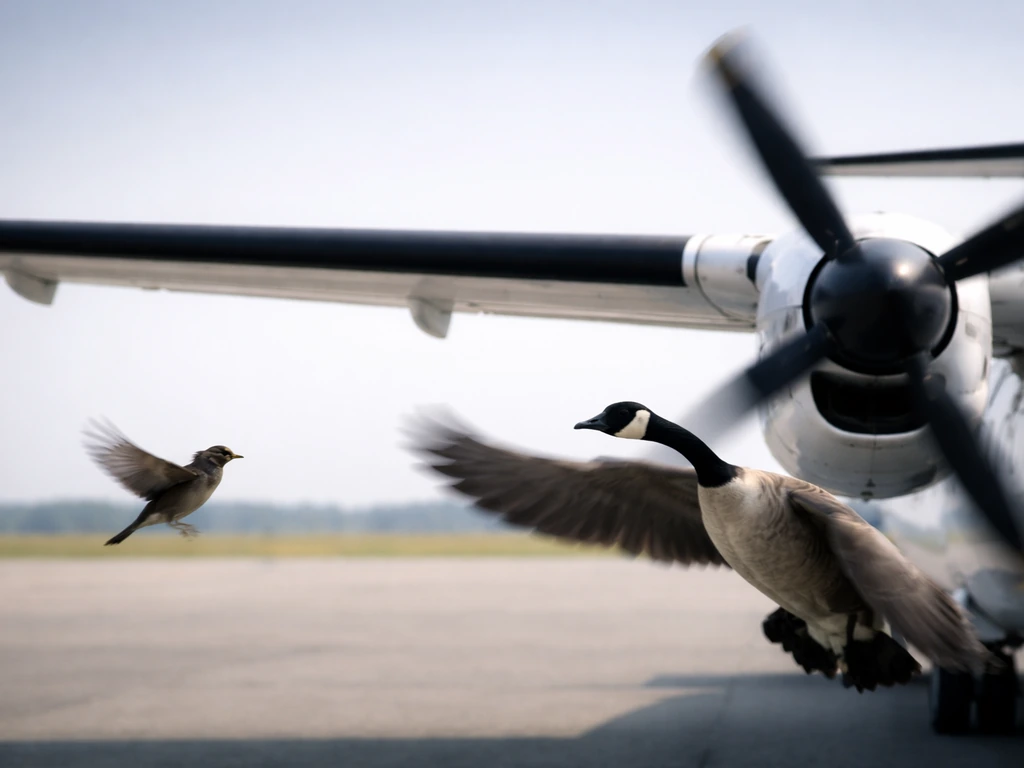
Not all birds represent the same threat. A sparrow hitting a widebody jet at cruise is a nuisance. A Canada goose or a pelican hitting a regional turboprop on takeoff is a different situation entirely. The FAA's wildlife strike data makes this clear: waterfowl like ducks and geese represent only about 4% of reported strikes, but account for roughly 27% of strikes that cause damage. Their size, density, and tendency to fly in large flocks at low altitudes near water make them disproportionately dangerous.
Flock size matters enormously. A single bird hit is usually survivable. A flock crossing a flightpath at engine-intake height during takeoff is a different problem, because multiple simultaneous ingestions can overwhelm engine tolerance limits that are sized for single-bird events.
Phase of flight and altitude are also critical factors. Most damaging strikes happen during takeoff, initial climb, and approach, when aircraft are flying at lower speeds and altitudes and birds are most active. Strikes at cruise altitude are rare, and at high altitude the thin air means fewer birds anyway. Seasonally, migration periods in spring and fall push large numbers of birds through airspace near airports, increasing strike frequency. Many birds are also most active at dawn and dusk, which overlaps with busy departure and arrival windows.
| Risk Factor | Lower Risk | Higher Risk |
|---|---|---|
| Bird size | Small songbirds, starlings | Geese, pelicans, vultures, swans |
| Flock size | Single bird | Large flocks (tens to hundreds of birds) |
| Flight phase | Cruise altitude | Takeoff, climb, approach below 3,000 ft |
| Time of year | Winter (low migration) | Spring/fall migration peaks |
| Engine exposure | Single engine ingestion, twin-engine aircraft | Dual engine ingestion, any aircraft |
| Aircraft type | Large widebody jet | Small general aviation, turboprop |
What pilots do when a bird strike happens
Pilots are trained to treat a bird strike as a potential emergency until they know otherwise. The first priority after any strike is assessing what was hit and whether the aircraft is still performing normally. Engine instruments are checked immediately. If there is thrust loss, the applicable emergency checklist takes over.
For minor strikes where nothing appears damaged, the response may be as simple as declaring the event to air traffic control, continuing to the destination, and filing a wildlife strike report after landing. AIM section 7-5-3 also urges pilots to report bird and other wildlife strikes using FAA Form 5200-7 (Bird/Other Wildlife Strike Report). For a more significant event involving engine damage or a crew injury, the pilot may declare an emergency, divert to the nearest suitable airport, and request priority handling.
Avoidance is the other side of pilot response. The FAA's Aeronautical Information Manual advises pilots to be vigilant for birds, particularly at low altitudes near airports, and to alert other pilots and ground personnel when birds are observed near runways. When birds are spotted on or near the runway before takeoff, pilots can request that airport management disperse the wildlife before the aircraft departs. That is a real, practical tool that gets used regularly.
AOPA guidance for general aviation pilots adds one more layer: after any strike, alert other pilots in the area through ATC so aircraft behind you in the pattern or on approach know what is in the airspace. That communication can prevent a second strike from becoming the more serious event.
Separating the myths from what the numbers actually show
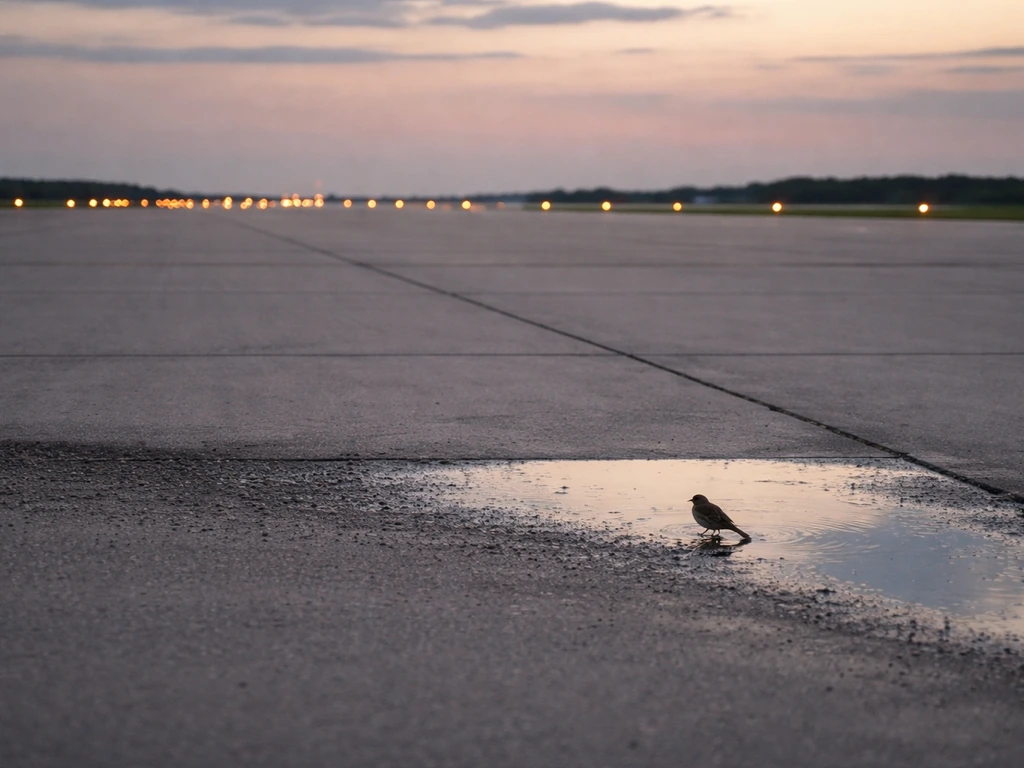
The biggest myth is that bird strikes are routinely dangerous. They are not. The FAA's National Wildlife Strike Database recorded 1,759 strikes in 1990. By 2021, that number had grown to 259,577 as reporting improved and air traffic increased. The vast majority of those cause no damage at all. Since 2010, the percentage of strikes causing damage has actually decreased even as the raw number of reported strikes has gone up, which reflects better aircraft design, better airport management, and better reporting culture.
The flip side of that myth is dismissing bird strikes entirely. They do cause real costs: aborted takeoffs, engine replacements, diversions, and occasional serious incidents. The risk is low but not zero, and that distinction matters especially for aircraft operating near known bird habitats.
Another common misconception is that modern engines are completely bird-proof. They are not. Engine certification standards require demonstrated tolerance for specific bird sizes and quantities, but those are test parameters, not absolute limits. A flock of large birds can exceed what any engine was designed to ingest safely, as Flight 1549 demonstrated.
Finally, crashes caused solely by bird strikes are extremely rare in commercial aviation. The incidents that get described as bird-strike-related crashes almost always involve an additional factor: critical flight phase, dual-engine involvement, low altitude, or very large birds. Related questions about whether bird strikes have caused actual plane crashes, and which specific incidents qualify, are worth exploring in detail separately since the documented cases each have their own engineering and operational context.
What to do if you witness a bird-aircraft incident
If you see a bird strike or a large flock near an active runway, the most useful thing you can do is report it promptly to airport operations or, if you are a pilot, to air traffic control. The FAA's formal reporting mechanism is the Wildlife Strike Database, governed by Advisory Circular AC 150/5200-32C, and reports can be filed online. FAA blank" rel="noopener noreferrer">Advisory Circular AC 150/5200-32C also explains the wildlife strike reporting system, NWSD data access, and the feather identification context used with strike data. Detailed reports (species if known, number of birds, location, altitude, what part of the aircraft was struck) are far more useful than vague ones.
As a passenger, you may notice a loud thump, a flash near the engine, or smoke following a strike. Stay calm. The flight crew is trained for this and the aircraft is designed to handle it. Follow any crew instructions, but do not assume a strike means the plane is going down. In the overwhelming majority of cases, the flight continues or lands normally.
If you find bird remains near an airport or runway, do not handle them and do not disturb the area. Report the location to airport operations. Feather and tissue samples from strike remains are used to identify species through the Smithsonian Institution's Feather Identification Lab, which feeds data back into strike prevention research. The remains have real scientific and safety value.
Do not attempt to scare birds away from airport areas on your own unless you are authorized airport staff. Unauthorized wildlife harassment near airfield operations creates its own hazards and may be legally restricted.
How airports reduce the risk of bird strikes
The formal framework for this is called a Wildlife Hazard Management Programme, or WHMP. The FAA and ICAO both require or strongly recommend WHMPs for airports with significant strike histories or wildlife hazard potential. The FAA's manual on wildlife hazard management covers habitat modification, active deterrence, and land-use controls around airport perimeters.
Habitat management is the foundation. Birds need food, water, and cover. Remove or reduce those near runways and you reduce bird presence. Practical steps include:
- Keeping grass on airfields at heights that deter foraging birds (typically 7 to 14 inches, tall enough to reduce visibility for hunting raptors and ground-feeding flocks).
- Eliminating standing water that attracts waterfowl, including drainage management and filling low-lying areas.
- Removing berry-producing shrubs, seed-bearing plants, and food sources near runways.
- Using netting or wire exclusion to prevent birds from nesting in airport structures.
- Avoiding land uses near airports (landfills, golf courses, retention ponds, agricultural fields) that concentrate hazardous wildlife.
Active deterrence methods are used alongside habitat management. These include pyrotechnics (loud bangs to disperse flocks), trained falconry programs at some airports, laser devices, and distress call broadcasts. No single method works indefinitely because birds habituate to repeated stimuli, so airports rotate techniques.
Lighting is another factor. Some migratory birds are attracted to airport lighting at night and during low-visibility conditions. Directing lighting downward, reducing unnecessary illumination, and using bird-friendly light spectra where feasible can reduce the concentration of birds in critical airspace.
The FAA's Advisory Circular AC 150/5200-33 specifically addresses hazardous wildlife attractants on and near airports, giving airport operators a roadmap for what to control and what land uses to avoid in the vicinity of airfields. That guidance, combined with regular wildlife surveys and strike data analysis from the National Wildlife Strike Database, forms the core of modern airport bird-risk management.
The honest takeaway: a bird can take down a plane, but it takes the right (wrong) combination of large birds, a full flock, both engines, and a critical moment in flight. When people ask, can a plane crash because of a bird, the answer usually depends on whether multiple large birds get ingested into both engines at a critical moment in flight.
When people ask, can a plane crash because of a bird, the answer usually depends on whether multiple large birds get ingested into both engines at a critical moment in flight, which is the same specific pattern behind a bird causes plane crash scenario. Modern aircraft design, trained pilots, and systematic airport wildlife management have all pushed that probability very low.
Understanding where the real risk lies, and where it does not, is what lets you assess bird-strike news or incidents accurately rather than reacting to either dismissal or alarm.
FAQ
How can you tell whether a bird strike is likely to be minor or genuinely serious?
The key tell is whether you lose thrust or see indications of engine damage (alarms, abnormal engine parameters, vibration). A single thump with no subsequent performance change is often minor, but any report of “bird ingestion,” smoke, burning smell, or engine instrument abnormalities should be treated as potentially serious and handled with the applicable emergency actions.
If a strike happens and the engines keep producing thrust, should the crew still divert?
Not necessarily. Many strikes are handled by continuing, but diversion becomes more likely if there is persistent engine roughness, recurring indications on engine instruments, evidence of damage to propellers or control surfaces, or uncertainty about whether additional birds were ingested. Crews weigh remaining fuel, nearest suitable airports, and checklist outcomes rather than the fact that the aircraft was struck.
Can a bird strike cause structural damage even if only one engine is affected?
Yes. Depending on impact location, a strike can damage intakes, cowlings, propeller blades, leading edges, or even the windshield, not just the engine. That is why crews still inspect what was hit and confirm controllability after a strike, even when the aircraft seems to “fly fine” initially.
Do bird strikes get more dangerous near the ground because there is less time, or because aircraft performance changes?
Both. Near the ground, airspeed can be lower during takeoff and climb, margins for error are smaller, and options for maneuvering or diverting shrink quickly. Also, there is less altitude to trade for troubleshooting, and if thrust loss occurs at low speed, the aircraft may not have time to reconfigure without consequences.
If multiple birds are involved, does that always mean both engines will fail?
No. Multi-bird ingestion can still result in partial thrust loss, temporary compressor surges, or only one engine being more severely affected, depending on where the flock intersects the aircraft and how the birds are distributed between intakes. Dual-engine involvement is a major risk driver, but it is not automatic.
Are cargo and commuter aircraft at higher risk than private jets because of bird flight patterns?
Risk is usually more about where and when aircraft operate relative to bird activity than about ownership type. A small aircraft flying repeated low-altitude routes through the same wildlife corridor can face frequent exposure, while a larger aircraft at higher altitudes might see fewer events. The “could it happen” question is about local bird density, runway use patterns, and time of day.
Do pilots always treat every strike as an emergency?
They treat it as potentially serious until they can verify otherwise. “Emergency” declarations and diversions are driven by what the crew learns from engine indications, aircraft behavior, and checklist guidance, not by the fact that something hit the aircraft. Minor external strikes without performance or controllability issues often end in continued flight plus reporting.
What should passengers do immediately after hearing a loud bang or seeing smoke?
Stay seated with seatbelt secured and follow crew instructions. Avoid trying to identify the engine or locate birds yourself, and do not assume the aircraft is doomed based on noise or flash. If the crew announces an inspection or landing plan, trust that procedures and aircraft design are being used to manage the situation.
Is it ever unsafe for ground crews or others to handle bird remains after a strike?
Yes. Bird remains can create contamination hazards and are useful for identification work, so handling should be limited to authorized personnel with proper protective procedures. If you find remains near a runway, report the exact location to airport operations rather than moving or disturbing the material.
If I spot birds on or near the runway before takeoff, what is the practical next step for a pilot?
Report the birds promptly via ATC and request the appropriate runway safety and wildlife response from airport operations. The most useful details are location relative to the runway, direction of movement, estimated flock size, and whether birds are actively on the runway or just nearby.
What is the most common mistake people make when discussing “bird strikes take down planes”?
They either dismiss the risk entirely or assume any strike is catastrophic. The practical takeaway is that most strikes cause no damage, and serious outcomes generally require a rare convergence of factors, especially multiple large birds ingested into both engines during a critical flight phase.
Do bird deterrence methods like lasers or pyrotechnics ever stop working?
They can lose effectiveness over time because birds habituate to repeated stimuli. That is why airports typically rotate deterrence techniques and combine them with habitat management, rather than relying on a single method indefinitely.
If a strike is reported, what details make the report more useful for safety planning?
Species if known, approximate number of birds, location (including distance and altitude if known), time relative to departure or approach, and what part of the aircraft was struck. Those specifics help match aircraft impacts to engine intake or airframe vulnerabilities and improve habitat and deterrence decisions.
Next Article
Can Bird Strike Cause a Plane Crash How It Happens
Explains how a bird strike can damage engines or the airframe, when it leads to crashes, and how to prevent it.