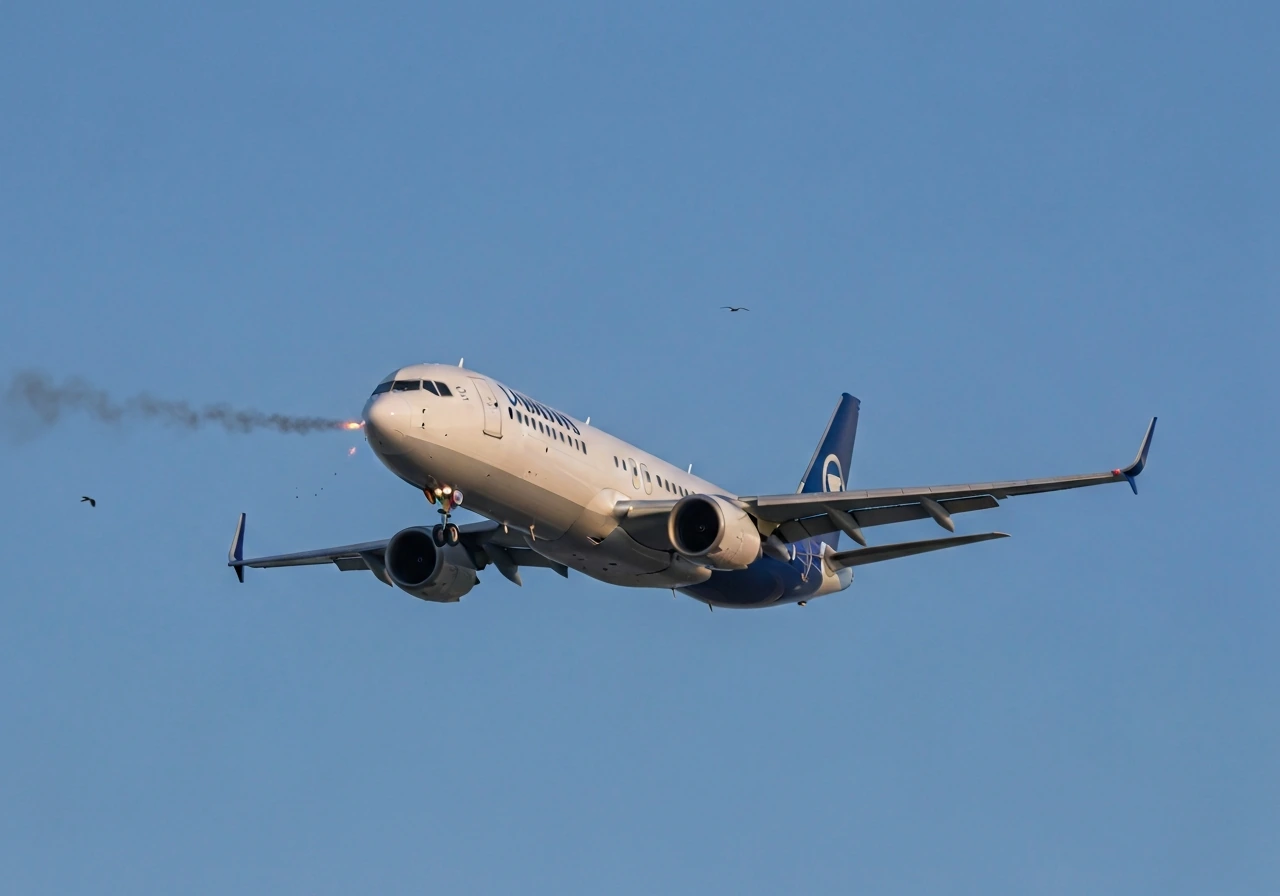
Can a bird strike actually bring down a plane?
Yes, a bird strike can cause a plane crash, but it is rare, and the vast majority of bird strikes cause little or no meaningful damage. The real danger comes from a specific scenario: a bird (or birds) getting ingested into a jet or turboprop engine. When that happens, the FAA's own guidance in the Aeronautical Information Manual notes that ingestion may result in sudden loss of power or outright engine failure, and in some cases, aircraft control problems. That is the honest, evidence-based answer. It is possible. It has happened. But context matters enormously, and this article breaks all of it down.
The real mechanisms: how a bird strike becomes a serious problem
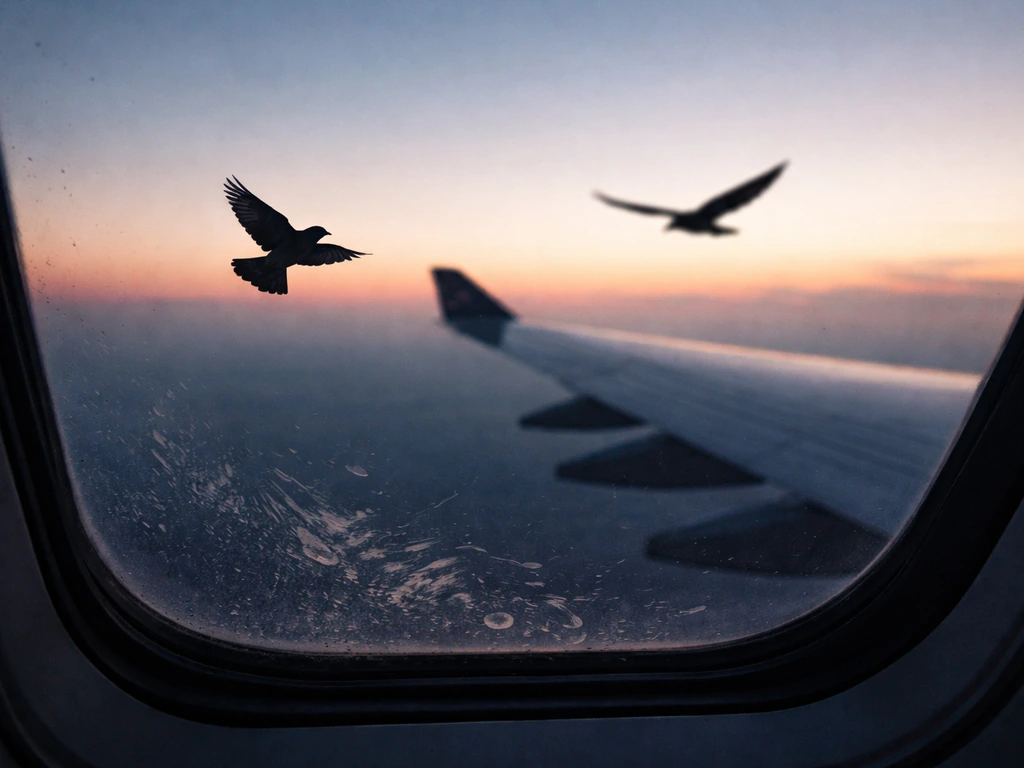
Not every bird strike is created equal. A small songbird hitting a fuselage at cruise altitude is almost always a non-event. A flock of large Canada geese ingested into both engines at low altitude during takeoff is a completely different situation. Understanding the difference comes down to where the impact happens and what it disrupts.
Engine ingestion: the most dangerous pathway
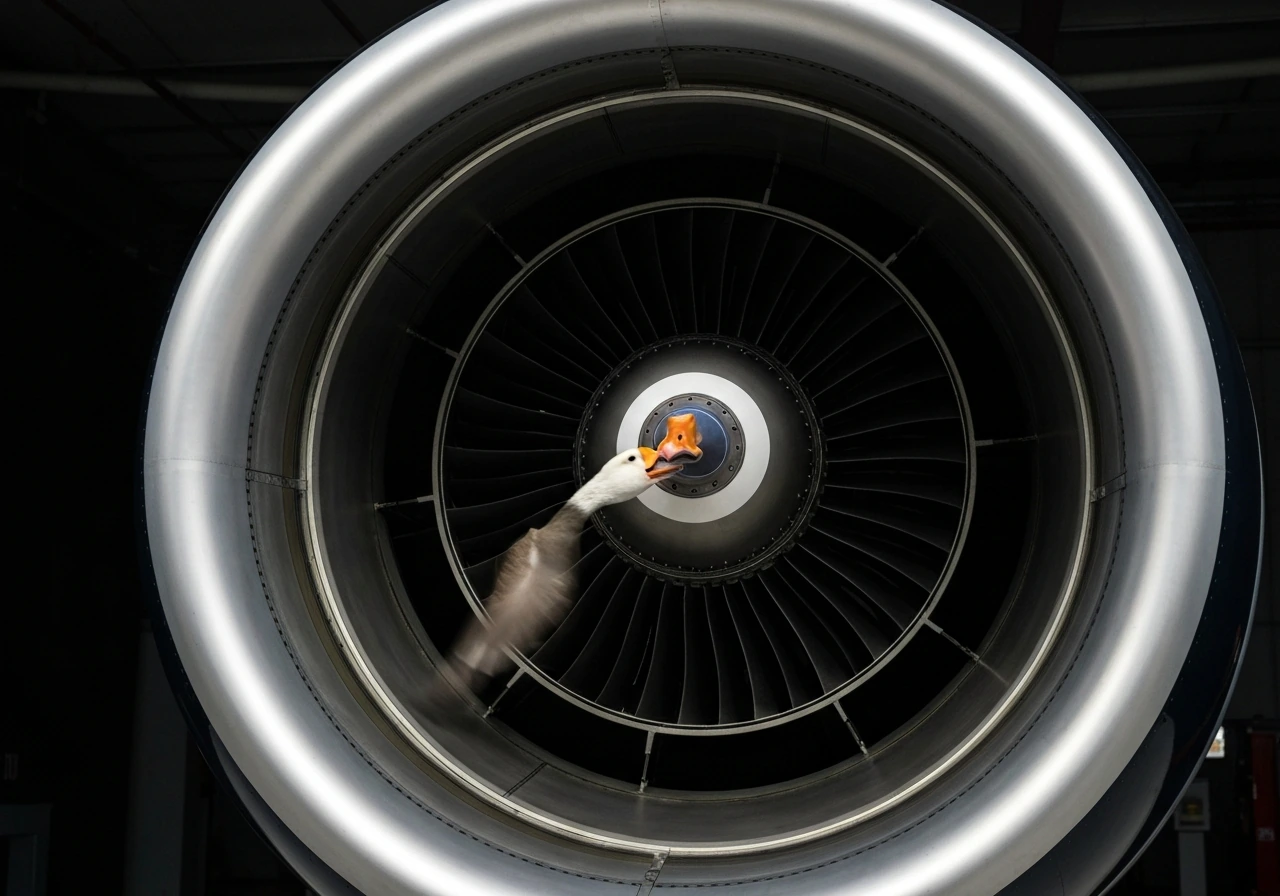
The FAA is direct about this: engine ingestion is the most serious type of bird strike for turboprops and jet aircraft. When a bird enters a spinning engine at high speed, it can damage or destroy fan blades, disrupt airflow, and cause a compressor stall or full engine failure. The worst-case outcome is losing thrust on one or both engines, which at low altitude during takeoff or approach leaves very little margin for recovery. This is exactly what made the 2009 US Airways Flight 1549 incident so dramatic, both engines ingested birds from a large flock and lost thrust almost simultaneously, leaving the crew with no good options except the Hudson River.
Aircraft engine certification under EASA's CS-E 800 criteria sets specific limits on how much damage a bird ingestion can cause before the design fails certification. For example, one acceptance criterion states that ingesting a large flocking bird must not cause more than a sustained 50% thrust loss and must not cause an engine shutdown or a hazardous engine effect during the test scenario. In other words, regulators don't expect engines to be immune to bird ingestion, they require that the damage stay within survivable, controllable limits. That standard exists precisely because the risk is real.
Windshield and airframe impacts
A bird hitting the cockpit windshield at speed can shatter it, injure pilots, and cause sudden loss of visibility or even incapacitation. Airframe impacts can damage flight control surfaces or sensors. These are less common pathways to a serious outcome, but they exist. A bird strike that injures a pilot or knocks out an instrument creates a cascade of problems, especially in poor weather or at a critical phase of flight like takeoff or final approach.
Why altitude and flight phase matter so much
Most birds fly below 3,500 feet, and most bird strikes happen during takeoff, initial climb, approach, or landing, exactly the phases when the aircraft is closest to the ground and has the least time to recover from a problem. At cruise altitude, a single-engine failure is serious but very manageable in a multi-engine aircraft. During a rejected takeoff or a go-around at 400 feet with degraded thrust, the math gets much harder. Phase of flight is one of the biggest factors in whether a bird strike becomes an incident or a catastrophe.
What actually happens in most bird strikes
The realistic outcome of a bird strike is: a thud, some feathers, possible minor structural damage, and a successful landing followed by a maintenance inspection. The aircraft continues flying. The crew reports the strike. Maintenance checks the airframe and engine inlets. Life goes on. This is what happens in the overwhelming majority of cases, and it is worth saying plainly because the idea that a bird can crash a plane gets treated as a straightforward yes or no when the real answer is far more nuanced.
ICAO's framework under Annex 13 draws a clear line between accidents, serious incidents, and ordinary incidents based on the severity of outcomes, injury thresholds, level of damage, and how close the event came to an accident. Most bird strikes fall into the "incident" or "minor" category. A small number qualify as serious incidents. Fatal crashes caused by bird strikes are genuinely rare, even though the overall number of bird strikes is very high.
How often bird strikes happen, and yes, they're increasing
Bird strikes are not rare occurrences in aviation. The FAA's Wildlife Strike Database receives tens of thousands of strike reports every year in the United States alone, and global numbers are higher still. The trend has been upward for decades, driven by two main factors: growing bird populations (especially large species like Canada geese and vultures that were protected under conservation laws and rebounded strongly) and more air traffic overall.
Underreporting is also a known issue, pilots and airlines are not always required to report every strike, and many minor events go unrecorded. The FAA blog also notes that the National Wildlife Strike Database was established by the FAA and USDA and that strike reporting is voluntary blank" rel="noopener noreferrer">National Wildlife Strike Database was established by FAA and USDA. The actual number of strikes is believed to be significantly higher than what appears in official databases. The FAA’s Wildlife Strike report for 1990, 2022 summarizes that 276,846 strikes were reported to its database, and explains how that database is used and what the reporting scope covers blank" rel="noopener noreferrer">276,846 strikes reported to the database. So if you're wondering whether a bird causes a plane crash with any regularity, the answer is: strikes happen constantly, but crashes as a result remain extremely uncommon relative to the total number of events.
Bird strikes vs. crashes: putting the risk in perspective
| Factor | Bird Strike (Typical) | Bird Strike (Severe/Crash Risk) |
|---|
| Bird size | Small to medium (sparrow, starling) | Large or flocking (geese, vultures, pelicans) |
| Impact location | Fuselage, wing leading edge | Engine inlet, cockpit windshield |
| Flight phase | Cruise altitude | Takeoff, climb, approach, landing |
| Likely outcome | Minor damage, safe landing, inspection | Engine failure, loss of control, potential crash |
| Frequency | Very common (tens of thousands per year) | Rare — crashes from strikes are documented but uncommon |
| Pilot response needed | Routine reporting, maintenance check | Emergency procedures, possible diversion or forced landing |
What aviation does to reduce the risk
Aircraft and engine design
Modern jet engines are required to demonstrate bird ingestion tolerance during certification testing. Regulators like EASA and the FAA mandate that engines survive specific ingestion scenarios without catastrophic failure, meaning the aircraft must remain controllable even after ingesting a bird. Windshields are designed and tested to withstand impacts from birds at operational speeds. Airframe structures around critical areas are reinforced. None of this makes aircraft bird-proof, but it sets a meaningful floor on how bad the outcome can get.
Airport wildlife management
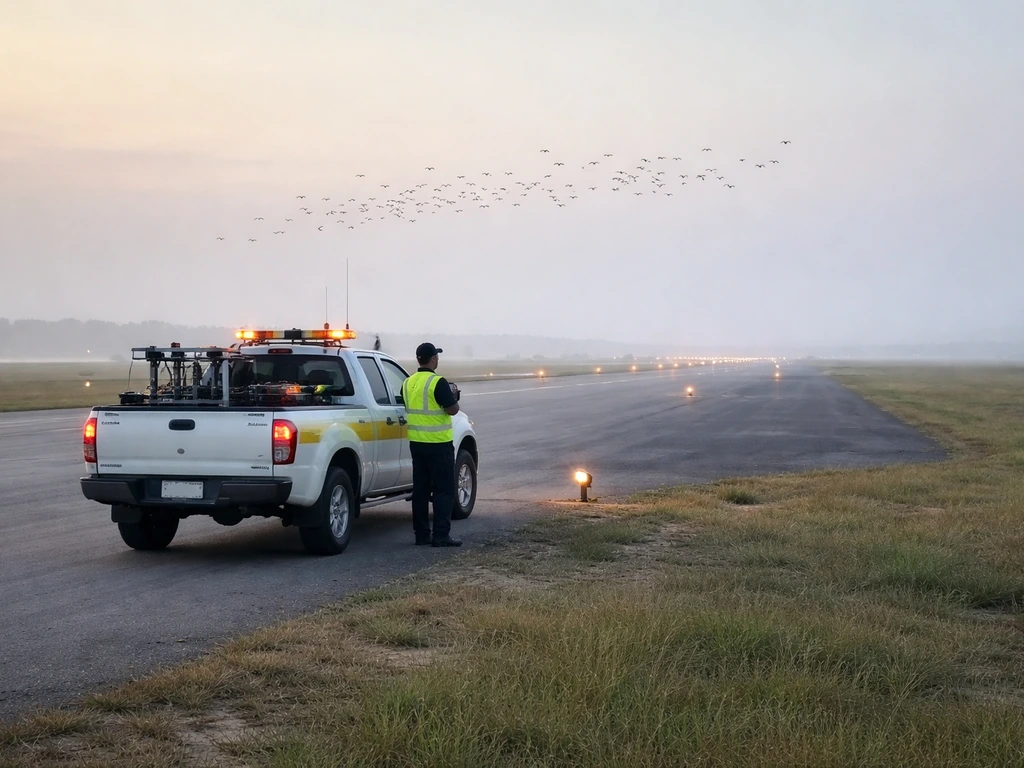
Airports near bodies of water, open fields, or food sources are especially vulnerable, and most major airports have dedicated wildlife management programs. These include habitat modification (removing standing water, cutting grass short, eliminating food sources that attract birds), active hazing programs using trained falconers, pyrotechnics, and distress call systems, and in some cases lethal control of problem species under government permits. Radar systems can now track bird movements in real time and give air traffic controllers advance warning during high-risk periods like dawn, dusk, and migration seasons.
Pilot training and procedures
Pilots are trained to respond to bird strikes, including engine ingestion scenarios. Emergency checklists cover single-engine failures, rejected takeoffs, and precautionary landings. ATC can issue bird activity advisories to crews. The system is layered: design, airport management, and crew training all work together to reduce the chance that any single bird strike becomes a catastrophic event.
Worried about a specific incident? Here's what to do
If you're trying to understand a specific bird strike event, whether you were on the flight, you're a concerned family member, or you're just trying to figure out what really happened, here are the most useful practical steps.
- Check the FAA Wildlife Strike Database (available publicly at faa.gov) for reported strikes at the airport and airline involved. Reports include date, aircraft type, species if identified, and damage level.
- For serious incidents or accidents, check the NTSB (National Transportation Safety Board) database if the event occurred in the US, or the relevant national authority (AAIB, BEA, etc.) for other countries. ICAO's Annex 13 framework means serious incidents must be investigated and findings published.
- Ask the airline directly. If you were on a flight that had a bird strike, you have every right to ask what happened and what inspection was performed before the aircraft continued in service.
- Look at the phase of flight and location. A bird strike reported during cruise at 30,000 feet is very different from one reported during takeoff roll or initial climb near a wildlife-heavy area.
- Check whether multiple engines were affected. Single-engine events in multi-engine aircraft are serious but highly survivable with normal crew response. Dual-engine events at low altitude represent the genuinely high-risk scenario.
- If you want to report a bird strike you observed (as a pilot, crew member, or even a ground witness), the FAA accepts voluntary reports through its Wildlife Strike Reporting system. More data in the system helps researchers identify high-risk locations and species.
Separating the myth from the real hazard
There's a version of this question that's driven by fear and a version that's driven by genuine curiosity about aviation safety. Both deserve a straight answer. People sometimes wonder whether a bird can take down a plane in the way that a missile or mechanical failure might, as an absolute, immediate catastrophic event. The honest answer is that the physics of a bird strike rarely produce that kind of instant outcome. What they can produce is a chain of events: engine damage leading to reduced thrust, a crew managing an emergency, a landing at an alternate airport. In the worst historical cases, the chain led to fatalities. In the vast majority, it led to an inspection and a delay.
The myth worth busting is not that bird strikes are harmless, they clearly aren't always. The myth is that any bird hitting any plane in any situation is likely to bring it down. That framing ignores the engineering safeguards, the training, the airport management systems, and the basic statistics. If you want the full picture of whether a plane can crash because of a bird, the answer is: yes under specific conditions, but aviation has built a very robust set of defenses between a typical bird strike and a fatal crash.
The bottom line
Bird strikes can cause plane crashes. The mechanism is real, the history is documented, and the risk is taken seriously by regulators, aircraft manufacturers, and airports worldwide. But the probability that any given bird strike results in a crash is low, because the conditions required, large birds, engine ingestion, critical flight phase, dual-engine involvement, rarely all align at once. What you should take away from this is not panic, and not dismissiveness. It's an accurate picture: a genuine hazard that aviation manages well, with clear procedures for when things go wrong and a strong track record of keeping those events survivable.