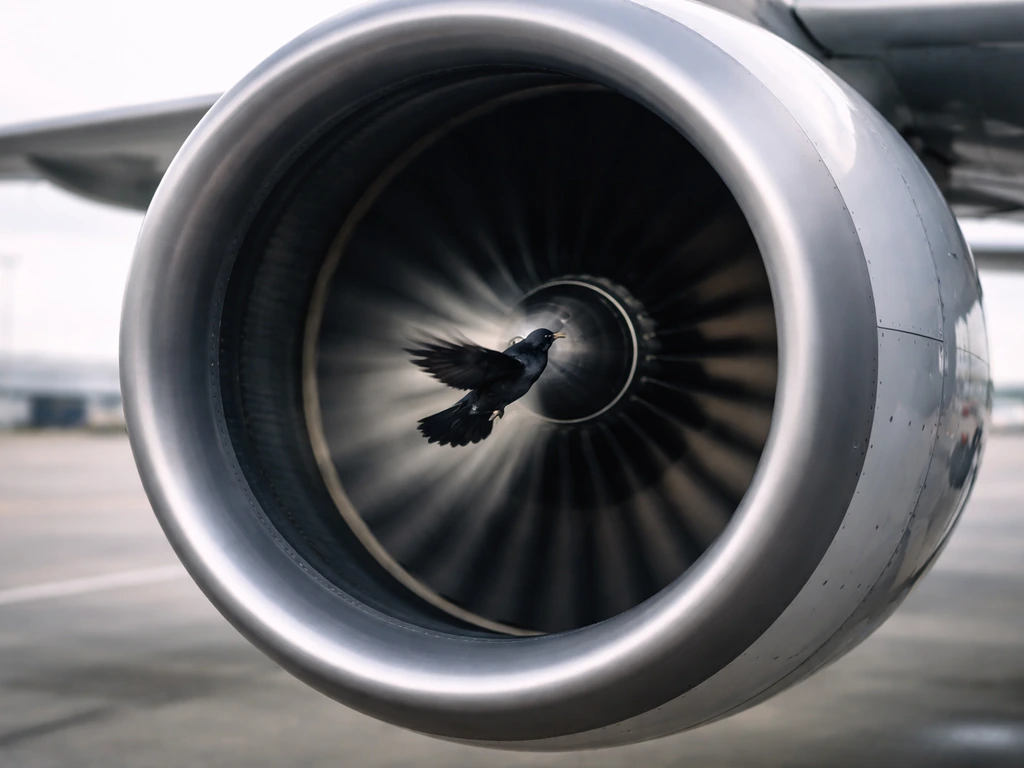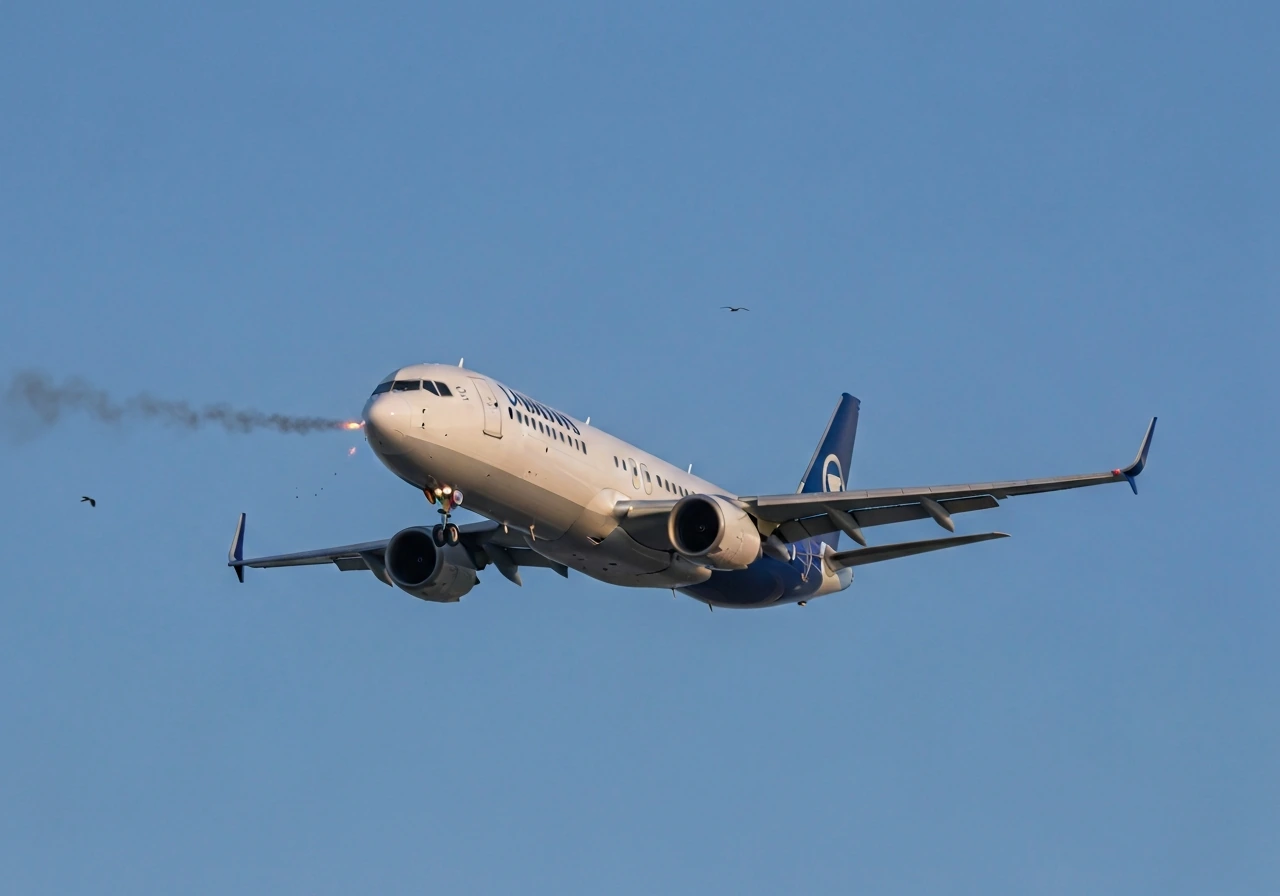
Planes prevent bird strikes through a layered system: airports manage the land around runways to make it less attractive to birds, trained biologists actively monitor and disperse wildlife, flight crews follow procedures that reduce exposure during high-risk moments, and the aircraft themselves are engineered to survive a strike if one happens anyway. No single method eliminates the risk entirely, but together these layers keep it remarkably low given how many flights operate every day.
How Do Planes Prevent Bird Strikes A Practical Guide

Maya Chen
15 Apr 2026

Why bird strikes happen around airports
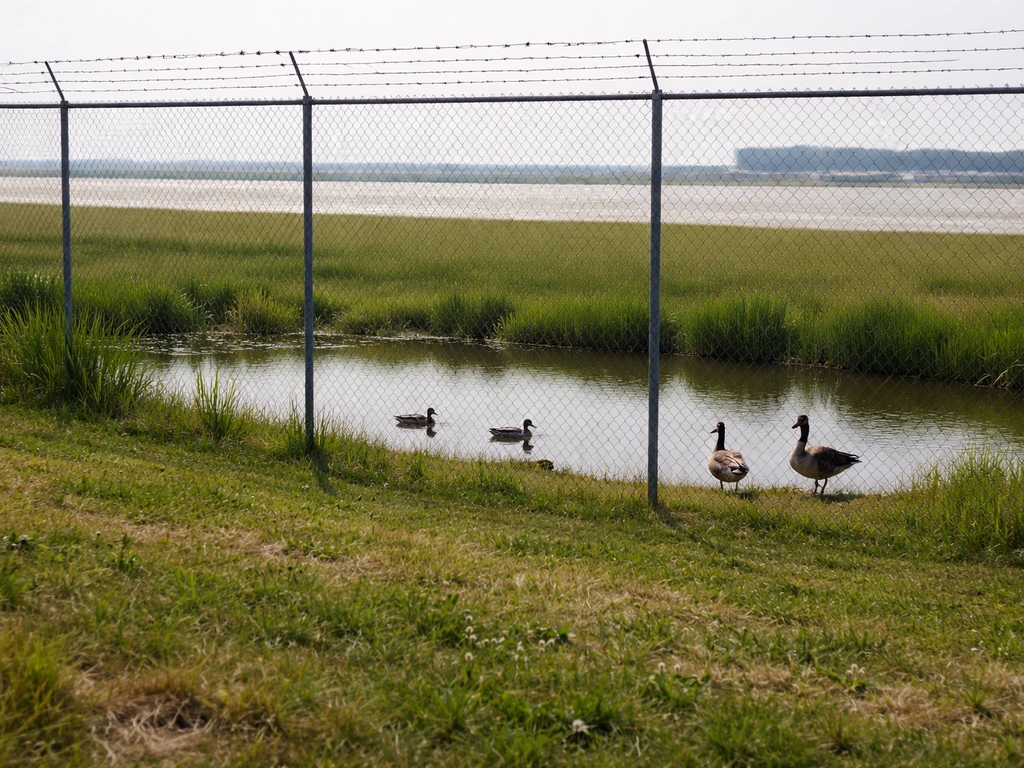
Airports are, unfortunately, ideal bird habitat. Large expanses of short grass attract insects and rodents. Drainage ponds and detention basins attract waterfowl. Food waste from terminals draws gulls and starlings. Birds aren't trying to cause trouble; they're just using the resources they find. The FAA's core guidance on hazardous wildlife attractants makes exactly this point: controlling what draws wildlife onto airport property is the first and most fundamental line of defense.
Risk isn't uniform throughout the year, either. The FAA's Aeronautical Information Manual calls out March through April and August through November as the highest-risk periods because of bird migration. During those windows, large flocks of species that wouldn't normally be near a given airport suddenly show up in massive numbers, often at low altitudes during dawn and dusk. That's when ground teams have to be most alert.
Bird detection and monitoring systems
Modern airports don't rely on someone simply spotting a flock from a window. Many use dedicated wildlife radar systems that can detect bird movement across the airfield and its surroundings in real time, flagging concentrations of birds and tracking their flight paths. The FAA has been integrating radar detection data directly into the airport-level wildlife mitigation program loop, so radar isn't just an observation tool; it triggers an operational response.
Beyond radar, airports employed under 14 CFR Part 139 (the regulation covering certificated airports) are required to conduct a formal Wildlife Hazard Assessment and maintain an active Wildlife Hazard Management Plan. That plan must include physical inspections of the airport environment, active wildlife control measures, and annual reviews of whether the plan is actually working. The FAA also points to situations that trigger an immediate review: a strike involving multiple birds, a strike that causes aircraft damage, or an event involving a species not previously identified as a hazard.
Wildlife biologists are central to this process. The USDA APHIS encourages airports to employ professional wildlife biologists specifically trained in airport hazard management, not just general pest control staff. These biologists conduct species identification, track population trends, and advise on which deterrents are likely to work for the specific mix of birds present at a given location.
Airport habitat management and approved deterrence
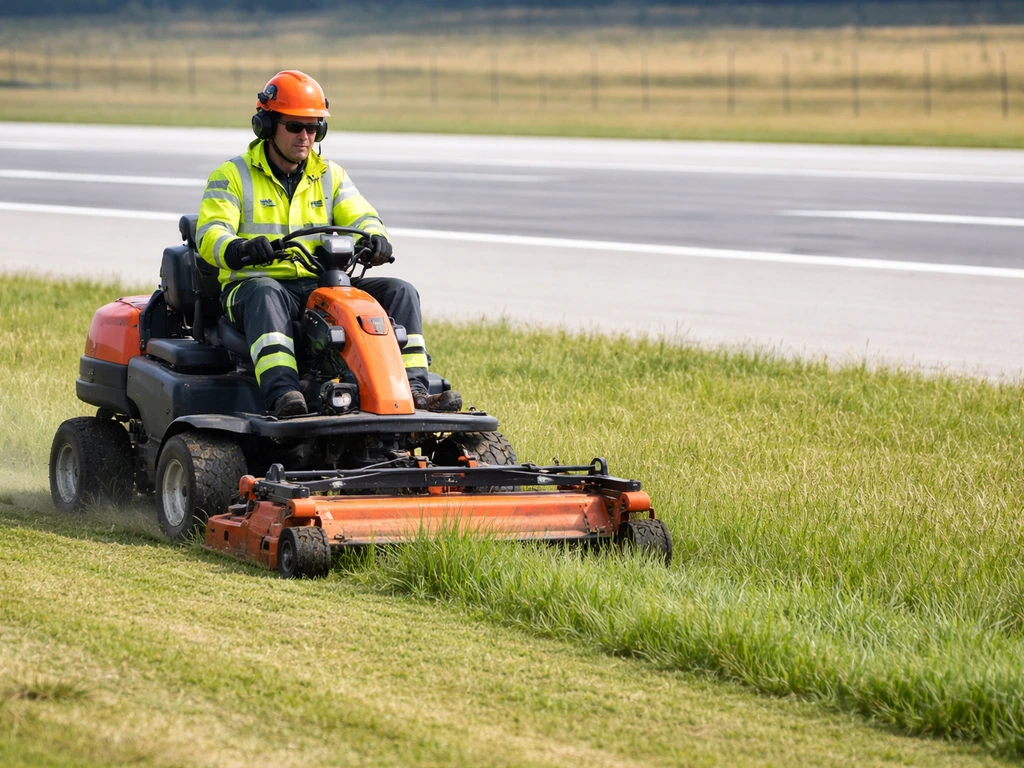
The most durable prevention strategy is making airports less attractive to birds in the first place. That means managing grass height to remove rodent cover, eliminating standing water where waterfowl congregate, and controlling food sources that draw scavenging birds near terminals and cargo areas. These changes don't require chasing birds away every day; they reduce the underlying reason birds keep coming back.
When habitat changes aren't enough on their own, airports use a toolkit of active deterrents. Common options include pyrotechnics (essentially loud bird-scaring cartridges fired from a handheld launcher), propane cannons, distress call recordings, trained falconry, and, increasingly, unmanned aircraft systems (UAS or drones) flown in patterns to disperse flocks. The FAA has validated UAS as part of the wildlife hazard abatement program, recognizing that a drone flying into a flock is far less disruptive than the alternative.
It's worth knowing why you won't see wire grids, nets, or blockers over runway approaches and engine inlets: the physics and engineering challenges make those solutions impractical in ways that aren't always obvious to casual observers. There's actually a deeper explanation of why jets don't have bird blockers that's worth reading if you've ever wondered why the obvious-seeming fix isn't used.
Operational procedures that reduce risk
Flight crews and air traffic controllers both play an active role in managing bird strike risk in real time. When birds are observed near runways, the FAA's AIM urges pilots and controllers to respond appropriately: that can mean selecting a different runway, delaying a departure, or adjusting the approach path. None of these are informal suggestions; they're part of standard operating procedure.
Timing matters too. Low-altitude flight during dawn and dusk is statistically riskier because that's when many bird species are most active and most likely to be crossing airport airspace in large numbers. Airport wildlife teams are typically most active during those same windows, running checks and deploying deterrents before the first departures of the day and again around last light.
The AIM also specifically highlights that the most serious strikes are those involving engine ingestion, and it recommends that pilots review engine-out procedures as part of pre-flight preparation at airports with known wildlife activity. That's not paranoia; it's prudent preparation given that what happens if a bird hits a plane engine can range from a minor compressor stall to significant thrust loss depending on the bird, the engine type, and the phase of flight.
Aircraft and engine design: built to take a hit
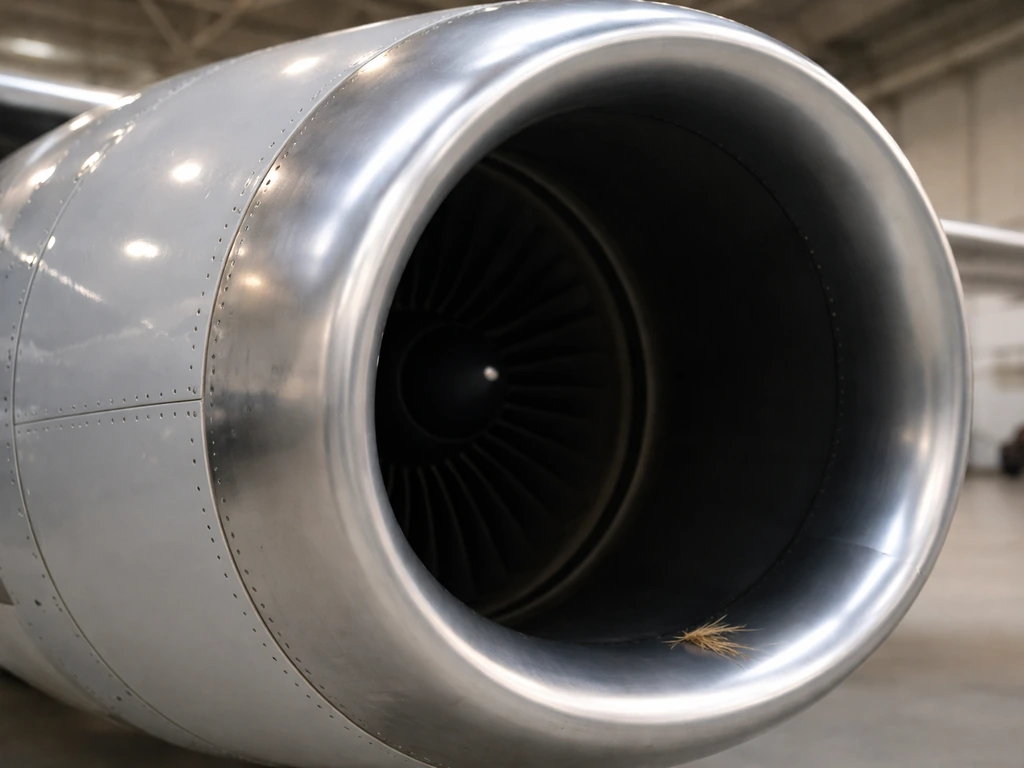
One of the most reassuring parts of the bird strike prevention story is that modern aircraft are actually certified to survive strikes, not just avoid them. Under 14 CFR § 25.631, airplane structures including the tail must be able to withstand an 8-pound bird impact at cruise speed at sea level and still allow continued safe flight and landing. That's a meaningful threshold; an 8-pound bird is roughly the size of a large Canada goose.
Engine certification requirements go even further. Under both U.S. 14 CFR Part 33 and EASA's equivalent standards, jet engines must demonstrate they can ingest birds without producing what the regulations call "hazardous engine conditions" or unacceptable sustained thrust loss. Skybrary's summary of these standards makes clear the goal: even after a bird strike, the engine must either keep running safely or shut down cleanly, without catching fire or breaking apart in a way that damages the rest of the aircraft. People sometimes wonder whether a jet engine can survive a bird strike, and the honest answer is: it depends on the bird and the engine, but the design standards are specifically written to make survival the expected outcome in most scenarios.
The fan blades on modern high-bypass turbofan engines are engineered with bird ingestion in mind. Blade geometry, material toughness, and containment ring design are all tested against bird strike scenarios during certification. None of this means an engine is indestructible, but it does mean a lot of engineering work has gone into ensuring that a single bird strike doesn't automatically become a catastrophe.
How reporting, analysis, and training improve prevention over time
Prevention doesn't just happen at the airport level in real time; it also improves over years through systematic reporting and analysis. The FAA maintains the National Wildlife Strike Database, which collects reports from pilots, airlines, airports, and air traffic control. Reports are submitted using FAA Form 5200-7, and the FAA strongly encourages online submission so data can be validated and integrated quickly. When bird remains are available after a strike, the FAA's Feather Identification Program can identify the species from feather fragments, adding precision to the data.
The database records location, time of day, phase of flight, aircraft type, species involved, and whether damage occurred. Over time, this creates a detailed picture of where, when, and with which species strikes are most likely. That picture is then used to refine wildlife management programs, update deterrence strategies, and allocate resources to the airports and seasons where risk is highest. It's a genuine feedback loop: every reported strike makes the system a little smarter.
Training is part of the loop too. FAA Advisory Circular 150/5200-36 requires that wildlife biologists and airport personnel involved in hazard management receive initial training and recurrent training every 12 months. That requirement exists because bird populations, migration patterns, and deterrence technologies all change, and a wildlife management plan that was effective five years ago may need updating. Annual recertification keeps airport teams current.
For anyone curious about the real-world outcomes of all this, the data is publicly accessible. The FAA's Wildlife Strike Database functions as a research tool for both aviation professionals and the public, and trend data from it has been used to drive improvements in both airport management and aircraft certification standards.
Common myths about planes and bird strikes
The biggest myth is that a bird strike automatically means a crash. That's not how it works. The vast majority of bird strikes cause no damage at all, and the regulatory framework described above is specifically designed so that even damaging strikes allow continued safe flight. Understanding whether a plane can survive a bird strike requires separating the rare high-profile incidents from the thousands of minor strikes that never make headlines.
A second myth is that bird strikes are rare, unusual events. They're not. The FAA's database receives thousands of reports per year. Bird strikes are common enough that the entire regulatory and operational framework described in this article exists specifically to manage them as a routine hazard, not an exceptional one. What's rare isn't the strike itself but the combination of factors (large bird, critical flight phase, engine ingestion) that leads to serious consequences.
A third myth is that a single large bird can destroy a jet engine outright. The reality is more nuanced. While a very large bird ingested at the wrong angle during a critical phase of flight can cause serious damage, engines are certified to handle bird ingestion under defined conditions. Whether a bird can destroy a jet engine depends heavily on size, species, and circumstances, and the certification process specifically tests engines against worst-case ingestion scenarios to ensure outcomes remain controllable.
Finally, some people assume airports could simply install physical barriers to stop birds from reaching runways or engines. Beyond the engineering impracticality, barriers would create their own hazards on or near active runways. The layered prevention approach described in this article reflects decades of research into what actually works, and physical blocking of engine inlets is not part of it for very good reason.
What you can do with this information
If you're a traveler, the main takeaway is that a lot of serious engineering and operational effort goes into making sure bird strikes are managed events rather than emergencies. The layered system (habitat control, active deterrence, radar monitoring, procedural safeguards, and aircraft design) means that no single failure point determines the outcome.
If you're interested in what your local airport is doing about wildlife hazards, certificated airports are required to have a Wildlife Hazard Management Plan, and you can ask the airport authority about it. You can also look up strike data for specific airports in the FAA's publicly accessible Wildlife Strike Database, which shows historical strike frequency and species involved.
If you witness a bird strike or observe unusual bird activity near a runway, reporting it through FAA Form 5200-7 (available online) contributes to the national database that helps improve prevention over time. That reporting loop is genuinely how the system gets better, and anyone who observes a strike is encouraged by the FAA to submit a report, not just pilots and airport staff.
FAQ
Do planes use the same bird-strike prevention approach year-round, or is it seasonal?
Airports usually treat the biggest risk windows differently, with extra inspections, more frequent deterrent activations, and tighter coordination between operations and wildlife teams during dawn and dusk, and during migration seasons (often March to April and August to November). If bird activity spikes outside those windows, teams still adjust, but the baseline “higher alert” staffing is typically tied to historical migration patterns.
Is it mainly about scaring birds away, or do airports change the environment too?
“Wildlife hazard management” is not just deterrence. A key early step is reducing the attractants that keep birds coming back, especially standing water, grass conditions that support rodents, and accessible food waste near terminals and cargo areas. Deterrents can help immediately, but they are most effective when paired with habitat and waste controls.
How reliable is bird-detection radar, and does it replace human observers?
Wildlife radar can help detect concentrations and track movement, but it is not treated as a replacement for field verification and coordinated actions. Airports commonly combine radar cues with visual checks, inspections, and planned deterrent responses because weather, terrain, and local species behavior can affect radar performance in real time.
What can pilots and controllers do immediately if birds show up near the runway?
If birds are reported near the runway, air traffic may respond by changing runway assignments, delaying departures, or adjusting approach paths. The exact choice depends on traffic volume, wind, and safety constraints, so a “fly a different route” fix is not always available at the moment birds appear.
Are all planes equally protected, or does protection vary by aircraft and engine?
Not every aircraft model uses the same engine layout or certification details, but the relevant idea is that engines and airframe structures are certified to withstand specified bird impacts and maintain continued safe flight and landing or an orderly outcome. For operations, crews still treat bird encounters seriously because impact severity can vary widely with bird size, species, ingestion location, and flight phase.
If engines are certified for bird ingestion, why do some strikes still cause noticeable problems?
Engine certification is based on defined bird masses and ingestion conditions, but that does not mean damage is impossible. In practice, many strikes cause little or no damage, while others lead to compressor stalls, thrust loss, or inspections depending on what was ingested. Crews follow procedures that prioritize safe continued flight and then assessment afterward.
Why don’t airports just install nets, grids, or barriers to stop birds from reaching runways?
Physical “blockers” over runways are generally avoided because they would introduce new runway hazards, like snag hazards, turbulence effects, or obstacles that could complicate approach and departure safety. Instead, airports focus on managing attractants and using controlled deterrents that do not permanently obstruct flight paths.
What happens after a bird strike is reported, and how is the information used?
After a strike, reporting is handled through formal channels (FAA Form 5200-7 and the airport or airline process), and investigators can sometimes identify species from remains using feather identification. That data helps determine whether a deterrent, habitat control measure, or operational adjustment should change for that location and season.
When do wildlife hazard plans get updated immediately, not just during annual reviews?
Airports under 14 CFR Part 139 must maintain an up-to-date Wildlife Hazard Management Plan with inspections and periodic effectiveness reviews. Important edge cases, like strikes involving multiple birds, damage events, or species not previously identified as hazardous, trigger an immediate reassessment rather than waiting for the next annual review.
How are drones used in wildlife hazard programs, and why are they considered less disruptive than other methods?
UAS can be effective for dispersing flocks because they can be flown in planned patterns that discourage birds without relying on constant human presence at every location. Airports still coordinate UAS use with overall safety and operational constraints so drone activity itself does not create new risks.