
When a bird hits a plane engine, the most likely outcome is a loud bang, a possible surge or momentary loss of thrust, and a mandatory inspection before that engine flies again. It is not usually a catastrophe. But it can be, depending on the size of the bird, how many birds are involved, and what stage of flight the aircraft is in. Here is exactly what happens, step by step, from the moment of impact to the maintenance bay.
What Happens If a Bird Hits a Plane Engine

Maya Chen
10 Apr 2026
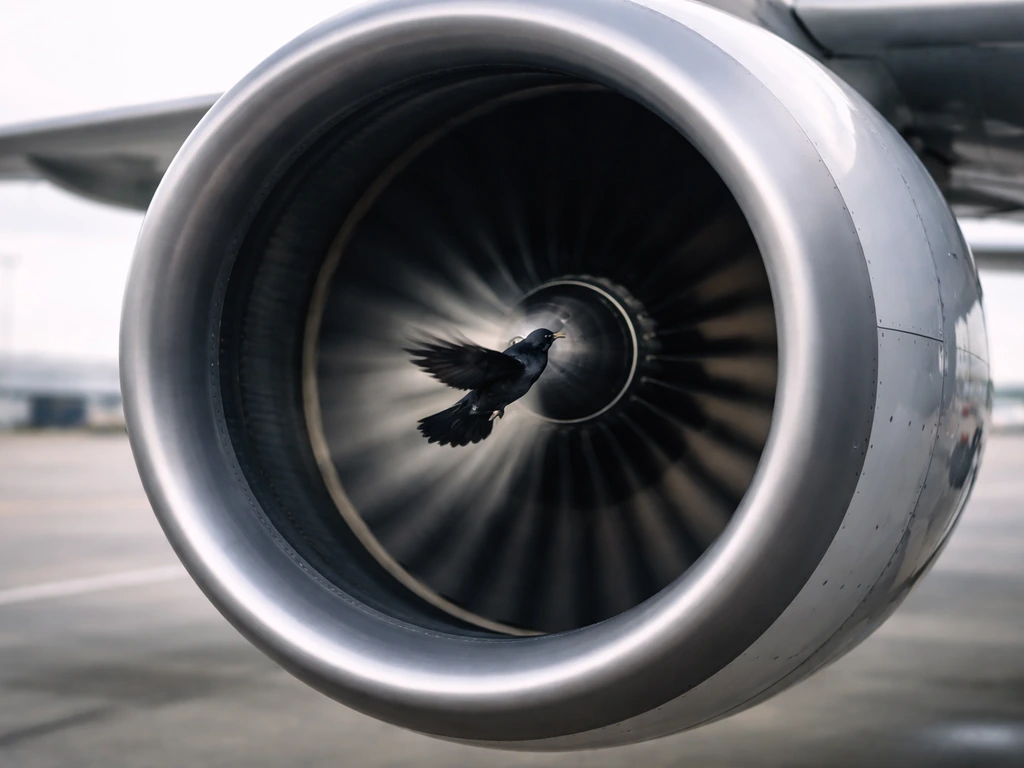
Ingestion vs. exterior impact: what we're actually talking about
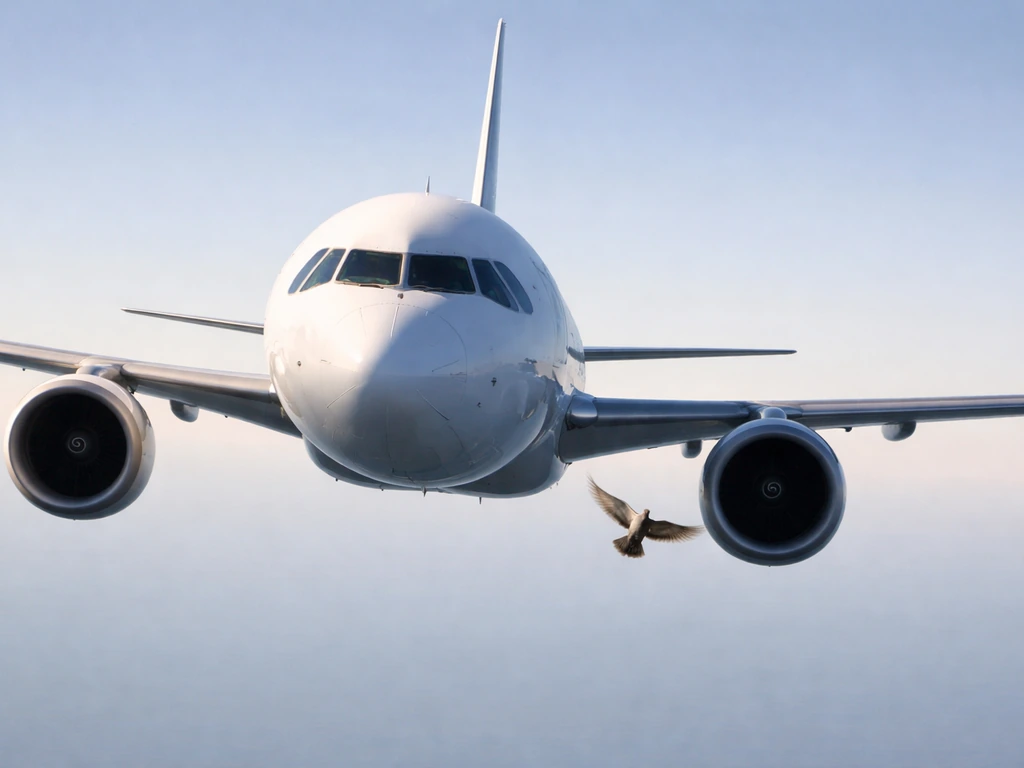
A bird strike on an engine is almost always an ingestion event, not a surface collision. The engine is spinning at enormous speed, creating a powerful airflow that pulls air (and anything in the path of that air) into the intake. A bird flying anywhere near the front of a running jet engine does not bounce off the fan blades like a ball off a wall. It gets drawn in. The distinction matters because ingestion puts the bird directly into the fan, the compressor stages, and potentially the combustion section, each of which can sustain very different types of damage.
An exterior impact, where a bird strikes the engine nacelle or cowling but does not enter the intake, is less common and generally causes cosmetic or structural damage to the housing rather than internal damage. The far more consequential scenario, and the one people are really asking about, is full ingestion.
What you hear and feel during the strike
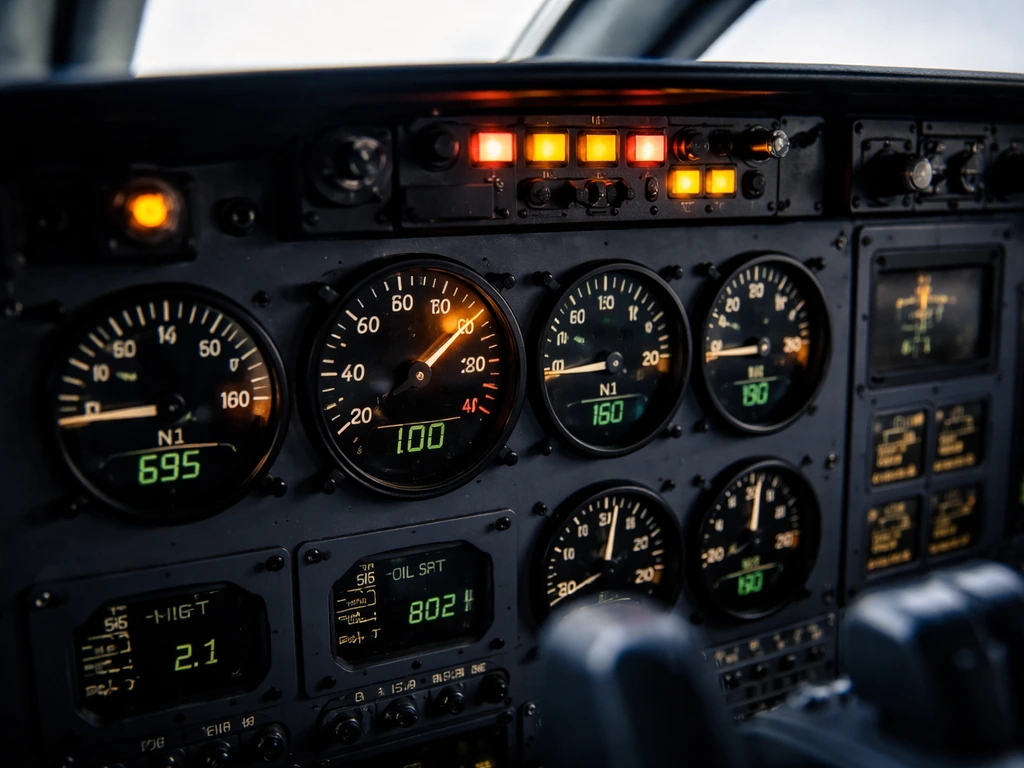
The first thing a pilot notices is usually a loud thud or bang, sometimes described as a shotgun blast. Immediately after, the engine may surge, which is a disruption of the normal airflow through the compressor that sounds like a series of rapid pops or backfires. The FAA's own turbofan malfunction recognition guidance explicitly identifies bird ingestion as a trigger for engine surge, and that sound is one of the primary cues pilots use to recognize the event.
In the cockpit, this translates to fluctuating engine pressure ratio (EPR) or N1 readings, vibration indications, possible fire warning lights, and a drop in thrust. On some strikes, particularly with smaller birds, the surge resolves on its own within seconds and the engine continues operating normally. On more serious strikes, thrust may drop significantly and stay there.
What damage can realistically happen inside the engine
The fan blades at the front of a turbofan engine are the first point of contact. On a single small bird, you might see blade nicks, dents, or minor deformation. Those fan blades are built to flex to some degree, but a larger bird or a flock can bend or fracture a blade, and a fractured blade creates an imbalance that causes severe vibration and compounds the damage very quickly.
Beyond the fan, bird material can pass into the high-pressure compressor, causing damage to the tightly toleranced compressor blades and potentially reducing compression efficiency. In the worst cases, debris reaches the hot section of the engine. The FAA's certification standard for engines, found in 14 CFR Part 33 section 33.76, actually requires that engine designs be tested and demonstrated to handle defined bird ingestion conditions, with specific blank" rel="noopener noreferrer">acceptance criteria for how much thrust loss and what type of effects are permissible. This is precisely why a jet engine surviving a bird strike is the expected design outcome rather than a lucky exception.
For reference, EASA's certification standard (CS-E 800) for large flocking bird ingestion requires that the engine must not lose more than 50% of sustained thrust and must not shut down during the test. That is the minimum bar for a certified commercial engine. It does not mean the engine is undamaged, but it means it was designed to keep flying after a realistic ingestion event.
Pilot and crew response right after a bird strike
Pilots follow their aircraft's Abnormal Procedures checklist for engine abnormalities, which typically means assessing thrust, checking for fire, monitoring vibration, and deciding whether to continue or divert. If the engine is still producing usable thrust and there are no fire or over-temperature indications, the crew may continue to destination or choose to land at the nearest suitable airport as a precaution. If the engine is clearly compromised, they shut it down using the Engine Failure or Engine Fire checklist, which commercial aircraft are fully certified to handle on the remaining engine(s).
After landing, the crew files a report. In the United States, that means completing FAA Form 5200-7, the Bird and Other Wildlife Strike Report. The form captures details including the number of birds struck, the species and size, the phase of flight, and the estimated damage. This data feeds the FAA's National Wildlife Strike Database, which aviation safety researchers and airport managers use to track trends and reduce future risk. Reporting is voluntary for civil aviation, but it is strongly encouraged and most operators do it. Wikipedia’s summary notes that the FAA’s ASRS (Aviation Safety Reporting System) is a voluntary confidential reporting system for close calls and near misses blank" rel="noopener noreferrer">Reporting is voluntary for civil aviation, but it is strongly encouraged and most operators do it..
What maintenance does next

No engine that has experienced an ingestion event returns to service without a borescope inspection at minimum. Maintenance technicians insert a flexible camera into the engine to visually inspect the fan, compressor, and combustion section for cracks, missing blade segments, or foreign object debris. Depending on what they find, the engine may need blade replacement, compressor work, or a full overhaul. The aircraft does not fly again until the engine is cleared or replaced.
Serious failure is less common than people think
The myth is that a bird into an engine means the plane falls out of the sky. The evidence does not support that. According to data compiled by the NBAA covering wildlife strikes to civil aircraft from 1990 to 2020, 5,123 engines were damaged across 4,956 bird-strike events involving engine damage. That sounds alarming until you consider how many flights operate every day, and the fact that engine damage in these reports ranges from minor nicks requiring a quick inspection all the way to catastrophic failure. The catastrophic end of the spectrum is genuinely rare.
The more honest concern is not a single sparrow but a flock of large birds during takeoff or initial climb, when the engine is at or near maximum thrust and altitude is low. The 2009 Miracle on the Hudson, where a US Airways Airbus A320 lost thrust in both engines after striking a flock of Canada geese, is the most famous example of a serious multi-engine ingestion event. Even that ended without fatalities, which says something about how modern aircraft handle catastrophic bird ingestion. That said, whether a bird can destroy a jet engine is a real question with a real answer: under the right (wrong) conditions, yes. The flock, the size, and the timing matter enormously.
For a broader look at the odds, whether a plane can survive a bird strike is almost always yes in single-bird scenarios, and the industry's track record with multi-bird events, while imperfect, is far better than most passengers assume.
What happens to the bird
The bird does not survive ingestion. The fan blades of a running turbofan engine are spinning at thousands of RPM, and the mechanical forces involved are instantly and completely fatal. There is no realistic scenario in which a bird is ingested and emerges unharmed. What comes out, if anything is recoverable, is biological material that maintenance crews and wildlife biologists may collect for species identification as part of the FAA's Feather Identification program. Identifying the species helps airports assess which wildlife species are present in their airspace and target control measures appropriately.
Exterior impact, where a bird strikes the nacelle or nose but does not enter the intake, can occasionally leave a bird stunned or injured rather than killed, but that is a surface strike, not an ingestion event. Once inside a running engine, survival is not possible.
How airports try to prevent this in the first place
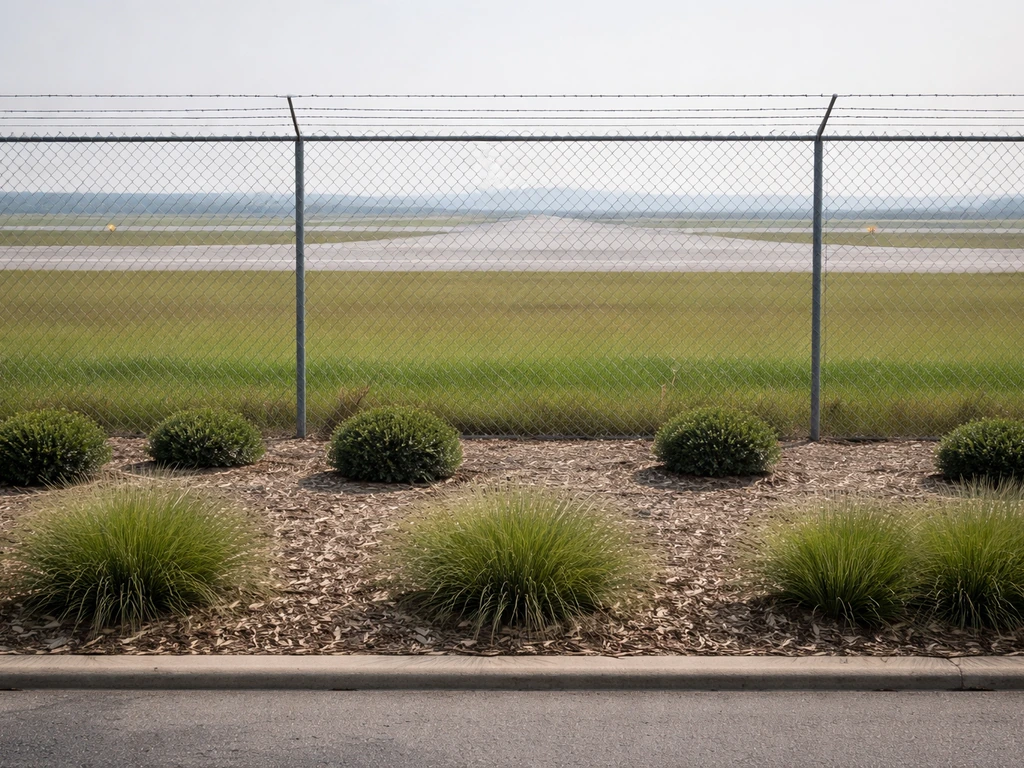
Bird strike prevention at airports is a serious, structured discipline. The FAA's Advisory Circular 150/5200-33 gives airports guidance on managing hazardous wildlife attractants, including land uses near airport boundaries that draw birds, such as open water, landfills, and certain vegetation. Airports conduct wildlife hazard assessments and implement active deterrents including pyrotechnics, trained falcons, habitat modification, and coordinated culling programs where necessary.
Pilots also contribute. If you see a large number of birds near an airport, you report it to ATC. After a strike, you file the FAA Form 5200-7 report so that the species, location, and flight phase data get into the National Wildlife Strike Database. That database is how the FAA and airport wildlife managers track which species are causing the most damage and where interventions are working.
On the engineering side, the reason jets don't have physical bird blockers in front of their intakes comes down to the physics of airflow: any screen or guard capable of stopping a large bird would also restrict the airflow the engine needs to function. So the solution is not a physical barrier but a combination of engine certification requirements, airport wildlife management, and operational procedures.
For a deeper look at the specific technology and tactics aviation uses to reduce ingestion risk, how planes prevent bird strikes covers the operational and engineering side in detail.
Putting the risk in perspective
Bird strikes happen thousands of times a year across the U.S. civil aviation fleet, and the overwhelming majority result in either no damage or minor damage that is found and corrected during the next inspection. The engineering certification standards exist precisely because regulators and manufacturers have always known birds and engines share the same airspace. The system is not perfect, and large flock events during critical phases of flight remain a genuine hazard. But the picture is far more managed and survivable than popular imagination suggests.
FAQ
After a bird strike, how do pilots decide whether to keep flying or land immediately?
If you hear a loud bang and the engine indicators start fluctuating, pilots treat it as an abnormal engine event. They usually do not immediately assume total failure, they monitor thrust, EPR or N1, vibration, and any fire or overtemperature alerts, then follow the airplane’s Abnormal Procedures to decide between continuing to destination and landing at the nearest suitable airport.
If the engine sounds normal again after a bird strike, is it safe to ignore the event?
A visible change like a “surge” or rapid pops does not automatically mean permanent damage. With smaller birds, the disturbance can clear in seconds as the compressor airflow stabilizes, but crews still require inspection later, because even “resolved” surges can leave blade nicks, dents, or foreign object debris.
Can a bird strike cause internal engine damage without obvious external damage or major thrust loss?
Yes, a strike can happen even when the exterior looks fine. Birds can be ingested at any speed, and damage often occurs internally to fan or compressor components, so maintenance typically requires a borescope inspection even if there were no obvious warning lights and no major thrust loss.
Which engine components are most likely to be damaged by a bird ingestion?
For turbofan engines, the fan and compressor are most at risk because ingestion sends debris directly through the intake air path. That is why damage signatures often look like fan blade deformation or imbalance first, then possible compressor blade damage if material passes through further stages.
Does passing certification bird-ingestion tests mean the engine is always undamaged?
It depends on the bird size and how many birds are involved, but certification limits are not guarantees of no damage. Even when an engine meets the “keep flying” threshold in testing, technicians may still find cracked blades, missing blade segments, or other evidence of ingestion that requires blade replacement, compressor work, or an overhaul.
What happens to the bird after a strike, and can anything be recovered?
Birds are usually killed by mechanical forces inside the running engine, so there is typically nothing alive to recover. If crews and wildlife specialists retrieve any biological material after landing, it is for species identification, which helps airports target deterrence and habitat measures based on local wildlife risk patterns.
How does the risk change if the bird strike affects one engine versus both engines?
If a bird strike involves one engine, the aircraft may continue on the remaining engines only if performance and aircraft procedures permit. If both engines are affected, the risk increases sharply, especially near takeoff or in initial climb, which is why operators plan engine-out performance margins and follow strict checklists.
Is filing the FAA Bird and Other Wildlife Strike Report actually important if it is voluntary?
At civil airports, reporting is encouraged rather than strictly mandatory, but the practical outcome is the same: without reporting, the safety database loses data that helps identify high-risk species and locations. In practice, crews usually file after any ingestion significant enough to warrant inspection.
After landing, what does an engine borescope inspection typically determine, and does it always lead to repairs?
Borescope checks focus on visual evidence like cracks, missing blade sections, and foreign object debris, but the exact teardown and repair decision depends on what technicians find. If the inspection shows damage beyond allowable limits, the engine can be removed and repaired or overhauled rather than simply returned to service.
If a strike triggers a fire warning or overtemperature indication, what changes operationally?
Yes, in certain cases the ingestion can cause fire warning indications or overtemperature trends, and that drives a different checklist path. Crews prioritize immediate fire or engine damage signs over “sound only” cues, because some warning combinations can indicate debris damage reaching the hot section.
Next Articles
Bird Causes Plane Crash? Risk, Mechanisms, Myths, Prevention
Whether bird strikes can cause plane crashes, how they happen, real risk data, debunked myths, and prevention steps
Can a Plane Crash Because of a Bird? Facts and Safety
Understand if a bird strike can crash a plane, what it damages, how often it happens, and what airports do to prevent it
Can a Bird Crash a Plane? Risks and What to Do
Can a bird crash a plane? Learn how bird strikes happen, real risk levels, and what to do if one occurs.