
Jets don't have bird-blocking screens or nets because those devices would create more danger than they prevent. A physical barrier on a jet engine intake or airframe would disrupt airflow, add weight, risk fragmenting into the engine on impact, and require its own rigorous certification that it doesn't cause the very damage it's meant to stop. Aviation handles bird strikes through a completely different approach: managing bird populations and behavior at airports, designing aircraft to survive certain impacts, and tracking data to reduce risk over time.
Why Jets Don’t Have Bird Blockers: Real Reasons and Solutions

Maya Chen
19 May 2026
What people mean by "bird blockers" and why the idea is intuitive but flawed
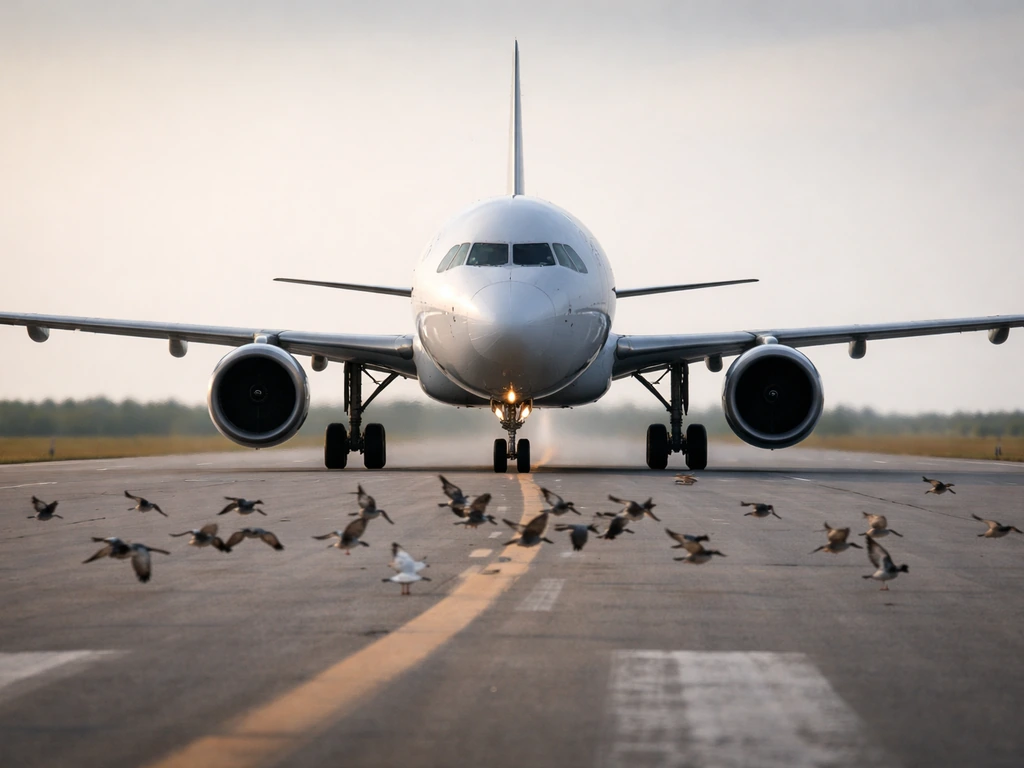
When people ask why jets don't have bird blockers, they're usually picturing something like a wire mesh screen over the engine inlet, a deflector cone, netting across the nose, or some kind of grille that keeps birds out of the engine. It's a completely reasonable thing to wonder. You see screens on home HVAC systems and mesh guards on boat propellers, so why not on something as expensive and safety-critical as a jet engine?
The mental model makes sense at low speeds. But a commercial jet engine at takeoff is pulling in hundreds of pounds of air per second, and the fan blades at the front are spinning at thousands of RPM. Any physical structure placed in that airflow has to withstand enormous forces without deforming, without shedding fragments, and without altering the precise aerodynamic balance that makes the engine work. The moment that screen gets hit by a bird, or fatigues from vibration, or ices up on approach, it becomes a debris generator sitting directly in front of the engine core. That's worse than the bird.
It's worth knowing that FAA Advisory Circular 33.76-1B does actually mention engine protection devices like screen or inlet barrier filters as something that can be considered in the certification framework. So the idea isn't completely off the table in theory. But the practical and regulatory hurdles are severe, and no commercial transport aircraft uses them as a primary solution.
Where birds actually hit aircraft
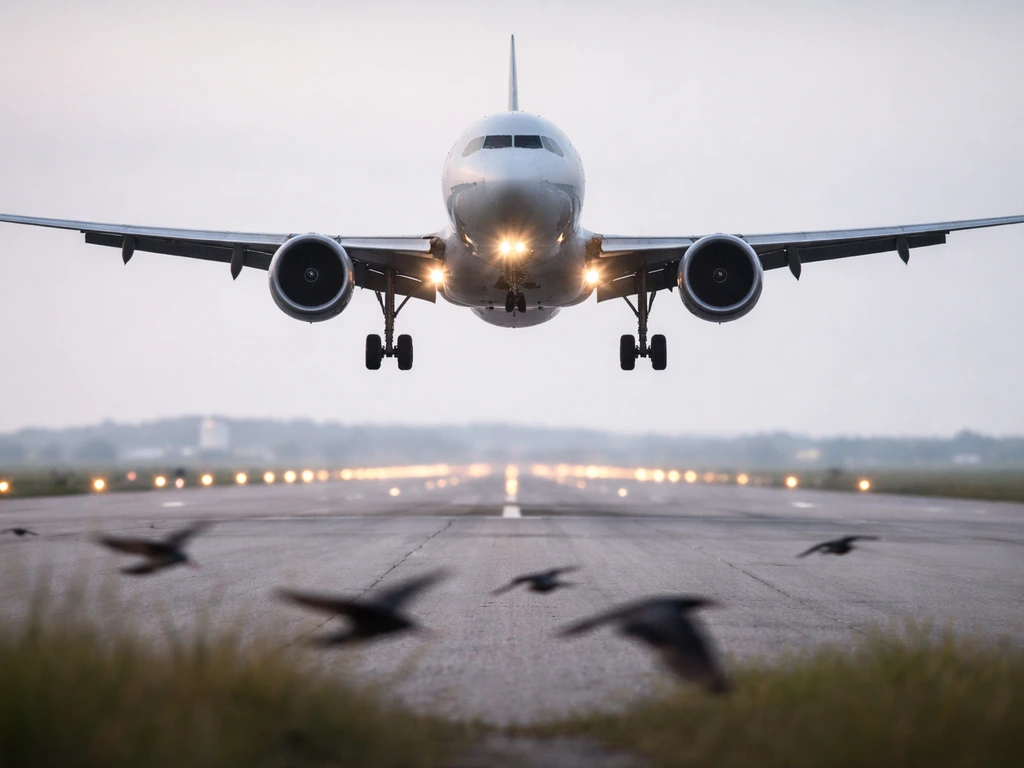
The vast majority of bird strikes don't happen at cruising altitude. According to FAA data covering 1990 through 2022, about 61% of bird strikes on fixed-wing civil aircraft occur during landing phases, including descent, approach, and landing roll. Another 36% happen during takeoff run and initial climb. Only about 3% occur en route at altitude.
That distribution matters because it tells you exactly where the problem is concentrated: the few hundred feet above ground level around airports, where birds are most active and where aircraft are moving at high speed with engines at or near full power.
As for which parts of the aircraft get hit, the picture is spread across the airframe. Windshields and the nose/radome area are frequently struck because they're the forward-facing surface in the bird's path. Wings, landing gear, and fuselage surfaces also take hits regularly. Engines are a serious concern because ingestion into the engine core is a fundamentally different and more dangerous event than a strike on a solid airframe surface.
What aviation actually does to prevent bird strikes
Real-world bird strike prevention is mostly a ground problem solved by ground-level programs, not an in-flight engineering problem. The international framework is set out in ICAO's Airport Services Manual Doc 9137 Part 3, and the FAA has its own parallel guidance in Advisory Circular 150/5200-36. Both frameworks push airports to build and maintain Wildlife Hazard Management Programs tailored to local conditions.
Habitat control
The single most effective long-term tool is making airports less attractive to birds in the first place. That means managing grass height so it doesn't provide cover for insects and rodents that attract raptors, eliminating standing water that draws waterfowl, and limiting plantings that produce seeds or berries. FAA's wildlife management guidance specifically describes habitat manipulation as a core strategy, not an afterthought.
Active deterrence and hazing
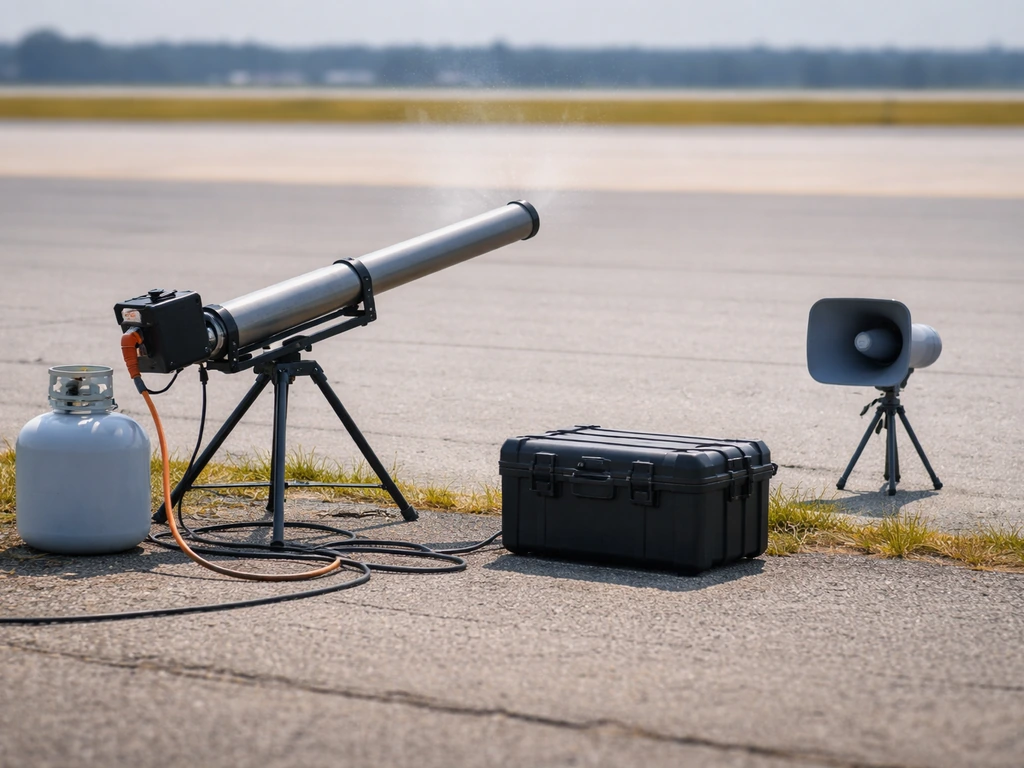
Airports use a combination of pyrotechnics (like propane cannons and shell crackers), trained raptors, distress call playback, and direct hazing by wildlife patrols to move birds away from active runways. Some airports use dogs trained to chase birds. These methods work because birds learn to associate the airport environment with threat and avoid it over time.
Monitoring, reporting, and data
The blank" rel="noopener noreferrer">FAA Wildlife Strike Database has been collecting strike reports since 1965, and that data directly feeds rule-making and airport program development. ICAO runs a parallel system called IBIS (the Bird Strike Information System) that collects international data. Pilots and airport staff are required to report strikes, and that reporting creates the evidence base that lets regulators identify high-risk species, locations, and seasons. Without that data, prevention programs would be guesswork.
Operational procedures
Pilots and dispatchers can also adjust. Timing departures to avoid peak bird activity at dawn and dusk, adjusting flight paths during known migration periods, and using bird activity reports from NOTAMs all reduce exposure. These aren't dramatic measures, but layered together with habitat and deterrence programs, they add up.
Why physical blockers on jets specifically don't work
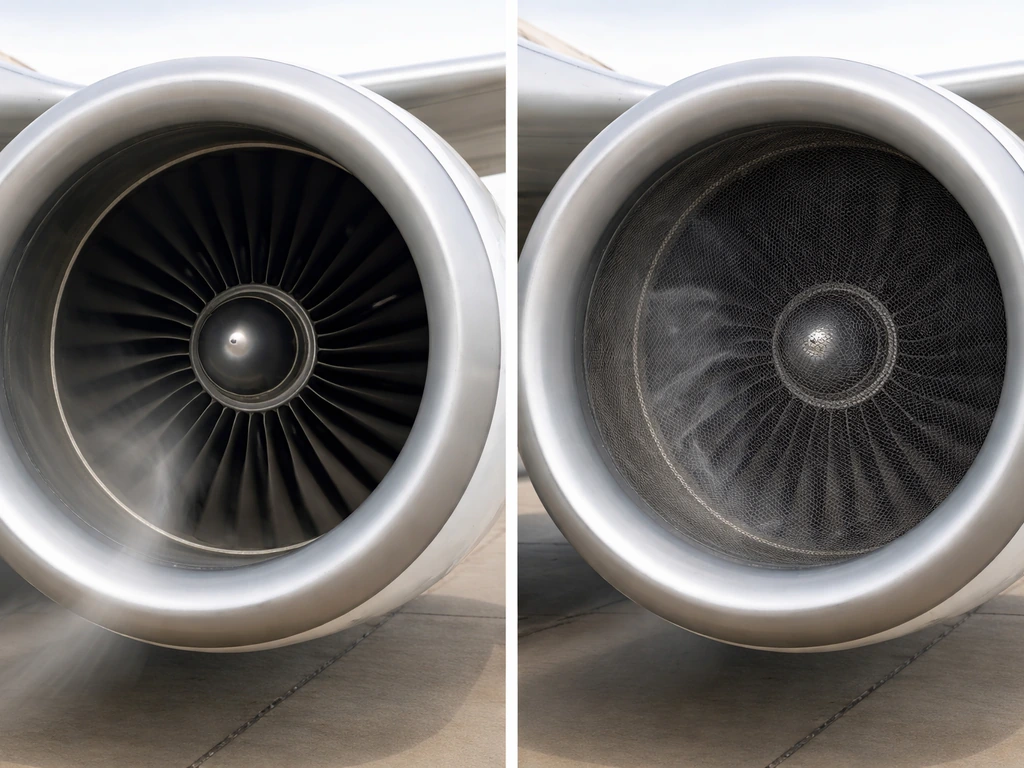
Let's go through the core problems with putting any kind of screen, net, or deflector on a commercial jet.
| Problem | What it means in practice |
|---|---|
| Aerodynamic disruption | Any structure at an engine inlet changes the airflow the engine was designed around, reducing efficiency and potentially causing compressor stalls |
| Weight and maintenance | A certified screen system adds weight to every flight and requires inspection, cleaning, and replacement cycles that create new maintenance failure points |
| Debris ingestion risk | If a screen fails, fragments, or ices up, the resulting debris goes straight into the engine core, which is more destructive than the bird it was meant to stop |
| Certification burden | Any new component on a certified aircraft must itself pass airworthiness testing, including proving it doesn't create hazardous conditions under all failure modes |
| Effectiveness gaps | A screen that stops a 4-pound bird may still allow damage from bird material forced through smaller openings, and offers nothing against strikes to the windshield, wing, or fuselage |
Under 14 CFR Part 25.631, transport-category airframes are already required to be designed so that a strike from an 8-pound bird at the specified relative velocity doesn't prevent continued safe flight and landing. The aircraft's structure is the blocker. Adding a separate physical barrier doesn't remove that structural requirement and introduces all the problems listed above on top of it.
The engine-specific reality
Engine bird ingestion is tested and regulated separately under 14 CFR Part 33, specifically section 33.76. The rule covers ingestion of large single birds, medium flocking birds, and large flocking birds at specified conditions, including the power and speed settings that represent the most demanding scenarios. The engine has to demonstrate it can handle the impact without causing hazardous effects, which means the design itself is the protection.
EASA's equivalent CS-E standards set similar ingestion test parameters, including defined acceptance criteria for thrust loss and engine behavior after a large flocking bird event. The testing is not theoretical. Physical bird ingestion tests are conducted, and the results have to meet specific outcome thresholds.
The engine fan blades, inlet geometry, and containment structures are designed with ingestion resistance in mind. The fan blades themselves act as a kind of processing mechanism for a bird strike, and the engine is tested to continue operating or shut down safely without releasing fragments that could damage the aircraft. A screen placed in front of this system doesn't improve on that design and risks turning a soft bird impact into a rigid fragment impact.
It's worth distinguishing between a bird striking the exterior of an engine nacelle and a bird being ingested into the core. A hit to the cowl or inlet lip is an airframe structural event. Ingestion into the fan and compressor stages is an engine event with different physics and different failure modes. Aviation treats these separately because they are separate problems.
How serious is the risk, and is the current approach working
Bird strikes are genuinely common. The FAA database contains hundreds of thousands of reports going back to 1990, and the annual strike count runs into the tens of thousands in the US alone. But most strikes cause no damage. According to FAA trend data, damage-causing strikes dropped from about 6% of all reported strikes in 1996 to 3.7% in 2024. The average body mass of reported bird strikes also decreased by 64% between 2000 and 2024, partly reflecting the effectiveness of habitat programs that reduce large bird presence near airports.
A peer-reviewed 2024 study published in Scientific Reports found that airports with formal Wildlife Hazard Management Programs in place show measurably lower realized strike risk than those without. That's the kind of evidence that tells you the current approach is working, even if it isn't as intuitive as a physical screen on an engine.
High-profile incidents do occur, and some are serious. Engine ingestion events can cause significant damage and have contributed to accidents. That testing includes conditions meant to answer the question can a jet engine survive a bird strike. A common question is whether a bird can destroy a jet engine during a strike, and the answer depends on the size of the bird and the ingestion conditions.
If a bird hits a plane engine, the key concern is how the bird affects the fan and compressor and whether the engine keeps operating safely or must shut down Engine ingestion events. But the engineering margins built into certified aircraft and engines, combined with airport-level management, have produced a strong safety record relative to the number of flights. The goal isn't zero strikes.
It's reducing strikes to a manageable frequency and ensuring the aircraft can handle the ones that do happen.
What you can actually do about it

If you're an airport wildlife manager or aviation stakeholder, the practical path is clear: implement or strengthen a Wildlife Hazard Management Program following FAA AC 150/5200-36 and ICAO Doc 9137 Part 3, focus first on habitat control, ensure your team is reporting all strikes to the FAA Wildlife Strike Database, and use that data to identify your highest-risk species and seasons.
If you're a pilot or dispatcher, report every strike, review bird NOTAMs when available, and take bird activity advisories seriously during migration seasons, particularly at airports near wetlands, coastlines, or agricultural areas.
If you're a member of the public concerned about bird safety near airports, the most useful thing you can do is avoid attracting large flocks to areas near flight paths. That means not feeding waterfowl near airport-adjacent ponds, supporting land management practices that reduce bird concentration near runways, and understanding that the birds most at risk in these collisions are the birds themselves, not just the aircraft.
The absence of a bird blocker on a jet engine is not a gap in aviation safety. Instead, airports reduce the risk by managing wildlife hazards and using operational procedures that avoid periods of peak bird activity bird blocker on a jet engine. It's a deliberate engineering and regulatory choice backed by decades of testing, data, and program development. The protection is built into the aircraft and the airport environment, not bolted onto the front of the engine.
FAQ
Couldn’t jets use a lightweight mesh or thin screen anyway, since birds are small?
Not in the way people picture. Most protections that could physically block an intake would have to be designed to avoid becoming detachable debris, stay effective under vibration, bird impact, dust and ice conditions, and still preserve engine airflow and thrust performance. That combination of aerodynamic, structural, and certification requirements is the main reason “just add a screen” is not used as a general solution on transport jets.
What’s the main risk with a barrier becoming debris during a bird strike?
The problem is not only “bird hit versus no bird hit.” A barrier can fail in ways that worsen outcomes, for example by fragmenting, shedding bits during vibration cycles, or changing the way the inlet and fan manage the energy of an impact. That means the barrier itself must be treated as a safety-critical component, not as a passive accessory.
If airframes are already certified for bird strikes, why not rely on a separate bird blocker instead?
No, because the aircraft is already required to survive certain bird strikes without preventing continued safe flight and landing. The airframe and engine designs are intended to manage the event under defined test conditions, so an external barrier does not replace those certified performance requirements and can add new hazards that must also be shown to be safe.
Is it the same risk when a bird hits the engine cowling versus when it gets ingested?
Even when a bird hits the engine exterior, the risk profile differs from ingestion. Exterior strikes involve airframe structural impacts to the nacelle or inlet lip. Ingestion into the fan and compressor involves internal aerodynamics, rotating blade interaction, and different potential failure modes, so aircraft and engines are evaluated under separate regimes.
Do pilots and dispatchers have enough control to prevent bird strikes using procedures alone?
There are operational measures that can reduce exposure, but they are not a guarantee. Bird activity is dynamic, and measures like departure timing and rerouting depend on staffing, airspace constraints, and real-time reports. That’s why they are layered with habitat control and deterrence, rather than treated as a standalone fix.
How much do bird NOTAMs actually reduce risk compared with habitat management?
Bird NOTAMs and local bird advisories can help, but the most practical prevention comes from consistent airport wildlife programs. The reason is that the hotspot is usually near the airport and tied to local habitat and seasonality, not just to what happens during a single flight window.
If most bird strikes cause no damage, why is strike reporting still important?
Reporting is required and also extremely valuable for analysis. If reports are incomplete, delayed, or not routed to the right channels, the database cannot accurately identify high-risk species, locations, and seasons, which then weakens wildlife hazard management decisions.
Would a bird blocker help with small birds, and why doesn’t that scale up to safety?
Yes, the “size” issue matters. Many of the most hazardous scenarios involve large birds or flocking events, and the engine certification tests reflect different categories and demanding conditions. A barrier could be expected to help with smaller birds, but it must also handle the worst-case impacts without creating an even more dangerous debris or airflow problem.
What can the public do that is actually effective near airports, and what should be avoided?
Public guidance can unintentionally cause the opposite effect if feeding shifts large birds closer to flight paths. If you reduce food and standing water in areas near airports, you typically reduce aggregation and collision likelihood, but land-use details vary by location and species.
If some airports have fewer strikes, is it because they have better blockers, or something else?
For many aircraft, a precise “blocker” is not the missing piece, but rather a gap in consistent implementation of the airport side controls. Airports differ widely in habitat configuration, deterrence staffing, and how rigorously they adjust programs based on strike trends.