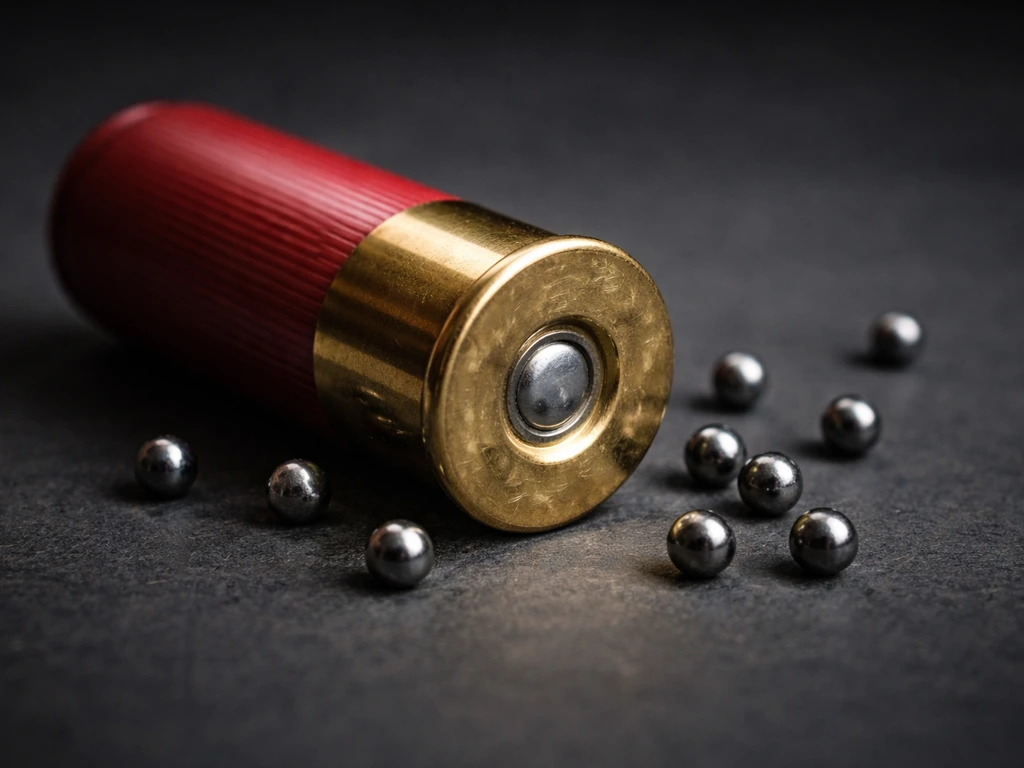
If you fire a shotgun loaded with small birdshot, the individual pellets can travel up to 500 yards from the muzzle under the right conditions. That said, their practical hazard zone, meaning the distance at which they still carry enough energy to injure a person, a pet, or a bird, is much shorter, typically within 50 to 100 yards depending on pellet size, load, and angle. There is no standard shotgun shell labeled "#22 bird shot," so if that phrase brought you here, it is worth clearing up the terminology first before getting into the real-world distances that matter.
How Far Does 22 Bird Shot Travel? Range and Safety Guide

Maya Chen
27 Apr 2026
What "22 bird shot" actually means (and where the confusion comes from)
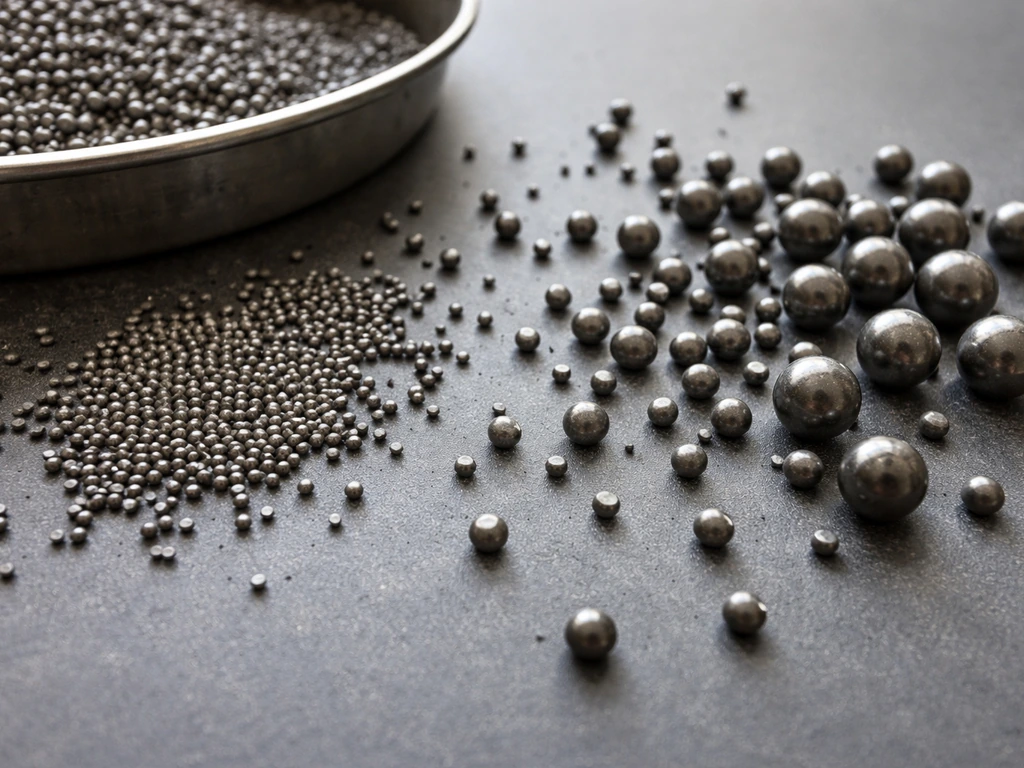
Standard U.S. shotgun birdshot sizes run from #9 (the smallest common size) up through #1, then into lettered sizes like BB and beyond. The numbering is inverse: the higher the number, the smaller the pellet. A #9 pellet is roughly 0.08 inches in diameter; a #1 pellet is about 0.16 inches. There is no commercially standard "#22" birdshot in this system. That size simply does not exist in the conventional shotgun shell lineup.
What causes the confusion is a collision of two completely different numbering systems. Some shot-size reference charts list a shot designation labeled "F" with a diameter of approximately 0.22 inches (5.59 mm). People scanning those charts sometimes conflate the diameter measurement with a shot number. Separately, ".22" is one of the most common firearm caliber labels in the world, referring to a bore diameter of roughly 0.22 inches in rifles and pistols like the .22 Long Rifle. That overlap makes it easy to blur the two systems in a search query.
There is also a third source of confusion: snake shot and pest-control shotshells are sold for small-caliber firearms, including .22 LR rimfire cartridges. These tiny shotshells are loaded with extremely fine shot and fired from a standard .22 rifle or pistol. That product is genuinely called ".22 birdshot" or ".22 shot" by some retailers. Its travel distance, hazard range, and patterning behavior are completely different from a 12-gauge or 20-gauge shotgun shell.
For the rest of this article, the focus is on shotgun birdshot, specifically small-numbered sizes like #7.5, #8, or #9, since those are what most people are actually asking about when they type "22 bird shot" and want to understand pellet travel and hazard distance.
How far birdshot actually travels
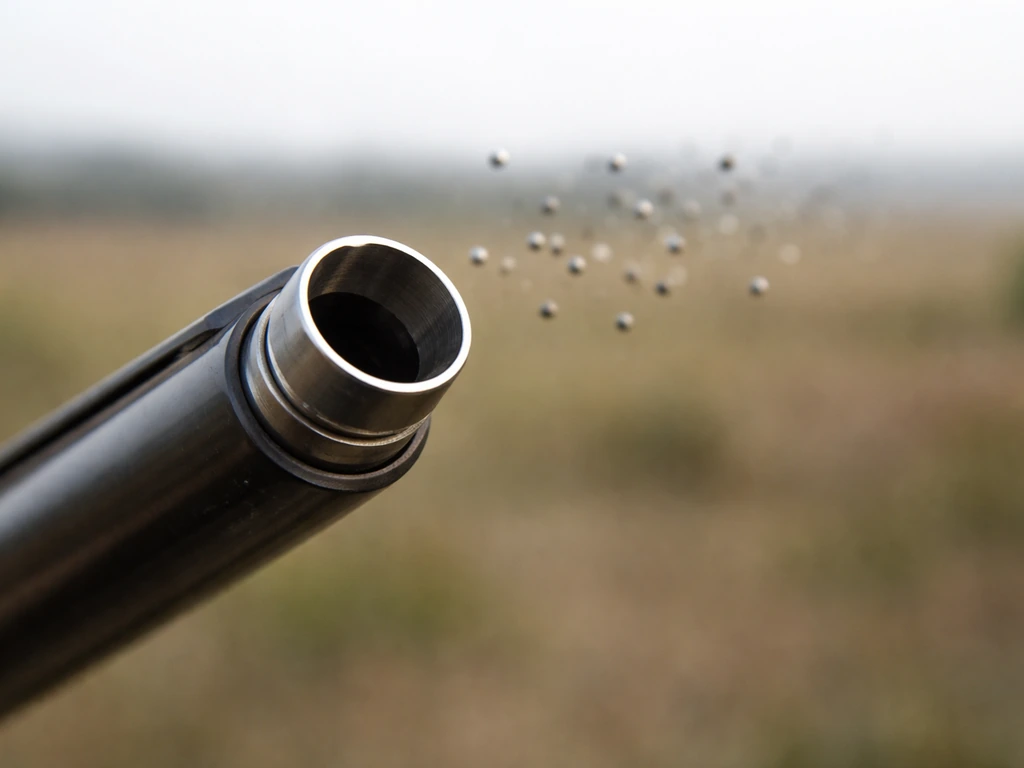
The NSSF puts it plainly in its firearm safety literature: shotgun pellets can travel 500 yards. That number is not a scare figure. It is based on the physics of a small lead or steel sphere launched at high velocity at a low angle. At that distance, a pellet carries very little energy, but it can still break skin, injure an eye, or kill a small bird. For practical safety planning, 500 yards is the outer boundary you need to think about when there is no backstop in place.
Several variables determine how far any given pellet actually travels in your specific situation.
- Pellet size and weight: Larger, heavier pellets (like #4 or #2) retain energy longer and travel farther than fine shot like #8 or #9.
- Muzzle velocity: Most standard birdshot loads leave the muzzle between 1,100 and 1,400 feet per second. Higher velocity extends both the effective range and the maximum travel distance.
- Launch angle: A pellet fired at roughly 30 degrees above horizontal will achieve maximum range. A flat horizontal shot stays lower but can still skip and ricochet unpredictably.
- Choke constriction: Full, modified, and improved-cylinder chokes change how tightly the shot column is held together, which affects pattern spread but has a smaller effect on individual pellet velocity at the muzzle.
- Wind: Even a modest crosswind shifts a light pellet like #9 meaningfully at distances beyond 30 yards.
- Gravity: All pellets arc downward after launch. The curve becomes steep enough to drop pellets to the ground well within 100 yards for most birdshot loads fired at normal hunting or target angles.
- Ricochet and deflection: Pellets striking hard surfaces, water, or pavement can redirect at unpredictable angles and extend the effective hazard zone significantly.
Patterning versus distance: what you will actually hit at different ranges

"Range" and "pattern" are two different things, and mixing them up leads to real mistakes. Range is how far pellets travel physically. Pattern density is how many of those pellets land in a useful area at a given distance. A load can still have pellets physically traveling at 150 yards while producing a pattern so thin at 50 yards that it has wide gaps with no pellet coverage at all.
The standard reference distance for patterning a shotgun is 40 yards, and for good reason. Field & Stream notes that patterns have traditionally been evaluated at 40 yards and explains approaches for assessing pellet strikes at that distance 40 yards is the standard reference distance for patterning a shotgun. At that distance, the pattern is spread enough to reveal real-world density and uniformity. A useful benchmark from shotgun training literature is 100 pellet holes in a 10-inch circle at 40 yards. If you cannot get close to that count, your effective range for reliably hitting a small target (like a bird) is shorter than 40 yards regardless of where individual pellets end up physically.
Texas Parks and Wildlife makes the practical point well: beyond about 40 yards, patterns spread so much that "holes" appear in the shot column, meaning gaps large enough for a target to pass through untouched. MeatEater's patterning research reinforces this by noting that areas devoid of pellet strikes are inherent to every pattern, not a testing artifact, and those gaps grow quickly with distance.
| Distance | Pattern behavior | Hazard to small birds/pets | Hazard to people |
|---|---|---|---|
| 0–15 yards | Dense, concentrated column; near-full payload impact | Very high; concentrated energy | Serious injury or lethal |
| 15–30 yards | Pattern opens; most pellets still within a 20–24 inch circle | High; sufficient density to injure or kill | Capable of causing injury |
| 30–50 yards | Pattern spreads further; gaps begin forming; reliable hits require luck | Moderate; individual pellets can still wound birds | Pellets can still penetrate skin |
| 50–100 yards | Very sparse; pattern is mostly gaps; energy dropping fast | Low but not zero; stray pellets can injure small wildlife | Risk of eye injury; skin penetration possible |
| 100–500 yards | Individual pellets only; no useful pattern | Minimal but not impossible for very small birds | Unlikely to penetrate skin; eye hazard remains |
The real safety hazard zone: people, pets, property, and birds
The 500-yard figure is the outer boundary for physical pellet travel, but the zone where you realistically need to worry about harm starts at the muzzle and does not fully end until pellets hit the ground. For planning purposes, treat anything within 100 yards of the muzzle as a firm hazard zone where pellets carry enough energy to injure a person's eye, break a small bird's bone, wound a pet, or chip glass and paint on a vehicle or structure.
Reflective surfaces deserve special attention. Car windows, greenhouse glass, solar panels, and metal roofing all pose ricochet risks that redirect pellets in unpredictable directions. A pellet that would have buried harmlessly into soft soil can bounce off pavement or a concrete wall and travel a completely different trajectory.
For birds specifically, the hazard is real at surprisingly long distances. Small songbirds, finches, and similarly sized birds weigh only a few ounces. A single pellet from a sparse, long-range pattern carries enough energy to fracture a wing or cause internal injury at distances well beyond 50 yards. If you are discharging a shotgun anywhere near a bird habitat, you need a backstop that physically captures pellets before they exit the shooting area, not just a general sense of "it should be fine out there."
Pets and livestock are in a similar category. You may also be wondering will bird shot kill a deer, but the lethality depends heavily on pellet energy at the distance involved. A dog or cat struck by a stray pellet at 60 yards may not show visible penetration but can suffer serious internal bruising or eye damage. The pellet energy at that range is not trivial for an animal under 30 pounds.
Legal and ethical considerations, and how to set up a proper backstop
One of the core rules of firearm safety that applies directly here: never fire unless you can see what lies beyond the target. If you cannot confirm that everything past your intended point of impact is clear of people, animals, and property for a safe distance, you should not take the shot. There is no exception to this rule, and there is no way to call a pellet back after it leaves the muzzle.
From an ethical standpoint, discharging birdshot in an area with unknown terrain, bird populations, or neighboring property puts unintended targets at risk. Many jurisdictions have laws that hold shooters liable for any injury caused by a discharged projectile, regardless of intent. Stray pellets crossing a property line, injuring a neighbor's pet, or striking a vehicle are not just accidents; they are potential legal liabilities.
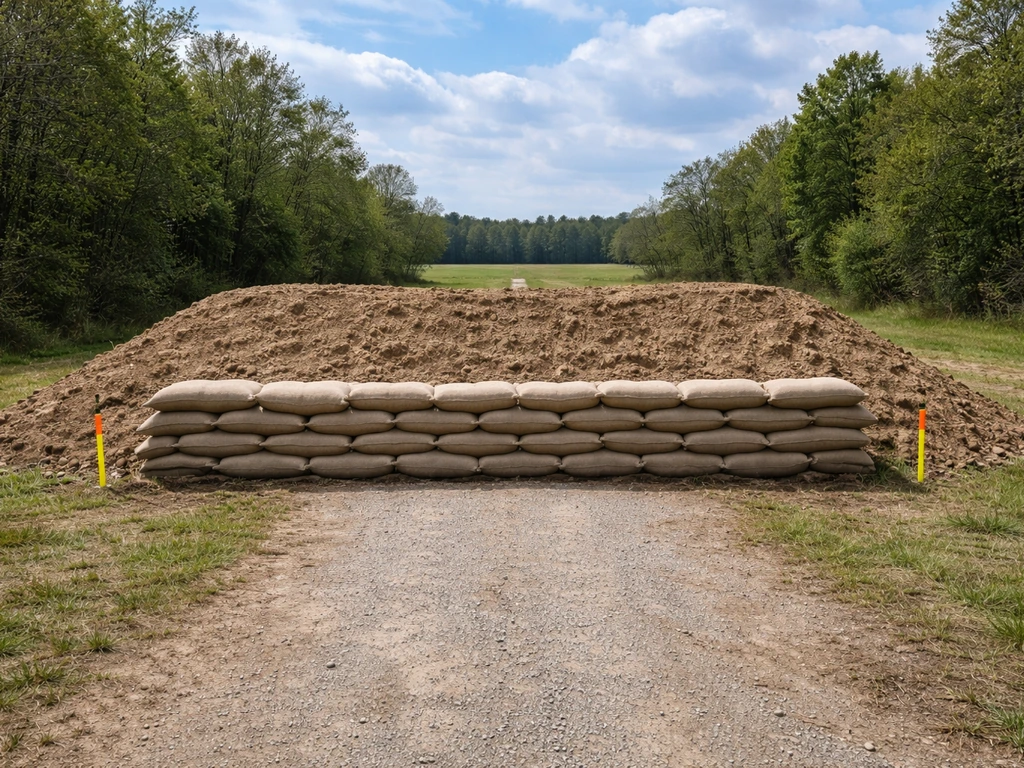
A proper backstop stops every pellet before it exits the shooting area. For shotgun birdshot, this means a berm of compacted earth at least 6 to 8 feet tall at the impact point, angled slightly back to prevent pellets from skipping up and over. The berm needs to be wide enough that even pellets at the outer edges of a spreading pattern hit earth, not open air. NRA guidance on backstop design notes that berm height and depth depend on your distance, the load, and nearby structures. If there are buildings, roads, or open fields directly behind your target zone, a simple earthen mound may not be sufficient without additional height or width.
- Never shoot at hard surfaces like concrete, rock, or pavement where ricochets are likely.
- Never shoot across or toward water surfaces, which can deflect pellets unpredictably.
- Place your target in front of the backstop, not beside it or beyond it.
- Check local ordinances before discharging any firearm outdoors. Many suburban and rural areas have minimum-distance rules from structures and property lines.
- If you are at a formal range, follow posted rules about pattern testing distances and backstop positioning.
How to measure your actual hazard range today
The best way to understand what your specific load actually does is to pattern it yourself. This gives you real data instead of estimates, and it also shows you where your effective range ends and where stray pellets start. Here is a straightforward process you can run today at a safe range or open backstop area.
- Set up a large paper target (at least 4 feet by 4 feet) in front of a solid backstop at 20 yards. Fire one round at the center mark and count the pellet holes. Note the total spread diameter.
- Repeat at 30 yards and 40 yards with fresh paper each time. At 40 yards, draw a 30-inch circle centered on the densest cluster and count the holes inside it. A useful benchmark is roughly 100 holes in a 10-inch circle; if you are well below that at 40 yards, your effective range is shorter.
- Measure the outer edge of the spread at each distance. The distance from the center of the pattern to the outermost pellet hole tells you the radius of your pattern at that range. This outer radius is your minimum backstop width requirement.
- If you want to understand physical travel distance for safety planning, and not just effective pattern range, add distance markers at 75, 100, and 150 yards. Lay out white paper or cardboard and fire a round horizontally (not angled up). Count any holes in those distant sheets to confirm whether pellets are reaching those distances from your specific setup.
- Walk the area behind your backstop after any test. Look for pellet impacts in soil or sand beyond the berm. If you find them, your backstop needs to be taller or wider before you fire again.
This test takes less than an hour and gives you actual measurements rather than general estimates. Pellet count, spread radius, and backstop penetration depth all tell you something specific about your setup that generic tables cannot.
Alternatives to shooting: protecting birds, property, and people responsibly
If you found this article because you are trying to manage birds around a property, building, garden, or structure, it is worth knowing that discharging birdshot is rarely the most practical or legal solution. Many bird species are protected under federal and state law in the U.S., and harming or killing them, even unintentionally, can result in significant fines. The Migratory Bird Treaty Act covers hundreds of common species, including many that people consider nuisance birds.
Exclusion and deterrence are consistently more effective than lethal control for long-term management. Physical barriers (netting, bird spikes, wire mesh) prevent access to roosting and nesting sites without creating a hazard zone. Visual deterrents like reflective tape, predator decoys, and motion-activated devices are useful for open spaces like gardens and fields. Acoustic deterrents, including distress call systems, can move birds away from an area without any risk to people, pets, or property.
If you are dealing with a specific conflict involving protected species, contacting your state wildlife agency or a licensed wildlife control operator gives you options that are both legal and more durable than any single discharge. In most cases, they will walk you through a permit process or a non-lethal plan that addresses the root cause instead of treating the symptom.
For those researching birdshot lethality and range in other contexts, related questions worth exploring include whether birdshot is effective for home defense, whether it can kill a turkey at hunting ranges, and whether small shot poses a realistic lethal threat to larger animals like deer. Birdshot lethality depends on pellet energy at range, which is why many people ask whether it is bird shot lethal birdshot lethality and range. Because of pellet travel and hazard range, birdshot is often a risky choice for home defense and may endanger people or pets beyond your intended target. Each of those scenarios involves the same underlying physics discussed here but with very different practical outcomes depending on pellet size, distance, and target anatomy.
FAQ
If I have “#22 bird shot” on a chart or label, what shot size is it really?
No. “#22 bird shot” is not a standard shotgun birdshot size, and chart letters like “F” sometimes refer to pellet diameter rather than a shotgun shot number. If you want real travel and hazard estimates, use the actual shotgun gauge (12, 20, 28, .410), shot size marking (for example #8, #7.5, BB), shot type (lead vs steel), and shell length, because those change pellet size and velocity.
Is the 500-yard figure the distance I should consider dangerous?
Treat 500 yards as an absolute outer physical-travel possibility, not a safety radius. For planning, use the article’s hazard planning idea, assume the area within about 100 yards of the muzzle can still be dangerous, and then expand or tighten based on what is behind your target (people, roads, pets, reflective surfaces).
How can the pellets go farther than my effective range?
Look at the pattern at 40 yards and then assume gaps get worse with distance. Even if individual pellets are still “in the air” farther out, pattern density can become so thin that a moving bird may pass through holes with no pellet strikes. Your reliable effective range is usually shorter than the farthest pellet travel.
Do pellets always go straight into the ground after missing the target?
Yes, especially with hard ground and hard surfaces. Pellets can skip or ricochet off pavement, concrete, rocks, and some dry packed areas, changing direction unpredictably. If there is any chance of ricochet (road, wall, metal roofing, car windshields), reduce the shooting area or eliminate the ricochet path, and consider a purpose-built backstop.
If a stray pellet hits a pet, how likely is injury at longer ranges?
Not necessarily. Energy at distance can be enough for serious eye injury or internal trauma even when penetration is not obvious. A dog or cat struck at around 60 yards can be hurt without a dramatic wound, so you should not treat “no visible hole” as “no harm.”
What does “know what’s beyond the target” mean when using birdshot?
Yes. If you cannot identify and clear what is beyond your intended impact point, you should not shoot. Birdshot can spread horizontally and vertically, and there is no way to recall pellets once they leave the muzzle, so “unknown area” behind the target is an absolute stop condition.
What’s the most practical way to find my birdshot’s real hazard and effective range?
Use patterning to validate your specific load, not generic expectations. Count pellet strikes in a defined area at 40 yards (a common benchmark is enough pellet holes in a 10-inch circle to indicate consistent density), and then pattern again at longer distances to see where you start getting large uncovered gaps.
How should I build or choose a backstop for birdshot?
A backstop that captures pellets is more than just “something tall.” It must be positioned so the full spread width still hits material (not open air) and built to handle skipped shots, especially if your shot angle is slightly upward or your ground is hard. Berm height, width, and slope matter, and buildings or roads behind the target zone can require additional height or width beyond a simple mound.
Why are reflective surfaces such a problem with birdshot?
Reflective or hard targets increase risk. Car windows, greenhouse glass, solar panels, and some metal surfaces can cause unpredictable ricochets. Even if your ground backstop is adequate, pellets hitting a reflective object can redirect farther than you expect, so avoid any reflective line of fire.
Is birdshot a good option for pest or nuisance bird control on a property?
For bird control, birdshot is often a legal and practical mismatch. Many birds are protected, and even if you are trying to solve a nuisance issue, discharging a projectile in an area with neighboring property can create liability if a pellet crosses a property line or hits an unintended target. Non-lethal exclusion and deterrence, or working with a licensed wildlife professional, reduces both risk and enforcement exposure.
Next Article
Is Bird Shot Lethal? How Birdshot Can Kill Birds Safely
Explains when birdshot pellets can kill birds, key factors, myths, and what to do if you suspect a bird was shot.