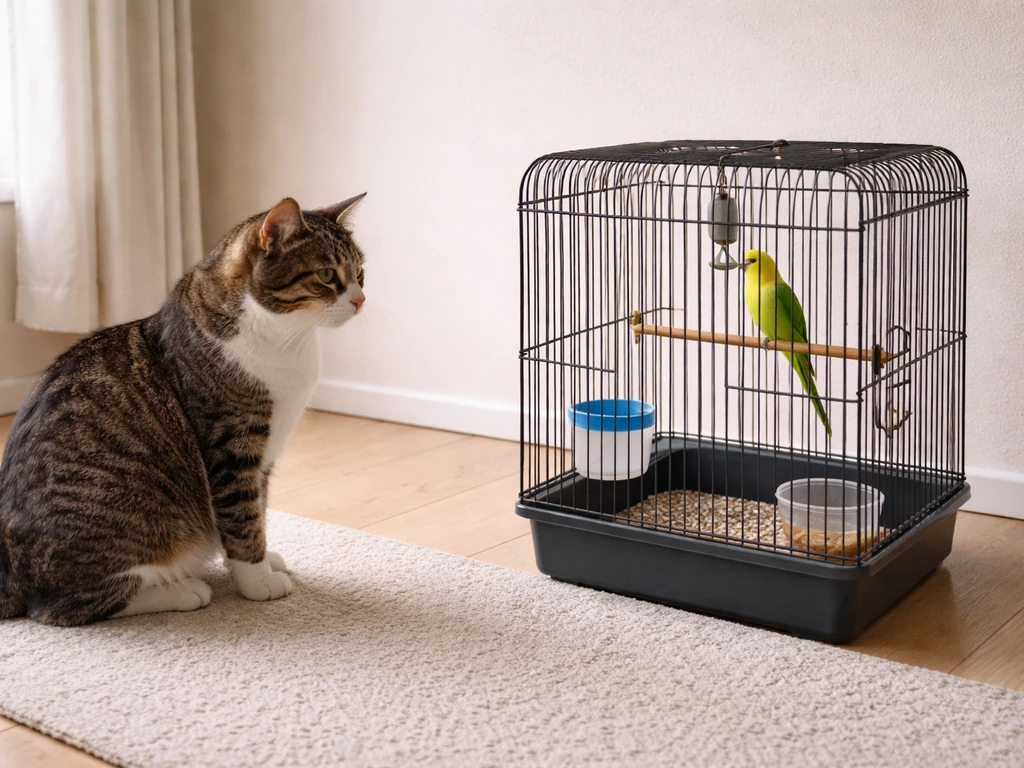
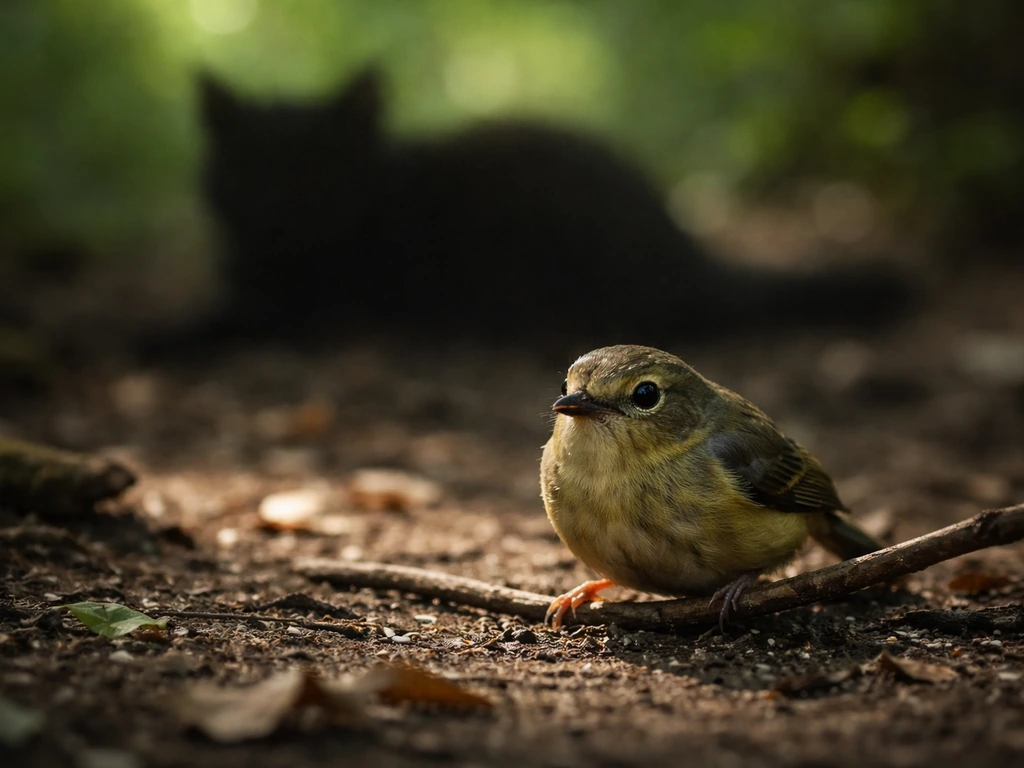
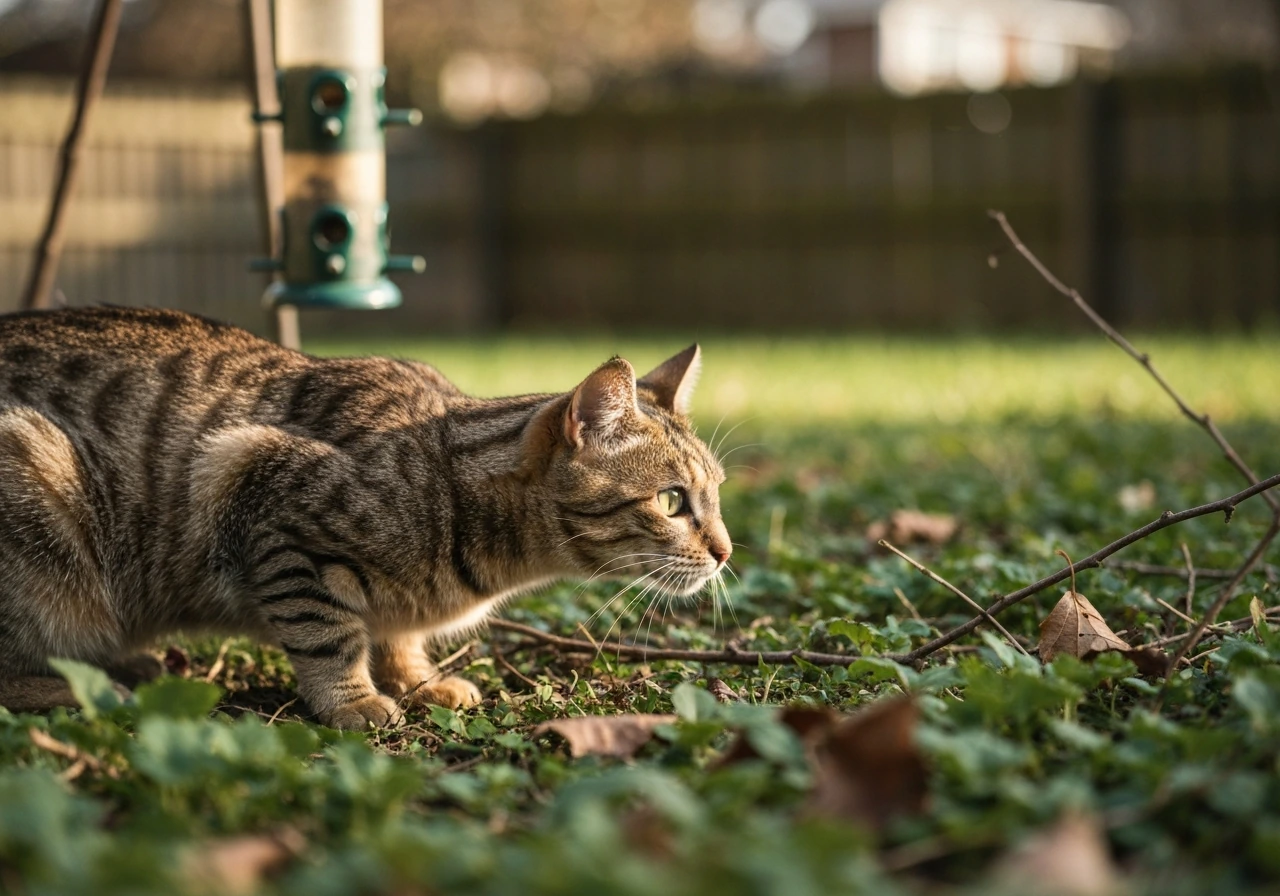
Yes, a cat can kill a bird that is in a cage
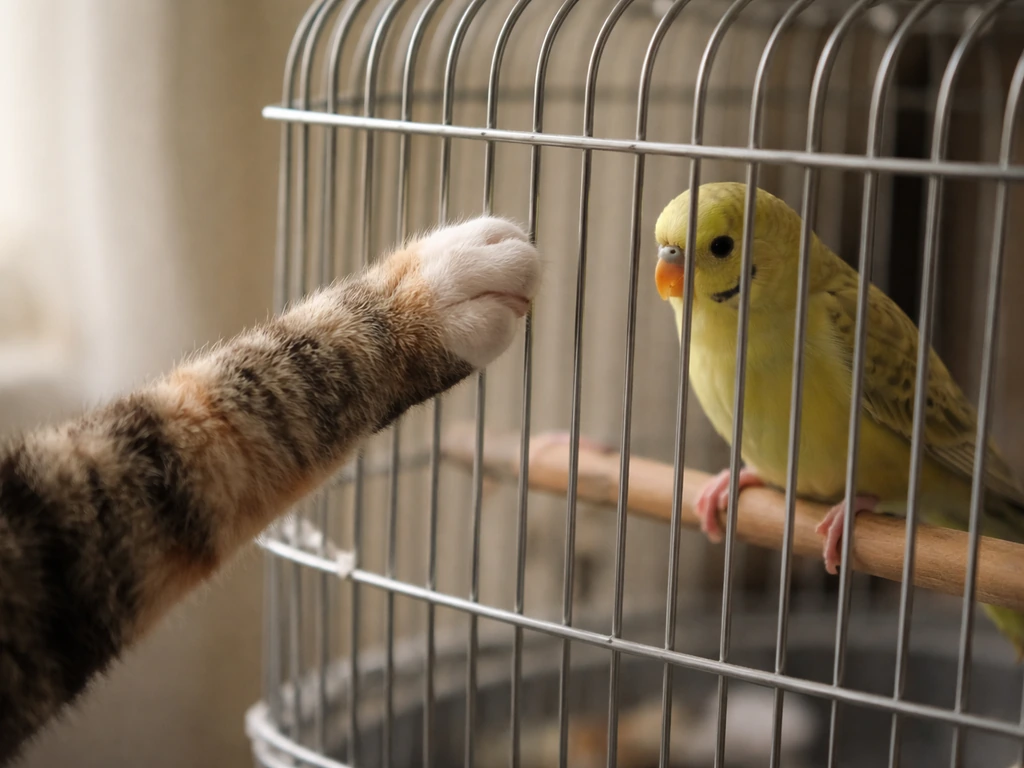
A cage does not make a bird safe from a cat. That is the short answer, and it matters. Cats can injure or kill caged birds by reaching through the bars, hooking a bird with a claw, grabbing a beak or foot, or simply terrorizing the bird into a fatal stress response. If you are wondering how a cat kill a bird, the main issue is that cats can injure birds or cause fatal stress even without contact how does a cat kill a bird. Even if no physical contact happens, the psychological toll of a predator standing at the cage can be enough to cause a bird to die. If you have a cat with access to your bird's cage right now, treat it as a real threat and act on it today.
How a cat can hurt a caged bird
Most people picture predation as a cat grabbing a free-flying bird. With a caged bird, it works differently, but it is just as dangerous. Here are the main ways it happens.
Reaching through the bars
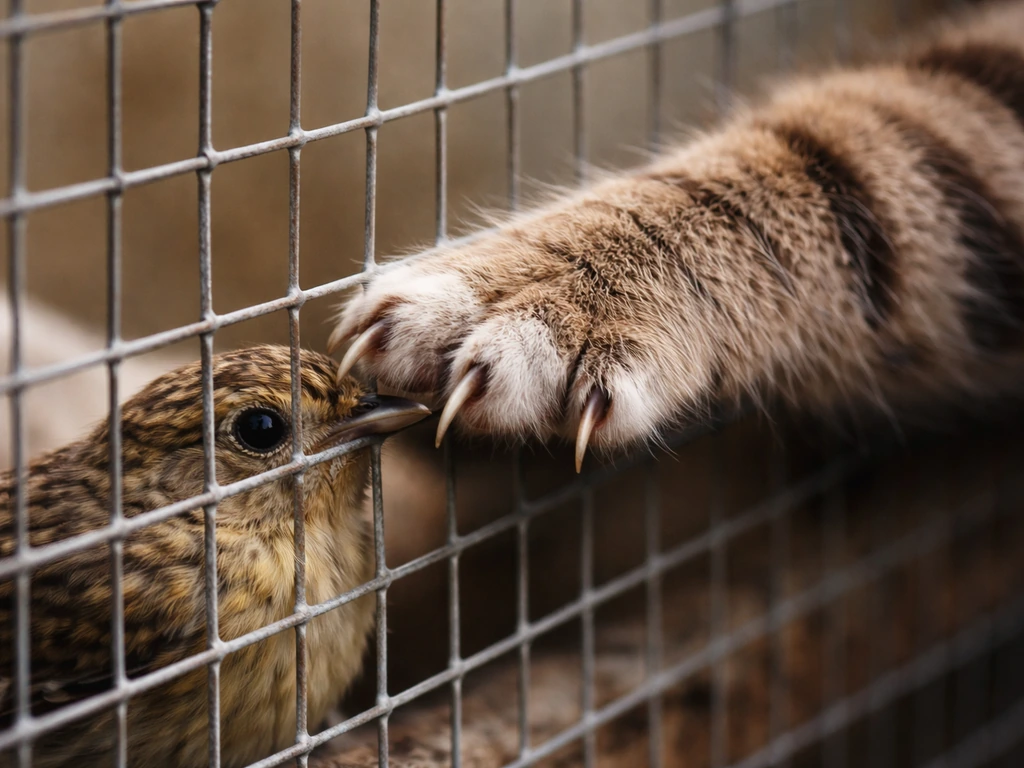
A cat's paw is narrow and flexible. On any cage with bar spacing wider than about half an inch, a determined cat can slide a paw inside and swipe. Even a single swipe can puncture skin, break a wing, or scalp a small bird. The bird does not need to be grabbed and carried off to suffer a life-threatening injury.
Grabbing through the mesh
Wire mesh with large openings is a common weak point in aviaries and budget cages. A cat can hook a toe or claw through the mesh and snag a bird that gets too close to the wall. Small birds like budgies and finches are especially vulnerable because they tend to perch near cage edges.
Knocking the cage over
A cat that is determined, excited, or just playful can push a cage off a table or stand. A cage falling even a short distance can break a bird's bones, cause internal bleeding, or result in the door popping open. Once the door opens, the outcome is predictable.
Stress, fear, and night fright
Birds are prey animals, and their stress response is intense. A cat sitting at the base of the cage, staring, pawing, or vocalizing can push a bird into a state of acute fear. In some cases this triggers night fright, where the bird panics, thrashes in the cage, and injures itself. Severe night fright can be serious, so it is important to treat it as an emergency rather than assuming your bird will settle can night fright kill a bird. Prolonged chronic stress weakens a bird's immune system and shortens its life. Some birds, particularly small ones like cockatiels, lovebirds, and finches, can die from the stress of repeated predator exposure alone, even without a single physical scratch.
This is the one most people underestimate. If a cat's paw makes even brief contact with a bird, cat saliva and the bacteria on a cat's claws can enter any tiny wound. Avian emergency medicine literature is clear on this: a bird exposed to mammalian predator contact can develop septicemia within 24 to 48 hours if it does not receive antibiotic treatment. The bacteria that live normally in cat saliva and on cat skin, including Pasteurella multocida, are rapidly lethal to birds. ABCD cat and vet review guidelines note that cat bites, scratches, and even close contact can transmit Pasteurella species, with onset such as cellulitis or abscess occurring within hours after inoculation Pasteurella multocida. A bird that looks completely fine after a cat touch can be dead the next morning. This is not an exaggeration.
Which situations are riskiest
Not every cat-near-a-cage situation carries the same level of immediate danger. These are the factors that push the risk up.
| Risk Factor | Lower Risk | Higher Risk |
|---|
| Cat's hunting drive | Older, low-energy, disinterested cat | Young cat, active hunter, or cat that has killed birds before |
| Bird species and size | Larger parrots (macaws, Amazons) | Small birds: budgies, canaries, finches, cockatiels |
| Cage bar spacing | Under 0.5 inches (12 mm) | Over 0.75 inches (19 mm) or wide mesh openings |
| Cage material | Heavy-gauge welded steel | Lightweight wire, plastic, or soft mesh |
| Cage door and lock | Secure latch with a secondary lock | Simple spring clip or door that pops open easily |
| Cage placement | On a secured shelf or stand out of jumping reach | On a low table, floor, or anywhere the cat can reach or climb to |
| Visibility and scent access | Bird in a separate room with a closed door | Cat can see, smell, and physically access the cage freely |
| Supervision | Cat never unsupervised near cage | Cat left alone with the bird for hours at a time |
A high-prey-drive cat next to a small bird in a flimsy cage on the floor is about as dangerous as it gets. A calm older cat that ignores birds and never gets near the room is a much lower concern. Most households fall somewhere in the middle, which is why proactive separation is always the safer call.
What to do right now if a cat has access to your bird's cage
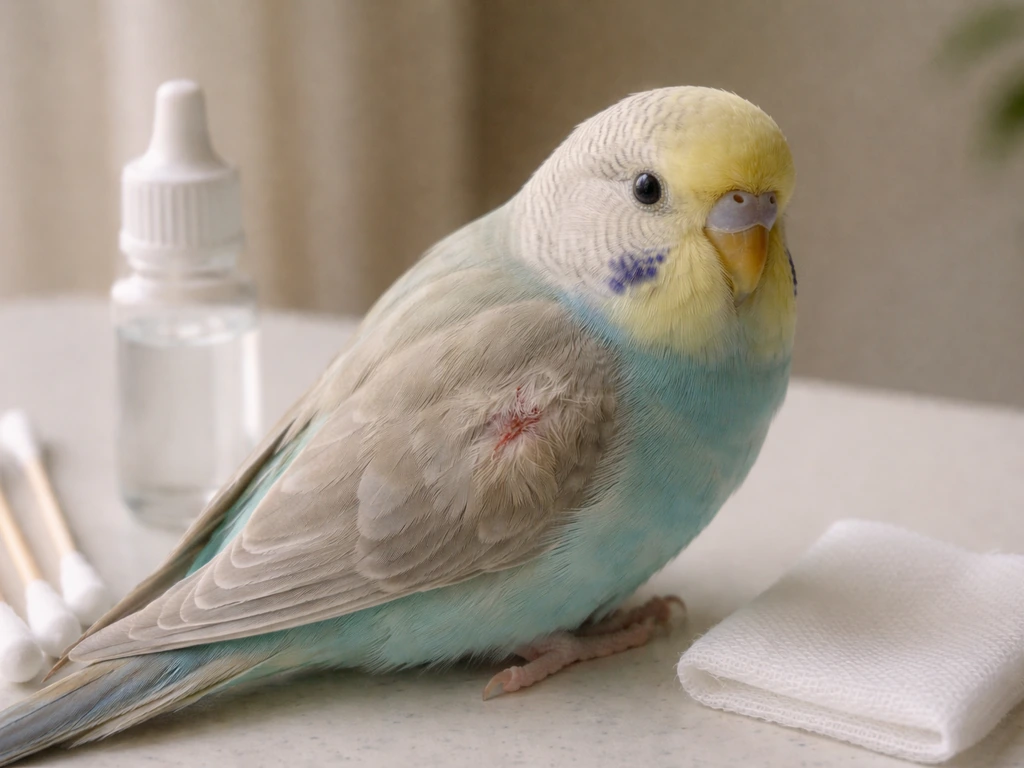
If you are reading this because a cat is currently near your bird's cage, or because a cat just touched or was near the cage, here is what to do immediately.
- Remove the cat from the room right now. Close the door and keep the cat out. Do not just shoo it away and walk off.
- Check the bird carefully. Look for any cut, puncture, missing feathers, blood, swelling, or signs of labored breathing. Use good light and look at every part of the bird including the feet, legs, wings, and around the beak.
- If you see any wound at all, no matter how small, treat this as a veterinary emergency. Even a pinprick from a cat claw needs prompt antibiotic treatment. Do not wait and watch.
- If the bird was only frightened but shows no visible wound, keep a close watch for the next 24 to 48 hours. Birds that were exposed to cat contact can still develop infection even without obvious injuries, because they may have groomed off cat saliva that entered through intact skin or tiny abrasions you could not see.
- Move the cage to a secure room the cat cannot enter. A room with a door that latches is ideal.
- If the bird is showing signs of shock such as fluffed feathers, sitting on the cage floor, heavy breathing, or not responding normally, keep it warm, quiet, and dark and contact an avian vet today.
How to prevent this from happening again
The cage itself
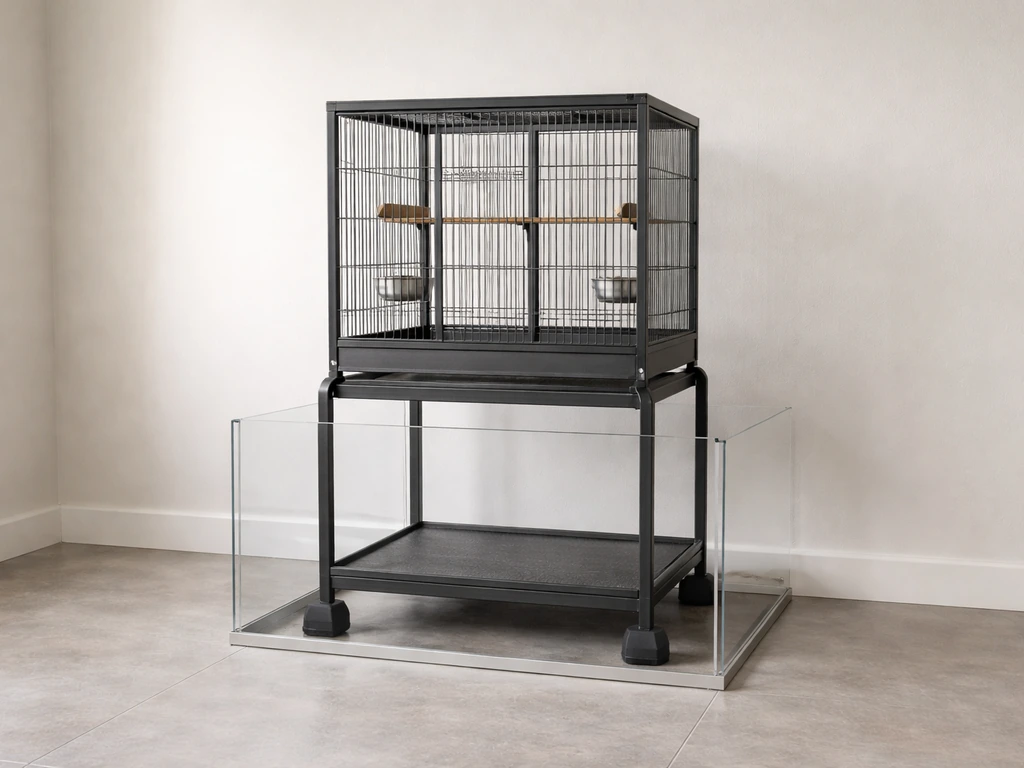
Upgrade to a cage made of heavy-gauge welded steel with bar spacing of no more than half an inch (12 mm) for small birds, or appropriately tight spacing for whatever species you keep. All doors should have secondary locks, not just spring clips. A cat can open a spring clip. Use an additional clip, padlock, or carabiner on every door and food hatch.
Cage placement and barriers
Place the cage on a heavy, stable stand that cannot be easily knocked over. Ideally the stand should be bolted to a wall or weighted at the base. Keep the cage elevated enough that the cat cannot reach the bottom of it while standing or sitting on a nearby surface. If your cat is a climber, this matters more than height alone.
Room separation
The most reliable prevention is keeping the cat and bird in completely separate areas of the house. Dedicate one room to the bird and keep that door closed. This is not about punishing the cat, it is about eliminating the access entirely. A cat that cannot get to the bird cannot harm the bird. This is the only approach that fully eliminates the risk.
Supervised interaction
Some bird owners let cats and birds be in the same room under direct supervision. If you do this, the rule should be that your eyes are on both animals at all times. Never leave the room, even briefly. The moment you leave is the moment an accident can happen. Supervised proximity is not the same as coexistence, and it is not a long-term substitute for proper separation.
Reducing visual and scent exposure
Constant visual access to a predator stresses birds even when nothing physical happens. Cage covers, opaque barriers, or placing the cage away from spots where the cat frequently sits can help reduce the chronic stress load. A bird that cannot see, smell, or hear the cat is in far better shape psychologically.
Health hazards beyond the attack itself
Even after you have secured the bird and removed the cat, there are secondary health concerns to stay aware of.
Infection and septicemia
As noted earlier, cat saliva is particularly dangerous for birds. The bacteria blank" rel="noopener noreferrer">Pasteurella multocida, commonly found in cat mouths, can cause fatal septicemia in birds within 24 to 48 hours of exposure. This is not a wait-and-see situation. If there is any possibility of cat contact with the bird's skin or feathers, contacting an avian vet for antibiotic guidance is the right call, not a precautionary overreaction.
Wound contamination and secondary infection
Claw wounds, even small ones, introduce bacteria directly into tissue. Birds have relatively thin skin over fragile bones, and puncture wounds that look minor can be much deeper than they appear. Any wound should be assessed by a vet rather than treated at home with antiseptic and hope.
Parasites
Cats can carry external parasites including fleas and mites. If a cat has been in close contact with a bird's cage, checking the bird and the cage environment for signs of parasites is reasonable, especially if the cat goes outdoors.
Chronic stress effects
Even without physical contact, repeated exposure to a cat creates chronic stress in birds. Over weeks and months, this suppresses the immune system, disrupts hormones, and can contribute to feather-destructive behavior, poor appetite, and increased susceptibility to illness. It is a slow harm rather than a sudden one, but it is real.
When to call a vet or bird rescue today
Contact an avian vet or bird rescue immediately if you notice any of the following.
- Any visible wound, puncture, cut, or area of missing feathers with skin exposed
- Blood anywhere on the bird or inside the cage
- The bird is sitting on the cage floor instead of perching
- Fluffed feathers combined with lethargy or eyes closed during the day
- Labored, open-mouth breathing or tail bobbing with each breath
- Loss of balance or inability to grip the perch
- The bird is unresponsive or unusually quiet after the cat interaction
- You are not sure whether physical contact occurred but the cat had access to the cage
Do not wait until morning if it is evening and the bird looks unwell. Avian emergencies move fast. Many areas have emergency exotic animal vets, and avian rescue organizations can often point you to one quickly. The 24 to 48 hour window for septicemia means that delaying by even several hours genuinely matters.
The bottom line on cat-and-bird safety is simple: a cage slows a cat down, but it does not stop one. You might also wonder can a bird of prey take a cat, but the safety priorities should start with preventing any cat access to your bird’s enclosure. Physical barriers within the cage help, but room separation is the only real solution. And if contact has already happened, the bird needs veterinary attention today, not tomorrow. The risks are well-documented and the window to act is narrow, but acting quickly gives the bird a real chance.