
Cats kill birds through a combination of physical injury, internal trauma, and bacterial infection from their bites. If you found a bird dead or injured after a cat was nearby, there is a clear, well-understood chain of events that most likely caused it, and there are practical steps you can take right now to handle the situation safely and reduce the chances of it happening again.
How Does a Cat Kill a Bird and What to Do Today

Maya Chen
6 Apr 2026
What it actually means when a cat kills a bird
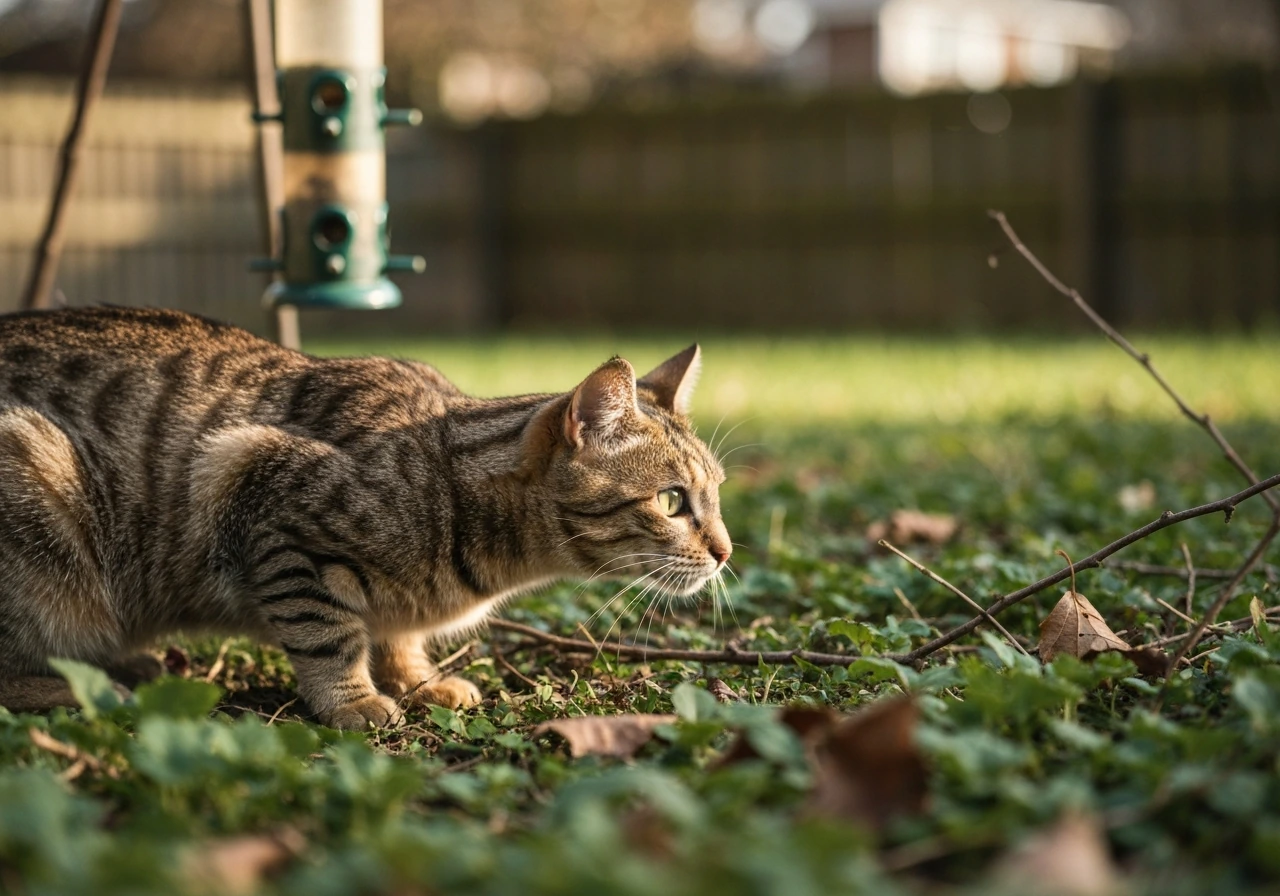
Most cat-bird incidents fall into a handful of common scenarios. A free-roaming outdoor cat stalks a bird at a feeder, on the ground, or in low vegetation and pounces. Fledglings (young birds that have recently left the nest but cannot yet fly well) are especially vulnerable because they spend time hopping around on the ground. Cats that live indoors but have access to a porch, window, or cat door can also reach birds, particularly smaller species like sparrows, finches, and warblers.
Sometimes the bird is found dead with obvious trauma. Other times it appears unharmed but is lethargic or in shock. And sometimes there is no bird at all: just feathers. All of these outcomes can trace back to the same hunting sequence.
How cats actually hunt and why birds die
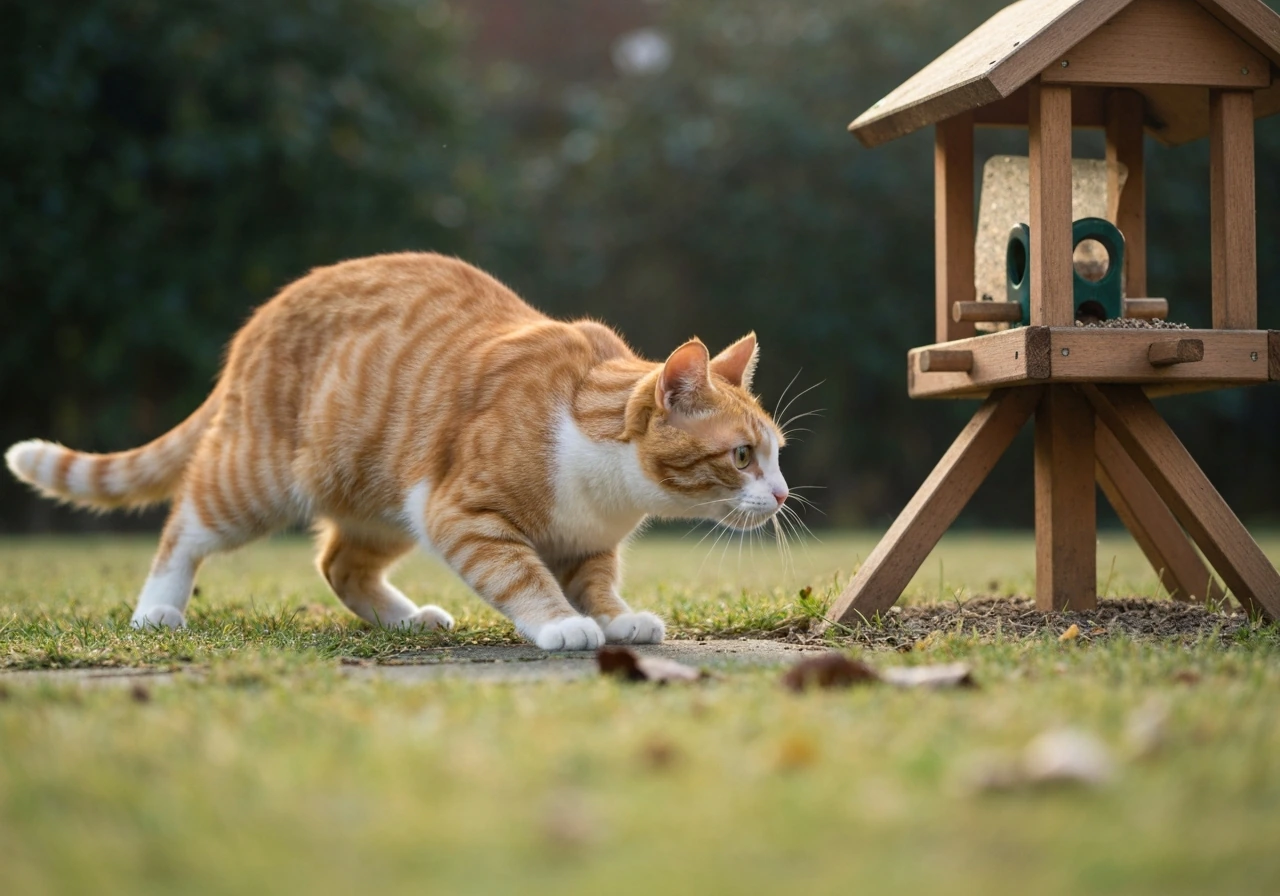
Cats are instinctive ambush predators. They use a stalk-and-pounce technique: crouching low, moving slowly, then launching at close range. The attack itself usually involves the cat grabbing the bird with its front claws and delivering a bite, most often to the neck or head. That bite is the key factor in bird death.
The bite is the most dangerous part
Cat teeth are narrow and pointed, which means they puncture deeply even when the wound looks small on the surface. A single bite can cause internal crushing injury to a bird's fragile skeleton and organs, which are not built to withstand that kind of force. Internal hemorrhage or damage to the air sacs (part of a bird's respiratory system) can kill a bird quickly even with no visible external wound.
What makes things worse is the bacteria in a cat's saliva. Even if a cat does not immediately kill a bird, its bite often leads to infection and death within 24 to 72 hours. This is why a bird surviving a cat bite is much harder than it looks and why a bird that seems fine after an attack should still be treated as critically injured.
Other causes of death during an attack
Beyond direct physical trauma, birds can die from stress-induced shock. A bird's heart rate can spike so dramatically during capture that it goes into cardiac arrest. This is similar to the phenomenon described in night fright killing a bird, where extreme stress alone is enough to be fatal. Suffocation is also possible if the cat holds the bird in its mouth long enough to restrict breathing.
One common question is whether a cat can kill a bird without direct physical contact. The short answer is that stress alone can contribute, but typically a cat needs to make physical contact to be lethal. If you have a pet bird and you're concerned about what a cat can do from a distance, the research on whether a cat can kill a bird just by staring at it addresses that specific scenario in more detail.
Health risks you need to know about before you touch anything
Before you pick up a dead or injured bird, understand the real health risks involved. CDC guidance for handling dead birds recommends avoiding bare-handed contact and, if you must pick one up, using gloves or an inverted plastic bag over your hand placed into a garbage bag avoid bare-handed contact with a dead bird. They are manageable, but they are real.
Salmonella
People and pets can contract salmonella from handling infected birds and contaminated feeders. Always wear gloves when handling any wild bird (dead or alive) and wash your hands thoroughly with soap and water afterward. If you have bird feeders or baths in your yard and you find a sick or dead bird nearby, remove them for about two weeks and clean them outdoors before putting them back up.
Avian influenza
Avian influenza (bird flu) is a genuine concern, especially given recent HPAI outbreaks. Avoid unprotected exposure to sick or dead birds. If handling is unavoidable, use disposable waterproof gloves, avoid touching your face while gloved, and wash your hands immediately afterward. Do not let children or pets come into contact with the bird or anything it touched.
Rabies
Rabies risk here is indirect but worth noting, particularly if the cat involved was unvaccinated or a stray. The rabies virus is transmitted through direct contact of saliva or nervous system tissue with broken skin or mucous membranes. If the cat scratched or bit you during the incident, contact your doctor or local health department right away to assess whether post-exposure treatment is needed.
What to do right now if you find a dead or injured bird
If the bird is dead
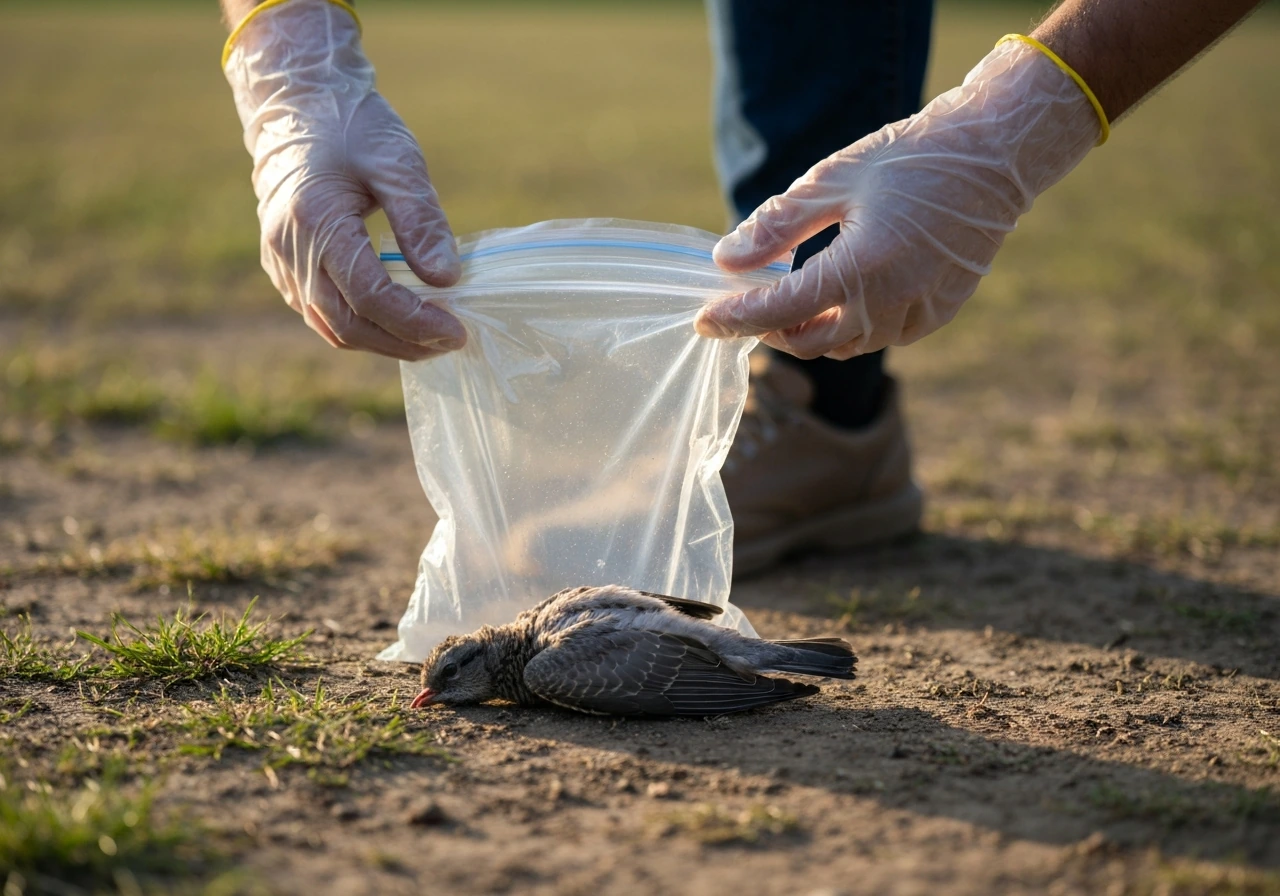
- Do not pick it up with bare hands. Use disposable waterproof gloves or an inverted plastic bag over your hand to grab the bird, then seal the bag around it.
- Avoid touching your face while gloved.
- After removing the gloves, bag them with the bird and dispose of everything in your outdoor trash.
- Wash your hands thoroughly with soap and water for at least 20 seconds.
- Disinfect any tools (tongs, shovels) you used with an appropriate disinfectant per the manufacturer's instructions.
If the bird is injured or alive
Minimize handling and stress as much as possible. Use gloves or a thick towel to gently place the bird into a cardboard box lined with a paper towel. Punch a few air holes in the lid, close it, and put the box somewhere warm, dark, and quiet, away from pets and children. Do not give the bird food, water, or any medication. Then call a licensed wildlife rehabilitator or your local wildlife center immediately. The bird needs professional care, not DIY treatment, especially if there is any chance of a cat bite wound.
If you are not sure whether the bird needs help, call a wildlife rehabilitation center anyway. They can talk you through what you are looking at and whether intervention is appropriate.
One thing worth knowing: if you have a caged pet bird and a cat got close to or into the cage, the situation has its own specific risks. The question of whether a cat can kill a bird in a cage covers those scenarios, including stress-related death even without direct contact.
How to prevent this from happening again
The most effective thing you can do is reduce outdoor cat access to areas where birds are present. Here is what actually works and what does not.
Keep the cat indoors
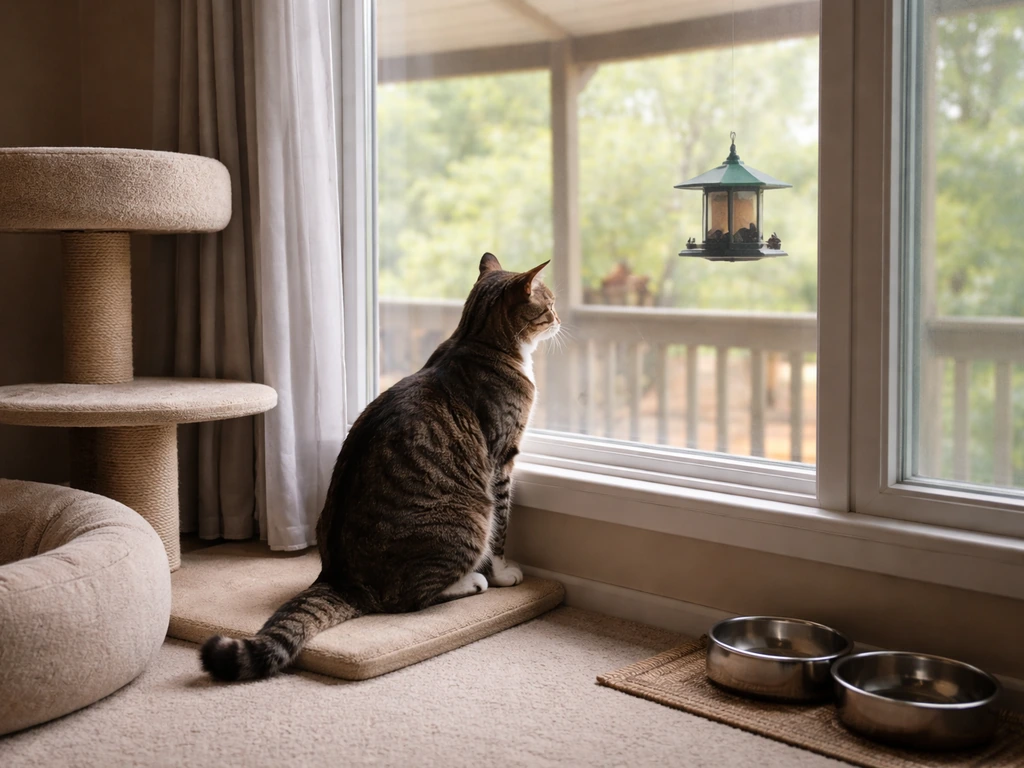
This is consistently the most effective prevention method. Outdoor cats are far more likely to hunt than indoor cats, regardless of how well-fed they are. Keeping cats indoors eliminates the opportunity entirely, and it also reduces the cat's own exposure to disease, parasites, and injury, including risks from larger predators. It is worth knowing that the predator dynamic can flip: a bird of prey can take a cat under certain circumstances, so indoor living protects both parties.
What does not work as well as you think
Bells on cat collars are largely ineffective for bird predation. By the time the bell rings, the bird often cannot escape, and fledglings on the ground have no flight response at all. Bells may reduce some hunting of faster prey, but do not count on them to protect birds.
Practical deterrents that do help
- Move bird feeders to locations that are harder for cats to approach without detection, such as away from low shrubs and fences that provide cover for stalking.
- Use feeders on smooth metal poles with baffles, which are harder for cats to climb.
- Avoid ground feeding, which puts birds in the most vulnerable position.
- Keep feeders away from areas where cats are known to frequent.
- If the cat is a neighborhood stray or feral, contact your local animal control or TNR (trap-neuter-return) program to reduce the feral population over time.
- Supervise outdoor time for cats that cannot be kept fully indoors, or use a contained outdoor enclosure (a 'catio') to allow outdoor access without free roaming.
Cats vs. other bird threats: keeping perspective
Cats are a significant and well-documented threat to wild birds, but they are not the only one. Window collisions, habitat loss, and other factors all contribute to bird mortality. The table below puts the main prevention strategies in context so you can prioritize based on your situation.
| Scenario | Most Effective Prevention | Works Without Cat Owner Cooperation? |
|---|---|---|
| Your own cat killed a bird | Keep cat indoors full-time or use a catio | Yes (you control the cat) |
| Neighbor's cat at your feeder | Reposition feeders, use pole baffles, remove ground-level cover | Yes (you control your yard) |
| Stray or feral cat | Contact animal control or local TNR program | Partially (depends on local resources) |
| Fledgling on ground in spring/summer | Keep all cats indoors during peak fledgling season (May-July) | Only if you own the cat |
The bottom line is straightforward: cats are effective, instinct-driven predators, and their hunting behavior is not something that can be trained away. Managing their access to outdoor spaces is the only reliable way to protect birds. If a bird has already been attacked, treat it as a medical emergency, get it to a rehabilitator as quickly as possible, and handle anything related to the incident with basic protective measures to keep yourself safe.
FAQ
If I see a cat chasing a bird but I cannot find the bird afterward, should I still assume it was killed?
Possibly, but not always. Birds can fly away but be injured or exhausted, especially fledglings and small ground birds. If you notice unusual behavior near the attack site (collapsed posture, inability to fly normally, staring or open-mouth breathing), treat it as potentially injured and contact a wildlife rehabilitator rather than waiting for recovery.
What is the safest way to check a bird without getting too close?
From a distance, look for responsiveness (head movement, coordinated breathing), and only approach if you can do it quickly and calmly. Wear disposable waterproof gloves if you are going to move the bird, use a cardboard box with air holes, and avoid direct handling of the head and legs. If the bird is actively bleeding, lethargic, or has any bite punctures, skip extended observation and go straight to rehabilitation.
Can I clean up the area or feeders immediately, or should I wait?
If there was a sick or dead bird, it is best to remove feeders and baths for about two weeks as a practical break in exposure, then clean them outdoors before putting them back. Even if you cannot confirm what caused the death, treat the feeder surface as potentially contaminated, especially around seeds, water, and droppings.
Should I put the bird back where I found it?
Do not return it outdoors unless a rehabilitator instructs you to. For fledglings and recently grounded birds, returning them can increase the chance of continued predation and stress. The safest default is to contain them briefly in the ventilated box and call a wildlife center for species-specific guidance.
How do I handle the situation differently if the bird is alive but shocked?
Keep stress low and temperature stable, warm but not hot, and avoid feeding or giving water. Shock can look like near-death and can worsen with handling. Quiet, dark, and secure containment plus prompt professional intake is safer than attempting at-home recovery.
Do I need to worry about zoonotic disease even if I use gloves?
Gloves reduce risk but do not eliminate it. You can still contaminate yourself by touching your phone, keys, door handles, or face while wearing gloves. After you finish, remove gloves carefully, wash hands thoroughly with soap and water, and launder any clothes that contacted feathers or bodily fluids.
What if the cat involved is my pet, and it has no visible injuries?
Even if your cat looks fine, there can still be bite wounds and saliva contamination. Keep your cat indoors away from the bird, and consider contacting your veterinarian if your cat has any puncture wounds, swelling, drooling, or reluctance to eat. For the bird, treat it as critically injured because infection can develop even if the initial injuries seem minor.
If the bird died on the spot, can I dispose of it normally?
Bag it and keep it sealed, especially if there is any chance it contacted surfaces that children or pets use. Wear gloves for disposal, then wash hands. If multiple birds die around the same time or you suspect HPAI due to symptoms or local advisories, contact local wildlife or public health for instructions rather than assuming it is routine predation.
What should I do if the cat got into a bird cage but the bird was not bitten directly?
Treat it as an emergency even without visible punctures. Stress and suffocation can occur after frantic movement or prolonged contact, and injuries can be subtle. Keep the caged bird in a quiet area, do not medicate, and contact a wildlife rehabilitator or an avian vet for urgent assessment.
Are cat deterrents like sprays, ultrasonic devices, or training effective for bird safety?
Most are unreliable compared with managing outdoor access. Many deterrents can be bypassed through repeated hunting opportunities, and some devices may add stress without preventing the stalk-and-pounce sequence. If you cannot bring the cat fully indoors, focus on physical barriers (enclosed yards, supervised outdoor time, or predator-proof enclosures for birds) rather than relying on gadgets.
Next Articles

Bird Causes Plane Crash? Risk, Mechanisms, Myths, Prevention
Whether bird strikes can cause plane crashes, how they happen, real risk data, debunked myths, and prevention steps

Can a Plane Crash Because of a Bird? Facts and Safety
Understand if a bird strike can crash a plane, what it damages, how often it happens, and what airports do to prevent it

Can a Bird Crash a Plane? Risks and What to Do
Can a bird crash a plane? Learn how bird strikes happen, real risk levels, and what to do if one occurs.