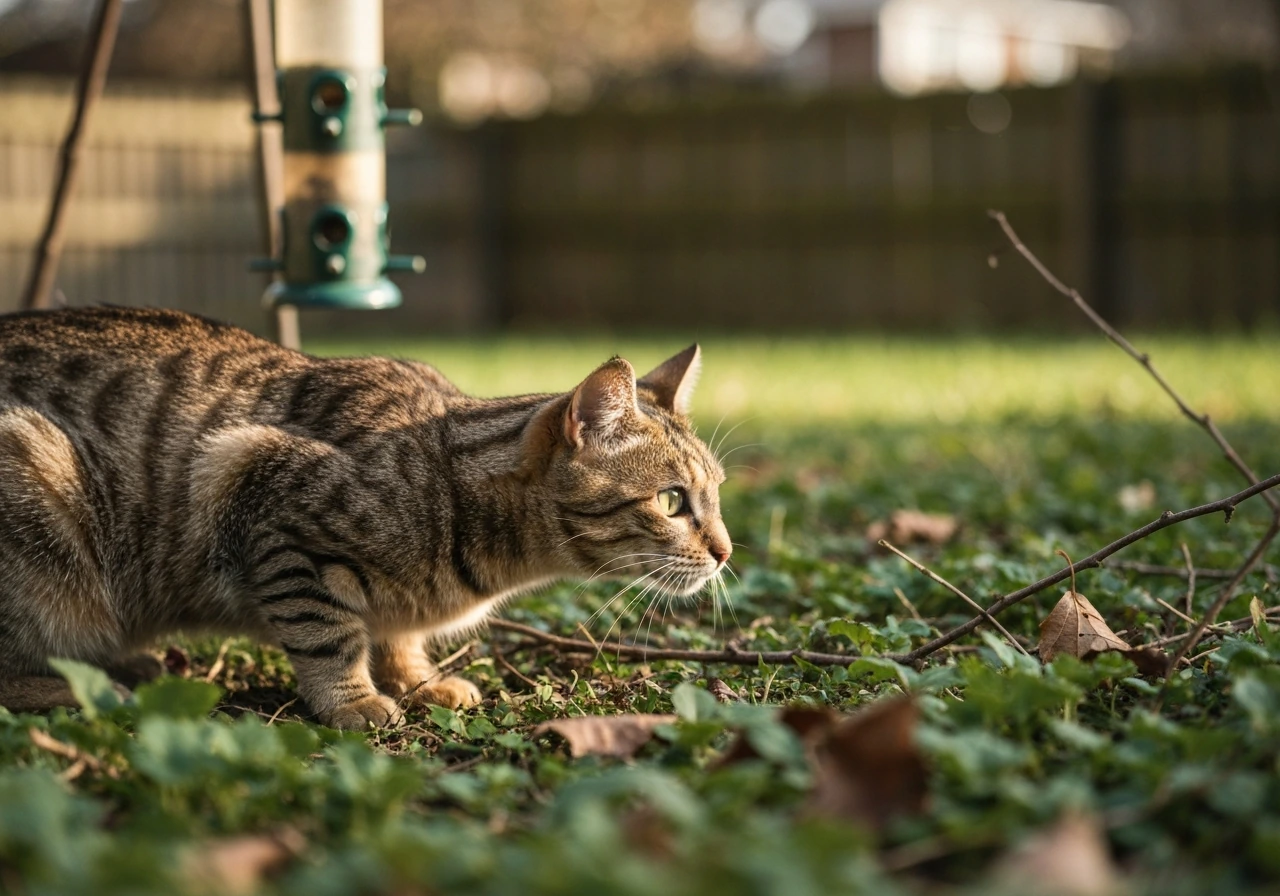
Yes, a bird can survive a cat bite, scratch, or attack, but survival is far from guaranteed and the clock starts the moment contact happens. The outcome depends on three things: how deep the wound is, which part of the body was hit, and how fast the bird gets proper treatment. Even a single small puncture from a cat's tooth or claw can kill a bird within hours if the infection isn't treated, so "it looks fine" is not a safe conclusion to draw.
Can a Bird Survive a Cat Bite or Scratch? What to Do

Maya Chen
17 Apr 2026
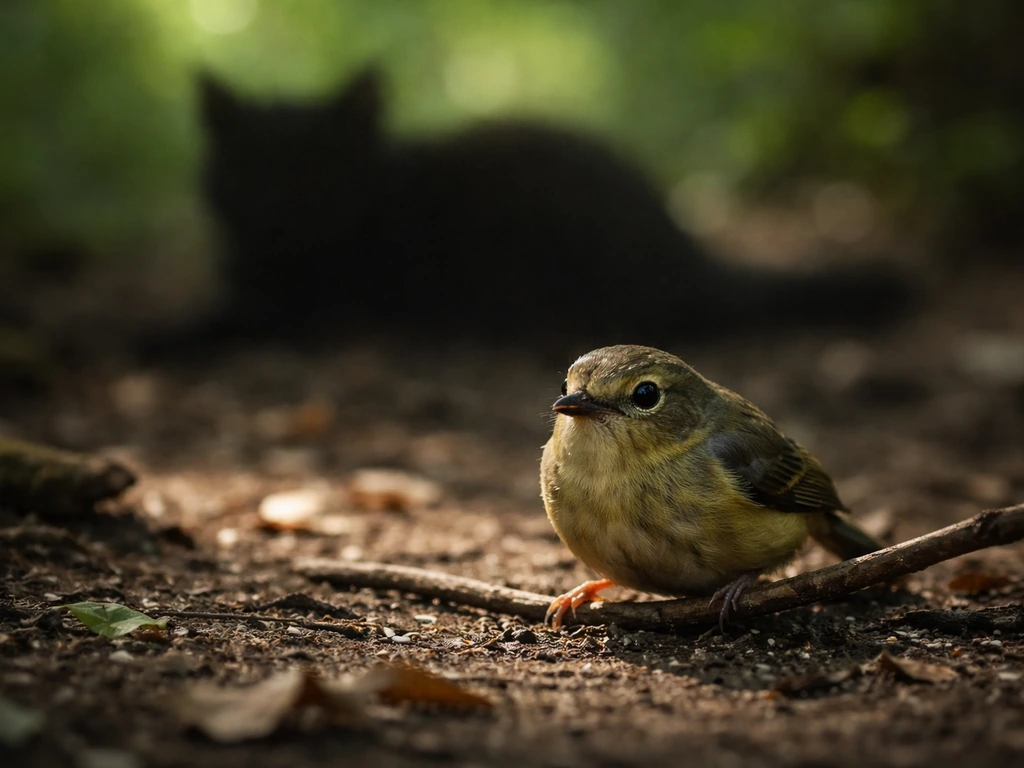
Why cat injuries are uniquely dangerous for birds
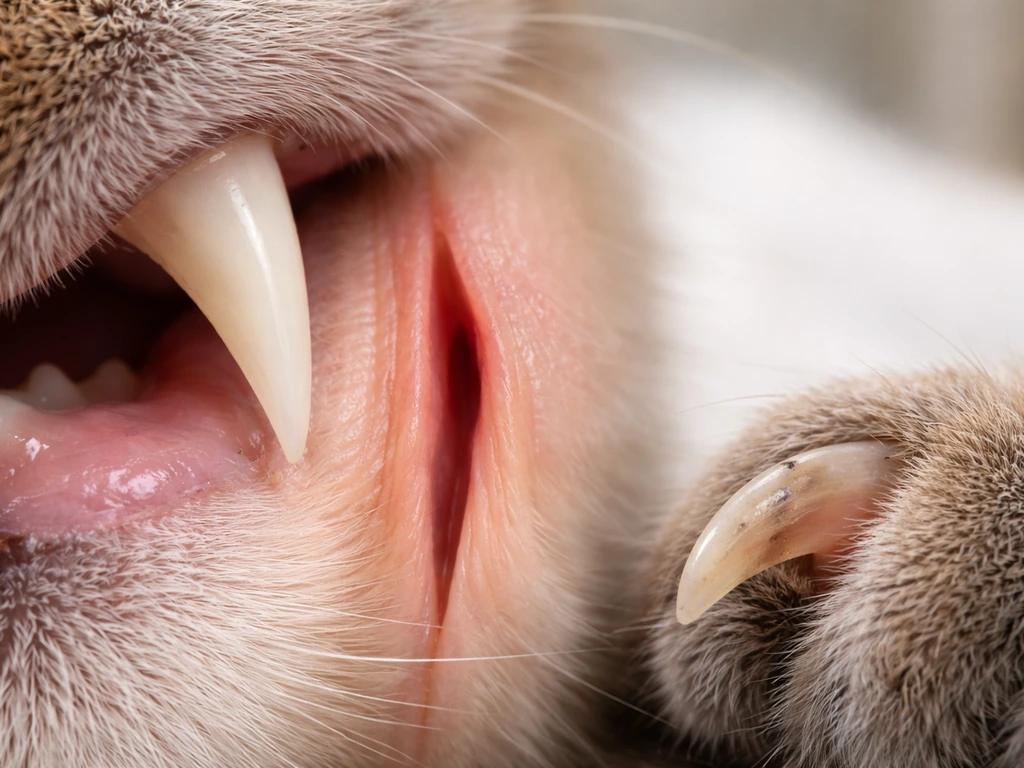
Cat bites and scratches are not like other small wounds. A cat's canine teeth are needle-thin and drive bacteria deep into tissue, often into joints and even bone, while leaving a surface puncture so small it can be missed entirely. Cat claws work the same way, penetrating like a puncture rather than a clean slice. The real danger isn't the wound you can see. It's the bacteria you can't.
Cats carry Pasteurella multocida in their mouths and on their claws. In birds, this bacterium causes rapid soft-tissue infection and can become systemic (spreading through the bloodstream) fast. There is actually a published case of a Pekin duck developing a serious Pasteurella soft-tissue infection from a single cat scratch, with treatment requiring 5 to 14 days of antibiotics. For small songbirds, the margin is even thinner. Cats also carry Bartonella henselae, the bacteria behind cat-scratch disease, which can cause fever, skin lesions, and more serious complications when it enters through broken skin.
If you want to understand more about the mechanics of what happens during a predatory encounter, the detail on how a cat kills a bird explains the physical trauma involved, which helps put the infection risk into full context.
Bites vs. scratches: same risk, different shape
People often assume a scratch is minor and only a bite is serious. That's a dangerous myth. Both break the skin and both drive bacteria into tissue. The difference is mostly shape: a bite leaves a small round puncture, while a scratch leaves a linear track. But a cat claw can penetrate just as deeply as a tooth, and Pasteurella doesn't care which route it took in.
Any bird that has had direct contact with a cat, even if you only noticed a scratch, should be treated as a potential bite victim. One wildlife rehab protocol puts it plainly: any animal found within a few feet of a cat should be considered a cat bite victim and handled accordingly, because you often can't tell what contact happened.
It's also worth knowing that cats don't have to physically injure a bird to cause harm. Stress alone from a prolonged predator encounter can be life-threatening to small birds. For related context on stress-related mortality, night fright and how it can kill a bird covers how acute fear responses can push a bird into fatal cardiac events, which applies here too.
What to do right now: immediate first aid steps
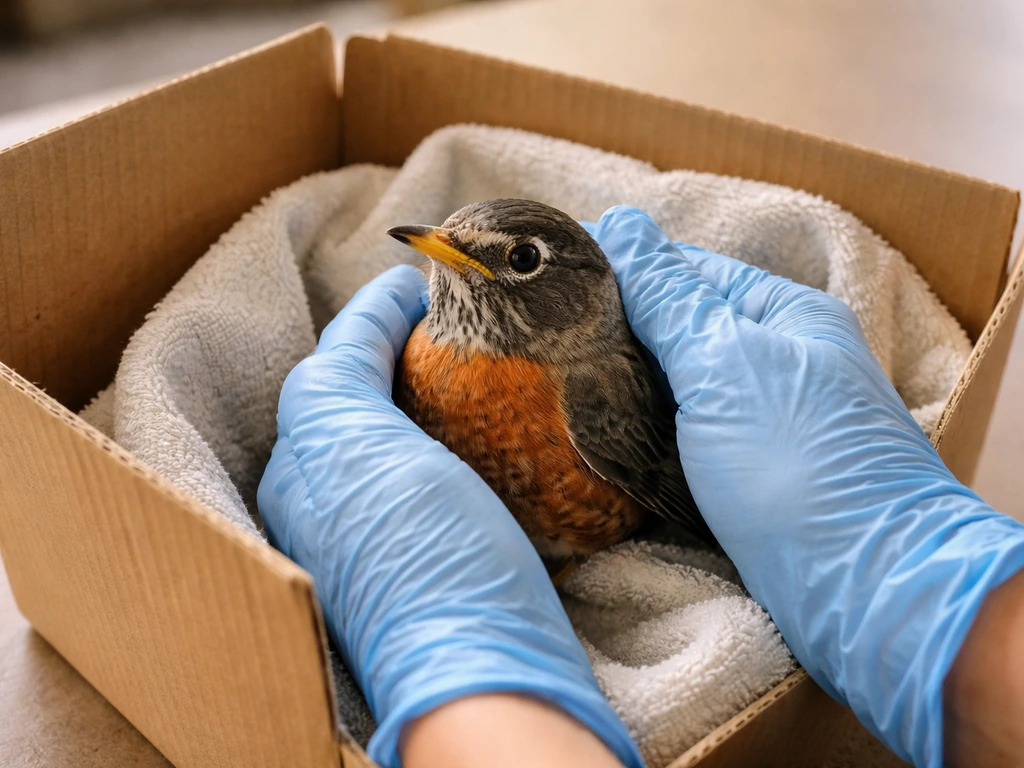
Your first job is to get the bird contained and calm without making things worse. Don't squeeze, shake, or try to examine every inch of the bird right away. Minimizing handling reduces additional stress and the risk of worsening internal injuries.
- Put on gloves if you have them, then gently pick up the bird with both hands, keeping its wings lightly against its body.
- Place it in a small cardboard box lined with a folded towel or paper towels. The box should be just large enough for the bird to stand, not so big it bounces around during transport.
- Punch a few small air holes in the lid, then close the box. Dark, enclosed spaces calm birds by reducing visual stimulation.
- Keep the box warm but not hot. A warm water bottle wrapped in a cloth placed next to (not under) the bird helps prevent shock-related hypothermia. Aim for a comfortable warmth, not heat.
- If there is visible bleeding, apply gentle, light pressure with a clean cloth for a few minutes. Puncture wounds from cat bites typically don't bleed much, which is part of why they're underestimated.
- Do not give the bird food or water. An injured bird in shock can aspirate liquids, and feeding is not your job right now.
- Do not apply antiseptic sprays, hydrogen peroxide, or home remedies to the wound. These can damage tissue and delay proper cleaning.
- Call a licensed wildlife rehabilitator or avian vet immediately and get moving. Antibiotic treatment ideally needs to happen within a few hours of the attack.
If you can't reach a rehabber right away, keep the bird in that warm, dark, quiet box until you can. Do not keep checking on it. Every time you open the box, you add stress.
Warning signs that demand emergency care right now
Many birds that look fine after a cat encounter are not fine. The absence of visible injury does not mean the bird is safe. These are the signs that mean you need emergency care, not a wait-and-see approach:
- Any known or suspected cat contact, even without visible wounds
- Visible blood, even a small amount, especially near the chest, head, or abdomen
- Open-mouth breathing or labored breathing
- Inability to stand, hold the head upright, or grip with feet
- One or both wings drooping or held at an odd angle
- Fluffed feathers combined with lethargy or unresponsiveness
- Swelling, bruising, or lumps under the feathers
- Eyes partially or fully closed when the bird should be alert
- Weakness, trembling, or uncoordinated movement
- Any puncture wound you can locate, no matter how small
Shock is a real and fast-moving risk after trauma. Signs of shock include weakness, irregular or labored breathing, and unresponsiveness. A bird showing any combination of these needs professional evaluation immediately, not in a few hours.
People sometimes wonder whether a bird that was only "stared at" by a cat needs care. Honestly, whether a cat can kill a bird just by staring is more than a trivial question, because the stress response from predator presence alone can be significant. But if there was actual contact, you're in a different category entirely.
What treatment looks like and what to expect
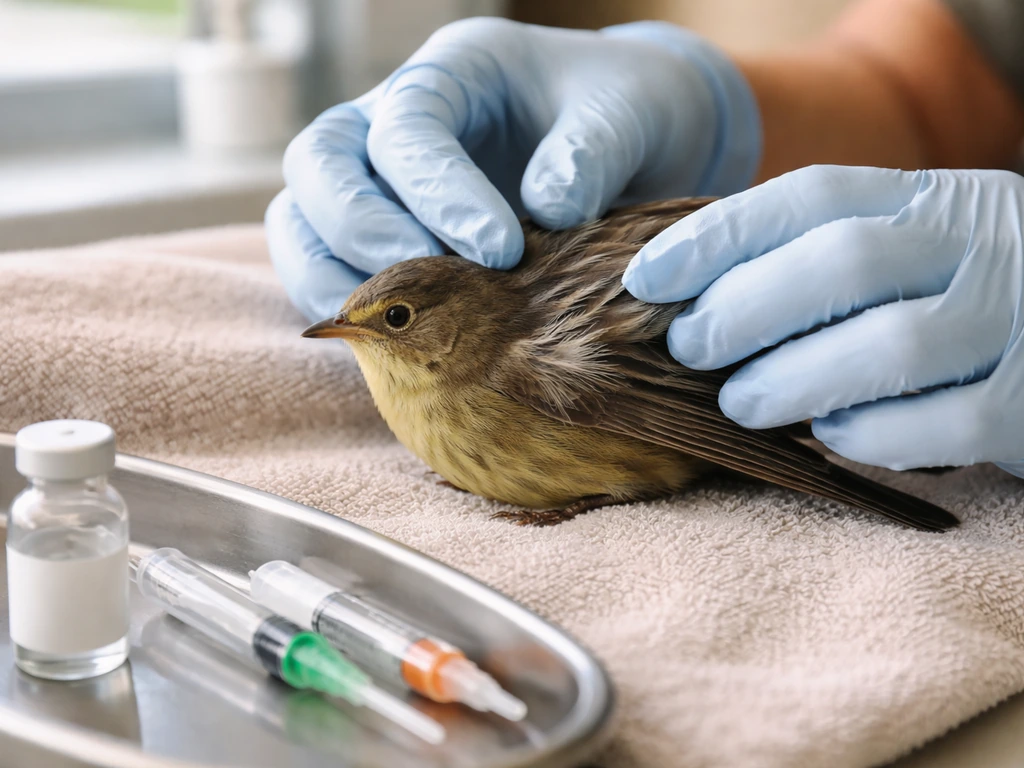
A vet or wildlife rehabber will start by doing a full physical exam, including checking beneath the feathers for punctures that are easy to miss. If puncture wounds are present, the vet may clean and irrigate the wounds, possibly debride (remove) damaged tissue, and decide whether to leave the wound open (which is common with high-infection-risk punctures) or close it. Wound cultures may be taken if the wound looks infected, though initial treatment doesn't always wait for culture results.
Antibiotics are the central treatment. Cat bite and scratch injuries are classified as high-risk for infection, and antibiotic prophylaxis is standard. Pain management is also typically included. For serious infections that have reached joints or the bloodstream, broader-spectrum antibiotics or IV treatment may be needed.
Recovery timelines vary widely. A bird with a single small puncture caught early and treated with antibiotics may recover in one to two weeks. A bird with deep punctures, internal injuries, or a systemic infection faces a much longer road, and many do not survive.
A PubMed-indexed study reports that fatal Pasteurella multocida infections after cat bites have been regularly seen among birds at an institute since the mid-1980s [fatal cases of Pasteurella multocida infection following cat bites have been seen regularly among avian patients at one institute since the mid-1980s](https://pubmed. ncbi. nlm. nih.
gov/2219107/). Honestly, survival rates for small birds after cat attacks are not high, especially when care is delayed. Wildlife rehab data on songbirds after dog and cat attacks consistently shows significant mortality even with treatment. Speed of treatment is the most controllable factor.
For birds in cages, the situation has its own complications. If you're a bird owner dealing with a cat attack on a caged pet, how a cat can kill a bird even in a cage explains how contact through bars is enough to cause serious injuries and why cage protection is not the safety guarantee people assume.
Reducing the risk going forward
If this happened to a pet bird, your setup needs to change. Cats and birds should never share unsupervised space, and a cage alone is not sufficient protection if a cat can reach through or knock it over. Bird enclosures need to be physically inaccessible to cats, with secure latches and placement out of reach.
For wild birds in your yard, outdoor cats are the single largest human-linked source of bird mortality. Keeping cats indoors is the most effective prevention. If that's not fully possible, supervised outdoor time in an enclosed catio eliminates the risk entirely. Bells on collars have limited effectiveness because cats can learn to move without triggering them.
It's also worth knowing that the predator relationship between cats and birds isn't one-sided in all cases. Larger raptors do sometimes target small cats. If you're curious about that dynamic, the question of whether a bird of prey can take a cat is a real one with its own evidence base.
For indoor pet birds, the daily routine matters. Never leave a cat and bird loose in the same room without direct supervision, and be realistic about how fast a cat can move when the bird is on the floor or near cage level. Even a curious swipe can introduce bacteria into a wound serious enough to kill a bird.
The bottom line on survival
Birds can and do survive cat bites and scratches, but only when they get fast, appropriate treatment. The wound you can see is almost never the whole picture. Cat bacteria are fast-moving and dangerous, shock is a real parallel threat, and time is the variable you have the most control over. If a bird has had any contact with a cat, treat it as an emergency, get it contained and warm, and call a wildlife rehabber or avian vet immediately. Don't wait to see if it gets better on its own.
FAQ
If I find a bird with a cat bite mark, should I disinfect the wound at home?
Rinse once with clean running water or sterile saline, then stop. Do not use hydrogen peroxide, alcohol, or ointments inside puncture holes, and do not “flush aggressively,” since you can drive bacteria deeper. If you can, gently blot excess fluid, then keep the bird warm and minimize handling until you reach an avian vet or wildlife rehabber.
My bird only seems scratched or feathers look ruffled after a cat was nearby, does that still count as a bite risk?
Yes. If the bird was in the same room, on the same surface, or within reach of a cat, treat it as a potential bite victim even when you only see missing feathers or a faint scratch. Cat teeth can puncture in spots you do not notice immediately, and infection can still start under feathers.
How long can a bird seem okay after a cat attack before infection or shock shows up?
A bird that is acting “normal” can deteriorate later, often because infection develops faster in punctures than surface wounds. Watch for lethargy, open-mouth or labored breathing, weakness, rocking balance problems, or trembling, and contact a rehabber or avian vet immediately if any appear.
Can I check under the feathers and squeeze the area to see how bad the puncture is?
Do not try to remove feathers around a puncture to inspect it closely, and avoid squeezing the area to “check for bleeding.” Excess handling increases stress and can worsen trauma. Let a professional do the under-feather inspection and wound exploration.
What’s the safest way to hold or transport a bird after a cat bite?
Keep the bird warm (roughly 80 to 85°F, or a warm towel-lined box), dark, and quiet. Use ventilation and avoid overheating, and do not offer food or water if the bird is weak or stressed, since poor coordination can lead to choking or aspiration.
How do I decide whether a “close call” counts as possible cat contact?
If you suspect a cat bite from any distance you cannot measure, treat it as a bite injury. A practical rule is: if the cat had access close enough to strike (a few feet in real life situations), assume contact may have happened and seek care promptly.
If the wound is tiny, is it ever reasonable to wait a day before getting antibiotics?
Yes, if antibiotics are delayed. Even when the wound looks small, cat-associated bacteria can spread into deeper tissue and joints. Timely prophylactic antibiotics are often the reason birds recover, so waiting “to see” can remove the best window for prevention.
What shock signs are most concerning after a cat bite or scratch in birds?
Shock risk is not only about visible bleeding. Signs to treat as urgent include collapse or inability to stand, very weak response, irregular or hard breathing, cold extremities, and ongoing isolation with no interest in surroundings.
Can I handle this like a minor first-aid wound and just use topical treatment?
Generally, no. Even if you have a human first-aid kit, avian bites should not be managed with topical creams as the main treatment. Birds with puncture wounds typically need systemic antibiotics and pain control, and some wounds should not be aggressively closed.
If I cleaned the area and it seems fine later, should I still get the bird examined?
Do not stop at cleaning if there was any break in skin. Re-checking is a different issue, but you still need a professional assessment because under-feather punctures and joint involvement can be missed initially.
I have a pet bird in a cage, how should I modify the home after a cat attack attempt?
Yes. If the bird is a pet and the cat still has access, you must change the setup immediately. Cats and birds should not share unsupervised space, and a cage only works if the cat cannot reach, paw through bars, or topple the enclosure; use secure latches and cat-inaccessible placement.
If a cat can see the bird through an enclosure, can stress still be deadly even without contact?
If the bird is in a catio or fully enclosed space, the risk is far lower because there is no direct contact with teeth or claws. However, stress can still be triggered by prolonged predator presence, so limit the cat’s ability to harass through the environment (for example, sight lines and repeated access).