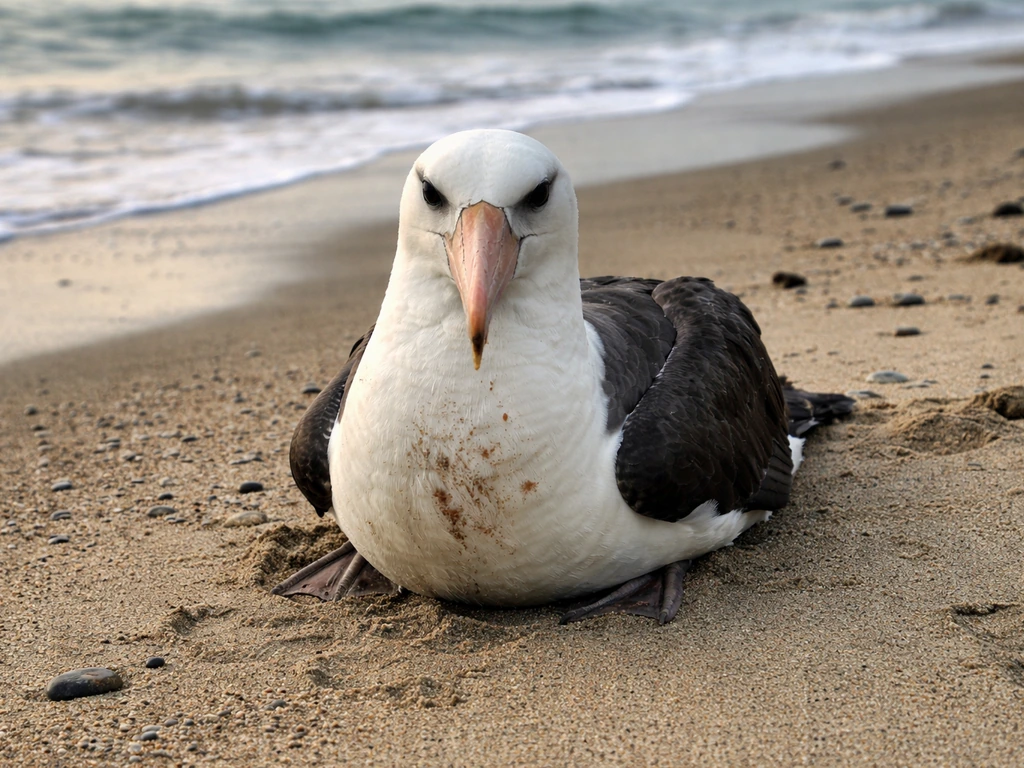
As of May 5, 2026, there is no confirmed public report of a Southwest Airlines bird strike incident today available through FAA public statements or major aviation news outlets. Details on whether the south korea plane crash bird strike involved a similar type of bird ingestion will depend on official incident reports and aviation authority findings Southwest Airlines bird strike. For the latest plane bird strike news about a specific Southwest flight, check the FAA’s reporting database and the airline’s published updates major aviation news outlets. That said, bird strikes happen every single day across U.S. airlines, and most never make the news because crews handle them routinely. If your flight is showing a delay labeled as 'maintenance' or 'inspection,' a bird strike is one of the most common reasons, and the steps below will help you verify what's actually happening and what it means for your trip.
Southwest Airlines Bird Strike Today: What to Check Now

What a bird strike actually is and when it matters for your flight
A bird strike is any collision between an aircraft and a bird, whether on the ground during taxi, on takeoff, during climb, or on approach to landing. The FAA and USDA have tracked these through the National Wildlife Strike Database since 1994, and the numbers are significant: tens of thousands of strikes are reported annually across U. FAA blog documentation explains that the National Wildlife Strike Database was centralized by FAA and USDA in 1994 tracked these through the National Wildlife Strike Database since 1994. S. aviation. The overwhelming majority cause no damage at all. The aircraft keeps flying, the crew logs the encounter, and nothing changes for passengers.
When a strike does matter, it usually comes down to where the bird hit. An engine ingestion is the most operationally serious scenario, particularly if the bird was large. Waterfowl like geese account for only about 4% of reported strikes but cause roughly 27% of all strikes that result in actual aircraft damage. A small songbird hitting a fuselage during cruise almost never causes a delay. A Canada goose going into an engine on departure is a different conversation entirely.
The core question flight crews and the airline's maintenance team ask after any reported strike is: what is the damage, and does it affect the safe conduct of this flight? That single question drives everything that follows, from whether the aircraft continues on its route to whether your gate agent gives you a new boarding time.
How to find out if a Southwest bird strike happened today

No single source will give you a real-time bird strike confirmation, but you can piece together a clear picture using a few tools together. If you are looking specifically for details on a t45 crash bird strike, you can cross-check the flight status timeline with official FAA and airline communications. If you are looking for an airplane bird strike today specifically, you should rely on official alerts and your flight status rather than social posts.
- Check your flight directly: Go to southwest.com or open the Southwest app and look up your flight number. If it shows 'delayed for maintenance' or 'aircraft inspection,' that is the airline's standard way of communicating a post-strike check without publicly labeling the cause.
- Use FlightAware or Flightradar24: Search your flight number on either site. Look for unexpected route deviations, unplanned landings at non-destination airports, or extended holds on the tarmac. A diversion combined with a maintenance message is a strong signal something happened.
- Check the FAA's public statements page: For significant aviation incidents, the FAA issues brief public statements. Search the FAA website for the flight number or route if you have it. Most minor strikes won't appear here, but engine-damage events that affect airworthiness sometimes do.
- Call Southwest directly: The number is 1-800-I-FLY-SWA (1-800-435-9792). Gate agents and phone agents have access to the same maintenance and operations system. Ask specifically whether the delay is due to a wildlife inspection.
- Check aviation news aggregators: Sites like The Aviation Herald and Simple Flying post reports of diverted or incident flights, often within hours of an event.
One important thing to understand: because FAA strike reporting by pilots is voluntary, not every bird strike generates a public record immediately. Many are filed after the fact using FAA Form 5200-7. So the absence of a news headline does not mean a strike didn't happen. Your best real-time signal is the flight status data itself.
What happens operationally right after a strike
Here is the typical sequence after a crew reports a bird strike. First, the pilots assess what they can from the cockpit: engine readings, flight controls, hydraulics, cabin pressurization. If anything is abnormal, they declare an emergency and divert immediately. If readings look normal, they continue to the nearest convenient point, usually the destination or nearest major airport, and inform the airline's Maintenance Control Centre (MCC).
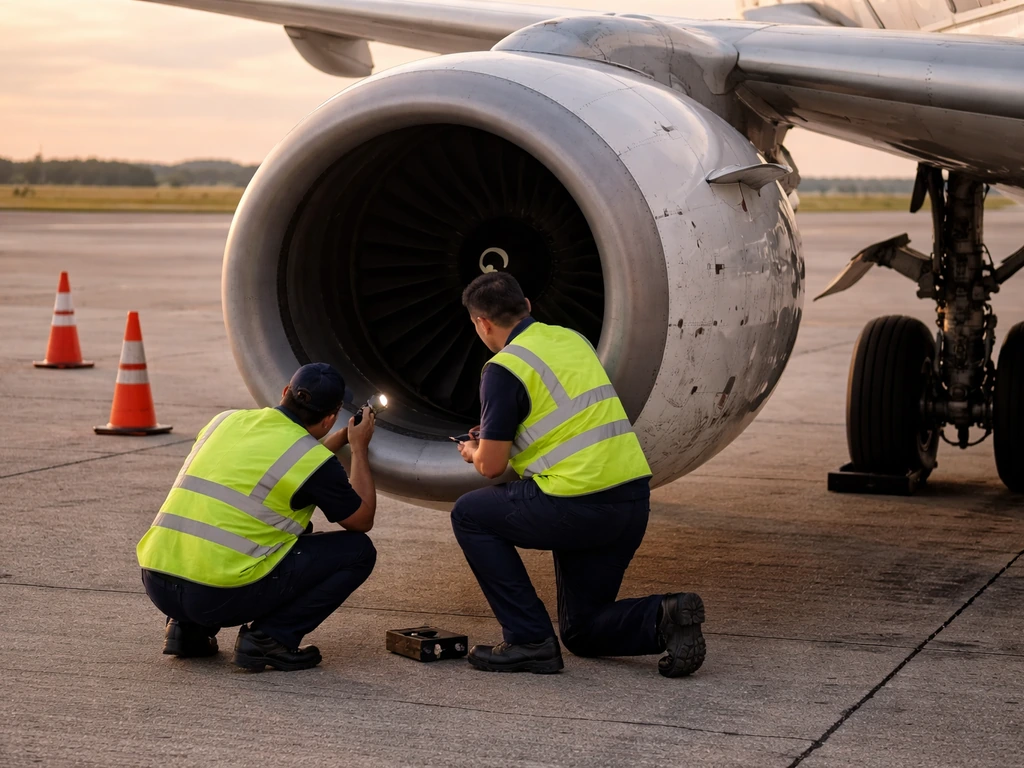
Once on the ground, a maintenance team physically inspects the aircraft. They check the engine fan blades (the most vulnerable parts), the engine nacelle, leading edges of the wings, radome, windscreen, and landing gear bays. If the inspection finds no damage, the aircraft gets a 'cleared to fly' sign-off and goes back into service. If there's visible damage, a detailed assessment follows, and the aircraft may be taken out of rotation.
For passengers, 'pending inspection' on a Southwest flight status screen typically means the aircraft is being evaluated and no departure time can be confirmed yet. Southwest publishes its primary contact number as 1-800-I-FLY-SWA (1-800-435-9792) on its official help center, which you can use if you need immediate assistance about a pending inspection status. 'Cleared' means the check is done and the aircraft is airworthy. If you see a gate change or a different tail number assigned to your flight, the airline has likely swapped in another aircraft while the original one undergoes further review.
Safety and health concerns for passengers and people on the ground
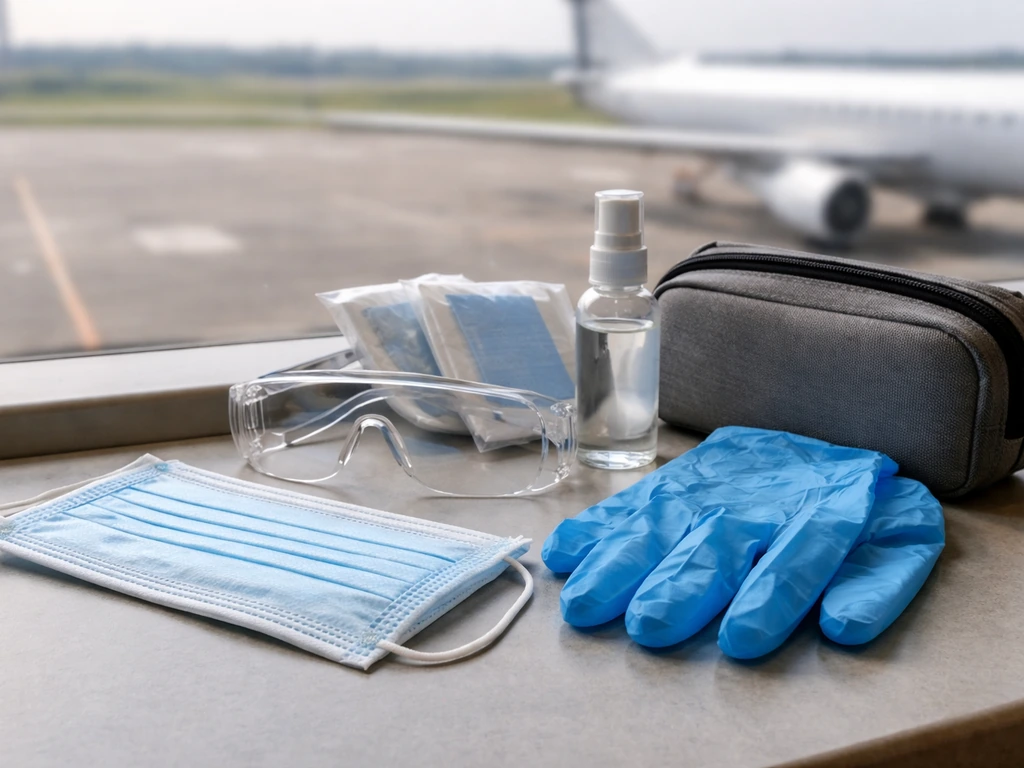
The honest answer is that bird strikes pose very little direct health risk to passengers on a modern commercial aircraft. The safety concern is structural and mechanical, handled entirely by the maintenance inspection process before the plane goes anywhere. Passengers are not exposed to bird remains in any meaningful way during a normal post-strike inspection.
For people near airports, the more realistic concern after a major bird strike (particularly an engine ingestion) is debris on or near the runway. Airports treat impacted runways like any hazard zone: access is restricted, maintenance crews wearing appropriate protective gear handle cleanup, and standard aviation hazmat protocols apply. You are not going to encounter this as a passenger in a terminal.
The disease transmission question comes up a lot, and it deserves a direct answer. Bird-to-human disease transmission (such as psittacosis, caused by Chlamydia psittaci) typically requires direct, prolonged exposure to dried bird droppings or secretions, usually in enclosed spaces with poor ventilation. The CDC is clear that infection happens by breathing in contaminated dust, not by being near an aircraft that hit a bird in flight. A bird strike at 3,000 feet altitude does not create a disease exposure scenario for passengers.
What evidence-based guidance actually says about bird hazards and flying
Aviation safety agencies, including the FAA, EASA, NASA, and the UK Birdstrike Committee, approach bird strike risk through data, engineering, and mitigation programs, not alarm. Aircraft engines are certified to withstand bird ingestion at specific sizes and speeds. Airframes are designed with bird strike resistance built into leading edges and windscreens. These are not optional features; they are certification requirements.
FAA data shows that the share of strikes causing damage has actually declined over time, even as reporting has improved and the total number of logged strikes has grown. That trend reflects real progress: better wildlife management at airports (habitat modification, deterrents, and trained wildlife officers), improved pilot reporting culture, and ongoing research including NASA probability modeling for strike risk at different altitudes and locations.
Skybrary's crew guidance frames the post-strike decision correctly: the question is never 'was there a bird' but always 'what effect does any damage have on the safe conduct of the flight.' That framing is why most bird strike encounters end with a cleared aircraft and a mild delay, not an emergency. The system is specifically designed to catch problems before they matter.
What to do right now if your flight is affected

If you are sitting at the gate or already checked in and your Southwest flight is showing a maintenance delay that may be bird-strike related, here is what to do. In the r/SouthwestAirlines discussion, users warn about scam number misdirection and advise blank" rel="noopener noreferrer">calling Southwest using the correct phone number 1-800-435-9792.
- Document the delay immediately: Screenshot your flight status screen, the departure board at the gate, and any text or email updates from Southwest. Include timestamps. You will need this if you pursue compensation or need to make a travel insurance claim.
- Ask the gate agent for a delay reason in writing: You have a right to know whether the delay is mechanical. Ask for a delay code or written statement. Southwest agents can provide this.
- Check rebooking options proactively: Southwest's app and website let you rebook without a fee if your original flight is delayed more than a certain threshold. Do not wait for the airline to offer alternatives. Look at options yourself and rebook before others fill the seats.
- Contact Southwest's customer service at 1-800-435-9792 if the app shows no availability. Phone agents can sometimes access options not visible online.
- If you missed a connection or have downstream expenses (hotel, car rental), keep all receipts. Southwest's Customer Relations team handles claims at southwest.com/contact-us.
- Check your credit card travel protections: Many travel credit cards include trip delay coverage that kicks in after a 6-12 hour delay due to mechanical issues. A bird strike inspection qualifies.
If you are on the ground near an airport where a significant strike occurred and you have concerns about debris, stay in designated passenger areas. Do not approach runways, taxiways, or maintenance areas. Airport operations staff manage those zones.
Common myths about bird strikes worth ignoring
Bird strikes generate a surprising amount of misinformation online, especially in the hours after a newsworthy incident. If you are searching for details on the Jeju air crash bird incident, focus on what the official investigation reports say rather than social media claims. Here are the ones most likely to show up in your search results today.
| The Myth | What's Actually True |
|---|---|
| Bird strikes always cause crashes or emergencies | The vast majority are minor events with no damage. Major accidents from bird strikes are extremely rare and extensively documented precisely because they are unusual. |
| Airlines hide bird strikes from passengers | Airlines and pilots have formal FAA reporting obligations and internal maintenance documentation. Operational transparency is required. What they don't do is announce every minor encounter, which is true of any routine maintenance item. |
| Bird remains on an aircraft spread disease to passengers | Disease transmission from birds requires direct exposure to contaminated droppings or secretions, typically over time and in enclosed spaces. A mid-flight collision does not create passenger exposure. CDC guidance is clear on the transmission route for avian diseases like psittacosis. |
| If a bird hit the plane, the flight should be cancelled automatically | An automatic cancellation rule does not exist. The decision is based on the inspection findings. Cleared aircraft fly; damaged aircraft don't. This is how the system is supposed to work. |
| Small birds can't damage a jet aircraft | Size matters a lot, but small birds in large numbers or hitting specific areas (like a pitot tube or sensor) can cause real problems. The FAA wildlife database captures strikes from birds as small as sparrows causing minor damage. |
If you have been following coverage of other aviation incidents involving birds, including high-profile crashes tied to bird encounters at various airlines and aircraft types around the world, it is worth noting that those events are studied precisely because they fall outside the normal pattern of routine strikes followed by inspection and clearance. If you are looking for what happened in a specific bird-related incident like the Air India plane crash, focus on verified reports from the investigation and aviation authorities rather than rumors high-profile crashes tied to bird encounters. In some rare cases, a large bird impact can lead to a crash landing, which is why pilots treat serious strike indications with immediate priority. The overwhelming daily reality is far less dramatic, and the safety systems around it are more robust than most passengers realize.
FAQ
If I search “southwest airlines bird strike today” but there is no headline, how can I tell whether my specific flight had a bird strike?
Use your flight’s status timeline and operational notes. If the delay reason is listed as inspection or maintenance and the aircraft tail number changes, that often indicates an airframe or engine check occurred. Social posts can be wrong, so treat the airline’s status feed and any official FAA-linked reporting updates as higher signal than comments.
What does “pending inspection” usually mean for boarding and departure timing on Southwest?
“Pending inspection” typically means maintenance has the aircraft but has not yet issued an airworthiness sign-off. You may see the gate hold, boarding pauses, or a new departure estimate. If the delay extends, the airline may swap to a different aircraft, which you can confirm by watching for a new tail number in the status details.
If an engine is involved, does that automatically mean the flight will divert or cancel?
Not automatically. Crews first check engine indications, flight controls, and systems performance. If readings and controllability are normal, they often continue to the nearest suitable airport and then inspect the engines and leading edges. Diversion or cancellation usually happens when damage is detected during initial checks or inspection after landing.
What parts of the plane are most commonly inspected after a bird strike, and why does that affect the delay?
Maintenance prioritizes the engine fan area and fan blades, then checks external impact zones like the leading edges of wings, radome, windscreen, and gear bays for dents, cracks, or loose fragments. If damage is suspected, they may perform borescope or more detailed teardown checks, which can extend the delay beyond the initial “maintenance/inspection” label.
Can a bird strike cause hidden damage that passengers would not notice until later?
Yes, that is why the inspection outcome matters. Even when there is no obvious visible damage, technicians may still find issues on blades, cowling, or structural components that require repair before the aircraft can return to service. That is also why the “cleared” sign-off is a key decision point rather than passengers simply seeing the plane look normal.
How soon would an FAA bird strike report appear, if it happens at all?
Pilot reporting is voluntary and many reports are filed after the fact rather than instantly. So you can have an encounter today with no immediate public record, especially within the first hours. For real-time situational awareness, rely on flight status and airline operational updates rather than waiting for a database entry to appear.
If the flight delay reason is “maintenance,” how do I know it is not something else?
“Maintenance” is broad. Look for context indicators like inspection wording, aircraft swap, or notes tied to engine or airframe checks. If the reason changes repeatedly, or if weather, staffing, or ATC notes appear, it may be unrelated. When in doubt, use the airline’s customer-facing updates or the gate agent’s explanation rather than assuming “bird strike” from one clue.
Is there any health risk to passengers from being near the aircraft after a bird strike?
For typical post-strike inspections, there is no meaningful exposure pathway from being near a bird strike in flight. The main potential exposure concern for bystanders is debris near runways during active cleanup, not something passengers in terminals would experience. If you are at the airport during cleanup, stay within designated passenger areas and follow staff directions.
What about disease risks like psittacosis, do they apply to passengers on the plane?
Bird-to-human disease transmission generally requires direct, prolonged exposure to contaminated droppings or secretions, usually in enclosed, poorly ventilated settings. A bird strike at cruising altitude does not create a passenger exposure scenario. The practical takeaway is that standard passenger areas and normal cabin ventilation patterns do not create a “dust exposure” situation like the disease transmission mechanism requires.
If debris is a concern, what should people near the airport do versus avoid?
Avoid approaching runways, taxiways, and any maintenance or cleanup zones. Airports restrict access during hazard cleanup and handle debris under standard protocols. From a passenger perspective, the right action is simply to stay where you are instructed, and do not try to view or photograph the impact area.
Why do bird strikes sometimes result in no delay at all?
Most encounters cause no damage, and the aircraft keeps flying after crews log the event. In those cases, there may be no visible operational change for passengers because the airplane remains airworthy and does not require extensive inspection beyond routine checks. Delays tend to show up when there is evidence of impact or a need for more detailed verification.
What should I do if online posts claim a serious bird strike, but the airline’s status does not confirm it?
Treat social claims as unverified. Check whether the airline status explicitly mentions inspection or system checks and whether there is an aircraft swap or revised boarding time consistent with maintenance work. If your flight status looks unchanged, it is likely exaggeration or confusion with another incident.
Albatross Bird Crash Landing: What to Do Right Now
Step by step protocol for albatross bird crash landing: stabilize, assess injuries, avoid harm, contact wildlife pros fa