
A bird flying into your house does not mean good luck in any scientifically supported sense, and whether it means good luck or bad luck depends entirely on which cultural tradition you're pulling from. What it does mean, practically speaking, is that a wild animal is stressed, potentially injured, and needs your help getting back outside safely. That's the part worth focusing on.
Bird Flying Into House: Good Luck or Safety Steps

Maya Chen
23 Mar 2026
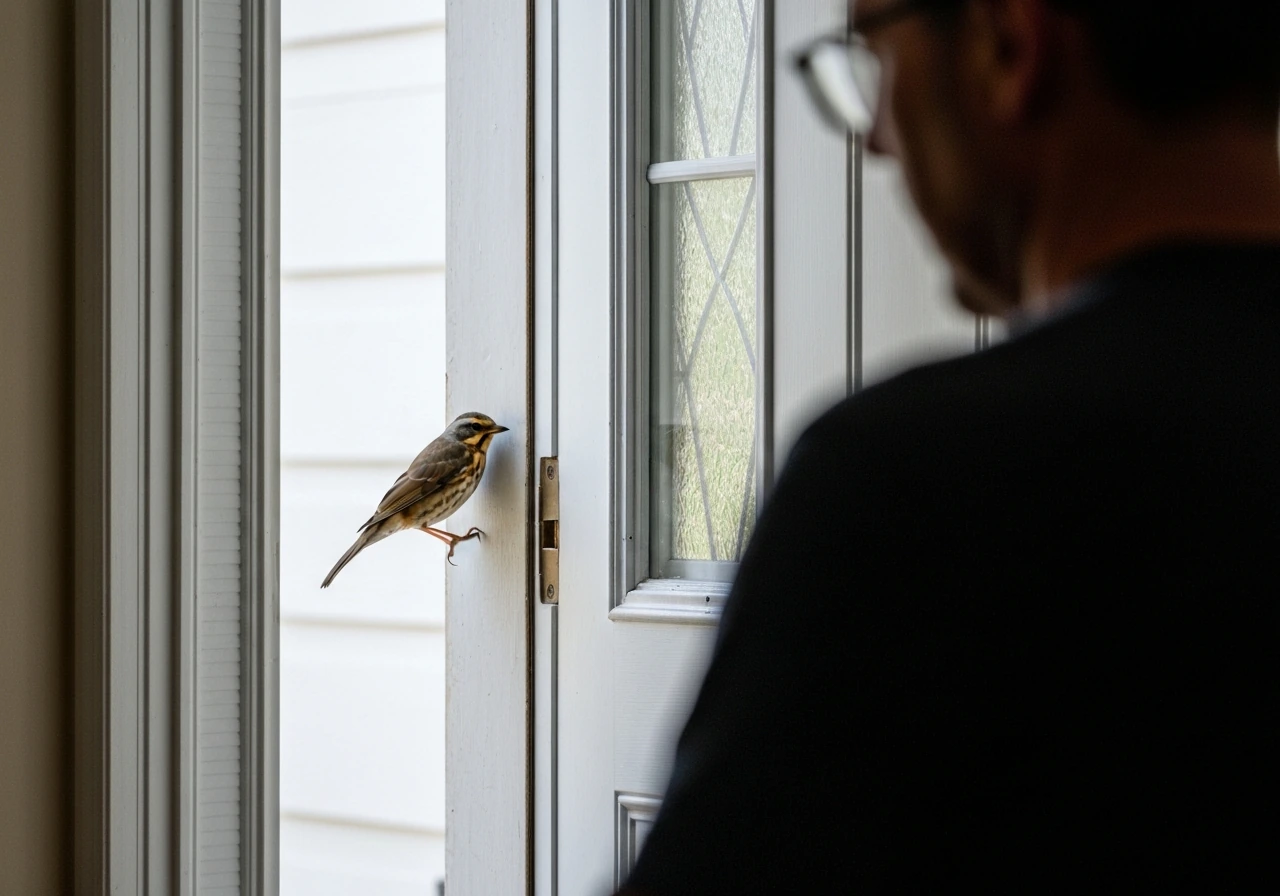
Why it feels like good luck (and what's real)
The idea that a bird flying into your home is an omen goes back thousands of years. Ornithomancy, the practice of reading bird behavior as signs, shows up across ancient Greek, Roman, and Indigenous cultures worldwide. The 'good luck' framing you've probably heard is just one version of a much older and more varied set of beliefs.
In American Southern and Appalachian folklore, a bird entering a house is often interpreted as a sign of a visitor coming, or in darker tellings, a death in the family. Snopes has covered this directly: the meaning varies widely by region and tradition, and there is no single universal interpretation. Some people hear 'good luck,' others hear 'bad omen,' and the same event gets read completely differently depending on who's telling the story.
The reason these beliefs stick is that birds are noticeable and their behavior feels meaningful in the moment. A bird bursting through your door is startling and unusual, so your brain wants it to mean something. That's a deeply human response. But the bird itself has no idea it's delivering a message. It flew in because it was confused by a reflection, attracted to light, or startled by something outside. That's it.
The real significance of the event is that a wild bird is now trapped in an unfamiliar space, burning energy, and at risk of injuring itself on walls, windows, and furniture. That's what deserves your attention right now.
What to do immediately when a bird enters the house
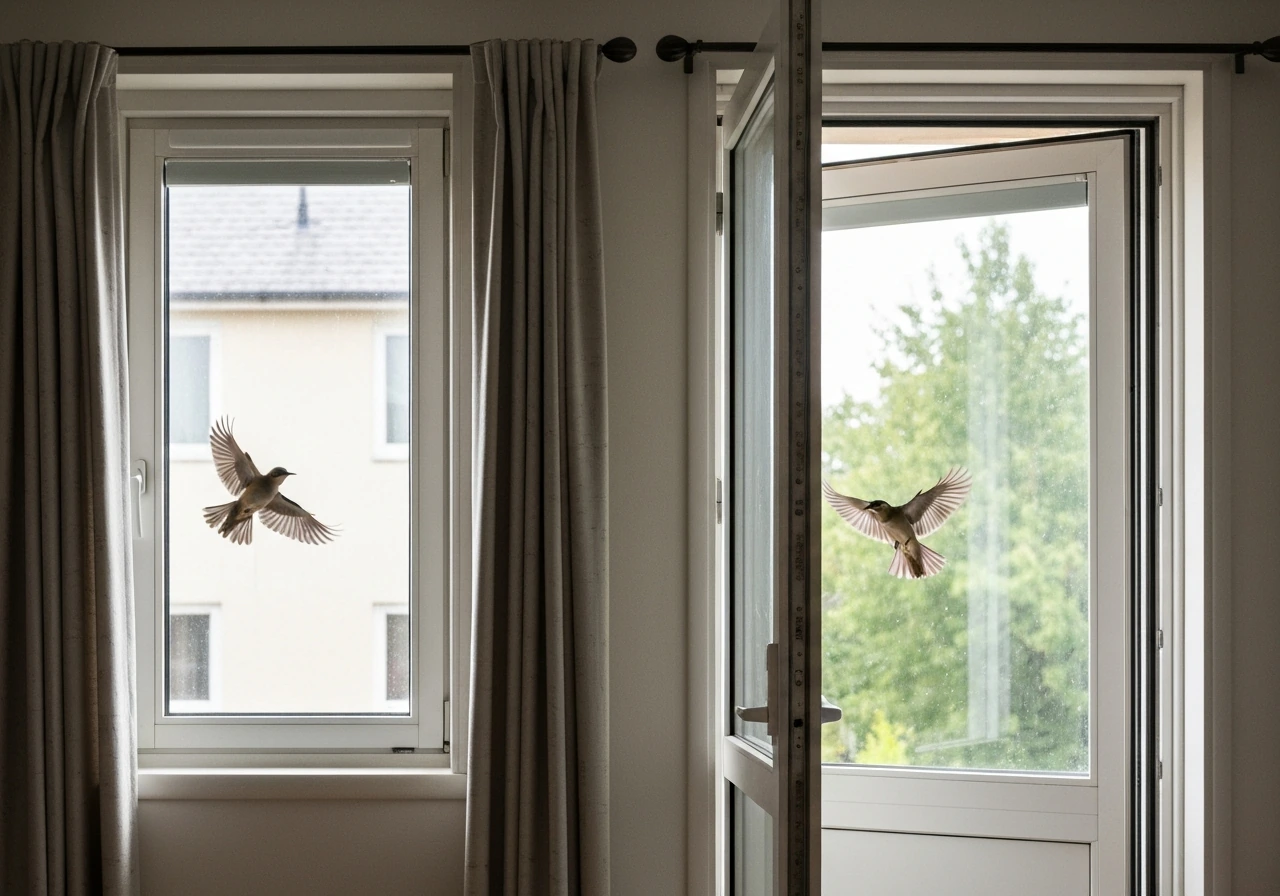
The first few minutes matter a lot. A panicked bird will exhaust itself quickly trying to escape through closed windows, which is why does a bird fly into a window in the first place?, and a tired, stressed bird is harder to help. Your job in those first moments is to make the environment less chaotic, not more.
- Stay calm and move slowly. Sudden movements make the bird more frantic.
- Keep children and pets out of the room immediately. A dog or cat in the room is a serious threat to the bird.
- Close off all doors leading to other rooms so the bird stays contained in one space.
- Turn off ceiling fans right away. A spinning fan can kill a bird instantly.
- Dim or turn off interior lights where possible, then open the widest available window or door to the outside and remove any screens blocking the opening.
- Close blinds or curtains on windows that don't open, so the bird doesn't keep flying at glass it can't get through.
The goal at this stage is simple: create one obvious exit and reduce everything else that's confusing or frightening the bird. Most birds, given a clear path and a calm environment, will find their way out on their own within a few minutes.
How to safely get the bird back outside (step-by-step)
If the bird doesn't find the exit on its own after a few minutes, you can help guide it without grabbing or chasing it. The key principle here is guidance, not handling. Picking up a wild bird is stressful for the animal and can cause injury, so it's a last resort.
- Hold a large bed sheet up high in front of you, stretched between your hands, and slowly walk toward the bird in the direction of the open exit. The sheet acts as a gentle wall that encourages the bird to move away from you and toward the opening.
- Alternatively, use a broom or a similar long-handled object to gently guide the bird toward the exit. Move it slowly and steadily, not jerkily.
- If the bird lands and seems to be resting, give it a moment. It may simply need to catch its breath before flying again.
- Keep the room as dark as possible except for natural light coming through the open exit. Birds move toward light, and this is your best tool.
- If the bird is a hawk, owl, or other bird of prey, do not attempt to handle it. Close off the room to prevent it from moving deeper into the house and call a local wildlife rehabilitation center for advice immediately.
Never chase the bird, wave your arms, or yell. All of that increases panic and the risk of collision injuries. Slow, deliberate movement is far more effective.
If after a reasonable effort (15 to 20 minutes of quiet, guided encouragement) the bird still hasn't left, call your local wildlife rehabilitation center rather than escalating to more aggressive handling. They can advise you on the phone and send help if needed.
Injury risk, stress, and when to contact wildlife rehab
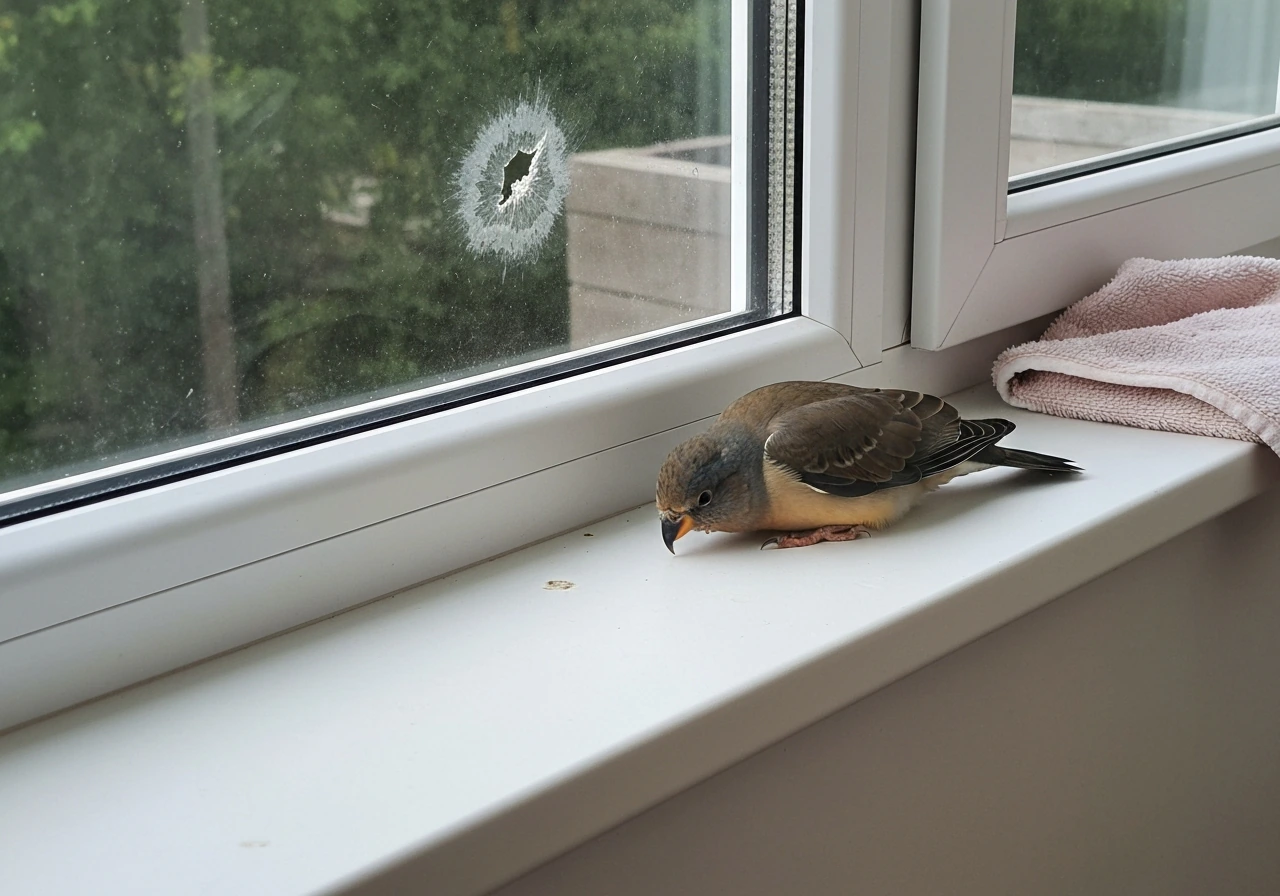
Not every bird that flies into your house is unharmed. Some have already hit a window before entering, and others get injured thrashing around inside. Knowing the difference between a bird that's just disoriented and one that genuinely needs medical help is important.
Signs that a bird is in serious trouble and needs professional help right away include: labored or open-mouthed breathing, inability to hold its head up, eyes that won't stay open, a wing hanging at an unnatural angle, obvious bleeding, or the bird lying on its side. If you see any of these, don't wait to see if it improves.
If the bird needs to be contained while you wait for help or arrange transport, place it gently into a cardboard box with air holes, lined with a soft cloth or paper towels. Put the box somewhere dark, quiet, and warm, away from pets and people. Do not offer food or water, and do not handle it more than necessary. Audubon's guidance is clear: keep it calm and contained, and get it to a licensed wildlife rehabilitator as soon as possible.
A bird that was simply startled and flew in may recover fully on its own once it's back outside. But a bird that was stunned by a window collision before it even entered your home may look fine initially and then decline rapidly. If you have any doubt, calling a wildlife rehab line costs nothing and can save the bird's life.
Health and safety concerns (disease, parasites, droppings)
For most healthy adults in a brief indoor bird encounter, the health risk is genuinely low. That said, it's worth understanding what the actual risks are so you can take proportionate precautions rather than either ignoring them or panicking.
The main concerns with wild birds indoors are droppings, parasites, and in rare cases, respiratory pathogens. Histoplasmosis is a fungal infection caused by a pathogen that grows in bird and bat droppings. It becomes a risk when dried droppings are disturbed and spores become airborne. A single bird in your house for a short time is unlikely to create a significant accumulation, but you should still clean up any droppings carefully.
Avian influenza is a lower concern in a typical household encounter, but the CDC does advise reducing exposure to bird droppings and biological material, especially for people who are immunocompromised, elderly, very young, or have underlying health conditions. These groups should take extra care during cleanup and consider wearing a mask.
Wild birds can also carry mites, lice, or ticks, which can temporarily infest an indoor space. If you handled the bird directly, check your clothing and wash your hands thoroughly. These parasites rarely establish themselves in a home after a brief visit, but it's worth a quick check.
Cleaning and next steps after the bird leaves
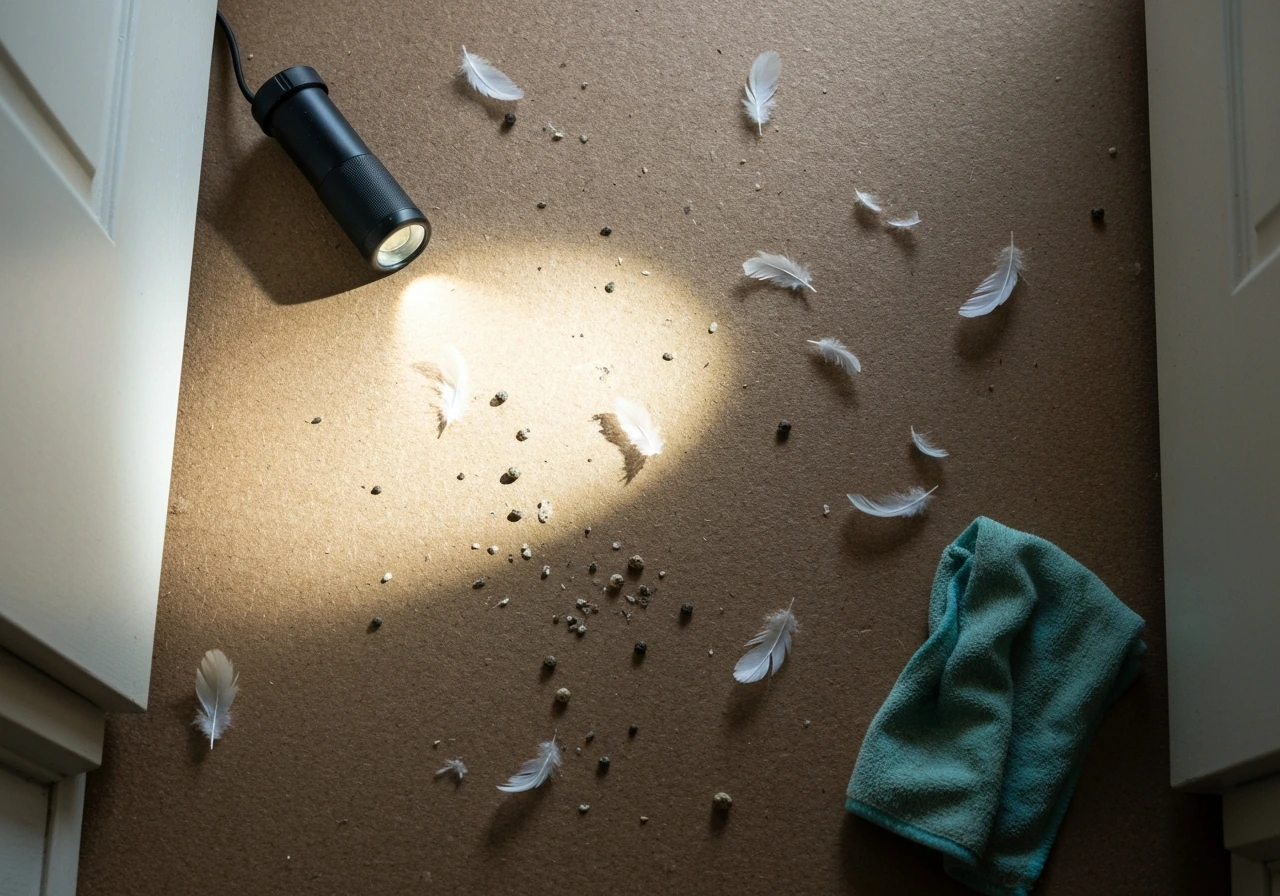
Once the bird is safely outside, do a walk-through of the affected area and locate any droppings, feathers, or other biological material it left behind. The cleanup process is straightforward but there are a few important rules to follow.
- Never sweep or vacuum dry droppings. This sends spores and particles into the air, which is exactly the exposure you want to avoid. The EPA is explicit on this point.
- Instead, lightly mist the droppings with water or a diluted disinfectant solution to dampen them first. This suppresses airborne particles.
- Once dampened, wipe up the droppings with paper towels or a disposable cloth. Place everything into a sealed plastic bag before disposing of it.
- Clean the surface with a household disinfectant. Standard products that work against bacteria and viruses are appropriate here.
- Wash your hands thoroughly with soap and water after any contact with droppings, feathers, or surfaces the bird touched.
- If you handled the bird directly, change your clothes and wash them.
If the bird spent an extended time in a room and left a larger mess, you may want to wear disposable gloves and a basic dust mask during cleanup, especially if you're in a higher-risk group. Ventilate the room well by opening windows after cleanup is complete.
Preventing repeat window and door collisions
Birds end up inside homes for a reason that's almost always tied to glass confusion. They see a reflection of the sky or trees in a window and fly straight toward it, or they see plants through a glass door and aim for them. Once you understand the mechanism, prevention becomes straightforward.
The most effective prevention for windows is adding visual markers to the exterior surface of the glass. Patterns applied to the outside of a window are significantly more effective than those applied to the inside, according to U.S. Fish and Wildlife Service guidance. Options include window films, tape strips, decals, or exterior-applied paint. The markers need to be close enough together that birds can detect them as a barrier, typically within a grid of about 2 inches by 4 inches (5 cm by 10 cm).
Hawk silhouette decals on their own don't work well unless they're part of a dense enough pattern. A single hawk shape in the corner of a large window won't prevent strikes. What matters is coverage and spacing, not just the shape of the marker.
Bird feeder placement also matters. Research cited by the Alberta Institute for Wildlife Conservation found that placing feeders either less than 1 meter or no farther than 5 meters from a window caused the most significant reduction in fatal strikes. At very close range, a bird that hits the glass hasn't built up enough speed to be seriously injured. At the 5-meter-and-beyond range, birds have a better view of the window as a barrier before they accelerate toward it.
At night, reducing interior lighting near large windows is one of the simplest things you can do. Lit interiors attract birds during migration season, and light pollution is a documented driver of disorientation and collision. Closing blinds or curtains after dark is free and effective.
If you're dealing with a door that birds keep flying through when it's open, consider adding a screen door or hanging lightweight wind chimes or strips of ribbon near the opening. The movement and visual disruption help birds recognize the opening as a threshold rather than a clear flight path.
| Prevention Method | Effectiveness | Cost | Notes |
|---|---|---|---|
| Exterior window film or tape pattern | High | Low to moderate | Must cover the glass with close spacing; exterior application outperforms interior |
| Decals (dense pattern) | High when applied correctly | Low | Single hawk silhouette alone is not enough; spacing and density are key |
| Closing blinds/curtains at night | High for nocturnal migrants | Free | Especially effective during spring and fall migration seasons |
| Feeder repositioning (under 1m or at 5m) | High | Free | Supported by research on reducing fatal strike rates |
| Screen doors | High | Moderate | Prevents birds from entering through open doors entirely |
| Single hawk silhouette decal | Low | Low | Widely sold but largely ineffective on its own |
The good news is that most of these fixes are cheap or free, and they work. If birds are repeatedly hitting the same window, that window is the problem, not the birds. A $20 roll of window tape applied correctly will solve it.
A bird flying into your house is one of those experiences that feels momentous, and it's easy to see why folklore attached so much meaning to it. If you're wondering about the exact mechanics behind the behavior, it's also helpful to understand why does a bird fly into a window in the first place. But the most useful thing you can do with that adrenaline is channel it into helping the bird exit safely, cleaning up properly, and then making sure it doesn't happen again. That's the real takeaway, and it's entirely within your control. can a bird break the sound barrier
FAQ
What should I do first if a bird is flying around inside?
Start by staying calm, close off other rooms, and open one clear exit (a single door or window) on the same floor the bird is on. Turn off or dim lights near that exit so the bird is drawn toward the opening instead of reflecting light inside.
If the bird keeps landing on walls or windows, how do I avoid making it panic?
Move slowly and quietly, keep people and pets out of the area, and let the bird come to the open exit. Avoid repeated “shooing” or cornering, since sudden motion increases collisions and exhaustion.
Is it okay to catch the bird and put it outside myself?
Only as a last resort. Catching can cause additional injuries and stress. If you must use containment, use a closed box or a towel to guide the bird, then immediately take it outside to the open exit.
How long should I wait before calling wildlife rehab?
Give it quiet, guided help for about 15 to 20 minutes. If it shows signs of serious trouble, seems injured, or cannot orient toward the exit, call sooner rather than waiting for it to “calm down.”
What if the bird is not moving much but also not showing obvious bleeding?
Window strikes can cause internal injuries that look mild at first. If the bird is lying on its side, breathing is labored or open-mouthed, it cannot hold its head up, or you see any unnatural wing position, treat it as urgent and contact wildlife rehab.
Do I need to wear gloves or a mask if I only see a few droppings?
For a short, single encounter, basic precautions usually suffice. Still, if you are in a higher-risk group (immunocompromised, elderly, very young) or there is visible droppings/feather material, consider disposable gloves and a mask, and clean with ventilation.
What is the safest way to clean droppings and feathers?
Ventilate the room first, remove material gently (avoid dry sweeping or shaking). Bag it, then wipe the area with appropriate household disinfectant per label directions, and wash hands thoroughly afterward.
Should I open all windows during cleanup or keep the bird area closed?
Keep the affected area closed while the bird is inside and contained. Once the bird is out and you are cleaning, ventilate by opening windows and doors during cleanup, then allow surfaces to dry completely.
Can indoor parasites like mites or ticks spread to my pets?
They can temporarily transfer from the bird’s body onto household surfaces. If you handled the bird or notice insect activity after the event, check pets for unusual scratching and talk to a veterinarian if symptoms appear.
Will leaving the lights on at night make birds hit the same window again?
Yes. Interior lights near large windows can lure birds during migration or cloudy evenings. After dark, close blinds or curtains, or turn off lights that face the window to reduce disorientation.
What window markers actually work, and how do I place them?
Use exterior-applied visual markers with dense coverage so birds can detect the glass. The spacing matters, roughly a grid around 2 inches by 4 inches (5 cm by 10 cm), and single, isolated decals usually do not prevent strikes.
If a bird keeps flying into one glass door, should I focus on the door only?
Yes, treat the specific opening the bird used. For doors, adding a screen door or clear threshold cues near the opening can help, and placing exterior visual markers on that door is often more effective than adding them only on the inside.
Where should I put the bird if I contain it while waiting for help?
Place it in a ventilated cardboard box lined with a soft material, set in a dark, quiet, warm spot away from people and pets. Do not offer food or water, and minimize handling and repositioning.
Does feeding the bird or trying to “calm it down” indoors help?
Usually not. Food or water can add stress, increase mess, and complicate containment. The practical approach is quiet guidance out, or containment and rehab contact if injury or distress signs appear.
Next Articles
Can a Bird Take Down a Plane? Bird Strike Reality
Bird strikes can damage engines and controls; they rarely bring planes down. Learn risks, myths, and what to do next.
Can Bird Strike Cause a Plane Crash How It Happens
Explains how a bird strike can damage engines or the airframe, when it leads to crashes, and how to prevent it.

Can a Plane Survive a Bird Strike? What to Expect
Yes. Learn what happens in a bird strike, why engines and windshields are built to resist it, and likely outcomes.