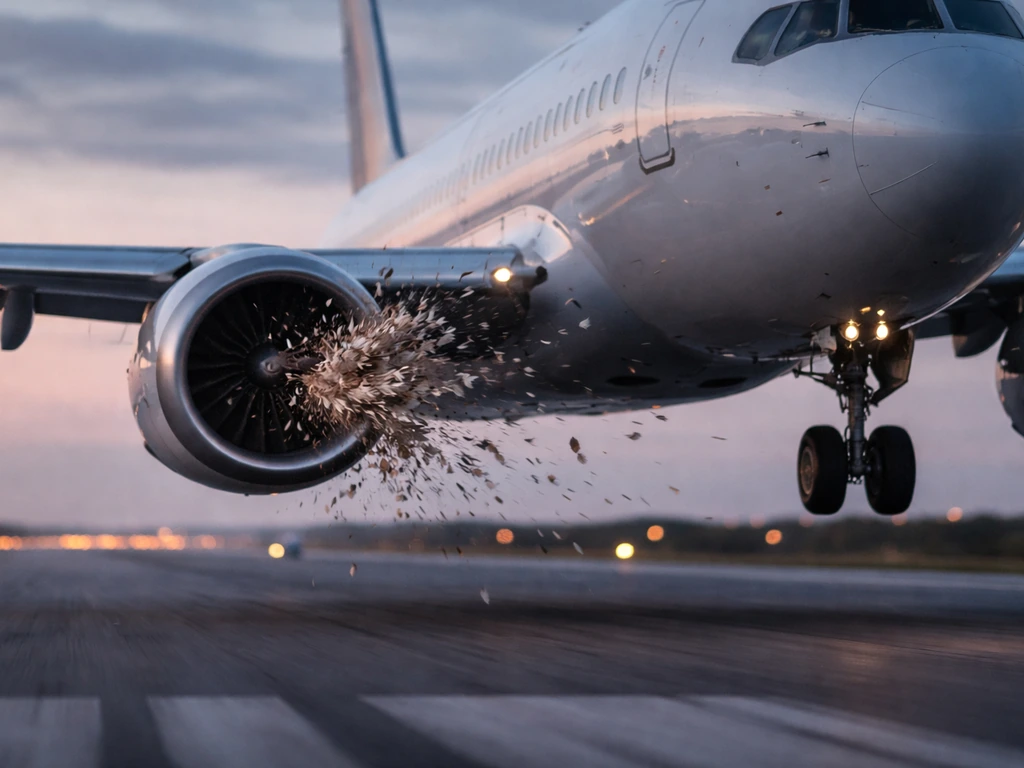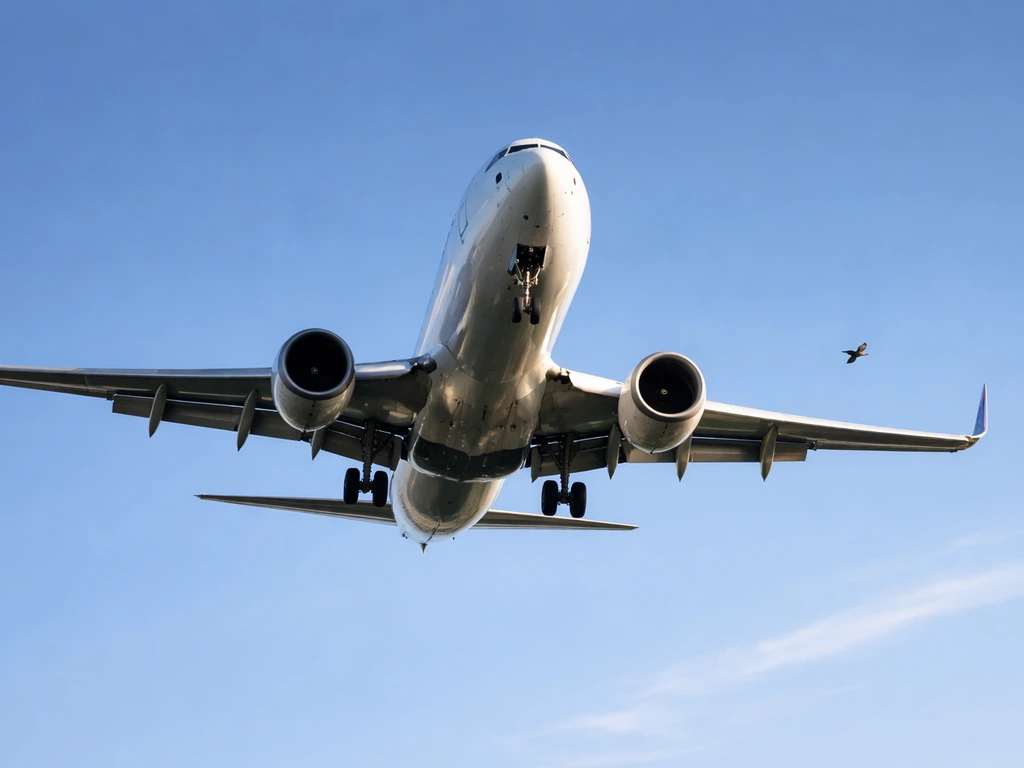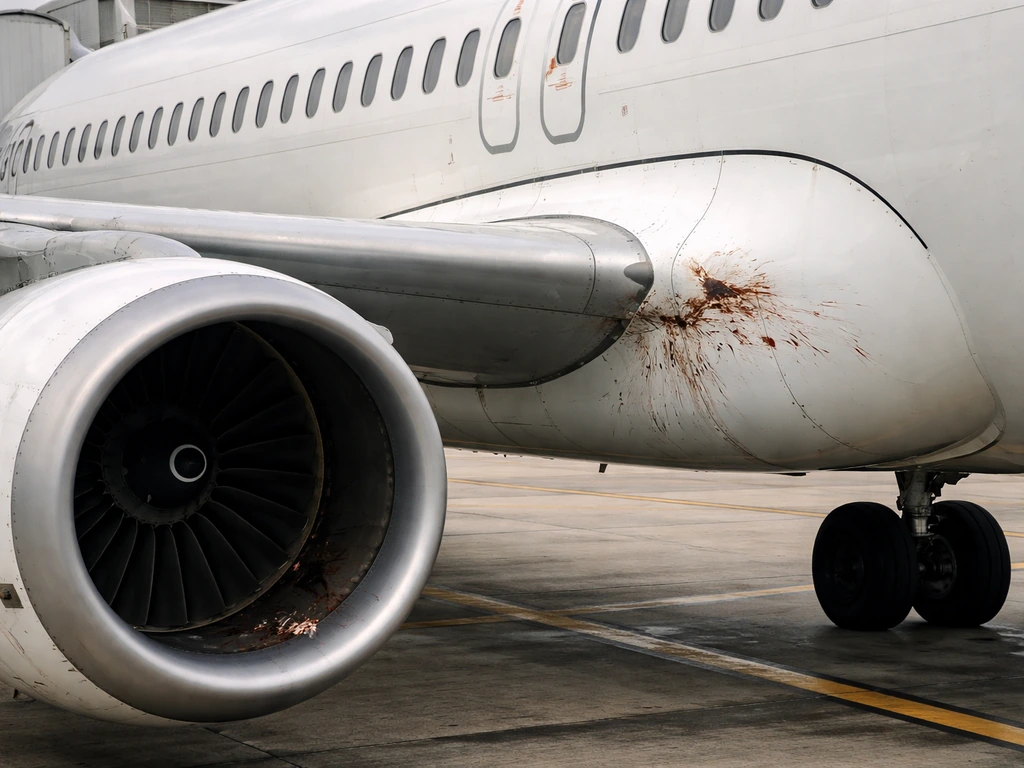
A single bird almost never brings down a helicopter, but that doesn't mean birds are harmless to rotorcraft. For fixed-wing aircraft, the term bird strike on a plane describes the same basic problem of a bird being ingested or impacting critical areas like the windshield and engine intake. The honest answer is: under the right (wrong) circumstances, a large bird or a flock can cause serious damage, force an emergency landing, or even contribute to loss of control. It's rare, but it has happened. The difference between a scary story and an actual crash usually comes down to the bird's size, what it hits, and how the crew responds.
Can a Bird Take Down a Helicopter? What’s Real

Maya Chen
29 Apr 2026
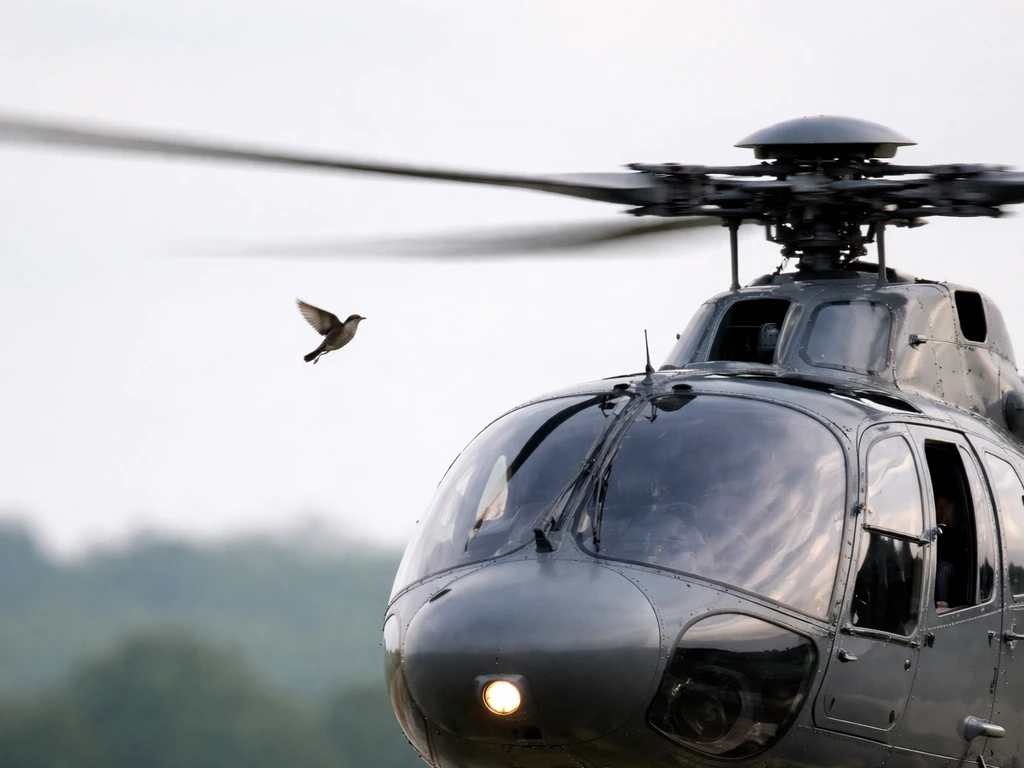
Can birds physically bring down a helicopter?
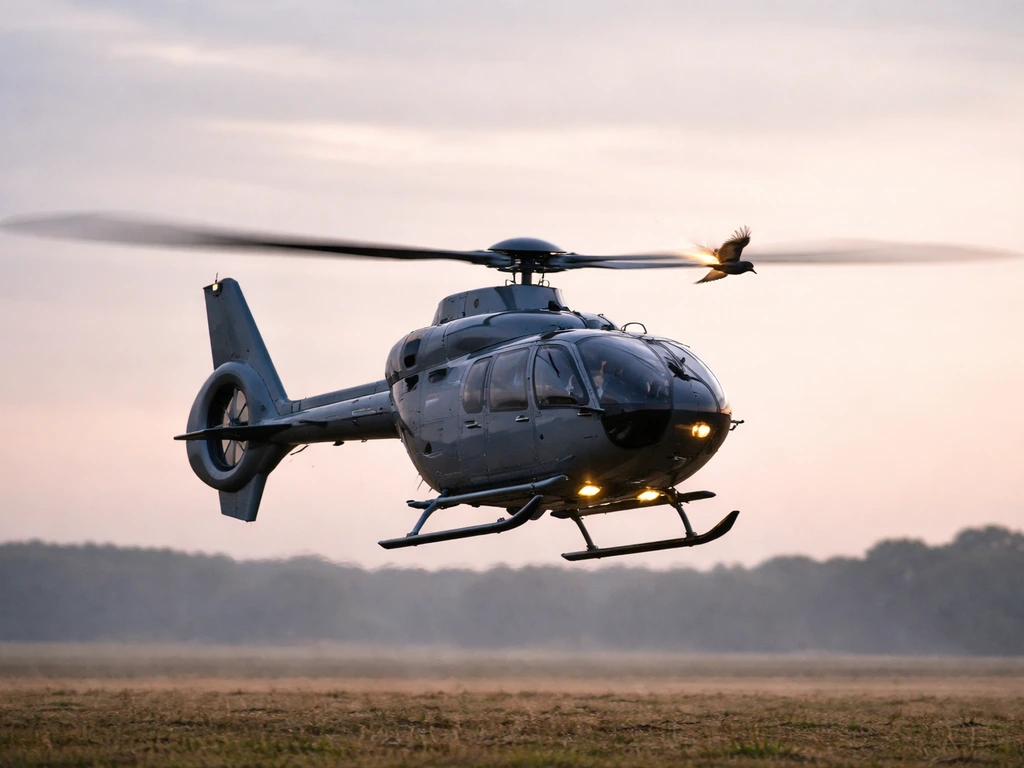
Modern helicopters are certified to survive bird strikes. EASA's CS-29 standard, for example, requires that a rotorcraft hit by a 1.0-kg (2.2-lb) bird at up to VNE (never-exceed speed) at altitudes up to 2,438 m (8,000 ft) must still be capable of continued safe flight and landing. That's the certification baseline for large rotorcraft, and it means engineers have already stress-tested single-bird impacts into the design. The aircraft is supposed to take that hit and keep flying.
Where things get complicated is when a strike hits a vulnerable location (a windshield that then showers debris into the rotor disk, engine air intakes, or control linkages), when multiple birds strike simultaneously, or when the crew is incapacitated or distracted by the impact. None of those scenarios mean a bird is powerful enough to physically destroy a helicopter from the outside. The real danger is what happens inside the aircraft after the hit. In a bird strike, what matters most is what happens inside the aircraft after the impact what happens inside the aircraft after the hit.
Which birds are actually capable of creating a real hazard?
Size is the single biggest factor. A sparrow hitting a rotor blade at cruising speed is a maintenance note. A Canada goose, a great blue heron, or a turkey vulture at the same speed is a different conversation entirely. These birds can weigh 4 to 8 kg (roughly 9 to 18 lbs), and at helicopter cruise speeds, the collision energy is substantial.
Flocking behavior multiplies the risk dramatically. Starlings, red-winged blackbirds, and snow geese form dense murmurations and flocks that can number in the thousands. A helicopter flying into a flock doesn't face one impact; it faces a rapid sequence of strikes across the airframe, rotors, and intakes. The US Airways Flight 1549 incident (a fixed-wing case, but the engineering principle applies directly) showed that simultaneous multi-bird ingestion can overwhelm both engines at once. The same physics apply to twin-engine helicopters.
- Large raptors: red-tailed hawks, ospreys, eagles (1–6 kg, often solitary but unpredictable in flight path)
- Waterfowl: Canada geese, snow geese, swans (3–10 kg, often in formation flocks at low to medium altitudes)
- Wading birds: great blue herons, cranes (up to 5 kg, fly at low altitudes near water corridors)
- Flocking passerines: European starlings, blackbirds (small individually, but flocks of thousands are hazardous to intakes)
- Vultures: turkey vultures and black vultures (2–3 kg, soar in thermals at varying altitudes, often near roads)
Seasonal migration concentrates these species in predictable corridors and time windows, typically spring (March–May) and fall (August–November) in the northern hemisphere. Helicopter operators working near coastlines, river valleys, wetlands, or agricultural areas during migration season are in the highest-risk environment.
How bird strikes actually damage helicopters
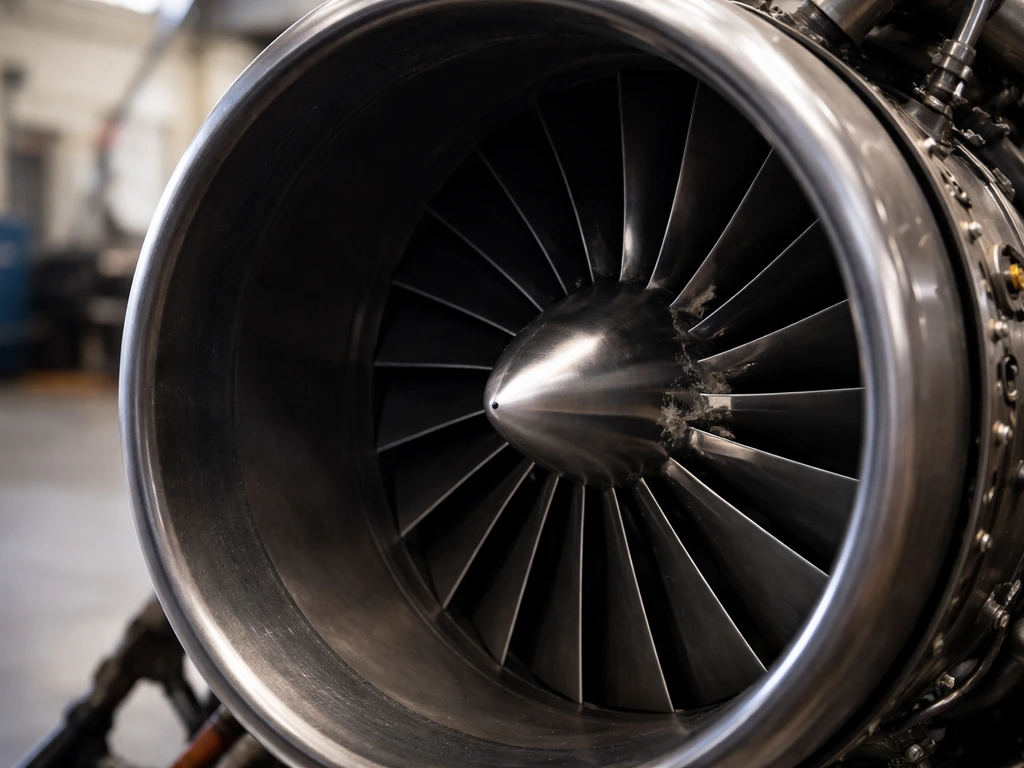
There are a few distinct damage pathways, and they don't all work the same way. Understanding them helps explain why some strikes are shrugged off and others turn into accidents.
Engine ingestion
When a bird is sucked into a turbine engine, the compressor blades are the first casualties. Bird mass and speed determine how much damage occurs. A medium-sized bird can deform compressor blades, cause a flameout, and produce partial or total power loss. Certification standards under EASA CS-E 800 require manufacturers to demonstrate through analysis or component testing exactly how much power loss results from ingestion at critical parameters including bird speed, target location, and rotor speed. The goal is ensuring the aircraft can still land safely, not preventing damage entirely.
Windshield and canopy strikes

A windshield strike from a large bird is violent. The glass can crack, shatter, or implode inward. That creates two immediate problems: debris in the cockpit that can injure the crew, and debris that can reach the main rotor disk overhead. In April 2021, an AgustaWestland AW109SP flying at about 1,000 ft AGL and 140 knots took a bird through the left windshield. Windshield debris entered the main rotor disk and punched a hole in the trailing edge of a rotor blade. The aircraft landed safely, but rotor blade damage from secondary debris is a credible and documented damage pathway.
Control interference and crew incapacitation
This is the most dangerous mechanism and the one that turns a survivable strike into an accident. In a 2009 Sikorsky S-76C++ incident, a bird struck the canopy and caused inadvertent movement of the engine control levers, leading to rapid power loss and eventual loss of control. Separately, an NTSB report documents a red-tailed hawk impact that fractured the windshield and interfered with engine fuel controls while also causing crew disorientation. It's not the bird's raw physical strength that brings down the helicopter; it's the chain of events triggered by the strike hitting the wrong place at the wrong time.
Rotor and tail rotor strikes
Main rotor blades travel at very high tip speeds, so a bird impact typically results in the bird being destroyed and the blade sustaining a gouge, crack, or delamination. Whether that damage is immediately dangerous depends on severity and blade construction. Tail rotor strikes are also documented: a Robinson R44 II sustained tail rotor blade damage from a bird strike significant enough to require blade replacement. Tail rotor damage is particularly consequential because yaw control depends entirely on it.
What actually happened: real incidents on record

The FAA Wildlife Strike Database contains thousands of rotorcraft entries, most of which record minor or no damage. But the serious cases are instructive precisely because they show what conditions lead to significant outcomes.
| Incident | Bird/Species | What was struck | Outcome |
|---|---|---|---|
| Sikorsky S-76C++ (Jan 4, 2009) | Unknown bird | Canopy | Engine control lever displacement, rapid power loss, loss of control |
| AgustaWestland AW109SP (Apr 22, 2021) | Unknown bird | Left windshield | Rotor blade punctured by debris; safe landing |
| Robinson R44 II (Aug 4, 2016) | Unknown bird | Tail rotor | Tail rotor blade damaged, required replacement |
| NTSB red-tailed hawk case | Red-tailed hawk | Windshield/fuel controls | Windshield fracture, fuel control interference, crew disorientation |
Notice the pattern: in nearly every serious case, the damage is to a critical system or the crew, not to the airframe in general. A bird hitting the fuselage or belly typically causes cosmetic damage or minor structural harm. A bird hitting a windshield, an engine intake, a rotor blade, or a control linkage creates a completely different scenario. Location is almost everything.
For context, fixed-wing aircraft face the same dynamics. The bird strike mechanics covered in relation to US Airways 1549 and other commercial aviation incidents apply equally to rotorcraft; the key variables are bird mass, ingestion speed, and whether both engines are affected simultaneously. If you are wondering about the chances of a bird hitting a plane, the same bird-strike variables discussed here, like mass, speed, and whether both engines are affected, still drive the risk even across different aircraft types. Understanding what happens if a plane hits a bird can also clarify why bird strikes are treated as a chain-reaction risk in aviation.
How to reduce the risk in practice
There's a well-established framework for managing bird-strike risk, and it operates at multiple levels: certification, airport management, flight operations, and reporting.
At certificated airports
Under 14 CFR 139.337, airports that hold FAA operating certificates are required to maintain a wildlife hazard management program. This includes habitat modification (reducing standing water, long grass, food sources), use of wildlife dispersal tools such as pyrotechnics, propane cannons, and trained falconers, and blank" rel="noopener noreferrer">employing or contracting qualified wildlife biologists to conduct formal Wildlife Hazard Assessments. FAA AC 150/5200-36B sets the qualification requirements for those biologists, and AC 150/5200-33 addresses how to site facilities to avoid creating new wildlife attractants near aircraft movement areas.
Flight crew operational steps
The FAA's Aeronautical Information Manual is direct on this: avoid overflight of known bird concentration areas, and especially avoid flying at low altitudes during active bird migration periods. If birds are observed on or near a runway or flight path, contact airport management to disperse the wildlife and notify ATC (ARTCC, FSS, or tower) so other traffic can be warned. These aren't bureaucratic suggestions; they reflect what actually reduces exposure.
- Check NOTAMs for bird activity advisories before flight, especially during migration seasons
- Increase altitude when practical in areas with high bird concentrations (wetlands, coastlines, agricultural fields)
- Slow to a lower airspeed when bird activity is observed ahead, since impact energy scales with velocity
- If a strike occurs, land as soon as practicable and conduct a full post-strike inspection before the next flight
- Report every strike using FAA Form 5200-7 (Bird/Other Wildlife Strike Report), even if damage appears minor
Reporting matters more than most pilots realize
FAA AC 150/5200-32C explains that strike reports feed directly into the Wildlife Strike Database, which drives research, airport safety improvements, and regulatory updates. This OMB clearance listing for FAA information collection 2120-0045 cites FAA Form 5200-7 as the Bird/Other Wildlife Strike Report form FAA AC 150/5200-32C explains that strike reports feed directly into the Wildlife Strike Database. Under-reporting is endemic in aviation, but every filed report contributes to a clearer picture of which species, locations, and conditions produce the worst outcomes. It takes about five minutes and could prevent the next serious incident.
Busting the myths: what birds can't actually do to a helicopter
A common misconception is that a large bird could simply smash through a helicopter and destroy it mid-air. That's not how it works. Helicopters are engineered specifically to absorb and survive single large-bird strikes. The EASA CS-29 standard requires that after a 1.0-kg bird strike at maximum permitted speed, the aircraft can still complete a safe landing. That's a design requirement, not a bonus feature.
Another myth is that birds deliberately attack helicopters. Birds don't plan intercepts. Almost every strike is the result of a bird being startled, following a flock, or failing to perceive the helicopter's speed. Raptors occasionally investigate noise, but 'attack' is not an accurate description of what happens.
The more subtle myth is the opposite one: that birds are trivial hazards because helicopters are tough. That framing is also wrong. The S-76C++ accident and the AW109SP rotor blade incident both demonstrate that the right strike in the right location absolutely can lead to loss of control or structural damage. The difference between 'usually survivable' and 'catastrophic' is a matter of precise geometry, aircraft speed, and crew response time.
SKYbrary's analysis of rotorcraft bird strikes makes an important point: helicopters spend far more time at low altitudes near the ground than fixed-wing commercial aircraft do. That's exactly where bird density is highest. The exposure profile is fundamentally different from a commercial jet cruising at 35,000 feet, and it means helicopter crews need to treat bird awareness as a constant low-level operational concern rather than something that only matters near airports.
If you're near a helicopter and there are birds around: what to do
For helicopter operators and ground crew
Before any flight from an off-airport location, do a visual scan of the area for roosting or foraging birds, especially large species. If you're operating from a fixed helipad near water, agricultural land, or open fields, coordinate with airport or facility management to implement basic deterrents like habitat modification (removing standing water, keeping grass short) and dispersal tools if birds are regularly present. After any suspected or confirmed strike, ground the aircraft until a qualified maintenance technician has inspected all critical components: windshield, rotor blades (main and tail), engine intakes, and flight control linkages.
For the general public near helicopter operations
If you observe a large flock of birds near a helicopter flight path, particularly near a hospital helipad, an offshore platform, or a working heliport, contact the facility directly. You don't need to know aviation terminology. Just describe what you saw: the species if you can identify them, approximately how many, and where they were concentrated. That information has real operational value.
For bird owners and wildlife feeders
If you have a bird feeding station or attract waterfowl near a heliport or small airport, it's worth being aware of the local guidance. FAA AC 150/5200-33 specifically addresses hazardous wildlife attractants and gives distance guidelines from aircraft movement areas. You're not required to remove backyard feeders in most residential situations, but concentrated feeding near active aviation facilities can contribute to wildlife hazard assessments. Contact the nearest airport's operations department if you're unsure whether your location is a concern.
The bottom line on all of this: birds rarely bring down helicopters, but they don't need to in order to create a serious safety event. A fractured windshield at the wrong moment, a blade damaged enough to vibrate, or an engine ingesting a goose at low altitude during approach are all scenarios with documented real-world consequences. Treating bird hazard as a manageable operational risk, rather than either dismissing it or catastrophizing it, is exactly the right framing.
FAQ
What does it mean when people say a bird “brought down” a helicopter, was the bird strong enough to destroy it?
Yes, but typically through secondary effects rather than a “smash through the fuselage” scenario. For a bird strike to become catastrophic, it usually has to hit a critical location (windshield, engine intake, rotor blade, or flight control system) and occur at a speed or phase of flight where the crew has little time to manage power, vibrations, and possible control impairment.
Is a single large bird more dangerous than a flock, or vice versa?
Large single strikes are concerning, but mass, speed, and timing are what change the outcome. A big bird at the right moment can still be survivable because the aircraft is designed for bird impacts, while multiple birds striking in rapid succession can overload engines, create repeated debris impacts, or force faster crew actions than usual.
After a suspected bird strike, can a helicopter just continue on if it seems fine?
If you notice a strike, the safest default is to treat it as potentially serious until inspection is done, because some failures are not visible externally. Windshield damage, engine intake ingestion, rotor blade gouges or delamination, and tail rotor issues can require different corrective actions, so a “fly again and see” approach is a common mistake.
Why are helicopter bird-strike risks often higher at low altitude?
During approach, departure, hover, and low-altitude operations, bird density and strike consequences both tend to be higher. Helicopters spend more time near ground-level habitats (water, fields, wetlands), which increases exposure compared with typical fixed-wing cruise profiles.
Can a bird strike cause problems even if the helicopter lands safely?
Yes. Even when a helicopter survives the immediate impact, rotor system effects can show up as vibration, unusual noise, or handling changes. That is why rotor blades and related components usually require thorough inspection, not just a quick visual check.
What are the most likely damage pathways that turn a survivable strike into an accident?
The main risk is debris or ingestion into systems rather than the bird “knocking” the helicopter out of the sky. Windshield glass can compromise visibility or direct debris toward the rotor disk, and bird ingestion can degrade power availability, both of which can quickly affect controllability.
Do birds intentionally attack helicopters?
No. Birds typically do not target aircraft. Strikes usually happen because birds are startled, following flock behavior, or misjudging the aircraft’s speed and closure rate. Raptors may investigate but “attack” language often misrepresents how strikes occur.
How does a strike to the tail rotor differ from a main rotor strike?
Yes, a tail rotor strike is especially consequential because yaw control depends entirely on tail rotor performance. Damage serious enough to require blade replacement has been documented, and even partial degradation can create control challenges for the pilot.
What should an operator do before fly-ins if birds are repeatedly present near a heliport or helipad?
If you are operating near a location where birds regularly concentrate, coordinate early with facility or airport management rather than relying on last-minute reactions. The practical approach is habitat modification (for example, eliminating standing water or managing grass), plus active dispersal tools when required, and reporting patterns so wildlife hazard assessments can be updated.
If I see a large flock near a helicopter route, who should I contact and what details matter most?
If birds are on or near a runway or flight path, notify the relevant ATC service and the facility operators so they can take dispersal and alert other traffic. You do not need technical vocabulary, but you should share the species if known, approximate number, and where the birds were concentrated.
Is it worth reporting a bird strike if there was no apparent damage?
If your aircraft struck a bird, reporting is still valuable even when damage seems minor. Under-reporting is common, and filed strike reports help connect species, location, and conditions to outcomes, improving hazard management and future operational guidance.
How do season and geography change the likelihood and severity of rotorcraft bird strikes?
In many cases, the key factor is whether the strike happens during periods when aircraft are close to habitats that attract birds, and whether operations coincide with migration timing. If you regularly operate along coastlines, river valleys, wetlands, or farmland, treat migration windows as higher-risk periods and plan accordingly.
Why is windshield damage treated as more than a cosmetic problem after a bird strike?
A windshield strike is not just about cracked glass. Secondary debris can enter areas above the cockpit, including the rotor disk, which can lead to rotor blade damage that may not be obvious immediately after landing.