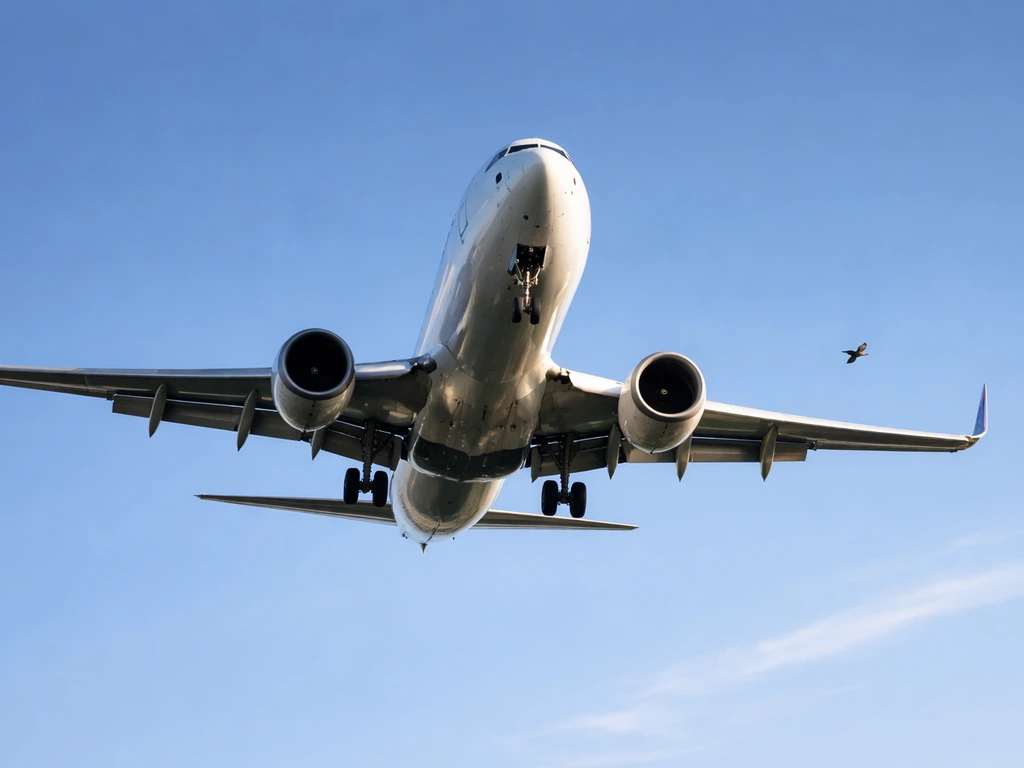
A plane doesn't automatically crash when a bird hits it. Most bird strikes cause minor damage or none at all. The rare cases where a crash happens come down to a specific combination of factors: a large bird (or a flock) getting pulled into an engine at a critical moment, the resulting thrust loss being severe enough to overwhelm the crew's options, or a direct hit to flight controls or windshield during a vulnerable phase of flight. In the most serious cases, the impact can damage an engine or flight controls, which is when you may see emergencies or even crashes crash happens. Understanding the difference between those two outcomes is the whole story.
Why Does a Plane Crash When a Bird Hits It?

Maya Chen
29 Apr 2026
What really happens in a bird strike
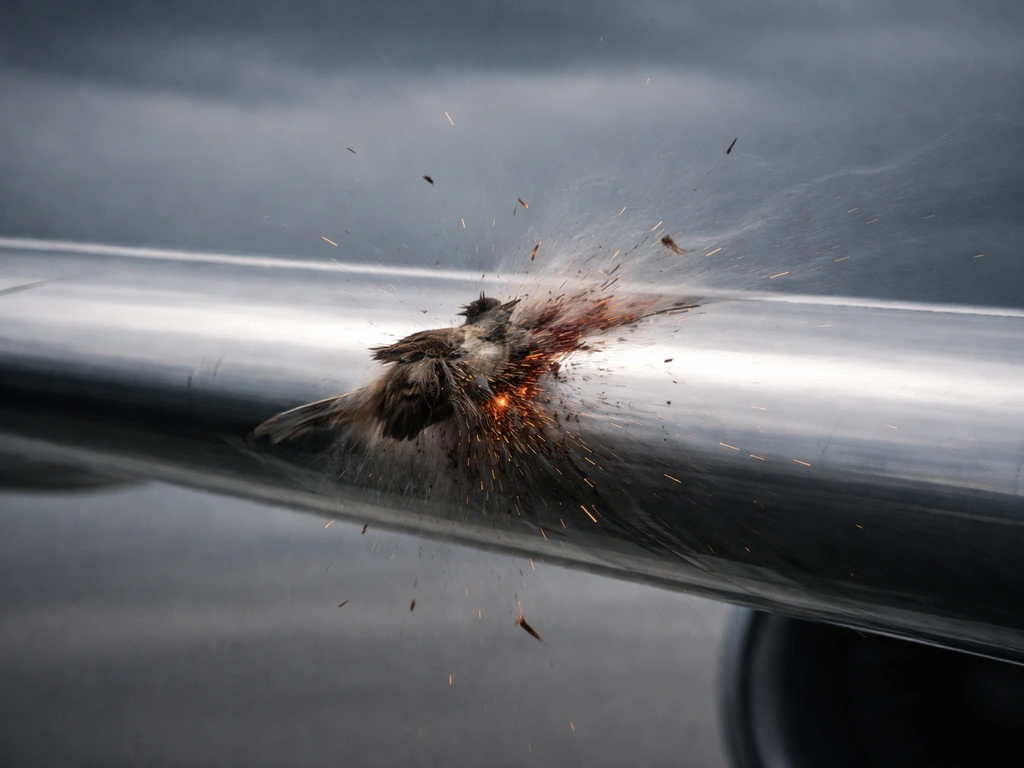
When a bird collides with a plane, the physics are brutal and quick. A 4-pound bird hitting an aircraft at 200 knots generates an impact force of roughly 50,000 pounds. The bird doesn't just bounce off. Depending on where it hits, the result could be a dent in the nose cone, a cracked windshield, structural damage to a leading edge, or the bird getting pulled straight into a running engine.
Bird strikes happen at every stage of flight, but they're most common during takeoff, initial climb, and landing approach. That's because most birds fly below 3,000 feet, and that's exactly where aircraft speeds are highest and altitude is lowest. Low altitude matters a lot: if an engine fails at cruise, you have time and options. If it fails at 200 feet during takeoff, your margins shrink instantly.
The FAA tracks tens of thousands of bird strikes in the U.S. every year. The overwhelming majority result in no damage. A smaller fraction causes minor damage. A very small number result in engine damage, aborted takeoffs, or precautionary landings. Actual crashes are rare enough to make international news every time one happens.
Engine ingestion: how birds can damage thrust and cause emergencies
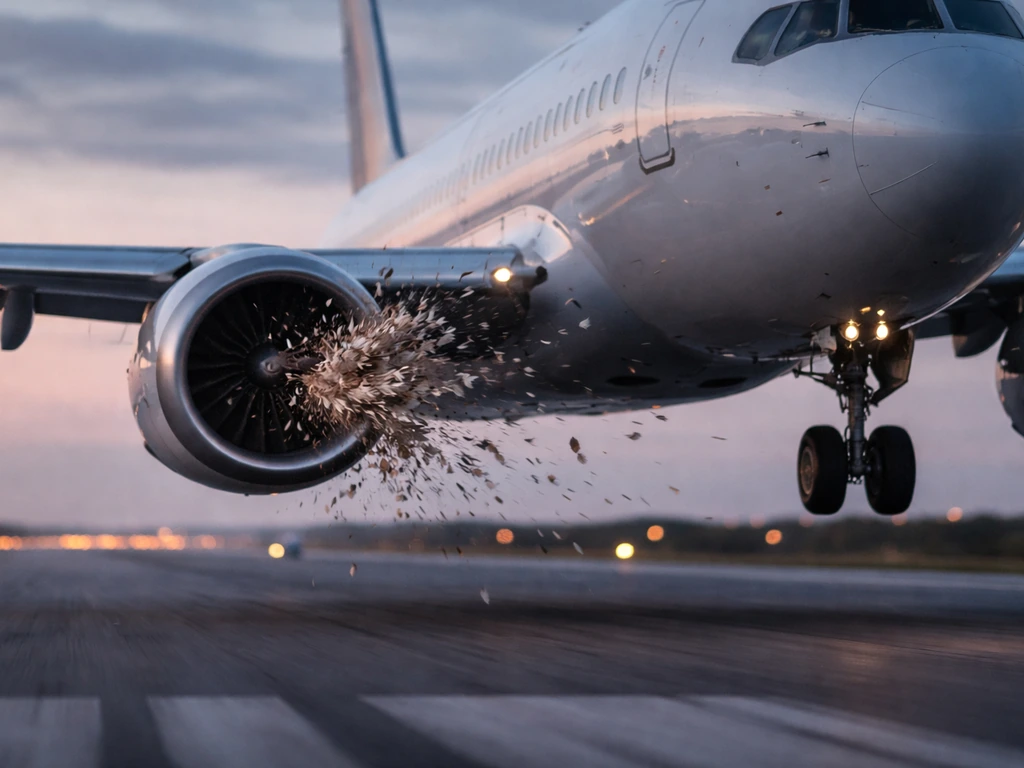
Engine ingestion is the most serious category of bird strike. A jet engine works by pulling massive amounts of air through spinning compressor blades rotating at thousands of RPM. A bird entering that flow path collides with those blades at extreme speed. The bird fragments, and those fragments can bend or fracture compressor or fan blades, damage combustion components, and create an imbalance in the rotating assembly that causes severe vibration.
The FAA classifies this as one of the most dangerous strike scenarios, and the engineering rules back that up. Under U.S. certification standards (14 CFR Part 33, Section 33.76), engines must be tested against bird ingestion to prove they don't produce hazardous effects. The FAA issues Advisory Circular AC 33.76-1B to provide guidance for complying with the bird ingestion certification requirements in 14 CFR § 33.76 14 CFR Part 33, Section 33.76. EASA has equivalent requirements under CS-E 800. Both frameworks require that even when a large bird is ingested, the engine must respond in a controlled, gradual way rather than failing catastrophically. For example, ingesting a single large bird at 90% takeoff thrust must not produce more than a 50% sustained thrust loss or force an immediate engine shutdown during the certification test window.
That sounds reassuring, and it is, but certification tests use defined bird sizes, speeds, and angles. Real-world strikes don't always match test conditions. A flock of Canada geese at a critical angle can exceed what a single-bird test covers. That's exactly what happened in the 2009 Miracle on the Hudson: both engines ingested geese during climbout from LaGuardia at low altitude, both engines lost thrust, and the crew had roughly 3 minutes to make a decision that ended in a river landing.
When a bird strike damages an engine, crews typically see compressor stall (a loud bang and loss of thrust), rising exhaust gas temperatures, abnormal vibration, or immediate thrust asymmetry. The trained response is to reduce thrust on the affected engine to idle, run the appropriate checklist, assess whether the engine can continue operating, and divert or declare an emergency if needed. That structured response is what keeps most engine ingestion events from becoming crashes.
Airframe impacts: when the fuselage or controls get affected
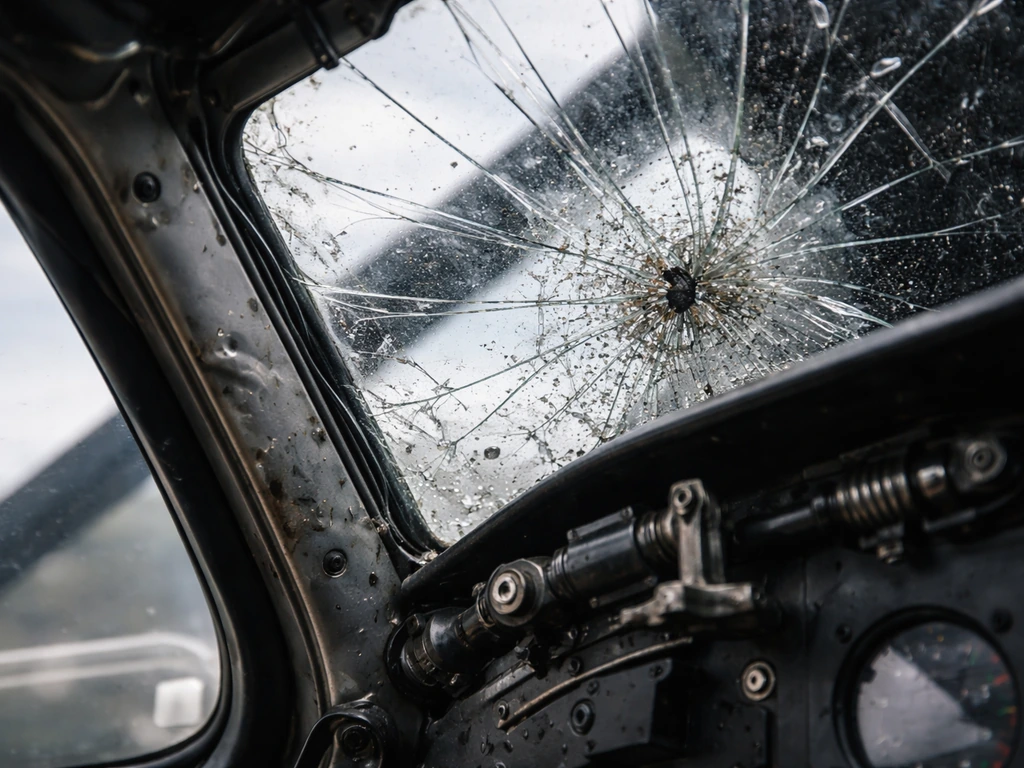
Not every dangerous strike goes into an engine. A large bird hitting the windshield at high speed can crack or shatter it, which at altitude means explosive decompression risk and potential injury to the crew. A strike to the leading edge of a wing or tail can deform control surfaces. A direct hit to a pitot tube (the sensor that measures airspeed) can give false readings that confuse both crew and automation.
Helicopters face additional vulnerability because the rotor system is exposed and bird debris can jam or damage rotor components. Helicopter pilot procedures after a bird strike depend on whether the rotor system or controls were affected. While helicopters have different vulnerabilities than fixed-wing aircraft, a bird strike can still become dangerous depending on where the bird hits and how severe the resulting damage is bird strike on a helicopter. For fixed-wing aircraft, the empennage (the tail assembly) is a concern because it controls pitch and yaw. Damage there during high-speed flight is a serious problem, though it's far less common than engine-related incidents.
Structural strikes that cause crashes are extremely rare. The more realistic airframe risk is a windshield hit that injures a pilot or forces an emergency landing, or leading-edge damage that requires the aircraft to be grounded for inspection after landing.
Why crashes are rare (and what determines risk level)
The short answer is redundancy and engineering. Airliners have two or more engines specifically so that losing one doesn't end the flight. blank" rel="noopener noreferrer">Certification requires engines to survive bird ingestion without producing hazardous effects. Pilots train extensively for single-engine operations. And the vast majority of birds are small enough that even a direct engine hit causes only minor damage.
Risk goes up when several factors stack at once. Bird size matters most: a 1-ounce sparrow is almost irrelevant to a turbofan; a 10-pound snow goose is a different situation entirely. Flock size matters too, because a mass ingestion event can overwhelm both engines simultaneously, removing the redundancy that normally saves the day. Speed and altitude at the time of the strike determine how little margin the crew has to respond. And engine design age plays a role: older engines built before modern certification standards have less engineered tolerance for bird ingestion.
| Factor | Lower risk | Higher risk |
|---|---|---|
| Bird size | Small birds (under 1 lb) | Large birds (over 4 lbs, e.g. geese, vultures) |
| Flock vs. single bird | Single bird strike | Multiple birds or flock ingestion |
| Altitude at strike | Cruise altitude (time to respond) | Takeoff/approach below 3,000 ft |
| Engine affected | One engine on multi-engine aircraft | Both engines simultaneously |
| Aircraft speed | Low taxi speed | High takeoff or approach speed |
| Engine certification standard | Modern engines (post-1984 rules) | Older engines with lower ingestion tolerances |
When all the high-risk factors line up together, that's when a bird strike becomes a potential crash scenario. Those combinations are genuinely rare, but they're real, which is why aviation safety agencies treat bird strike mitigation as a serious ongoing effort.
What airlines and pilots do to prevent or handle bird strikes
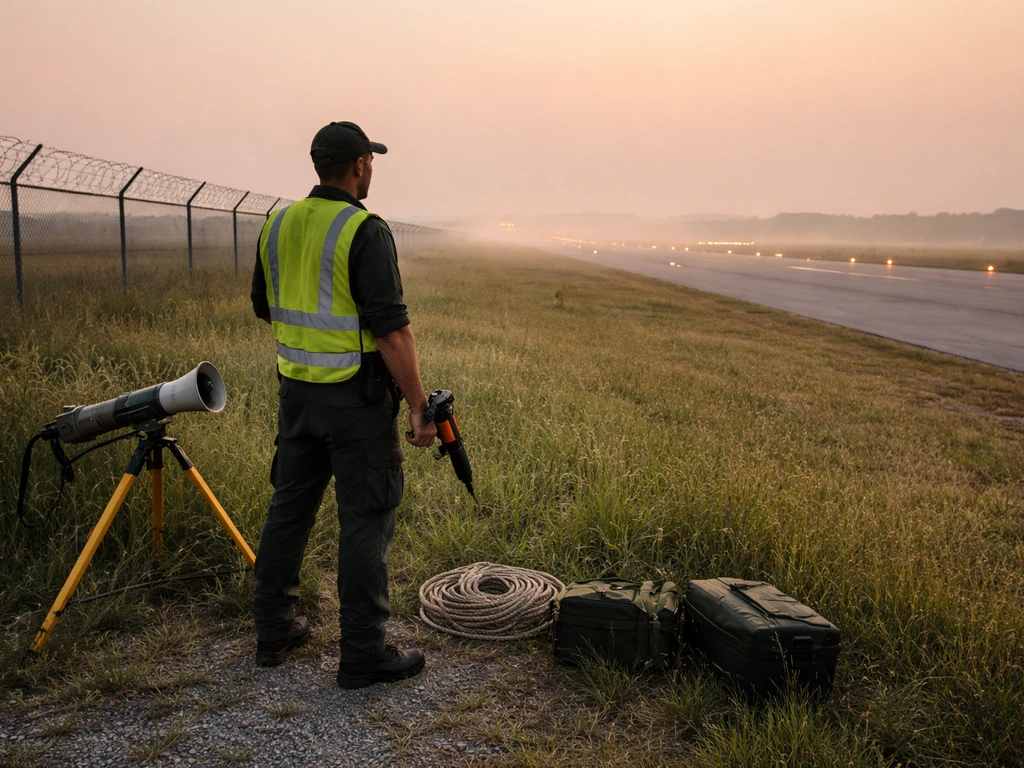
Prevention starts at the airport. Wildlife management teams use trained falcons, pyrotechnics, recorded predator calls, and habitat modification to keep bird populations away from runways. The FAA requires airports to report and track bird strike data, and that information feeds into hazard maps that help air traffic controllers issue bird advisories.
On the flight deck, crews use radar and ATC advisories to avoid areas of known bird activity. During takeoff and initial climb, flight paths can be adjusted when bird concentrations are reported. Many airports maintain bird strike logs specifically to identify time-of-day and seasonal patterns so they can schedule wildlife control activity when it's most needed.
Engine design is the biggest technical defense. Modern high-bypass turbofan engines are tested and certified to ingest birds without immediate catastrophic failure. EASA's CS-E 800 and the FAA's 14 CFR Part 33.76 both specify minimum performance requirements after ingestion. These aren't just theoretical standards: they involve actual testing with bird carcasses fired into running engines.
Pilots train specifically for bird strike scenarios in simulators. The procedure after a suspected engine ingestion includes reducing thrust on the damaged engine to idle, monitoring engine parameters, running the engine fire or failure checklist depending on readings, communicating with ATC, and making a divert decision. That training is the reason so many bird strike events end as precautionary landings rather than emergencies.
How to interpret news and myths about bird strikes and crashes
When you see a headline about a bird strike, the first thing to check is whether the aircraft actually crashed or just landed early. The phrase 'bird strike' covers everything from a gull bouncing off the nose cone with a small dent to a flock of geese taking out both engines. Most bird strike reports involve precautionary diversions, post-flight inspections, or minor repairs. The word 'strike' in a headline does not mean the plane went down.
A common myth is that any bird strike is dangerous. The reality is that the FAA receives reports of roughly 17,000 bird strikes a year in the U.S. alone, and the number that result in aircraft damage (not just a dent) is a small fraction of that. The number that cause an actual crash is vanishingly small. If bird strikes routinely crashed planes, commercial aviation would not function.
Another myth is that small planes and commercial jets face the same level of risk. They don't. A single-engine propeller aircraft has far less margin when a bird hits the propeller or cowling than a twin-engine airliner does. General aviation bird strike incidents are proportionally more likely to cause serious outcomes than airline events, simply because redundancy and certification standards differ.
If you've just watched a news clip about a bird strike and are wondering whether flying is still safe, the most honest answer is: yes, and the engineering and procedures in place specifically address this risk. The events that make the news are the rare exceptions, not the rule. The much more common story is a bird gets hit, the crew declares a precautionary landing, the plane gets inspected, and the flight continues after repair.
Understanding what a bird strike actually involves, and what conditions would need to stack up to cause a crash, is the most useful frame for putting these news stories in context. The risk is real and taken seriously by engineers, regulators, and pilots. It's also well-managed and rarely fatal, which is why commercial aviation safety statistics remain what they are.
FAQ
If a plane gets hit by a bird, does it always crash?
Not usually. A bird strike can be called “bird strike” even when it only causes a small dent, windshield crack, or minor engine wear, and many events end with a precautionary landing or return-to-gate for inspection. A crash requires loss of control or structural failure, or an emergency landing that still fails, not just any damage.
How can I tell whether a bird strike was actually a crash or just a precautionary landing?
You can’t tell from the headline alone because “crash” and “incident” are different outcomes. Look for whether the aircraft made a landing (even an emergency landing), whether passengers disembarked normally, and whether the report mentions damage confined to inspections or components like the windshield, leading edge, or a single engine.
What do pilots do in the first seconds after a bird strike, especially if it may have hit an engine?
Crew response is designed around fast indication of the affected system. Common cues include sudden thrust asymmetry, compressor stall indications, rising exhaust gas temperatures, abnormal vibration, and engine parameter deviations. That’s why pilots immediately reduce thrust on the suspect engine to idle and run the relevant checklist rather than trying to “push through” at takeoff or climb.
Why are flocks (like geese) more dangerous than a single bird?
Engine ingestion risk depends heavily on the type and size of bird, and also on how many birds are involved. A single small bird can be within normal ingestion capability, while a flock at an angle that drives multiple fragments into the intake flow can overwhelm the designed margin and cause thrust loss in both engines on a twin.
Can a bird strike cause a serious emergency even if none of the engines fail?
Yes, even when the engines survive. A windshield strike at high speed can crack or shatter the pane, leading to possible crew injury risk from debris and, at altitude, rapid cabin or cockpit decompression hazards. That can force a different emergency strategy than an engine ingestion event, often centered on securing the airframe and managing depressurization and landing priorities.
If a bird hits the plane, will it always sound like an engine stall?
Often, but it’s not the universal failure mode. Birds can damage flight controls or sensors (like pitot tubes), deform leading edges, or affect the tail at speed. These scenarios can create handling problems or unreliable automation rather than a loud “stall bang,” so the emergency can be triggered by control authority or instrument reliability issues.
Does the age of an aircraft or its engines change how dangerous a bird strike can be?
Older engines and some older aircraft designs may have less conservative ingestion margins because certification and engine design practices have evolved over time. That doesn’t mean modern systems are immune, but it can mean the same bird strike produces different thrust-loss behavior, vibration sensitivity, or required inspection thresholds.
Are bird strikes more dangerous for helicopters than for fixed-wing planes?
Yes, helicopters have different failure pathways because rotors are directly exposed and bird fragments can jam or damage rotor components, or interfere with control linkages. The pilot response also depends on whether the rotor system is affected, and whether the priority is landing immediately versus continuing controlled flight to a safe area.
Does having two engines always prevent a bird-strike crash scenario?
For fixed-wing aircraft, redundancy primarily protects against losing one engine, not against every type of airframe damage. If the strike damages flight controls, windshield, pitot tubes, or both engines simultaneously, redundancy may not solve the problem. That’s why the “two-engine safety net” is strongest for engine ingestion with only one engine affected, and weaker for critical control or sensor hits.
Why is the takeoff and landing phase more associated with severe bird-strike events?
Risk is higher at low altitude mainly because reaction time is limited, and because speed and engine configuration during takeoff or approach can reduce available options. At cruise, an engine issue might still be manageable because there is more time to troubleshoot, coordinate, and choose a diversion.
Do certification standards mean real-world bird strikes are always the same as test conditions?
The certification testing uses defined bird sizes, speeds, and angles, but real strikes can vary. A key practical caveat is that a real-world flock can present a mass and trajectory beyond what a single test condition covers, and multiple fragments can interact with engine internals differently than a single “representative” bird.
If there’s windshield or leading-edge damage, what extra checks are usually needed?
Yes. After an event, aircraft typically require specific inspections and sometimes limited flight permission depending on damage. Windshield and leading-edge damage can require careful checks for cracks, delamination, or deformation, not just a surface patch.
If airports already deter birds, why do bird strikes still happen?
The airport side includes active habitat modification and deterrence, but a common misconception is that prevention is perfect. Bird control is about reducing probability and severity, not eliminating birds entirely. That’s why flight crews also rely on radar and ATC advisories when they know local bird activity is elevated.
Next Article
What Happens If a Plane Hits a Bird: Bird Strike Guide
Learn what a bird strike is, possible aircraft damage, passenger safety, bird outcomes, and what to report and expect af