When a plane hits a bird, the technical term is a "bird strike," and the outcome can range from a barely-noticed thud to a serious emergency requiring an immediate return to the airport. Most of the time, it's closer to the former. But understanding what actually happens, step by step, helps separate genuine risk from movie-fueled panic.
What Happens If a Plane Hits a Bird: Bird Strike Guide

Maya Chen
17 Apr 2026
What a bird strike actually is and why the term matters
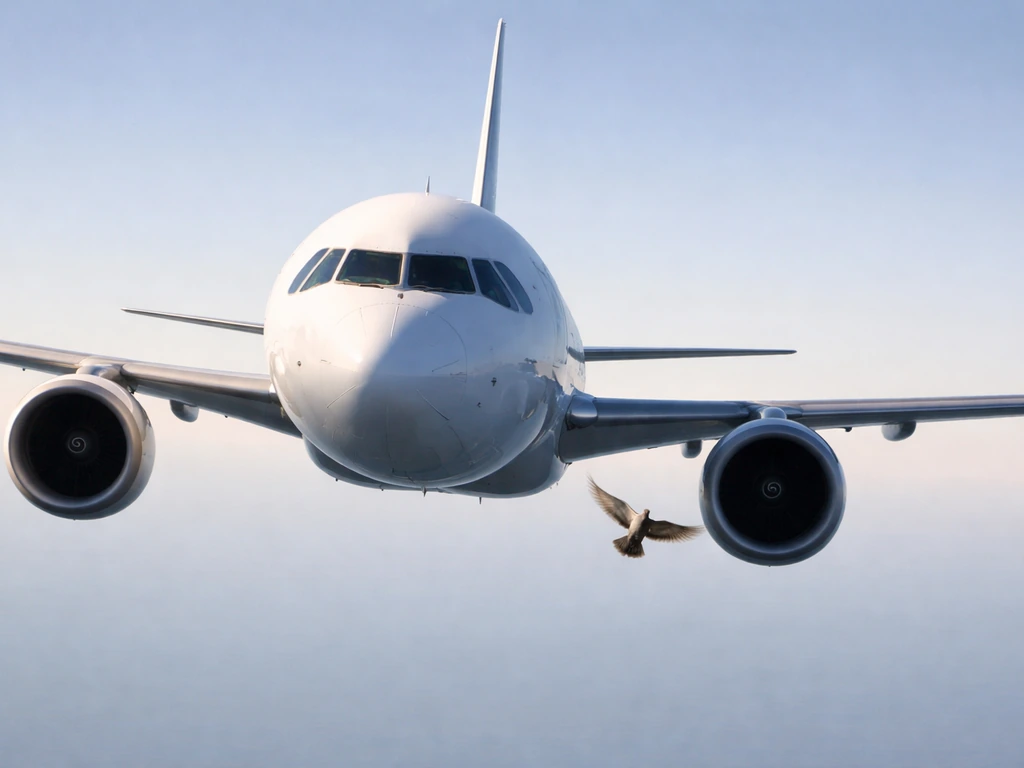
A bird strike (sometimes written "birdstrike") is the collision between an aircraft in flight, or moving on the ground, and a bird or other wildlife. The phrase covers everything from a sparrow glancing off a nose cone during taxi to a Canada goose getting ingested into a turbofan engine at rotation. What is a bird strike on a plane is one of the most searched follow-up questions people ask after hearing the term for the first time, and that confusion is worth clearing up right away: it's simply any in-flight or ground-operation collision between a flying animal and an aircraft.
The term matters because aviation safety agencies use it as a defined, reportable event with specific forms, databases, and regulatory standards attached to it. When pilots, controllers, and investigators say "bird strike," they're invoking a whole chain of procedures, not just describing something that happened. Knowing that chain helps you understand why the response to a bird strike is more organized than most people expect.
The FAA has tracked wildlife strikes since 1988, and the data are both reassuring and sobering. From 1988 to October 2024, wildlife strikes have been linked to 499 human fatalities and 361 aircraft destroyed globally across civil and military aviation. Those are real numbers. But they have to be weighed against the enormous volume of flights operating over the same period, and against the fact that the chances of a bird hitting a plane are actually quite high on a per-flight basis, making the catastrophic-outcome rate very low in proportion.
What happens to the plane in the first few seconds
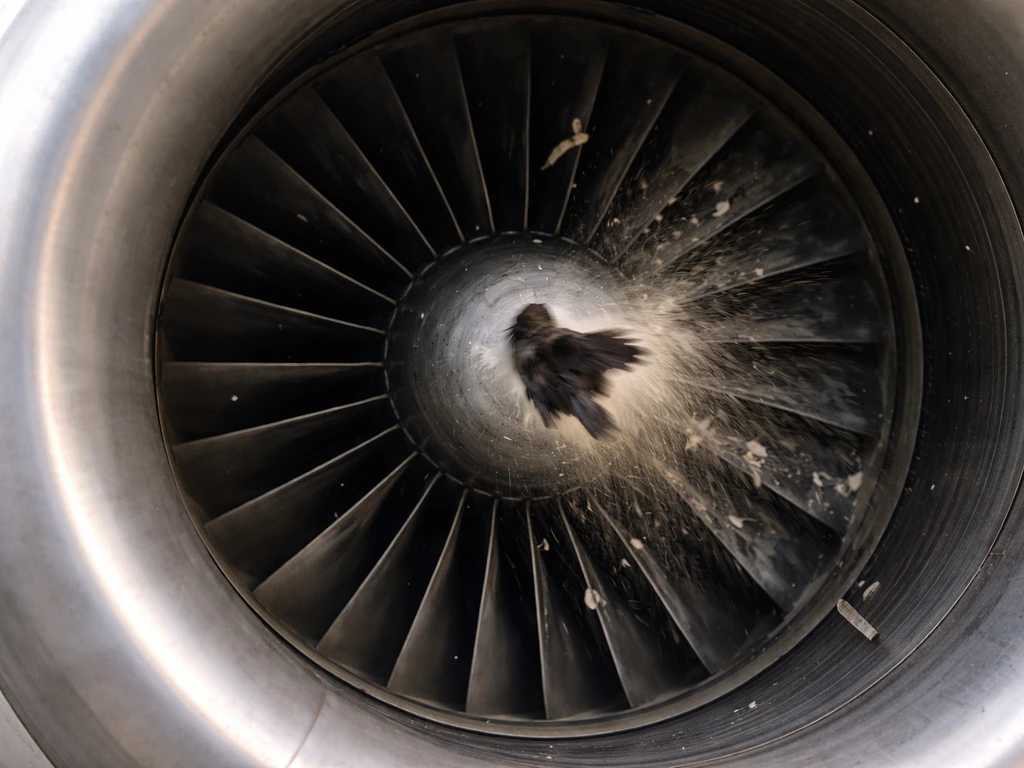
The immediate effect depends almost entirely on where the bird hits and how big it is. According to an Airbus study cited by aviation safety resource SKYbrary, engines are the impact zone in about 41% of bird strikes. The rest involve windshields, wings, fuselage, landing gear, and other airframe surfaces. Each scenario plays out differently.
Engine ingestion
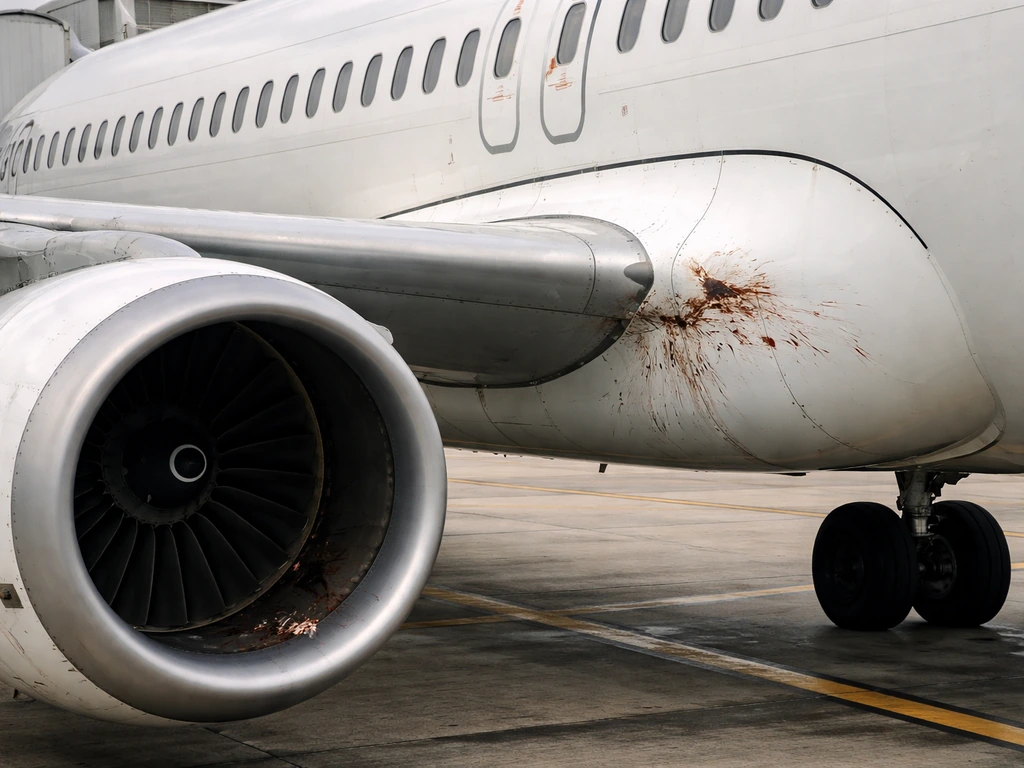
Engine ingestion is the scenario most people worry about, and for good reason. When a bird enters a jet engine, it can damage or destroy fan blades, cause compressor stalls, trigger vibration, and in severe cases force a shutdown.
EASA certification standards require engines to tolerate ingestion of birds up to a defined size class without exceeding specific thrust-loss limits: no more than 50% sustained thrust loss for a large flocking bird, and no more than 25% for medium or small birds. The idea is that even after ingestion, an engine should either keep running safely or fail in a controlled, non-hazardous way.
Pilots will typically hear a loud bang, feel vibration, and see engine instrument readings drop or fluctuate. At that point the checklist for an engine abnormality or failure kicks in.
Windshield and airframe strikes
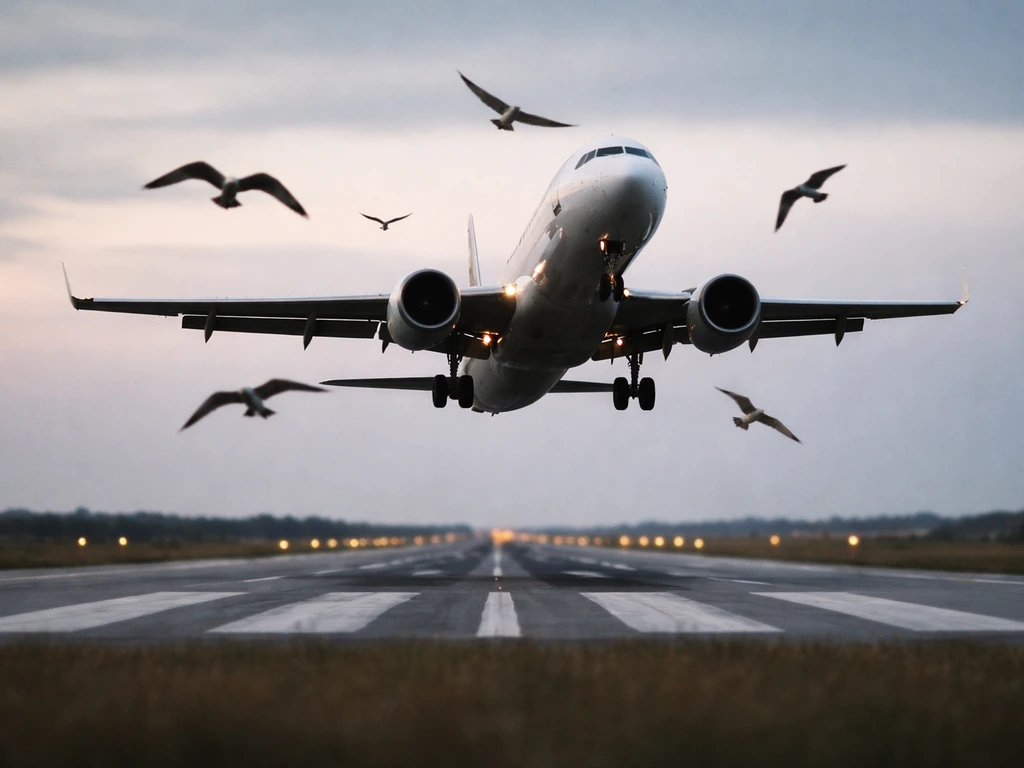
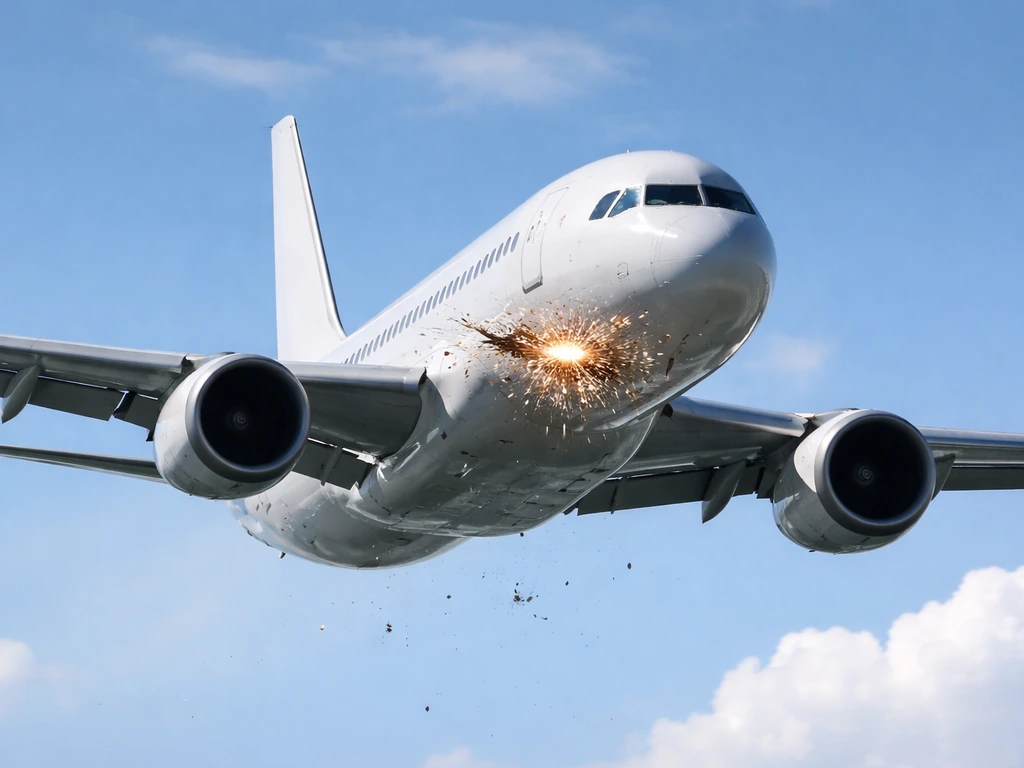
A bird hitting a windshield at cruise speed carries enormous kinetic energy. Modern aircraft windshields are multi-layer laminated structures designed to resist penetration, but at high speeds and with large birds, cracking or full penetration is possible. SKYbrary's controller guidance lists broken windshields as one of the concrete immediate hazards controllers need to anticipate after a reported strike. A penetrated windshield in the cockpit can injure crew, cause sudden depressurization at altitude, and drastically limit visibility. Wing or fuselage strikes are usually less critical unless structural sensors flag damage.
Low altitude is where most strikes happen
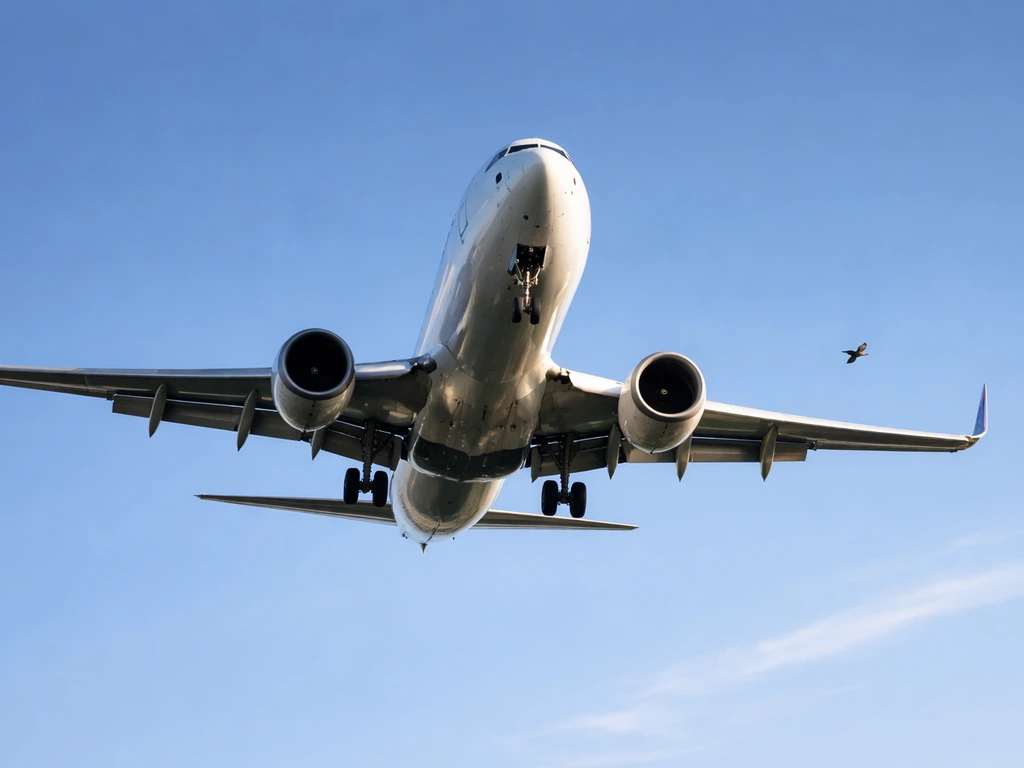
About 70% of wildlife strikes occur between 0 and 500 feet above ground level, and 92% occur at or below 3,500 feet. That means the vast majority happen during takeoff, climb, approach, or landing, not at cruising altitude. Higher-altitude strikes do occur, particularly during bird migration seasons, but they're the exception. The concentration near runways makes sense: that's where birds and planes share the same airspace most often.
What happens to the bird (and nearby wildlife)
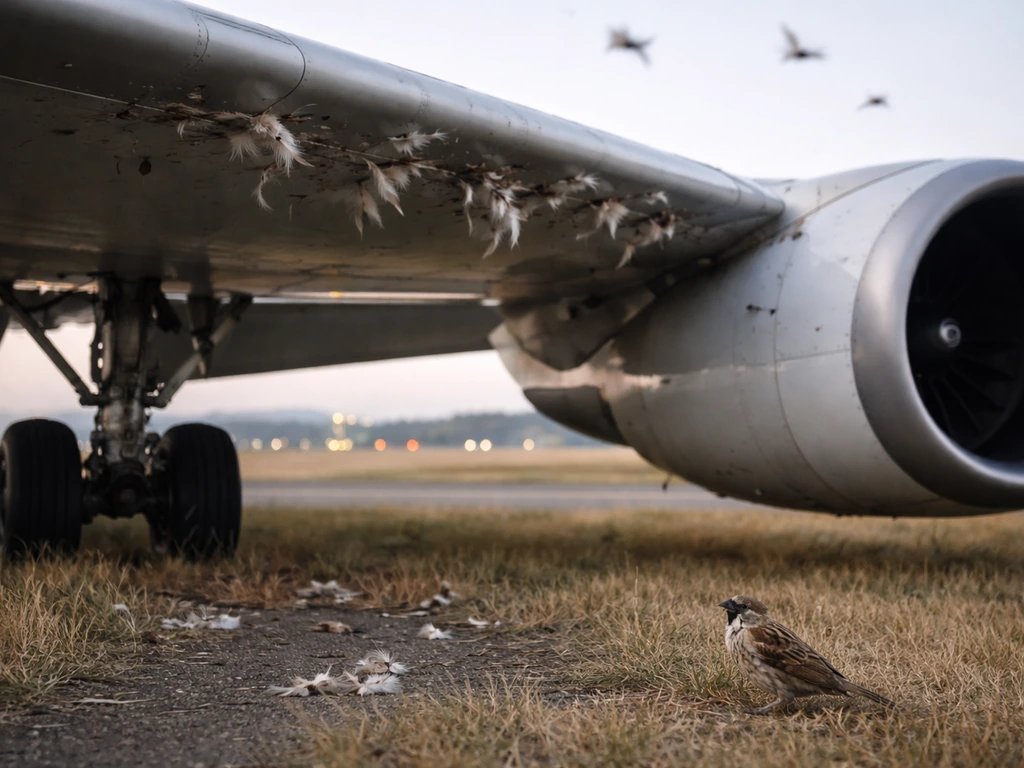
The honest answer is that the bird usually doesn't survive. The kinetic forces involved in a collision at even approach speeds (around 130-160 knots for many commercial jets) are fatal to almost any bird. Engine ingestion is instantly lethal. Direct airframe impacts at speed are similarly severe. The bird may be killed on contact, shredded, or in some lower-speed ground-level encounters, mortally injured and found near the runway.
The myth worth busting here is that birds "bounce off" harmlessly. Small birds at low speeds sometimes survive strikes with minor airframe surfaces, but those cases are the exception. The FAA's feather identification program, part of its strike reporting system, exists specifically because investigators often collect feather or tissue fragments from aircraft after a strike to identify the species involved, which tells wildlife managers which birds are congregating near airports and need to be managed.
Secondary effects on other wildlife are mostly indirect. A bird strike event near an airport can prompt wildlife dispersal activities, such as habitat modification, pyrotechnics, or raptor programs, that affect local bird and animal populations. These are intentional management responses rather than collateral damage from the strike itself.
How dangerous is it for passengers, really
The risk to passengers depends on several intersecting factors: the size of the bird, whether it's a lone bird or a flock, which part of the aircraft is hit, the speed and altitude at the time of impact, and the aircraft type. ICAO's compiled statistics show that blank" rel="noopener noreferrer">only about 11% of bird strikes cause any damage at all, and only a very small fraction of those endanger safety.
SKYbrary notes that bird-strike reporting requirements apply even when there is little or no effect, because specimen or species identification and a reporting culture depend on it reporting requirements exist even when there’s little/no effect. That's not a reason to dismiss the hazard, but it does mean that the overwhelming majority of bird strikes result in no meaningful risk to anyone on board.
The highest-risk scenarios involve large birds or flocks ingested into one or both engines at low altitude during critical phases of flight. The reason altitude matters so much is time: at 200 feet on takeoff, a crew that loses an engine has seconds, not minutes, to respond. Why a plane crash happens when a bird hits it almost always traces back to this combination of large-bird engine ingestion plus low altitude plus limited time to react, not to the strike itself being inherently unsurvivable.
Modern commercial aircraft are certified to continue safe flight and landing after impact with a 4-pound bird under specified speed and flight conditions (EASA CS-25.631 and the equivalent FAA standard). That doesn't make every strike safe, but it means the aircraft structure is designed with bird impact as a known and quantified hazard, not an afterthought.
One more factor worth noting: a June 2025 NTSB advisory flagged that on certain Boeing 737 MAX engines, a load reduction device designed to protect the engine can inadvertently release oil into hot engine conditions after a bird-strike event, potentially causing smoke in the cockpit or cabin. This is a real and specific concern that Boeing and the FAA were actively addressing, and it's a good example of how even non-catastrophic strikes can trigger secondary effects worth monitoring.
What happens next: inspections, reporting, and clearance

After a bird strike is reported or suspected, the sequence is fairly predictable. The crew assesses the aircraft's condition immediately, declares any necessary emergency or precautionary status, and lands. Once on the ground, maintenance personnel inspect the aircraft before it returns to service. What they're looking for depends on what was hit: fan blade damage and compressor condition for engines, windshield integrity, wing leading-edge deformation, and any structural sensor flags.
EASA rules require that whenever an aircraft suffers a bird strike resulting in significant damage or loss of any essential service, the commander must submit a written bird strike report to the competent authority after landing. In the U.S., the FAA uses FAA Form 5200-7 (Bird/Other Wildlife Strike Report) for this purpose. In the United States, the FAA’s Advisory Circular 150/5200-32A instructs wildlife-strike reporting and directs reporting using FAA Form 5200-7 blank" rel="noopener noreferrer">FAA uses FAA Form 5200-7 (Bird/Other Wildlife Strike Report). Pilots, airport operators, and even passengers who witnessed a strike can submit reports.
The reporting requirement exists because the FAA's National Wildlife Strike Database is the primary tool for improving standards and managing bird hazards at airports. What happens when a bird strikes a plane in terms of regulatory follow-up is often more systematic than people realize: feather samples get identified to species, strike location and altitude get logged, and that data feeds directly into decisions about habitat management, dispersal programs, and certification updates.
If you witnessed a bird strike as a passenger or bystander and want to report it, contact the airline or airport directly and ask them to file an FAA Form 5200-7. You can also submit a report yourself through the FAA's wildlife strike reporting system. The key data points to include are: date, time, location, aircraft type, altitude, and a description of what you saw.
What air traffic control does when a strike is reported
When a crew reports a bird strike or bird activity, controllers are trained to relay that information to adjacent facilities and flight service stations so that other aircraft in the area can be warned. This is a standard coordination step, not an emergency declaration in itself, but it keeps the hazard information moving through the system quickly.
Myths vs. what the evidence actually shows
A few persistent myths circulate about bird strikes, and most of them make the hazard seem either much worse or much more trivial than it actually is. Here's what the data says:
| Myth | What the evidence shows |
|---|---|
| Every bird strike causes an explosion or crash | ICAO data shows only 11% of strikes cause any damage, and catastrophic outcomes are rare. Most strikes have little to no effect on continued flight. |
| Birds always die instantly in a strike | Engine ingestion and high-speed direct impacts are almost always fatal, but low-speed ground-level collisions with minor surfaces sometimes allow survival. |
| Bird strikes only happen at high altitude during migration | About 70% of strikes occur below 500 feet AGL. Migration does push some birds higher, but the runway environment is the primary risk zone. |
| A single bird can bring down a large commercial airliner | Modern jets are certified to handle specific bird impacts. Multi-engine failure from a flock is the realistic catastrophic scenario, not a single small bird. |
| Bird strikes are getting rarer as airports improve | Bird populations near airports have grown in many regions. Strikes remain a persistent and common hazard that's managed rather than eliminated. |
| Pilots can always avoid birds on radar | Most birds don't appear on weather radar. Pilots rely on visual spotting, reports from controllers, and airport wildlife programs, none of which offer complete coverage. |
How this applies to rotorcraft too
Bird strikes aren't limited to fixed-wing aircraft. Helicopters operate extensively at low altitudes and at speeds where bird collisions are a genuine operational concern. Federal regulations under 14 CFR § 29.631 specifically address bird strike requirements for rotorcraft design, requiring that helicopters be capable of continued safe flight and landing after certain bird impacts. If you're curious about how the dynamics differ, what happens if a helicopter hits a bird gets into the specifics of rotor systems and the different risk profile helicopters face compared to jets.
The question of whether a bird can take down a helicopter is worth looking at separately, because the answer involves rotor blade geometry and hover/low-speed flight dynamics that are quite different from fixed-wing engine ingestion scenarios.
The bottom line on risk and what you can actually do
A bird strike is a real aviation hazard, well-documented, actively managed, and taken seriously by every segment of the industry. It is not, for the vast majority of flights, a catastrophic event. The data from decades of FAA tracking and ICAO statistics consistently show that most strikes cause no damage, a small fraction cause damage, and a very small fraction endanger safety.
If you're a passenger who just experienced what sounded or felt like a bird strike, the right move is to stay calm, follow any crew instructions, and understand that the crew and maintenance team have a practiced process for evaluating exactly what happened. If you witnessed a strike from the ground or as a bystander, you can contribute to aviation safety by helping ensure it gets reported through the appropriate channels.
The aviation system's response to bird strikes, from certification standards to wildlife management programs to real-time ATC coordination, is one of the more quietly effective safety systems in operation. It doesn't make strikes impossible, but it does mean that when one happens, there's a well-tested process already in place to handle it.
FAQ
How do pilots tell the difference between a bird strike and something like engine debris or hail?
They rely on what is felt and what the instruments show. A bird strike often includes a distinct bang or vibration, followed by specific engine indications (for example, thrust fluctuations, fan or compressor vibration trends, or abnormal engine parameters). Crews also cross-check external cues after landing, such as foreign object damage signs on the intake, leading edge, or windshield, which helps separate it from other causes like construction debris or weather impacts.
If the plane seems fine after a bird strike, is it always safe to continue the flight?
Not necessarily. Even when the crew does not declare an emergency, they may still treat it as an in-flight abnormality and land if inspections or operational limits might be exceeded. Whether dispatch continues depends on factors such as aircraft type, which component was hit, engine indications after the event, and any alerts from structural or engine monitoring sensors.
What happens if a strike occurs right after takeoff and there is little time to react?
Time pressure is the main risk driver in low-altitude, critical-phase scenarios. If an engine ingestion or severe thrust-loss indication occurs during takeoff or climb, crews follow emergency or abnormal checklists designed for fast stabilization and configuration, then either continue in accordance with performance limits or return to the airport as soon as it is operationally feasible.
Can a pilot land safely after a windshield impact, and what changes for the flight after that?
A windshield can crack or even penetrate without immediately causing loss of control, but it can rapidly reduce visibility and may create cabin pressure concerns at altitude. After landing, the aircraft will typically require detailed windshield and related structural checks, and sometimes replacement of the affected glazing and inspection of any adjacent components before the aircraft returns to service.
How likely is cockpit smoke or other symptoms after a strike if the engines were not catastrophically damaged?
Secondary effects are possible even with non-catastrophic outcomes. A specific example mentioned in industry advisories is oil release into hot engine conditions on certain Boeing 737 MAX engines, which can produce smoke in the cockpit or cabin after a bird-strike event. That means crews still evaluate and document symptoms carefully, not just engine performance readings.
Do bird strikes get reported if there is no visible damage?
They often get reported when they are suspected, exceed certain thresholds, or involve any disturbance that prompts crew or controller reporting. Reporting practices can vary by operator and by the severity and operational impact. If a crew observes bird activity, feels an impact, or sees indications that warrant attention, it is more likely to trigger a report even if the aircraft appears serviceable.
What should a passenger do immediately if they think they were hit by a bird?
The most useful action is to follow crew instructions and avoid arguing with the crew if they ask for something operational. Passengers can note the time, seat row, and what they felt or heard (thud, vibration, change in noise, or instrument messages if visible), because those details help maintenance and investigators correlate the event to flight data. Reporting to the airline or airport afterward is most helpful.
What information is most valuable if I report a bird strike as a witness?
Include the exact date and time (or approximate), your location relative to the airport or route, the aircraft type if you know it, the altitude or flight phase (takeoff, climb, approach, landing, or en route), and a description of the bird size and behavior if you observed it. If you have video or photos, share them through the appropriate reporting channel so investigators can better identify the species.
Will the aircraft be inspected differently depending on where the impact happened?
Yes. Engine strikes focus on fan blade condition, compressor state, vibration indicators, and foreign object damage checks. Windshield impacts focus on glazing integrity and potential penetration or cracking patterns. Wing or fuselage impacts emphasize leading-edge deformation, structural sensor checks, and any deformation that could affect aerodynamics or control surfaces.
Do helicopters face the same bird-strike risks as jets?
They face a different risk profile. Helicopters operate at lower altitudes and often at lower speeds with rotor-blade exposure, so impacts can involve rotor systems and transmission components rather than jet engine ingestion. Regulations for rotorcraft specifically address continued safe flight and landing after defined bird impacts, reflecting the distinct dynamics versus fixed-wing aircraft.