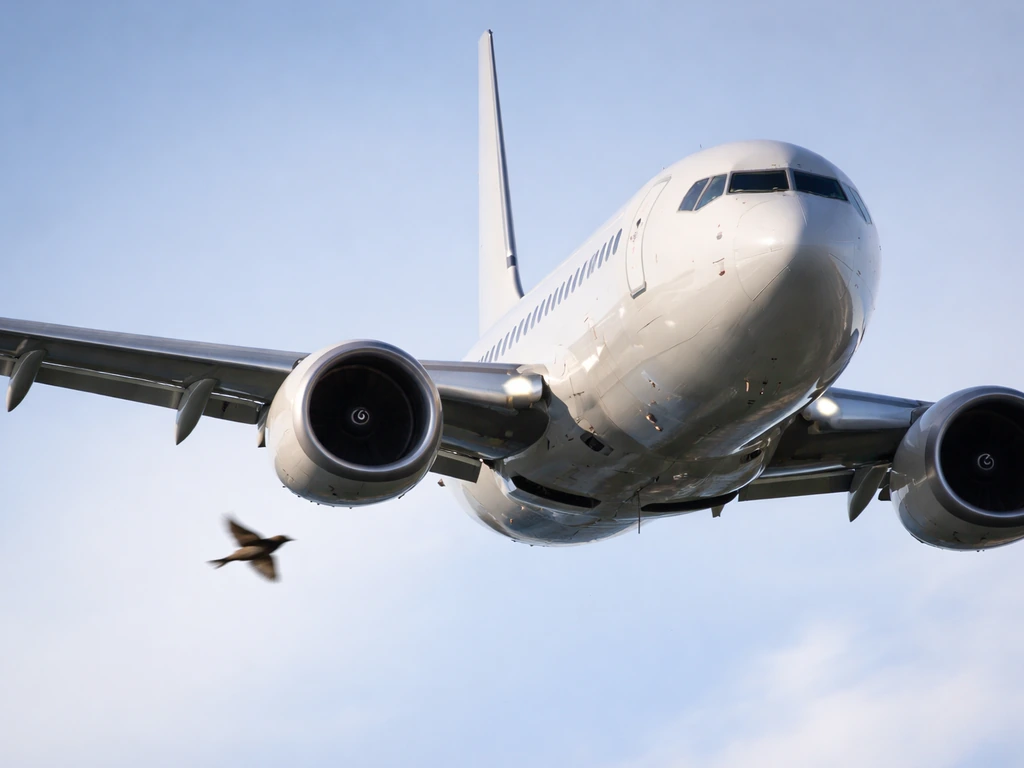
Yes, a bird strike can cause a plane crash, but it is rare. Over 35 years and more than 319,000 reported wildlife strikes in the US alone, crashes directly caused by birds are a small fraction of that total. The real answer is more nuanced: most bird strikes cause no damage at all, but under the right (or wrong) conditions, particularly during takeoff or landing, with large birds like geese, or on small aircraft, the risk becomes genuinely serious.
Can a Plane Crash Because of a Bird? Facts and Safety

Maya Chen
15 May 2026
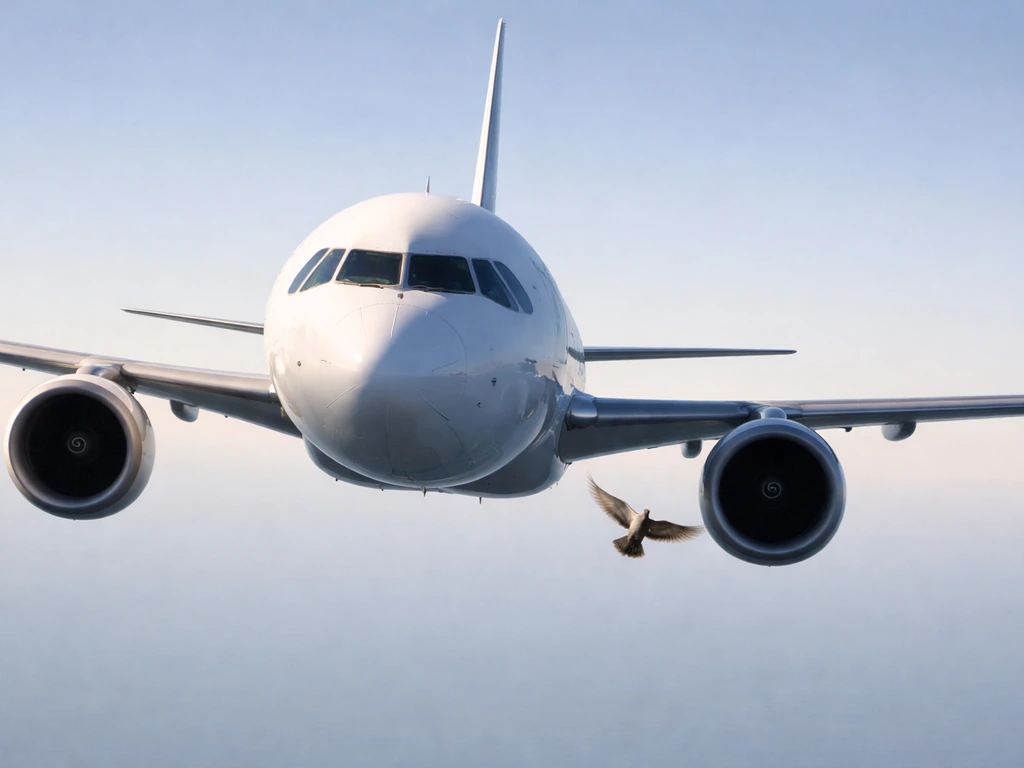
What actually happens when a bird hits a plane
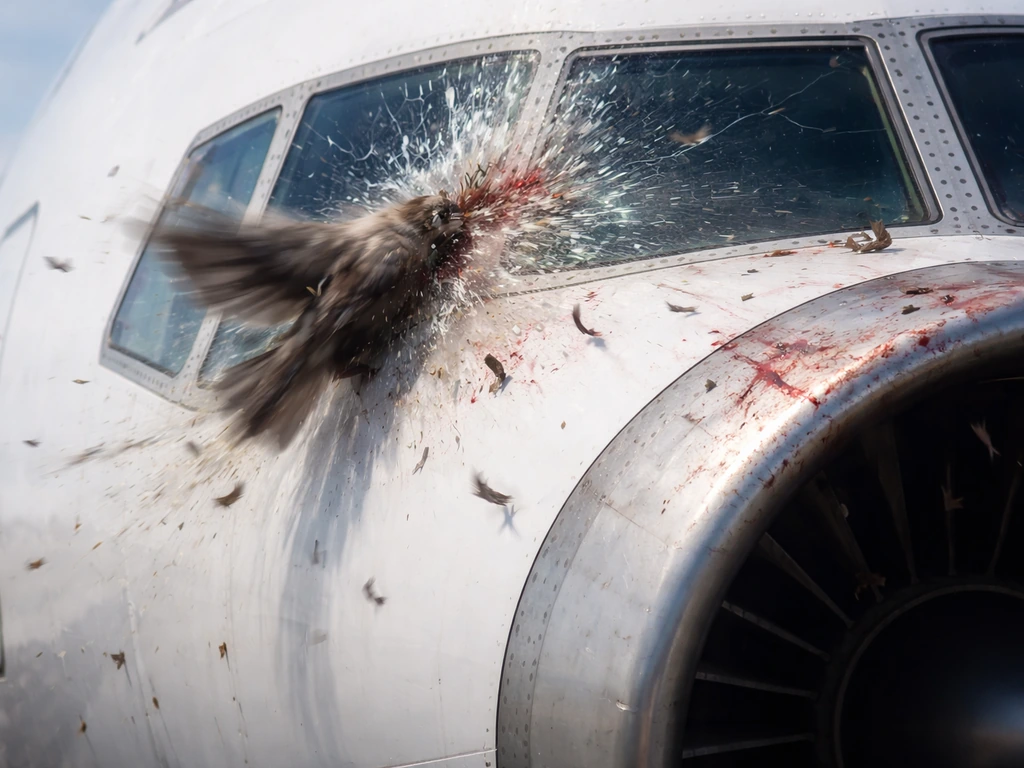
The damage from a bird strike comes down to physics. Kinetic energy is determined by the bird's mass and the relative speed at impact, and at aircraft speeds even a medium-sized bird carries enormous destructive force. A 4-pound bird hitting a jet at approach speed hits with roughly the same energy as a car crash. That is not a small thing.
The three areas that matter most are engines, windshields, and control surfaces. Each fails in different ways and carries different risk levels.
Engine ingestion
When a bird gets pulled into a jet engine, it can damage the compressor blades in the core. That damage can cause an engine stall and loss of thrust. In serious cases it can cause an uncontained engine failure, where fragments breach the engine casing. FAA certification rules are specifically designed to prevent uncontained failures, requiring that ingested birds not produce hazardous debris outside the engine. Even so, a compressor stall on a single-engine aircraft is an emergency, and on a twin it forces the crew to manage with reduced power at the worst possible moment.
Windshields
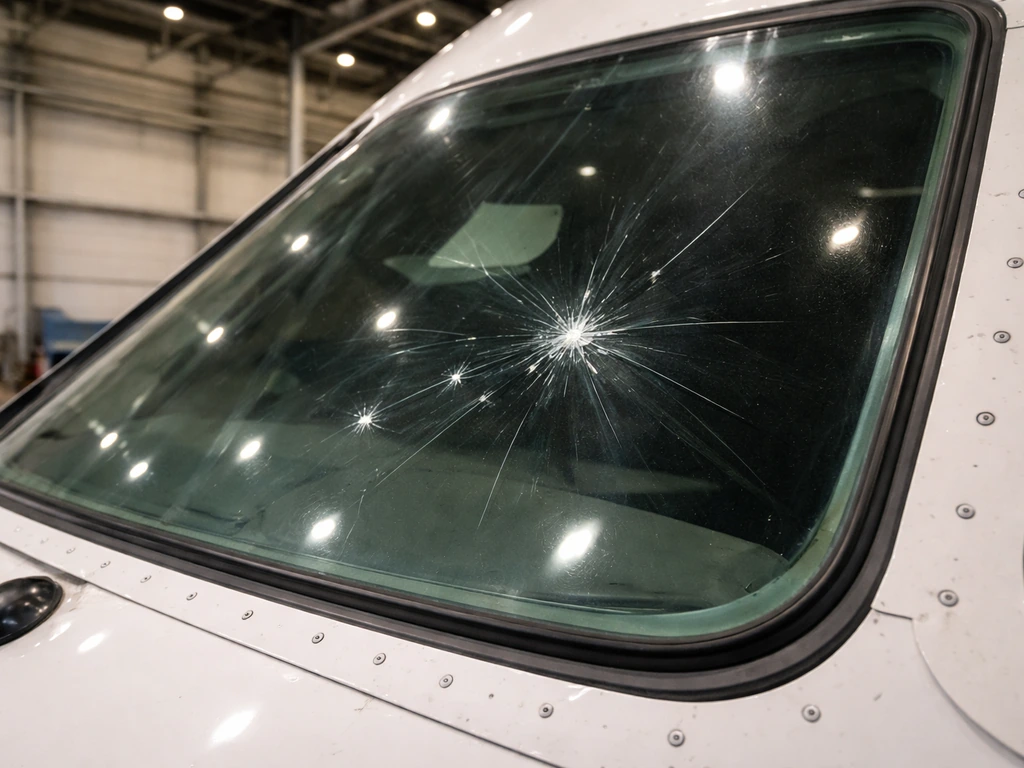
Large commercial aircraft windshields are certified to withstand a 4-pound bird strike at cruise speed at sea level without penetration. That is a federal design requirement under 14 CFR § 25.775. Smaller general aviation aircraft typically have no equivalent certification standard, which is one reason bird strikes are proportionally more dangerous for light planes. A shattered windshield in a small Cessna is a very different situation from a cracked outer layer on a 737.
Control surfaces and other airframe damage
Birds can also hit the radome (the nose cone housing radar), leading edges of wings, tail surfaces, and landing gear. Radome strikes are among the most commonly reported. Control surface strikes are less frequent but can affect the aircraft's ability to maneuver. In most cases the plane remains fully flyable, but the damage adds up when combined with other stresses or when the crew is already managing an engine problem.
Can a bird strike actually bring down a plane?
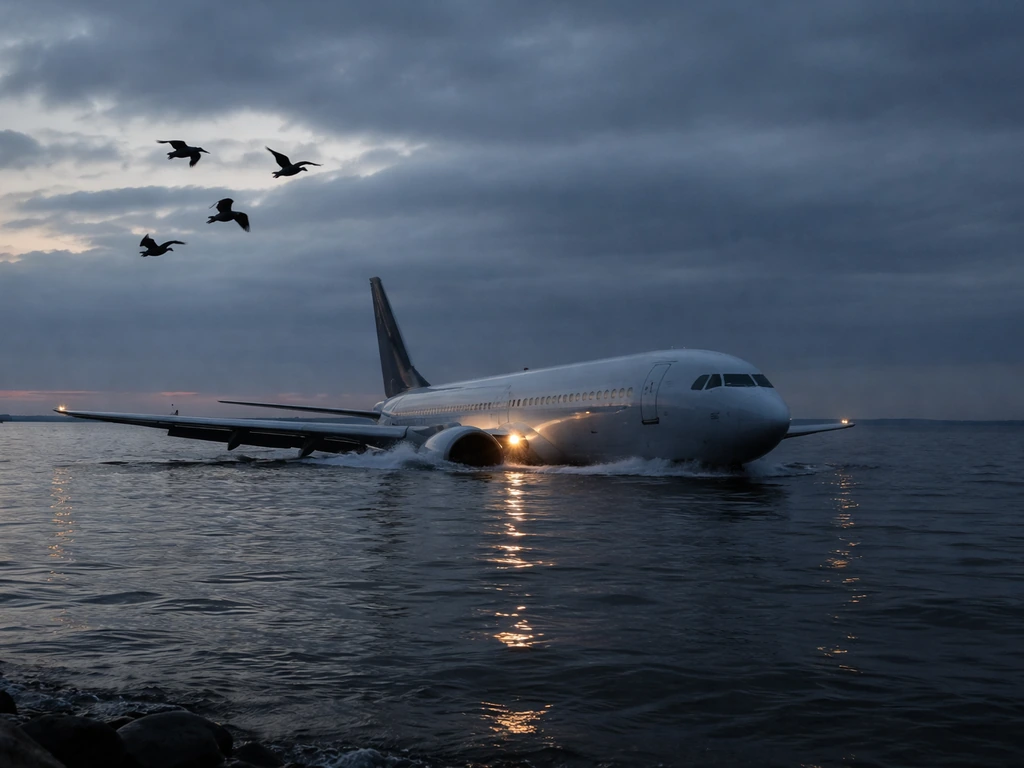
It can, and it has. The most widely known example is US Airways Flight 1549 in 2009, where a flock of Canada geese caused dual engine failure shortly after takeoff from LaGuardia, forcing an emergency water landing on the Hudson River. That event is famous partly because everyone survived, but it illustrates the scenario perfectly: large birds, both engines, critical phase of flight.
That said, crashes are genuinely rare relative to how often strikes happen. The FAA database shows that strikes causing any aircraft damage have dropped from about 6% of all reported strikes in 1996 to just 3.7% in 2024. The vast majority of bird strikes, around 96%, cause no reportable damage. Crashes resulting in fatalities are a much smaller subset of that already-small damage category.
The circumstances that push a strike from a nuisance to a catastrophe are fairly specific: multiple large birds or a dense flock, engine ingestion rather than a glancing airframe hit, a phase of flight where altitude and airspeed leave little margin for recovery, and sometimes a combination of factors hitting at once.
When is a flight most at risk?
Phase of flight matters enormously. The FAA data shows that about 61% of strikes happen during descent, approach, and landing roll, and another 36% happen during the takeoff run and initial climb. Only about 3% happen during the en-route cruise phase. That distribution reflects where birds actually fly, mostly below 3,000 feet, and where aircraft concentrate, around airports.
Takeoff and initial climb are the most dangerous moments. The aircraft is at low speed, low altitude, and the crew has almost no time to react before the ground. An engine failure at 200 feet on takeoff is a different emergency than one at 35,000 feet with time to troubleshoot and divert.
Bird species also matter. Waterfowl (ducks and geese) account for only about 4% of all reported strikes but are responsible for 27% of strikes that cause damage. That outsized impact comes from their size and their tendency to fly in dense flocks, which can lead to multiple simultaneous engine strikes.
Aircraft type is another major variable. Small general aviation aircraft are more vulnerable than large commercial jets for several reasons: lighter airframes, less powerful (and often piston-based) engines with different failure modes, no FAA windshield certification requirement, and typically single-engine configurations where one engine failure is immediately critical. The sibling question of whether a bird can take down a plane applies very differently to a Piper Cherokee versus an Airbus A320.
Migration season raises the baseline risk. Spring and fall migrations move enormous numbers of birds through corridors that often cross busy airport airspace. Night migrations are especially relevant because nocturnal migrants are less visible and radar detection is limited.
How airports and airlines manage the risk
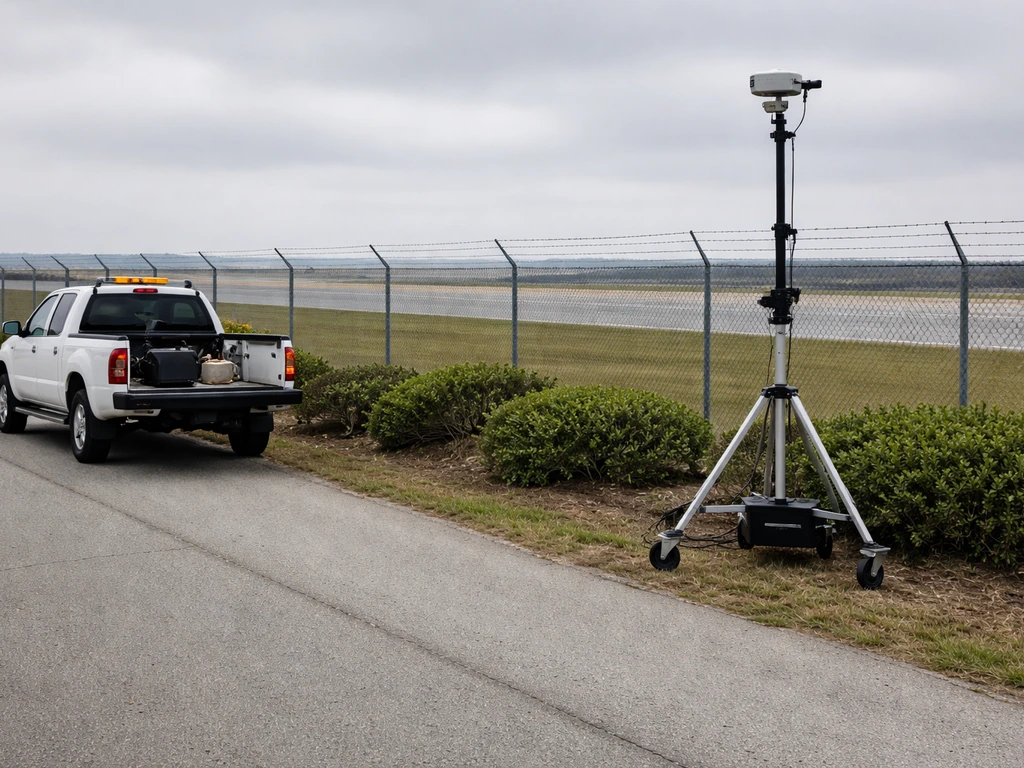
Bird strike mitigation is a formal, regulated discipline. Under 14 CFR § 139.337, large certificated airports in the US are required to have a Wildlife Hazard Management Plan (WHMP). These plans are not just paperwork; they drive real operational changes.
The core idea behind wildlife hazard management is habitat control. Birds come to airports because airports offer food, water, and open space. Remove those attractants and the birds mostly go elsewhere. Practical measures include draining standing water, managing grass height to eliminate rodent habitat, removing berry-producing vegetation, and restricting access to food waste. The FAA's Wildlife Hazard Management at Airports manual lays out this framework in detail.
Active dispersal methods are used when habitat control is not enough. These include propane cannons, distress call playback systems, trained raptors (falconry), laser deterrents, and in some cases lethal removal of wildlife under USDA Wildlife Services authorization. Major airports like O'Hare and JFK have dedicated wildlife biologists on staff.
Pilots have their own mitigation tools. FAA guidance in the Aeronautical Information Manual advises pilots to climb when they encounter a flock en route, because lead birds in a flock tend to be the highest, and the flock generally disperses downward. Pilots are also advised to avoid overflight of known bird concentration areas and to reduce speed when bird activity is reported on approach.
Reporting is the backbone of the whole system. The FAA and USDA co-administer the National Wildlife Strike Database (NWSD), established in 1994. Pilots, airport staff, and airlines report strikes using FAA Form 5200-7. That database, now covering more than 319,000 strikes over 35 years, is how researchers identify dangerous species, high-risk airports, and seasonal patterns. Better data leads to better mitigation.
What you can do if you spot birds near a flight path
If you live near an airport or regularly see large concentrations of birds near flight paths, there are practical steps you can take.
- Report large bird concentrations to the airport. Most airports have a wildlife or operations contact. If you see a flock of geese roosting on or near the runway perimeter, a call to the airport's operations desk is genuinely useful.
- If you witness a bird strike on an aircraft, report it. You can submit a report through the FAA's Wildlife Strike Reporting page using Form 5200-7. Civilian reports are accepted and add to the database.
- If you own land near an airport, work with the airport on habitat. Airports are often willing to collaborate with neighboring landowners to reduce bird-attracting features like ponds or tall grass.
- If you are a pilot, check NOTAMs and ATIS before flying, particularly during migration season (spring and fall). Wildlife hazard advisories are sometimes included. File a strike report after any bird impact, even if no damage is apparent.
- Do not attempt to use your own dispersal methods near an airport without coordinating with airport operations. Uncoordinated deterrents can push flocks toward active runways rather than away from them.
Myths worth clearing up
A lot of fear around this topic comes from misconceptions that overstate or understate the risk. Here are the most common ones.
Myth: One bird can bring down any plane
A single small bird (a starling, a sparrow) hitting a large commercial jet is almost never dangerous. The engines on modern airliners are certified to ingest birds up to a certain size without catastrophic failure. It is flocks of large birds, particularly geese or pelicans, or multiple simultaneous ingestions that create real risk. The question of whether a single bird can crash a plane depends entirely on the bird's size, what part of the aircraft it hits, and the aircraft type.
Myth: Jet engines are more vulnerable than propeller engines
This is backwards for large aircraft. Turbofan engines on airliners are engineered with bird ingestion certification standards that piston engines on small planes are not subject to in the same way. A bird that stops a small piston engine or shatters a prop can be fatal on a single-engine light aircraft in a way that the same bird hitting a 737 engine simply is not.
Myth: Bird strikes are getting worse because of more birds
Reported strikes have increased over the decades, but that reflects better reporting systems and more flights rather than a surge in dangerous incidents. The rate of strikes causing actual damage has dropped significantly, from 6% in 1996 to 3.7% in 2024. The system is getting better at managing risk even as traffic grows.
Myth: Birds avoid airports on their own
Airports are actually attractive habitat for many bird species. Mowed grass fields look like prime foraging grounds. Drainage ponds attract waterfowl. Open perimeter areas attract raptors hunting rodents. Birds do not self-select away from runways, which is exactly why wildlife management programs exist.
Myth: If a bird strike happens, the pilots always know immediately
Sometimes strikes are detected only during post-flight inspection. A hit to the radome or landing gear at low speed may produce a thump but no obvious instrument indication. This is one reason post-flight visual inspections matter and why reporting even suspected strikes is encouraged, even if the aircraft seemed fine.
The bottom line on risk
Bird strikes are a real, well-documented hazard that aviation takes seriously. They can cause crashes under specific conditions, and those conditions are understood well enough that the industry has built layers of protection around them: engineered aircraft, certified windshields, wildlife management programs, pilot training, and a global reporting database. The risk is not zero, but it is managed, quantified, and declining as a proportion of all strikes. For most passengers on most flights, a bird strike means a loud noise and a post-flight inspection, not a catastrophe.
FAQ
Can a single bird ever cause a crash, especially if it hits an engine?
Yes, but it depends on bird size and aircraft configuration. A single ingestion is usually manageable on modern multi-engine airliners because certification and engine containment design reduce the chance of catastrophic debris, while on small single-engine aircraft a severe ingestion can stop the engine or damage the prop, leaving little time to respond during takeoff or landing.
If there is a bird strike on takeoff, what actions typically matter most?
The biggest driver is whether the crew believes thrust is available and controllable. In many aircraft procedures, the priority is confirming engine indications, setting power as required, and maintaining pitch and runway alignment, because reaction time near the ground is extremely limited. Even when the aircraft seems controllable, operators often require a post-flight technical inspection if the strike could have affected engines, prop, or control surfaces.
Why do bird strikes seem more common during landing and approach than cruising?
Because the flight profile overlaps where birds are most active and where margins are tight. Data-heavy phases like descent, approach, and landing roll place aircraft at lower altitudes and lower speeds near airports, and the aircraft is close to the ground with less time to diagnose and recover from engine or control problems.
Can a bird strike damage the plane without any warning lights or obvious cockpit cues?
Yes. Some impacts, such as hits to the radome, leading edges, or landing gear, can produce sounds or minor vibration but no immediate instrument alerts. That is why inspections after the flight, including looking for engine and prop evidence, cracks on fairings, and condition of control surfaces, are so important even if the aircraft appeared normal.
Do modern aircraft handle bird strikes the same way across airlines and aircraft models?
No. Certification standards differ by aircraft size and design, for example, windshield and engine certification on large airliners are more specific, while many general aviation aircraft lack equivalent windshield design requirements. The same bird can be a minor event on one model and a major hazard on another, especially if the aircraft is single-engine.
What about windshields and glass, does it always mean the strike was dangerous?
Not always. A cracked outer layer or localized damage may not threaten immediate structural integrity, but it can impair visibility and create follow-on issues if other components, seals, or de-icing systems are affected. Crews and maintenance teams typically treat any windshield damage as a reason to assess the extent and ensure it meets airworthiness requirements.
How do pilots decide whether to continue the flight after a bird strike?
The decision is aircraft- and situation-dependent, but it usually hinges on observed damage and engine performance. If there is suspected engine ingestion, unusual thrust changes, abnormal vibrations, or any indication of control surface impact, the aircraft is generally treated as requiring closer inspection, and operators may choose to divert rather than continue normally.
Is the risk higher on nights and during migration seasons even for scheduled commercial flights?
Often, yes. Night migration increases the likelihood of encountering nocturnal species that are harder to see and harder for onboard systems to detect, and migration corridors can overlap busy airport airspace. That does not mean the flight is likely to have a major event, but it increases the chance of a strike occurring and therefore raises the importance of follow-on inspection and reporting.
Should passengers report a bird strike they notice, or is the flight crew and airport enough?
The flight crew and airport reporting is primary, since they have aircraft condition information and can use the formal strike reporting channels. Passengers can still be helpful by reporting timing, location (window seat helps), number of birds, and what they observed to the crew or airline, which can narrow down where on the aircraft to inspect.
Next Article
Can a Bird Crash a Plane? Risks and What to Do
Can a bird crash a plane? Learn how bird strikes happen, real risk levels, and what to do if one occurs.