
A terror bird almost certainly could have killed a human, based on everything we know about their anatomy. The problem is that the question is entirely hypothetical: terror birds went extinct long before modern humans existed, so there was never a real encounter to study. If you're trying to figure out whether terror birds pose any danger today, the answer is a flat no. They're gone. But if you want to understand what they were, how dangerous they really were based on fossil evidence, and how that compares to large birds alive right now, that's worth digging into.
Would a Terror Bird Kill a Human? Evidence Explained

Maya Chen
25 Apr 2026
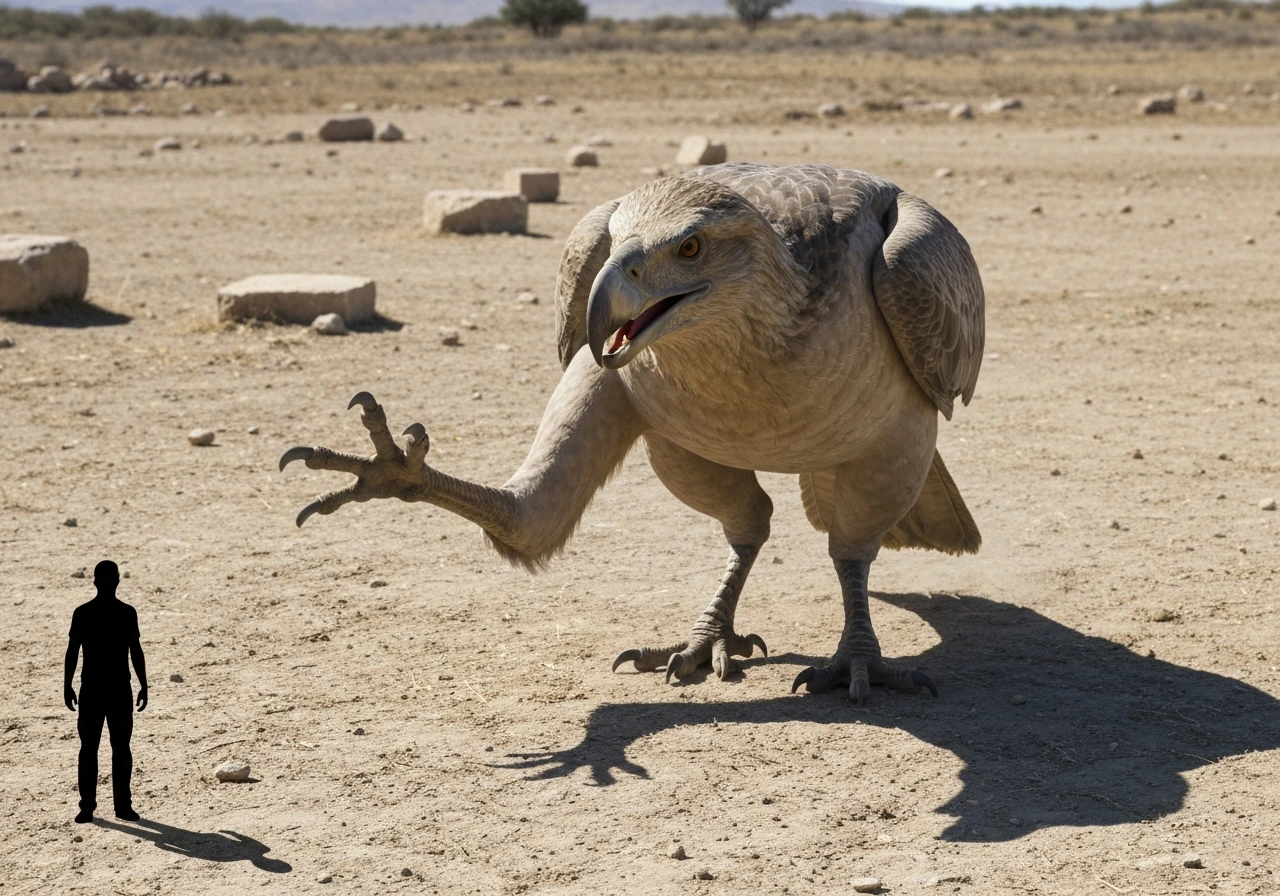
What a terror bird actually was (and when it lived)
Terror birds belong to the family Phorusrhacidae, a clade of large to giant flightless carnivorous birds that dominated parts of South America for most of the Cenozoic era. They were apex predators in ecosystems where large mammalian carnivores hadn't yet taken over, and they were extraordinarily successful across tens of millions of years. Fossil evidence places them across South America primarily, but also in North America during the Plio-Pleistocene, and there are even Eocene-era finds from Europe and Africa, suggesting the group spread widely at various points in their history.
The most famous North American species, Titanis walleri, was once thought to be a candidate for human overlap, which is part of why the "would they kill a human" question keeps circulating. But rare earth element dating of Titanis fossils from the Santa Fe River in Florida places its extinction at roughly 1. Florida Museum explains that rare-earth-element analysis of a Titanis bone from Texas dates it to about 5 million years old, refining Titanis timing rare earth element dating of Titanis fossils. 8 million years ago, well before humans arrived in North America. The last definitive phorusrhacids globally are late Pleistocene in age, but even those predate human presence in the relevant regions. There was simply no overlap.
Can terror birds even interact with humans? The extinction problem
No living terror birds exist. The entire Phorusrhacidae family is extinct, and no credible fossil or genetic evidence suggests any lineage survived into historical times. When people ask whether a terror bird would kill a human, they're really asking a thought experiment about a creature that has been gone for at least hundreds of thousands of years. There's no zoonotic disease risk, no chance of encountering one in the wild, and no population anywhere in the world.
This matters because a lot of online content about terror birds leans into framing them as some kind of latent threat or blurs the line between prehistoric predators and modern bird dangers. If you're on a bird-safety site trying to figure out your actual risk from birds, terror birds contribute zero risk. What does contribute real risk is a much shorter list of living species, which we'll get to.
Their anatomy: beak, claws, size, and speed
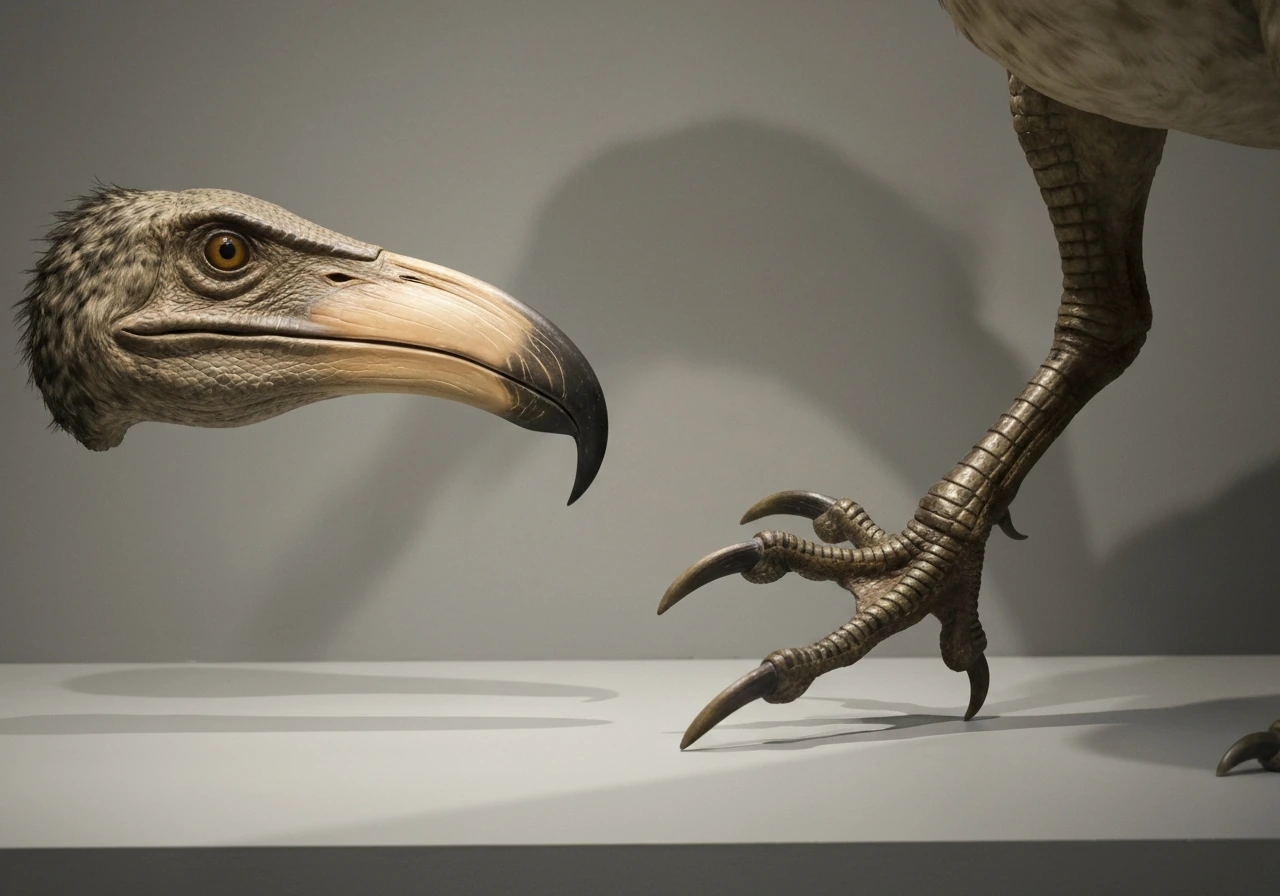
Based on the fossil record, terror birds ranged from roughly 1 to 2 meters tall depending on species. Some of the giant taxa exceeded 100 kg in body mass. The skull and beak are what most researchers focus on: phorusrhacids had massive, strongly hooked beaks with a rostrum-like upper mandible, similar in some ways to an eagle's beak but scaled up dramatically.
A landmark biomechanics study using CT scanning and finite element analysis on Andalgalornis steulleti estimated a bite force of around 133 N at the bill tip. That sounds modest until you consider how they likely used it. The skull mechanics point to a rigid, hatchet-like downward strike rather than the side-to-side jaw-shaking you'd see in a crocodilian. The rigid skull was optimized for rapid, high-force vertical jabs, essentially driving the hooked beak into prey like a weapon. Paired with a flexible neck (documented in separate modeling work on phorusrhacid neck anatomy), this would have been an extremely effective killing mechanism.
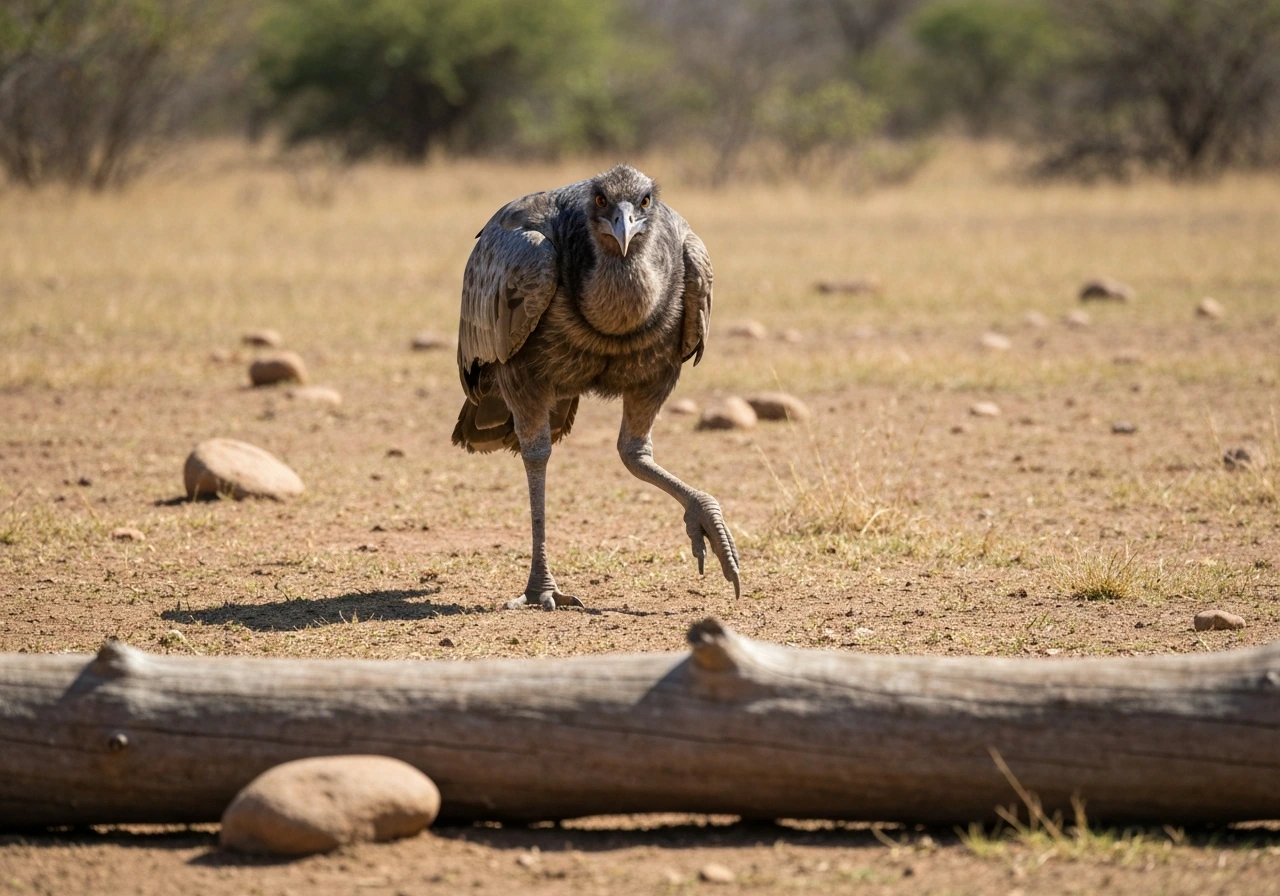
Speed is another factor. Biomechanical modeling of phorusrhacid running performance treats the group as capable of high-speed pursuit, consistent with a cursorial predator strategy. Exact speed estimates vary depending on which body mass you plug in, but the structural adaptations (long, powerful legs) clearly support fast straight-line running. A human on foot would not outrun a large phorusrhacid.
As for claws, fossil trackway evidence from Argentina (footprints described in 2023) shows clawed feet consistent with a predatory lifestyle. These weren't the enormous raking talons of a raptor, but the combination of speed, beak strike force, and body mass would have made a direct attack by one of the larger species potentially lethal to a human-sized animal.
How terror birds compare to modern large birds
Comparing terror birds to living species helps put their danger in context, though no modern bird maps perfectly onto them. The most useful comparisons are cassowaries and ostriches, both of which are large, flightless, and capable of inflicting serious injuries on humans. Can a secretary bird kill a human? The short answer is that these birds can seriously injure people, but fatalities are not common serious injuries on humans.
| Feature | Terror bird (Phorusrhacidae) | Cassowary | Ostrich |
|---|---|---|---|
| Height | 1–2 meters (species-dependent) | Up to ~1.8 meters | Up to ~2.7 meters |
| Weight | Up to ~100+ kg (largest species) | Up to ~85 kg | Up to ~145 kg |
| Primary weapon | Hooked beak, hatchet-strike | Dagger-like inner toe claw | Powerful kick (no claw weapon) |
| Running speed | High (biomechanically modeled) | Up to ~50 km/h | Up to ~70 km/h |
| Known human fatalities | None (never coexisted with humans) | Yes (first documented 1926) | Rare but documented |
| Alive today | No — extinct | Yes | Yes |
The cassowary comparison is the most instructive. Cassowaries are documented in the Journal of Zoology and elsewhere as capable of causing fatal injuries, primarily via leaping kicks that drive their inner toe claw into a person. The first documented human death occurred in 1926. Terror birds, by analogy, had a more beak-forward attack style rather than a kick-based one, but the scale and speed were comparable or greater in the largest species. The cassowary gives you a useful real-world anchor for what a large, fast, aggressive flightless bird can actually do to a human body.
Large raptors like eagles and great horned owls also cause injuries, but their attacks are usually brief and defensive rather than predatory toward humans. The terror bird's predatory anatomy puts it in a different functional category, closer to the cassowary end of the spectrum than the raptor end.
Myths and misinformation worth clearing up
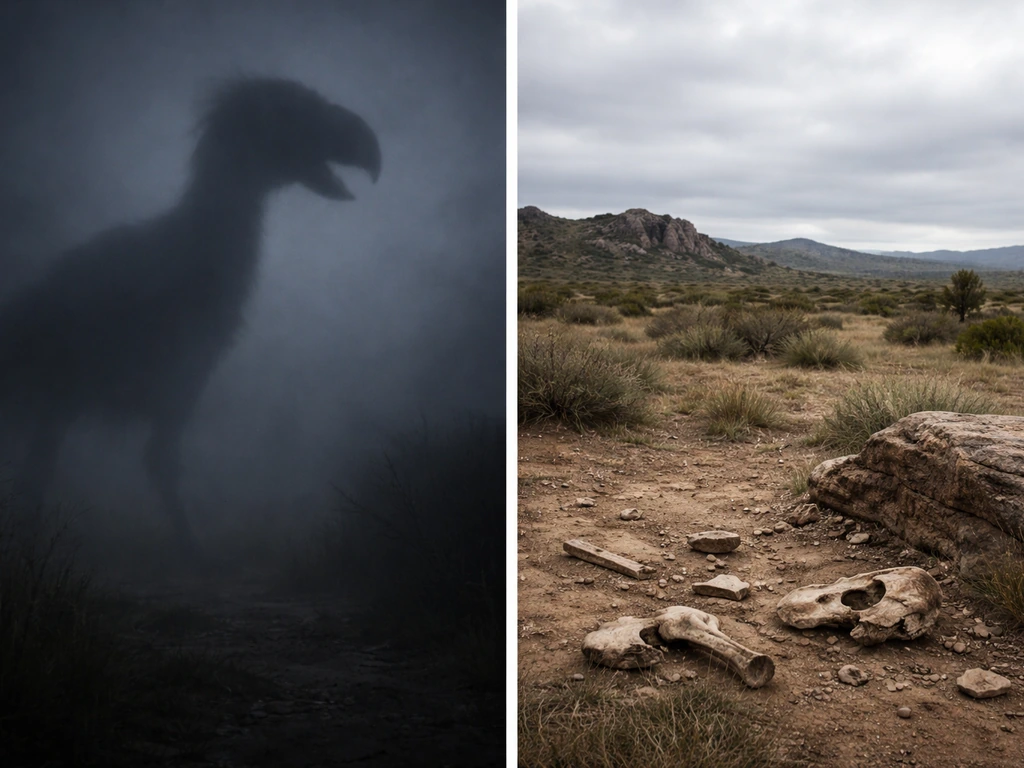
- "Terror birds could still exist somewhere" — No credible evidence supports this. The fossil record shows a clear extinction timeline, with Titanis gone by at least 1.8 million years ago and no confirmed later survivors anywhere.
- "Titanis walleri overlapped with early humans in Florida" — This was a hypothesis that circulated for years, but rare earth element dating of the fossils definitively places Titanis in the early Pleistocene, not the late Pleistocene when humans were present in the Americas.
- "Terror birds were basically feathered T. rexes" — Overblown. They were formidable predators, but they were birds with bird-scale anatomy. Their bite force (modeled at ~133 N) was not in the same universe as large theropod dinosaurs.
- "Their claws were their main killing tool" — The biomechanical evidence points primarily to the beak and skull as the killing instruments, not the feet. The hatchet-strike model is supported by finite element analysis of the skull.
- "Modern birds are basically miniature terror birds" — No modern bird lineage is directly descended from Phorusrhacidae. The family died out without leaving close living relatives.
- "Terror birds were slow because they were big" — Structural modeling suggests the opposite: their leg anatomy supported fast running, not lumbering movement.
What to actually do about dangerous birds today
Since terror birds are extinct, any practical safety concern has to shift to living species. The real-world risks from birds fall into two categories: physical attack and disease transmission. Physical attack risk is low overall but real for a handful of species.
Avoiding physical injury from large or territorial birds
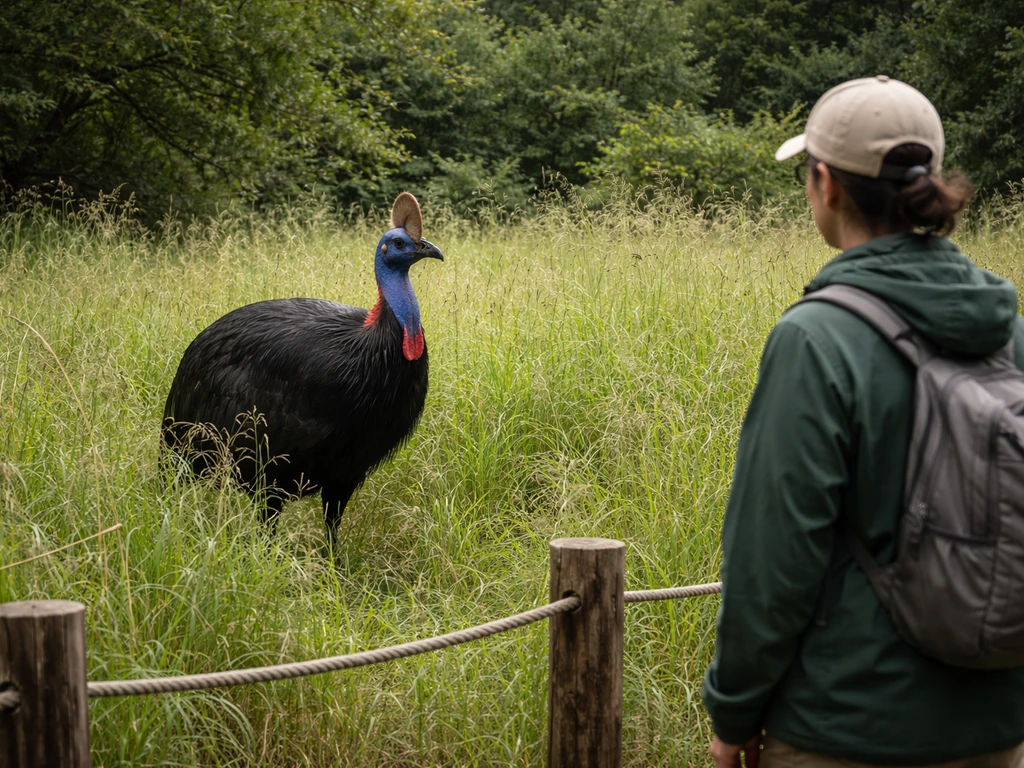
- Give large flightless birds (cassowaries, ostriches, emus) serious space. Treat them like you'd treat any large animal: don't approach, don't feed, don't corner them. Cassowary attacks documented in Queensland often involved people feeding or closely approaching the birds.
- During nesting season (roughly late April through July for most North American species), birds become significantly more territorial. State wildlife agencies and the NYSDEC recommend avoiding nest disturbance entirely during these windows, and federal law under the Migratory Bird Treaty Act protects most wild birds and their nests.
- If a large raptor (eagle, great horned owl) acts defensively near a nest, back away and give it distance. The U.S. Bureau of Land Management recommends maintaining safe viewing distances and notes that biologists identify active nesting sites to keep people informed during the season.
- If you find an injured bird of prey and want to help, contact a licensed wildlife rehabilitator rather than handling it yourself. The American Eagle Foundation specifically warns against rescue attempts that put the helper at injury risk, and notes that harming raptors is a federal offense.
- Never try to chase, catch, or scare off a large defensive bird by rushing at it. This almost always escalates the situation.
Reducing disease risk from birds
Physical attacks get more attention, but disease is a more common real-world risk for people who spend time around birds. The CDC recommends basic hygiene practices: wash hands after handling birds or cleaning cages, avoid touching your face around birds, and don't handle sick or dead wild birds without gloves. For most people in typical settings, the CDC assesses avian influenza risk as low, but close or repeated contact with infected poultry or wild birds changes that calculus.
If you're assessing bird-related risk more broadly, the question of what birds can actually do to humans is worth putting in perspective. For living birds, the broader question of can a bird kill a human depends on species, behavior, and context.
Topics like how many documented bird-attack fatalities have occurred, whether specific species like the cassowary or secretary bird pose genuine danger, and whether bird-borne diseases represent a significant public health risk are all separate threads that connect to this same general concern. Whether a secretary bird can kill a python is a separate, specific question about hunting behavior and prey size.
If you are also wondering whether a secretary bird can kill a human, the answer depends on the bird's behavior and opportunity for a defensive strike secretary bird can kill a python. People sometimes ask which bird has killed the most humans, but the answer depends on how fatalities are counted and which species you include how many documented bird-attack fatalities have occurred.
If you want the specific number behind those documented bird-attack fatalities, that’s where estimates of how many people have died from bird attacks come in how many documented bird-attack fatalities have occurred. The answer in almost every case is that the risk is real but manageable with basic awareness and distance.
The bottom line on terror birds and human danger
Based on everything the fossil record tells us, a large terror bird would have been genuinely dangerous to a human-sized animal. The anatomy supports a fast, powerful, beak-driven predator capable of lethal strikes. In a direct encounter, a large phorusrhacid like Titanis or Kelenken would have had the size, speed, and weaponry to kill a person. But that encounter never happened and never will.
They're extinct, the timelines don't overlap, and no living population exists anywhere. The question is a fascinating thought experiment backed by real paleontology, but it carries zero practical safety implications for anyone alive today. If you're wondering about a kiwi bird instead, it can be dangerous in rare defensive situations, so it's worth understanding how kiwi behavior affects human risk.
FAQ
If a terror bird could kill a human, why isn’t the risk relevant today?
Because there are no living terror birds, and the known fossil record indicates they went extinct long before humans were present in the regions where they lived. That means there is no real-world chance of an encounter, so “risk” in a safety sense is effectively zero.
Did any terror bird species live at the same time as early humans anywhere?
There is no evidence for overlap between humans and phorusrhacids. The well-known North American timeline example places Titanis extinction around 1.8 million years ago, which is earlier than human arrival in North America.
Could a smaller terror bird still kill a human, or is it only the biggest species that mattered?
Smaller species could still seriously injure a person, but the likelihood of killing would be much lower than for the largest phorusrhacids. The article’s strongest “lethal encounter” argument depends on body mass, speed, and the force of beak strikes, which scale up in the giant taxa.
Would a terror bird have attacked humans intentionally, like hunting prey, or would it be more of a defensive threat?
Based on the described predatory anatomy and modeled hunting mechanics, the likely interaction would have resembled predator-prey behavior rather than casual defense. Still, because there is no direct evidence of how they responded to human-sized primates, “intent” can’t be confirmed, only inferred from functional traits.
How does their hunting method compare to cassowaries and other birds in terms of injury likelihood?
The closest modern anchor is cassowaries because of the combination of flightless body plan, speed, and capacity for severe injury. Terror birds appear more beak-forward with vertical jabs, so the injury pattern would differ, but the overall potential for lethal trauma in close range is comparable for large individuals.
If the goal is modern safety, what should I focus on instead of terror birds?
Focus on living species that can physically injure people (for example, large flightless birds) and on disease hygiene. The article emphasizes that disease transmission risk is usually low for most people, but it increases with close or repeated contact with potentially infected poultry or wild birds.
Are bird-borne diseases something people should worry about even if they never handle birds?
Yes, but the practical level of concern depends on exposure. For most people in typical settings, risk is assessed as low, yet people who clean cages, handle wild birds, or work around poultry should use basic hygiene (hand washing, avoid touching your face) and avoid handling sick or dead birds without protection.
Could terror birds spread disease to humans if they were extinct?
No in any practical sense. The article treats them as posing no zoonotic disease risk because there is no living population to transmit anything, so disease prevention measures apply to living birds only.
Does their presence in the fossil record mean they were common and likely to encounter humans frequently?
Not necessarily. Fossil distribution shows where they lived, but it does not tell you interaction frequency with humans, especially since there was no overlap with humans. Even for living birds, encounter risk depends heavily on behavior and habitat overlap, not just size or anatomy.