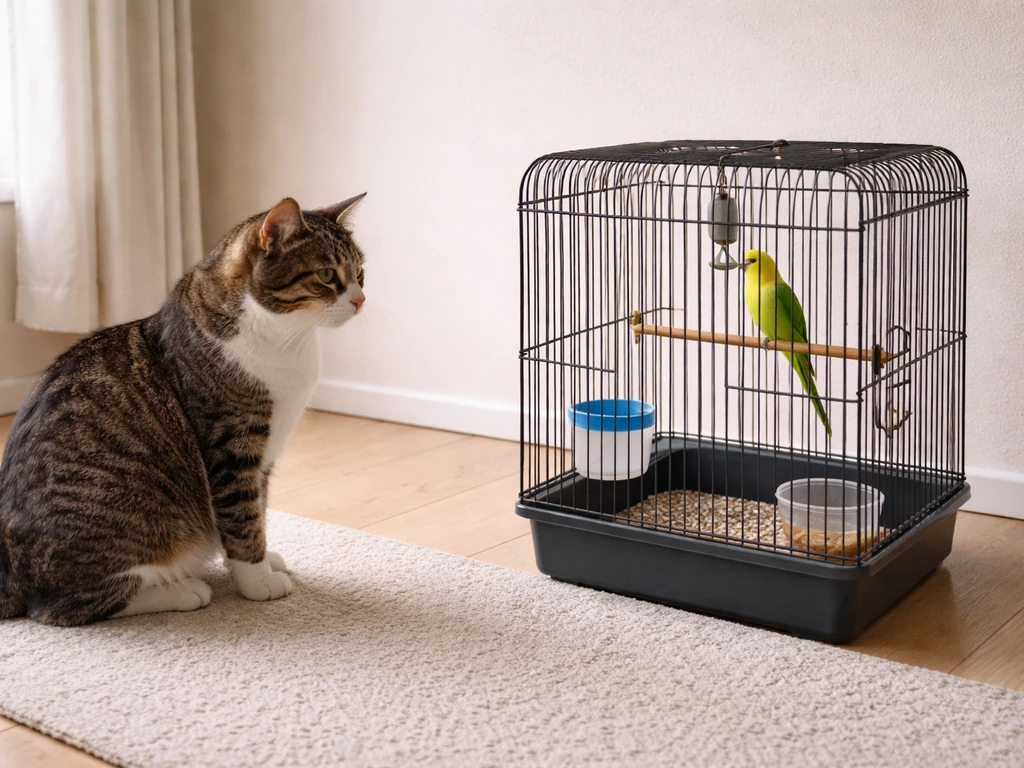
Yes, a night fright can kill a bird. It doesn't happen every time, but the combination of collision trauma, exhaustion, and acute stress response creates real, documented pathways to serious injury or death. That same fear and collision stress can explain how a cat can end up killing a bird after it startles and panics how does a cat kill a bird. The good news is that if you act quickly and correctly in the first hour, most birds have a solid chance of recovering.
Can Night Fright Kill a Bird? Risks and What to Do

Maya Chen
26 Apr 2026
What a night fright actually is
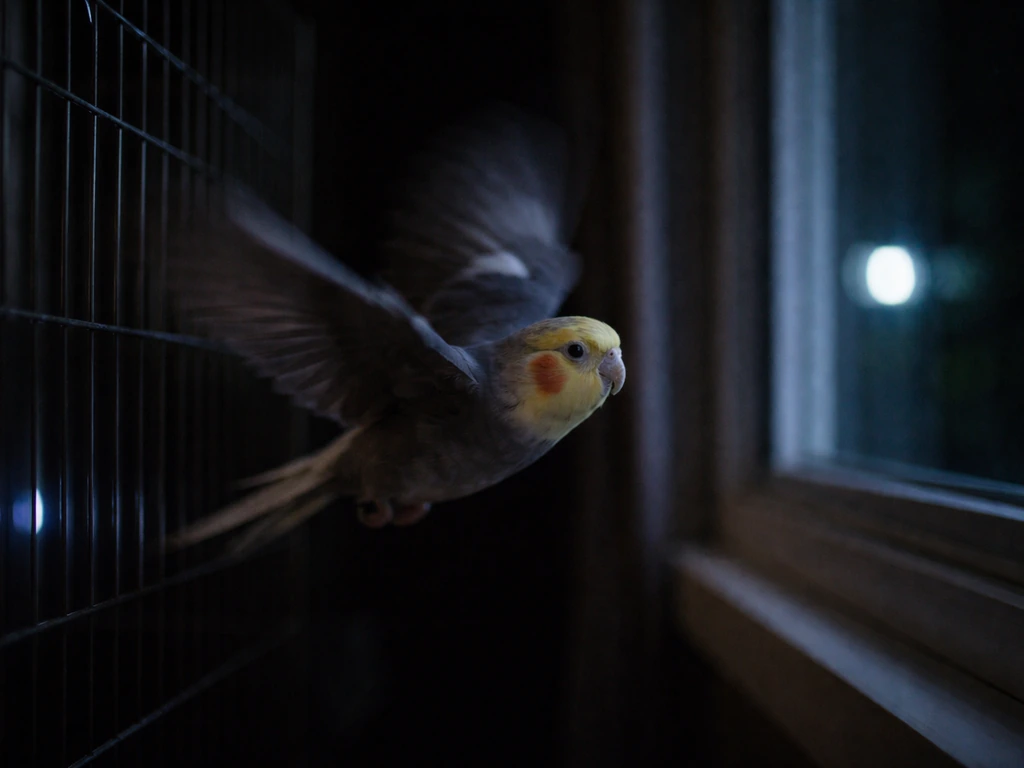
A night fright is a sudden, explosive panic episode where a bird launches into frantic, disoriented flight in low-light or nighttime conditions. It's most common in pet birds like cockatiels, budgies, and parrots, but wild birds can also experience it when they're startled near windows, outdoor lighting, or inside buildings they've entered by accident.
Common triggers include a flash of light (car headlights, a phone screen, a motion-sensor light), a sudden loud noise, the silhouette of a predator (real or perceived), a reflection in glass, or even another bird thrashing in the cage. For wild birds, artificial lighting at night is a well-known disorienting force that causes them to collide with structures. For pet birds, anything that breaks the dark silence of a sleeping room can set one off.
The bird doesn't choose to do this. It's a hardwired prey-animal fear response. Once triggered, the bird has essentially no ability to override it. That's what makes the situation dangerous.
How a night fright can actually kill a bird
There are several distinct mechanisms, and understanding them helps you know which warning signs to take seriously.
Collision trauma
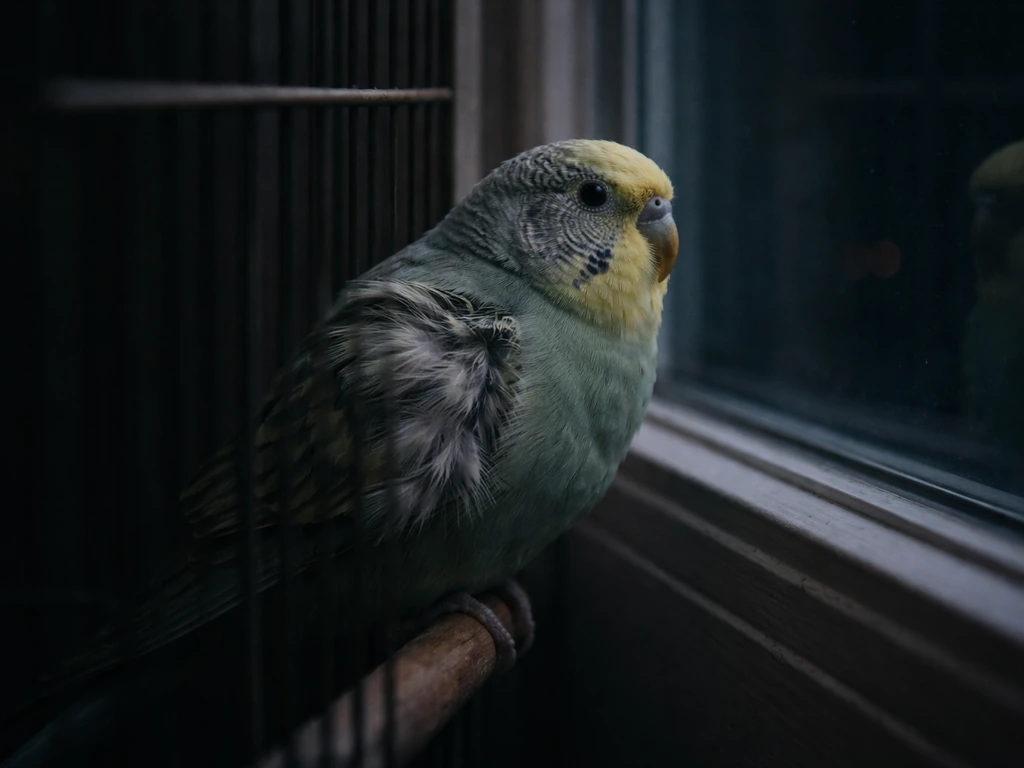
This is the most immediate physical danger. A bird in full panic hits walls, cage bars, windows, furniture, and ceiling fans. Window strikes in particular are far more dangerous than they look. Research shows that birds striking glass can suffer broken bones, head trauma, and spinal injuries even when they appear to fly off afterward. One analysis found that over 17% of window strikes were associated with panic flights specifically. A bird that walks away from a window strike is not necessarily fine. Internal injuries and neurological damage can develop over the next several hours.
Stress-induced physiological collapse
Birds have a very high metabolic rate and a stress response that floods their system with adrenaline quickly. In severe or prolonged frights, this can tip into a state called capture myopathy or acute stress syndrome, where the metabolic cascade itself damages muscle tissue and organs. This is the mechanism behind what people sometimes describe as a bird dying of fright with no visible injuries. It's rare but real, and small birds are more vulnerable than larger ones.
Exhaustion and overheating
Frantic, sustained flight in a confined space burns energy fast and raises body temperature. A bird that thrashes for several minutes without stopping can become severely fatigued. If the room is warm or poorly ventilated, overheating compounds the problem. Exhausted birds are also more likely to be caught by predators if the fright happens outdoors or near an open door.
Secondary predation risk
A disoriented bird on the ground at night is extremely vulnerable. A disoriented bird on the ground at night is extremely vulnerable can a cat kill a bird in a cage. If you are trying to judge survival risk from different dangers, you may also wonder can a bird survive a cat bite in a real-world encounter. This is why keeping cats away from any grounded bird, even briefly, is so important after a night fright. Cats are a significant threat in this scenario. A bird that survives a night fright collision but lands stunned outdoors faces a very different survival calculation than one that stays safely caged or indoors. Even a cat simply staring at a grounded bird causes intense additional stress that can worsen an already compromised animal.
What to do right now: calming and securing the bird
If a night fright just happened, your job in the next few minutes is to stop additional harm, not to diagnose or treat. Here's the order of operations:
- Turn on a dim, indirect light source immediately. A completely dark room lets the bird keep crashing. A very low light lets it see and land.
- Speak quietly and move slowly. Any sudden motion or loud voice will re-trigger the panic response.
- For a caged bird: check that the bird is not tangled in cage bars, toys, or perches. If it is, gently and calmly free it without grabbing or squeezing.
- For a loose or wild bird: do not chase it. Give it a chance to land and settle on its own. Then, once it's still, use a lightweight cloth or small towel to gently cover it from above, which blocks visual stimulation and usually calms a panicking bird quickly.
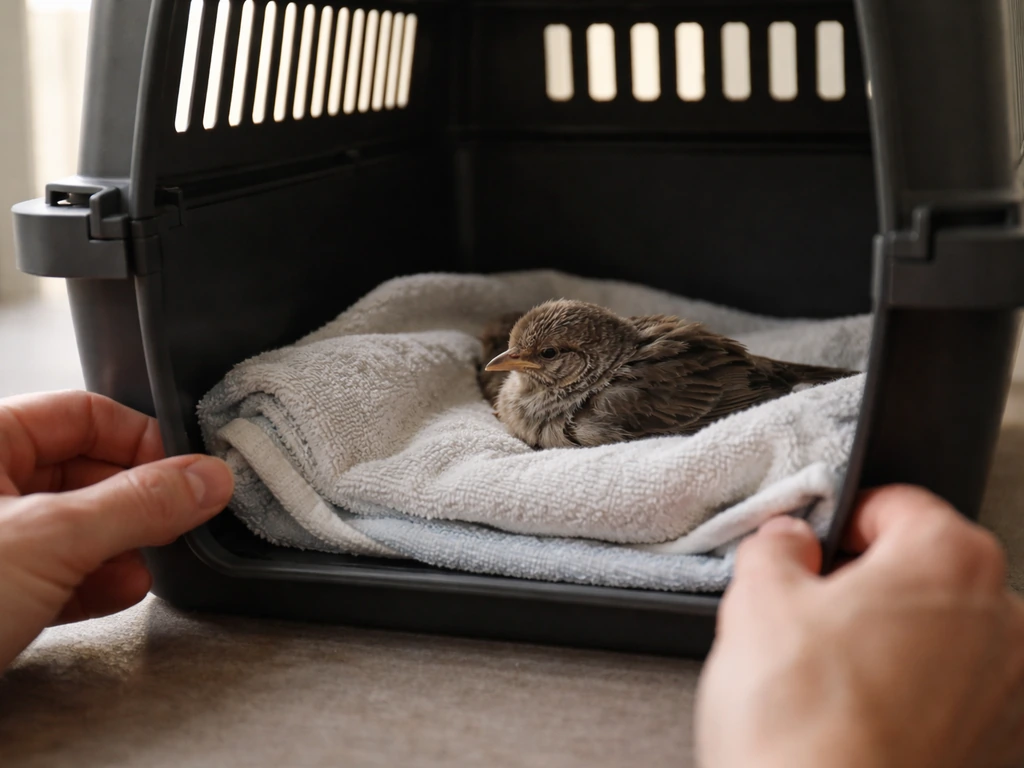
- Place the bird in a small, dark, quiet container (a cardboard box with ventilation holes works well) lined with a soft cloth. Do not use a wire cage during recovery as it can cause further injury.
- Keep the container in a warm room, away from pets, children, and noise. Temperature should be around 75 to 80°F (24 to 27°C). Do not place it in direct sunlight or near a heating vent.
- Do not offer food or water immediately. Wait until the bird is fully calm and standing normally before attempting this.
- Wash your hands before and after handling, and minimize contact overall.
Emergency vs. monitor: how to tell the difference
Not every night fright requires a vet visit, but some absolutely do. Here's how to triage the situation honestly.
| Sign you're seeing | What it means | Action needed |
|---|---|---|
| Labored, open-mouth breathing | Respiratory distress or internal injury | Emergency vet now |
| Active bleeding that doesn't stop | Serious wound or broken blood feather | Emergency vet now |
| Unable to stand or hold head up | Neurological injury or severe shock | Emergency vet now |
| Seizures or uncontrolled twitching | Head trauma or acute stress collapse | Emergency vet now |
| One wing drooping, can't fly | Possible fracture | Vet same day |
| Eyes closed, very still, but breathing normally | Shock or exhaustion, may recover | Monitor closely for 30 to 60 minutes |
| Alert, able to perch, breathing normally | Likely mild fright with no major injury | Monitor for several hours |
| Bird flew off strongly after the event | Possible no serious injury, but not guaranteed | Watch closely for 24 to 48 hours for delayed signs |
Window collision cases deserve special caution. A bird that struck glass hard and is now sitting quietly might look fine while experiencing internal bleeding or neurological damage. If the collision was forceful, treat it as a potential emergency even if the bird appears calm.
Aftercare and what to watch during recovery
If the bird doesn't need immediate emergency care, here's how to manage the recovery period at home.
Keep the bird in its dark, quiet container for at least one to two hours. Resist the urge to check on it constantly. Each time you open the box or turn on a bright light, you risk re-triggering stress. Check once every 20 to 30 minutes by listening, and take a calm visual check only if you hear distressed sounds.
Once the bird is clearly calmer and holding itself upright, you can offer a small amount of water. For pet birds, return them gently to a familiar, secure cage with dim lighting and no loud stimulation for the rest of the night. For wild birds, if they are fully alert and mobile after one to two hours, release them outdoors in a sheltered spot at dawn rather than at night, when predation risk is lower.
Watch for these signs over the next 24 to 48 hours, as delayed symptoms are common after collision or severe stress:
- Continued fluffed feathers and lethargy beyond a few hours
- Loss of appetite that persists more than 12 hours
- Asymmetrical posture, head tilt, or circling behavior
- Labored breathing that develops after the initial event
- Discharge from eyes or nostrils
- Sudden deterioration after seeming to improve
Any of those signs warrant a vet call, even if the bird looked okay at first. This is especially true after a known window strike.
Clearing up the 'sudden death' myth
There's a persistent idea that birds can simply drop dead from fright with no physical cause. The reality is more nuanced. Pure psychological fright very rarely kills a healthy adult bird on its own. When a bird does die after a night fright with no visible injury, the cause is almost always a physiological stress cascade, an underlying health condition that was worsened by the acute stress, or an impact injury that wasn't visible externally. Saying a bird "died of fright" isn't wrong exactly, but it glosses over the specific mechanisms that actually cause death, and that distinction matters for prevention and treatment.
Similarly, a bird flying away after a collision is not proof it survived unharmed. Studies confirm that internal injuries from window strikes can be fatal even when the bird initially appears to recover. If you witness a collision, monitoring matters.
How to stop night frights from happening again

Prevention is genuinely straightforward once you understand what triggers these events. Here's what actually makes a difference:
For pet birds
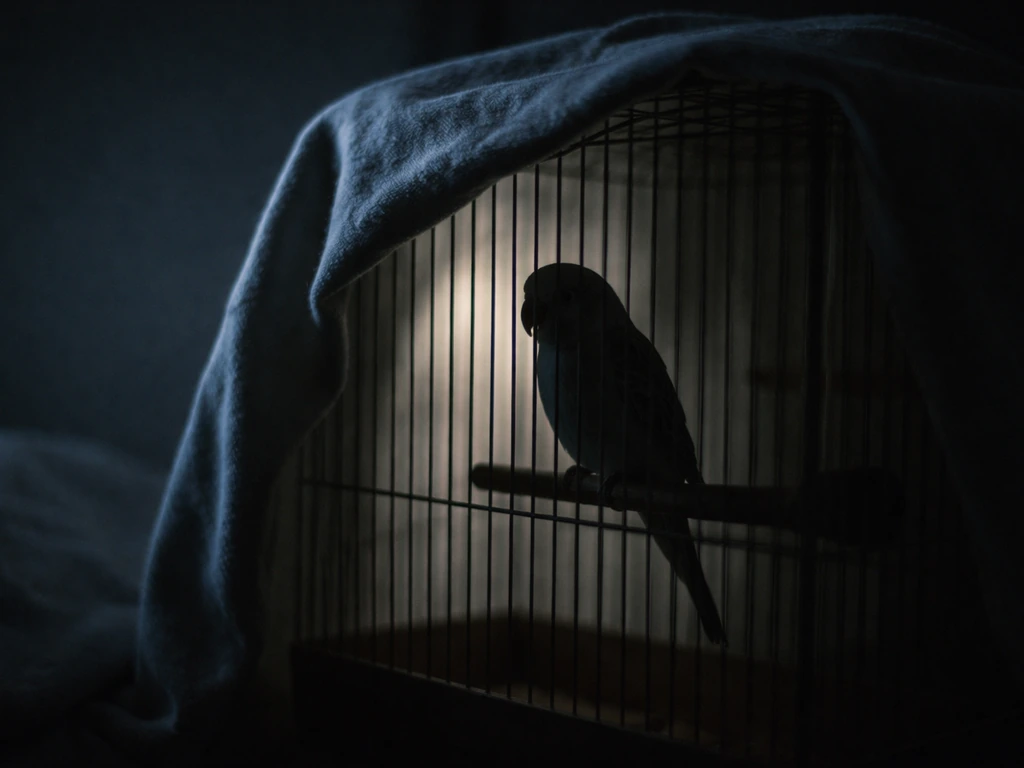
- Use a cage cover: a breathable, opaque cover over the cage at night blocks light flashes and visual predator cues that are the most common trigger.
- Install a small nightlight in the room. A dim, steady light source prevents total darkness, so if the bird startles, it can see where it is and settle faster.
- Manage your own nighttime movement. Car headlights through a window, a phone screen, or walking into the room are all frequent triggers. Place cages away from windows if possible.
- Consider a different room: rooms with fewer traffic patterns and less outside light exposure are better sleeping spots for birds.
- Keep multi-bird households aware: one bird thrashing can trigger a mass panic. Position cages to minimize visual and acoustic contagion between birds.
For wild birds near your home
- Apply window treatments (decals, tape, or exterior screens) to break up reflections. Markers should be spaced no more than 2 inches apart vertically and 4 inches apart horizontally to be effective.
- Turn off or dim outdoor lighting facing windows at night, especially during migration seasons (spring and fall).
- Close blinds and curtains in lit rooms at night to reduce the light-dark contrast that attracts and confuses birds.
- If a bird enters your home, darken the room, open one exit point like a door or window to the outside, and let it find its way out on its own before attempting to handle it.
Night frights are frightening to witness, but most birds that receive calm, prompt care do recover. The key is knowing the difference between a bird that needs time and quiet and one that needs urgent veterinary attention, and acting on that distinction without hesitation.
FAQ
If my bird flew into something and then seems normal, should I still treat it as a possible emergency?
Yes, especially after a window strike or a hard hit. A bird that is quiet can still be dealing with internal bleeding, concussion, or early neurological effects that show up later, so follow the triage logic and monitor closely for 24 to 48 hours.
What signs mean I should call an avian vet immediately rather than waiting overnight?
Use urgency triggers like breathing changes (open-mouth breathing, persistent wheezing), inability to stand or coordinate, repeated head tilting, seizures, blood from the nares or mouth, rapid worsening lethargy, or any clear loss of balance after a collision. If you see any of these, do not continue home observation.
How do I manage a night fright in a household with other pets, like dogs?
Keep all animals separated and controlled, even if they seem calm. Dogs can create stress by barking or staring, and either pet can also accidentally introduce a second hazard if the bird is on the floor or in a recovery container.
Should I offer food right away after the panic episode?
Usually no. First focus on calm and safe recovery, since feeding immediately can be stressful and can worsen aspiration risk if the bird is disoriented. After the bird is upright, calmer, and behaving normally, offer only a small amount appropriate for that species.
Is it safer to let a wild bird rest outside or bring it indoors after a night fright?
If the bird is injured, cooled, or visibly disoriented, indoors is safer until it is fully alert. But avoid extended indoor confinement, and release at dawn into a sheltered spot, since nighttime increases predation and reduces the bird’s ability to orient.
Can turning on lights to check on the bird make things worse?
Yes. Bright light and frequent checking can re-trigger the panic response, which increases collision risk and delays calming. Use low-stimulation checks (listening, minimal dim light) and limit openings of the container.
Does it matter if the bird is a small species like a finch or budgie?
It can. Smaller birds are generally more vulnerable to severe effects from prolonged stress, overheating, and capture myopathy. If a small bird shows even mild neurologic issues or becomes weak, treat it with a lower threshold for urgent veterinary input.
What should I do if the bird is on the floor and I cannot pick it up safely?
Reduce movement first. Dim lights, remove hazards (fans, cats, other pets), and use a quiet container to guide the bird rather than chasing. Chasing can increase exertion and stress, which raises the risk of exhaustion-related decline.
How long should I keep watching after a night fright?
Plan on monitoring for at least 24 to 48 hours. Delayed signs are common after collisions and severe stress, so a bird that looks okay at first can still deteriorate later.
What is the best immediate step to prevent a repeat night fright?
Remove the trigger and stabilize the environment. Cover reflective surfaces if applicable, switch off motion-sensor flashes if safe, eliminate predator cues, and keep the bird in a dark, quiet container so its stress response can shut down.
Next Article
Can a Cat Kill a Bird in a Cage? What to Do Now
Learn if cats can hurt caged birds, why cages fail, and the immediate steps to secure, check, and prevent harm.