
Birds attack cats almost always for one reason: they believe your cat is threatening their nest, eggs, or babies. It's not random aggression, and the bird isn't trying to injure your cat. It's defending something precious and nearby, and your cat walking through the yard triggered a hard-wired alarm response. Once you understand what's driving it, the fix becomes a lot more obvious.
Why Would a Bird Attack a Cat? What to Do Now

Maya Chen
17 May 2026
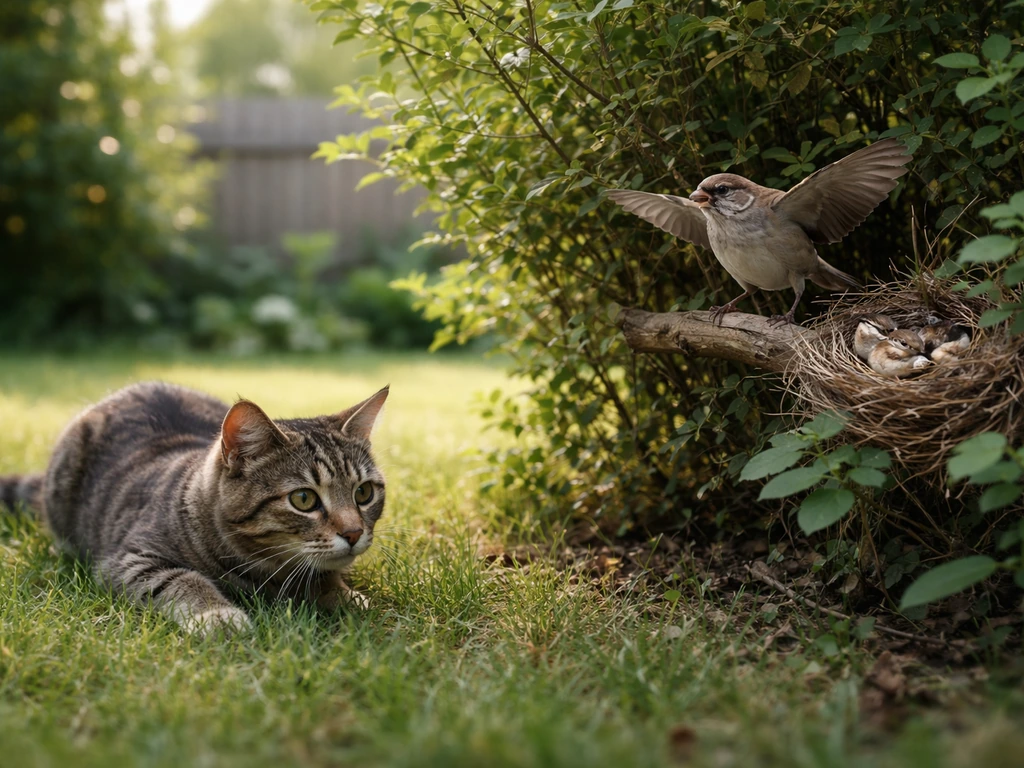
Common scenarios: when birds target cats
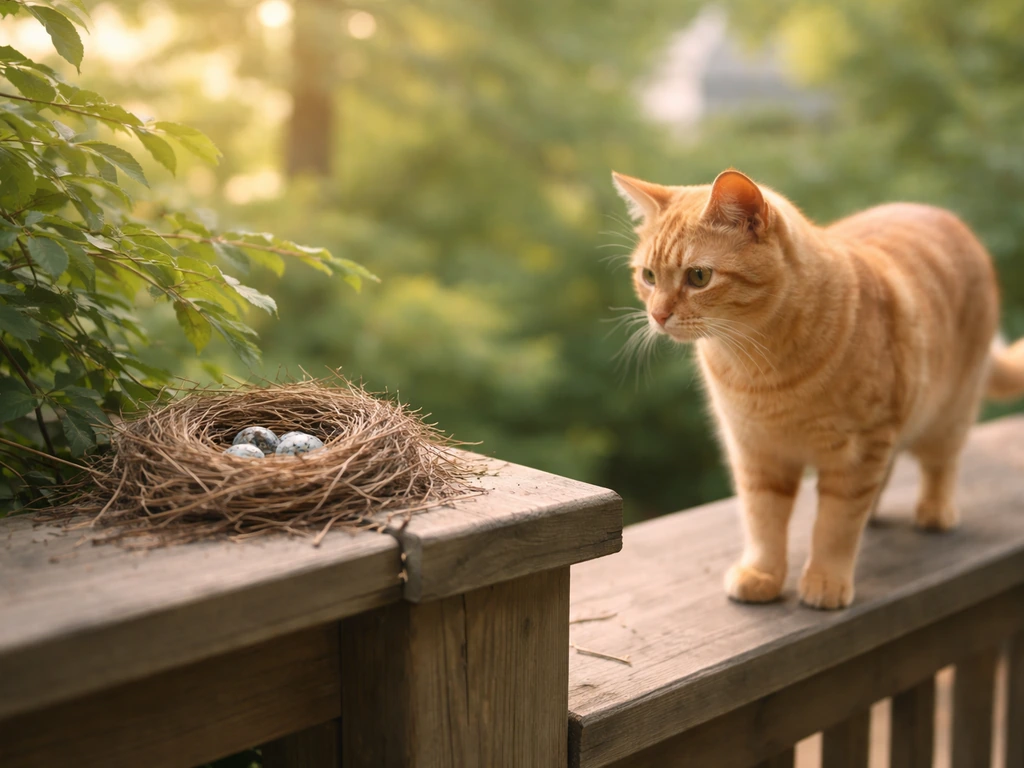
Most bird-on-cat incidents happen in spring and early summer, which is peak nesting season. That's when birds are most territorial, most vigilant, and most willing to take on something much bigger than themselves. If you want to know what bird attacks cats most often, start by looking for local species that nest nearby. If your cat has been going outside without incident for years and suddenly gets dive-bombed, the calendar is likely the explanation: a bird moved in nearby, and the rules changed.
Here are the situations that come up most often:
- Your cat walks through the yard and a bird starts dive-bombing from above, sometimes repeatedly.
- Multiple birds show up suddenly, all harassing your cat at once (this is called mobbing).
- A bird follows your cat along a fence line or path, calling loudly and swooping close.
- The attacks happen consistently in one part of the yard but not others.
- The behavior started recently, even though your cat has been an outdoor cat for a long time.
The location consistency is a big clue. If attacks keep happening in the same spot, there's almost certainly a nest within 20 to 30 feet of that area. Birds protect a zone around their nest, not just the nest itself. Your cat doesn't have to be at the nest to trigger a response.
Also worth knowing: some birds have more than one brood per season. That means if you sorted things out in May, defensive behavior can start up again mid-summer when the second clutch arrives. It's not a new problem; it's the same bird, restarting the cycle.
Real reasons birds attack: nest defense, territory, and mistaken threat
The core motivation is almost always nest or young defense. When a cat gets close to a nest, the parent bird's threat response kicks in. This can look like an attack, but it's actually a defensive escalation: alarm calls first, then mobbing, then physical dive-bombing if the threat doesn't leave. It's a spectrum, and your cat wandering around in the territory keeps pushing the bird further up that spectrum.
Mobbing is worth understanding on its own. It's when a bird calls out and neighboring birds arrive quickly to join in harassing the threat. You can go from one bird to five or six in under a minute. Species known for this include chickadees, titmice, blue jays, crows, grackles, blackbirds, and kingbirds. Mockingbirds are notorious for it. The birds aren't coordinating like a team; they're each responding to an alarm call because removing a predator from the area benefits everyone nearby.
Territory defense is the other driver. Even outside of active nesting, birds defend home ranges, especially during breeding season. A cat that regularly patrols through a bird's claimed area can trigger repeated harassment, even if there's no visible nest yet. The bird is essentially trying to establish that this spot is off-limits.
One thing to correct right away: the bird isn't trying to hurt your cat. It wants your cat to leave. The goal of every dive-bomb, swoop, and loud call is to make the perceived predator uncomfortable enough to go somewhere else. If your cat leaves the area and the bird calms down within minutes, that confirms it. The bird wasn't angry at your cat personally; it was responding to a threat category, and your cat fit the profile. This is the same kind of instinct question as why would a bird chase a squirrel: it is driven by territorial or defensive behavior, not cruelty.
What to do right now: immediate safety steps
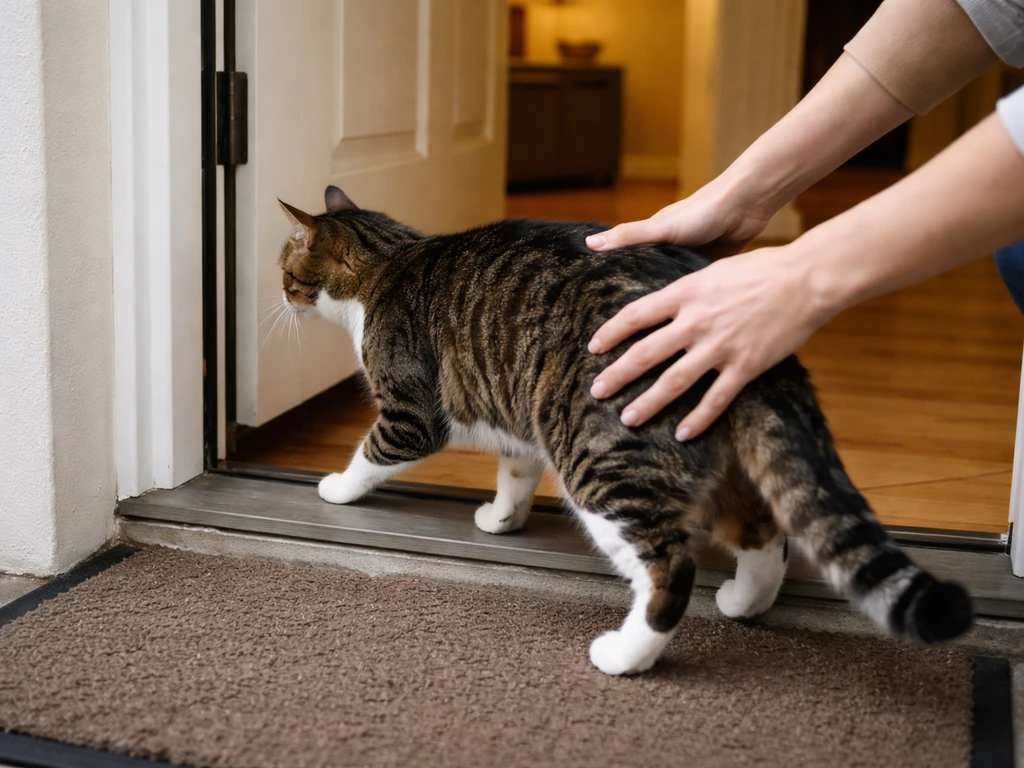
Step 1: Get your cat out of the area
Bring your cat inside immediately. Don't wait to see if the bird calms down on its own while your cat is still in range. The bird won't stop while your cat is still there. Once your cat is inside, the bird will typically stand down within a few minutes. That's not a coincidence; that's the defense behavior doing exactly what it's designed to do.
Step 2: Check your cat for injuries
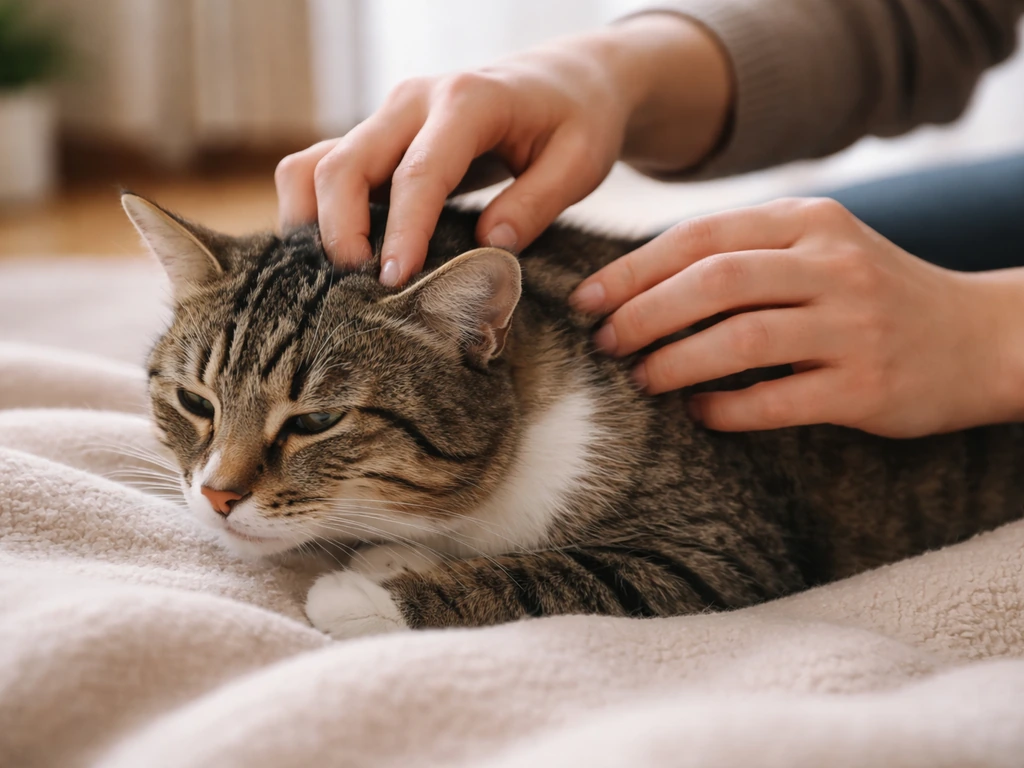
Most bird attacks on cats don't cause serious wounds, but check carefully anyway, especially around the head, neck, and back where a bird might make contact during a dive. Part the fur and look for any punctures, scratches, or bleeding. If the skin is broken, clean the wound with soap and water, then apply antiseptic. Even a small puncture wound in a cat can become infected quickly and may need veterinary attention, so don't brush off minor-looking injuries. Wounds that seem shallow sometimes have more damage underneath.
Step 3: Don't try to chase or scare the bird away
It won't help, and it could escalate things. A bird in full nest-defense mode isn't going to be deterred by a person waving their arms. More importantly, in the U.S. most nesting birds are protected under the Migratory Bird Treaty Act, which means you can't legally harm them or interfere with an active nest. Your best move is to remove your cat from the equation, not to confront the bird.
Preventing repeat attacks: smarter management going forward
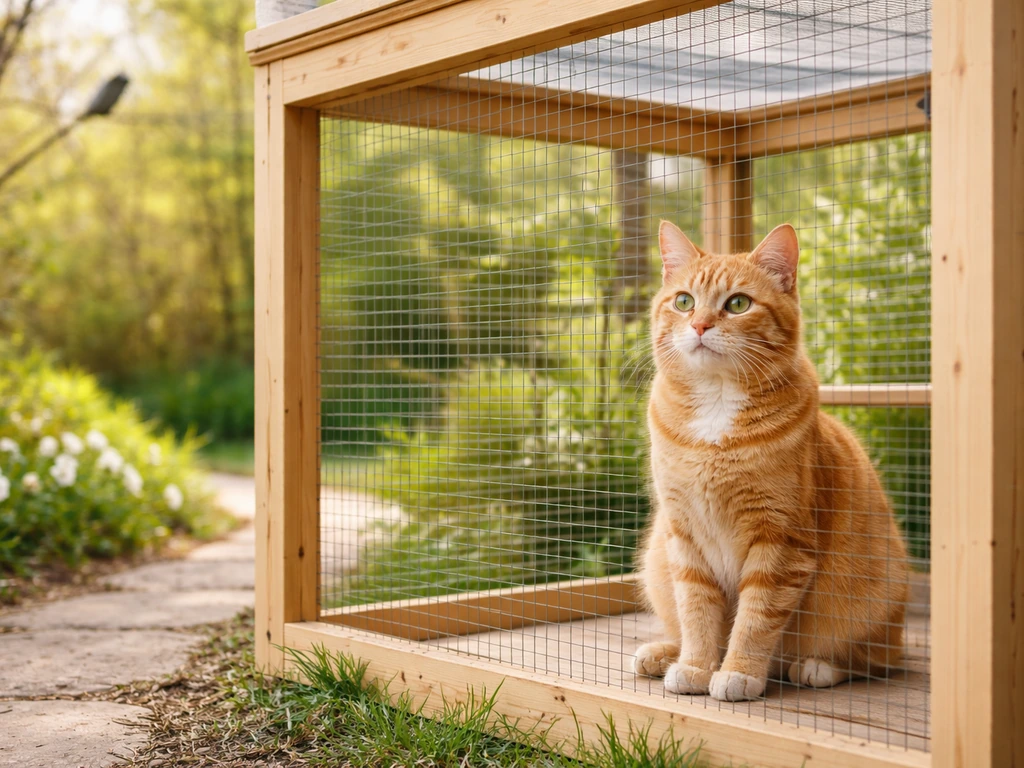
The most effective thing you can do is keep your cat indoors or in a supervised enclosed outdoor space during nesting season, roughly March through August in most of North America.
NWF says the only 100% effective way to keep birds safe from outdoor cats is to keep cats indoors and to place feeders and birdbaths at least 10, 12 feet away from likely hiding places for cats keep cats indoors and place feeders and birdbaths at least 10–12 feet away from hiding places. This is the recommendation from the U.
S. Fish and Wildlife Service, the National Wildlife Federation, and most wildlife organizations, and it works because it removes the trigger entirely. Your cat can't get attacked by a nesting bird if your cat isn't in the bird's territory.
If your cat does go outside, avoid the area where attacks have been happening. Try to figure out where the nest is (look in shrubs, low tree branches, or dense vegetation near the attack zone) and give it a wide berth. Once the nestlings fledge and leave, which typically takes a few weeks, the parents will dramatically reduce their defense radius and the attacks should stop.
A few other practical changes that reduce risk:
- Change your cat's outdoor routine so it's not passing through the defended zone every day at the same time.
- Move bird feeders and birdbaths away from areas your cat frequents. At least 10 to 12 feet of open space between a feeder and any shrubs or cover that a cat could hide behind is a common guideline.
- If you have a catio or enclosed run, use it during peak nesting weeks rather than free-roaming access.
- Physical barriers like netting around garden areas can discourage your cat from approaching ground-level nest zones without harming any animal.
- Skip the bell on the collar. It's been studied and it doesn't meaningfully protect birds or reduce wildlife confrontations.
These aren't just good for avoiding bird attacks. Keeping cats managed outdoors is one of the most impactful things you can do for local bird populations overall, which is a bigger topic but worth mentioning here. Keeping cats managed outdoors also helps reduce predation pressure that can otherwise affect bird populations.
Health and disease concerns: what's real and what isn't
The most common worry after a bird-cat confrontation is disease transmission, and it's worth separating the real risks from the exaggerated ones.
The real concern that comes up most is avian influenza. Cats can be infected with avian influenza A viruses, and during active outbreaks in wild bird populations, the risk of a cat picking up the virus through direct contact with sick or dead birds is elevated. The CDC recommends keeping pets away from wild bird areas during outbreaks, and if your cat shows signs of respiratory illness after contact with birds, contacting your veterinarian is the right call. The risk of a person catching bird flu from a cat exists but is considered low; prolonged, unprotected exposure to an infected animal carries a higher risk than brief contact.
From a physical attack alone, disease transmission is very unlikely. Birds don't typically carry zoonotic diseases at a level that poses meaningful risk from a peck or scratch in the average backyard encounter. The bigger injury risk from a bird attack is secondary infection in your cat's wound from bacteria normally present on skin or in the environment, not from the bird itself.
The CDC also notes that bird feeders, birdbaths, and surrounding ground can accumulate droppings from wildlife, which is worth keeping in mind if your cat tends to investigate those areas. Keeping feeders cleaned regularly and limiting your cat's access reduces that exposure.
The myth to let go of: that a bird pecking at or striking your cat will reliably transmit disease. A brief physical strike during a territorial display is not a significant disease vector. Clean wounds carefully, watch for signs of infection, and call your vet if anything seems off.
When to escalate: injuries, persistent attacks, and getting expert help
When to call a vet for your cat
Call your vet if your cat has any wound that broke the skin, even a small one. Puncture wounds especially can look minor on the surface while being deeper than they appear, and they're prone to infection. Also call if your cat seems lethargic, is not eating, or develops swelling or discharge at a wound site in the days after the incident. When in doubt, a quick call to the clinic costs nothing and can save you a much bigger problem later.
When to contact a wildlife professional
If a bird was injured during the encounter, the right move is to contact a licensed wildlife rehabilitator. Don't try to care for the bird yourself. Use a ventilated box to contain it safely, keep it in a quiet, dark place, and don't offer food or water before getting professional guidance. Tufts Wildlife Clinic and similar organizations recommend this minimal-handling approach specifically to reduce stress and avoid inadvertently causing more harm.
If attacks are ongoing and severe, meaning the bird is regularly making physical contact, your cat is getting injured, or you or another person is also being targeted, that's a signal to reach out to your local wildlife agency or a wildlife conflict specialist. They can assess whether the nesting situation is something that warrants monitoring and advise on legal, safe next steps. In most cases, the solution is still just waiting out the nesting period while keeping your cat managed, but it's worth getting a professional read if the situation feels out of hand.
The good news is that nesting seasons are finite. Most breeding cycles wrap up within a few weeks per brood. If you can manage your cat's outdoor access during that window, the problem usually resolves on its own without any confrontation at all.
FAQ
How can I tell if the bird was defending a nest versus trying to attack my cat repeatedly?
If your cat leaves the area and the bird stops within a few minutes, that strongly suggests defense behavior rather than a true “hunt” or injury attempt. Still, keep your cat inside for the rest of the day, because some birds restart quickly if the cat re-enters their defended zone.
What if I cannot find a nest, but the bird keeps dive-bombing in the same yard area?
Yes. Even if you never see a nest, the defended zone can extend beyond where the nest is visible. Look for dense shrubs or low branches within about 20 to 30 feet of the repeat attack spot, and check whether the behavior ramps up in spring or during mid-summer when birds may raise a second brood.
Will changing how I approach the yard help, or is it still a nest-defense situation?
Try a “distance check.” If you can stand at the attack point yourself and the bird still calls and dives, the bird likely considers that area a threat route, not just your cat’s movement. If the bird calms when you stay farther back, the fastest fix is increasing buffer distance and limiting your cat’s access during nesting season.
Can I scare the bird off with my arms, a hose, or other deterrents?
Do not use motion deterrents or confront the bird during active defense. Waving hands, spraying, or chasing can escalate the threat display, and in the U.S. many nesting birds are protected, so harassment or harming them can create legal risk. The practical solution is to remove the trigger by keeping the cat indoors or supervised and away from the zone.
Where on my cat should I check first after a bird dive-bomb?
If your cat was dive-bombed, inspect the most vulnerable areas after you bring them inside: face and eyes, around the neck, and along the back and shoulders. Use good lighting, part the fur, and watch specifically for punctures, bleeding, or areas that feel tender later.
What signs mean I should treat the injury as urgent rather than “wait and see”?
Minor-looking scratches can still become deep puncture wounds if a claw or beak broke the skin. Clean with soap and water right away, apply antiseptic, then monitor over the next 24 to 72 hours for swelling, warmth, discharge, or reduced eating, and call the vet promptly if any of those show up.
How soon should I contact the vet after a bird injury?
Time matters. Call your veterinarian the same day if the skin broke, especially with punctures, and do not wait several days because infection can begin under the surface. If the wound is on the face or near the eye, err on the side of same-day guidance.
What should I do if the bird looks hurt during or after defending the nest?
If you find a bird that appears injured, distressed, or grounded, contact a licensed wildlife rehabilitator rather than attempting to move it yourself for “quick care.” The safer approach is to contain it in a ventilated box in a quiet, dark area until help arrives, and avoid offering food or water without instructions.
What should I do if the attacks are getting worse or involving multiple birds?
If multiple birds mob your cat, or the bird makes repeated physical contact, treat it as a conflict situation and ask your local wildlife agency or a wildlife conflict specialist for guidance. They can advise whether there is an active nest and what legal, non-harm options make sense for your property setup.
What is the best way to let my cat be outside safely during nesting season?
If your cat is outdoors, the safest routine change is supervision with an enclosure or leashed time in areas far from the attack zone, especially March through August in much of North America. Also avoid letting your cat roam during peak time near low shrubs and tree edges where nests are most likely.
Next Articles
What Bird Attacks Cats? Risks, Scenarios, and What to Do
Find which birds may attack cats, how to spot real scenarios, first-aid steps, infection risks, and prevention today.
Do Cats Like Bird Sounds? What It Means and How to Keep Birds Safe
Explore why cats react to bird sounds, what their chirps mean, and how to keep birds safe while managing your cat’s hunt

Bird Causes Plane Crash? Risk, Mechanisms, Myths, Prevention
Whether bird strikes can cause plane crashes, how they happen, real risk data, debunked myths, and prevention steps