Yes, there are a small number of birds that are genuinely poisonous, but the honest answer is that they are rare, geographically limited, and far less dangerous to most people than the question implies. The bigger issue is that a lot of birds get labeled "poisonous" when the real hazard is something else entirely: infection, disease transmission, or simple irritation. This guide breaks down what the science actually says, clears up the most common myths, and tells you exactly what to do if you think you have been exposed to a bird that could harm you.
Is There a Poisonous Bird? Real Biology, Risks, and What to Do

Maya Chen
23 Mar 2026
What "poisonous" actually means (and why the word matters here)
The word "poisonous" gets used loosely, and that loose usage creates a lot of confusion when people are trying to figure out whether a bird is actually dangerous. Getting the terms straight is worth a minute of your time because it changes what you should do. what is the deadliest bird. What is the deadliest bird? covers which species can cause the most serious harm and why most “poisonous” claims are misleading. worst bird strike
A poison is any substance that causes harm when it enters the body by being swallowed, inhaled, injected, or absorbed through the skin. A venom is technically a subset of that: it is a toxic substance that is actively delivered through a bite, sting, or wound. The difference matters because the route of exposure determines how dangerous something is. A substance that is deadly if you eat it might be completely harmless if you just touch it, and vice versa.
Toxicity, as defined in biomedical literature, is simply the quality or degree of being poisonous. A bird can be toxic, meaning it contains or carries a harmful substance, without being venomous, meaning it has no mechanism to inject that substance into you. Birds do not have venom glands or stingers. So when people ask "is there a poisonous bird," they are really asking: can a bird harm me through its tissues, feathers, or secretions, without biting or injecting anything? The answer to that narrower question is yes, but only in a handful of cases.
There is also a third category that most "poisonous bird" questions are really about: illness from infection, bacteria, and viruses. This is not poisoning in the strict biological sense. It is infectious disease transmission. Psittacosis, avian influenza, and histoplasmosis are real hazards associated with birds, but they are caused by pathogens, not toxins. Conflating them with "poison" leads people to either panic unnecessarily or miss the actual risk.
Are any birds actually poisonous? Here is what the science says

A small group of birds in New Guinea carry batrachotoxins (BTX) in their feathers and skin. These are the same family of potent neurotoxins found in poison dart frogs. The best-documented examples are the hooded pitohui (Pitohui dichrous) and the blue-capped ifrit (Ifrita kowaldi). Peer-reviewed research has confirmed batrachotoxin alkaloids in the tissues of both species.
The key finding from the science is that these birds do not produce the toxin themselves. They acquire it from their diet, specifically from melyrid beetles in the genus Choresine. The toxin accumulates in their feathers and skin through a process called sequestration. This is the same mechanism used by poison dart frogs kept in captivity: once they stop eating the beetle source, they lose their toxicity over time.
What does exposure actually feel like? Ornithological researchers who have handled these birds report burning and irritated mucous membranes, sneezing, and watery eyes from close contact. Serious systemic poisoning in a healthy adult from casual handling is not documented in the scientific literature, but the toxin is genuinely harmful to predators and potentially to people if the exposure is significant enough. You are not going to encounter these birds unless you are in the remote forests of New Guinea.
Beyond the New Guinea species, evidence suggests that batrachotoxicity may occur more broadly across corvoid bird lineages, meaning the phenomenon is probably not limited to just two species. Research continues, but the confirmed cases of meaningful toxicity in birds that people in North America, Europe, or Australia might encounter in daily life are essentially zero.
Common myths: birds people think are poisonous (and why they usually are not)
The most persistent myth is that brightly colored birds are poisonous, the same way some people apply that logic to frogs or insects. In birds, color is almost never a reliable indicator of toxicity. Cardinals, parrots, toucans, and macaws are all brilliantly colored and completely non-toxic. Color in birds is almost always about mate selection, not chemical defense.
Another common misconception is that birds of prey, like owls or hawks, are poisonous because they eat other animals that might carry toxins. This is not how it works. Predators that eat toxic prey generally metabolize or excrete those compounds rather than storing them. There is no documented case of a raptor being toxic to handle or eat because of what it hunted.
A third myth is that dead birds are "poisonous" in the way a toxic mushroom is poisonous. Dead birds are genuinely hazardous, but the risk is infectious, not chemical. The danger comes from bacteria, viruses, and fungi that may be present in or around the carcass, not from a toxin the bird produced. Touching a dead crow will not cause chemical poisoning, but it could expose you to pathogens like West Nile virus or avian influenza if you handle it without protection.
Finally, some people believe that certain bird droppings are "poisonous" because they make people sick. Again, the risk here is infectious. Histoplasma capsulatum, the fungus that causes histoplasmosis, grows in soil enriched by bird or bat droppings. Breathing in disturbed spores can cause a serious lung infection. But that is a fungal spore, not a toxin produced by the bird. Psittacosis, caused by Chlamydia psittaci, is a bacterial infection spread through the dried droppings or respiratory secretions of infected birds. Real hazards, but not poison in the biological sense.
Real risks from birds: what actually happens when you touch, handle, or eat one
For the vast majority of birds people encounter, the risks fall into a few practical categories that have nothing to do with chemical toxins.
Touching or handling birds
Bare-handed contact with a sick or dead bird is the main concern. The CDC advises against touching sick or dead birds, their feces, or litter without protective equipment. The risks are bacterial and viral: avian influenza, Salmonella, Campylobacter, and other pathogens can transfer from a bird's feathers, skin, or droppings to your hands and then to your mouth or eyes. This is not poisoning. It is infection, but the practical outcome can be serious.
Feathers and droppings
Feathers from the genuinely toxic New Guinea birds carry batrachotoxin and could theoretically cause mucosal irritation if you handled them extensively. For any other bird, feathers are not chemically toxic, but they can carry allergens, mites, or pathogen residues. Droppings are the bigger concern because of the histoplasmosis risk: disturbing accumulated droppings, especially in enclosed spaces like attics or old barns, can aerosolize fungal spores. The CDC and NIOSH both emphasize preventing droppings from accumulating and avoiding dust generation during cleanup.
Eating birds
Eating a properly cooked bird that is commercially raised or legally hunted carries essentially no toxin risk. The cooking process and the sourcing both matter. The risk from eating wild birds is primarily related to how the bird was handled, stored, and cooked, not any inherent chemical toxicity in the meat. The one exception, theoretically, would be eating tissues from the documented toxic New Guinea species raw or in large quantities, but that is not a realistic scenario for anyone reading this.
Bites and scratches
Birds are not venomous, so a bite or scratch does not inject toxin. But bird bites and scratches can still introduce bacteria into a wound. If you are bitten or scratched by a bird, clean the wound thoroughly and tell your doctor about it when you seek care. The CDC specifically recommends informing clinicians about bird bites or scratches.
What to do right now if you think you were exposed

If you or your pet has had contact with a bird and you are worried about a toxic or infectious exposure, here is what I would do immediately.
- Remove and bag any clothing that had direct contact with the bird, its droppings, or a contaminated surface.
- Rinse your skin with running water for at least 15 to 20 minutes. If any material got in your eyes, flush them with water immediately.
- Wash your hands thoroughly with soap and water. Do not touch your face, mouth, or eyes before washing.
- If you think you may have ingested something from a bird, call Poison Control at 1-800-222-1222. They will ask about the substance, the amount, your weight and age, and the route of exposure. Have that information ready.
- If you are experiencing serious symptoms (difficulty breathing, chest pain, severe swelling, or loss of consciousness), call 911 instead of Poison Control.
- If a pet has eaten part of a bird or had significant exposure to bird material, call your veterinarian or an animal poison control line right away.
For exposure to droppings specifically, especially in an enclosed space, get to fresh air immediately. If you were cleaning up accumulated droppings without a respirator and now feel chest tightness, shortness of breath, or flu-like symptoms, get medical evaluation. Do not wait to see how you feel in a few days because histoplasmosis symptoms can take 3 to 17 days to appear after exposure.
Symptoms to watch for and when to get help
The symptoms that should prompt you to seek medical attention depend on the type of exposure. Here is a practical breakdown:
| Exposure type | Symptoms to watch for | Timeline | Action |
|---|---|---|---|
| Skin/feather contact (toxic bird) | Burning skin, eye irritation, sneezing, redness | Immediate to within hours | Rinse skin/eyes, call Poison Control if symptoms persist |
| Ingestion of bird tissue | Nausea, vomiting, numbness, tingling | Minutes to hours | Call Poison Control (1-800-222-1222) immediately |
| Droppings/spore inhalation (histoplasmosis) | Fever, cough, fatigue, shortness of breath | 3 to 17 days after exposure | See a doctor; mention the exposure |
| Bird droppings/secretion contact (psittacosis) | Fever, headache, dry cough, muscle aches | 5 to 14 days after exposure | See a doctor; mention bird contact |
| Avian influenza exposure | Fever, cough, sore throat, eye redness, muscle aches | 3 to 17 days after exposure | Seek prompt evaluation; call local health department |
| Bite or scratch | Redness, swelling, warmth at wound site, fever | Hours to days | Clean wound, see a doctor, mention the bird source |
One thing worth emphasizing: if you tell a doctor or emergency room about bird exposure, be specific. Say whether you touched the bird, handled its droppings, were bitten or scratched, or inhaled dust near droppings. That information changes what the clinician will look for and how they will treat you. The CDC notes that informing your clinician about bird bites and scratches is specifically recommended.
Identify the bird, report it, and reduce future exposure
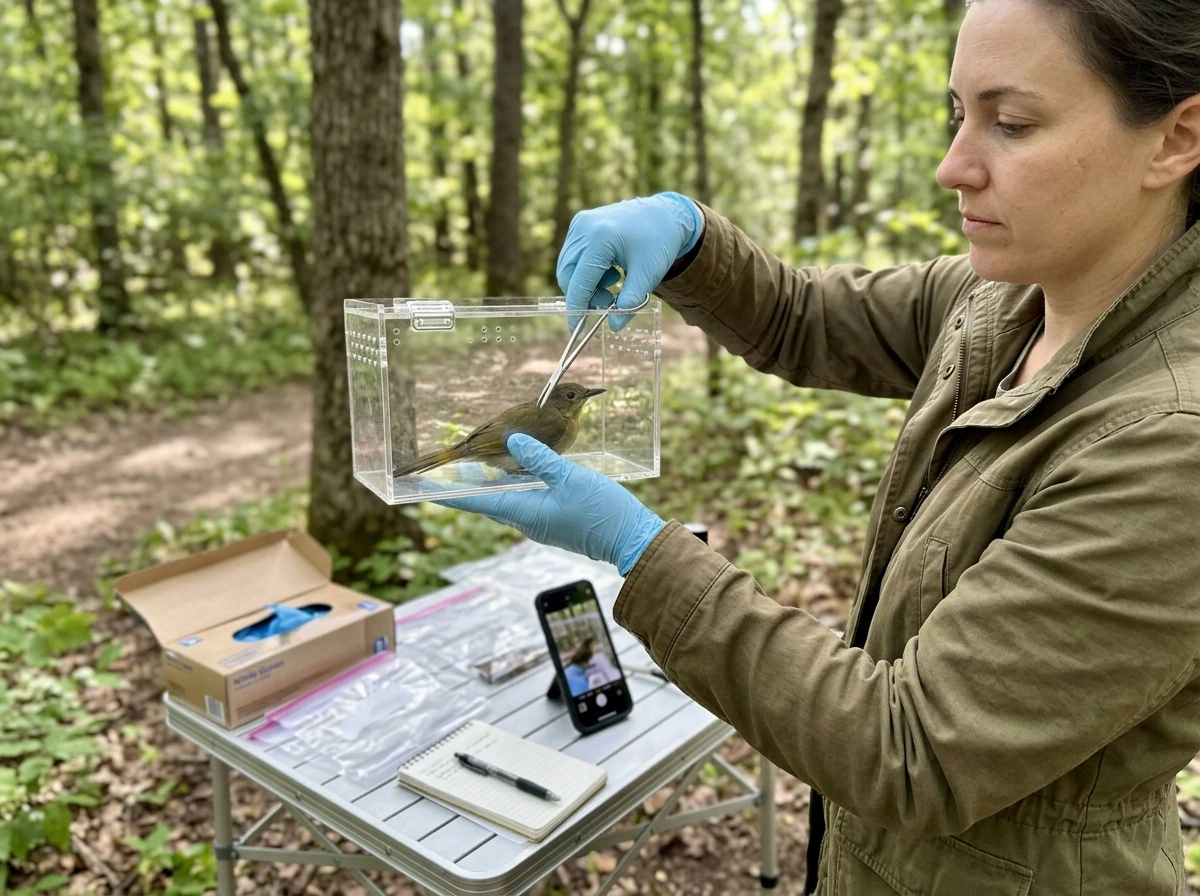
If you found a sick or dead bird and are trying to figure out what species it is and whether it poses any risk, start by not touching it with bare hands. Take a photo from a safe distance and use a free bird identification app (Merlin by Cornell Lab is a good one) to identify the species by location, size, and markings. This will help you assess whether it is a species associated with any known risk.
For dead birds, most state and local wildlife agencies want to know about them, especially if you find multiple dead birds in the same area. In Oregon, for example, there is a dedicated dead-bird reporting hotline at 866-968-2600. In most states, the process is similar: call your state fish and wildlife agency or local health department, describe the location and species if possible, and ask whether they want to collect the bird for testing. The CDC and state surveillance programs use dead bird reports to track diseases like West Nile virus, so your report actually matters.
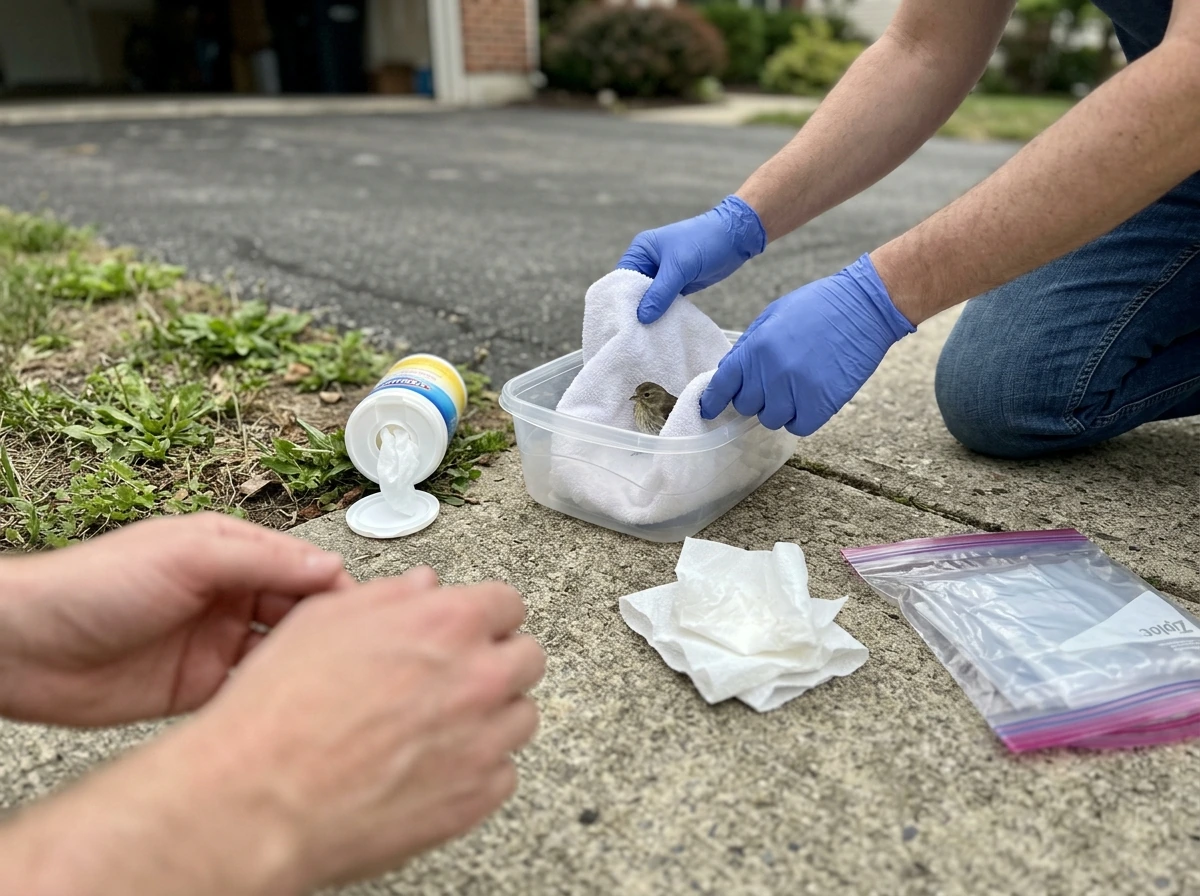
If you need to move a dead bird before reporting it or as instructed by wildlife officials, use thick gloves or a plastic bag turned inside out over your hand. Double-bag the bird and seal both bags. Wash your hands thoroughly afterward. The CDC advises avoiding bare-handed contact with dead animals specifically in the context of disease surveillance.
Preventing future exposure at home
If you have pet birds, the CDC's psittacosis prevention guidance is worth following as a baseline: wash hands thoroughly after touching birds or their cages, wear gloves when cleaning, wet cage surfaces before wiping them down to reduce aerosolization of dried droppings, and use a mask if you are immunocompromised or cleaning a heavily soiled area.
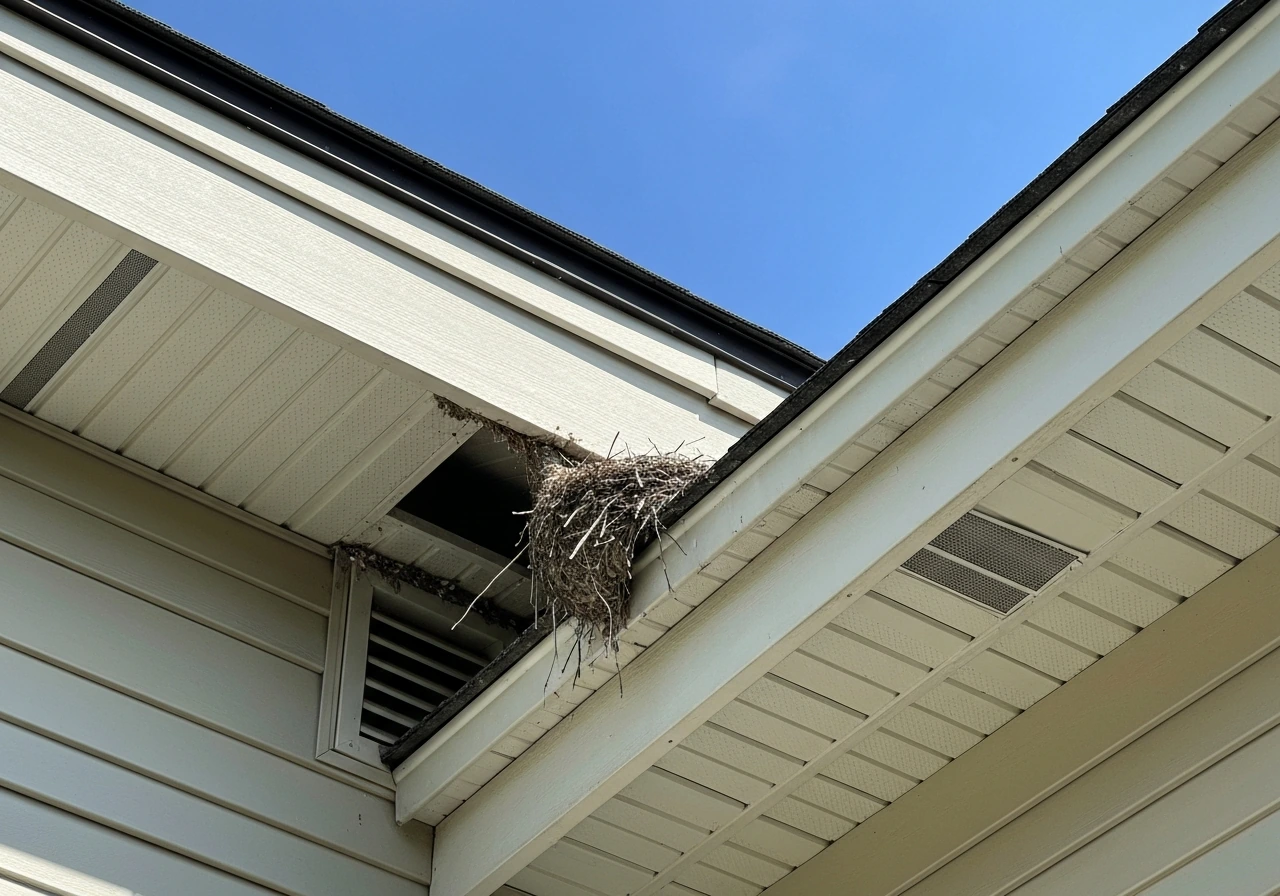
For wild bird accumulations around your property, like a roost site on your roof or droppings buildup in an attic, the NIOSH guidance is clear: prevent accumulation in the first place, and when you do clean, avoid generating dust. Use an N95 respirator, wet the area before disturbing it, and ideally get professional help if the accumulation is significant. These steps protect you from histoplasmosis specifically, which is one of the most common and underrecognized bird-related health risks.
The bottom line is this: genuine chemical toxicity from birds is real but extremely rare and geographically limited. The far more common bird-related health risks come from infectious pathogens in droppings, secretions, and carcasses. Treat any sick or dead bird as potentially infectious, protect yourself with basic PPE, report it to the right authorities, and get medical attention if you develop symptoms in the days or weeks after exposure. For possible poison exposures in the U.S., Poison Control (America’s Poison Centers) recommends using webPOISONCONTROL or calling 1-800-222-1222 for guidance report it to the right authorities. That approach covers you for virtually every real-world scenario.
FAQ
If I just see a “poisonous bird,” do I need to worry about contact from being nearby?
For most people, the risk is “infection or irritation,” not chemical poisoning. If you did not handle a carcass, droppings, or nest material, there is usually no action needed beyond normal hygiene (wash hands). Seek medical care mainly if you had close contact with secretions or disturbed droppings and then develop fever, respiratory symptoms, eye redness with discharge, or severe gastrointestinal illness.
Can a bird bite or scratch hurt me even if birds are not venomous?
Yes, “not poisonous” does not mean “no risk.” Bird bites and scratches can introduce bacteria into the wound and should be treated like a wound-care issue, not a toxin issue. Wash with running water and soap right away, apply an antiseptic, and contact a clinician if the wound is deep, on the hand or face, you cannot fully clean it, or you develop increasing redness, swelling, pain, or fever.
If symptoms start days later after cleaning droppings, is it still related?
Not usually. The main hazard from a droppings exposure is breathing in disturbed material or fungal spores, so timing matters. If you were in an enclosed space and you develop symptoms, contact a clinician promptly rather than waiting. Histoplasmosis symptoms can appear weeks after exposure (often 3 to 17 days), so a “too late” approach can miss the window for evaluation.
What should I do if I accidentally touched bird droppings with bare hands?
If you touched droppings or a carcass with bare hands, immediate steps are to wash thoroughly with soap and water, avoid touching your eyes or mouth, and change clothing. Do not try to “mask” exposure with disinfectant alone, especially on skin, because you still need proper handwashing. If you’re immunocompromised or you cleaned a large accumulation, it’s reasonable to contact a clinician even if you feel fine.
I found a sick or dead bird. What’s the safest way to identify and handle it?
Avoid handling wild birds you cannot identify, but take identification steps safely. Use a photo from a distance, keep people and pets away, and wear gloves if officials instruct you to move the bird. If you must clean up feathers or a small area, wet it first to reduce dust before wiping, and use eye protection if there is debris.
How do I report dead birds, and what details matter most?
For “multiple dead birds” in the same area, report sooner rather than waiting. Wildlife agencies often want species, exact location, date, and how many you saw. If the birds are in a public or high-traffic area, also consider alerting local health authorities because detection can trigger targeted surveillance and public messaging.
What if a bird poops on me or my clothes?
If a bird landed on you and left droppings, treat it like contamination rather than poisoning. Gently wipe the area, wash skin with soap and water, and clean clothing promptly. If droppings got into the eyes or you later develop respiratory symptoms after being in an enclosed, dusty area, get medical advice.
Are brightly colored birds more dangerous because they look poisonous?
Color is not a reliable safety cue. If a bird looks “bright” but you are not handling feathers, droppings, or the carcass, the chemical-toxicity concern is minimal. The more practical question is whether it was sick or dead, and whether you disturbed droppings or dust during cleanup.
When cleaning an attic or barn with lots of bird droppings, do I really need a respirator?
If you are cleaning an attic, barn, or other enclosed space where droppings have accumulated, use a respirator and avoid making dust. N95-level protection can help for smaller dust exposures, but for heavy contamination or sensitive individuals, professional cleanup is safer. Also wear gloves and eye protection, and wet the area before removing material.
Are some people higher risk after bird exposure, like kids or immunocompromised patients?
Yes. Young children and people who are pregnant, immunocompromised, or have chronic lung disease should be extra cautious with droppings cleanup. If they were present in the area during dust disturbance, contact a clinician for guidance, because some bird-related infections can be more serious in these groups.
Is handling feathers or bird poop more risky?
Bird feathers and secretions can cause irritation, especially with close handling, but they are not the main route of serious disease. Droppings are the bigger driver for fungal and bacterial spread because they can aerosolize when disturbed. So the protective priority is preventing dust and avoiding bare-hand contact with droppings and litter.
Next Article
Worst Bird Nest: Identify Risks and Safe Removal Steps
Learn how to spot the worst bird nest risks, avoid myths, and follow safe cleanup and exclusion steps.