
The short answer: most bird nests near your home are a nuisance, not a genuine danger, especially when people worry about the deadliest bird But a handful of situations do carry real risks worth taking seriously, including disease from accumulated droppings, parasites that migrate indoors, structural hazards, and fire risks near electrical equipment. This guide will help you figure out which category you are dealing with today, what to do right now, and what to plan for once nesting season ends. If you are comparing risks across species, it helps to start with what the deadliest bird can look like in real-world scenarios and then apply the same safety mindset to your nest. what is the most aggressive bird
Worst Bird Nest: Identify Risks and Safe Removal Steps

Maya Chen
23 Mar 2026
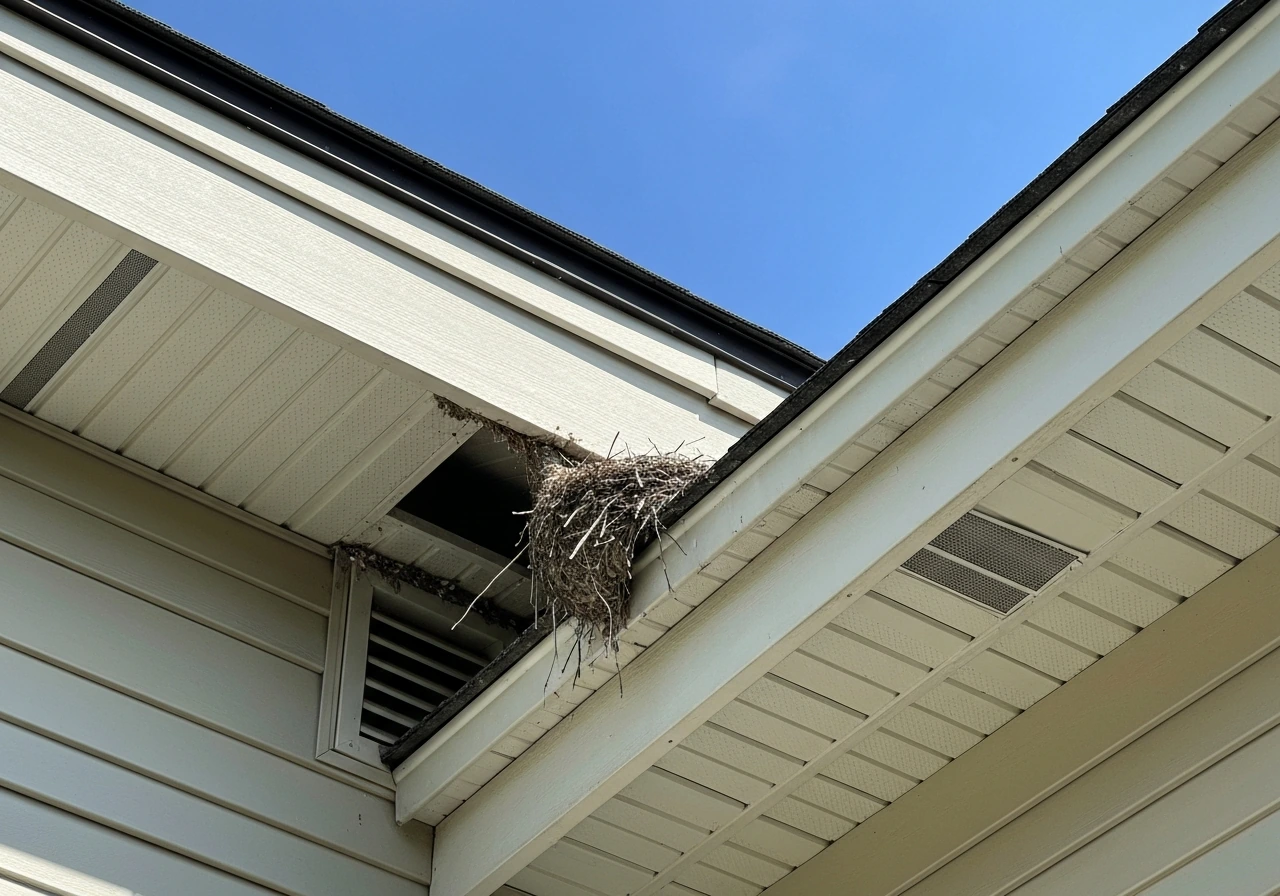
What 'worst bird nest' actually means (and what it doesn't)
When people search for the worst bird nest, they are usually worried about one of a few things: getting sick from droppings, bringing mites or lice into the house, damage to the building, or not knowing whether it is even legal to remove the nest. These are legitimate concerns worth addressing. What is generally not true is the old myth that touching a nest or getting near one will cause the parent birds to abandon their eggs or chicks. Adult birds do not abandon nests just because a human walked by.
The nests that genuinely earn the 'worst' label tend to share a few traits: they are built somewhere that causes ongoing structural damage (inside a dryer vent, in gutters, in electrical panels or junction boxes), or they involve a large volume of droppings accumulating in an enclosed space over time. A single robin nest in a porch eave is not the same situation as a colony of starlings nesting inside your attic for two seasons. Scale and location matter far more than which species is involved.
The other common myth is that all bird droppings are immediately toxic. If you are specifically worried about a poisonous bird, it helps to know which species are known for unusually potent toxins. If you’re asking, “is there a poisonous bird,” this is one reason the answer is usually no, most of the real risk comes from specific fungi and dust exposure. They are not.
The actual risk comes from a specific fungus called Histoplasma, which can grow in soil contaminated by bird or bat droppings over time. Exposure risk goes up significantly when you disturb a large accumulation of old, dry droppings and generate dust. A fresh nest with a small amount of droppings below it is a very different hazard level than years of guano buildup in a sealed attic space.
How to spot danger signs without getting close
Before you get within arm's reach of any nest, do a visual assessment from a safe distance. You are looking for a few specific red flags that tell you whether this situation needs professional handling or just basic precautions.
Health and contamination signs
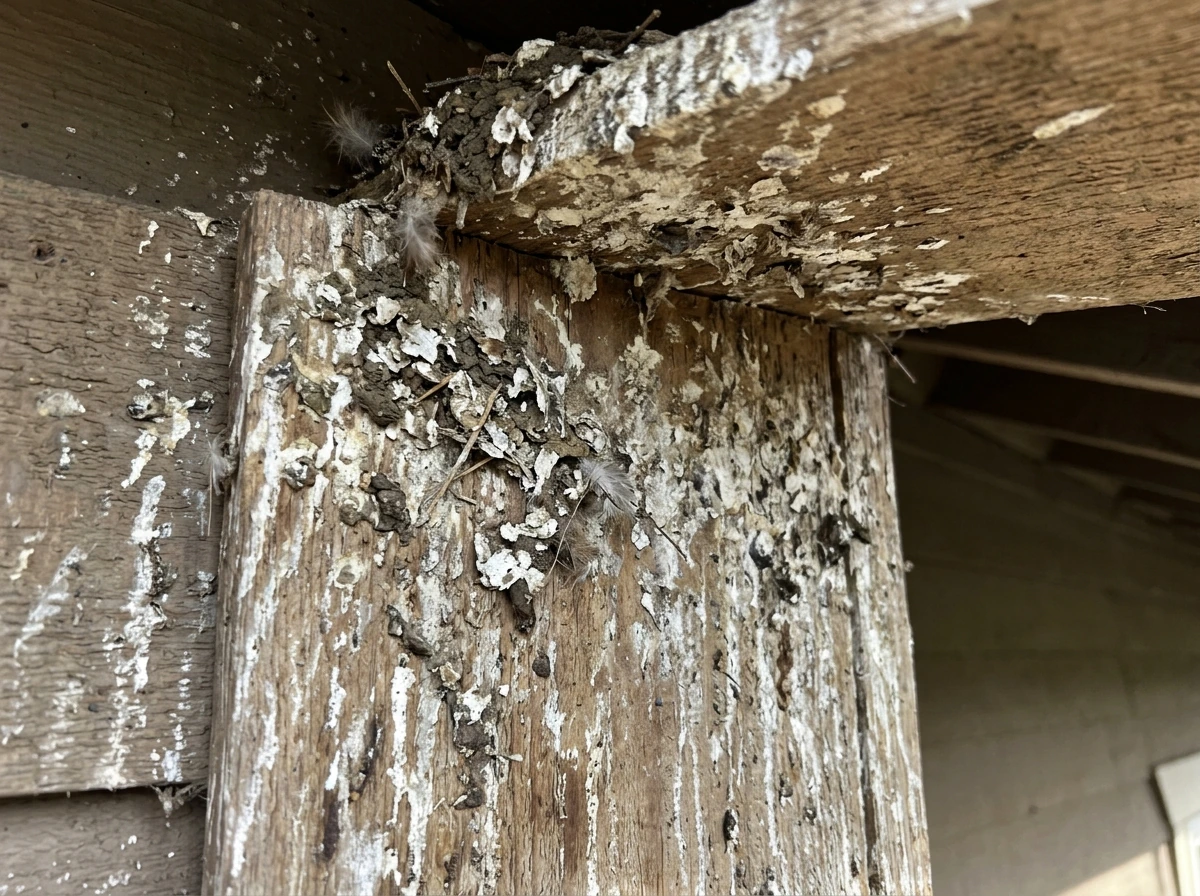
- Visible whitish or gray droppings coating a large surface area (walls, flooring, beams) directly beneath the nest area, especially if they look old and dry
- A strong ammonia smell coming from a closed or semi-enclosed space like an attic, crawl space, or inside a vent
- Dead chicks or broken eggs below the nest, which attract flies and secondary pests
- Visible insect activity (mites or beetles) on surfaces near the nest, or small red crawling insects on nearby walls inside the home
Structural and fire hazard signs
- Nest material visibly stuffed into a dryer vent, bathroom exhaust vent, or stove exhaust — these block airflow and create a fire risk
- Nesting inside or directly on top of electrical boxes, junction boxes, or HVAC units
- Gutters overflowing or pulling away from the roofline because of nest debris and blocked drainage
- Moisture staining on ceilings or interior walls near a known nesting area, which suggests the nest is trapping water against the structure
Signs that warrant calling someone today
- Any nest inside a dryer vent or other active exhaust vent — this is a fire risk and cannot wait until nesting season ends
- A large accumulation of old droppings in an enclosed interior space (attic, basement, crawl space)
- Anyone in the household showing respiratory symptoms after spending time near the nest area
- Evidence that rodents are being attracted to the nesting area (gnawed material, droppings from rodents mixed with bird debris)
What to do right now, today
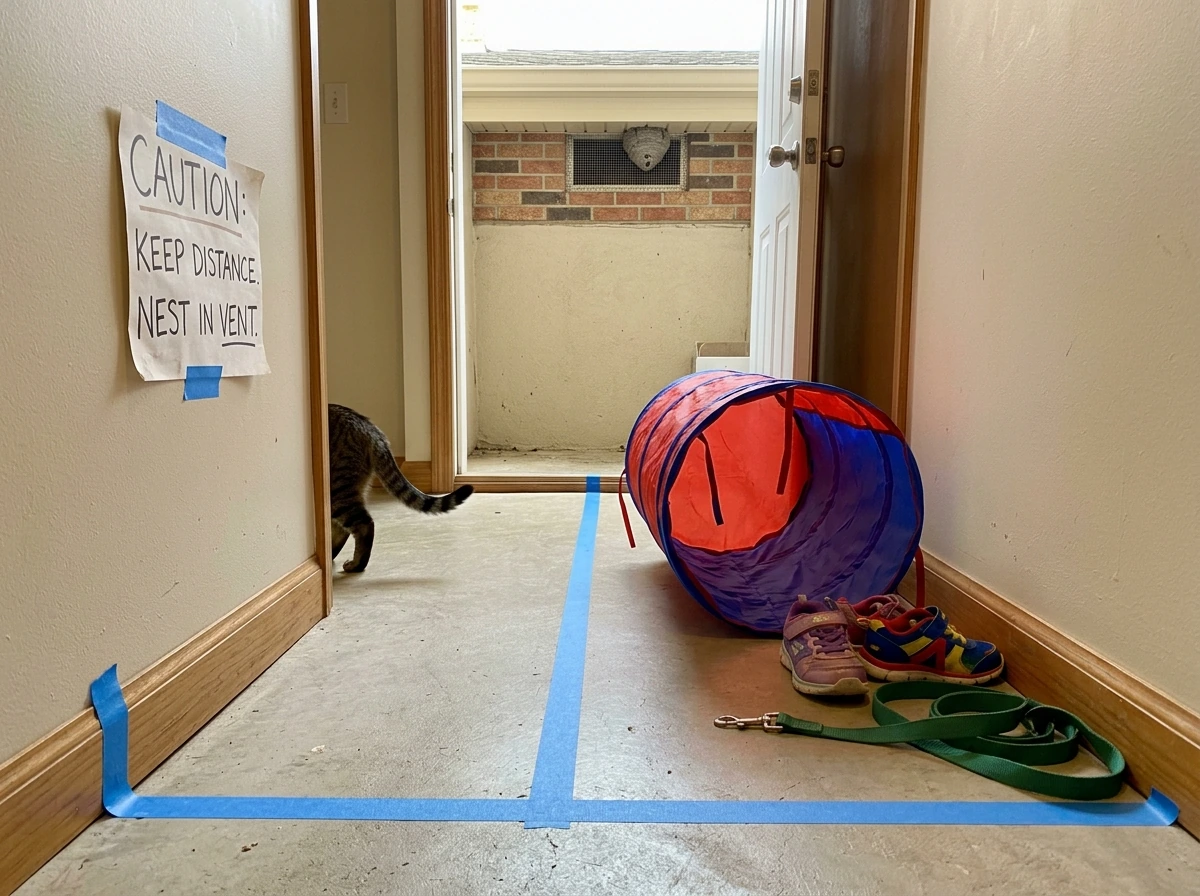
Your first job is to establish a safe boundary, especially if you have children or pets. Keep kids and pets away from areas directly beneath or near an active nest. Droppings can fall, mites can migrate, and chicks that fall from nests can attract predators or cause kids to try to handle them. None of this requires panic, just a simple temporary boundary.
If the nest is in an active exhaust vent, shut off that appliance immediately and call a pest control or wildlife removal professional today. Do not run a dryer or stove exhaust through a blocked vent. This is the one situation where waiting is genuinely not safe.
For nests in less urgent locations, resist the urge to disturb or remove them right away without checking the legal situation first (more on that below). Instead, document the location with photos from a safe distance, note whether the nest appears active (eggs or chicks present, adult birds coming and going), and assess the rough scale of the droppings problem. That information will be useful when you call for help.
If you have pets that roam outdoors near the nesting site, check them regularly for mites. Bird mites are small, fast-moving, and can transfer to pets and then into the home. They are not permanently parasitic on humans, but they will bite, and they are a pain to deal with once they are inside. A temporary indoor restriction for outdoor cats or small dogs is a reasonable precaution while an active nest is nearby.
Cleaning up safely: droppings, mites, and allergens
If you need to clean up droppings or nest debris, the single most important rule is this: do not dry-sweep or blow it. Dry disturbing of accumulated bird droppings is how Histoplasma spores and other pathogens become airborne. CDC and NIOSH guidance for workers dealing with bird or bat waste specifically recommends wetting the material first before collecting it, precisely to reduce aerosolized particles. The same principle applies at home.
- Put on an N95 respirator (not a basic dust mask), gloves, and eye protection before approaching the cleanup area
- Lightly mist the droppings with water mixed with a small amount of disinfectant (a diluted bleach solution works) to dampen the material without creating runoff
- Use damp paper towels or a damp cloth to collect the softened material, placing it directly into a sealed plastic bag
- Double-bag the waste and dispose of it in an outdoor trash receptacle
- Clean the surface with a disinfectant appropriate for the material (diluted bleach on hard, non-porous surfaces)
- Remove all protective gear carefully, bag it, and wash your hands and any exposed skin thoroughly
- Wash any clothing worn during cleanup separately from regular laundry
For large accumulations (anything covering more than a few square feet in an enclosed space), do not DIY this. The aerosolization risk in a confined space is real enough that professional remediation with proper respiratory protection and negative air pressure equipment is the right call. If you are immunocompromised, pregnant, or have a respiratory condition like asthma, outsource even small cleanups.
Bird mite infestations in a room near a nest can usually be handled with a thorough vacuum of all soft surfaces, washing bedding at high heat, and a perimeter spray by a licensed pest control operator. The key is to address the source (the nest) at the same time, otherwise the mites just keep coming.
Allergens from feathers, dander, and droppings are a real concern for sensitive individuals. If someone in the household has developed new respiratory symptoms or skin reactions near the nesting area, treat the space as potentially contaminated and get professional assessment before spending more time in it.
When and how to legally remove a nest
This is where most people get tripped up. In the United States, nearly all native bird species are blank" rel="noopener noreferrer">protected under the Migratory Bird Treaty Act (MBTA). That means it is blank" rel="noopener noreferrer">illegal to remove an active nest (one with eggs or live chicks) without a federal permit, regardless of where the nest is located. 'Active' means eggs are present or chicks have not yet fledged. Violating this can result in real fines.
The exceptions are a short list of non-native, unprotected species: house sparrows (Passer domesticus), European starlings (Sturnus vulgaris), and rock pigeons (Columba livia). These three species can legally be removed at any time in the US, including active nests. If you are not sure which species you are dealing with, photograph the birds and nest and check with your local wildlife agency before touching anything.
For protected species, the practical approach is to wait until the nest is completely inactive (no eggs, no chicks, and adults no longer returning) and then remove it promptly. Most songbirds fledge within two to three weeks of hatching. Marking a calendar from the date you first notice chicks gives you a reasonable estimate of when the nest will be empty. Once inactive, removing the nest is legal and actually encourages the birds to build in a more suitable location next season.
For active nests in genuinely dangerous locations, like inside an exhaust vent, contact your state wildlife agency or a licensed wildlife rehabilitator. In some cases, emergency permits can be obtained for nests posing immediate safety hazards. Do not just remove it and hope for the best, the legal risk is real and the permit process is usually faster than people expect.
Keeping birds from nesting in the same spot again
Once a nest is gone and the nesting season is over, the best window for exclusion work opens up. Birds are creatures of habit and will return to the same successful nesting sites year after year. Blocking those sites now prevents the same problem next spring.
Physical exclusion by location
| Nesting location | Best exclusion method | Notes |
|---|---|---|
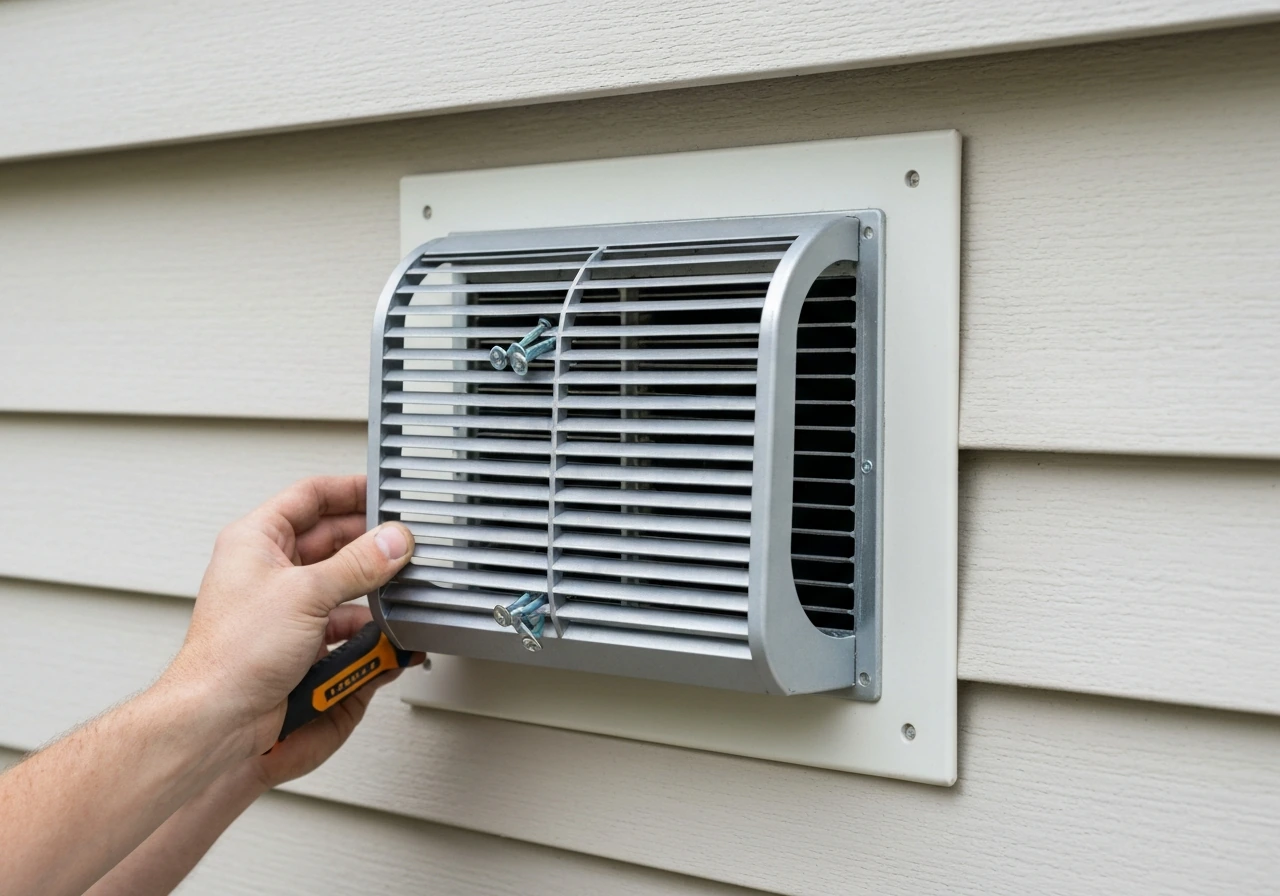
| Dryer/exhaust vents | Install a vent guard with a fine mesh or a louvered cap designed for birds | Check the cap fits the vent size exactly to maintain airflow |
| Eaves and ledges | Bird slope panels or angled surfaces that prevent flat landing; bird spikes for wide ledges | Spikes work better on flat ledges than rounded ones |
| Gutters | Gutter guards or mesh covers; clean and inspect annually | Debris buildup is what attracts nesting in the first place |
| Attic vents and soffits | Hardware cloth (1/4-inch mesh) installed flush over all openings | Inspect for gaps at roofline junctions; soffit gaps are the most commonly missed entry |
| Rafters and open beams (covered porches) | Netting suspended from the ceiling to deny access to the beam area | Use UV-resistant netting rated for outdoor use |
Visual deterrents like reflective tape, owl decoys, and predator silhouettes have limited and short-lived effectiveness. Most birds habituate to them within a week or two. Physical exclusion is always the more reliable long-term solution.
If you want to redirect nesting birds rather than just exclude them, installing appropriate nest boxes in a better location (farther from the house, in a tree or on a post) can work for some cavity-nesting species. This approach works especially well for house wrens, bluebirds, and chickadees. It gives the birds an acceptable alternative and keeps them out of your structure.
Who to call and what to tell them
The right call depends on the situation. Here is a straightforward breakdown: If you are also wondering what the most aggressive bird is, it helps to know which species are known for defending nests or territory.
| Situation | Who to contact | What to tell them |
|---|---|---|
| Active nest of a protected species in a dangerous location (vent, electrical) | State wildlife agency or licensed wildlife rehabilitator | Species if known, exact location of nest, whether eggs/chicks are present, the specific hazard (fire, electrical, etc.) |
| Large droppings accumulation in enclosed space | Licensed wildlife exclusion/pest control company experienced with bird remediation | Approximate square footage of contamination, how long it has been accumulating, enclosed vs. ventilated space |
| Mite infestation spreading indoors | Licensed pest control operator | Location of source nest, rooms affected, whether nest is active or inactive |
| Unprotected species (starling, house sparrow, pigeon) nest anywhere | Pest control or wildlife removal company | Species, location, whether nest is active, access constraints |
| Injured or orphaned chick on the ground | Local wildlife rehabilitator | Species if possible, exact location, condition of the bird, whether the nest is visible above |
When you call any of these services, have photos ready if possible. A clear photo of the nest location, the birds, and any droppings accumulation will cut the intake call in half and help the professional give you accurate advice before they even arrive. Know your address and be ready to describe the access point: is it on a ladder, inside a crawl space, on a roof? That affects what equipment they will need to bring.
One more thing worth knowing: wildlife rehabilitators are often volunteers operating on tight budgets. If an injured or orphaned bird is involved in your situation, be patient and respectful when you call. They deal with a high call volume especially in spring and early summer, and they are the right people for the job when a bird's welfare is part of the equation.
Your decision checklist for today
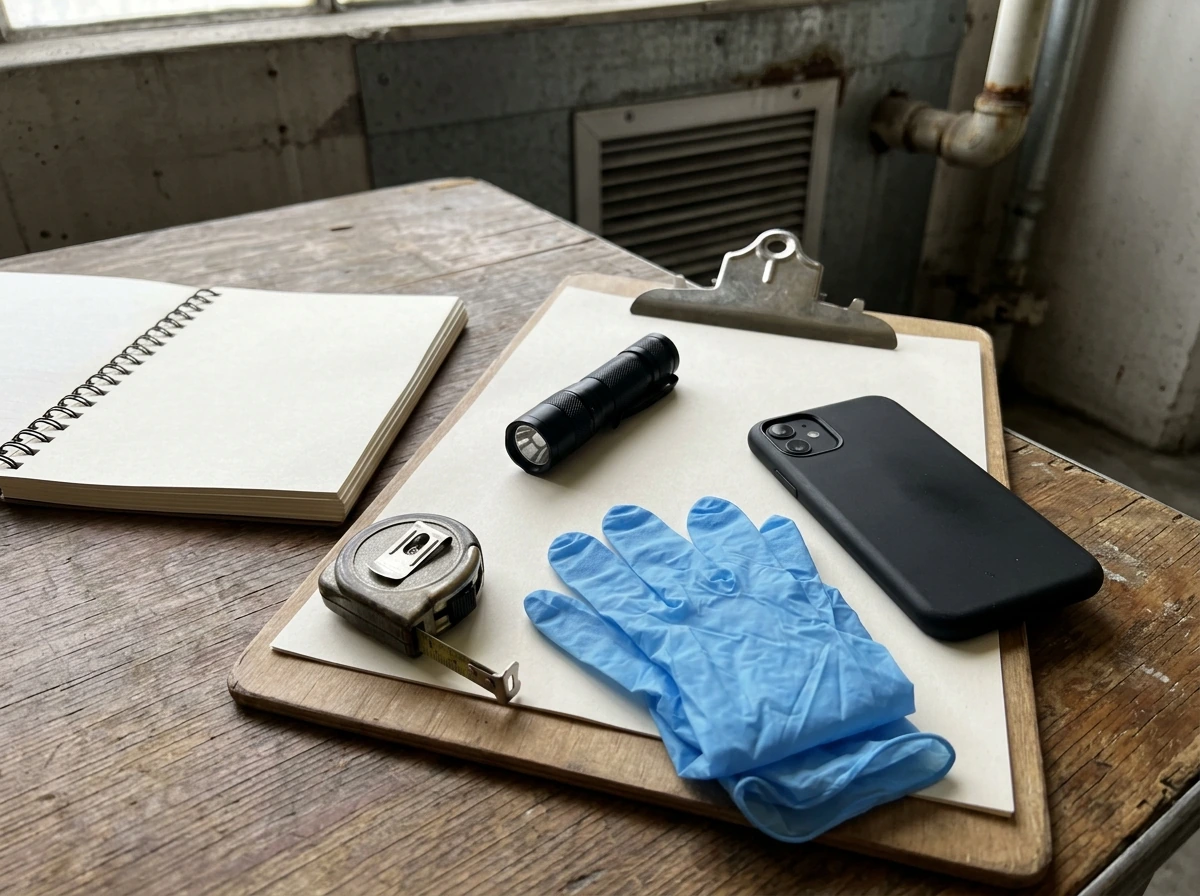
- Assess the nest location from a distance: is it in a vent, electrical area, or enclosed space? If yes, treat it as urgent.
- Determine if the nest is active (eggs or chicks present, adults coming and going). Active nests of protected species cannot be legally removed without a permit.
- Check the species: house sparrows, European starlings, and rock pigeons are unprotected and can be removed at any time.
- Evaluate the droppings situation: small and recent is low risk; large, old, dry accumulation in an enclosed space is high risk and needs professional cleanup.
- Establish a safe zone for kids and pets away from the nesting area until the situation is resolved.
- If cleanup is needed now, wet the material first, wear N95 plus gloves and eye protection, and double-bag all waste.
- Contact the right resource based on your situation (see table above) and have photos and location details ready.
- Once the nest is inactive and removed, schedule physical exclusion work before the next nesting season (typically before February in most of the US).
FAQ
How can I tell if a nest is active without getting close enough to cause trouble?
Use binoculars or a camera zoom from far away. Activity signs include eggs visible, chicks begging or making noise, adults repeatedly entering and exiting the exact spot on a consistent schedule, or fresh nesting material being added. If you cannot confirm eggs or ongoing adult traffic, assume it might still be active and plan around that until you can verify.
Is it safe to knock a nest down if the eggs look empty or the nest looks old?
Do not rely on appearance alone. Eggs can be present without being obvious, and some species reuse partial structures. If eggs or chicks have not fledged, removing it can still be illegal in places covered by the Migratory Bird Treaty Act, and it can also worsen airborne contamination if droppings are present.
What should I do right away if I see a large buildup of droppings near the nest?
Create a no-go zone and stop any dry activities in that area, like sweeping or using a shop vac without wetting. If the area is enclosed and the droppings cover more than a few square feet, wait for professional remediation, because dust generation in a confined space is where the risk of airborne pathogens rises.
Can I vacuum droppings up myself if I wear a mask?
A mask helps for comfort, but it does not replace the correct method. The key issue is preventing aerosolization by wetting the material first and using appropriate respiratory protection, which pros can match to the space and accumulation size. For enclosed areas and heavy buildup, DIY vacuuming without negative-pressure containment is a common mistake.
If the nest is in a dryer vent, is it okay to keep using the dryer but be careful?
No. If birds are using an exhaust vent, shut off the appliance immediately and call a professional removal service. Running the dryer can push debris into the home ducting pathway, increasing fire risk and making cleanup more hazardous.
Are bird mites always temporary, and will they go away once the nest is removed?
Mites often decline once the nest is no longer present, but they may persist for a while indoors if they have already dispersed onto nearby fabrics and hiding spots. Plan on thorough vacuuming of soft surfaces, washing bedding at high heat, and treating the perimeter if an operator recommends it, then monitor for new bites for several days.
How do I document the site correctly for a wildlife or pest control call?
Take photos showing (1) the exact access point and how to reach it, (2) a wider shot that includes surrounding landmarks, and (3) visible droppings accumulation. Also note dates and what you observed, like when you first saw chicks or how often adults return, because timing helps determine whether the nest is active and what options exist.
What if the birds are non-native, can I remove the nest immediately if it is active?
In the US, house sparrows, European starlings, and rock pigeons can be removed even if the nest is active. Still, confirm the ID first by photographing the birds and nest, because misidentification is a frequent reason people unintentionally violate protections.
When is it truly safe to exclude birds after nesting season ends?
Wait until the nest is fully inactive, meaning no eggs, no chicks, and adults have stopped returning. If you see adults still visiting, it may not be finished. After it is inactive, remove or block promptly and seal the entry route to prevent repeat nesting the next cycle.
Do visual deterrents like tape or decoys work well enough to avoid cleanup?
They can buy time, but most birds habituate quickly. If a site has a history of successful nesting, rely on physical exclusion (sealing and blocking access) plus habitat redirection, otherwise the same location often gets reused and you still end up dealing with droppings and mites.
What if someone in the household has asthma or new allergy symptoms near the nest?
Treat the area as potentially contaminated and limit time there until it is assessed. The practical step is to reduce disturbance, ventilate safely if you can, and get professional help for cleanup if symptoms worsen or the problem involves significant droppings accumulation.
Should I try to relocate the nest or install a new box during an active nesting season?
Do not interfere with an active nest. If you want to redirect nesting behavior, set up nest boxes only when the current nest is inactive and the exclusion work is done, then monitor that the new site is in a safer, farther-from-the-house location.
Next Article
What Is the Deadliest Bird? Evidence-Based Answer
Evidence based answer to the deadliest bird, which species pose the biggest risks and how to stay safe.