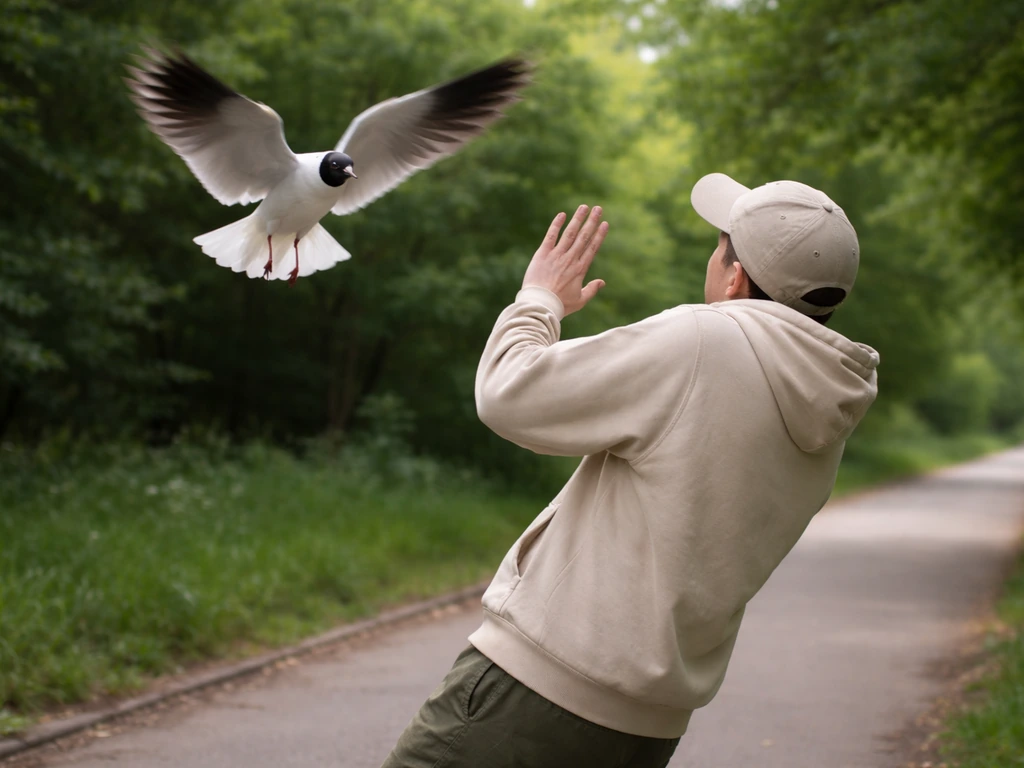
Birds don't hate. That's the honest answer. What looks like hatred is almost always fear, stress, pain, or a very reasonable attempt at self-defense. If a bird is biting you, lunging at you, screaming when you approach, or flattening itself against the cage wall, it's communicating something specific and readable. Once you know what to look for, you can usually tell within a few minutes whether your bird is scared, defensive, sick, or just having a bad day, and then actually do something about it.
How to Tell If a Bird Hates You What It Really Means

Maya Chen
22 May 2026
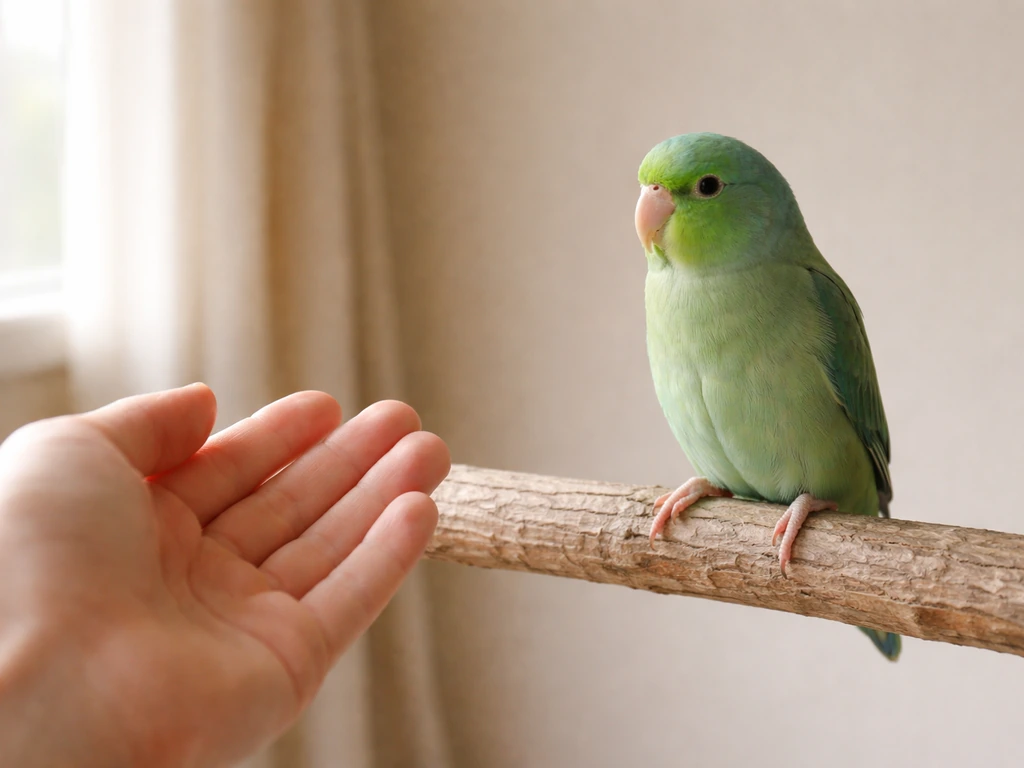
Birds don't hate you, but they do have strong feelings
The idea that a bird "hates" you is a human projection. Birds experience fear, stress, discomfort, territorial instinct, and pain, and all of those can produce behavior that looks personal. A cockatiel that lunges every time you reach into the cage isn't nursing a grudge. It's either scared of your hand, protecting a perceived territory, responding to something painful, or reacting to a past experience it hasn't forgotten. The behavior has a cause, and that cause is almost always fixable once you identify it correctly.
Wild birds are the same. A mockingbird dive-bombing you every time you walk to your car during nesting season isn't picking on you specifically. It's protecting eggs or chicks within a few feet of where you're standing. The aggression is nest-defense, not personal animosity, and it stops almost completely once nesting season ends. Understanding that distinction changes how you respond.
Signs a bird is stressed, scared, or defensive
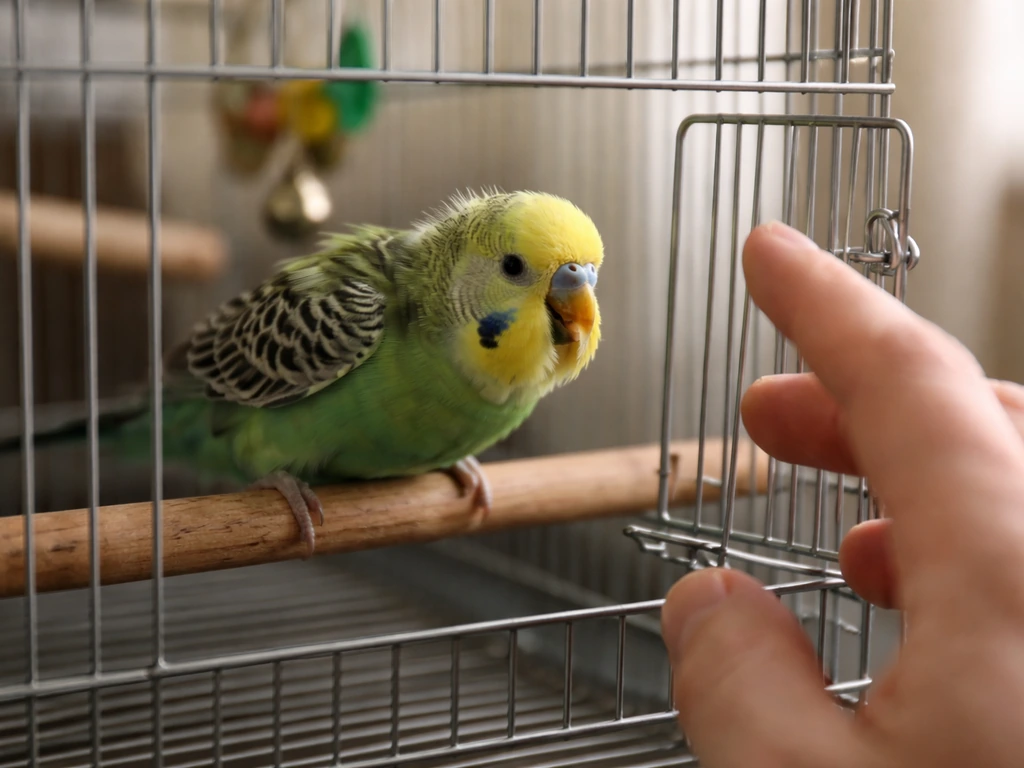
These are the signals most people misread as hatred. They're actually a bird telling you it feels threatened or uncomfortable.
- Lunging or darting toward you with an open beak, especially when you reach toward the cage or try to pick it up
- Biting that is immediate and repeated, not exploratory or playful
- Screaming or alarm calling that starts specifically when you approach
- Hissing, often paired with slicked-down feathers and a tense, low body posture
- Wings held slightly away from the body, feathers slicked tight, tail fanned out
- Freezing in place or pressing against the back of the cage to create distance
- Rapid breathing or panting alongside these postures (this one warrants a vet call, not just a behavioral fix)
- Flying away or retreating every single time you enter the room
- Raised head feathers or a generally puffed-up look combined with an alert, wide-eyed stare
The common thread across most of these is distance-seeking. The bird is trying to get away from you or warn you off because something about the interaction feels unsafe to it. That's very different from hatred. It's actually useful information you can work with.
Wild bird aggression specifically
If you're dealing with a wild bird, swooping, dive-bombing, and loud alarm calls near a specific spot almost always mean a nest is close. Nearly every bird species will defend a nest aggressively. If you are dealing with that kind of nest defense, you may wonder will a bird attack you, but the behavior usually comes with a predictable safe distance you can respect wild birds defend a nest aggressively. The attack zone is usually within a 50-foot radius of the nest and disappears within a few weeks once the young fledge. This isn't the bird hating you; it's the bird doing exactly what evolution designed it to do.
Signs a bird actually feels comfortable around you
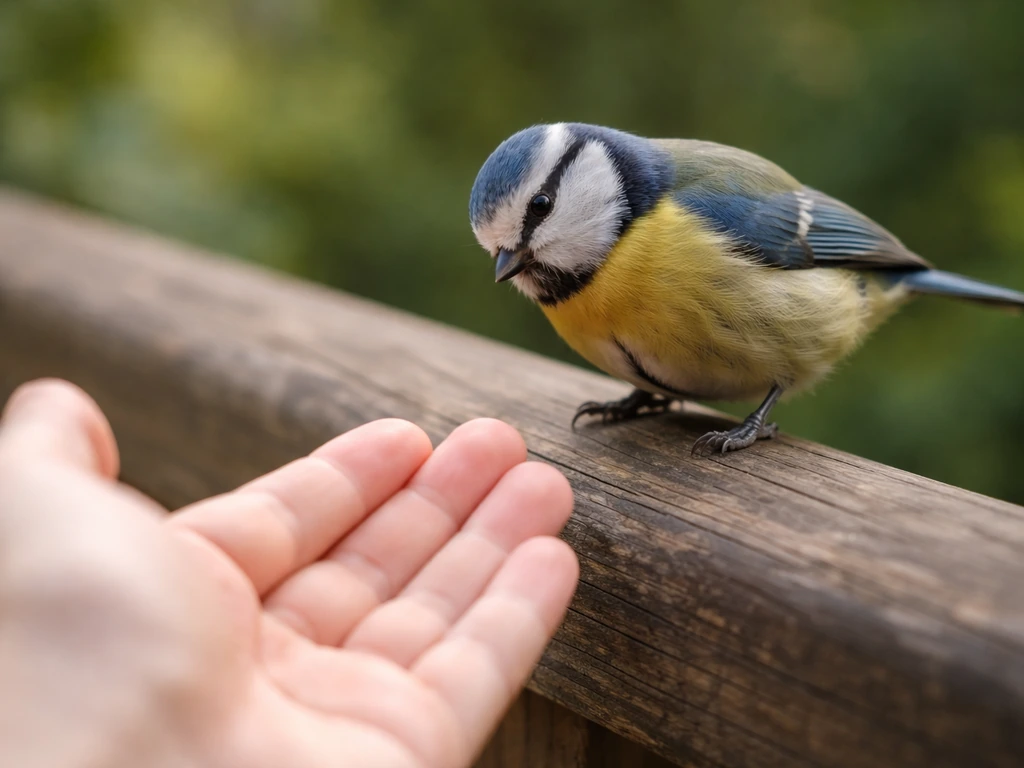
If you're second-guessing yourself and wondering whether things are actually fine, here's what bonding and comfort actually look like. These are the signals that tell you the relationship is on solid ground.
- Voluntarily stepping up onto your hand or moving toward you when you're nearby
- Preening itself while in your presence (relaxed birds groom; stressed birds don't)
- Soft, low vocalizations like chattering, quiet singing, or contact calls when you leave the room
- Grinding the beak (the quiet, rhythmic sound right before sleep), which signals deep relaxation
- Leaning into your hand or rubbing its head against your fingers
- Relaxed feathers that sit naturally, neither puffed up nor slicked flat
- One foot tucked up while perching near you
- Playing with toys or eating while you're present in the room
- Pupil dilation and constriction (pinning) paired with a loose body posture when looking at you, which often signals positive excitement in parrots
If you're seeing some of these regularly, even alongside occasional biting or screaming, the bird isn't hostile. It's probably reacting to specific triggers you haven't identified yet, not to you as a person.
Telling stress and aggression apart from illness
This is the part most people miss, and it matters a lot. Birds are biologically wired to hide illness until they can't anymore. By the time behavior changes become obvious, the underlying problem is often already serious. A bird that suddenly becomes withdrawn, defensive, or unusually aggressive may not have a behavior problem at all. It may be in pain, struggling to breathe, or fighting an infection. VCA Animal Hospitals notes that illness signs in pet birds can include labored or open-mouth breathing, along with neurologic or behavioral changes such as head tilt struggling to breathe.
The key is to look at the whole picture. Behavioral fear or aggression usually has a clear trigger: a hand approaching, a loud noise, a stranger in the room. Medical problems tend to produce more generalized changes with no obvious trigger, or they show up alongside other physical signs.
| Signal | Likely behavioral (fear/stress) | Possible medical problem |
|---|---|---|
| Biting/lunging | Triggered by a specific action (hand in cage, eye contact) | Sudden onset with no clear trigger; biting that's new in a previously tame bird |
| Fluffed feathers | Brief, situational, bird returns to normal quickly | Persistent fluffing combined with low energy or not eating |
| Screaming/vocalizing | Tied to a specific event (your leaving, a noise) | Sudden new screaming with no pattern; strange or changed voice quality |
| Breathing changes | Not typically present with pure fear/stress | Tail bobbing with each breath, open-mouth breathing at rest, increased sternal movement |
| Withdrawal/hiding | Bird is alert and responsive when approached | Bird is unresponsive, limp, or doesn't react normally to stimuli |
| Feather destruction | May coincide with boredom, routine changes, or hormonal cycles | New or sudden onset; paired with skin changes, discharge, or weight loss |
| Head tilt or loss of balance | Not typically a behavioral sign | Neurological red flag; needs immediate vet attention |
Open-mouth breathing at rest is never a behavioral issue. Tail bobbing with every breath is not attitude. Hissing paired with rapid, labored breathing is not just the bird being dramatic. These are physical signs of respiratory distress, and they need a vet, not a training plan. If you're unsure whether what you're seeing is behavioral or medical, always err toward the vet first.
What to do today to build trust and reduce fear
If the bird checks out medically and the issue is genuinely behavioral, the good news is that fear-based responses are very trainable. Here's where to start.
Start with distance, not contact
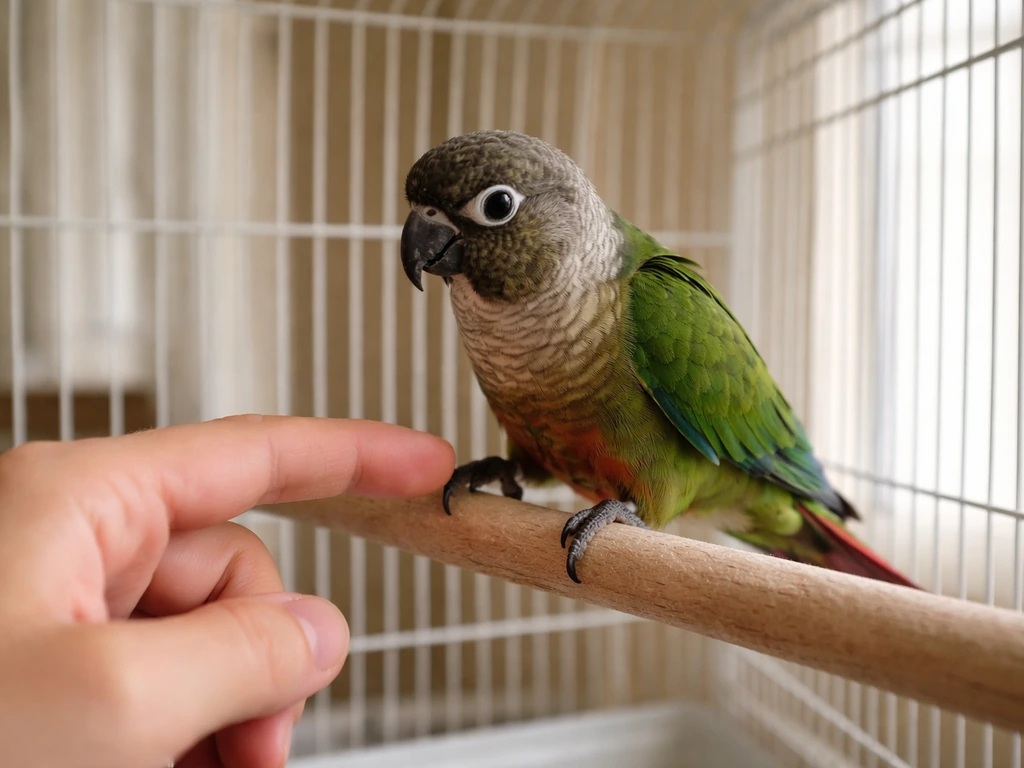
The single biggest mistake people make is pushing contact before the bird is ready. Instead, start from a distance where the bird stays relaxed. Sit near the cage and just exist there. Read a book, talk quietly, offer food through the bars without reaching in. Move slowly and keep your voice calm. A bird that can observe you without feeling threatened is already learning that you're safe.
Teach the step-up on the bird's terms
Teaching a bird to step up onto your finger or hand is one of the most effective things you can do for the relationship. It gives the bird a clear, predictable way to interact with you and removes the guessing game of being grabbed. Present your finger at mid-chest height, say "step up" calmly, and wait. If the bird steps on, reward it immediately with a small treat or verbal praise. If it doesn't, back off and try again later. Forcing the step-up defeats the whole purpose. Done consistently, this single behavior takes an enormous amount of stress out of every future handling interaction.
Create predictable routines
Birds are highly routine-dependent. Feeding, out-of-cage time, lights-on and lights-off at roughly the same time each day reduce overall stress significantly. A bird that knows what to expect from its environment is a bird that has mental bandwidth to engage with you rather than spend its energy on vigilance.
Check the cage size and environment
A cage that's too small is a documented source of stress in pet birds. If your bird can't fully extend its wings, can't move between perches comfortably, or has no room to get away from the door, it will be more defensive, period. Enrichment matters too: foraging opportunities, varied perch textures, rotating toys, and regular time outside the cage all reduce the background stress level that makes fear-based behavior worse.
Reduce restraint, especially early on
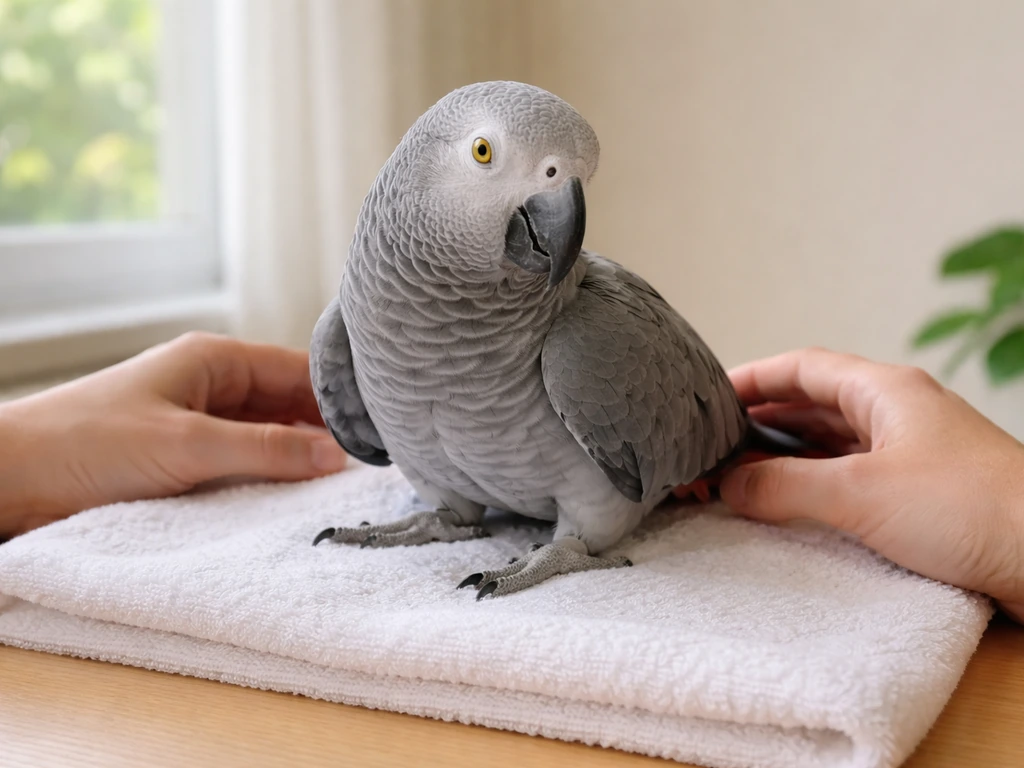
Restraint is genuinely stressful for birds. Heart rates in large parrots can exceed 250 beats per minute during restraint. If your handling sessions involve a lot of grabbing or holding the bird in place, you're conditioning it to dread being touched. Where possible, let the bird choose contact rather than imposing it, especially while trust is still being built.
Common mistakes people blame on "hate"
A lot of the behaviors people interpret as a bird hating them are actually responses to things the person is doing without realizing it. Here are the most common ones.
- Staring directly at the bird during initial interactions. Direct eye contact is a threat signal in many species. Looking at the bird from an angle or with soft eyes reads as far less confrontational.
- Reaching in from above. Predators come from above. A hand entering a cage from overhead triggers an instinctive threat response even in hand-raised birds.
- Rushing interactions when the bird shows early warning signs. A bird that's hissing or backing away is telling you it needs more space, and ignoring that erodes trust faster than almost anything else.
- Punishing biting. Blowing on the bird, flicking it, or yelling when it bites doesn't teach it not to bite. It teaches it that you're unpredictable and scary, which usually makes biting worse.
- Assuming the bird will warm up on its own without any structured positive interaction. Trust with birds is earned through consistent, low-pressure positive experiences, not time alone.
- Treating all fluffed feathers as aggression. A bird fluffing up for a few minutes after you handle it and then returning to normal is just resetting. A bird that stays puffed up for hours is a different situation entirely.
- Attributing wild bird swooping or dive-bombing to personal animosity. It's nesting defense. It will end. The bird does not know your name.
When to call a vet or behavior specialist
Some situations go beyond what you can address on your own, and recognizing them early makes a real difference. Here's when to stop troubleshooting and get professional help.
Call an avian vet promptly if you see any of the following: open-mouth breathing at rest, tail bobbing or increased sternal movement with each breath, active bleeding, a drooping wing, seizure or loss of balance, head tilt, discharge from the eyes or nostrils, a sudden dramatic change in droppings, or a bird that has stopped eating and is sitting low and puffed up on the cage floor. Birds hide illness well, and by the time these signs are obvious, waiting even a day can be dangerous.
Sudden aggression in a previously tame bird, especially with no obvious environmental trigger, is also worth a vet visit before you try any behavioral interventions. Pain and infection can completely change a bird's personality. Feather-destructive behavior that's new, escalating, or accompanied by any skin changes needs both a medical workup and potentially a behavioral specialist, since the causes can be medical, psychological, or both at the same time.
If you've ruled out medical causes and the fear or aggression is persistent and severe, a certified parrot behavior consultant or an avian-savvy trainer can help you build a structured desensitization plan. This is especially useful for birds with a trauma history, rehomed birds, or birds that have been through significant life changes. Trying to push through severe fear without guidance often makes the problem worse and takes much longer to fix than working with someone who knows what they're doing.
For wild bird aggression that's genuinely dangerous, such as repeated swooping that creates a fall or injury risk, the practical approach is to reduce perceived threat by avoiding the area when possible, using a portable canopy or umbrella over frequently used paths, and walking calmly rather than flailing or running.
If you're dealing with a bird that swoops you, the goal is to create distance, avoid the attack zone, and reduce perceived threat while the nest is active repeated swooping. If you’re wondering whether a mother bird will attack you, it usually comes down to whether you’re too close to her nest or chicks during nesting season mother bird attack you. The aggression is tied to the nest, and it will resolve on its own within weeks.
If you're ever injured by a wild bird, especially on the face or near the eyes, treat it as a genuine wound and clean it promptly.
The bottom line is that a bird behaving defensively is giving you information, not a personal verdict. Most of the time, what looks like hatred is a solvable problem once you understand what the bird is actually communicating and respond to it appropriately. For example, Audubon’s emergency guidance emphasizes safety-first triage for birds, including mistaken-identity scenarios like birds flying at windows and interpreting aggression as defense or territorial behavior rather than personal animosity Most of the time, what looks like hatred is a solvable problem once you understand what the bird is actually communicating and respond to it appropriately..
FAQ
How can I tell if my bird is reacting to me personally or to something about my routine?
Watch for whether the behavior happens only when you do a specific action (opening the cage, reaching over from above, wearing certain clothes, turning on a particular light, vacuuming) versus happening randomly throughout the day. If you can recreate the exact trigger and get the same response, it is usually situational fear or stress, not dislike of you.
What should I do in the moment when a bird lunges or screams at my approach?
Stop moving closer, freeze briefly, and lower your body so you are less imposing. Back up far enough that the bird’s posture softens, then try again later at a greater distance. Repeatedly trying to “confront” the bird in the same moment teaches it that your approach is the threat.
Do birds ever show “real hate,” like remembering bad experiences?
They do not process emotions like people do, but they can associate people or places with past discomfort. If the bird gets worse only around the same handling style or location (for example, the same perch near the cage door), that pattern points to learned fear from a specific experience, and it improves best with consistent, low-pressure repetition.
If a wild bird is dive-bombing me, how do I know whether it is nest-defense or something else?
Nest-defense is usually predictable and localized, with loud alarm calls and swoops that intensify when you enter a consistent area. If the bird follows you across unrelated spaces or behaves erratically outside any nesting period, treat it as higher-risk and give it wider distance while you reassess the environment.
How close is “too close” for a wild bird that’s defending a nest?
Use distance as your safety tool. If swooping is triggered, increase your distance until you can pass without alarm behavior, then keep that buffer during the nesting weeks. In practice, the safest approach is to avoid the attack zone entirely rather than testing the edge repeatedly.
Can a bird look aggressive even when it is actually in pain, and how can I spot the difference?
Yes. Pain-related behavior often looks less like targeted guarding (for example, only when you reach into the cage) and more like generalized changes (withdrawal, sudden irritability, unusual silence, hiding). Also check for breathing changes, posture on the cage floor, sudden drop in appetite, or any new physical signs, because those point to medical issues rather than training problems.
What are the most reliable comfort and bonding signs, not just “non-aggression”?
Comfort usually shows up as steady, relaxed body posture, normal breathing, and willingness to engage with predictable routines (eating, moving between perches, taking food offered through the bars). A bird that looks relaxed around your presence, tolerates nearby activity, and returns to normal behaviors quickly after you approach is generally bonding rather than “tolerating you.”
Should I stop handling entirely until I fix the behavior?
Not necessarily, but you should change the handling goal. For fear-based cases, reduce restraint and use the smallest possible steps that keep the bird relaxed. If you cannot approach without lunging or labored breathing signs, pause step-up practice and focus on distance, calm voice, and food through the bars until the bird can observe you comfortably.
How do I prevent making fear worse when teaching step-up?
Never force it. Present your finger at mid-chest height, give the bird time to decide, and reward immediately when it steps on. If it backs away, swivels away, or pins itself, you are likely asking too much at that moment, so back off and try again later at a farther distance.
What daily changes matter most if stress seems to be driving the aggression?
Start with predictability. Keep feeding and out-of-cage time consistent, maintain stable lighting schedule, and avoid sudden loud disruptions during peak sensitive times. Also ensure the cage allows normal wing extension and has enough room to move away from the door.
When should I assume it is medical instead of behavioral, even if I see a trigger?
If there is any sign of respiratory distress, bleeding, drooping wing, balance problems, head tilt, discharge from eyes or nostrils, sudden major changes in droppings, or a bird that stops eating and sits fluffed low, treat it as medical first. A painful condition can make any trigger more intense, so err on the side of an avian vet.
My bird’s aggression suddenly started, but nothing in the environment changed. What’s the best next step?
Schedule an avian vet evaluation before beginning desensitization. Sudden changes in a previously tame bird can reflect pain, infection, or neurological issues, and those can mimic fear-based aggression while requiring different treatment.
If I need professional help, what should I look for in a behavior specialist or trainer?
Choose someone experienced with avian welfare who prioritizes medical rule-outs, uses gradual desensitization rather than forcing contact, and can help you identify specific triggers and build a structured plan. If the bird has trauma history or was rehomed, ask how they approach trust building and reducing restraint.
What should I do if I get injured by a wild bird during an attack?
Treat it as a real wound, especially if it’s near the face or eyes. Clean promptly and monitor for increasing redness, swelling, or worsening symptoms, since wild bird injuries can become infected even if the initial bleeding was small.
Next Article
What to Do When a Bird Swoops You: Step by Step
Step-by-step actions to stay safe during protective bird swoops, prevent injury, handle contact, and reduce repeat encou