
Yes, a bird can destroy a jet engine, but it depends heavily on the bird's size, the number of birds involved, and exactly where in the engine they hit. A single small bird like a starling typically causes minor damage or none at all. A large bird like a Canada goose, or a dense flock hitting both engines at once, can cause severe thrust loss, blade damage, and in rare cases a complete engine failure. The word 'destroy' covers a wide range, from a dented compressor blade to a full engine shutdown, and both are real outcomes depending on the scenario.
Can a Bird Destroy a Jet Engine? What Actually Happens

Maya Chen
27 May 2026
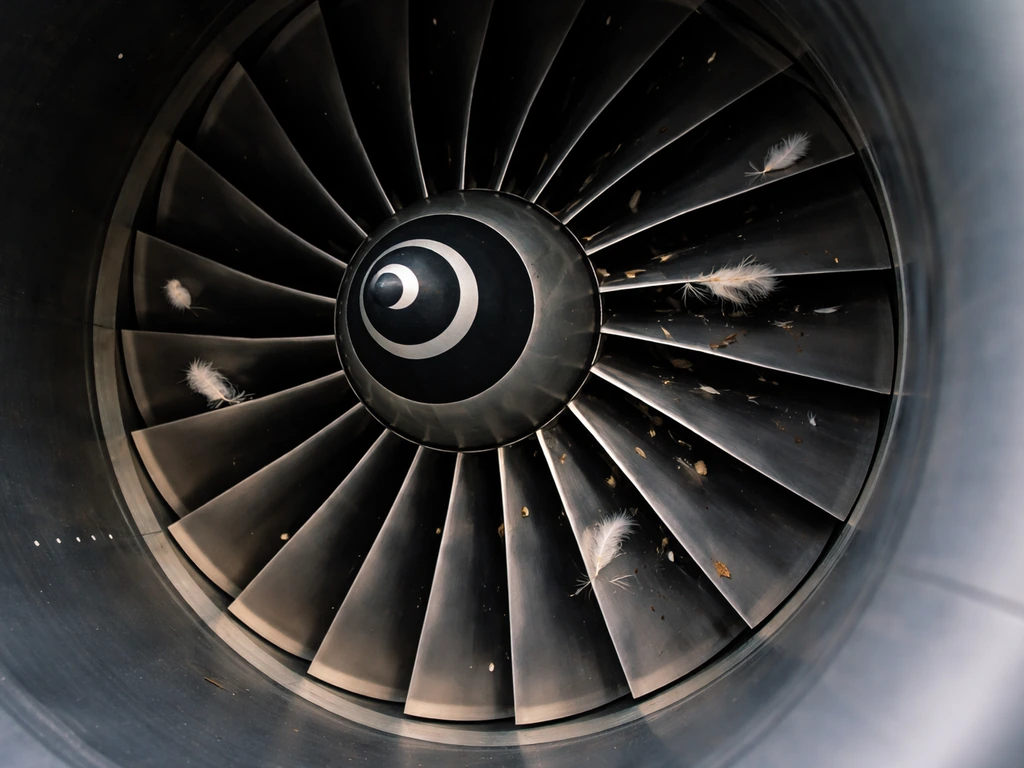
What actually happens inside a jet engine during a bird strike
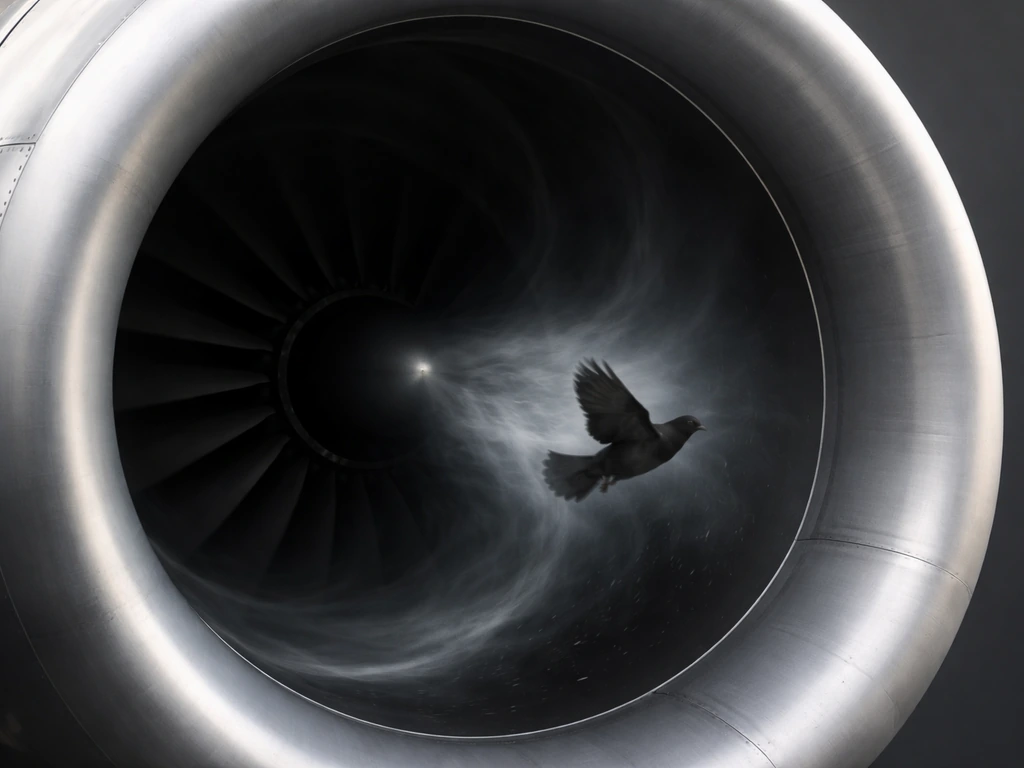
When a bird enters a jet engine, it does not get 'sucked in' the way most people imagine. Birds don't fly into engines deliberately, and the intake airflow does pull them in once they are close enough. At typical approach speeds, the combined velocity of the aircraft and the bird means the impact energy is enormous, even for a relatively light animal.
The first thing the bird hits is the fan, a set of large blades spinning at thousands of RPM. The fan is the most exposed part and usually takes the most damage. Behind that are the compressor stages, the combustion chamber, and the turbine. A bird that gets past the fan can jam compressor blades, cause a compressor stall (a sudden disruption in airflow that sounds like a loud bang and can momentarily kill thrust), or contaminate fuel-air mixing in the combustion section.
The specific failure modes depend on where the bird ends up. Fan blade damage is the most common outcome and is often repairable. A compressor stall is usually temporary and the engine can recover on its own or after a restart. Structural damage that breaks turbine blades is more serious. If a turbine blade separates and punches through the engine casing, that is called an uncontained failure, and it is the scenario engineers and regulators work hardest to prevent because debris can reach the fuel system or the aircraft structure.
Can a bird destroy an engine? Size, species, and impact severity
The honest answer is: it depends on the bird. The FAA certifies jet engines under 14 CFR § 33.76, which sets specific bird-ingestion test requirements based on inlet area and bird size. Engines must demonstrate they can handle small birds, medium birds, and large birds under defined test conditions without catastrophic failure. The FAA's Bird Standards Matrix breaks these into categories including small flocking, medium, and large birds, with different acceptable outcomes for each.
A single small bird, say a sparrow or a pigeon, rarely causes more than cosmetic damage to a modern turbofan. A medium bird like a seagull can dent or crack fan blades and may cause a temporary stall. A large bird, a Canada goose weighing 8 to 14 pounds, is a serious threat. FAA guidance and lessons-learned documents cite large-bird ingestion as capable of causing near-total thrust loss. The famous 2009 US Airways Flight 1549 ditching on the Hudson River was caused by flying through a flock of Canada geese that hit both engines simultaneously, causing catastrophic thrust loss in both.
Flocking encounters are where the math gets really bad. A single large bird can test the limits of what a certified engine can handle. A flock hitting a single engine multiplies the damage. A flock large enough to hit both engines at once, as in the Hudson River case, removes the redundancy that modern aircraft rely on. FAA certification does include flock-ingestion testing, requiring engines to survive a simulated encounter with multiple small birds based on the engine's inlet area, but no certification standard is designed to guarantee survival of the worst-case large-flock dual-engine event.
| Bird Category | Typical Examples | Likely Engine Outcome | Certified to Survive? |
|---|---|---|---|
| Small (under ~0.3 lb) | Sparrow, starling | Minor or no damage | Yes, engines must handle flocks of small birds |
| Medium (approx. 1–2 lbs) | Seagull, pigeon, mourning dove | Possible fan blade damage, temporary stall | Yes, with allowable thrust loss limits |
| Large (4 lbs+) | Canada goose, vulture, pelican | Severe blade damage, major thrust loss, possible engine failure | Must not cause uncontained failure or fire, but thrust loss is allowable |
| Multiple large birds / flock (both engines) | Canada geese, starling superflocks | Catastrophic dual-engine thrust loss possible | No guarantee for worst-case dual-engine scenarios |
Myths vs facts about bird strikes and jet engines
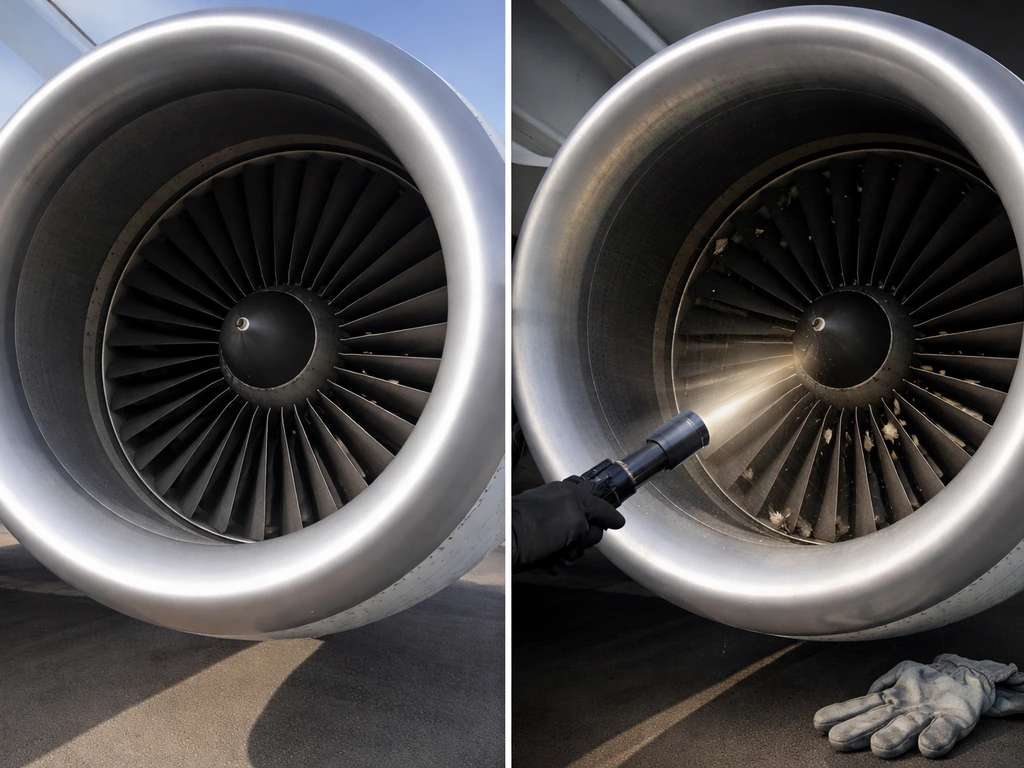
There are two opposite myths floating around about bird strikes. The first is that birds pose no real threat to modern jet engines and that everything is fine by design. The second is that any bird strike is a crisis that will bring a plane down. Neither is true.
- Myth: Jet engines just shred birds with no damage. Fact: Fan and compressor blades can be dented, cracked, or fractured by bird impacts, especially with large birds. Damage can require engine removal and overhaul.
- Myth: Any bird strike will cause a crash. Fact: The vast majority of bird strikes cause no damage at all. FAA wildlife strike data from 1990 to 2023 shows that most recorded strikes result in no aircraft damage and no injuries.
- Myth: Small birds are harmless. Fact: A flock of small birds ingested all at once can cause compressor stalls and cumulative blade damage. Certification testing accounts for this with multi-bird flock simulation requirements.
- Myth: Engines are certified to survive any bird strike. Fact: Certification requires engines to handle defined test conditions without uncontained failure or fire, but it does not guarantee full performance after a large-bird ingestion. Thrust loss is an acceptable outcome in some certification categories.
- Myth: Bird strikes are rare. Fact: The FAA Wildlife Strike Database documents tens of thousands of strikes per year with U.S. civil aircraft. Most go unreported and cause no damage, but the frequency is high.
- Myth: Birds are sucked in by powerful vacuum-like suction from far away. Fact: The intake draw is significant at close range, but birds typically enter engines because they are in the flight path, not because they are pulled from a distance.
How jet engines and airports are built and managed to reduce this risk
Engine design and certification

Modern turbofan engines are designed with bird ingestion in mind from the start. The FAA's 14 CFR § 33.76 certification requirement mandates that manufacturers test engines by firing actual birds (or gelatin simulants) into running engines at defined weights and quantities. The engine must demonstrate it can continue to provide thrust within acceptable limits, must not release hazardous fragments through the engine casing (the uncontained failure standard), and must not catch fire. The related standard 14 CFR § 33.94 covers blade containment and rotor unbalance, and 14 CFR § 33.blank" rel="noopener noreferrer">17 covers fire protection, all working together to limit how bad an ingestion event can get.
Critically, certification does not mean the engine is undamaged after a large-bird ingestion. It means the damage is contained. You might lose thrust, you might need to shut the engine down, but the goal is that pieces don't fly out and hit the fuselage, fuel lines, or the other engine. That containment principle is what makes a survivable emergency out of what could otherwise be catastrophic.
Airport wildlife management
Airports are required to manage wildlife hazards, and this is taken seriously. FAA Advisory Circular 150/5200-33C gives detailed guidance on controlling hazardous wildlife attractants near airports, including how to manage grass height (shorter grass discourages large birds), water features, trash, and food sources. Many major airports have full-time wildlife biologists, use trained falcons or dogs to scare birds off runways, fire noise cannons, and in some cases hold federal permits for lethal control of hazardous species.
The FAA emphasizes habitat modification as the most effective long-term tool. An airport that removes ponds, reduces seed-bearing vegetation, and manages turf height consistently will have far fewer dangerous bird concentrations than one that does not. Land use around airports matters too, which is why FAA AC 150/5200-33C covers not just the airport property but the surrounding area, because birds do not respect property lines.
What to do if you suspect a bird strike near you
If you are a passenger and you hear a loud bang, see a flash from an engine, or notice the plane shuddering during takeoff or approach, stay calm and follow crew instructions. Bird strikes are serious but survivable in the overwhelming majority of cases. That same idea is also why questions like “can a plane survive a bird strike” come down to certification, maintenance, and pilot procedures rather than one single worst-case outcome. The flight crew has checklists for exactly this situation. Your job is to stay seated, stay buckled, and pay attention to the crew.
If you are a pilot, the procedure after a suspected bird strike is to declare the situation to air traffic control, follow your aircraft's abnormal procedures checklist, and land as soon as practical. Report the strike using FAA Form 5200-7 or through the FAA Wildlife Strike Database online. The Aeronautical Information Manual (AIM § 7-5-3) specifically urges pilots to report all wildlife strikes. This data feeds into the national database that helps researchers and engineers understand which species, locations, and conditions are most dangerous.
If you are on the ground near an airport and witness what looks like a bird strike during an aircraft's approach or takeoff, you can report it to the airport's operations center. You are not expected to do anything else. Do not approach an aircraft on a runway or taxiway.
If you read a news report about a bird strike incident, look for these details before drawing conclusions: Was it a single bird or a flock? What size were the birds? How many engines were affected? Was there a declared emergency? Those specifics tell you whether this was a minor maintenance issue or a serious safety event.
What happens to the bird, and what to do if you find remains near an airport
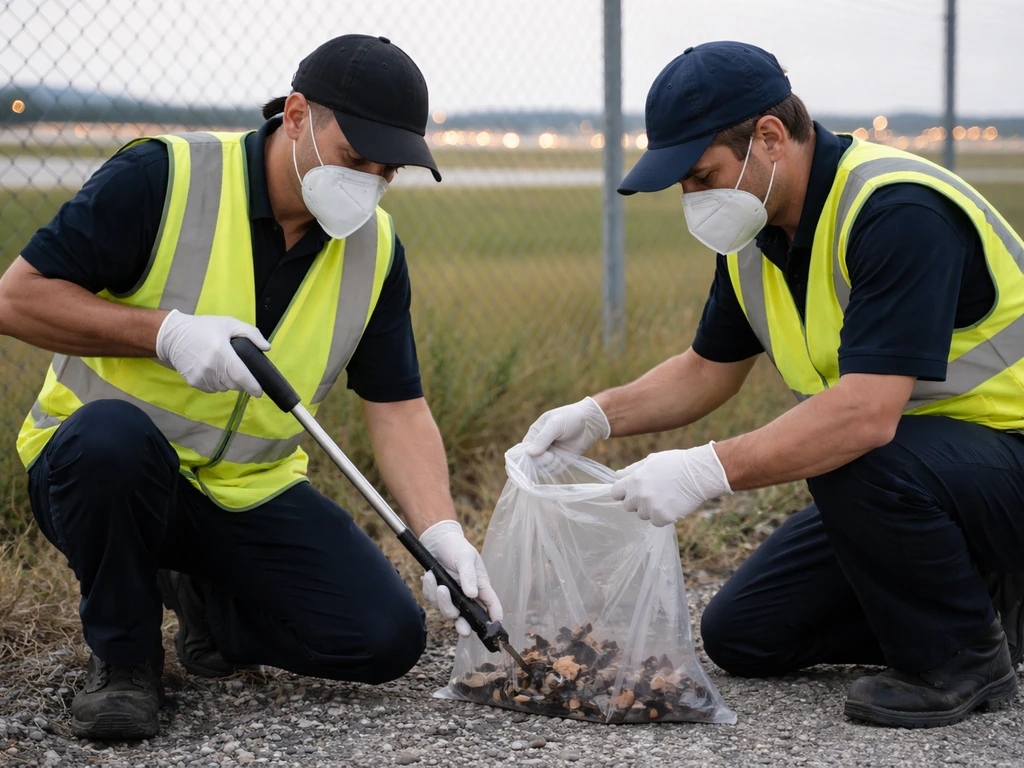
From the bird's perspective, a jet engine strike is almost always fatal. The impact forces involved, combined with the rotating fan blades, leave no realistic chance of survival for any bird entering an engine. Birds struck by the airframe, nose, or windscreen may also be killed instantly from blunt force trauma. In some lower-speed collisions with smaller aircraft, a bird may survive with injuries, but that is the exception.
The species most commonly recorded in FAA strike data include mourning doves, gulls, raptors, and waterfowl depending on the region and season. Migratory periods, especially spring and fall, see higher strike rates because more birds are moving through flight corridors that overlap with airport approach paths.
If you find a dead bird near an airport or on airport property, there are a few things worth knowing. Airport wildlife staff may want the remains for species identification, which feeds into the FAA Wildlife Strike Database and helps improve hazard management. Do not handle carcasses with bare hands. If you find one in a public area, you can contact the airport's operations center or a local wildlife authority. Some airports actively collect and submit feather and tissue samples to the Smithsonian Feather Identification Lab for DNA-based species ID, which is especially useful when only fragments remain after engine ingestion.
If you live near an airport and want to help reduce bird strike risk, the most practical things you can do are: avoid feeding birds in your yard near the airport boundary, remove standing water that attracts waterfowl, and keep grass trimmed short to reduce foraging habitat for large birds like geese and starlings. These steps protect birds from a hazardous environment and reduce risk for aircraft at the same time. It is a situation where the interests of aviation safety and bird welfare genuinely point in the same direction.
Understanding the real risk of bird strikes, rather than either dismissing them or catastrophizing them, is what leads to better outcomes for everyone involved. Engines are certified to contain the damage. Airports are required to manage the risk. Pilots are trained to respond. And the data from reported strikes is what drives continuous improvement in all three areas. That is why jets don’t have bird blockers, even though wildlife hazards are taken seriously.
FAQ
Why don’t jets have “bird blockers” or screens to prevent bird strikes?
Not in any reliable, engineered way. Modern aircraft are already designed so the engine must contain ingestion damage, rather than counting on removable “bird protection” systems. Any additional obstruction can reduce performance or complicate certification, so manufacturers generally do not add bird-catching hardware.
Can an engine keep running after a bird strike, but still be damaged?
Yes, even if the engine keeps running. A strike can leave the fan or compressor with deformed blades or deposits that later cause vibration, abnormal EGT/temperature readings, or an airflow issue. That is why crews may call for inspections and why dispatch and maintenance guidance often treats bird strikes as more than a visual event.
How can pilots tell whether the bird strike caused serious damage?
Yes, damage can be hard to see from the cockpit. The aircraft might not show obvious shuddering, especially if the bird hits a low-stress area or is small, yet the fan blade can still be nicked or cracked. Maintenance inspections after reported strikes are what confirm the actual condition.
Does “certified” mean a bird strike will never cause catastrophic engine failure?
It can, but it is uncommon and depends on the engine design and what parts were hit. The certification focus is on preventing uncontained failures, which includes stopping fragments from escaping the engine casing. Still, “contained” does not mean “no damage,” it means debris release is prevented to protect the airframe.
What happens if a damaged engine from a bird strike is not inspected promptly?
Bird strikes are not strictly a “single event” problem, they can cause progressive deterioration if damage goes undetected. For example, blade damage or compressor disturbances can worsen with additional cycles. That is why operators typically follow a post-strike assessment and inspection interval rather than simply flying as normal.
How is a suspected bird strike handled when it happens during taxi or while stopped?
On the ground, a strike is usually managed differently depending on phase and observed symptoms. If there is no sign of thrust or engine performance issues, the aircraft may still require borescope inspection and repair planning based on the type of engine and the reported ingestion. Ground staff should coordinate with the airline’s maintenance control to decide the inspection depth.
If I hear a bang during approach, does that always mean the engine is failing?
Sometimes, a “hard” engine noise does not automatically mean the worst-case scenario occurred. A compressor stall can sound like a loud bang and reduce thrust briefly, then recover. Crews distinguish stall indications and related system cues using aircraft-specific abnormal procedures and engine monitoring.
Are bird strikes usually limited to one engine, or can both get hit at once?
Not usually, because the engine is the primary hazard once ingestion occurs, but multiple-engine events can happen when both intakes encounter the same flock. With dual-engine aircraft, the key factor is whether the aircraft’s trajectory and geometry put each engine in the flock’s path at the same time.
If I witness a bird strike, what should I do without getting in the way?
Ground reporting helps improve hazard management, but you should keep it limited to safe actions. If you are near the airport, notify the airport operations center or follow local instructions, do not approach an aircraft and do not interfere with emergency response. For passengers, the crew reporting pathway is the priority.
What details should I look for in news reports so I can judge how serious a bird strike likely was?
The most decision-useful details are bird size, whether it was one bird or a flock, how many engines were affected, and what phase of flight (takeoff, climb, approach, landing) it occurred in. Species identity is helpful too, but phase and event scale often explain why the outcome ranged from minor damage to severe thrust loss.
I found a dead bird near the airport, can I just take it home or handle it?
If you find remains, treat them as potentially hazardous and evidence for identification. Avoid bare-hand handling, bag the material if the airport requests it, and contact airport wildlife staff or the operations center. Some airports use DNA or feather ID processes, so preserving fragments (without contamination) can matter.
Which actions around my home actually reduce bird strike risk for flights?
You can reduce risk locally by focusing on habitat attractants near approach and runway areas, not just “keeping yards bird-free.” Practical measures include removing standing water, keeping turf consistently trimmed short, and avoiding landscaping choices that produce abundant seeds or shelter. These steps reduce both bird presence and the likelihood of hazardous concentrations during peak migration.