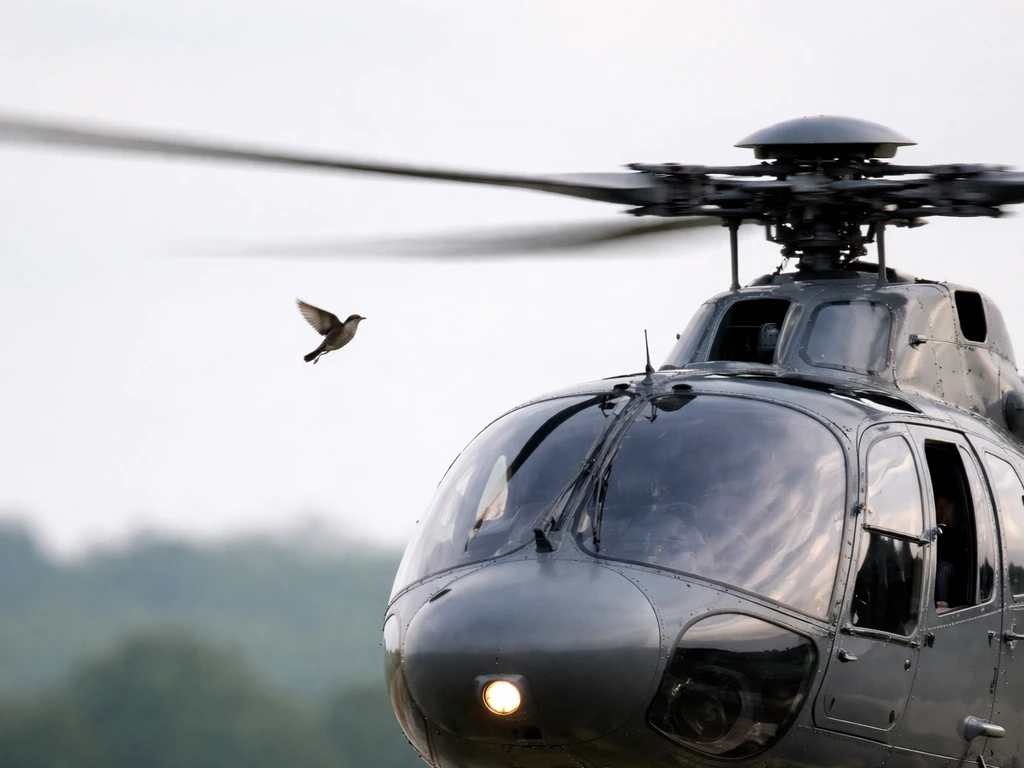
When a helicopter hits a bird, the most likely outcome is a loud thump, possible structural damage to a rotor blade or windshield, and a very bad day for the bird. People often wonder, can a bird take down a helicopter, and the core answer is that it is extremely unlikely unless conditions line up with a major strike. The helicopter usually keeps flying. The bird almost certainly does not survive.
What Happens If a Helicopter Hits a Bird

Maya Chen
1 May 2026
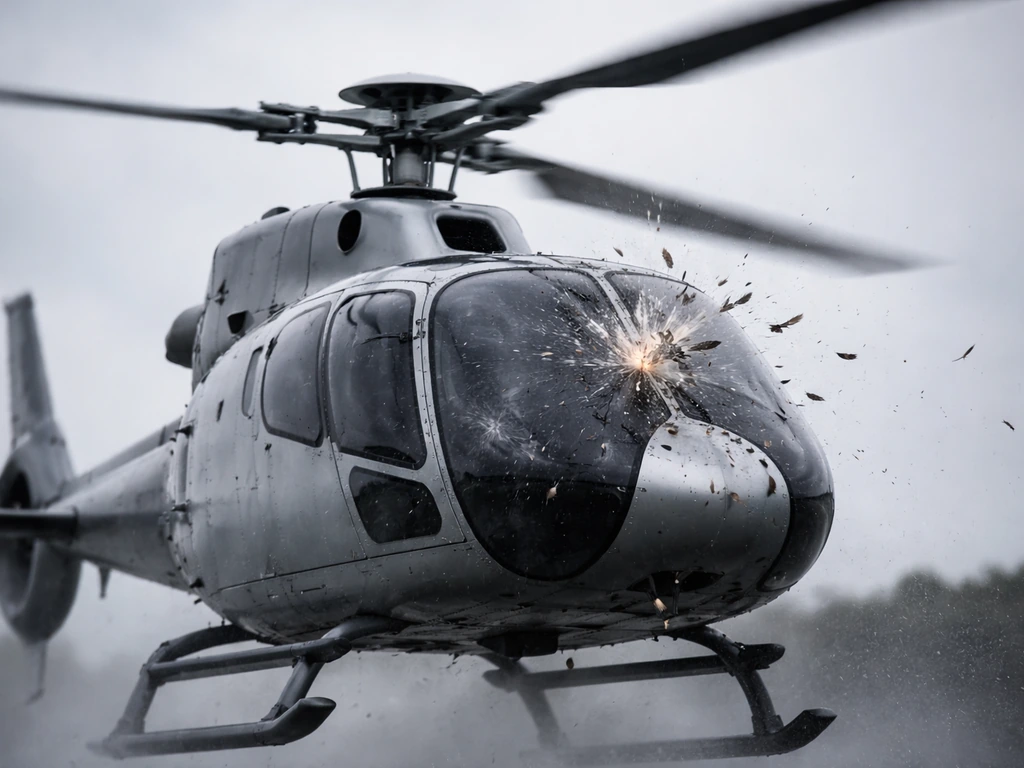
Catastrophic failure from a single bird strike is rare, though not impossible, and the drama people imagine, fireballs, instant crashes, engine explosions, is almost never what actually happens. For a plane, a bird strike can damage the engine, windshield, or airframe, and prompt the same kind of immediate pilot assessment and emergency procedures bird strike on a plane.
What happens to the helicopter right away
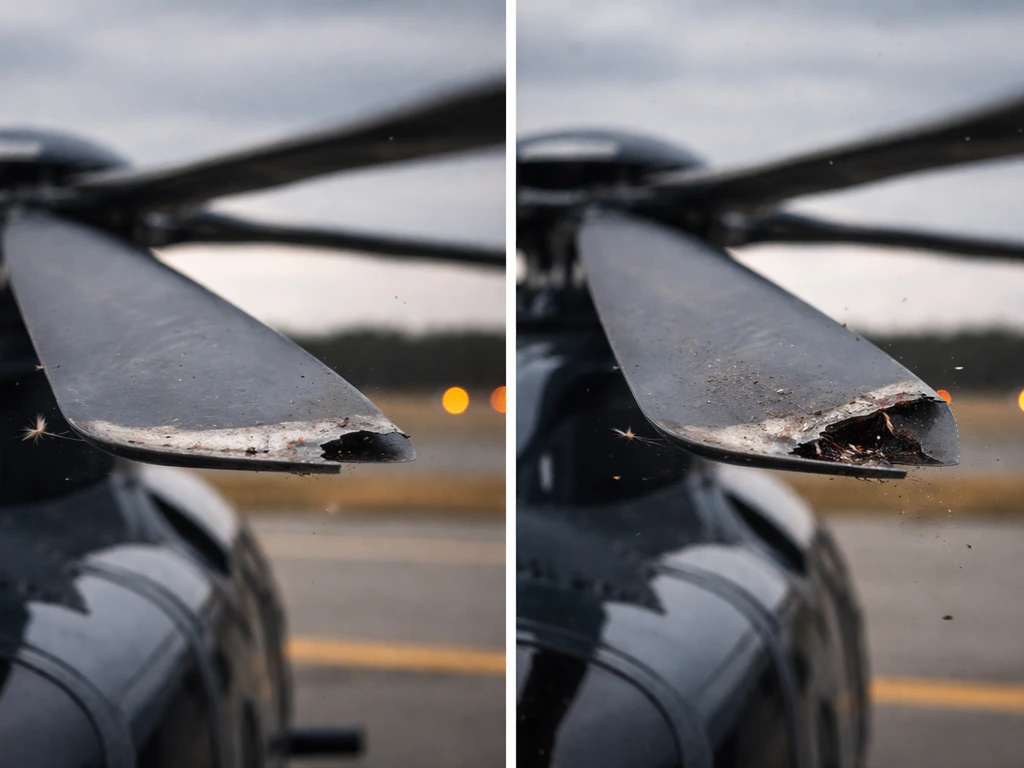
The immediate effects depend on what the bird hits: a rotor blade, the windshield, a tail rotor, or an engine intake. Each scenario plays out differently, but none of them are trivial.
Rotor blade strikes
A main rotor blade spinning at operating speed hits a bird with enormous force, even a medium-sized bird. The impact can nick, crack, or deform the leading edge of the blade. Because rotor blades are precisely balanced, even minor damage can introduce vibration. The pilot will feel this immediately, often as an unusual shudder through the controls or airframe. Severe blade damage can cause dangerous imbalance, and in the worst cases that imbalance compounds quickly. Pilots are trained to recognize rotor vibration as a serious signal and respond by reducing airspeed and finding a place to land.
Engine and intake ingestion
Turbine-powered helicopters have engine intakes that can ingest a bird. A small bird may pass through with little effect. A larger bird, or multiple birds, can cause compressor blade damage, a surge, or even a flameout. Twin-engine helicopters have a significant safety advantage here because they can continue flying on one engine while the pilot manages the situation. Single-engine aircraft face a much tighter decision timeline. FAA airworthiness rules under 14 CFR §29.631 require that transport-category rotorcraft be certified to continue safe flight and landing after striking a 2.2-pound (1.0 kg) bird at cruise speeds up to 8,000 feet altitude, which means the aircraft is designed with this scenario in mind.
Windshield and fuselage strikes
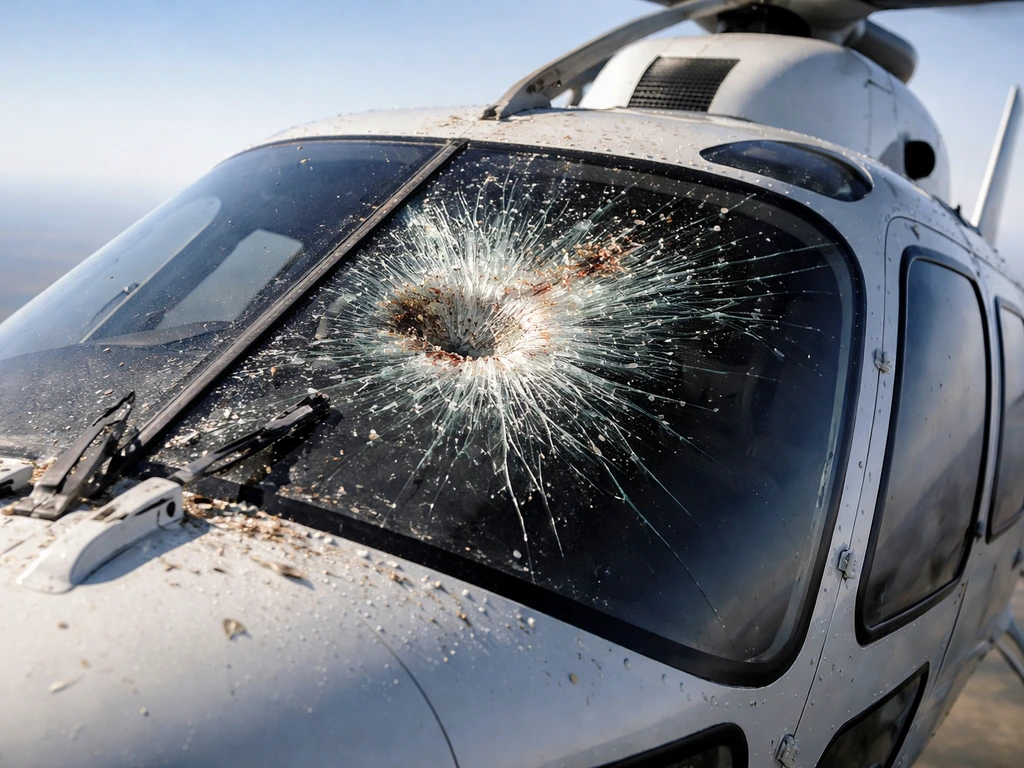
A bird hitting the windshield at speed can shatter it, shower the cockpit with debris, and potentially injure the pilot directly. Helicopter windshields are tested for bird impact resistance, but a large bird at high speed can still penetrate. A fuselage hit is usually less dangerous structurally but can still cause skin damage and requires inspection before the aircraft flies again.
Pilot response
The standard pilot response to any suspected bird strike is to assess aircraft control and systems immediately: check engine instruments, feel for unusual vibration, confirm tail rotor response, and determine whether continued flight is safe. If there is any doubt, pilots declare an emergency and land as soon as practicable. The phrase 'continued safe flight and landing' is what certified aircraft are designed to achieve, not guaranteed smooth continued operation.
What happens to the bird
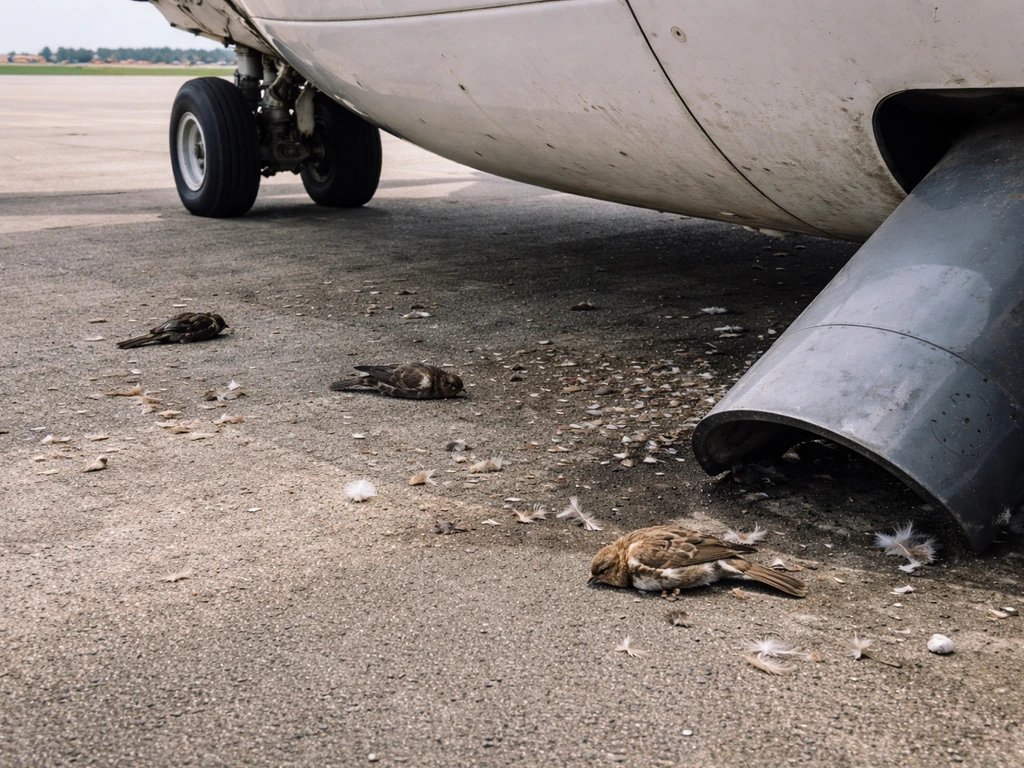
There is no gentle way to say this: the bird almost always dies. A rotor blade moving at tip speeds that can exceed 400 mph delivers a lethal blow. Even a glancing impact from a rotor or windshield at typical helicopter cruise speeds (60 to 150 knots) generates forces far beyond what any bird's body can withstand. Internal hemorrhage, organ rupture, and skeletal destruction happen instantly.
What you find afterward depends on what the bird hit. Windshield and fuselage strikes may leave blood, feathers, and sometimes larger fragments on the aircraft's exterior. Rotor strikes often scatter debris over a wide area below the flight path, which can make it hard to locate anything at all. Engine ingestion typically destroys most biological material, though feather fragments may be visible in the intake or exhaust.
Occasionally a bird survives a glancing blow from the edge of a rotor wash interaction rather than direct contact, falling stunned to the ground. This is uncommon but worth checking if the helicopter was at low altitude and you observed the bird fall. A stunned bird on the ground is still in shock and needs careful handling (more on that below).
Common myths worth ignoring
A lot of people picture a helicopter bird strike as an immediate catastrophe: an explosion, a fireball, the aircraft spiraling out of the sky. That picture is almost always wrong, and understanding why matters both for reassurance and for taking the real risks seriously.
| Myth | What actually happens |
|---|---|
| A single bird always causes engine failure | Small to medium birds often pass through turbine engines with limited damage. Larger birds or flocks are a bigger risk, but single-bird engine failure is not guaranteed. |
| The helicopter will catch fire | Bird strikes do not cause fires in any typical scenario. Fuel ignition requires very specific conditions not created by biological impact. |
| The helicopter will immediately crash | Certified transport-category rotorcraft are designed to achieve continued safe flight and landing after a 2.2-lb bird strike. Crashes do occur but are not the default outcome. |
| The rotor will shatter instantly | Rotor blades are engineered composites. They can be damaged and cause dangerous vibration, but shattering on a single small-bird impact is extremely uncommon. |
| Small birds pose no risk at all | A small bird ingested into a turbine at the wrong angle, or a flock of small birds, can still cause real damage. Size matters but is not the only variable. |
The real risks are more specific: an undetected rotor crack that worsens over subsequent flights, a windshield breach that injures the pilot, engine damage in a single-engine aircraft with no power redundancy, or a flock encounter that overwhelms the aircraft's systems. These are serious but they are not the cinematic catastrophe that search results and headlines suggest. Context matters enormously, and the honest answer is that most bird strikes are survivable events that require careful inspection and reporting, not disaster recovery. For fixed-wing aircraft, you can estimate the odds from bird strike data and general hazard factors like altitude, season, and local bird activity bird strikes.
It is also worth noting that helicopter bird strikes share some characteristics with fixed-wing bird strikes, but the rotorcraft environment is distinct. This is one reason why the question of why does a plane crash when a bird hits it comes up for fixed-wing aircraft, even though helicopter risks are different fixed-wing bird strikes. If you want the same idea for fixed-wing aircraft, see what happens if a plane hits a bird. The rotor system, lower typical airspeeds compared to jet aircraft, and different engine configurations all change the risk profile. The concerns around helicopter strikes should not simply be imported from what you might read about commercial airline bird strikes.
Reporting requirements and who to contact

In the United States, pilots and operators are required to report wildlife strikes to the FAA. The primary tool for this is the FAA Wildlife Strike Database reporting form (FAA Form 5200-7). This is a federally maintained system and reporting helps the agency identify hazard hotspots, track trends, and update safety guidance. Reporting is mandatory for air carriers and is strongly encouraged for all other operators.
If the strike occurs at or near an airport, notify airfield operations immediately. Airport wildlife management teams can respond to bird carcasses on or near runways, inspect the area for flock activity, and coordinate with air traffic control to warn other aircraft. If the strike caused any damage or declared emergency, the relevant aviation authority (FAA in the US, EASA or national authority elsewhere) will expect documentation as part of the post-incident inspection record.
Preserve any physical evidence you can safely collect: feathers, tissue fragments, or photos of the strike damage. The Smithsonian Institution's Feather Identification Laboratory works with the FAA to identify bird species from strike remains, which helps target prevention efforts. Even a small feather sample in a sealed bag is useful.
- File an FAA Wildlife Strike Report (Form 5200-7) as soon as practical after landing
- Notify airfield operations or the tower if the strike occurred near an airport
- Document all damage with photographs before any repairs begin
- Collect any feather or tissue samples and note the GPS coordinates of the strike location if possible
- Coordinate with your maintenance team for a full airworthiness inspection before the next flight
- If a flight emergency was declared, follow your operator's incident reporting procedures
Handling the scene safely after the strike
If you land and find bird remains on the aircraft or on the ground nearby, handle them carefully. Wild birds can carry zoonotic diseases including avian influenza strains, Salmonella, and Chlamydiosis (psittacosis in some species). For carcass disposal planning during avian influenza outbreaks, follow EPA’s guidance on managing and disposing bird carcasses to reduce infection risk Wild birds can carry zoonotic diseases including avian influenza strains, Salmonella, and Chlamydiosis (psittacosis in some species).. Wear disposable gloves before touching any biological material. Do not handle remains with bare hands and avoid touching your face afterward.
For carcass disposal, follow your local wildlife and environmental regulations. In the US, most native bird species are protected under the Migratory Bird Treaty Act even after death, which means you cannot simply discard them in regular trash in some jurisdictions. Contact your local US Fish and Wildlife Service office or airport wildlife coordinator for guidance. Samples sent for species identification are typically handled through the FAA/Smithsonian pipeline mentioned above.
If you find a bird that appears to be alive but stunned, keep people and animals away from it and contact a licensed wildlife rehabilitator. Do not attempt to treat it yourself. Stunned birds are in shock and can be further injured by well-intentioned handling. Keep the area quiet, place a breathable container (a cardboard box with holes) over the bird to reduce stimulation, and get professional help on the line.
For debris from the aircraft itself, fragments of composite rotor blade material or broken windshield should be collected and preserved for the maintenance team. Do not discard these pieces. They are part of the inspection record and can help identify the damage mechanism.
Reducing the risk for future flights
Bird strikes are not random bad luck. They cluster by location, altitude, season, and time of day in predictable ways that you can actually plan around.
Timing and altitude
Most bird strike incidents happen at lower altitudes, especially during takeoff and approach phases below 500 feet AGL, and during dawn and dusk when bird activity peaks. If you have schedule flexibility, mid-morning and mid-afternoon flights during non-migration periods are statistically lower risk. Spring and fall migration seasons concentrate large numbers of birds at altitudes that helicopters routinely fly, so extra vigilance is warranted from March through May and August through November.
Route awareness
Avoid low-level flight over wetlands, agricultural fields at harvest time, landfills, and large water bodies, particularly during dusk or dawn. These areas concentrate birds. If your route must cross them, do so at the highest practical altitude to reduce collision probability. Pilots familiar with local bird behavior have a real advantage here: knowing where the local raptors soar, where waterfowl roost, and where migratory corridors cross your typical routes is genuinely useful operational knowledge.
Airport and operator wildlife management
Airports with active wildlife management programs use a range of tools: habitat modification to make the airport environment less attractive to birds, trained wildlife personnel, pyrotechnic deterrents, raptor dispersal programs, and coordinated reporting systems. If you operate from a smaller airfield without dedicated wildlife management, talk to the field manager about what hazard mitigation is in place and advocate for basic measures like grass height management and removal of food attractants near the movement areas.
Pilot awareness and equipment
There is no radar system that reliably detects individual birds, though some research into avian radar continues. The practical tools available to pilots are situational awareness, NOTAM review for known bird hazard areas, and coordination with ATC for any reported bird activity along your route. Some operators in high-risk environments use forward-facing cameras or modified lighting to increase bird detection and possibly deter approach, though evidence for lighting effectiveness is mixed. The most reliable mitigation is still route and timing planning combined with prompt reporting of every strike so the data improves for everyone.
FAQ
If a helicopter hits a bird, will it definitely crash or catch fire?
Not always. If the bird hit was small and no damage is found during the inspection, the helicopter may be cleared to return to service. The key decision is the maintenance sign-off based on inspection findings like rotor blade leading edge damage, windshield integrity, vibration trends, and engine/air-intake checks, not the fact that the flight “seemed fine” right afterward.
How do pilots tell whether the bird strike caused serious damage?
Vibration is one of the clearest cues, but it is not the only one. Pilots also look for abnormal control feel, changes in engine indications (temperature, torque/power parameters, compressor behavior), warning messages, and abnormal tail rotor response. If any of those don’t look normal, the event should be treated as potentially structural until proven otherwise.
Can a helicopter fly again immediately after a bird strike?
If there is no immediate, obvious emergency, the aircraft is still typically taken out of service until an appropriate inspection is completed. Rotor blade damage or hidden cracks can worsen over subsequent flights, so operators follow an inspection and maintenance checklist appropriate to the aircraft type and the nature of the impact.
What types of bird-strike damage might not be obvious during the flight?
Yes, and it depends on the direction and location of the impact. A bird strike on a rotor blade can create imbalance that persists even if the blade looks superficially intact. Windshield damage can also be subtle at first, with micro-cracks or spidering that only a close inspection reveals.
Does the risk change depending on whether the helicopter is single-engine or twin-engine?
Twin-engine helicopters have a timing advantage because the crew can continue safe flight and landing capability on one engine if the other is affected, while they manage the situation. On single-engine rotorcraft, the margin is narrower, so pilots generally prioritize the fastest path to a safe landing and may declare an emergency sooner if engine performance is affected.
If the strike seems minor, do I still have to report it?
It depends on aircraft type and where you fly, but for most operations you should assume any suspected strike is reportable and also triggers internal operator procedures. Even if the aircraft can be operated, the reporting helps build a local hazard picture so future flights can adjust routing, altitude, and timing.
What should passengers or crew do immediately after landing, without making things worse?
If you can safely do it, preserving evidence matters, but do not delay safety actions. Collect photos from a safe position, note the approximate time and location, and preserve any visible fragments or debris for maintenance. Avoid rummaging through the rotor area or any potentially energized systems.
If we find the bird stunned on the ground, should we try to move or help it?
Be careful with “alive but stunned” birds. The safe step is to keep others away, minimize handling, and contact a licensed wildlife rehabilitator. A quiet, breathable container can reduce stress, but DIY treatment can cause additional injury and increases disease exposure risk.
Are there health or cleanup precautions after a bird strike?
Yes. Bird remains and some aircraft debris can carry pathogens, so use disposable gloves when handling biological material and avoid touching your face. Also follow local rules for waste disposal and protect the aircraft inspection evidence from contamination, so maintenance teams can assess what happened accurately.
What detection or avoidance tools actually help before the strike happens?
You cannot rely on radar to guarantee detection of individual birds, so detection is mainly situational. Practical mitigation focuses on avoiding known high-risk times and places, reviewing NOTAMs or internal hazard notices, coordinating with ATC if birds are observed along the route, and promptly reporting strikes so routes and procedures improve.
If we cannot find the bird or obvious remains, does that mean the aircraft was not damaged?
If you land and debris is scattered, the absence of obvious bird remains does not mean the strike was harmless. For rotor impacts especially, fragments can be widely dispersed and hard to locate, so the maintenance team still needs photos, pilot observations, and any recovered fragments to assess rotor and system damage.
Is it correct to assume the helicopter risks are the same as fixed-wing bird strike risks?
Yes, “why does a plane crash when a bird hits it” can happen in edge cases, such as engine damage leading to loss of propulsion, control impairments, or cascading failures. Helicopters have different rotor and power configurations, so the same failure mode is not guaranteed, but both rotorcraft and fixed-wing aircraft can face serious consequences depending on impact location and system vulnerability.
Next Article
Can a Bird Take Down a Helicopter? What’s Real
Debunks whether birds can take down helicopters and explains real strike risks, when they escalate, and safety steps.