
Yes, a bird can survive being hit by a car, but the odds depend heavily on how fast the vehicle was going, where the impact landed, and how quickly the bird gets proper care. Many birds that are struck at low speeds or clipped by a side mirror survive with prompt help. Birds hit at highway speeds rarely do. The most honest answer is: assume it's seriously injured, act quickly, and get it to a wildlife rehabilitator as fast as you can.
Can a Bird Survive Being Hit by a Car? What to Do Now

Maya Chen
24 May 2026
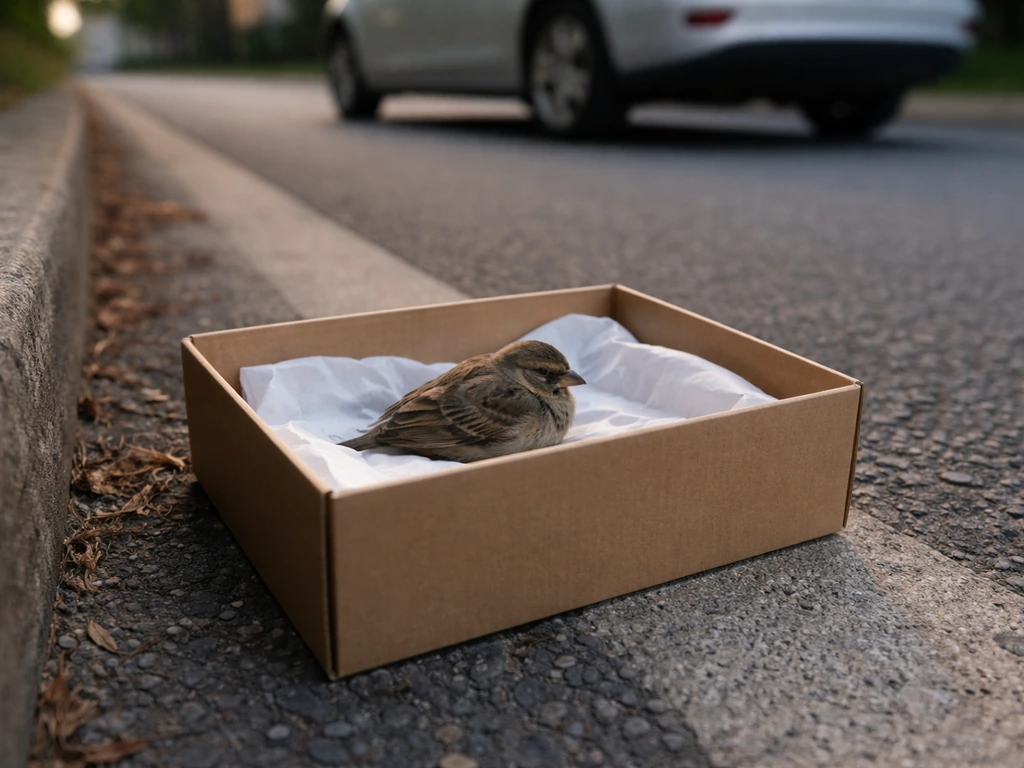
What actually determines whether a bird survives
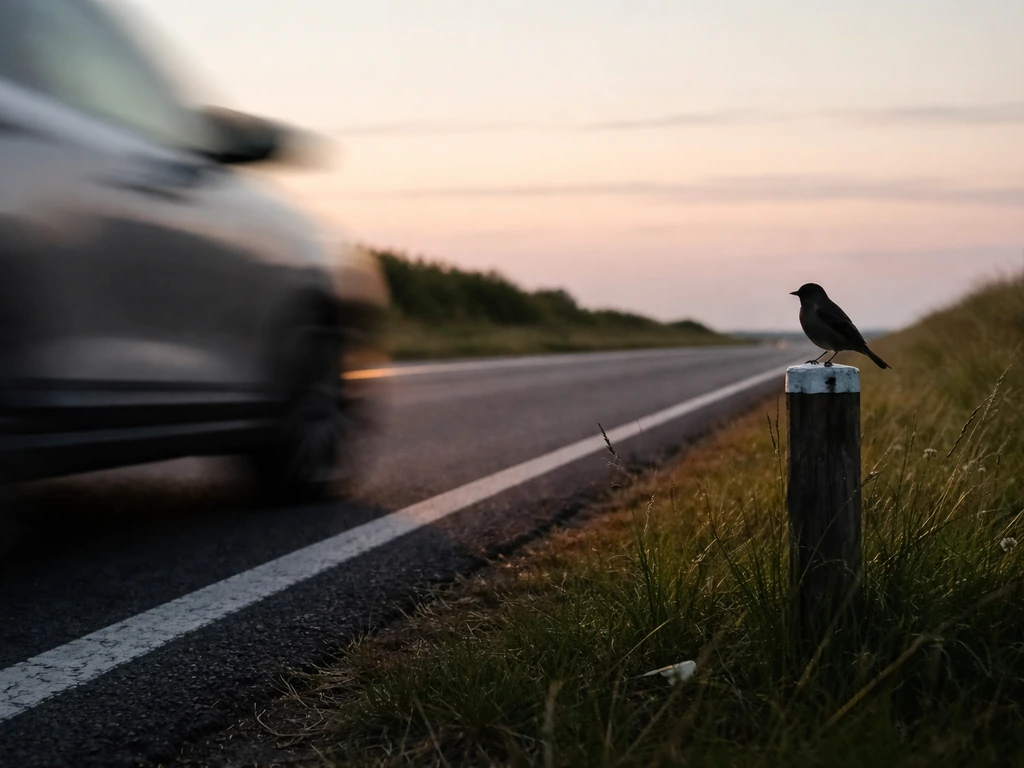
Speed is the biggest factor. Research on avian escape behavior found that birds like cowbirds simply don't have enough reaction time to avoid a vehicle traveling above 120 km/h (about 75 mph). At highway speeds, a direct strike is almost always fatal. At slower speeds, like in a parking lot or residential street, a bird may be stunned, clipped, or thrown by the pressure wave rather than directly struck, which gives it a fighting chance.
Species and size matter too. Larger birds with slower wing loading, like raptors or herons, are actually more vulnerable on roads because they can't maneuver out of the way quickly. Small, agile birds like sparrows and finches sometimes dodge successfully, but they're also the most common casualties on two-lane roads where collision risk modeling shows small bird mortality is highest.
Where the impact lands is critical. A strike to the head or neck is far more dangerous than a wing or leg hit. Wildlife rehab centers like Wolf Hollow consistently report that car-strike cases often involve a combination of broken bones and head or internal injuries, and that's exactly the combination that's hardest to assess from the outside. A bird that looks relatively intact may have life-threatening internal bleeding or brain trauma you simply can't see.
The bird's alertness when you find it tells you a lot. A bird that's standing, looking around, and responds to movement nearby is in a much better position than one lying flat, unable to hold its head up, or breathing with an open beak. Both need attention, but the latter needs it urgently.
What to do in the first few minutes
Your first job is to get the bird out of danger without causing more harm. If it's sitting in the road, approach slowly and calmly. Sudden movements will cause a stressed bird to try to flee, often into traffic again.
- Protect yourself first: pull over safely before approaching the road.
- Pick the bird up gently using both hands, cupped around its body with its wings held against its sides. Don't grab it by a wing or leg.
- If you have gloves, use them, but don't delay care just because you don't. The risk of disease transmission from brief handling is low.
- Place the bird in a cardboard box or paper bag with a few air holes. Line it with a soft cloth or paper towels.
- Put the lid or close the bag so the bird is in the dark. Darkness reduces panic and stress significantly.
- Set the container in a warm, quiet spot away from pets, children, and noise while you assess next steps.
Once the bird is contained, do a quick visual check before closing the box. Look for obvious bleeding, a drooping wing at an unnatural angle, or any leg that isn't bearing weight. Check if the bird is breathing by watching its chest. A bird breathing with its mouth open or pumping its tail with each breath is in respiratory distress and needs immediate professional help.
Signs of shock and serious injury to recognize
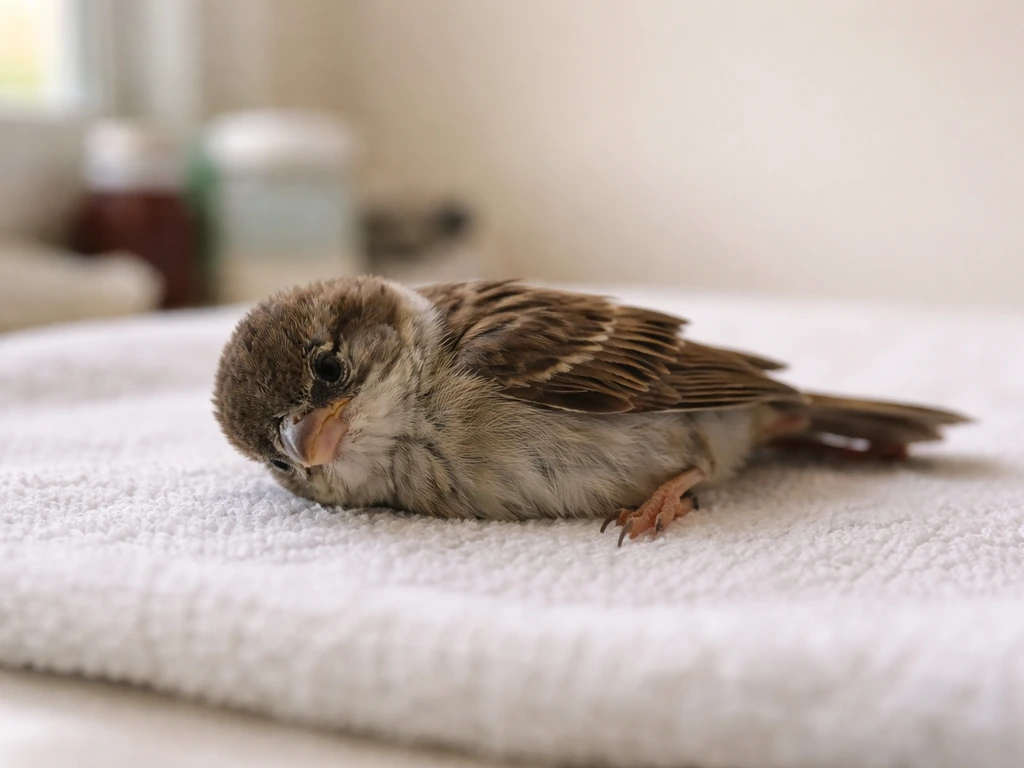
Birds go into shock after trauma, and it can look deceptively mild at first. These are the warning signs that mean the bird needs a vet or wildlife rehabilitator right away, not a few hours of waiting at home.
- Lying flat and unable to stand or right itself
- Head tilted to one side or rolling involuntarily (signs of neurological damage or head trauma)
- Eyes partially or fully closed, unresponsive to nearby movement
- Open-mouth breathing or tail-bobbing with each breath
- Visible blood around the head, beak, or eyes
- A wing or leg hanging at a clearly wrong angle (fracture)
- Cold, limp body or feathers puffed out excessively (hypothermia or circulatory shock)
- No improvement after 30 to 60 minutes in a warm, quiet, dark container
Head and neck trauma is the injury you most need to worry about with road strikes. Veterinary researchers have developed an avian version of the Glasgow Coma Scale specifically for raptors with head trauma because the prognosis can change so quickly. Internal injuries are the other silent killer: a bird can be walking and alert and still have internal bleeding that becomes fatal within hours. This is why external appearances are unreliable, and why professional assessment matters even when the bird seems okay.
When to call a wildlife rehabber vs. when home monitoring is okay
Call a wildlife rehabilitator immediately if the bird shows any of the serious injury signs listed above. In the U.S., you can find a licensed rehabber through the National Wildlife Rehabilitators Association directory or by calling a local wildlife agency, nature center, or avian vet. Many rehabbers will advise you by phone and tell you whether to bring the bird in or what to watch for.
There is a narrow window where home monitoring makes sense: if the bird was struck at very low speed, is alert and responsive, has no visible bleeding or obvious fractures, and is simply stunned. In that case, Audubon recommends placing the bird in a warm, dark, quiet container and observing for about an hour.
Tufts Wildlife Clinic similarly advises keeping a window-hit bird warm, dark, and quiet after a collision, and notes that recovery should occur within minutes unless the bird is seriously injured Audubon recommends placing the bird in a warm, dark, quiet container and observing for about an hour. .
If it recovers fully and flies off strongly when you open the box in a sheltered area, it may be okay. But if there's no clear improvement within that hour, treat it as an emergency and contact a rehabber.
When in doubt, call anyway. Most wildlife rehabilitators would rather spend two minutes on the phone ruling out an emergency than have you wait too long on a bird that needed immediate care. Tufts Wildlife Clinic and most other veterinary resources are clear that vehicle injuries often require special treatment that home monitoring simply can't provide. If you are dealing with property damage from a bird strike, you may also be wondering does car insurance cover bird damage, and the answer can depend on your policy.
What NOT to do (and why these mistakes are common)
The instinct to help can lead to some genuinely harmful actions. These are the ones that vets and rehabbers see cause the most problems.
- Do not give the bird food or water. This is the single most common mistake. A bird in shock or with internal injuries can aspirate (inhale) liquid into its lungs and die. Audubon, Tufts Wildlife Clinic, and Golden Gate Bird Alliance all give this as a firm, explicit instruction. Even if the bird looks hungry, no food or water until a professional clears it.
- Do not assume a moving bird is fine. A bird stumbling around, flapping uselessly, or running in circles is showing signs of neurological damage, not recovery.
- Do not try to splint a broken wing yourself. Improper splinting causes more damage, increases pain, and can cut off circulation. Wrap the bird gently to keep the wing still against the body (using a thin cloth or soft bandage loosely), and leave the actual repair to a vet.
- Do not leave the bird in a cold environment. Cold kills injured birds faster than almost anything else. Warmth is a genuine life-saving intervention in the first hour.
- Do not keep the bird with pets or in a noisy, bright space. Stress alone can kill a bird already in shock.
- Do not try to release the bird too quickly. A bird that flies a few feet and crashes back to the ground is not recovered. Wait for a strong, sustained flight before calling it done.
Basic short-term care while you wait for help
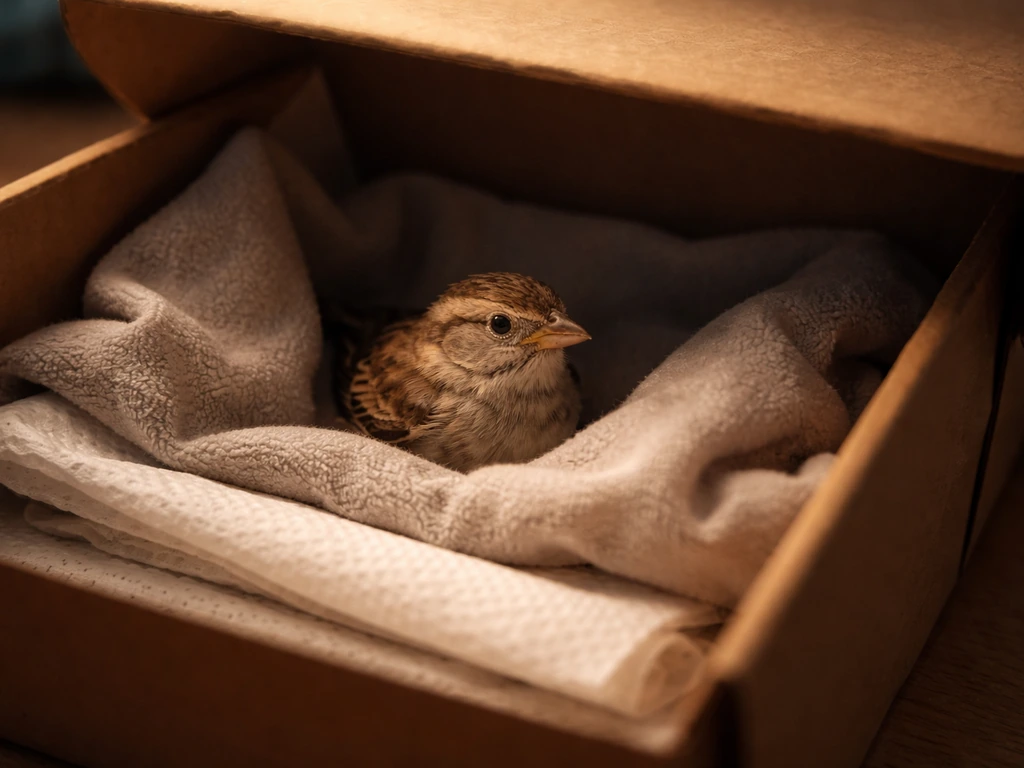
If you can't reach a rehabber immediately or need to transport the bird yourself, the goal for the next several hours is simple: keep it warm, keep it dark, keep it quiet, and don't add to its stress.
Use a cardboard box lined with a non-fraying cloth or paper towels. Close the lid. Keep the box at room temperature, around 70 to 80 degrees Fahrenheit. If the bird feels cold to the touch, you can place a heating pad set to the lowest setting under one half of the box, not underneath the whole bottom, so the bird can move away from the heat if it gets too warm. A warm water bottle wrapped in a cloth works too.
Minimize handling after the initial rescue. Every time you open the box to check, you're adding stress. Check once every 30 minutes at most. When you do look, you're assessing whether breathing has improved, whether the bird can hold itself upright, and whether it seems more alert. Document what you see so you can tell the rehabber exactly what's changed.
For transport to a rehab facility, keep the box in a dark, quiet part of the car. Avoid loud music, direct air conditioning blowing on the box, and sharp turns. The calmer the ride, the better the bird's chances on arrival. The Merck Veterinary Manual's guidance on avian trauma reinforces this: the priority before any treatment is stabilizing the bird, and that stabilization begins with you, in the car, before you even reach the clinic.
How to reduce car strikes near your home
If you're finding birds hit near your property regularly, there are a few practical steps that actually make a difference. The USFWS identifies attractants as a major risk factor: bird feeders, berry-producing shrubs, and water features close to busy roads draw birds to dangerous zones. Moving these features farther from the road edge is one of the most effective things a homeowner can do.
Planting dense hedgerows or installing fencing parallel to the road creates a visual barrier that guides birds upward and over vehicles rather than across at bumper height. This approach mirrors the wildlife underpass and fencing strategies that road ecology research has shown can reduce wildlife-vehicle collisions meaningfully. A USGS-reviewed study found that underpass and fencing combinations reduced wildlife mortality on one highway segment by about 58%.
Be skeptical of gadgets. Washington State DOT has reviewed the evidence on most roadkill-reduction devices, including ultrasonic emitters and reflectors, and found that most haven't proven effective in real-world conditions. Physical barriers and habitat management are the evidence-based options.
Window collisions are a separate but related hazard. If you're also losing birds to window strikes near your home, that's worth addressing alongside road-strike prevention, since the same birds passing through your yard are exposed to both risks. The practical fixes there, like bird-safe window tape or screens, are different from road mitigation but equally worth doing.
If a bird was injured on or near your vehicle and you're wondering about car damage or insurance coverage for bird-related incidents, those are handled separately from the bird's immediate welfare, but they're worth knowing about as connected parts of the same situation. Even if the bird survives, hitting a bird can still damage your car, so it’s smart to inspect for dents, cracked glass, and any issues with headlights or mirrors can hitting a bird damage your car.
FAQ
What should I do if the bird is still alive but won’t get up or keep its head up?
Treat it as seriously injured. Keep it warm, dark, and quiet in a covered box, limit handling, and contact a wildlife rehabilitator immediately. Even if it seems calm, inability to hold the head up often points to head or neck trauma or respiratory distress that home observation cannot reliably rule out.
Can I feed or give water to a bird after a car strike?
In most cases, no. Do not offer food or water while the bird is stressed or possibly concussed, because it can choke or inhale fluids. Focus on warmth, darkness, and quick professional care, and let the rehabilitator decide whether fluids or feeding are appropriate.
If the bird looks alert after the collision, is it safe to release it where I found it?
Not automatically. External appearance can hide internal bleeding or brain injury, so you should still consider calling a rehabber. If you do monitor at home only for the short “stunned but improving” window described in the article, make your decision based on clear improvement, then release in a sheltered area, not back into traffic.
How long should I wait before I take the bird to a rehabilitator?
If there are any serious injury signs (trouble breathing, visible fractures, blood, drooping at unnatural angles, or inability to hold the head up), do not wait. If the bird was struck at very low speed and is responsive with no visible injuries, the monitoring period should be about an hour, and if you do not see clear improvement, contact a rehabber right away.
Should I attempt to capture the bird with gloves or towels, and how do I do it safely?
Use a towel or light cloth only to gain control if the bird is able to move or escape. Approach calmly, avoid repeated handling, and contain it quickly to prevent panic, further injury, or escape into traffic. If you cannot safely contain it, prioritize calling a rehabber for guidance.
Is it okay to take the bird to a general animal shelter or emergency vet instead of a wildlife rehabilitator?
Sometimes, but it depends on local resources. Wildlife rehabbers are specifically equipped for wild birds, and many will advise by phone even if you end up going to a different facility. If you go elsewhere, call ahead and mention it is a wild bird after a suspected vehicle trauma so they can prepare appropriate stabilization.
What if I find multiple birds struck near the same area?
Handle them one at a time, but do not leave injured birds unattended if you can avoid it. Call a wildlife rehabilitator or local wildlife agency and describe the situation, since rehab capacity and transport planning matter. Also consider prevention steps for the location, like moving feeders or water features farther from the road edge.
What if I can only transport the bird myself, and the trip will be more than a short drive?
Minimize stress during transport by keeping the box dark, quiet, and away from direct airflow or loud noise, and avoid sharp turns. Keep the bird warm using the low heat option if needed, and monitor breathing changes. If the bird worsens en route, prioritize immediate contact with the receiving rehabber or clinic for instructions.
Can I move a bird out of the road with my hands?
You can only do it if it is safe and the bird can be grabbed without repeated chase. Better options are to gently guide it using a barrier or calmly contain it with a box if it will not move. The goal is to prevent another strike, not to increase stress or cause additional injury.
How can I tell if the bird is having breathing trouble versus normal stress?
Look for breathing patterns, mouth breathing, open beak, or visible chest effort that suggests distress. If the bird is struggling to breathe, do not wait for it to “settle down,” contact a rehabilitator immediately. A bird that appears upright but is working hard to breathe can still deteriorate quickly.
If the bird survives and flies off, should I still report it or check on it?
If it recovers fully and flies strongly, it may be okay, but you should still use judgment. If you notice abnormal behavior afterward, like repeated staggering, inability to perch, or persistent lethargy, contact a rehabber. Document the time, location, and what you observed so they can assess the likelihood of hidden injury.