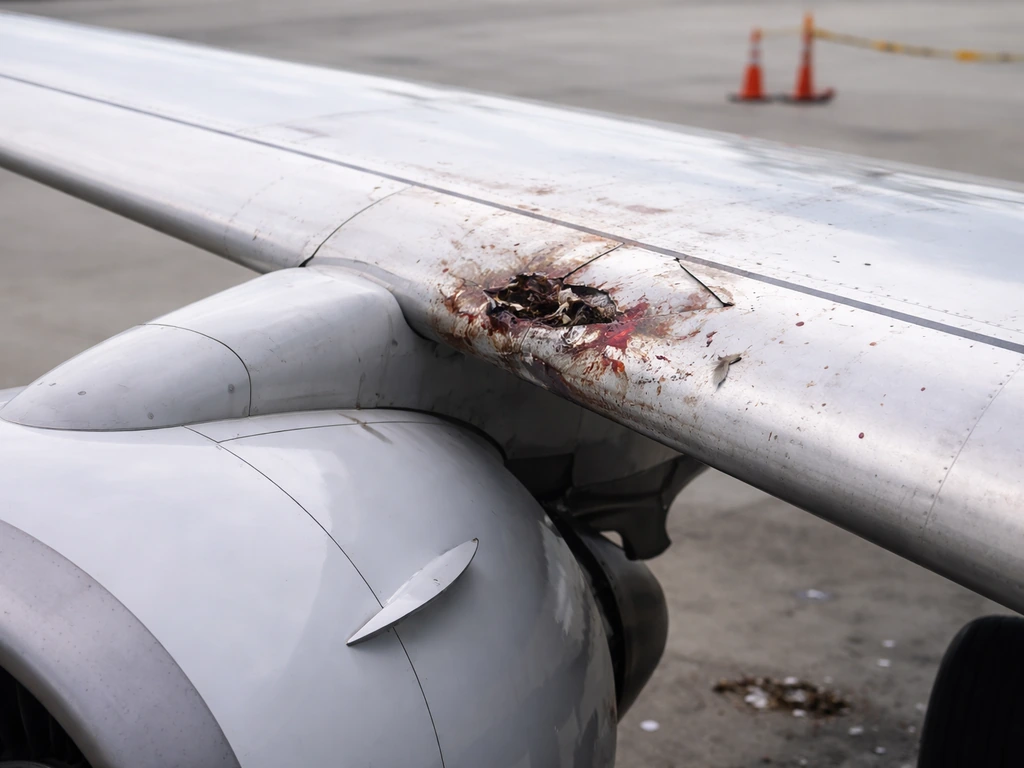
A bird strike warning is an official notice, posted, broadcast, or issued operationally, that birds are active in or near an area where collisions with aircraft, vehicles, or structures pose a real safety risk. In aviation, it usually means airport operations or air traffic control has flagged elevated bird activity on or near a runway, taxiway, or flight path. Outside of airports, you might see the phrase on wildlife management signage, property alerts near large flocks, or in notices sent to pilots via NOTAMs (Notices to Air Missions). Wherever you see it, the warning is asking you to slow down, stay alert, and follow the specific protocol that applies to your role.
What Is a Bird Strike Warning and What to Do

Maya Chen
18 May 2026
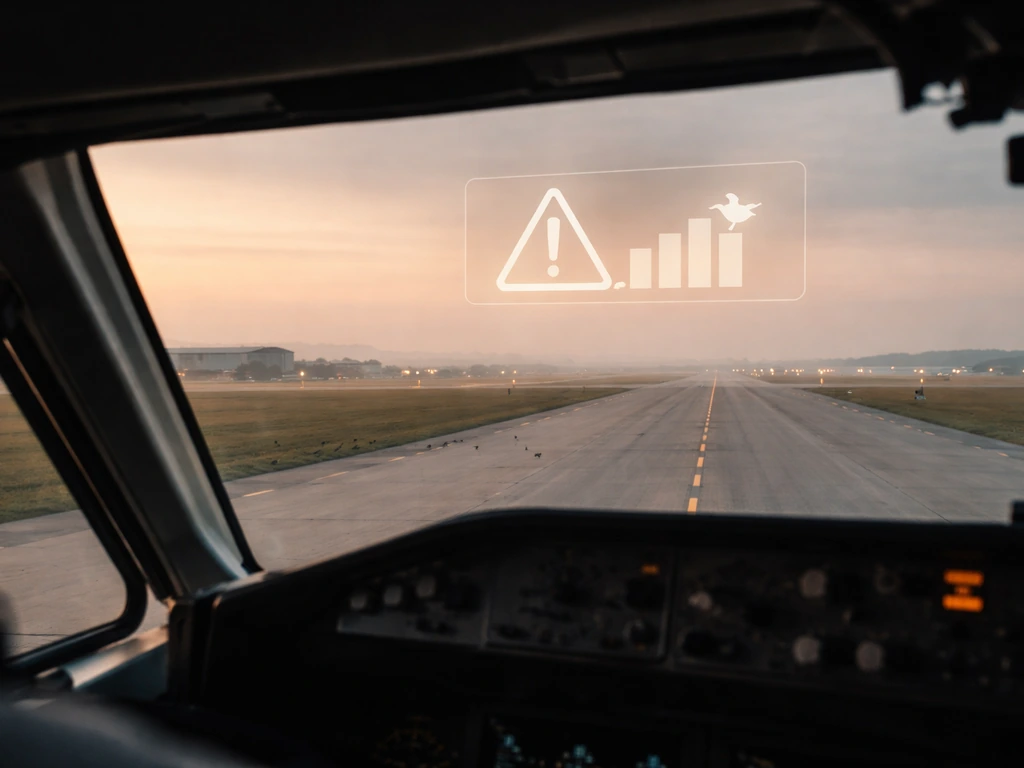
What bird strike warnings mean and where you'll actually see them
The term covers a handful of distinct contexts, so it helps to know which one you're in. Here are the most common places you'll encounter this kind of warning:
- Airport NOTAMs: Pilots receive these pre-flight notices when bird activity is unusually high at a specific airfield. A NOTAM might read something like 'BIRD HAZARD VCY RWY 28L' with a time window.
- Air traffic control advisories: Controllers can issue real-time verbal alerts to pilots on approach or departure when birds are spotted on or near the runway.
- Airport signage and operations alerts: Ground crews and airport staff may receive internal hazard bulletins or see posted warnings near active wildlife areas on the airfield perimeter.
- Wildlife hazard postings near infrastructure: Near communication towers, wind farms, or power lines in known migration corridors, land managers sometimes post wildlife hazard notices.
- Property or municipal notices: Homeowners near large bird roosting areas (especially near small airstrips) occasionally receive community alerts during peak migration seasons.
In the U.S., bird strike warnings sit inside a larger framework called Wildlife Hazard Management, which airports are required to maintain under FAA regulations (14 CFR § 139.337). Internationally, ICAO's Annex 14 sets similar standards for aerodromes. So when you see a bird strike warning at or near an airport, it is not informal, it is the output of a formal safety program.
Why these warnings exist: real hazards versus exaggerated fears
Bird strikes are genuinely dangerous in aviation, and the data backs this up. The FAA's Wildlife Strike Database, which underpins the entire U.S. reporting system, documents thousands of strikes per year. Large birds, Canada geese, vultures, white pelicans, can destroy jet engines, shatter windshields, and in the worst cases disable aircraft at critical moments like takeoff or landing. The 2009 US Airways Flight 1549 ditching in the Hudson River after a Canada goose strike is the most cited example, but there are many less famous incidents that caused serious damage.
That said, the risk is highly context-dependent. Small songbirds hitting a car windshield while you're driving, or a robin flying into your living room window, do not carry the same safety consequences. Bird strike warnings are calibrated to situations where speed, altitude, and aircraft mass create lethal physics. As a casual observer standing outside an airport fence, a bird strike warning is not a personal danger alert, it is a signal to the people operating aircraft and airfield equipment.
One common myth worth clearing up: bird strikes do not typically create explosion or fire hazards visible from outside the aircraft. Engine ingestion events are serious but are usually contained within the aircraft system. The warning exists to prompt operational responses, not to evacuate bystanders.
How to respond based on your role
If you're a traveler or airport passenger

Honestly, a bird strike warning is not something you'll act on directly as a passenger. Your job is to follow crew instructions. If a flight is delayed because of active bird hazard on the runway, that is the system working correctly, the airport is running hazing or dispersal operations to clear the area before your aircraft moves. If you experience a bird strike during flight (you might hear a thud or see feathers on the windshield from a window seat), stay calm and let the crew manage it. Pilots train for engine events and have checklist procedures for every scenario.
If you're airport operations staff or a pilot
Your response depends on the warning type. A NOTAM means you factor bird activity into your departure or approach planning, altitude choices, runway selection, and timing can all reduce exposure. An air traffic control advisory means you acknowledge it and adjust accordingly. Ground crews who receive a wildlife hazard bulletin should avoid the flagged area until the airport's wildlife control team (or contracted wildlife biologist) has cleared it. If you actually witness a strike, the FAA Wildlife Strike Report form (Form 5200-7) is the correct next step, the FAA's Wildlife Strike Database depends entirely on these voluntary but strongly encouraged reports, and they feed directly into future hazard assessments.
If you're a homeowner or property owner near a bird hazard area
If you've received a community notice or see wildlife hazard signage near a small local airstrip, the practical ask is simple: don't do things that attract large bird concentrations near the airfield. That means no open compost, no bird feeders right next to the perimeter, and no actions that flush large flocks toward the runway (like suddenly disturbing a roosting area). If you observe unusually large concentrations of birds near the airstrip, contact the airport's operations office directly. Most small airports appreciate that kind of community tip.
What to do immediately after a bird strike occurs
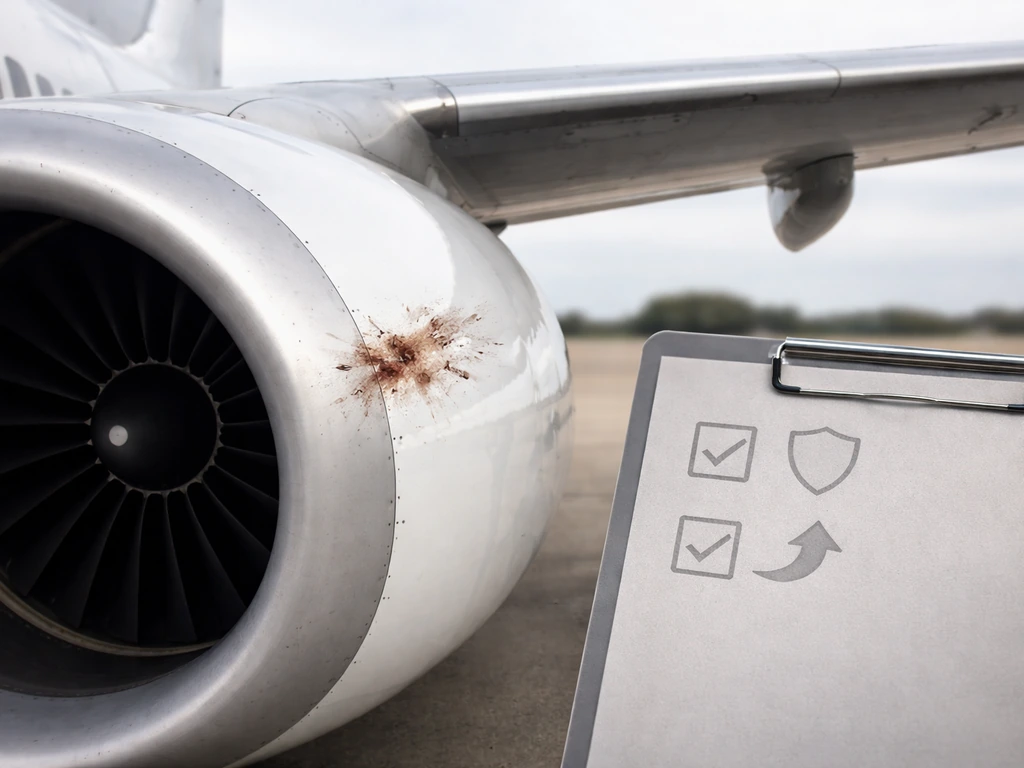
If you're on an aircraft that has just had a bird strike, the first priority is always crew communication. Follow instructions without adding noise or movement to the cabin. The crew will assess whether the aircraft needs to return, divert, or continue depending on what systems were affected.
For anyone involved in airfield operations post-strike, the steps are:
- Secure the aircraft and ensure all personnel are clear of the area.
- Document the strike location, time, bird species if identifiable, and number of birds involved.
- Collect any bird remains carefully (use gloves) for possible species identification — this helps wildlife biologists understand which species are causing hazards.
- Submit the FAA Wildlife Strike Report (Form 5200-7) as soon as possible. This is free, takes about 10 minutes, and directly improves aviation safety data.
- Report to airport operations and, if the strike caused damage or injury, to the NTSB as required.
On the ground near infrastructure (not aviation), if a bird has struck a window or structure and is injured or dead, you can contact your local wildlife rehabilitator for injured birds, or your municipal waste service for remains. You do not need to report non-aviation bird-window collisions to any federal agency, though citizen science programs like the Fatal Light Awareness Program (FLAP) do accept reports.
Health concerns after a bird strike or close encounter
This is an area where a lot of unnecessary alarm circulates, so here's the straightforward picture. Handling a dead bird does carry a small, manageable disease risk, but the hazards are not dramatic if you take basic precautions. The realistic concerns include:
- Histoplasmosis: A fungal infection associated with large accumulations of bird droppings, not with a single bird carcass. Not a concern from handling one dead bird in the open air.
- Avian influenza (bird flu): Relevant if you're handling sick or dead poultry in quantity, particularly in outbreak zones. A single wild bird carcass found after a window strike is very low risk. Use gloves and wash hands thoroughly.
- Salmonella and Campylobacter: Present in some bird droppings. Standard hygiene (gloves, handwashing, no touching your face) is sufficient.
- West Nile virus: Spread by mosquitoes that fed on infected birds, not by direct contact with the bird itself.
In an aviation context, the biological material left after a strike (feathers, blood, tissue on aircraft surfaces) should be cleaned using standard biohazard precautions: gloves, eye protection if there's a risk of splatter, and disposal in a sealed bag. This is practical cleanliness, not an emergency health response. There is no documented case of public health outbreak traced to bird strike cleanup.
If you have direct skin contact with bird remains and develop fever, respiratory symptoms, or rash within two weeks, mention the exposure to a healthcare provider. That's the sensible floor, not a reason for alarm before symptoms appear.
Prevention: reducing bird strikes where you're most likely to encounter them
The good news is that most bird strike risk factors are addressable. The approach depends on your setting.
At airports and airfields
Airports under FAA oversight use Wildlife Hazard Management Plans that combine habitat modification (removing standing water, mowing grass to specific heights, eliminating food sources) with active deterrents (pyrotechnics, trained falcons, distress calls, and sometimes lethal removal under federal permits). These are specialized programs run by trained wildlife biologists, not something individuals improvise.
At homes and buildings

Window collisions are the most common bird strike most people ever deal with, and they're very preventable. Research consistently shows that birds cannot perceive glass as a barrier, especially when it reflects sky or vegetation.
- Apply window collision deterrents: dot patterns, UV-reflective decals, or external screens. The pattern spacing that works is roughly 2 inches vertically and 4 inches horizontally, based on ornithological research.
- Move bird feeders either within 3 feet of the window (so birds can't build fatal speed) or more than 30 feet away.
- Reduce interior lighting visible from outside at night, especially during migration seasons (spring and fall). This is particularly important for tall buildings in flyways.
- Avoid reflective glass on new construction near known bird corridors if you have any design input.
Near power lines and towers
If you manage property near communication towers or power lines in a migration corridor, work with your utility provider or the tower operator, many have retrofit programs to add bird flight diverters or perch deterrents on problem spans. This is less about individual action and more about flagging the issue to the right operators.
Bird strike warnings, wherever you encounter them, are ultimately a well-designed safety signal. They're the product of serious data collection and hazard analysis, not overreaction. That is largely because Wildlife Hazard Management and careful airfield operations reduce the number of opportunities for birds and aircraft to overlap why don't bird strikes happen more often. Whether the warning applies to your flight, your airfield operation, or the window at the end of your hallway, the practical response is the same: take it seriously, act within your role, and use the tools that actually work.
FAQ
If I see “bird strike warning” on a sign near an airfield, does it mean I should evacuate or stay away from the area entirely?
Usually no. At airports and small airstrips, the notice is intended for operational safety, meaning you should avoid the flagged movement area and follow posted instructions. For a community notice, you should stay clear of the specific hazard zone and not attempt your own bird dispersal, especially around active runway equipment or wildlife control operations.
What is the difference between a NOTAM-style bird hazard notice and an air traffic control advisory?
A NOTAM is typically used for preflight and planning, so it affects how you choose routes, altitudes, timing, and runway when you depart or approach. An air traffic control advisory is a real-time coordination message, so you respond immediately by adjusting to controller instructions rather than making broad changes to your plan after the fact.
I’m driving near an airport and notice many birds clustered near the road, what should I do?
Do not try to shoo birds off the road or honk at them, that can flush flocks into the airfield approach path. Instead, slow down for wildlife hazards, keep vehicles clear of any marked airfield perimeter routes, and report the concentration to airport operations if the notice is explicitly asking for community input.
How can I tell whether the warning is about birds near runways versus birds near terminals or taxiways?
Look for the location cues in the notice or bulletin, such as “runway,” “taxiway,” “approach path,” “apron,” or “terminal area.” If it references approach or departure, assume it impacts flight path timing and altitude selection, whereas if it references apron or terminal, expect ground crew movement restrictions rather than flight planning changes.
If I experience a bird strike on takeoff or landing, what should a passenger actually do in that moment?
Stay seated, keep your seatbelt fastened, and follow the crew’s directions. Avoid standing up to look out multiple windows or moving around, since that can interfere with cabin communication and safety checks. If there is a windshield impact, don’t panic expecting a fire, since visible explosions are not typical.
Does “bird strike warning” include helicopters, cargo trucks, or other vehicles besides aircraft?
Yes. The warning can cover bird activity that creates collision risk for any vehicles operating in the airfield environment, including ground equipment and vehicle movements near active surfaces. The practical implication is the same: keep to restricted routes and respect any wildlife control or traffic management instructions.
I want to submit a wildlife strike report, do I need to have been on the aircraft, and what details help most?
You can report without being the pilot, but the most useful reports include date, approximate time, location (airport and runway or near a landmark), aircraft or vehicle type (if known), bird description or size, and observable effects (noise, visible damage, engine or system indications). Clear location helps update future hazard assessments even when the bird species is uncertain.
Should I clean bird remains myself, and how do I do it safely on aircraft or at an airport facility?
On aircraft surfaces, use basic biohazard precautions like gloves and eye protection if there is any chance of splatter, then bag and seal waste. Facilities should follow their internal procedure for regulated disposal. If you are not trained for biohazard cleanup, wait for ground personnel to handle the contaminated materials rather than improvising with household cleaners.
I found a dead bird on my property near my home or a window, is that the same situation as an aviation bird strike warning?
It’s related but not the same. Window collisions near residences are often handled through wildlife and citizen science channels, while aviation warnings are operational notices tied to airfield safety programs. If there is a nearby airfield notice, you can still help by contacting airport operations with the general location and time, but you generally do not replace formal aircraft reporting procedures with a personal cleanup.
Can bird strike warnings be wrong or exaggerated, and should I ignore them if I don’t see birds?
They are usually based on observed bird activity and/or hazard modeling, so lack of visible birds at a specific moment does not mean the risk is gone. Conditions change with time of day, weather, and feeding patterns, so you should treat the notice as guidance and follow your role-specific protocol even if the area looks calm.
Next Article
Is a Bird Strike an Incident? What to Do and When It Matters
Learn when a bird strike counts as an incident, urgent hazards, and exact steps to document, report, and prevent it.