Yes, baseballs have hit birds, and there are several documented cases to prove it. This is not folklore or a one-off fluke. From Randy Johnson's infamous fastball in 2001 to a line-drive grounder in 2023, direct ball-to-bird contact has happened at multiple levels of play, with fatal outcomes in each confirmed case.
Has a Baseball Ever Hit a Bird? Real Cases and What to Do

Maya Chen
23 Apr 2026
Does this ever happen: real evidence, not myth
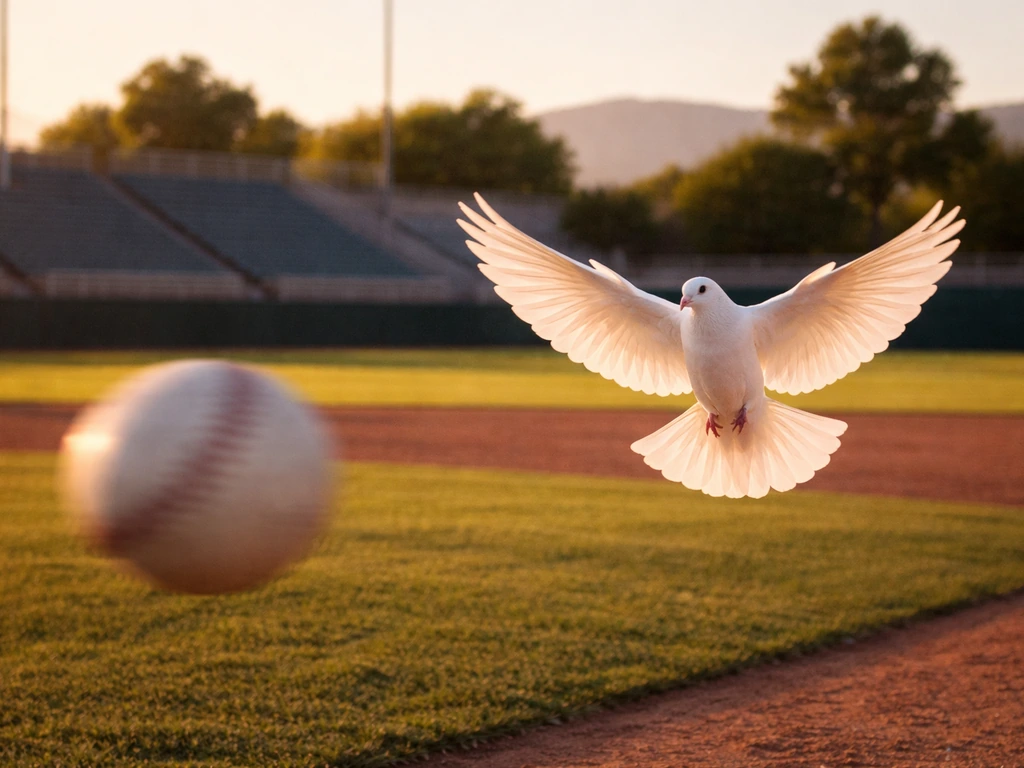
The most famous case is Randy Johnson's. On March 24, 2001, during a spring training game at Tucson Electric Park in Arizona, Johnson's fastball struck a dove mid-flight. If you are wondering when it happened, Randy Johnson hit the bird on March 24, 2001, during a spring training game at Tucson Electric Park Randy Johnson incident. If you are wondering when it happened, Randy Johnson’s hit took place on March 24, 2001 when did randy johnson hit the bird. when did randy johnson hit the bird. The bird flew directly into the ball's path, and the result was immediate and fatal. ESPN described the bird as essentially exploding on impact. MLB has video of it. This is one of the most replayed moments in baseball history, and it is fully documented, not a rumor.
The second well-documented case happened in March 2015 during a Tigers-Braves spring training game in Kissimmee, Florida. Catcher James McCann hit a foul ball that struck a bird perched on top of the backstop netting behind home plate. Feathers flew. The bird died. Both AP and CBS News covered it with video.
Then on May 22, 2023, Cleveland Guardians rookie Will Brennan hit a line-drive grounder that struck a bird in the infield during a game against the Chicago White Sox. If you mean the famous MLB pitching case where someone hit a bird while pitching in the MLB, that incident is often compared to Randy Johnson’s 2001 dove hit. The bird was killed on contact. Brennan publicly apologized afterward. CBS Sports reported that Will Brennan issued an apology after his May 22, 2023 line-drive/grounder struck and killed a bird in the infield blank" rel="noopener noreferrer">publicly apologized afterward.. Around the same time, an Arizona Diamondbacks pitcher also struck a bird during warmups, adding another incident to the same news cycle.
So the answer is clear: baseballs have hit and killed birds on multiple verified occasions, across different eras, different ballparks, and different types of hits. These are not myths, near-misses, or exaggerations.
Where it's most likely to happen
Most documented cases have happened at professional or semi-professional ballparks, but the physics and bird behavior that make this possible exist anywhere a game is played. A few factors stack the odds.
Open fields naturally attract birds. Grassy infields and outfields mimic the short-grass habitats that ground-feeding birds like doves, sparrows, and starlings actively seek out. Birds will land on the field between pitches, walk across the infield, and perch on structures like backstop netting or foul poles. They are not avoiding the game; they simply do not register a ball in flight as a threat until it is too late.
The most dangerous moments are high-velocity events with little reaction time: a pitcher's fastball crossing the plate (as in the Randy Johnson incident), a line drive hit sharply into the infield (as with Will Brennan), or a foul ball deflecting unpredictably (as with James McCann). A baseball can travel 90 to 100 miles per hour off a professional bat. At that speed, neither the bird nor anyone on the field has time to react.
Outdoor parks near water, wooded areas, or open farmland tend to have higher bird activity. Spring training venues in the American Southwest and Southeast, both near natural bird habitat, appear in two of the three main documented cases. But this can happen at any recreational field, Little League diamond, or backyard batting cage where birds are present.
What the actual impact looks like: injury vs. no injury
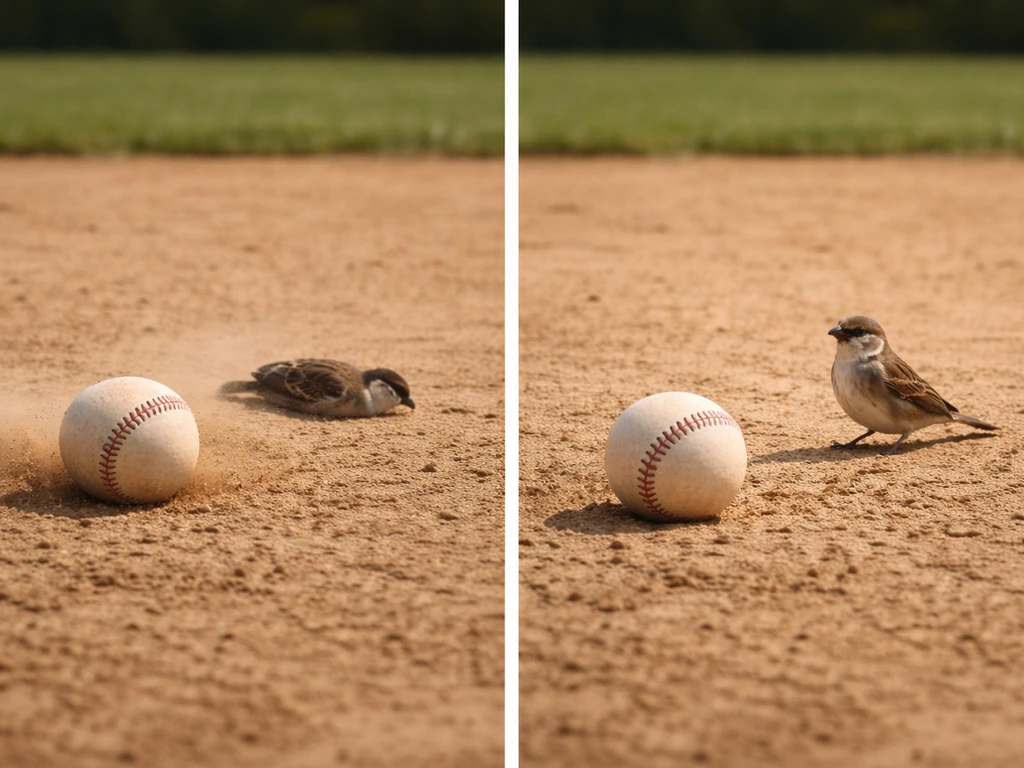
In every documented case of a baseball directly hitting a bird, the outcome was fatal. That makes sense physically. A baseball weighs about 5 to 5.25 ounces and travels at speeds that generate enormous force. A bird struck directly in flight or while perched has almost no protective mass or skeletal structure to absorb that impact. The most likely outcomes are blunt trauma, internal hemorrhage, spinal or skull fracture, or death on contact.
A near-miss is a different story. A ball passing close to a bird without making contact can startle it badly enough to cause a stress response, disorientation, or collision with a nearby structure. That secondary trauma can cause real injury: fractures, concussion-like effects, or shock. So even if you do not see a direct hit, a bird found near a field after a sharp hit is worth checking on.
The survival odds after a true direct hit are low. But if a bird is only grazed, clipped by the edge of the ball, or struck at lower velocity (a softer toss rather than a line drive), there is a chance it survived with injury. If you’re wondering what happens if you hit a bird in golf, the outcome can be similar because a direct impact can still cause severe injury or death chance it survived with injury. If you are dealing with a bird after an impact, focus on containment and quick professional help rather than assuming it is fine survived with injury. In golf, a similar direct strike can injure or kill a bird, especially when it is startled or happens at close range near the fairway what happens if you hit a bird in golf. Shock alone can make a bird look dead when it is actually stunned. That is why the next steps matter.
What to do right now if a bird is struck
The first thing to do is stop play and approach slowly. Do not rush at the bird or grab it immediately. A stunned bird may try to flee and injure itself further. Give it 30 seconds to a minute to see if it stands, hops, or moves on its own.
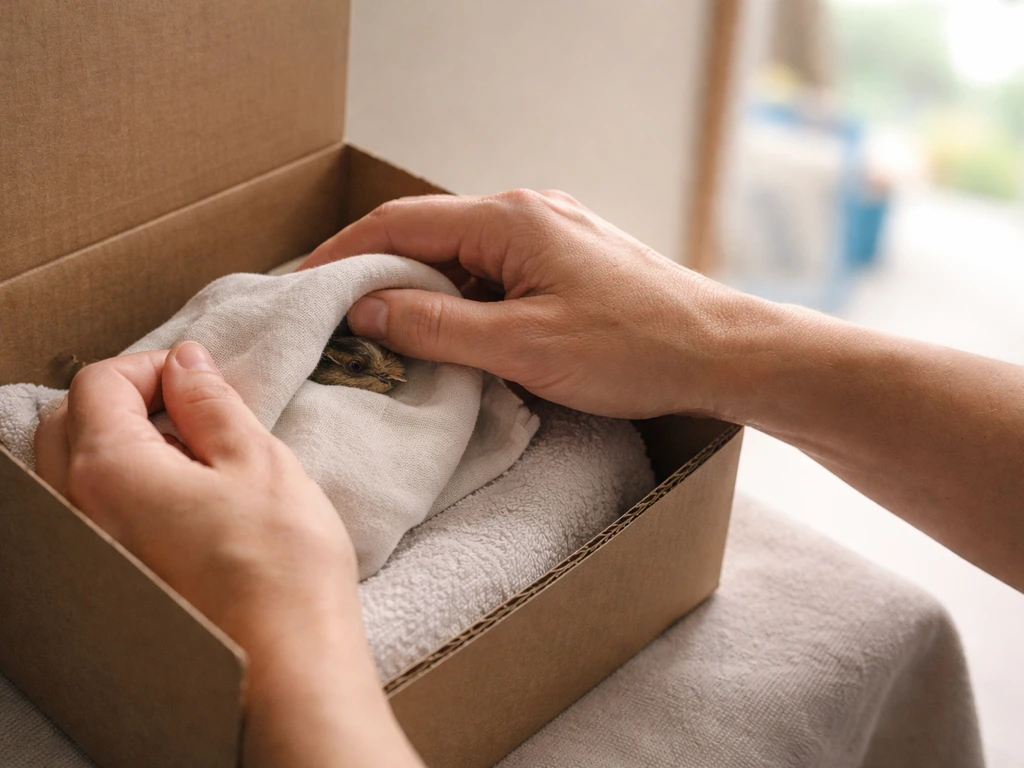
If the bird is not moving or cannot move, contain it gently. Use a lightweight cloth, a shirt, or a towel to cover it lightly and scoop it into a box or crate. Covering the bird's head reduces stress and makes handling safer for both of you. Keep the container in a warm, dark, quiet place while you figure out next steps.
Do not attempt to feed or give water to the bird. This is one of the most common mistakes people make, and it can cause aspiration or other harm. The bird can wait safely without food or water while you contact a professional. Do not try to splint a broken wing or treat a wound yourself.
How to assess the injury and decide who to call
Once the bird is safely contained, take a quick visual assessment before you contact anyone. You do not need to handle it more than necessary. Look for these signs:
- Visible bleeding or open wounds
- A wing held at an abnormal angle or dragging on the ground
- Inability to stand or hold its head upright
- Rapid or labored breathing, panting, or open-mouth breathing that continues for more than a few minutes
- Eyes closed or half-closed, no response to nearby movement
- Obvious swelling around the head, chest, or wings
Any of these signs means the bird needs professional help. Contact a licensed wildlife rehabilitator as your first call. You can find one through the National Wildlife Rehabilitators Association directory or by calling your local animal control or wildlife agency. If you cannot find a rehabber quickly, a veterinarian (ideally one who treats birds or wildlife) is your next option.
If the bird is breathing fast or panting and has been doing so for at least two hours, that is an urgent signal. Do not wait. The RSPCA flags that threshold specifically as a sign of injury or illness requiring care. For a bird that just took a baseball at speed, do not wait two hours to decide: if it is not recovering and moving on its own within 15 to 20 minutes, call for help.
If the bird is dead, do not handle it with bare hands. Use gloves or a plastic bag inverted over your hand, especially if you do not know the species. Report it to your local wildlife agency if it was a protected species. Most wild birds in the U.S. are protected under the Migratory Bird Treaty Act.
Bird-safe first aid: what to do and what to avoid
| Do this | Do not do this |
|---|---|
| Cover the bird gently with a light cloth | Grab or squeeze the bird tightly |
| Place it in a dark, quiet, warm box | Keep it in a bright, noisy environment |
| Warm a water bottle in a towel and place near (not under) the bird | Put the bird directly on a heat source |
| Call a wildlife rehabilitator or vet immediately | Attempt to treat wounds yourself |
| Keep other people and pets away from the area | Allow children or dogs to approach the bird |
| Handle with gloves if the bird is dead | Handle a dead bird with bare hands |
| Wait for professional guidance before moving the bird far | Drive a wild bird to multiple locations without a plan |
The core principle from every wildlife rehabilitation source is the same: your job is containment and transport, not treatment. Keeping the bird calm, warm, and undisturbed while getting it to someone qualified is the entire job. Feeding it milk, bread, or anything else is dangerous and should never happen. Do not put food or water into a bird's mouth under any circumstances.
How common is this, and how to reduce the risk near fields
To be honest, a baseball directly hitting a bird is rare. There are thousands of professional and amateur games played every year, and documented direct-impact cases number in the single digits over decades. It is a genuine event, but not a routine one. The Randy Johnson incident became famous precisely because it was so unusual and visually dramatic. That said, near-misses, startled birds, and secondary collisions around ballparks probably happen more often and go unnoticed. If you are curious about whether golfers ever do anything similar, has a golfer ever hit a bird? is a related question.
If you manage a field or regularly play at one with high bird activity, a few practical steps can reduce the risk for birds without affecting play.
- Reduce attractants on and around the field: avoid food waste near dugouts or bleachers, which draws ground-feeding birds onto the playing surface
- Turn off or reduce artificial lighting during migration season (spring and fall) if the field has stadium-style lights; bright lights at night disorient migrating birds and pull them toward low-altitude flight paths
- Do a quick visual check of the infield before batting practice or warm-ups if birds are actively feeding on the grass
- If a bird is resting on protective netting or structures near play, pause and give it time to leave before pitching or batting near that area
- Report any bird strikes to your local wildlife agency, especially if the species appears to be a protected migratory bird
None of this requires major changes to how you play. The risk to any individual bird on any given day is low. But because wild birds (including doves, the species in the Randy Johnson incident) are protected under federal law, being aware and responding correctly if something does happen is genuinely important. The goal is not to be afraid of it happening but to know exactly what to do if it does.
For anyone curious about the broader history of baseballs and birds, the Randy Johnson case has its own fascinating backstory around the exact timing and mechanics of the hit, and there are documented parallels in other sports too. The physics of a fast-moving ball intersecting with a bird in flight is the same whether it is a pitch, a batted ball, or a foul tip, which is why direct-impact injuries are so severe regardless of the sport involved.
FAQ
If I only heard a loud smack or saw a bird fly away but never saw the ball hit, should I still check for injury afterward?
Yes. A near-miss can trigger a stress response, and birds may collide with nearby objects after being startled. Check the immediate area for a bird on the ground, disorientation, bleeding, or inability to stand, then contact a wildlife rehabilitator if anything seems wrong.
What if the bird flew off on its own after being struck, should I still get help?
If it appears alert, moves normally, and shows no obvious bleeding or injuries, it may be fine, but it can also be stunned and later collapse. If you see repeated wobbling, drooping wings, open-mouth breathing, or worsening behavior over the next hour, treat it as injured and call wildlife help.
Is it safe to give the bird water or food if it seems stunned?
No. Do not feed or water it, even if it looks calm, because fluids and food can be aspirated into the lungs. Also avoid “quick fixes” like bread, milk, or putting water directly into the beak. Transport to a professional instead.
How long should I wait to see if the bird recovers before calling someone?
For a bird involved in a direct baseball impact, do a brief observation window of about 15 to 20 minutes. If it is not recovering and moving on its own within that timeframe, call for professional wildlife assistance. If it is panting or breathing fast for at least two hours, treat it as urgent immediately.
Should I handle the bird with my hands to move it faster?
Use protection. Avoid bare hands, especially if you do not know the species. Gloves or using a plastic bag as a barrier are safer, and gentler handling reduces stress, which matters because shocked birds can injure themselves while panicking.
If the bird has a visible injury, can I splint a wing or wrap it at the field?
In most cases, no. Splinting or tight wrapping at the scene can worsen damage or restrict breathing. Your role is containment, warmth, and transport to a wildlife rehabilitator or bird-capable veterinarian for proper assessment.
What container is best for taking the bird to help?
Use a ventilated, escape-proof box or crate lined with a soft towel. Keep it warm, dark, and quiet. Ventilation matters, but avoid materials that can snag claws. A secure lid prevents additional panic and injury during transport.
Do I need to report a dead bird, and what if it might be a protected species?
Yes, report it to your local wildlife agency when possible, especially if you cannot confirm the species. Many wild birds are protected under federal law, and agencies can advise on disposal and whether any further steps are needed.
Who should I contact first, animal control, a wildlife rehabilitator, or a veterinarian?
Start with a licensed wildlife rehabilitator if you can reach one quickly. If not, call local animal control or your wildlife agency for guidance, and a veterinarian (ideally one experienced with birds or wildlife) is a good next option.
Do different ball types change the risk, like hard baseballs vs softer practice balls?
Yes, risk is generally lower with softer tosses and lower-velocity impacts, but it is not zero. A bird can still be injured if struck while perched or at close range. When in doubt, treat any impact and any “found injured” bird as potentially serious.
What can field managers do that actually reduces bird risk during games?
Focus on reducing attractive landing spots in active areas, like keeping turf well-managed near the playing surface and using deterrence that does not endanger birds. Also brief staff on the exact response steps (stop play, approach slowly, contain and transport, call wildlife help) so action is immediate and consistent.
Next Article
Has a Golfer Ever Hit a Bird? Facts and What to Do
Reality check on whether golfers ever hit birds, what happens, and step by step first aid and prevention tips.