
Worldwide, direct bird attacks kill roughly a handful of people per year, and the honest global total is probably somewhere between 5 and 20 deaths annually when you count only confirmed, direct physical attacks. That number feels surprisingly low, and it is, but it comes with a big asterisk: the data is fragmented, definitions vary wildly between countries, and many incidents never get coded as bird-related in official records at all.
How Many People Have Died from Bird Attacks: Best Estimates

Maya Chen
30 Apr 2026

Why the numbers are hard to pin down
The core problem is that there is no single global registry for bird-attack deaths. Countries use different coding systems, different definitions of what counts as an animal attack, and different thresholds for what gets reported to national surveillance at all. Even within a single country like the United States, a death certificate lists one "underlying cause" that initiated the chain of events leading to death. If someone fell off a ladder fleeing a swooping hawk, the certificate might say "fall" rather than "bird contact." A CDC-published study on animal-encounter fatalities from 1999 to 2016 specifically flags this problem, noting that coexisting conditions and coding conventions mean the initiating animal-encounter cause is often miscoded or buried.
The ICD-10 system does have a code for bird-related incidents, W61 (Contact with birds, domestic or wild), and UK ONS would likely use W64 (exposure to other and unspecified animate mechanical forces) for something like a seagull-related death. But how consistently individual hospitals, coroners, and national agencies apply these codes varies enormously. So when you read that "X people died from bird attacks," what you're usually reading is a partial count from one country, one dataset, or one definition of attack.
What actually counts as a bird attack
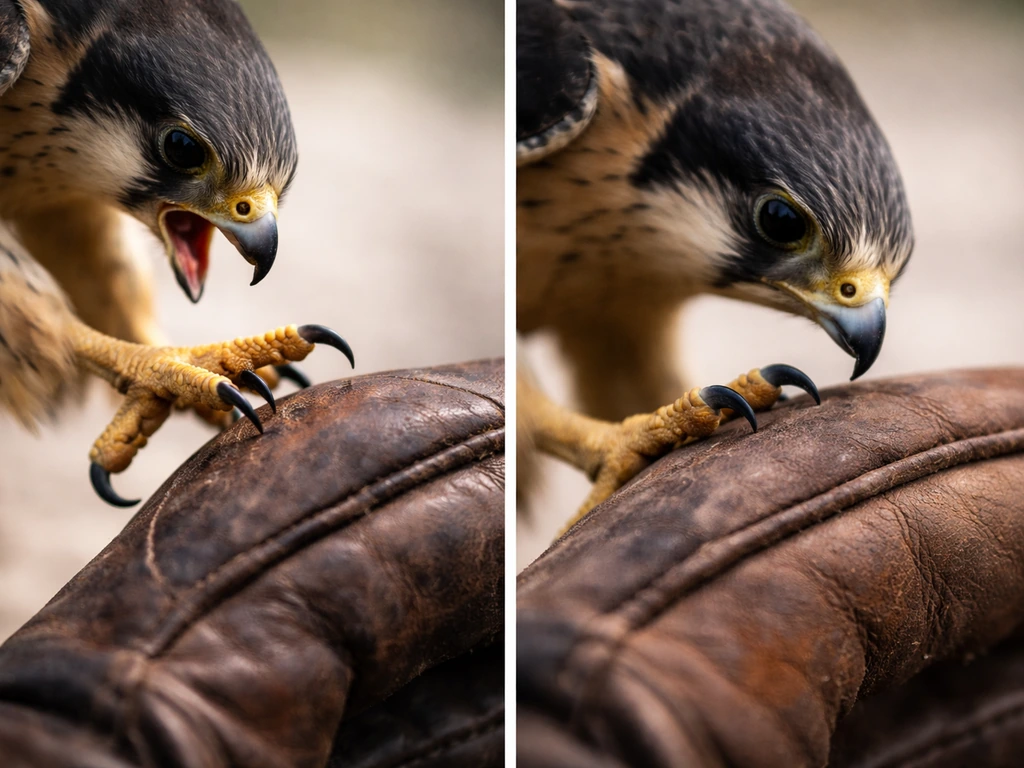
Before you can count deaths, you have to define what you're counting. "Bird attack" gets used to describe at least four different things, and they carry very different mortality risks.
- Direct physical strikes: a bird uses talons, beak, or body mass to physically harm a person. This is the category most people picture, and it's where almost all confirmed fatalities sit.
- Defensive aggression during nesting: birds like Canada geese or Australian magpies charge, peck, or strike to protect a nest. These rarely kill directly but can cause falls or traffic accidents.
- Aviation wildlife strikes: bird collisions with aircraft are tracked by the FAA, which reports 499 human fatalities globally (military and civil aviation combined) from wildlife strikes between 1988 and October 2024. Not all of those involved birds, but the majority did.
- Fright-induced injuries: someone runs from a swooping bird, trips, and hits their head. The bird doesn't touch them, but the encounter is the cause. These almost never get coded as bird attacks.
For this article, the focus is on direct physical attacks, the first category. Aviation strikes are a separate and better-documented hazard. Fright-induced falls are real but essentially impossible to track at scale.
Where the best data actually comes from
No single source gives you a clean global number, but you can triangulate from several places.
- CDC WONDER (U.S.): Uses ICD-10 external-cause codes to pull animal-contact deaths from death certificates. A 2018-2023 U.S. analysis showed increasing animal-related fatality counts over time, and the W61 code specifically captures bird contact. The data is searchable but requires knowing which codes to use, and misclassification remains a documented problem.
- FAA Wildlife Strike Database: The most rigorous dataset for aviation-related bird deaths. It covers civil aviation and includes injury data from 1990 onward. For this specific hazard, it's the gold standard.
- Coroner and hospital discharge data (country-specific): The UK ONS, Australian state health departments, and similar agencies hold injury data. Getting bird-specific subsets usually requires a freedom-of-information request, and many countries simply don't have searchable databases at this granularity.
- Peer-reviewed case series: Published studies on cassowary attacks, raptor aggression, and goose encounters fill gaps where surveillance data is absent. They're not population-level statistics, but they're often the only documentation that exists for specific species.
The ICD-11, which is gradually replacing ICD-10 globally, has structured external-cause categories that could improve consistency over time. But as of 2026, most countries are still mid-transition, and comparisons across systems remain unreliable.
Global vs country-level estimates, and where the gaps are

The United States probably sees fewer than 5 direct bird-attack deaths per year from non-aviation incidents, based on ICD-10 code analysis. CDC WONDER is the public platform used to query U. S. mortality datasets, including underlying cause of death via ICD coding, which is the practical basis for pulling ICD external-cause-linked fatality counts such as bird-contact codes [CDC WONDER mortality queries](https://wonder.
cdc. gov/). There are also internet claims about whether a secretary bird can kill a python, but the evidence is far less standardized than the fatal-attack data for large species like cassowaries and ostriches can a secretary bird kill a python. Australia has documented cassowary-related deaths, with published research confirming at least one modern fatality from cassowary attack in Queensland.
Cassowaries and ostriches are, according to a peer-reviewed Journal of Zoology study, the only birds worldwide confirmed to have caused human deaths through direct physical attack, outside of aviation. Cassowaries and ostriches have been identified as the main birds linked to the highest numbers of documented human deaths from direct, physical attacks.
That said, large data gaps exist in sub-Saharan Africa (where ostriches and other large birds are present), parts of Southeast Asia, and most of the Global South, where wildlife injury surveillance is limited or non-existent. WHO's animal-bite fact sheet addresses animal bites broadly, not bird attacks specifically, and doesn't produce species-level mortality estimates. So any "global total" you read should be treated as a floor, not a ceiling.
Aviation is the exception. blank" rel="noopener noreferrer">The FAA's global database is unusually complete for this niche. The 499 wildlife-strike fatalities figure (1988 to October 2024) is the most credible large-scale number available, but it includes non-bird wildlife and covers a 36-year span, which averages to roughly 14 per year across all wildlife types.
Historical trends and notable patterns
There is no strong evidence that direct bird-attack deaths are increasing worldwide, but a few patterns stand out in the data.
Cassowary attacks have been documented since the 1920s, with the Queensland case series being the most systematic modern record. Fatalities are rare but real. Ostrich attacks, mostly documented in farming contexts, follow a similar pattern: infrequent but occasionally fatal, especially when people enter enclosures or try to handle birds directly.
For smaller species, a Scientific Reports study on an urban raptor found that human feeding and religious practices directly increased the frequency and severity of attacks on people. This is a notable finding because it suggests that human behavior, specifically food subsidies and habituation, can create localized attack spikes that look like outbreaks but are really behavioral responses to human activity.
Nesting season aggression from geese, magpies, and corvids produces annual spikes in injuries, particularly from falls or traffic accidents caused by sudden attacks. These rarely kill directly, but they generate the bulk of emergency-room visits coded to bird encounters.
Who's actually at risk, and how serious is it
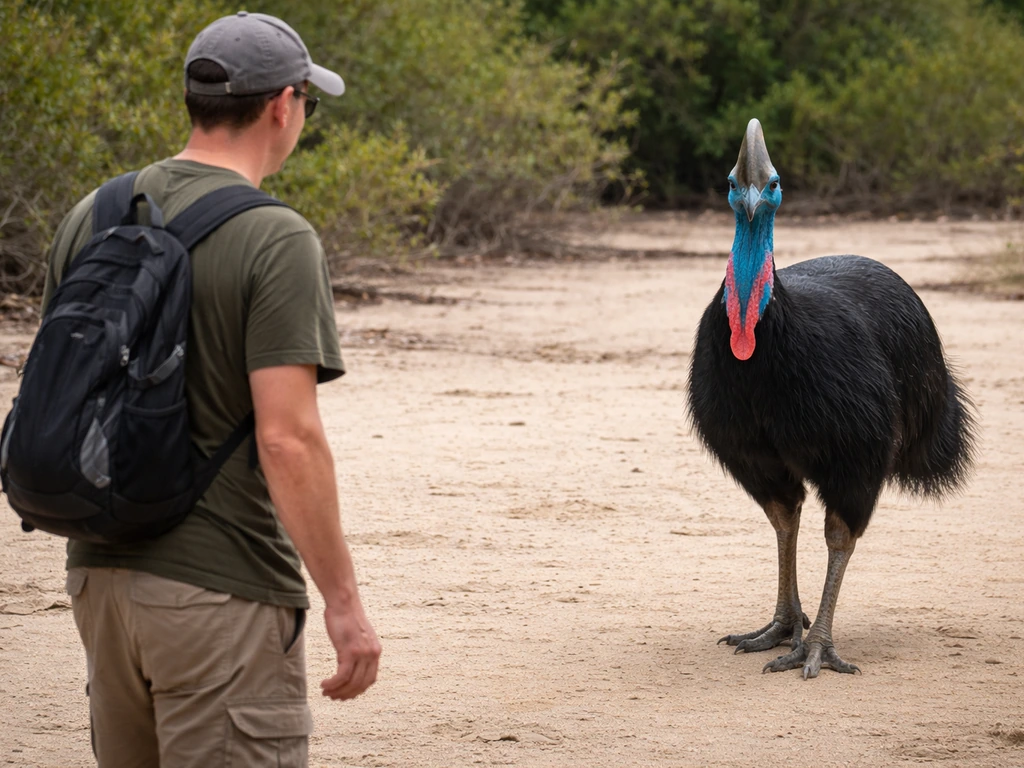
For most people in most places, the risk of dying from a bird attack is genuinely negligible. While secretary birds are known predators, reports of a secretary bird killing a human are extremely uncommon compared with the documented risks from other animals. In rare cases, the better question is whether a particular bird species and situation could seriously injure or kill a person risk of dying from a bird attack. It is far lower than the risk of dying from a dog attack, a bee sting, or a car accident. In the United States alone, dog attacks kill around 30 to 50 people per year, and venomous insects kill hundreds. Bird attacks don't come close to either.
The risk is meaningfully higher in specific scenarios.
- Proximity to cassowaries or ostriches: Workers on bird farms, wildlife rangers, and tourists in cassowary habitat (Far North Queensland, parts of New Guinea) face the only confirmed direct-attack fatality risk from birds in the wild or semi-captive settings.
- Children near aggressive birds: WHO's animal-bite guidance notes that head and neck injuries are more common in children because of their height and smaller body mass. A goose or raptor strike to a child's face carries more injury potential than the same strike to an adult.
- Cyclists and motorcyclists: A bird strike at speed, or a sudden swerve to avoid a swooping bird, can cause serious crashes. This is a documented risk in Australia during magpie nesting season and is likely underreported in ICD data.
- People who feed or handle birds habitually: Research shows that feeding raptors and other birds increases attack frequency. Handlers, falconers, and wildlife rehabilitators face occupational exposure that the general public doesn't.
Secondary risks from bird encounters, particularly wound infections and zoonotic disease, are a real concern even when the immediate injury seems minor. In some cases, those pathogens can cause illnesses serious enough to kill, which is why wound care matters even when the initial injury seems minor Secondary risks from bird encounters, particularly wound infections and zoonotic disease. The CDC Yellow Book lists birds as possible carriers of pathogens transmissible through bites and scratches, and any puncture wound from a beak or talon warrants proper wound care.
How to reduce your risk from bird encounters right now
Avoiding aggressive encounters
- During nesting season (spring into early summer for most species), give nesting birds a wide berth. If you know a goose, magpie, or raptor has a nest near a path you use regularly, take a different route until the chicks fledge.
- Never feed large birds, especially raptors, by hand or in ways that associate you with food. Research directly links human food subsidies to increased aggression toward people.
- In cassowary or ostrich territory, stay well back, never approach a bird that's watching you, and don't get between a parent and chick. These birds can kick with enough force to cause fatal injury.
- Canada geese feel safer taking off and escaping over open sightlines. Government of Canada guidance notes that removing dense cover near areas where geese congregate reduces the likelihood of cornered, defensive behavior near people.
- If a bird charges you, don't run. Back away slowly while facing the bird and use an arm, bag, or umbrella as a barrier between your face and the bird.
If you're struck by a bird

- Protect your face and eyes first. Most serious injuries from bird attacks involve the face, eyes, or scalp.
- Clean any puncture wound from a beak or talon thoroughly with soap and water immediately. Bird beaks and talons carry bacteria, and wound infections after bird bites are a documented complication.
- Seek medical care for any wound that breaks the skin. You may need a tetanus update, antibiotics, or evaluation for deeper tissue damage.
- If you fall as a result of a bird encounter, even if the bird didn't touch you, evaluate yourself for head injury before driving or continuing activity.
- For persistent goose or raptor conflicts near homes or workplaces, contact your local municipal wildlife authority. In Alberta and other jurisdictions, agencies like Alberta Environment provide specific goose conflict guidance. In the U.S., contact USDA Wildlife Services or your state wildlife agency.
When to call for emergency help
Call emergency services immediately if a large bird (cassowary, ostrich, emu, large raptor) has struck someone and there is bleeding that won't stop, suspected broken bones, or any loss of consciousness. Cassowary kicks in particular can puncture the abdominal cavity. Don't wait to see how the injury develops.
Putting it all in perspective
If you're wondering whether birds pose a meaningful danger to your life, the honest answer is almost certainly not. The confirmed death toll from direct bird attacks is tiny compared to virtually every other animal group, and it's concentrated in very specific species (cassowary, ostrich) and situations (farming, wildlife encounters, aviation). So which bird has killed the most humans? The answer depends on which datasets you trust and how they classify “bird contact” versus other wildlife injuries.
Questions about whether specific species like cassowaries, secretary birds, or raptors can kill a person are worth understanding in their own right, since the answer changes quite a bit depending on the species. But as a general population-level risk, bird attacks rank far below dogs, insects, and dozens of other hazards most people don't think twice about.
The real value in tracking these numbers isn't fear management, it's knowing exactly which scenarios and species carry actual risk so you can make smart decisions in the field.
| Hazard | Estimated U.S. deaths per year | Notes |
|---|---|---|
| Dog attacks | 30-50 | Well-documented via CDC surveillance |
| Venomous insects (bees, wasps, hornets) | 60-70 | CDC ICD-10 data |
| Aviation wildlife strikes (birds/wildlife) | ~14/year globally (avg. 1988-2024) | FAA database, includes non-bird wildlife |
| Direct bird attacks (non-aviation, U.S.) | Fewer than 5 | Estimated from ICD W61 data; likely undercounted |
| Direct bird attacks (global, all species) | 5-20 estimated | No single source; triangulated from case series and surveillance |
FAQ
How many deaths from bird attacks are actually “hidden” because of misclassification on death certificates?
There is no reliable global correction factor. The article explains that the underlying cause on a death record is often the physical mechanism (for example, a fall) rather than a bird encounter, so bird-attribution can be systematically undercounted, especially when coding thresholds differ by country or when investigators do not label the initiating hazard as animal contact.
Do the yearly numbers include people who died from bird-related infections after an injury?
Not in the core “direct physical attack” count. Secondary complications like wound infection or zoonotic illness can be serious, but those deaths may not get coded as a bird attack, depending on medical coding choices, which means the total harm from bird encounters can be higher than the direct-attack fatality count.
What’s the difference between a bird attack death and a bird-related death I might hear about in the media?
Media reports often bundle different categories, including aviation wildlife strikes, fright-induced falls, and nonfatal injuries. This article’s main estimate is for confirmed direct physical attacks only, so comparing it to headlines that say “bird killed someone” can be misleading if the incident was coded as an exposure or a fall rather than direct bird contact.
Why can the same incident be counted differently across countries?
Because each country can use different coding systems, different definitions of what counts as an “animal attack,” and different requirements for reporting to surveillance. Even when the diagnostic code exists in principle, local application by clinicians, coroners, and reporting agencies can vary.
If direct bird-attack deaths are rare, which species and settings are the highest-priority risk to understand?
The article points to concentrated risk around large, terrestrial birds and specific human interaction settings, especially farming or handling environments (cassowary, ostrich, emu, and large raptors). For most other situations, localized spikes are more common than fatalities, so focusing on species-specific behavior is more useful than thinking in terms of an overall global rate.
How should I interpret the “global floor not a ceiling” idea when comparing numbers online?
Treat any published global number as a minimum supported by the reporting systems that fed it. In regions with limited wildlife injury surveillance, fatalities can be missed entirely or recorded under non-bird mechanisms, so a “low” figure should not be read as proof that risk is equally low everywhere.
Do bird attacks appear to be increasing over time?
The article notes no strong evidence of a worldwide rise. When you see apparent increases in a place, it may reflect better reporting, changing human behavior (for example, feeding wildlife), or changes in how incidents are coded rather than a true increase in fatal attacks.
What immediate actions are most appropriate after a large bird strike?
Seek emergency care right away for uncontrolled bleeding, suspected broken bones, or any loss of consciousness. The article highlights that cassowary kicks can puncture the abdominal cavity, so waiting is risky even if the initial injury looks manageable.
What should someone do after a beak or talon puncture wound from a bird, even if it seems minor?
Get proper wound care and monitor closely for infection and complications. The article emphasizes that birds can carry pathogens transmissible through bites and scratches, so puncture wounds warrant medical attention rather than simple first aid.
How do aviation wildlife strikes fit into the “how many people died” question?
They are a separate, better-documented category. This article uses the FAA’s wildlife-strike fatalities as the best large-scale figure, but that number includes non-bird wildlife and spans many decades, so it cannot be directly compared to direct bird-attack-at-ground-level estimates.
If I’m trying to estimate risk for a specific country or region, what should I look for besides a single “death per year” number?
Look for whether the local data distinguishes direct contact attacks from falls and aviation incidents, and whether it reports species-level information. Without those distinctions, a single aggregated “bird attack” figure can hide the fact that most risk is confined to specific species or specific interaction settings.
Why do some places see lots of bird injuries but not many deaths?
Annual nesting or habituation-driven behavior changes can cause frequent attacks that lead mainly to nonfatal injuries, especially falls or traffic-related accidents. The article notes that these can generate many emergency-room visits coded to bird encounters, even though direct lethality is uncommon.