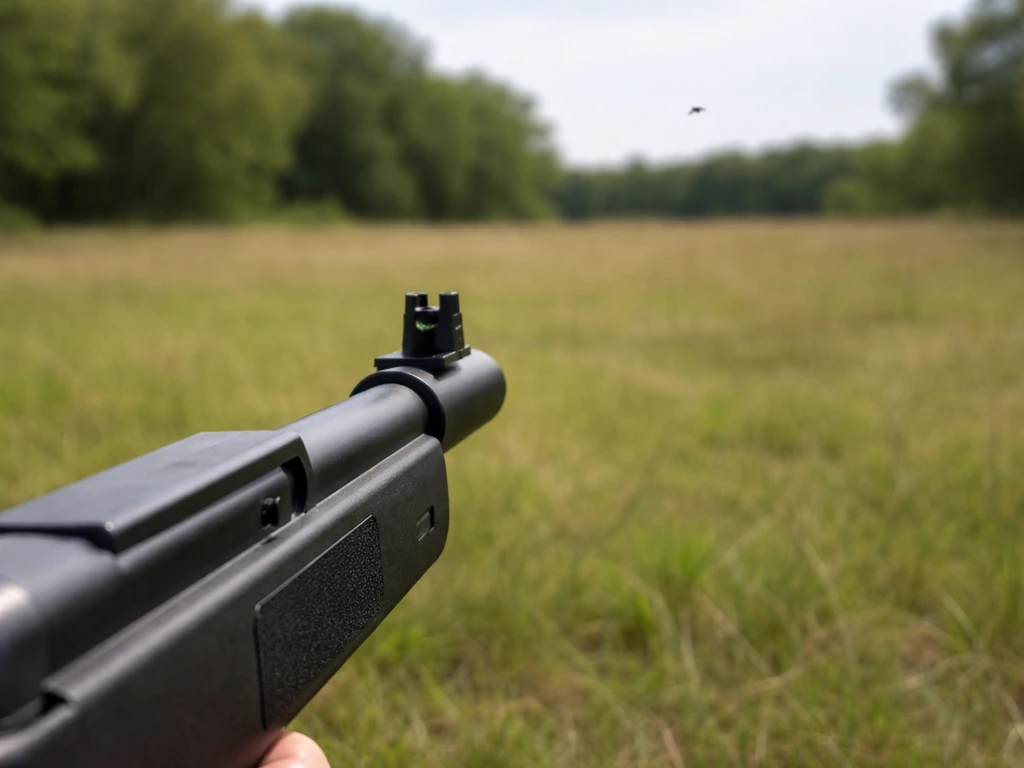
Yes, a 400 fps BB gun can kill a bird. Whether it actually does depends on several factors beyond speed alone, but at that velocity the energy is high enough to cause lethal injury, especially at close range and with good shot placement. This is not a gray area. A 400 fps gun is not a toy, and treating it like one near birds is how accidental kills happen.
Can a 400 FPS BB Gun Kill a Bird? Risk and Next Steps

Maya Chen
20 Apr 2026
What 400 FPS actually means in real-world terms
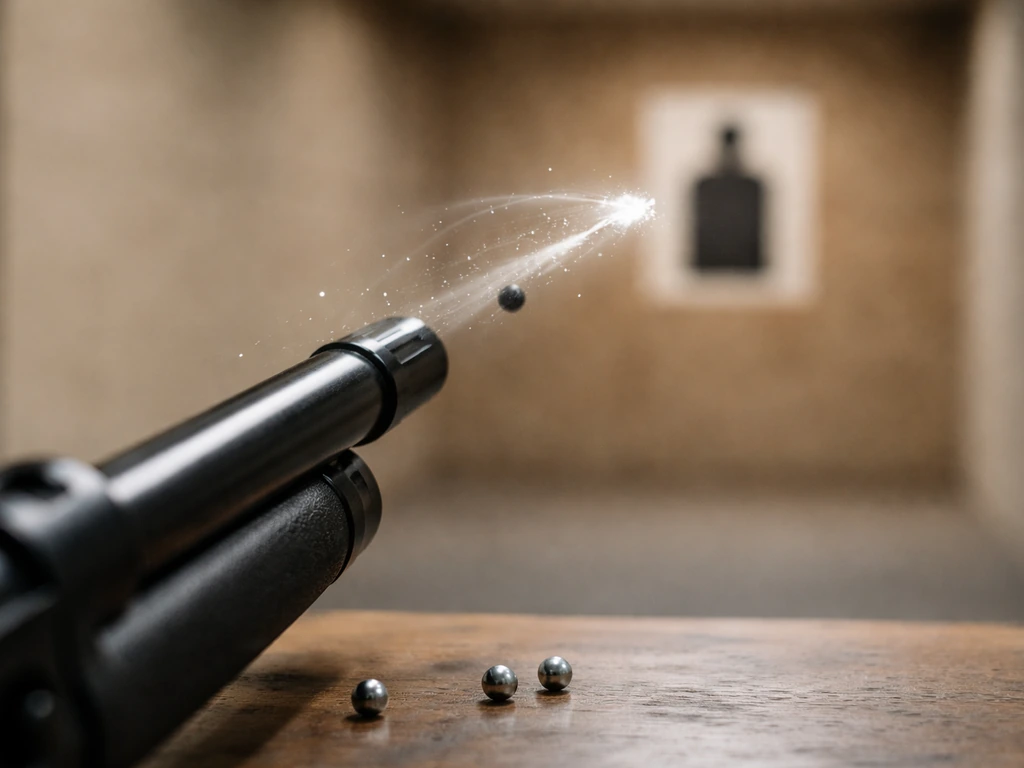
FPS (feet per second) tells you how fast a BB leaves the barrel. What it does not tell you is how much energy that BB carries, how far that energy carries downrange, or what happens when it hits something. Those are the numbers that actually determine injury and lethality.
Kinetic energy is calculated from both velocity and mass together. A standard 0.20 gram BB leaving the barrel at 400 fps carries approximately 1.48 to 1.49 joules of energy at the muzzle. That might sound modest, but it is enough to penetrate tissue at close range, and heavier BBs (0.25 g and above) carry even more energy at the same velocity. The FPS rating alone tells you nothing without knowing the projectile weight.
Distance matters a lot. Velocity and energy drop as the BB travels. A pellet or BB with a higher ballistic coefficient retains more velocity downrange, and at 50 yards the retained velocity difference between an efficient and inefficient projectile can exceed 160 fps. At very close range (under 20 feet), a 400 fps BB still carries most of its muzzle energy. At longer ranges, penetration risk decreases but does not disappear entirely, especially for small birds with thin bones and small body mass.
So when you hear someone say their gun is "only 400 fps," the real questions are: what does it weigh, how far away is the target, and where does it hit? Those three factors, combined with velocity, determine whether a shot is survivable or fatal. Airsoft guns can also be dangerous to birds, especially when their energy and shot placement are high enough. Airsoft guns can also be dangerous to birds, especially when their energy and shot placement are high enough.
Can a 400 fps BB gun kill a bird? What actually determines it
The short answer is yes, it can. The CDC has documented that projectiles from BB and pellet guns traveling above roughly 350 fps can cause tissue damage comparable to low-velocity conventional firearms, including injuries that result in permanent disability or death. A 400 fps gun clears that threshold.
The factors that determine whether a bird dies from a BB gun hit come down to four things: velocity, projectile mass, distance, and shot placement. Research on bird gunshot injuries makes clear that penetration and tissue devitalization are what determine injury severity, not velocity alone. A BB that clips a wing feather is not the same as one that penetrates the thorax or skull.
Shot placement is probably the most critical variable. A pellet lodged in a buzzard's head that happened to miss both the skull and eye may leave the bird alive, while a shot that penetrates the chest cavity or abdomen is far more likely to be fatal, even at moderate velocities. Case reports in medical literature document airgun pellets causing cardiac tamponade, aortic injury, and dysrhythmia in living subjects, which illustrates how much damage a small, fast projectile can do when it hits the wrong spot.
For small birds specifically, the lethality risk is higher than it would be for a larger animal. A sparrow or starling has a body mass of roughly 20 to 80 grams. A BB carrying 1.5 joules into that body does not need to hit a vital organ precisely to cause lethal internal damage. The energy-to-body-mass ratio is simply much less forgiving.
| Factor | Why it matters | Higher risk scenario |
|---|---|---|
| Velocity (fps) | Determines initial kinetic energy | 400 fps or above |
| Projectile mass (g) | Heavier BB = more joules at same fps | 0.25 g or heavier |
| Distance | Energy drops with range; close shots retain most energy | Under 20 feet |
| Shot placement | Vital organs, skull, chest = high lethality risk | Head, thorax, abdomen |
| Bird size | Smaller birds have less margin for injury | Sparrows, finches, pigeons |
Myths vs. reality about "safe" air guns and bird deaths
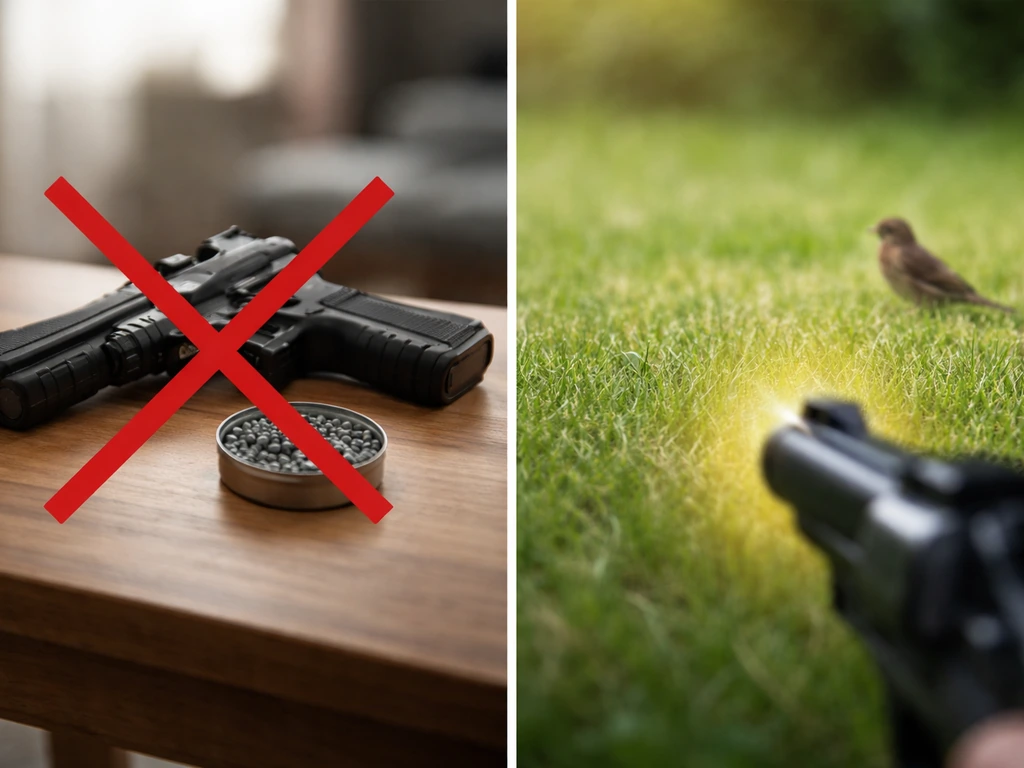
There are a handful of persistent myths that make people underestimate the risk of BB and pellet guns near birds. Let's go through the main ones.
Myth: "It's not a real gun, so it can't really kill anything." Reality: The CPSC explicitly warns that muzzle velocities above roughly 350 fps significantly increase the risk of serious injury. A 400 fps BB gun is above that threshold. It is not a firearm in the legal sense, but the physics do not care about the legal definition.
Myth: "I'm just trying to scare them away, not kill them." Reality: Shooting at birds to scare them is still shooting at birds. A shot intended to miss can easily hit, especially with moving targets. And a near-miss at close range can still cause blunt-force injury or fright-induced fatal stress in small birds.
Myth: "Low FPS means low risk." Reality: FPS alone is not a reliable guide to lethality risk. A heavier BB at 400 fps carries more energy than a lighter BB at the same speed. This is why energy in joules is the more useful metric, and why outdoor airsoft limits are typically set in joules, not just fps.
Myth: "Birds are tough. They can survive a hit." Reality: Some do, and some do not. The outcome depends heavily on placement and species, but it is not something you can reliably predict or control. A shot that produces no visible external injury can still cause internal hemorrhage, organ damage, or a fatal infection days later.
It is also worth noting that deliberately shooting birds in the United States is illegal under the blank" rel="noopener noreferrer">Migratory Bird Treaty Act for most species, including common ones like robins, sparrows, and pigeons. The fact that the weapon is "just a BB gun" is not a legal defense. In the United States, the Migratory Bird Treaty Act (MBTA) is one federal legal basis governing protections for migratory birds and restricting taking or killing without authorization, and Cornell Law’s U.S. Code database hosts the MBTA text in 16 U.S. Code Chapter 7, Subchapter II blank" rel="noopener noreferrer">legal defense.
What to do right now if birds are nearby or you've already shot
If you are currently in a situation where you have been shooting near birds, or are thinking about doing so, here are the most important immediate steps.
- Stop shooting immediately. Even if no bird appears injured, continuing increases the risk of a direct hit.
- Secure the area. If birds are roosting or nesting in a spot that is causing a problem, focus on physical barriers first (more on that below) rather than deterrence by shooting.
- Check the area for injured birds. Look for birds on the ground, moving abnormally, or unable to fly. A bird that was hit may not show obvious signs right away.
- Do not handle a bird unnecessarily. If a bird appears injured, contain it safely before making contact (see the next section).
- Contact a wildlife rehabilitator. In the US, you can find licensed rehabilitators through the National Wildlife Rehabilitators Association or your state fish and wildlife agency. Time matters once a bird is injured.
If you were not aiming at birds and are genuinely unsure whether any were hit, scan the ground and nearby low branches carefully. Birds that are injured often move to low cover and become quiet, which makes them easy to miss.
If a bird is hit: signs of injury and what to do next
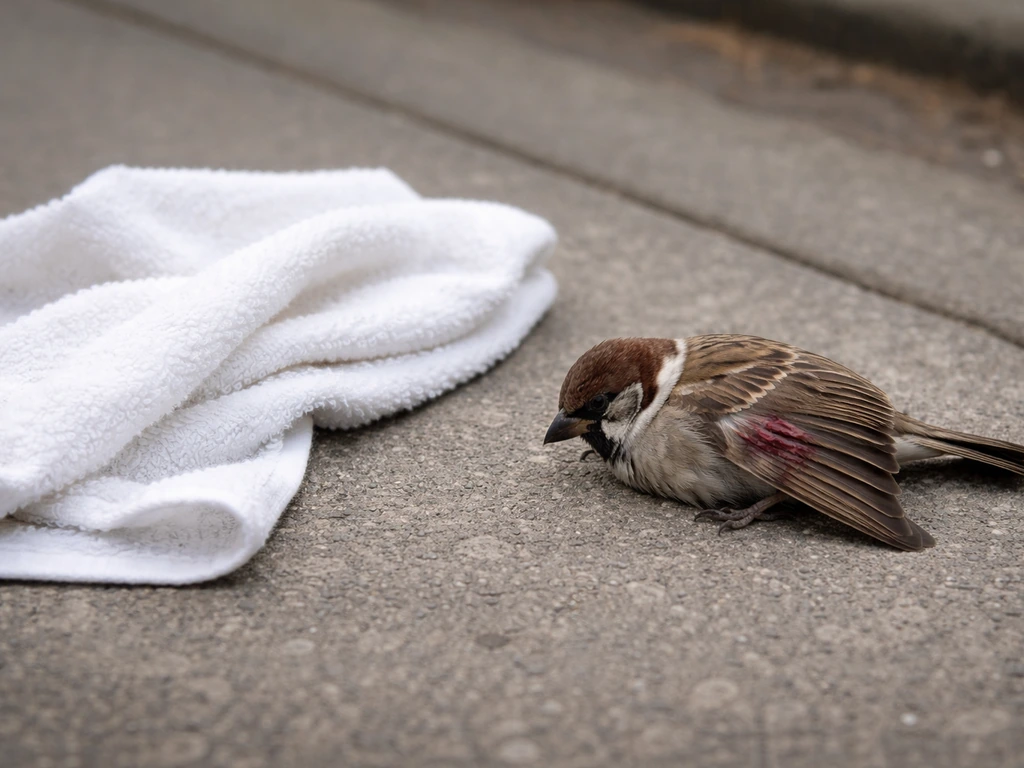
A bird that has been struck by a BB may show obvious signs like inability to fly, a drooping wing, or visible bleeding. But internal injuries are often invisible from the outside. Watch for these indicators:
- Sitting still on the ground and not moving away when approached
- Labored or open-mouth breathing
- Holding one wing lower than the other
- Tilting the head or losing balance
- Eyes partially closed during daylight
- Visible blood, especially around the head or breast
If you find a bird showing any of these signs, contain it carefully. Use a cardboard box with ventilation holes. Line it with a soft cloth or paper towels. Place the box somewhere warm, dark, and quiet. Do not give the bird food or water unless a licensed wildlife rehabilitator specifically tells you to. Offering food or water to an injured bird can cause aspiration and make things worse, not better.
The next step is to contact a wildlife rehabilitator as quickly as possible. As one rehabilitator resource puts it directly: once an animal is injured, the clock is ticking. Do not wait to see if the bird "gets better on its own." Internal injuries from projectiles rarely improve without professional care, and many birds that seem stable after a hit deteriorate within 24 to 48 hours.
Do not attempt to remove a BB or pellet yourself. Do not splint a wing without guidance. Do not keep the bird in a cage with open perches if it cannot grip or balance. The best thing you can do in the first hour is keep it contained, quiet, and warm, and get it to a professional.
Humane, legal alternatives if birds are causing a real problem
If the underlying situation is that birds are nesting somewhere inconvenient, roosting on your property, or getting into your garden, there are effective and legal ways to deal with that. Shooting at them is not one of them, and not just because of the legal risk. It is also simply not effective as a long-term solution. Birds return to the same locations unless the attractant or access point is physically removed.
Physical exclusion is the most effective long-term approach. Netting over garden beds, fruit trees, or building ledges prevents access entirely without harming any bird. Bird spikes and wire barriers on ledges and rooflines prevent perching and roosting without injury. These are standard commercial products designed for exactly this purpose, and they work.
Visual and sensory deterrents can also help. Reflective tape, predator decoys (moved regularly so birds do not habituate), and motion-activated sprinklers are all options for open areas like gardens. Combining methods tends to be more effective than relying on one alone.
If a specific species is the problem, your local animal control office or state wildlife agency can advise on legal, humane options including professional relocation or hazing in some circumstances. What they will tell you is that shooting, especially with a BB or pellet gun, is not on the approved list for most situations and carries real legal exposure.
The comparison between different air gun types and their lethality to birds comes up frequently, and the honest answer is consistent: whether you are looking at a 300 fps airsoft gun, a standard BB gun, or a higher-powered pellet gun, the risk to birds scales with energy output and proximity. A 300 fps airsoft gun can still injure or kill a bird if the shot has enough energy and hits a vulnerable area. A 400 fps BB gun sits in the zone where lethality is genuinely possible, not theoretical. If bird safety matters, the right tool is a deterrent, not a gun.
FAQ
If I didn’t see a bird bleed or fall, can it still have been hit by a 400 fps BB gun?
No. Airguns can still injure birds even if you do not see an obvious wound. Internal bleeding, organ damage, and shock can worsen over 24 to 48 hours, so a bird that looks “okay” at first still needs professional assessment if it was hit or possibly hit.
If two BB guns both claim 400 fps, is the bird risk the same?
Energy matters most, and energy depends on both BB weight and muzzle velocity. Check the gun’s listed BB mass (in grams) and compare it using joules, not only the FPS number. If you do not know the pellet or BB weight, you cannot reliably estimate the risk.
Does distance fully prevent lethal injury from a 400 fps BB gun?
Under-20-feet shots are especially dangerous because the BB retains most of its muzzle energy. Over longer distances, penetration risk drops but does not go to zero, particularly with small birds and shots that land in the thorax or head.
Can a near miss from a BB gun kill a bird without direct penetration?
Yes, because “near miss” plus fright and blunt trauma can still be fatal for small birds. A bird can also startle into a fatal impact (for example, hitting glass) even if the BB never penetrated.
What kind of hit is most likely to be fatal for small birds?
Shot placement is decisive. A BB striking the skull or eye area, or penetrating the chest cavity or abdomen, is far more likely to be fatal than a graze that only knocks feathers. However, you cannot guarantee survivability even with a seemingly minor visible wound.
Should I try to remove a lodged BB or pellet from an injured bird?
Do not. Removing or probing a BB can cause further bleeding, organ damage, or infection, and improper bandaging can worsen shock. If you must do anything, focus on gentle containment, warmth, and getting to a licensed wildlife rehabilitator.
What should I do in the first hour after finding a possibly injured bird?
If you find a bird that may be injured, the fastest triage is to keep it in a warm, dark, quiet ventilated container and contact a rehabilitator immediately. Avoid offering food or water unless a professional instructs you, because aspiration risk is real for birds under stress.
Is it legal to shoot at birds if it is “just” a BB gun?
Legal outcomes vary by location, but in the U.S. many species are protected under the Migratory Bird Treaty Act, and deliberately shooting at birds is generally illegal in most situations. Even if a weapon is called a “BB gun,” that label does not remove wildlife-law risk.
What are humane alternatives if birds keep roosting or nesting near my home?
If you are trying to stop birds, the safer approach is exclusion and habitat modification rather than firing. Netting, bird spikes, wire barriers, and covering attractants remove access without harming birds, and they prevent the problem from simply returning to the same spot.
Can an airsoft gun still kill a bird even if it is lower FPS than a BB gun?
Yes. Many people assume airsoft is “less lethal,” but risk is still determined by projectile energy and how accurately the shot hits. Lower FPS can still injure if the energy is high enough and the bird is close.
Next Article
Can a Pellet Gun Kill a Bird? What to Do If One Is Hit
Learn if a pellet gun can kill a bird, why it can, and what to do fast if one is hit or injured.