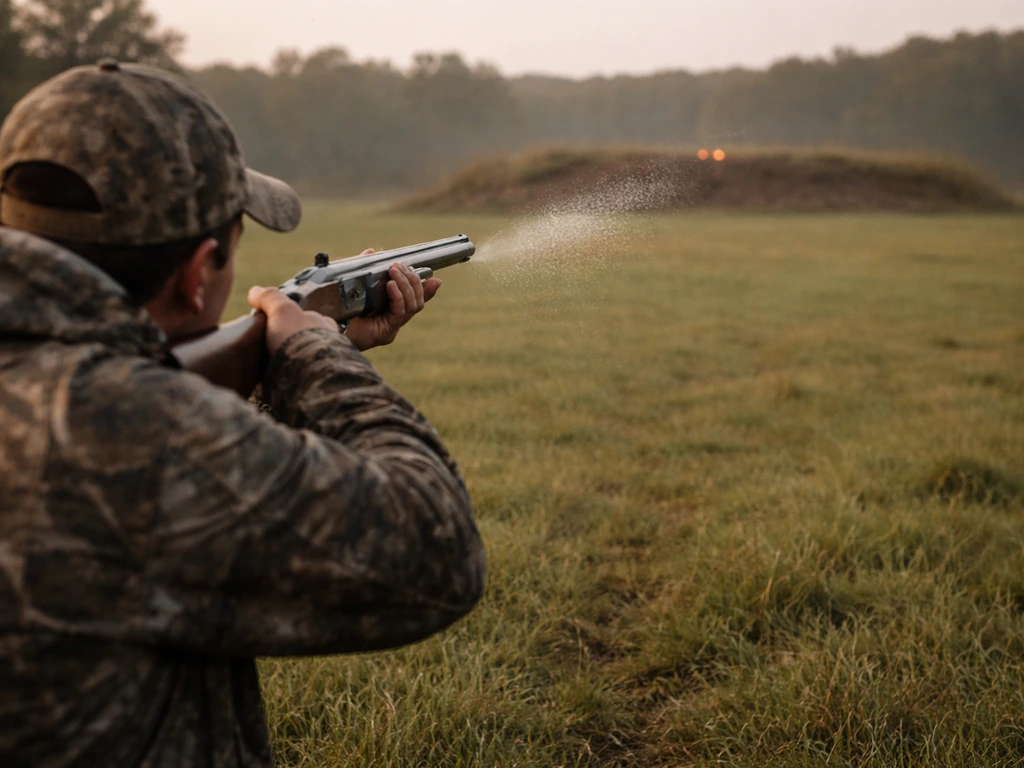
Yes, birdshot can kill a human. It's not a common outcome, but it's a real one, and anyone who tells you birdshot is "basically harmless" hasn't looked at the medical literature. The actual risk depends on a handful of factors: distance, pellet size, where the pellets hit, and how many connect. Get those factors wrong and a birdshot wound can be fatal. This article breaks down exactly when and why.
Can Bird Shot Kill a Human? Safety, Risk, and First Aid

Maya Chen
8 Apr 2026
The direct answer: yes, under the right (wrong) conditions
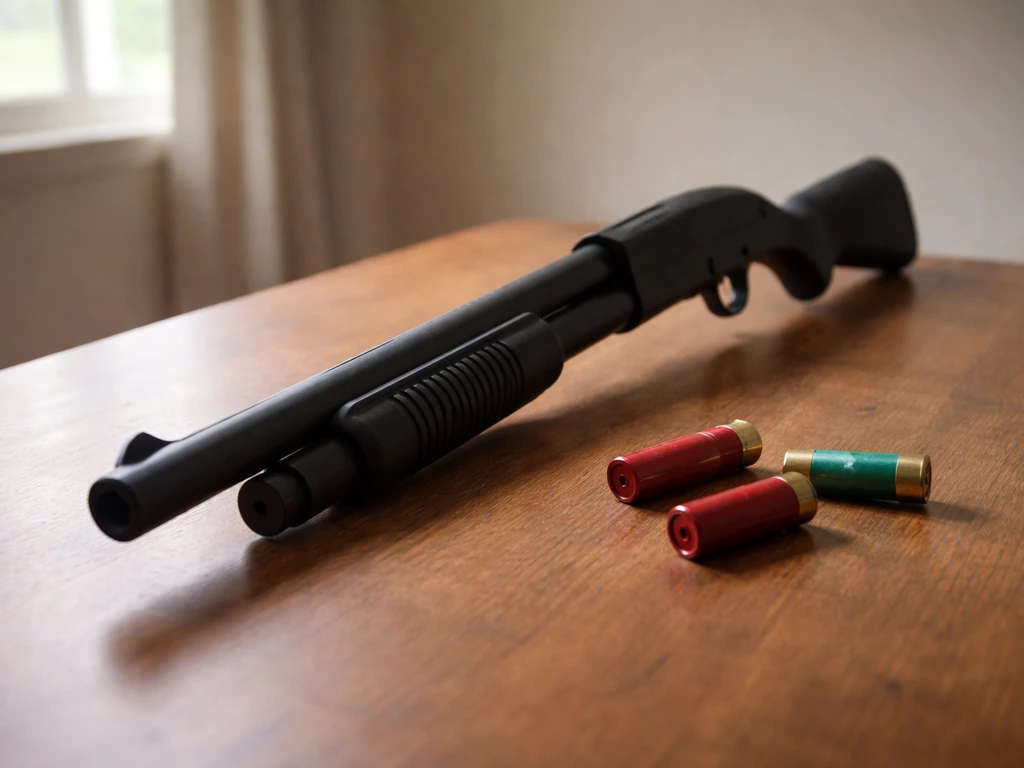
Birdshot is designed to bring down birds, not people, but it doesn't care about intent. At close range, a load of birdshot can deliver enough energy and pellet density to cause penetrating trauma to critical structures: arteries, the heart, lungs, and eyes. At longer distances the danger drops significantly, but it doesn't disappear. If you want a quick overview of what birdshot actually is and how it's classified, what birdshot is and how it's used covers the basics of pellet sizes, loads, and their intended purposes.
The clearest real-world example comes from a 2006 hunting accident in which a man was struck in the face, neck, and chest at roughly 30 yards. A pellet lodged near his heart, migrated to contact the surface of the heart, and caused a minor heart attack. He survived initially but died months later from complications. That was at 30 yards with a standard hunting load. Up close, the consequences would have been immediate and almost certainly fatal.
How birdshot actually injures the body
When a shotgun fires, it sends a wad of small pellets downrange. Those pellets do damage through two main mechanisms: direct penetration of tissue and secondary injury from fragmentation and energy transfer. At close range, the pellets haven't spread much yet, so they hit as a tight cluster. That cluster acts almost like a single large projectile, punching a "rat-hole" wound through skin, muscle, and potentially into body cavities.
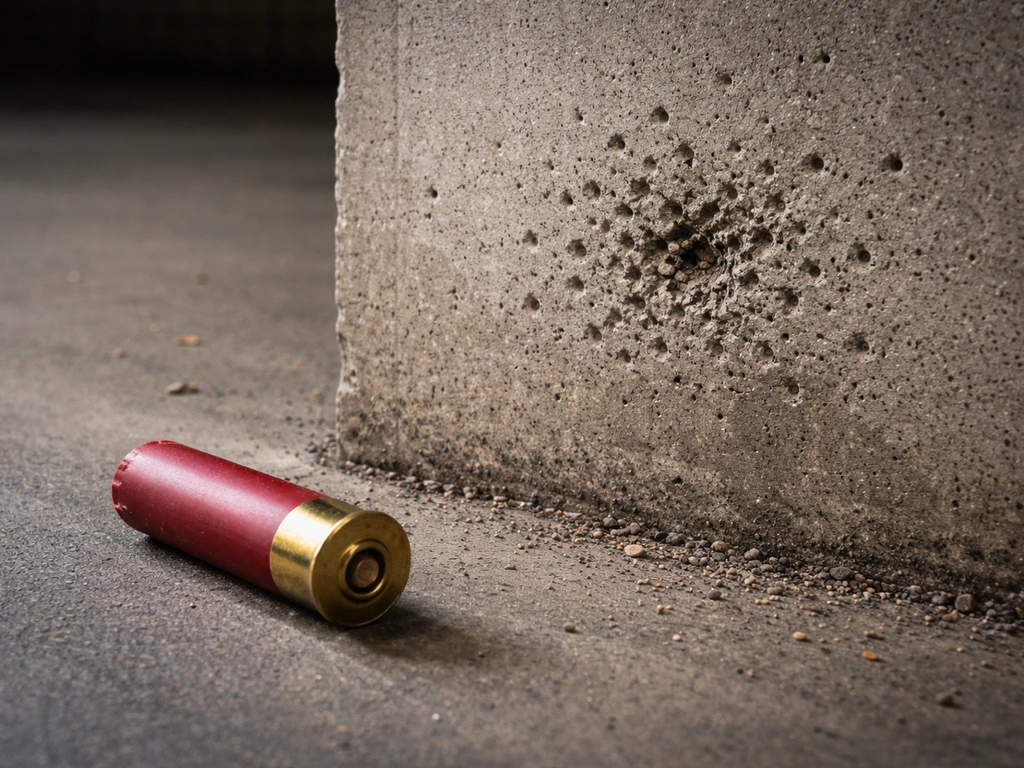
Beyond about 1 meter, pellets begin to spread out. You stop seeing one central wound and start seeing a central entry point surrounded by satellite pellet holes. At close range (within about 30 cm), you may also see muzzle burns, soiling, and tattooing on the skin from unburned powder. These forensic markers help medical examiners and ER physicians understand how far away the shot came from and how serious the internal damage might be.
Inside the body, projectile deformation and fragmentation increase the amount of tissue disruption. Pellets that hit bone can fragment further, scatter unpredictably, and damage vascular structures nowhere near the original entry path. This is why birdshot wounds that look small externally can hide severe internal bleeding or organ damage. One well-documented area of concern is the eye: birdshot has caused globe perforation (a penetrating injury through the wall of the eyeball), which is a sight-threatening and life-threatening emergency.
The real-world factors that decide whether it's lethal
Distance
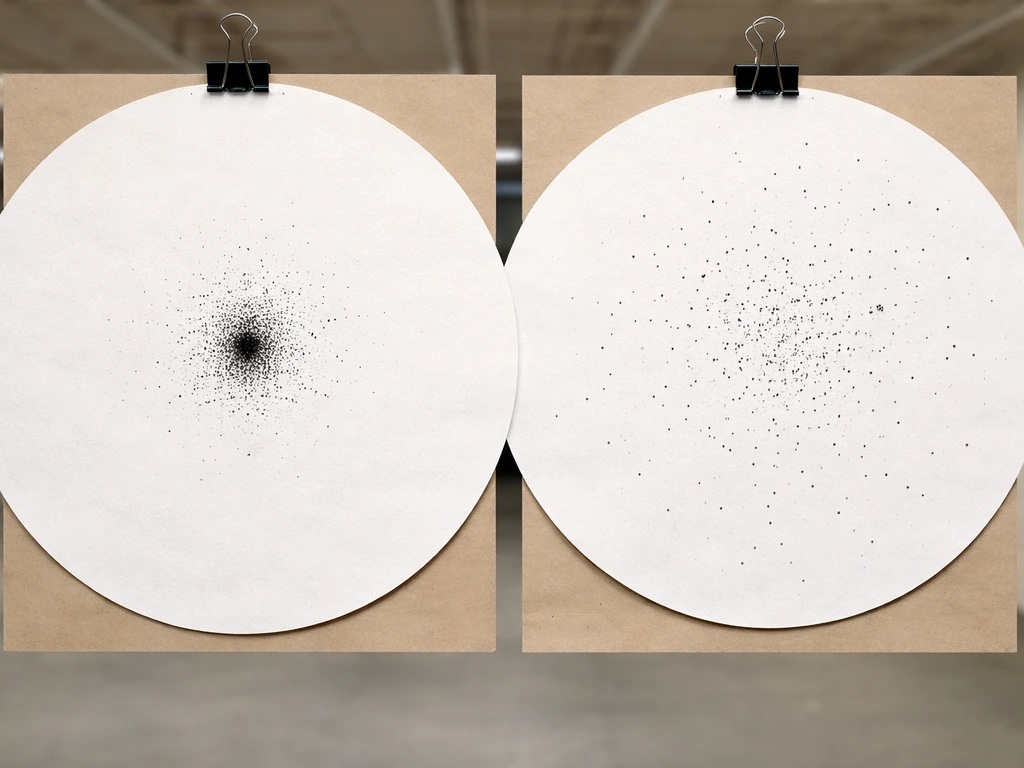
Distance is the single biggest variable. At close range the pellets are moving fast and packed tightly together, maximizing both penetration depth and the volume of tissue damaged. Velocity measurements from research on shotshell loads show that higher-velocity loads (for example, one measured at 457 m/s at the muzzle) produce significantly greater penetration than slower loads at the same distances. As distance increases, velocity and energy drop, and the pellets spread out, reducing the number that might hit any one area. If you're curious about how far birdshot actually travels before losing its dangerous energy, that breakdown covers effective and maximum range in detail.
Choke and pattern spread
The choke at the end of the shotgun barrel controls how tightly the pellets cluster as they leave the muzzle. A tighter choke keeps pellets grouped longer, meaning dangerous pattern density extends to a greater distance. A more open choke spreads pellets faster, reducing the chance of multiple pellets hitting a critical zone at longer range. Shotgun patterning guides typically measure pattern density by counting pellets in a 30-inch circle at a given distance. Modern cartridge and choke combinations can put 70% or more of their pellets into that circle at optimal hunting distances, which translates directly into lethality potential if a person is the target.
Pellet size and load
Not all birdshot is equal. Shot size ranges from the very small (size 9 or 8, used for clay targets and small birds) to larger sizes like 2 or BB, which carry more mass and energy per pellet. Larger pellets penetrate deeper and retain energy better over distance. A #9 load from across a field is unlikely to be fatal to an adult; the same distance with a larger load of #2 shot is a different story. The pellet count also matters: a shell that delivers more pellets increases the statistical probability that at least one hits a critical structure.
Strike location
Where the pellets land on the body is as important as how many arrive. Head, neck, and face hits are the most dangerous because of the concentration of critical structures in a small area: carotid arteries, the jugular vein, the trachea, the eyes, and the brain. Chest hits can penetrate the lungs, heart, or major vessels. Abdominal hits can reach the liver, spleen, or aorta. Extremity hits are less likely to be immediately fatal but can still cause severe bleeding. The 2006 hunting accident illustrates exactly this: face and chest hits led to a pellet reaching the heart surface.
Multiple pellet hits
A single small pellet to the torso might be managed conservatively. Thirty pellets spread across the face, neck, and chest is a different clinical picture entirely. Multiple simultaneous penetrating injuries multiply the chances of hitting something critical and complicate treatment. Hemorrhage from several sites at once is harder to control and more likely to cause hemodynamic instability.
When it's a medical emergency: symptoms and first steps
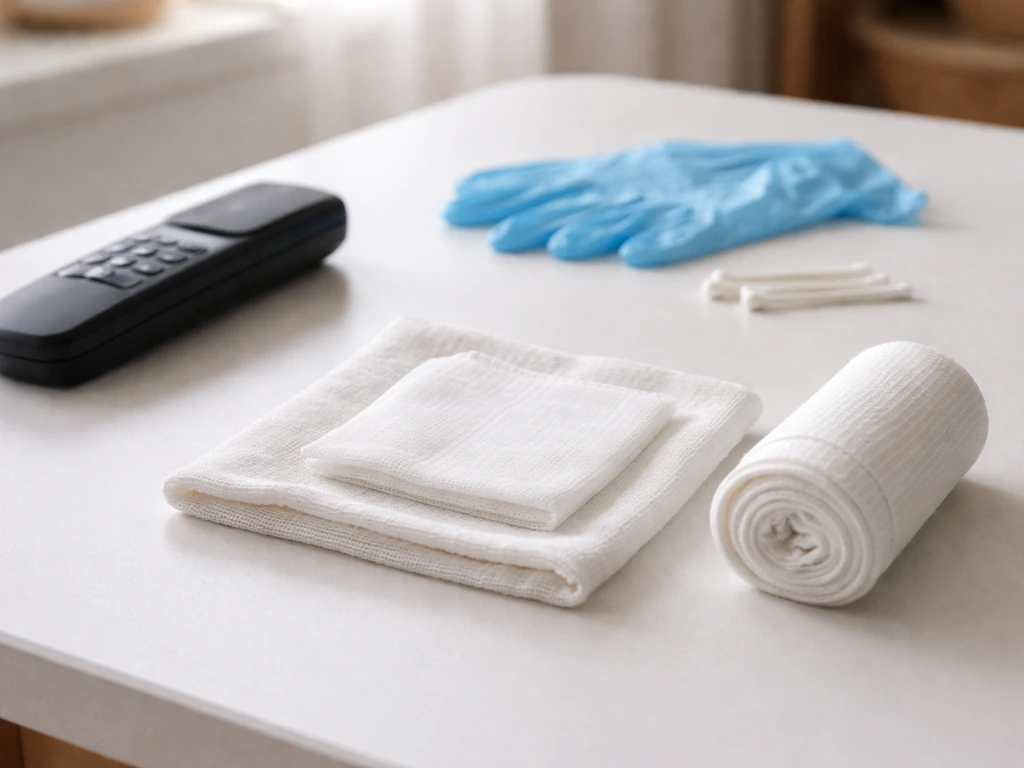
If someone is struck by birdshot, treat it as a potential emergency until proven otherwise. MedlinePlus (NIH/NLM) advises prompt direct pressure for bleeding injuries and emphasizes rapid medical evaluation for potentially serious trauma, which supports treating such wounds as emergencies until assessed by clinicians treat it as a potential emergency until proven otherwise.. Do not assume that because the wounds look small, the injury is minor. Pellets can reach the chest cavity, the abdomen, or the skull without producing an obvious wound.
Call emergency services (911 in the US) immediately if the person was struck at close range, if pellets hit the head, neck, chest, or abdomen, or if any of the following are present:
- Difficulty breathing or gurgling sounds when breathing
- Coughing up blood
- Rapid, weak pulse or signs of shock (pale skin, confusion, fainting)
- Bleeding that does not slow with direct pressure
- Loss of vision, irregular pupil shape, or eye pain after a head/face hit
- Loss of consciousness at any point
- Chest pain or pressure, especially after a torso hit
For bleeding wounds, apply direct pressure with a clean cloth or sterile dressing and hold it firmly. Don't remove the cloth if it soaks through; add more material on top. The priority sequence is airway, breathing, and circulation: check that the person can breathe and has a pulse before doing anything else.
For open chest wounds, Red Cross guidance treats these as medical emergencies. Leave the wound exposed to air or use a clean non-occlusive dressing rather than sealing it tightly, and watch for worsening breathing. A sealed chest wound can cause a tension pneumothorax, which is a rapidly fatal complication. EMS and trauma teams use specialized chest seals with venting to manage this, but in the field, keeping the wound open and monitored is safer than improvising a tight seal.
For eye injuries, do not rub the eye, do not apply pressure, and do not try to remove anything. Cover loosely with a clean cup or shield if available and get to an emergency room immediately. Penetrating eye injuries require specialist care, and delay worsens outcomes.
This question also comes up in the context of self-defense scenarios. If you're specifically asking can birdshot kill you in a self-defense situation, that article looks at the question from an applied personal-safety angle with additional context on close-range scenarios.
Prevention and safe handling
Most birdshot injuries to humans are accidents. They happen when hunters fire without clearly identifying what is beyond their target, when someone steps into a shooting lane unexpectedly, or when a firearm is handled carelessly. A few basic practices eliminate most of these risks.
- Know your zone of fire. Hunter education programs emphasize maintaining a safe zone of fire and never allowing the muzzle to sweep toward another person. Before pulling the trigger, confirm what is in front of and behind your target.
- Treat every firearm as if it is loaded, even if you believe it isn't.
- Keep your finger off the trigger until you are ready to shoot and have a safe target.
- Be aware of pellet spread at your hunting distance. At typical bird-hunting distances, shot patterns can be wide enough to catch bystanders standing several feet off to the side of the intended target.
- Wear eye protection when shooting. Ricochets and back-scatter are real hazards. Police and military firearms safety guidance specifically calls out overpenetration and ricochet hazards, and shotgun pellets can ricochet from hard surfaces.
- Property owners who use shotguns for pest control or protection should consider their backstop: pellets that miss or pass through a target can travel significant distances and retain enough energy to cause injury. Understanding the actual range limits of your ammunition is not optional.
If you find yourself in a situation where you're uncertain about where pellets land or how far they travel from your property, the physics are worth understanding. Pellet spread and energy retention over distance directly affect how far a dangerous pattern extends. This is distinct from the question of what birds can physically carry (a completely different topic, but one that surprises people: what bird can pick up a deer is a good example of how people often misjudge what birds are capable of in general).
Common myths vs. what the evidence actually shows
| Common Myth | What the Evidence Shows |
|---|---|
| Birdshot is non-lethal | False. Close-range birdshot has caused deaths. Even at 30 yards, pellets have reached the heart surface and caused cardiac events. |
| Small pellets can't penetrate deep enough to hit vital organs | False. Pellet velocity, mass, and cluster density at close range allow penetration into the thoracic and abdominal cavities. |
| If it doesn't kill you immediately, you're fine | False. Retained pellets near the heart or in vascular territory can cause delayed complications, including death weeks later. |
| Birdshot is always safer than buckshot for home defense | Partially true at longer ranges, but at typical indoor distances the difference in lethality is minimal. Both are dangerous at close range. |
| The eye is the only really vulnerable area | False. Head, neck, chest, and abdomen are all high-risk zones. Eyes are specifically dangerous because penetration into the eye requires far less pellet energy. |
| Distance eliminates the risk entirely | False. Distance reduces risk significantly, but pellets can still cause serious injury at ranges well beyond typical bird-hunting distances, especially to exposed skin and the eyes. |
The myth that birdshot is "safe" or "harmless" persists partly because most birdshot accidents at longer distances result in painful but survivable injuries. That survivorship creates a false sense that the ammunition itself is low-risk. It isn't. The distinction is that the conditions under which it becomes lethal (close range, critical strike zone, multiple pellets) are conditions that happen in real life, as the documented record of hunting accidents and defensive shootings makes clear.
The honest summary: birdshot can kill a human, and the factors that determine whether it does are range, pellet size and load, choke, and where the pellets land. Treat any birdshot wound to the head, neck, chest, or abdomen as a potential life-threatening injury, call for emergency services immediately, control bleeding with direct pressure, and do not assume that small entry wounds mean minor injury. That approach keeps people alive while waiting for professional medical help.
FAQ
If birdshot wounds look tiny, can they still be life-threatening?
Not only is it possible, but it depends strongly on where the pellets hit and whether pellets can reach critical areas (eye, head, neck, chest, abdomen) or strike arteries and major organs. If you do not know the range, assume higher risk and treat it as an emergency, especially after close-range events or if pellets were directed at a person.
Can multiple birdshot pellet hits make a difference compared with a single pellet?
Yes. Multiple small pellets distributed across the face/neck/chest can collectively cause severe internal bleeding, even when each individual entry wound seems minor. Emergency care is still needed if there are multiple wounds, worsening pain, weakness, fainting, coughing blood, or trouble breathing.
What factor should I consider first for risk, range or shotgun setup?
The single biggest practical factor is range, because shorter distances mean tighter pellet clustering and higher energy. Choke and pellet size also affect pattern density and penetration, so even at “medium” distances, a tight choke with larger pellets aimed at the torso can still be dangerous.
How do I know if the shot was close enough to be especially dangerous?
Yes, and “close range” is the most concerning. In real situations, people often misjudge how far a muzzle was from the victim. If pellets show signs consistent with short-range discharge (for example, soot/soiling or tattooing around the entrance), treat it as potentially severe and get emergency help right away.
Can birdshot damage organs even if there is no large entry wound?
Birdshot can cause serious injury even without an obvious large penetration wound because pellets can fragment after hitting bone, causing bleeding or organ damage off the original track. If symptoms suggest internal trauma (fast heartbeat, dizziness, abdominal pain, vomiting, difficulty breathing), do not rely on external appearance.
Should I try to remove pellets from the wound to help recovery?
Generally, you should not remove pellets or probing into wounds. The priority is airway and breathing, then circulation (direct pressure for bleeding), and urgent medical evaluation. Removing pellets at the scene can worsen bleeding, increase tissue damage, and delay proper sterile care.
How urgent is treatment for eye or chest birdshot injuries?
Time matters for eye injuries and for chest trauma. For eye penetration, delay can worsen outcomes. For suspected chest injury, rapid EMS care is important because complications can evolve quickly, and field improvisation can be harmful.
What is the correct way to manage bleeding until EMS arrives?
For uncontrolled bleeding, apply firm direct pressure with a clean dressing, and if it soaks through, add layers on top and keep pressure. Avoid repeatedly lifting the dressing to “check,” because that disrupts clotting and can restart heavy bleeding.
Can birdshot injure someone without being fired directly at them (ricochet or scatter)?
Yes. People can be struck by ricochet or pellet scatter off hard surfaces like metal, stone, or hard-packed ground. If a person was near a shooter or near reflective/hard objects, treat it as potentially serious and check for eye involvement and multiple wounds.
If someone survives the initial injury, can serious complications still appear later?
Even if a person seems alert at first, complications can develop over hours (for example, breathing difficulty, shock, infection, or delayed heart or internal complications). If symptoms worsen or any red flags appear, escalate care immediately rather than waiting.
When should I call emergency services versus monitoring at home?
If pellets may have hit the head, neck, chest, or abdomen, the safest approach is urgent evaluation regardless of symptom level. For any concerning signs such as trouble breathing, confusion, significant bleeding, weakness, or loss of vision, call emergency services immediately.
Next Article
How Far Does Bird Shot Travel? Range, Choke, and Safety
Learn how far birdshot travels and spreads, how choke and shot size change range, plus safe backstop rules.