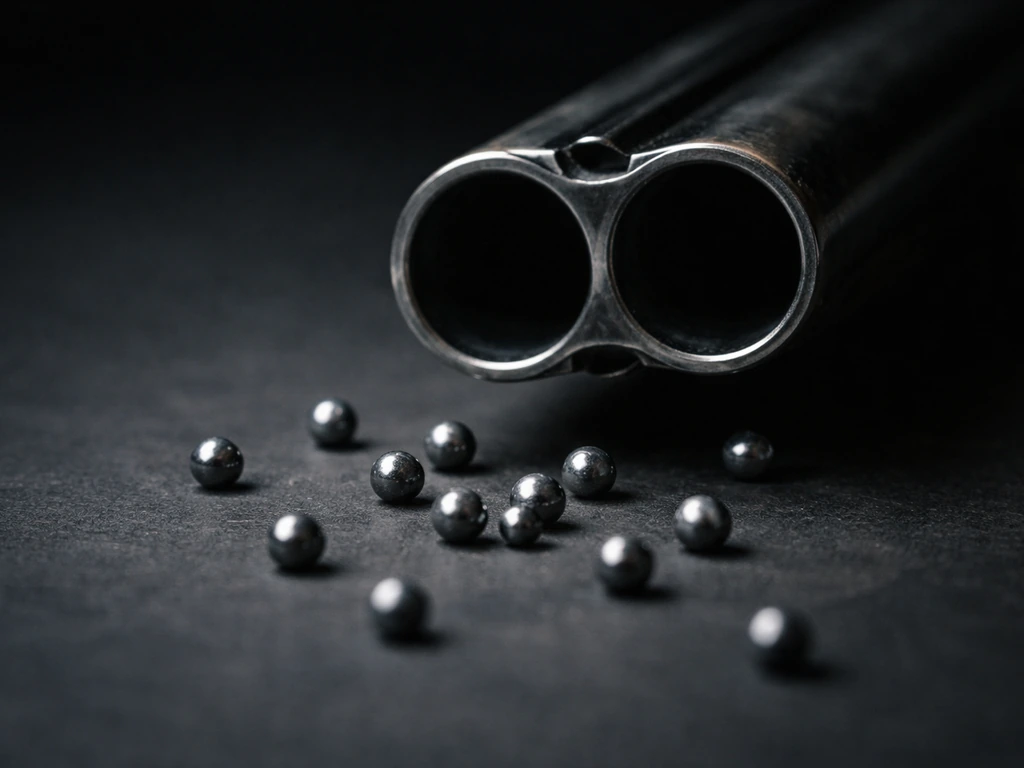
Can birdshot kill a person? The direct answer
Yes, birdshot can kill a person. It is not common at long range, but it happens, and the idea that birdshot is somehow a "safe" or non-lethal load is one of the most dangerous myths in firearms safety. At close range, a standard 12-gauge birdshot shell delivers a dense cluster of small lead pellets with enough combined energy to cause fatal wounds to the head, neck, chest, or abdomen. Even at moderate distances, individual pellets can penetrate the eye, strike a major blood vessel, or enter the skull through a thin bone and cause death. Distance matters enormously, but "it's only birdshot" is not a reason to assume you are safe.
If you want to understand what bird shots are and how they differ by size and load before reading the rest of this article, that background will help put the lethality discussion in context. The short version: birdshot shells contain anywhere from roughly 90 to over 400 individual pellets depending on size and gauge, all released in a single shot.
How birdshot actually hurts or kills you
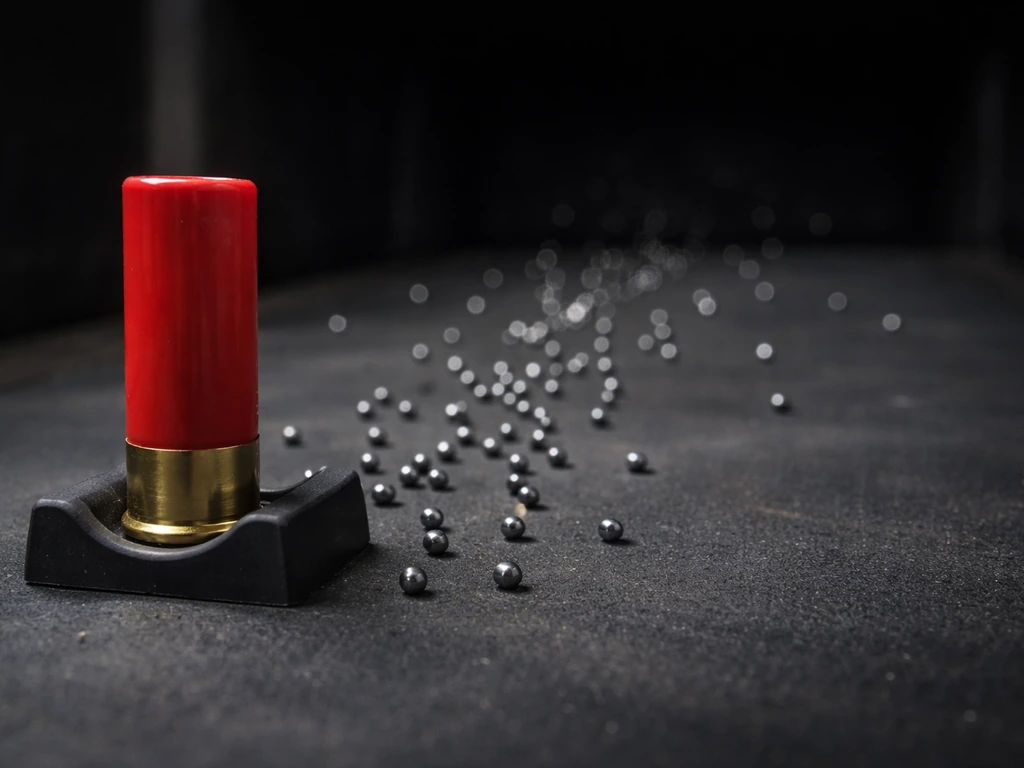
A 12-gauge 2 3/4-inch shell loaded with #7.5 shot contains roughly 350 to 400 pellets. When fired, those pellets leave the muzzle at around 1,200 to 1,300 feet per second. At close range, the pattern is still tight, which means most of those pellets strike within a small area. The combined energy of that dense cluster can destroy tissue, shatter bone, and penetrate deep into the body, including the thoracic cavity. That is why close-range birdshot wounds to the chest or abdomen are treated as life-threatening by trauma surgeons.
Penetration depth drops as distance increases. Individual pellets slow quickly because of their small mass and poor ballistic coefficient. By 40 to 50 yards, many #7.5 or smaller pellets may not have enough energy to reliably penetrate skin and reach vital structures. But "may not" is not the same as "cannot," especially with larger birdshot sizes like #4 or #2, which retain energy significantly longer.
Where the pellets hit is just as important as how many hit you. A single pellet to the eye can cause permanent blindness or travel intraocularly into the brain. A pellet striking the neck can lacerate the carotid artery or jugular vein. There is a documented autopsy case in which a facial shotgun wound caused fatal cerebral ischemia due to carotid stenosis from the pellet impact, illustrating that even a non-center-mass strike to the head can be fatal through vascular injury.
Higher-risk scenarios you need to know about
Most birdshot accidents are not people standing in the open field at 40 yards. The genuinely dangerous situations tend to involve one of the following conditions:
- Close range discharge (under 15 yards): the pattern is still tight, wound energy is high, and penetration into the torso or head is very likely. This includes accidental discharges in a garage, car, or any indoor space.
- Indoor or enclosed spaces: walls, floors, and ceilings reflect pellets. Ricochets from hard surfaces can contain enough energy to cause serious eye, face, or neck injuries even after bouncing.
- Poor or absent backstop: pellets that miss the target or pass through it keep traveling. Knowing how far birdshot can travel is critical, because even spent pellets at the outer edge of their range can still injure an unprotected eye.
- Large game loads: #4, #2, and BB-sized shot used for waterfowl or turkey retain far more energy at distance than #7.5 or #8 target loads. Do not assume all birdshot behaves the same.
- Head, neck, and eye exposure: these areas are more vulnerable regardless of range. A pellet that would only bruise the forearm at 40 yards could permanently damage vision or penetrate the skull at the same distance.
Ricochet is a factor people consistently underestimate. Pellets that hit hard, angled surfaces like concrete, rock, or steel can deflect at unpredictable angles. This matters especially if you are practicing at home or shooting in an area with hard ground or structures nearby.
What to do right now if you or someone else is hit
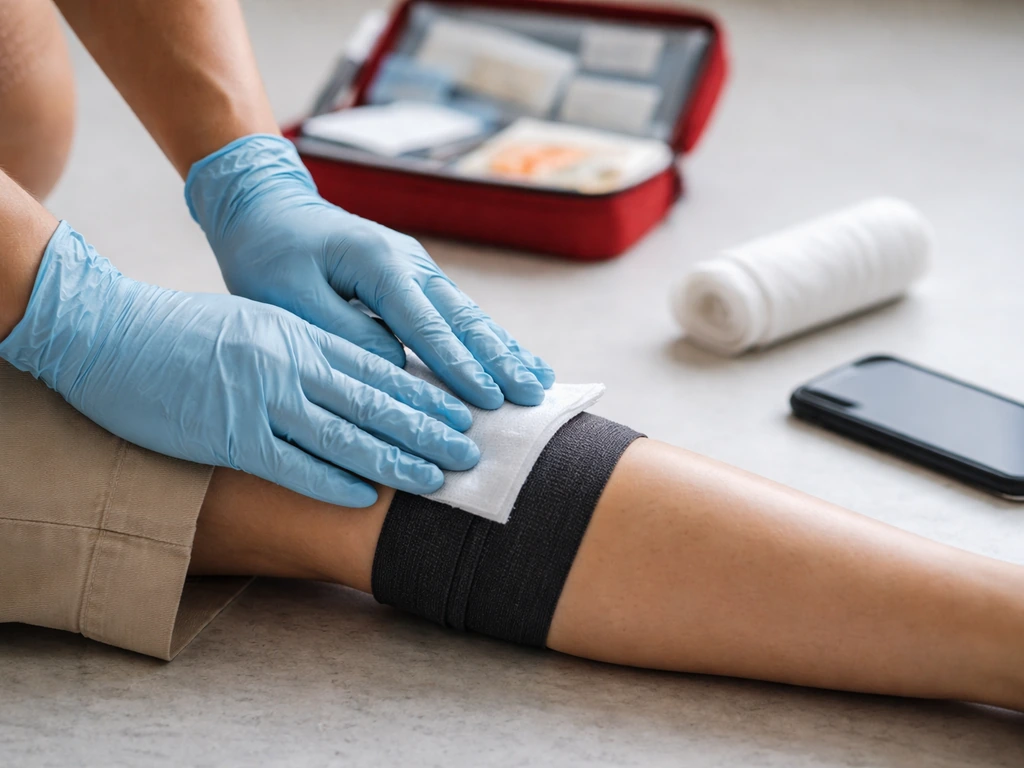
Treat any shotgun pellet injury as a potential medical emergency until proven otherwise. Here are the steps to follow:
- Call 911 immediately or have someone else call while you administer first aid. Do not assume the wound is minor because it looks small on the surface.
- Control bleeding by applying firm, direct pressure with a clean cloth. Do not remove an embedded pellet or fragment. Embedded objects should be left in place, as removing them can worsen bleeding and damage surrounding tissue.
- Do not probe, irrigate, or dig into the wound. Keep it covered and as clean as possible.
- Keep the person still and calm. If the wound is in the neck or chest, watch for any change in breathing, gurgling sounds, or swelling around the airway.
- For eye injuries: do not rub the eye, do not rinse it with water, and do not apply pressure. Cover it loosely (a clean paper cup works) and get to an emergency department immediately.
- Watch for these signs that require emergency care without delay: uncontrolled bleeding, difficulty breathing or swallowing, loss of vision or eye pain after any pellet hit near the face, confusion or loss of consciousness, numbness or weakness in an arm or leg, and any wound to the neck or head.
Even if the wound looks superficial, get evaluated by a physician. Pellets can travel through soft tissue and lodge near nerves, blood vessels, or organs in ways that are not visible from the outside. Imaging is often needed to find retained fragments, and the sooner that happens, the better the outcome.
Long-term complications that can show up later
Getting through the initial injury does not mean you are in the clear. Retained pellets, which are very common in birdshot wounds because of the sheer number of projectiles, create ongoing health risks that can appear months or even years after the original incident.
[Lead toxicity is a serious and documented complication. ](https://pubmed. ncbi. nlm.
nih. gov/6800314/) PubMed lists a case report of lead poisoning in a child after a gunshot wound, supporting the plausibility of delayed lead toxicity from retained particles [lead poisoning is a serious and documented complication](https://pubmed. ncbi. nlm.
nih. gov/3951923/). There are published case reports of patients developing symptomatic lead poisoning years after a shotgun injury, including joint pain, neurological symptoms, and in severe cases, death, when retained lead pellets were not removed or monitored. One case report describes a patient who developed lead toxicity and joint pain 12 years after a pellet migrated into the hip joint.
Another review notes that elevated serum lead levels from retained pellets can reach life-threatening concentrations if chelation is not started. If you have retained pellets, periodic blood lead monitoring is not optional.
Infection risk is elevated with any penetrating wound. The skin is breached, debris may be carried in with the pellets, and the entry wound can be small enough to close over and trap bacteria inside. Tetanus is a real concern with puncture-type wounds; your tetanus vaccination status matters and should be confirmed with a healthcare provider after any pellet injury.
Vision and nerve damage can be permanent. Studies of pellet-related ocular injuries consistently show that a significant portion of patients with penetrating eye injuries end up with permanent visual loss in the affected eye. Retained intraocular foreign bodies can cause ongoing inflammation, retinal detachment, and eventual blindness even if initial vision seems intact. This is why eye injuries from pellets are treated as globe-threatening emergencies requiring urgent ophthalmology evaluation and imaging.
Scarring and chronic pain at the wound site are common. Pellets that sit near nerves or joint spaces can cause progressive functional loss. Imaging with X-ray or CT can locate retained fragments and help guide decisions about whether removal is safer than leaving them in place.
Myths about birdshot lethality, corrected
There are a few persistent misconceptions worth addressing directly, because they lead to underestimating risk and delaying care.
| Myth | What's actually true |
|---|
| "Birdshot can't kill you, it's too small." | At close range it absolutely can. Head, neck, and chest wounds from birdshot are treated as life-threatening by trauma teams. Documented fatalities exist. |
| "If you're hit and feel okay, you're fine." | Pellets can penetrate deeply without causing immediate pain. Internal bleeding, vascular injury, and retained fragments may not produce obvious symptoms right away. |
| "It can't reach you past 50 yards." | Larger birdshot sizes like #4 and #2 retain lethal energy well beyond 50 yards. Even smaller shot can damage eyes or exposed skin at longer distances. |
| "A single pellet can't do real damage." | A single pellet to the eye can cause permanent blindness. A single pellet to the neck has caused embolization to the heart in documented medical cases. |
| "Birdshot is non-lethal for home defense because it won't over-penetrate walls." | This is a relative reduction in wall penetration, not a guarantee of non-lethality. Birdshot causes serious and potentially fatal wounds at the ranges typical inside a home. |
The underlying problem with all of these myths is the same: people conflate "less lethal than a rifle at 100 yards" with "harmless." Those are not the same thing. It helps to think of birdshot the same way a trauma surgeon does: as a penetrating injury until proven otherwise, regardless of pellet size.
It's also worth separating the "can a bird pick up something large" type of question from real ballistic hazards. People sometimes wonder whether something physically large and heavy, like what bird can pick up a deer, and the answer is none, which highlights how "bird" and "shot" get conflated in odd ways online. Birdshot is a firearm load, not anything a bird itself delivers. The danger is real and mechanical, not animal.
Prevention, safety, and how to handle birdshot responsibly
Most birdshot injuries are preventable. The risks drop dramatically when basic firearm safety rules are followed consistently, not just occasionally.
Muzzle direction is the most important habit. Always point the firearm in a safe direction. This sounds obvious but accounts for most accidental discharges that injure bystanders. The ATF's own firearms safety guidance places this first: keep the muzzle pointed in a safe direction at all times.
A proper backstop is non-negotiable. Whether you are shooting at a range or on private land, the backstop needs to safely stop pellets and not deflect them toward occupied areas. Hard surfaces like concrete, rock, and steel at the wrong angle create ricochet hazards. The backstop should be positioned and built to absorb energy, not redirect it. Understanding your shooting environment before pulling the trigger is part of basic safety.
Eye and ear protection belong on every time you handle a firearm near a discharge. Pellet-related eye injuries are disproportionately severe and permanent, and they are the most preventable category of birdshot injury. Ballistic-rated safety glasses are not the same as regular sunglasses; they are designed to stop exactly this kind of small, fast projectile. Ear protection prevents cumulative hearing damage, which is a long-term injury that sneaks up on shooters who skip it.
Safe storage prevents accidents in the home. Firearms should be unloaded and locked when not in use, with ammunition stored separately. This is especially important in households with children or visitors who are not familiar with firearms. An accidental discharge in a house creates all the risk of an indoor close-range shot, with walls and floors acting as unpredictable surfaces for ricochets.
Knowing your load matters. Not all birdshot is the same. If you want a thorough comparison of whether birdshot can kill a human based on specific load types and circumstances, that deeper breakdown is worth reading alongside this article. The key practical takeaway: larger shot sizes carry more energy farther, and that changes how you need to think about safe distances and backstop requirements.
Finally, treat every accidental pellet strike, even a superficial graze, as a reason to see a doctor. Not because every graze is fatal, but because the complications described above are difficult or impossible to detect without imaging, and early intervention makes a real difference in long-term outcomes. Do not talk yourself out of getting checked because the entry wound looks small.