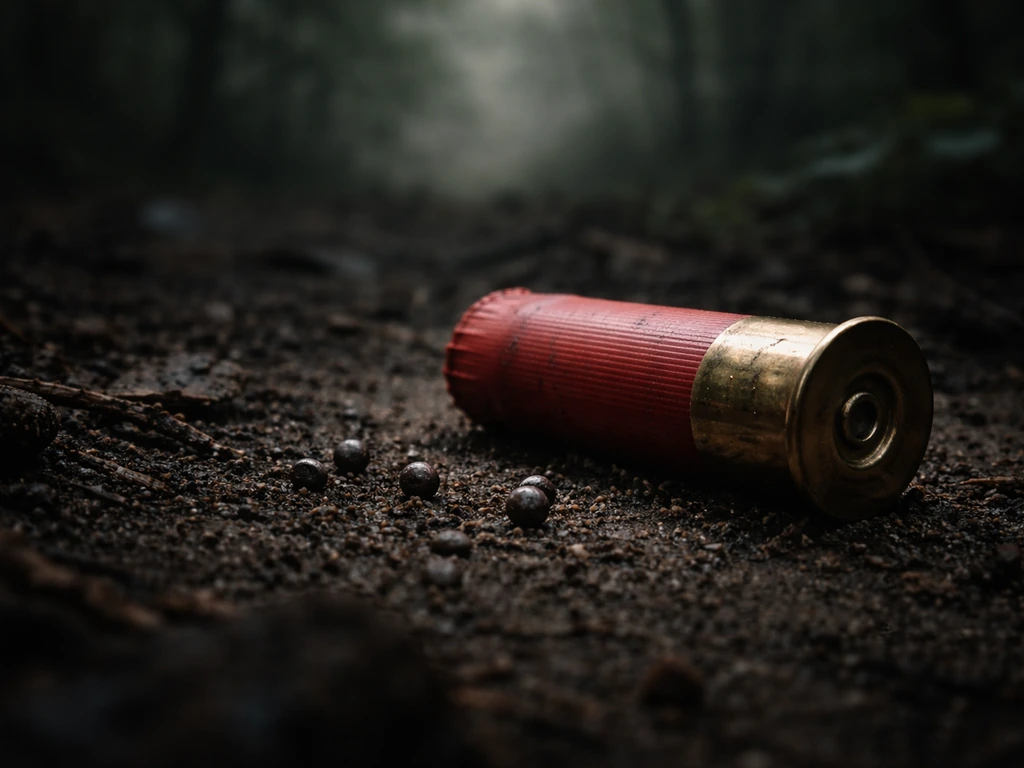
Birdshot travels farther than most people expect, and it stays dangerous well beyond what folklore suggests. The short answer: a single pellet from a standard birdshot load can travel anywhere from 150 to over 300 yards depending on shot size, muzzle velocity, and angle of fire. Its effective lethal range on birds is roughly 20 to 50 yards, but individual pellets can wound or injure birds, pets, and people well past that point. If you want to understand why, and how to stay safe, the numbers and the reasoning are below.
How Far Does Bird Shot Travel? Range, Choke, and Safety

Maya Chen
3 Apr 2026
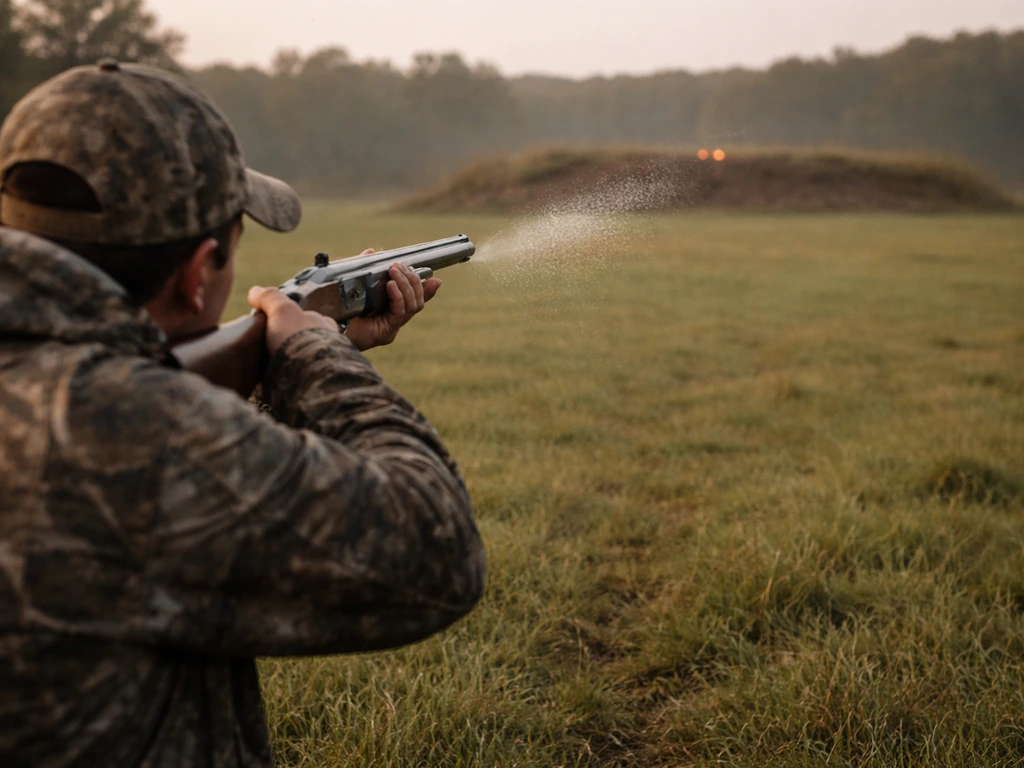
What 'birdshot travel' really means: range vs. spread vs. penetration
These three terms get mixed up constantly, and the confusion leads to genuinely dangerous assumptions. Range, spread, and penetration are three completely separate things.
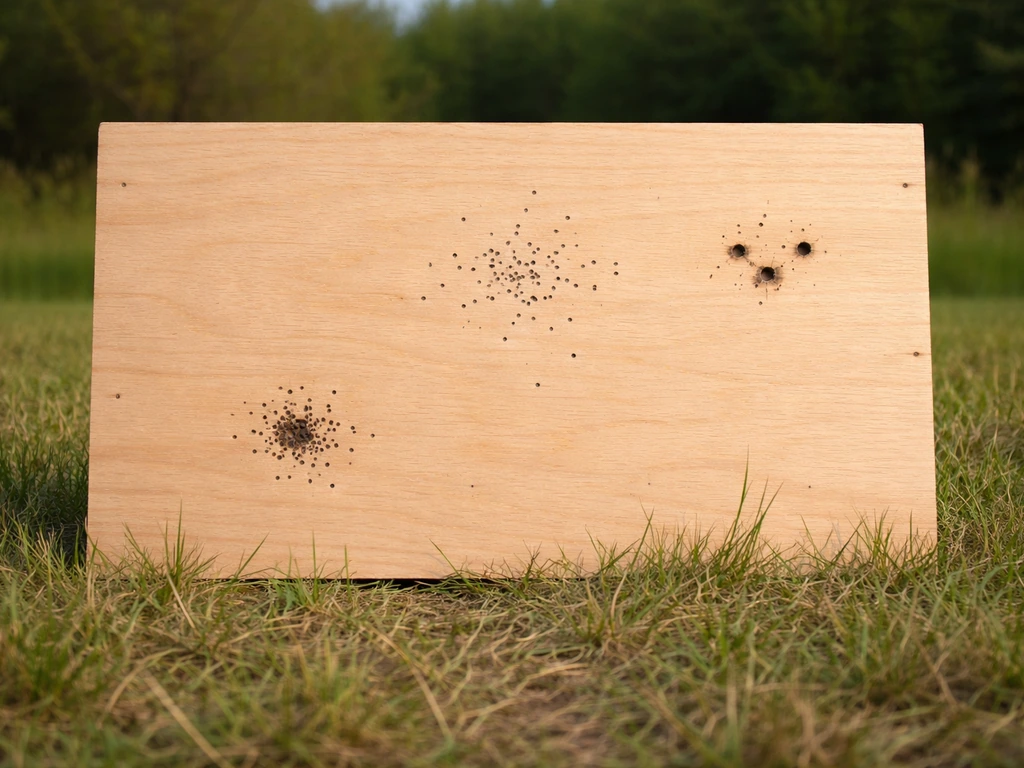
Range is how far a pellet physically travels before hitting the ground. This is the maximum distance number and it is always larger than people guess. Spread is how wide the shot cloud fans out as it moves downrange, which directly affects whether enough pellets hit a target to be lethal. Penetration is how much energy a pellet retains when it arrives, which determines whether it can actually wound or kill what it hits.
The critical insight is that these three things diverge quickly. Pellets can still be traveling and capable of breaking skin or wounding a bird long after the pattern has spread so thin that a lethal density is impossible. The American Rifleman describes practical shotgun patterning and emphasizes testing pattern density and evenness, since real-world pellet behavior varies by load and choke test his patterns (density/evenness). That is why knowing 'how far birdshot goes' requires you to hold all three ideas in your head at once, not just one number.
If you are newer to shotgun ammunition and want the foundational picture of what bird shots are and how different loads compare, that context will make the numbers below much more meaningful.
Typical effective and maximum pellet distance: the rules of thumb
Effective range on game birds (meaning: the pattern is still dense enough and pellets still carry enough energy to produce clean kills) tops out at roughly 50 yards for most standard birdshot loads. The NRA's shotshell ballistics guidance puts this ceiling at around 50 yards, and that aligns with what hunting guides and range data consistently show. Inside 40 yards is where most birdshot does its real work, and 20 to 35 yards is the sweet spot for the majority of upland and waterfowl situations.
Maximum travel distance, however, is a very different figure. Small birdshot pellets like #8 or #9 fired at typical muzzle velocities of 1,100 to 1,400 fps can travel 150 to 200 yards before hitting the ground if fired at a low angle. Larger pellets like #4 or #2, which carry more mass and retain velocity better, can travel 250 yards or more. At extreme angles (close to 45 degrees), pellets can theoretically reach even farther. These are not loaded ranges, they are real physical travel distances.
Here is a simple rule-of-thumb table to keep in mind:
| Shot Size | Effective Range (birds) | Pellet Still Hazardous To | Approximate Max Travel |
|---|---|---|---|
| #9 / #8 (small) | 15–35 yards | ~75–100 yards | 150–180 yards |
| #7.5 / #6 (medium) | 25–45 yards | ~100–150 yards | 180–230 yards |
| #4 / #2 (large) | 35–50+ yards | ~150–200 yards | 230–300+ yards |
These are approximate figures for standard 12-gauge loads. Conditions, angle of fire, and load specifics all shift these numbers, but they give you a realistic baseline that is far more honest than the 'it only goes 50 yards' myth you will often hear at a range.
The factors that actually change how far birdshot goes
Choke
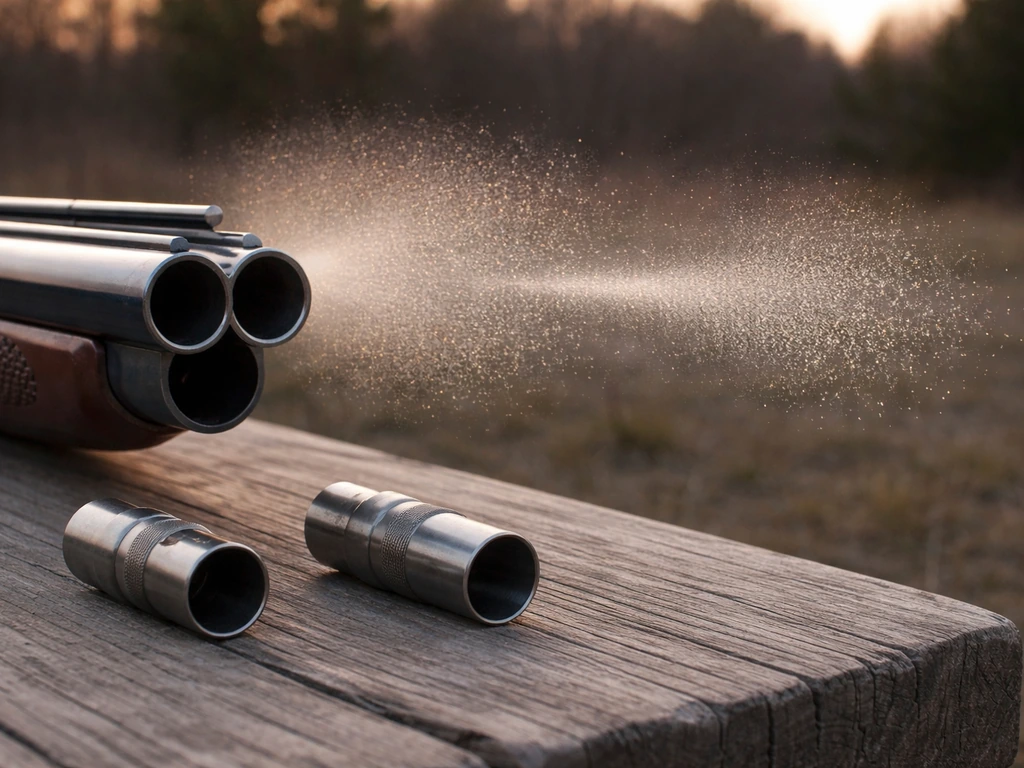
Choke affects pattern density and spread, not maximum travel distance. A cylinder (no choke) spreads the shot cloud wide quickly, so the pattern thins out faster with distance. A full choke keeps pellets tighter together longer, maintaining higher pattern density at 40 to 55 yards. Winchester's 2025 choke guidance frames it this way: improved cylinder is ideal from 20 to 30 yards; modified from 30 to 40 yards; tighter chokes for 45 to 55 yards. Wildfowl magazine's choke guidance puts it similarly, recommending skeet or improved cylinder for birds inside 25 yards and tighter constrictions like modified or full for longer distances.
What choke does not do is send pellets dramatically farther. It concentrates them. Individual pellets fired through a full choke do not travel 50% farther than those through a cylinder. The spread just stays tighter.
Shot size and pellet count
Larger pellets (lower numbers like #2 or #4) are heavier, carry more energy downrange, and travel farther. Smaller pellets like #8 or #9 bleed off velocity fast due to their low mass and high aerodynamic drag. A forensic ballistics teaching module shows this clearly in its striking velocity and energy tables: by 40 to 50 yards, small pellets have lost a substantial fraction of their initial energy. More pellets in the load (a shell packed with #8s has far more individual pellets than one loaded with #4s) means more chances of a hit within the spread, which is why small shot can still be effective close-in despite limited individual pellet energy.
Muzzle velocity
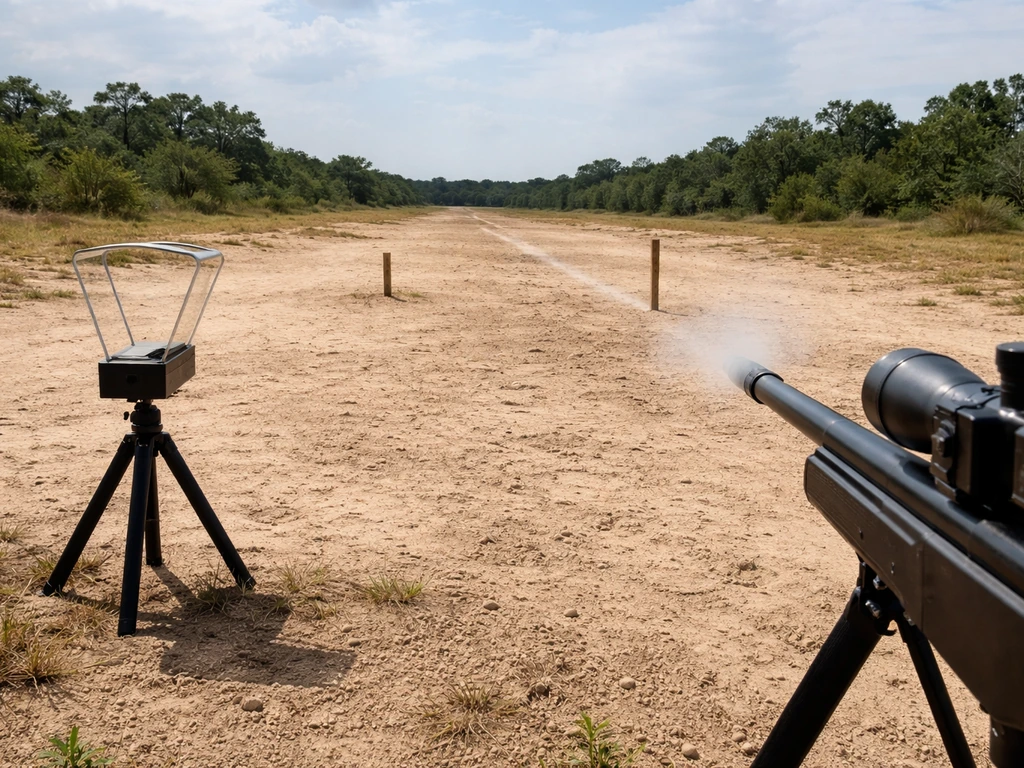
Higher muzzle velocity extends both effective range and hazard distance. Standard field loads run around 1,100 to 1,300 fps. High-velocity or magnum loads can push 1,400 to 1,550 fps. That extra speed translates directly into more retained energy at 30, 40, and 50 yards, and it also means pellets reach farther before hitting the ground. If you are using hot loads, your safety margins need to expand accordingly.
Barrel length
Longer barrels (28 to 30 inches) allow powder to burn more completely, producing slightly higher muzzle velocity than shorter barrels (18 to 22 inches) with the same load. The practical difference is modest, usually 10 to 30 fps, but it adds marginal range. More importantly, barrel length affects handling and swing speed in the field, which affects where the shot actually lands relative to a moving target.
Real-world conditions
Wind, humidity, temperature, and angle of fire all matter. CSIRO wildlife research on shotgun pattern testing specifically notes the use of berms and wind-speed restrictions to control experimental conditions, precisely because wind alters downrange pellet distribution in measurable ways. A strong tailwind can push pellets farther; a headwind shortens them. Firing upward at a steep angle shortens maximum ground travel. Firing at a low angle lengthens it significantly. This is why knowing your shooting angle is critical to estimating where pellets might land.
Hazard distances for birds, pets, and people
The effective range for killing game birds and the range at which individual pellets can still injure birds, pets, or people are not the same number. This distinction matters enormously for anyone thinking about safety.
For birds specifically, lethality depends on the pattern delivering enough pellets to a vital zone with sufficient energy. Outdoor Life's large-scale waterfowl necropsy research makes this point clearly: lethality is a function of sufficient strikes within the pattern at effective energy, not simply whether pellets reached the bird. A stray pellet or two from a sparse fringe pattern at 70 yards may not kill cleanly, but it absolutely can wound a bird. At 100 yards, individual pellets from larger shot sizes can still carry enough energy to penetrate feathers and flesh.
For pets, the picture is sobering. A pellet that would not cleanly kill a game bird at 80 yards can still penetrate a dog's or cat's skin and cause serious internal injury. VCA Animal Hospitals' guidance on penetrating trauma is direct: pets may look normal after a pellet wound and then deteriorate 30 to 90 minutes later as internal damage becomes apparent. Prompt veterinary evaluation is essential, not optional.
For people, the concern is real and documented. Whether bird shot can kill a human is a serious question, and the answer is nuanced but not reassuring. An AP News incident report confirms real-world birdshot injuries to humans at non-hunting distances, with non-life-threatening but real wounds. Medical case reports document that retained pellets cause soft-tissue injury and require medical intervention regardless of shooting distance. A PubMed-indexed case report even documents a fatality caused by a single shotgun pellet, which should put to rest the idea that small pellets are always medically trivial.
As a practical safety rule: treat any area within 200 yards of a shooting direction as potentially hazardous to unprotected people, pets, and birds. For small shot like #8, you can tighten that to around 150 yards. For larger birdshot loads, extend it past 250 yards if you are firing at low angles.
Myths vs. facts about birdshot distance and lethality
A lot of dangerous folklore circulates about how far birdshot travels. Here are the most common myths and what the evidence actually shows.
| The Myth | The Reality |
|---|---|
| 'Birdshot only goes about 50 yards.' | 50 yards is roughly the effective hunting range. Maximum travel is 150 to 300+ yards depending on shot size and conditions. |
| 'Once past effective range, pellets can't hurt anyone.' | Pellets beyond effective hunting range still carry enough energy to injure birds, pets, and people. Retained-pellet medical cases confirm this. |
| 'Birdshot can't kill a person.' | It can, and it has. Even sub-lethal injuries from birdshot can require surgery, and pellet emboli (pellets migrating in the bloodstream) are a documented complication. |
| 'A heavy choke makes birdshot travel farther.' | Choke affects pattern density, not maximum travel distance. Individual pellets from a full choke don't fly significantly farther than from a cylinder. |
| 'Birdshot drops immediately after leaving effective range.' | Pellets follow a ballistic arc like any projectile. They don't drop straight down at 50 yards. Energy loss is gradual, not sudden. |
| 'The Dick Cheney incident was unusual.' | Accidental pellet injuries at 30 to 40 yards are entirely consistent with birdshot's effective range. The incident illustrates normal birdshot behavior, not an anomaly. |
The question of whether bird shot can kill you comes up regularly, and it deserves a straight answer rather than reassuring myths. The short version: yes, it can, especially at close range, and even at longer distances individual pellets can cause serious injuries that require immediate medical attention.
How to plan a safe shot and what to do if a bird might be hit
Planning your shooting direction and backstop
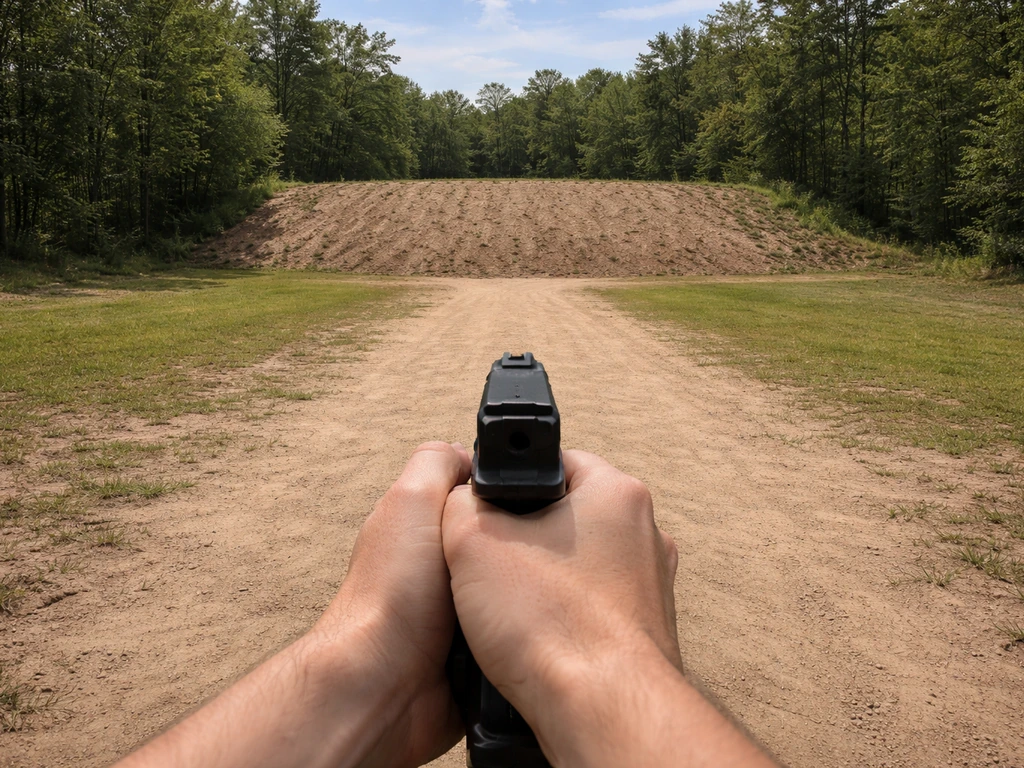
The single most important safety practice is controlling where your muzzle points and what is behind your target. NSSF firearm safety rules emphasize muzzle direction and control as foundational, not optional. Before you shoot, mentally trace the full flight path of your shot: where will the pellets go if you miss, and where will they eventually land?
A proper backstop is not just a berm or a hill, it is a constructed barrier that stops pellets completely. A 2024 range design guideline is explicit that berms alone are not backstops, and that a properly constructed backstop is required to reliably stop shot. If you are shooting in an open field, a natural hillside directly behind your target area at a safe angle is the next best option. Range SOP guidance for shotguns notes that rounds should impact the back berm at angles of 45 degrees or steeper, which is a useful mental model for field situations too.
Estimating safe distances from other people, pets, and wildlife
Use the shot size and load you are actually shooting, not a generic 'birdshot' assumption. Small #8 or #9 shot for dove or quail: keep unprotected people, pets, and ground-nesting birds at least 150 yards outside your shooting arc. Medium #6 or #5 shot for pheasant or turkey: extend that to 200 yards. Large #2 or #4 for waterfowl: treat 250 yards as your minimum buffer. These are conservative numbers, and that is intentional.
If you think a bird was hit accidentally
If you are concerned that a wild bird may have been struck by stray pellets, your first call should be to a licensed wildlife rehabilitator. The U.S. Fish and Wildlife Service is clear that injured wild birds should go to a licensed rehabber, and that removing wildlife from parks or open spaces can be illegal. Do not attempt to treat the bird yourself beyond keeping it warm, calm, and contained for transport. Wildlife Watch's first-aid guidance emphasizes arranging transfer to a rehabber promptly after basic stabilization.
The ability of large birds to carry things is sometimes wildly overestimated in popular imagination. Just to put pellet-and-bird interactions in context, the idea that a bird can pick up a deer is the kind of myth this site regularly debunks, and the reality of what birds can physically withstand from pellet impacts is similarly misunderstood in both directions: people underestimate pellet hazard at range, and overestimate how resilient birds are to stray strikes.
If your pet may have been hit
Do not wait for visible symptoms. Even if your dog or cat looks fine after being in the path of a shot, get them evaluated by a veterinarian immediately. Tier 1 Veterinary Medical Center's guidance on wildlife and injury encounters stresses that minor-looking wounds can mask serious internal damage and that prompt evaluation is critical. VCA's guidance on penetrating trauma confirms that pets can appear normal and then deteriorate quickly as internal injuries develop. When in doubt, go to the vet.
Putting the numbers together before you pull the trigger
- Identify your shot size and load velocity so you know your realistic hazard distance (not just effective hunting range).
- Check what is behind your target zone out to at least 200 yards and confirm there are no people, pets, or protected wildlife areas in that arc.
- Choose your shooting angle deliberately: higher angles shorten ground travel, low angles extend it significantly.
- Use a proper backstop, not just an open hillside, for any structured shooting situation.
- If you are hunting near residential areas, farms, or wildlife refuges, apply the larger buffer distances from the table above rather than minimums.
- If anything goes wrong and a bird, pet, or person is in the path, treat it as a real injury situation immediately: contact a wildlife rehabber for birds, a veterinarian for pets, and emergency services for people.
FAQ
If effective range is about 20 to 50 yards, can birdshot still hurt someone at 100 yards or more?
Yes, at close distances birdshot can still be lethal or cause life-changing injuries, and at longer distances it can injure even if the pattern would not be dense enough to cleanly kill game. The deciding factor is retained pellet energy and whether a pellet strikes a vulnerable area, not the idea of “only 50 yards.”
How reliable are the travel-distance numbers if I’m shooting in real hunting conditions instead of a controlled range?
Recoil, muzzle blast, and target visibility change where you point and how firmly you mount the gun, so “published range” can be misleading. The practical takeaway is to follow the same safety buffers regardless of how far you believe you are aiming, and never assume a miss goes harmlessly short.
If I use a different brand of birdshot with the same shot size, should I expect the same travel and hazard distances?
Shot size, load type, and bore/choke combination matter. Two “#8 birdshot” loads can behave differently, so you should use the safety distance recommendations as a minimum for the specific ammunition you are shooting, not for a generic class of birdshot.
Why does shooting angle change how far birdshot can travel and where it lands?
Aim height is a major variable. Shooting upward shortens ground travel, but firing at a low angle increases the chance that pellets travel farther before hitting the ground, which means your hazard area should expand when the shot line is flatter.
Does using a full choke make birdshot safer at distance because the pattern is tighter?
Choke changes pattern density and spread, not the maximum physical travel of pellets. However, tighter patterns can still increase the probability of pellets striking something at intermediate distances within the pattern, so choke affects where danger is concentrated, not whether danger exists.
What is the correct way to set up a safe shooting direction and backstop if I am worried about pellet travel sideways?
Treat the entire area along your shot direction as hazardous, including areas to the sides where pattern spread and misses can carry pellets. A common mistake is setting a backstop directly behind the target but leaving adjacent open space unaccounted for.
Does “birdshot is safer than buckshot” change how I should handle loaded guns around people?
If you are transporting or storing a loaded shotgun, do not “assume it is safe because it is aimed down.” The hazard comes from muzzle direction at the moment of discharge and what is behind it. Follow basic muzzle-control rules every time, even when you think you are not going to shoot.
My dog seemed normal after being around a shot, do I still need to take it to a vet?
If you suspect a pet was hit, appearance is not proof of safety. Pets can deteriorate later due to internal damage, so the next step is immediate veterinary evaluation, even if the dog or cat seems fine at first.
If I find a wild bird I think was hit, what should I do first?
For wildlife, the correct action is to contact a licensed wildlife rehabilitator. Do not remove birds from parks or protected areas unless permitted, and do not try to treat internal injuries yourself beyond basic containment for transport.
If someone gets nicked or bruised after a birdshot incident, when is it urgent versus “watch and wait”?
Yes, a low-probability “stray pellet” can still be medically significant because a single pellet can penetrate and cause retained fragments. That means first aid should be treated as potentially serious, and anyone injured should seek medical care promptly.
What safety distance rule should I follow if I don’t know my exact shot number in advance or I change loads often?
Use the specific safety buffer that matches the shot size you are actually firing, because larger shot increases retained energy and extends the hazard distance. A frequent error is applying the smaller-shot buffer to a larger-shot load.
Next Article
What Are Bird Shots? Definition, Risks, and What to Do
Define bird shots, explain real health risks to birds and people, debunk myths, and share immediate response steps.