Yes, a bird of prey can attack and injure a cat, and in rare cases can kill a small one. But the scenario most people picture, where a large hawk swoops down and carries off a full-grown cat, is far more myth than reality. The genuine risk is real but narrow: it mostly applies to kittens, very small cats, and situations where large owls are present. Cats are also unlikely to kill birds just by staring at them, since attacks depend on a cat’s ability to physically reach and bite or scratch the bird. Understanding exactly where the line sits helps you make practical decisions without either dismissing the risk or panicking every time you see a hawk overhead.
Can a Bird of Prey Take a Cat? Risks and What to Do

Maya Chen
1 May 2026
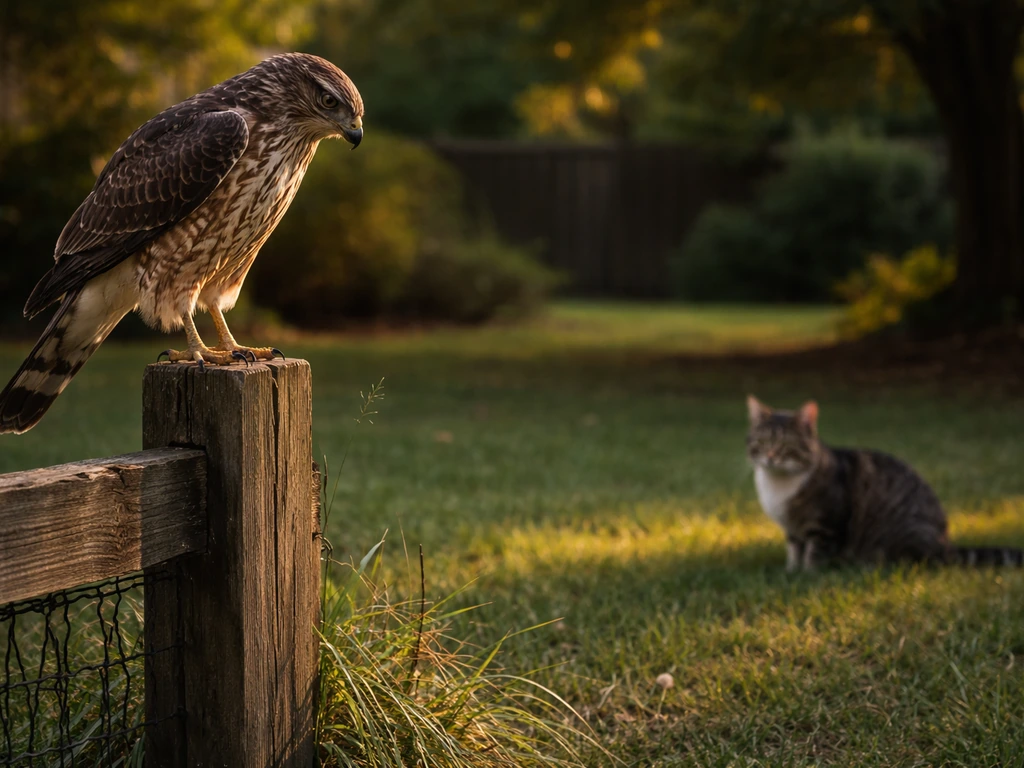
What's actually realistic about raptor predation on cats
Birds of prey are highly efficient hunters, but they are also selective. They target prey they can reliably subdue and, critically, carry or consume on site. A raptor that attacks something too large to handle risks serious injury to itself, and a broken talon or wing in the wild is often a death sentence. So raptors are not reckless. They generally prefer proven prey items such as mice, voles, rabbits, and squirrels, and they adjust their ambitions based on what they know they can handle.
Attacks on cats do happen. Alaska Department of Fish and Game has documented a great horned owl attacking a cat along with pet rabbits in the same period. Maine's wildlife agency acknowledges that great horned owls occasionally take small domesticated animals. These are not urban legends. But they are also not common, and published data on how frequently cats are killed by raptors is sparse and inconsistent, partly because such events are hard to document and easy to exaggerate.
How birds of prey hunt and what they're actually after
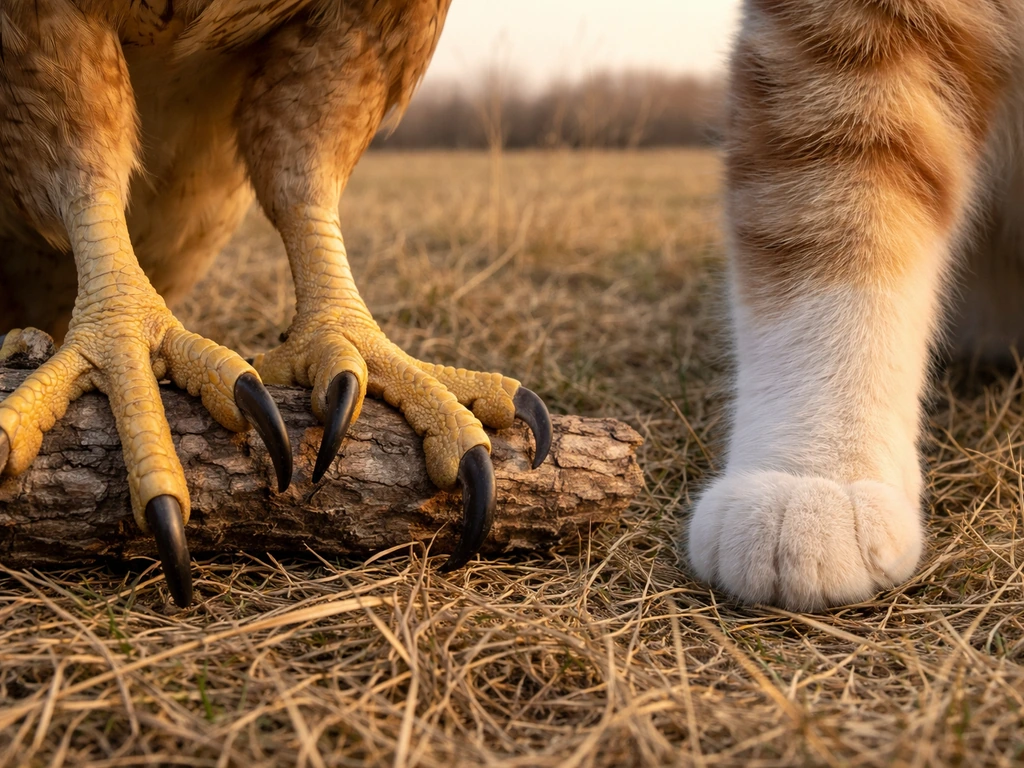
Raptors hunt using speed, surprise, and precision. Hawks typically attack from a high perch or soaring position, diving steeply to strike prey with their talons. Owls hunt mostly at night or dawn and dusk, using near-silent flight and exceptional hearing to locate prey in low light. Because owls hunt at night, people sometimes wonder if a night fright could kill a bird during a startled encounter can night fright kill a bird. Both rely on a quick, decisive strike to the head or spine to kill prey fast.
The hard constraint is weight. Most hawks and falcons in North America can only reliably carry prey weighing under about 0.5 kg (roughly 1 lb). Red-tailed hawks, one of the most common large hawks across the continent, weigh about 1 to 1.5 kg themselves and can lift prey up to roughly their own body weight under ideal conditions, but sustaining flight with that load is another matter. Eagles are larger and stronger, with bald eagles reaching 4 to 6 kg and golden eagles known to take prey as large as young deer in rare cases. Even so, lifting and flying away with a 4 kg adult cat is not something any North American raptor does routinely.
Which cats are actually at risk
Size is the single biggest factor. Kittens under about 1.5 kg are genuinely vulnerable to a wider range of raptors, including large red-tailed hawks and great horned owls. A small adult cat in the 2 to 3 kg range is within the outer reach of an aggressive great horned owl or golden eagle but is not easy prey. A healthy adult cat weighing 4 to 5 kg or more is unlikely to be successfully taken by any hawk and is beyond what most owls would attempt.
Beyond size, the circumstances matter a lot. Cats are most vulnerable when they are in open areas with limited cover, at dawn, dusk, or night when owls are active, near habitat that supports high rodent populations (which attracts raptors in the first place), and in regions with established populations of large raptors like great horned owls, golden eagles, or great gray owls. A cat lounging in an exposed backyard at dusk near a field edge is in a genuinely higher-risk situation than one in a sheltered urban yard.
Owls vs hawks and eagles: how the risk differs by species
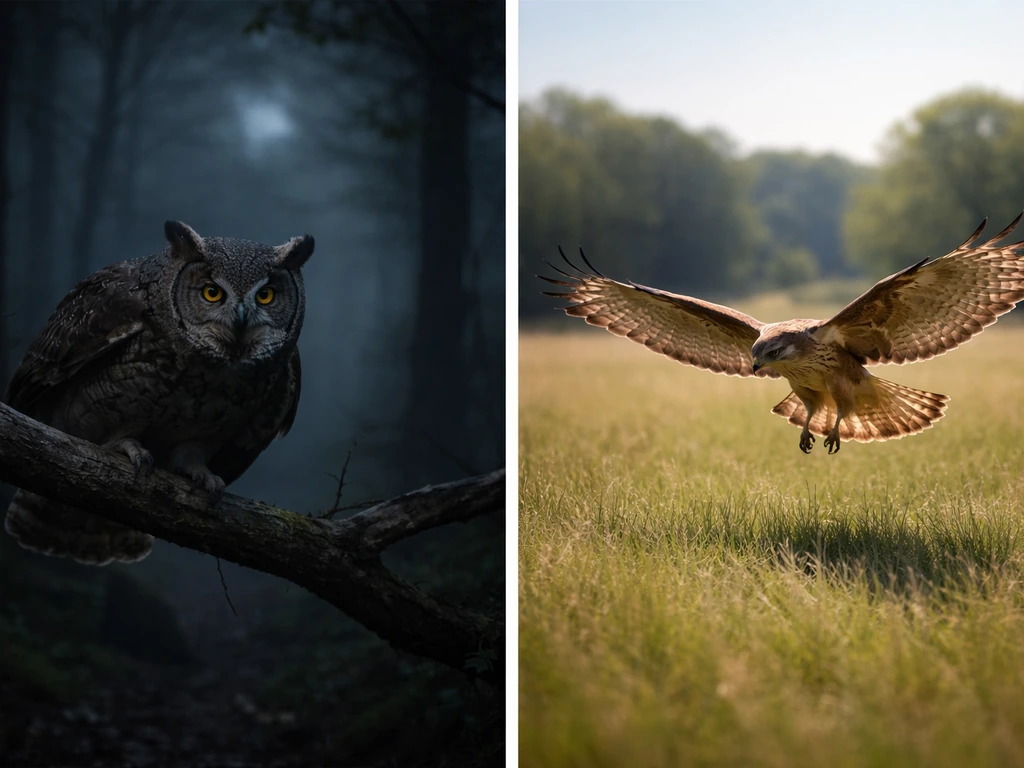
Not all birds of prey pose the same threat, and it helps to think about them in broad categories.
Great horned owls
Great horned owls are the raptor most credibly linked to domestic cat attacks. They are large (up to about 1.8 kg), hunt at night, and have a famously wide and opportunistic diet that includes skunks, porcupines, and other animals that most predators avoid. They hunt by stealth and can strike before a cat is aware of any danger. They are also widespread across nearly all of North America, including suburban and urban fringe areas. If any raptor is going to go after a small cat or kitten, it is most likely a great horned owl.
Red-tailed hawks and other buteos
Red-tailed hawks are large, common, and visible, which is probably why they feature in so many scary stories. In reality, their preferred prey is small mammals such as mice, voles, and squirrels. They can and do occasionally attack rabbits, which can weigh 1 to 2 kg. A very small kitten could fall into that range, but a red-tailed hawk attacking a cat larger than about 1.5 kg is unusual. They also hunt by day, which gives cats more opportunity to see them coming and respond.
Golden eagles and bald eagles
Golden eagles are the most powerful birds of prey in North America and have documented kills of foxes, young deer, and domestic lambs. A golden eagle could realistically kill a small to medium adult cat. However, golden eagles are not common in suburban areas. They prefer open, mountainous, or arid landscapes and are a genuine concern mainly in rural western or northern regions. Bald eagles are more widespread but are fish specialists and rarely target mammals the size of cats.
Falcons and smaller hawks
Peregrine falcons, Cooper's hawks, sharp-shinned hawks, and American kestrels are not a realistic threat to cats of any size. Their prey is birds and small rodents, and they simply lack the size and strength to injure a cat in any meaningful way.
| Species | Typical weight | Realistic cat risk | When/where most likely |
|---|---|---|---|
| Great horned owl | Up to ~1.8 kg | Moderate: kittens and small cats | Night, dawn/dusk; widespread including suburbs |
| Red-tailed hawk | 1–1.5 kg | Low: mainly very small kittens | Daytime; open country and suburban edges |
| Golden eagle | 3–6 kg | Moderate-high: kittens and small adults | Daytime; rural, mountainous, open western/northern areas |
| Bald eagle | 3–6 kg | Low: fish specialist, rare mammal attacks | Near water; rural |
| Cooper's hawk / Sharp-shin | 0.3–0.5 kg | Negligible | Daytime; widespread |
Myths vs facts: what raptors can and can't really do
The most persistent myth is that hawks routinely swoop down and carry off cats the way they carry off mice. Here is how the facts actually stack up.
- Myth: A large hawk can carry off a 5 kg adult cat. Fact: No North American hawk can sustain flight carrying an animal that heavy. A red-tailed hawk weighs around 1 to 1.5 kg itself. Physics does not support this.
- Myth: Any raptor circling your yard is hunting your cat. Fact: Soaring raptors are usually riding thermals, scanning for rodents, or simply passing through. A hawk circling overhead is not in attack mode.
- Myth: Great horned owls never bother cats. Fact: Documented attacks on cats by great horned owls exist. They are rare but real, especially for small cats and kittens at night.
- Myth: Eagles never come near suburban areas. Fact: Bald eagles are increasingly common near suburban waterways. Golden eagles are less common but can appear in open rural-adjacent areas during migration.
- Myth: A cat can always escape a raptor attack. Fact: Owls attack silently and at night. A sleeping or distracted cat may have no warning before a strike.
What cat owners can do right now to reduce risk
The good news is that most of the risk is controllable, and the changes are not drastic.
Supervise outdoor time and limit dawn and dusk exposure
Keeping cats indoors at night, dawn, and dusk eliminates the window when great horned owls are most active. If you want your cat to have outdoor time, midday is the lowest-risk period. Supervised outdoor sessions, where you are physically present, reduce risk further because raptors are warier of humans.
Provide overhead cover
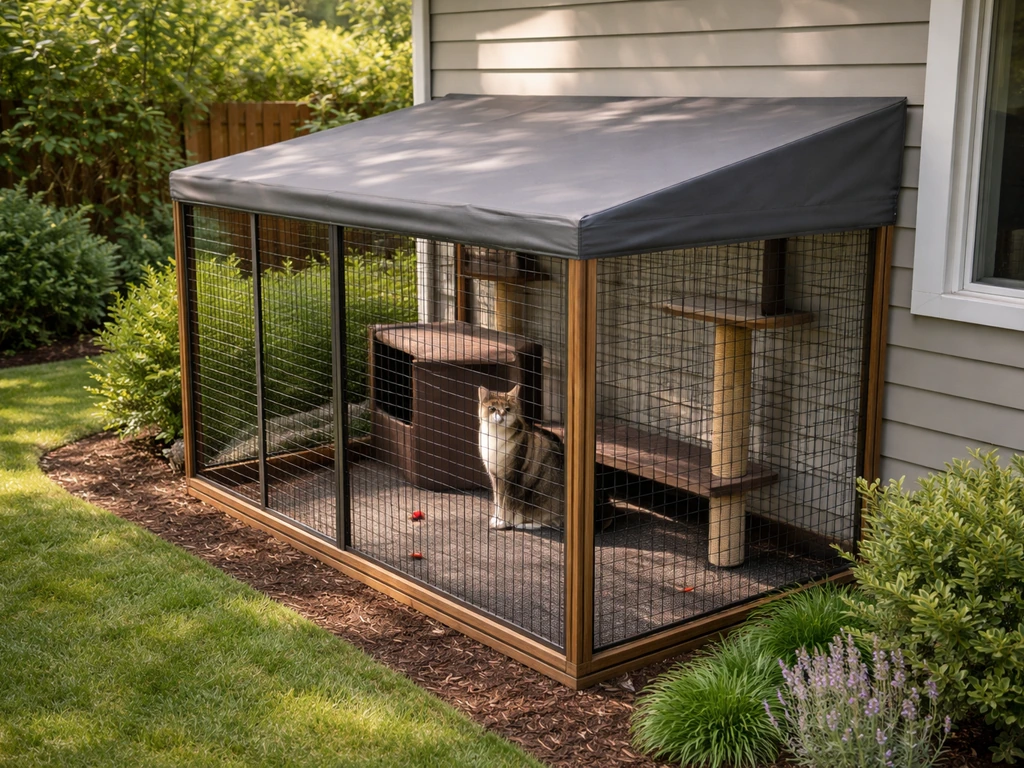
Raptors need a clear, unobstructed dive path to make a successful strike. Dense shrubs, a covered patio, a cat enclosure (sometimes called a catio), or a garden bed with overhead netting all break up that attack lane. Even a simple patio umbrella over a cat's favorite outdoor spot adds a meaningful layer of protection.
Manage rodent attractants
Raptors follow food. A yard with a visible rodent population, exposed bird feeders with spilled seed on the ground, or unsecured compost will attract hawks and owls in the first place. Reducing those attractants reduces how often large raptors visit your yard and how comfortable they get there.
Discourage perching
Raptors like to survey from high perches before attacking. If your yard has tall bare fence posts, dead trees, or open utility poles, you can make them less attractive. Anti-perch spikes on fence tops, removing dead snags where possible, or stringing reflective tape between posts can discourage a hawk or owl from setting up camp in your yard.
Extra caution for kittens and small cats
If you have a kitten or a small-breed adult cat under about 2 kg, keep them indoors entirely until they are larger, or only allow outdoor time in a fully enclosed catio. The risk window for a very small cat is genuinely wider and the outcome of an attack more likely to be fatal.
If an attack happens: what to do for the cat and the bird
Immediate care for the cat
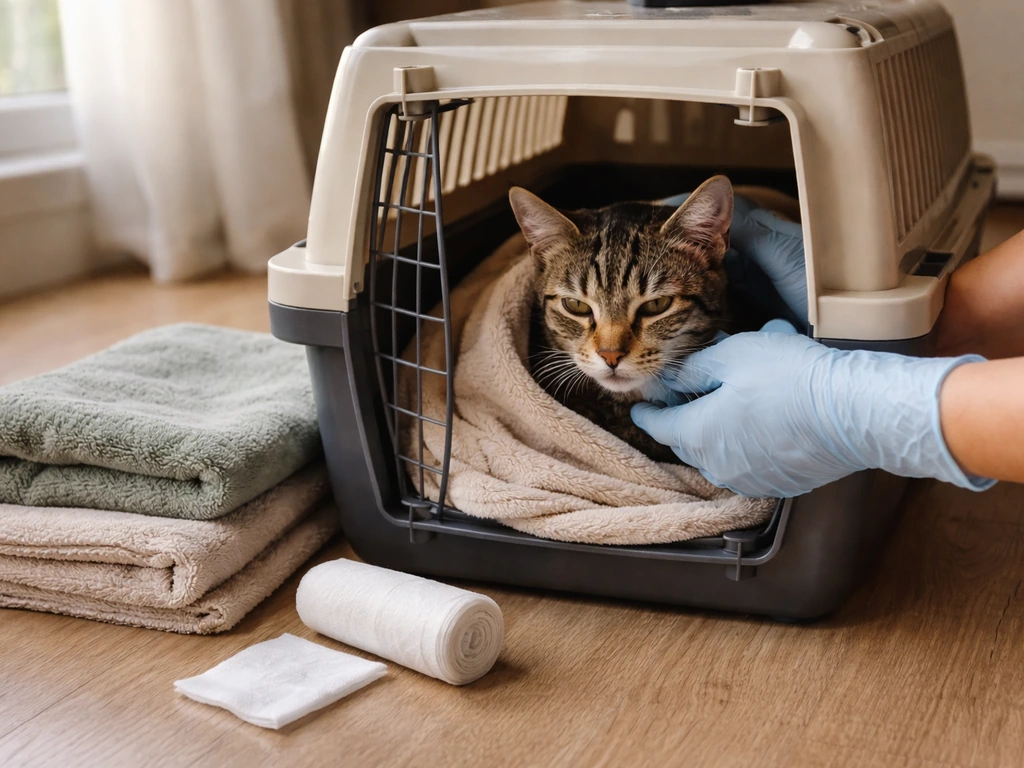
Even if a cat walks away from a raptor encounter looking fine, see a vet the same day. Raptor talons are extremely sharp and penetrate deeply, and blank" rel="noopener noreferrer">puncture wounds that look minor on the surface can involve internal damage, fractured bones, or muscle tears that are not immediately visible. Infection is also a serious concern. This is closely related to what vets warn about with cat bites too: the surface wound understates the internal damage. If you are dealing with a cat bite, get veterinary care quickly because infection and internal damage can develop fast. A vet visit is not optional after any confirmed strike.
Before the vet visit, keep the cat calm and warm, apply gentle pressure to any visible bleeding wounds with a clean cloth, and do not probe or clean deep punctures yourself. Transport the cat in a secure carrier to minimize movement and stress.
What about the bird
This matters more than most people realize. An adult domestic cat defending itself can seriously injure a raptor. Cat scratches and bites can fracture the small bones in a bird's foot, damage feathers critical for flight, or introduce bacteria that cause fatal infections in birds. Cats can injure birds during defense, and that includes the specific ways cat injuries can harm a bird how does a cat kill a bird.
If a raptor appears injured after an encounter, do not handle it yourself. [Raptors are federally protected under the Migratory Bird Treaty Act](https://www. congress. gov/crsexternalproducts/R/PDF/R44694/R44694.
5. pdf), and interfering with one, even with good intentions, can create legal complications. Contact a licensed wildlife rehabilitator or your state fish and wildlife agency. They have the training and permits to handle injured raptors safely.
The broader point is that a raptor-cat encounter is bad for both animals. Keeping cats inside or supervised is not just about protecting the cat. It also keeps both animals out of a confrontation that neither benefits from.
FAQ
What are the realistic chances a bird of prey could carry off my cat?
If you mean a raptor landing on your cat and clawing rather than carrying it away, that can happen, especially with kittens or small cats. If you mean carrying off a cat like it carries prey, that is exceedingly rare because most raptors cannot lift prey as heavy as adult cats and leaving a wounded prey item is risky for the bird.
Does my cat’s age or weight matter more than the type of bird I saw?
Use cat weight and age as your main risk guide, not species alone. Kittens and very small cats (roughly under 2 kg) are the biggest concern because more raptor types fall within their strike capability, and a failed attack is also more likely to become fatal.
My cat was near a hawk or owl, but it did not attack. Should I still worry?
The safest interpretation is that any visible raptor interest means your cat should be treated as a possible target, especially at dawn, dusk, or night. Even if the bird is not attacking, remove outdoor access immediately and switch to indoor or fully enclosed time while the bird is around.
If my cat chases or fights back successfully, can it still harm the bird of prey?
Yes. A cat can hurt a raptor during defense, including punctures, broken small bones, and feather damage that affects flight, plus infection risk. If the bird looks injured afterward, do not try to help it yourself, contact a licensed wildlife rehabilitator or your state agency.
My cat ran off after a raptor struck or grabbed at it, but I see no obvious injuries. Do I still need a vet?
A “near miss” still warrants caution. If talons made contact, even briefly, schedule a same-day vet visit because puncture wounds can look small but involve deeper tissue injury and later infection. Wait-and-see is not recommended after any confirmed strike.
What is the best way to let my cat outside without totally removing outdoor time?
Yes, and the most useful step is supervision plus an escape-proof setup. If you need outdoor time, choose midday and use a secure catio or an enclosure with overhead coverage where a dive path is interrupted, not just a yard leash run.
Do landscaping and yard layout change the risk a lot, or is it mostly about the bird species?
For raptors, the attack lane matters. Dense shrubs, patio roofs, covered walkways, and overhead netting can break up a clear approach. Open, low-cover areas at dusk or near fields are higher risk, even in neighborhoods.
How can I tell if my yard is attracting raptors, not just passing through them?
Yes. Yard features that attract prey species can indirectly raise risk because raptors hunt what is available. Reduce spilled birdseed, secure compost, and manage rodent attractants, since more rodents often means more raptor visits.
What specific yard changes help if I keep seeing raptors perched nearby?
Make the cat harder to spot or harder to reach: add barriers that block a direct dive, limit exposed lounging spots, and consider anti-perch deterrents on areas the raptor uses to scan from above. Also remove “sitting targets” like dead snags when feasible.
What should I do if I find an injured owl or hawk after an encounter with my cat?
In most cases you should not approach the bird at all. If a raptor is down or visibly injured, keep distance, bring pets inside, and contact a wildlife rehabilitator or your state fish and wildlife office because raptors are protected and handling can create legal and safety problems.
Does living near great horned owls mean I should keep my cat indoors all the time?
Cats are not only at risk from aerial strikes, but also from opportunistic nighttime hunting by certain large owls in some regions. If you live in an area with great horned owls, indoor-only during dawn, dusk, and night is the most effective reduction step.
Next Article
Can Night Fright Kill a Bird? Risks and What to Do
Can night frights kill birds? Learn the real risks, warning signs, and step-by-step rescue and prevention actions.