Yes, cats meaningfully affect bird populations, and the evidence is not subtle. U.S. modeling studies estimate that free-roaming cats kill somewhere between 1.3 and 4.0 billion birds every year in the United States alone, with the largest share coming from feral and stray cats rather than owned pets. That is not a number that comes from a single bad study, it is a synthesis of field data, video-collar research, and population modeling. The effect is real, it is large, and it is something individual cat owners can actually do something about.
Do Cats Affect Bird Populations? Evidence and How to Reduce Risk

Maya Chen
22 May 2026
How cats actually hunt birds
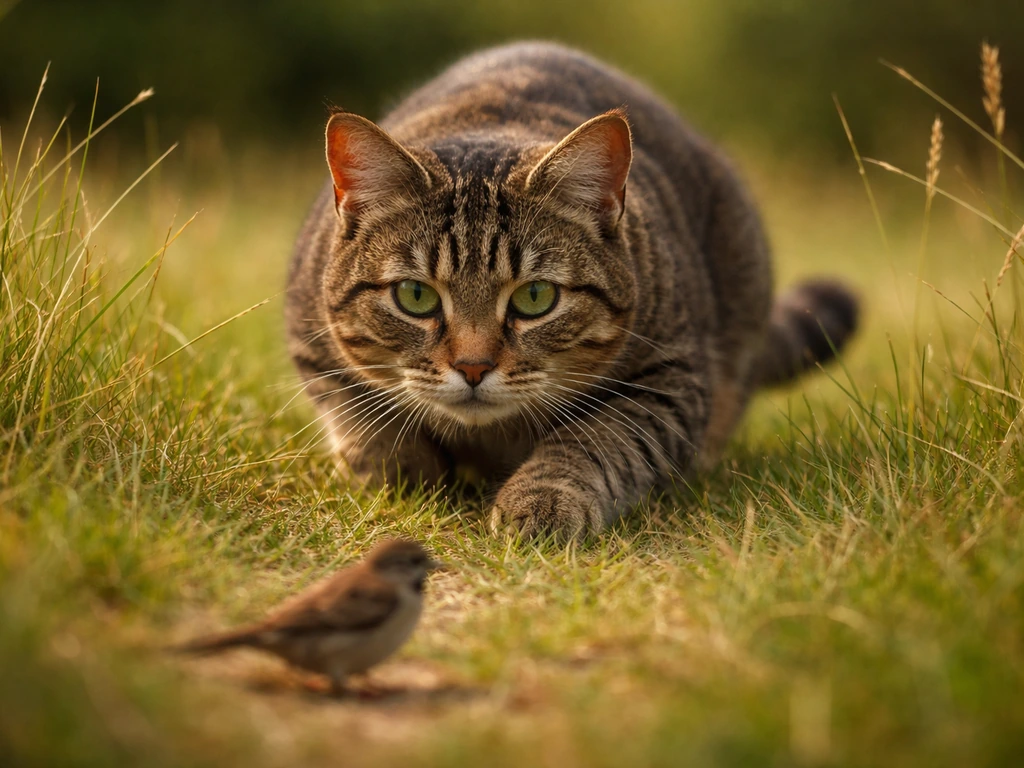
It is easy to picture a cat catching a bird as a single lucky grab, but video-collar research paints a much more deliberate picture. Cats go through a full sequence: locating prey, stalking slowly, then pursuing and seizing. Animal-borne camera studies have documented each of these stages separately, which matters because it shows hunting is a skilled, multi-step behavior, not an accident. Feral cats recorded in one video study were killing at a rate of roughly 0.3 kills per hour, which works out to about 7 animals per cat per day in active hunting conditions.
Habitat plays a huge role in whether a hunt ends in a kill. In open areas with little cover, cats in the same study had about a 70% chance of making a kill once they initiated a hunt. In dense grass or rocky terrain, that dropped to around 17%. That single finding has direct practical implications for how you set up your yard.
One important methodological point: surveys that rely on owners reporting prey brought home consistently undercount actual kills. Video-collar studies reveal cats killing and leaving prey, or simply not returning it, at rates that owner reports would never capture. So if your cat occasionally drops a bird on the doorstep and you think that is the full picture, the research says otherwise.
What the research actually says about population-level impact
The 1.3–4.0 billion annual bird kills estimate from the Nature Communications modeling study is the most widely cited figure, and it holds up under scrutiny even accounting for the model's uncertainty ranges. Per-cat estimates for unowned cats run roughly 30–48 birds per year; owned outdoor cats tend to kill fewer, but still contribute. The mammal toll is actually even higher, 6.3 to 22.3 billion small mammals annually, which gives you a sense of how active free-roaming cats are as predators across the board.
These are not uniform impacts spread evenly across all birds. Trait-based vulnerability modeling shows that small, generalist birds with a low 'hand-wing index' (basically shorter, rounder wings) and large geographic ranges are disproportionately targeted. That means common species like sparrows, wrens, and thrushes face the highest predation pressure, not rare or specialized birds. The population-level effect is felt most where those species are already under pressure from habitat loss, window collisions, or other mortality sources.
Regional variation matters too. The impact in a dense suburb with many outdoor cats looks very different from a rural edge habitat next to agricultural fields. Cat activity patterns also shift depending on the landscape, research from the USGS shows free-roaming cats in urban-adjacent areas tend to be more active during the day, while cats in other settings may hunt at more variable hours. Where you live changes the equation.
Indoor cats, outdoor cats, supervised cats, and feral cats: the risk is not the same
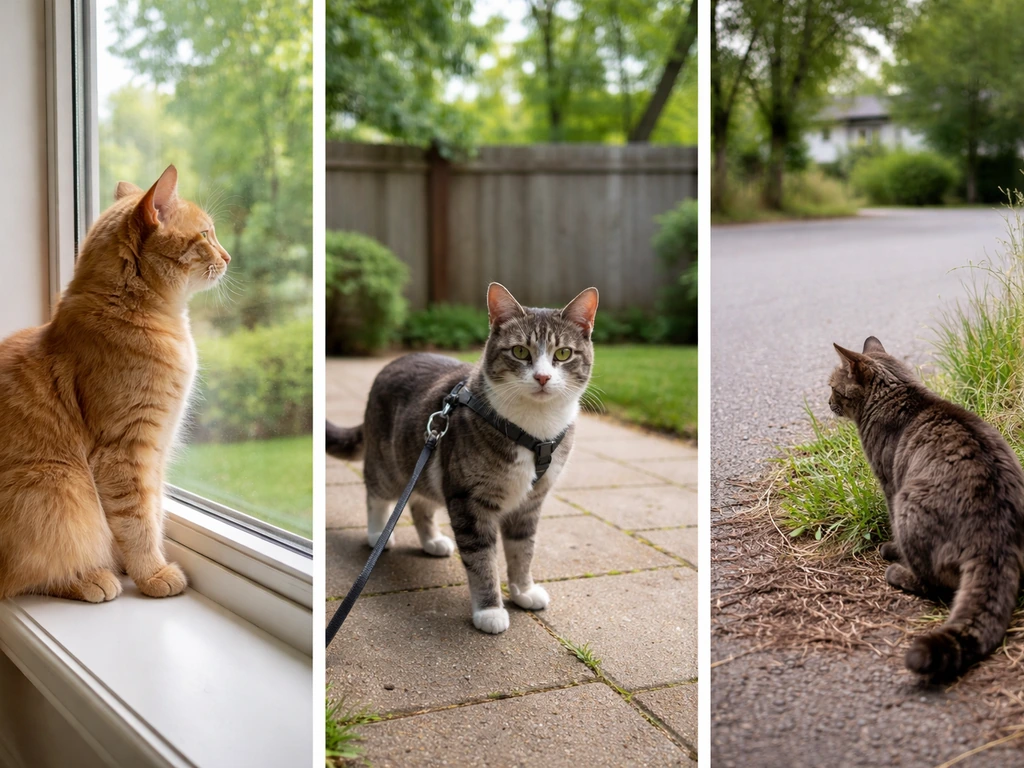
Not all cats pose the same risk, and understanding the differences helps you figure out what action actually applies to your situation.
| Cat Type | Hunting Opportunity | Approximate Bird Impact | Primary Mitigation |
|---|---|---|---|
| Strictly indoor | None (unless escapes) | Near zero | Ensure no escape routes |
| Owned outdoor (roams freely) | High, especially at dawn/dusk | Meaningful — lower than feral but real | Transition to full indoor or supervised outdoor |
| Supervised/leashed outdoor | Low to moderate | Low if supervised closely | Keep sessions away from bird activity areas |
| Feral/stray (unowned) | Very high — no restrictions | Highest per-cat impact | Community management programs |
The clearest dividing line is owned versus unowned. Feral and stray cats roam freely, hunt without any management, and tend to live at higher densities in some areas. The modeling evidence consistently attributes the majority of bird kills to this unowned category. That does not let owned outdoor cats off the hook, they still kill birds, and the per-cat rates are documented, but the urgency of action differs.
When and where bird risk is highest
Spring is the most critical season. Fledgling birds are on or near the ground, cannot fly well, and have not yet learned to identify predator threats. A cat that spends even a couple of hours outside during May and June can do serious localized damage during nesting season. Veterinary guidance from Tufts specifically recommends keeping cats indoors during spring 'baby bird' season for exactly this reason.
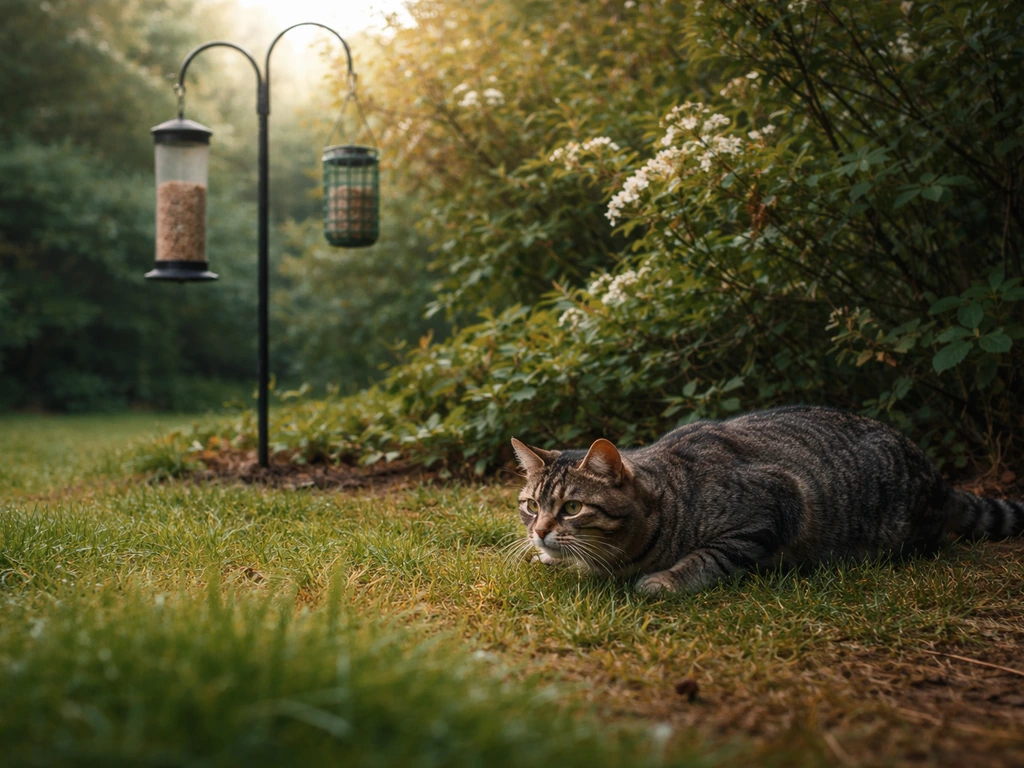
Open habitats are much higher risk than dense, vegetated ones. A backyard with a bird feeder in an open lawn is essentially a hunting ground with an attractant. Edge habitats, where a lawn meets shrubs or a field meets a treeline, are also high-risk zones. Dense groundcover, shrubs with thorny stems, and brush piles near feeders give birds escape options that can literally be the difference between life and death when a cat is nearby.
Dawn and dusk are peak bird-activity windows and also times when many cats are most active. Cats are often less likely to respond to bird sounds alone than owners assume, but they can still hunt birds when they see or move near them. If your cat has any outdoor access, restricting it during those windows, especially in spring and summer, matters more than any collar or bell.
What cat owners can do starting today
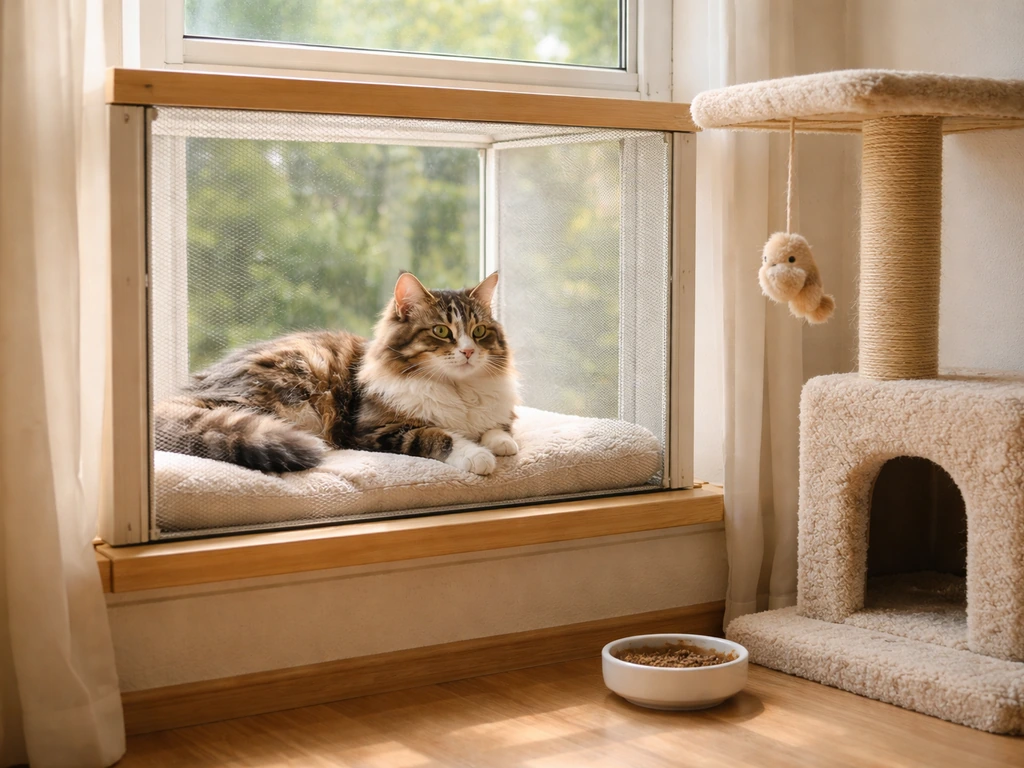
The single most effective step is keeping cats fully indoors. That sounds obvious, but the research genuinely supports it as the strongest individual-level action available. American Bird Conservancy's Cats Indoors program frames enriched indoor living as both achievable and compatible with cat welfare, cats can live healthy, stimulating lives without outdoor roaming.
If full indoor confinement is not immediately possible, supervised outdoor time on a leash or in a secure 'catio' enclosure reduces hunting opportunity dramatically compared to free roaming. The key is that supervision needs to be actual supervision, not just a cat door with occasional check-ins.
For the yard itself, you can make it structurally less dangerous for birds even if your cat goes outside sometimes:
- Place bird feeders and bird baths at least 10–12 feet from shrubs or other cover that cats could use for concealment during a stalk
- Add dense, thorny shrubs (like hawthorn or holly) near feeders so birds have escape cover cats cannot easily penetrate
- Keep brush piles away from open lawn areas where cats hunt most successfully
- Remove or fence off low-cover areas immediately beneath feeders — open ground under a feeder is a kill zone
- Restrict cat outdoor time during dawn, dusk, and spring nesting season specifically
On collars: bells reduce kills in some studies, Cornell veterinary research found bell-equipped cats killed roughly half as many birds and mammals as cats without bells in one study period, but Audubon and others note that bells are not reliable on their own. Cats learn to move without ringing them. Use a bell or a brightly colored 'CatBib' style collar as a supplement, not a substitute for managing outdoor access. Reflective collars with ID also help identify and return owned outdoor cats, which matters for community-level awareness.
Dealing with feral or stray cats in your neighborhood
If the cats causing bird harm in your area are not yours, the options are different but still real. Your first move is contacting your local animal control agency or humane society to report the situation and ask about local programs. Many municipalities have protocols for stray and feral cats that go beyond just calling animal control and hoping for the best.
Trap-Neuter-Return (TNR) is the most commonly discussed community approach. TNR can reduce a colony's reproductive rate and is often the most politically feasible intervention in areas where lethal removal is not accepted. However, the modeling evidence is honest about its limits: TNR effectiveness depends heavily on how intensively it is implemented and whether new cats are immigrating into the area. A partial TNR effort on a fraction of a colony, in an area where stray cats keep appearing, is unlikely to reduce bird predation in any measurable way. For TNR to work as a bird-protection measure, it needs near-complete coverage and sustained effort.
From a strict population-reduction standpoint, population models have found that euthanasia is more effective at reducing free-roaming cat numbers than TNR. That is a difficult reality, and most communities will not go that route. But it is worth understanding when evaluating what a local TNR program can realistically achieve for bird populations versus cat welfare.
Practically, you can also make your property less attractive to feral cats: remove food sources (including unsecured garbage and compost), eliminate den sites under decks or in brush piles, and use motion-activated deterrents like sprinklers in high-risk areas near bird feeders. These steps will not solve the neighborhood problem, but they can meaningfully reduce the exposure your backyard birds face.
Myths worth putting to rest
A few ideas circulate about cats and birds that the evidence does not support, and they are worth addressing directly.
'Cats only catch birds that are already sick or injured.' This is one of the most persistent myths, and it does not hold up. Healthy birds are absolutely taken, video-collar research shows active stalking of mobile, alert prey, not just opportunistic grabs of struggling animals. The 'injured-only' framing is inconsistent with documented predation behavior.
'One cat doesn't matter.' It does matter, at scale. The U.S. modeling framework that produces the billion-bird estimates works by aggregating per-cat kill rates across the cat population. Your individual cat contributes to that aggregate. If you have one outdoor cat killing even 10–20 birds a year, and your neighborhood has 30 outdoor cats, that is hundreds of birds annually in one local area. Local populations of ground-nesting or low-nesting species can genuinely be depleted by this pressure.
'Keeping cats indoors is cruel.' This is the claim that probably prevents more cat owners from acting than any other. American Bird Conservancy addresses it directly: indoor cats with environmental enrichment, window perches, puzzle feeders, interactive play, catios, can live healthy, full lives. The 'indoor cats are miserable' framing reflects assumptions about what cats need that are not supported by veterinary welfare research. Plenty of cats have never been outdoors and are perfectly content.
'Bells are enough.' As covered above, bells reduce but do not eliminate predation risk, and cats can adapt to minimize bell ringing. Bells are a useful add-on, not a solution in themselves.
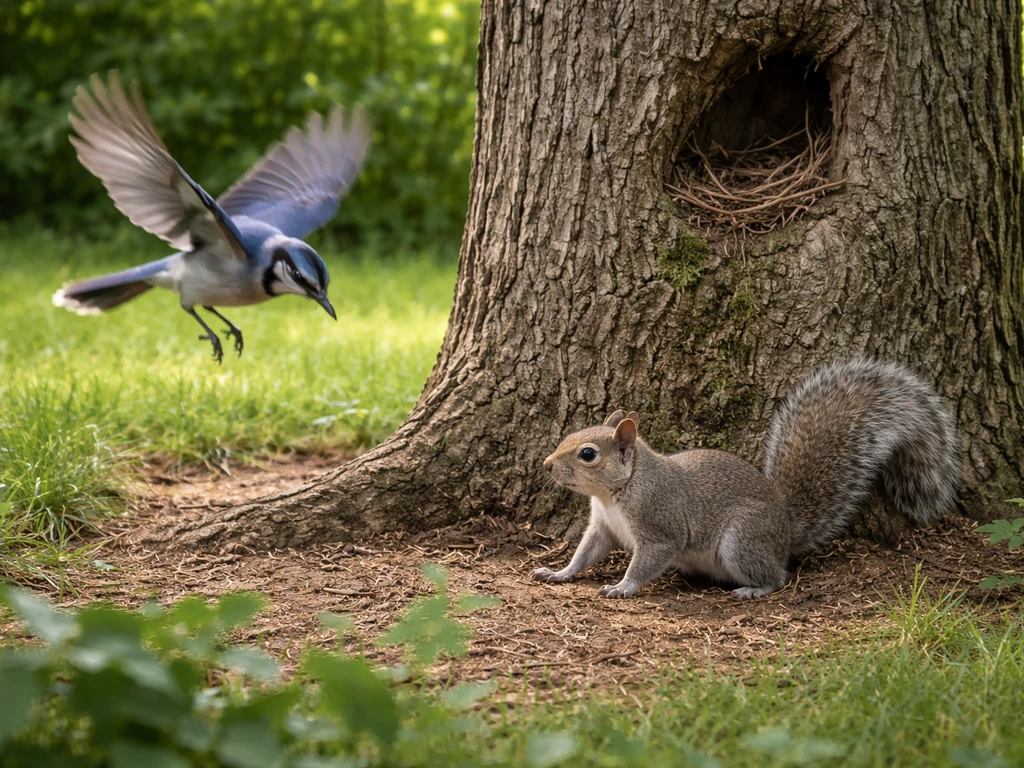
If you are also curious about the other side of the cat-bird dynamic, birds that actively confront or chase cats, that is a genuinely interesting behavior pattern worth exploring separately, as is the question of why certain birds will even target other animals like squirrels. Understanding why some birds confront or attack cats is a related question that also has real-world safety implications why certain birds will even target other animals like squirrels. Some birds are known to aggressively attack cats, especially if they feel threatened near nests or roosts birds that actively confront or chase cats. The predator-prey relationship between cats and birds runs in both directions in ways that often surprise people.
The bottom line and your next steps
Cats do affect bird populations, the evidence is solid, the mechanisms are well-documented, and the scale is large enough to matter both nationally and locally. The good news is that the actions that make the biggest difference are within reach for most cat owners: transitioning to indoor living, supervised outdoor access, structural yard changes to reduce hunting success, and collar deterrents as a supplement. If you are dealing with feral or stray cats, connecting with your local animal control agency and exploring community TNR or removal options is the most realistic path forward. Start with the changes you can make today, restricting outdoor time during spring nesting season is free and immediate, and build from there.
FAQ
Do cats only affect birds when they’re outdoors, or can indoor cats still harm them?
If your cat is kept inside, it should not affect bird populations through direct predation. The main remaining risk is when indoor cats have access during openings (doors left ajar, broken screens, or uncontrolled hallway-to-yard access). Treat any accidental outdoor time as hunting opportunity, especially in spring when fledglings are near the ground.
Are bells or other collars enough to prevent cats from killing birds?
Not reliably. Collars and bells can reduce kills in some cases, but cats often learn to hunt in ways that minimize noise, and deterrents do not prevent stalking and seizure. If you choose collars, use them only as an add-on while still managing outdoor access and peak hunting times.
If I let my cat out briefly, does it still increase the risk for birds?
Yes, even a short window can matter because predation is concentrated at times when birds are active and vulnerable. The highest-impact tactic is restricting outdoor access during dawn and dusk and tightening springtime supervision (May and June) when fledglings are easiest to catch.
How effective is supervised outdoor time, like leash walking or a catio, at reducing bird hunting?
The biggest reduction comes from eliminating unsupervised roaming. Leash walking and secure enclosures can work well, but only if the cat cannot slip the leash, reach gaps in the enclosure, or enter areas where it can ambush birds. Check for escape routes, loose harness fit, and any ability to jump into nearby cover.
Can yard setup reduce risk even if my cat goes outside sometimes?
Yes. Backyard layout can change outcomes quickly, even if you keep outdoor access limited. Consider moving feeders away from dense cover where birds have to cross open lawn to reach safety, and avoid placing feeders directly next to hedges, brush piles, or low hiding spots a cat can use for ambush.
If I don’t find dead birds, does that mean my cat isn’t hunting them?
Video-collar findings and owner-report comparisons suggest you may be undercounting kills. Many cats drop prey out of sight, leave it behind, or do not bring it back, so the absence of visible “presents” does not mean there is no predation.
Do bright collars or reflective collars help more than bells for bird protection?
Color and markings are more about making the cat visible than stopping hunts. A brightly colored collar can help people spot the cat more easily, which supports responsible supervision and community awareness, but it is not a substitute for indoor living or enclosure-based access.
If someone runs a TNR program nearby, will it automatically reduce bird predation in my area?
Feral and stray cats can hunt without owner intervention, so the actions that work best are community-based and coverage-dependent. For bird protection, partial efforts can fail if new cats keep arriving or if gaps remain. A program tends to be more effective when it is sustained and geographically comprehensive.
How can I tell whether local TNR is likely to reduce cats’ impact on birds?
It can help, but outcomes depend on implementation intensity and whether immigration continues. If your neighborhood keeps receiving new cats, a small or intermittent effort may reduce births but not meaningfully lower hunting pressure. Ask whether the program targets near-complete coverage, includes ongoing monitoring, and coordinates across property lines.
Does cat predation mainly threaten rare birds, or can common backyard birds be affected too?
Yes. Bird vulnerability is not uniform, but it also means “common” species can be disproportionately hit. If you live near ground-nesting areas or have lots of small songbirds visiting feeders, risk can be higher even if the species you notice seem abundant.
What are the highest-risk situations in a typical neighborhood yard?
Look for practical signs of risk you can control, not just the presence of birds. Open areas with short escape routes, feeders placed near cover, and periods of peak activity (especially spring, dawn, and dusk) are the strongest predictors you can act on immediately.
What should I do first if I can’t switch to fully indoor living right away?
Target the biggest lever first. If full indoor confinement is hard, create a step-down plan that reduces outdoor time immediately during spring nesting, then gradually replace free roaming with enclosure or leash-only access. Use yard modifications concurrently so any remaining outdoor time has lower hunting success.
Next Article
Why Would a Bird Chase a Squirrel? Causes and Next Steps
Learn why birds chase squirrels, how to spot the motive, and what to do safely to protect nests and pets.