
If you're searching this phrase in a bird health context, here's what you most likely need to know: an "old bird" that appears to be dying probably isn't just dying of old age, and you should not attempt to end its life yourself. Get the bird into a warm, dark, quiet box right now, do not give it food or water, and contact a licensed wildlife rehabilitator or avian vet as soon as possible. The rest of this guide will help you figure out what's actually wrong, what to do step by step, and when a vet-administered euthanasia may be the right call.
Can You Kill an Old Bird Lethal Company? What to Do Now
Maya Chen
11 May 2026
What this search phrase is really asking
The phrase "can you kill old bird lethal company" is almost certainly not asking about a video game or a business. In the context of bird health, it breaks down into two possible questions. The first is whether something lethal is causing an old or aging bird to die, meaning the bird is actively in distress and the person wants to know what's killing it.
The second is whether it's acceptable or possible to deliberately end the bird's life, either out of mercy or frustration at seeing it suffer. If you're wondering something like what fps can kill a bird, it's especially important to remember that harming wildlife is dangerous and often illegal, so focus on professional, legal guidance instead.
Both questions are completely understandable. Watching a bird decline is stressful and emotional. But the answer to both starts in the same place: get proper help before you do anything else, and do not try to end the bird's life on your own.
When birds die vs. when someone causes harm: the legal and ethical line
Deliberately harming or killing a bird, even one that appears to be suffering, is legally risky in most countries and ethically fraught without proper training. In the US, many wild birds are protected under the Migratory Bird Treaty Act, meaning intentionally killing them is a federal offense regardless of intent.
Trying to harm a bird with a weapon is both dangerous and illegal in many places, so seek help from a vet or wildlife rehabilitator instead intentionally killing them. For pet birds, state animal welfare laws generally apply. The ASPCA is clear that [euthanasia should only be performed by skilled, trained professionals certified in administering injectable euthanasia solution](https://www. aspca.
org/about-us/aspca-policy-and-position-statements/position-statement-euthanasia). The AVMA frames euthanasia as a veterinary welfare decision, not a DIY intervention.
The RCVS in the UK notes that euthanasia is technically not classified as "an act of veterinary surgery" in law, but it still strongly frames professional oversight as the standard. Under the UK Animal Welfare Act 2006, the power to authorize an animal's destruction sits with inspectors, police constables, and authorized personnel, not with members of the public acting alone. The safe, legal, and humane path is always to contact a vet or licensed rehabilitator first.
If you believe the bird is suffering and you feel desperate, that's a sign to move faster toward professional help, not to act alone. Call an avian vet, a wildlife rehabilitator, or your local animal control office right now and describe what you're seeing. Call an avian vet or wildlife rehabilitator right now, so you can get safe guidance instead of trying to handle it yourself.
What's actually killing "old" birds (it's usually not just age)
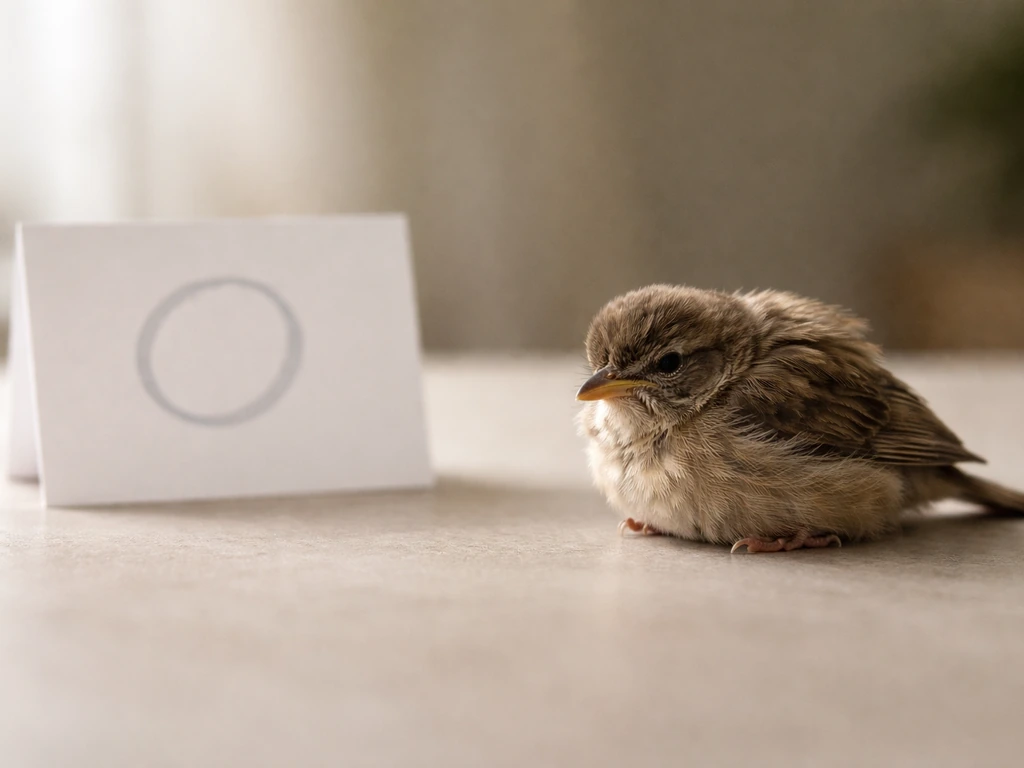
One of the most common mistakes people make is assuming a bird that's clearly struggling must simply be old and winding down. In reality, birds rarely die peacefully of old age alone. When a bird looks like it's fading, one of several well-documented lethal causes is usually at work, and identifying it matters both for the bird's treatment and for your own safety.
PTFE and nonstick fume poisoning
This one kills birds fast and is shockingly easy to miss. When PTFE-coated nonstick cookware is overheated above roughly 280°F, it releases fumes that cause severe respiratory toxicosis in birds. Signs include sudden difficulty breathing, tremors, and neurological symptoms. Birds can die within minutes or hours. If your bird is indoors and you've been cooking with nonstick pans, this has to be ruled out immediately. Move the bird to fresh air and get to a vet.
Lead toxicity
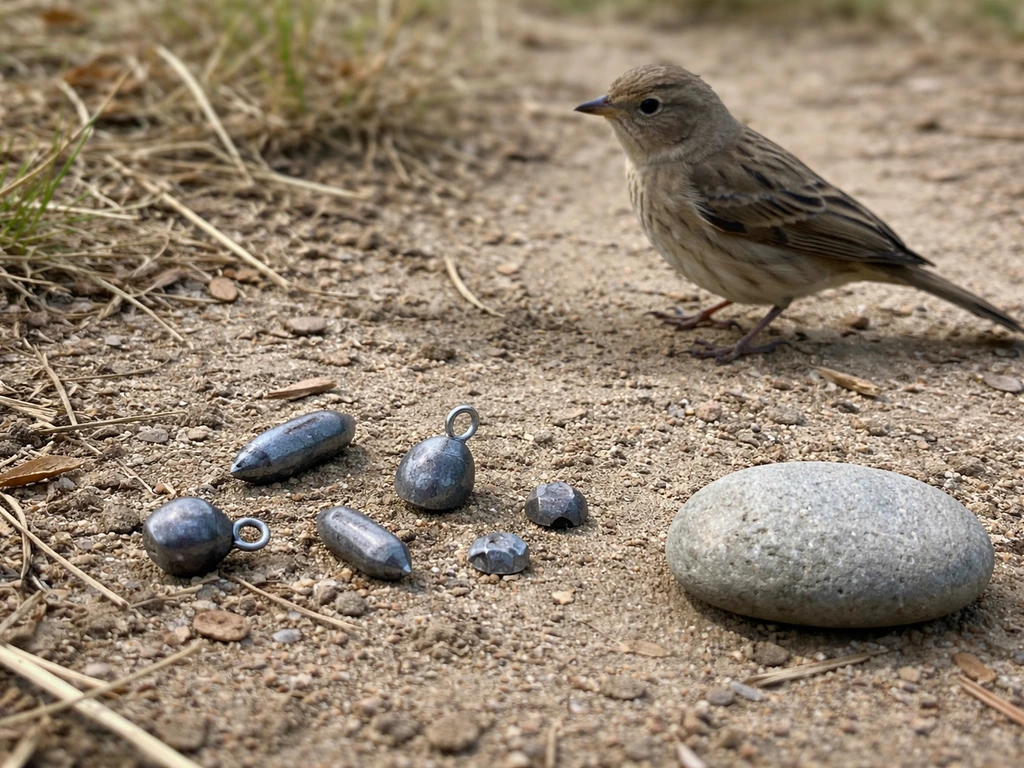
Lead poisoning is more common in birds than in most other wildlife. The Pennsylvania Game Commission notes that birds that ingest large amounts of lead can die suddenly with few other clinical signs beforehand, making it look like the bird just "dropped." Sources include lead fishing weights, spent ammunition fragments in carrion, and old paint chips. This is a treatable condition when caught early, but it needs immediate veterinary diagnosis.
Avian botulism
The USGS identifies avian botulism as a significant cause of bird mortality, noting that affected birds often die in good body condition, which can make the decline seem sudden and unexplained. Botulism from contaminated water or food can cause progressive weakness, neck paralysis (sometimes called "limberneck"), and death. The incubation period ranges from about 2 hours to 2 weeks depending on the dose, so a bird that seemed fine recently can deteriorate rapidly.
Avian influenza and infectious disease
The USDA APHIS notes that wild birds can carry avian influenza without appearing sick, and that sick birds showing signs of illness may represent a broader disease event. The RSPCA specifically warns not to touch a bird that appears sick without first checking bird flu guidance, because of biosecurity risks to other animals and humans. If you're finding multiple dead or sick birds in one area, report it to your local wildlife authority immediately.
Window strikes and electrocution
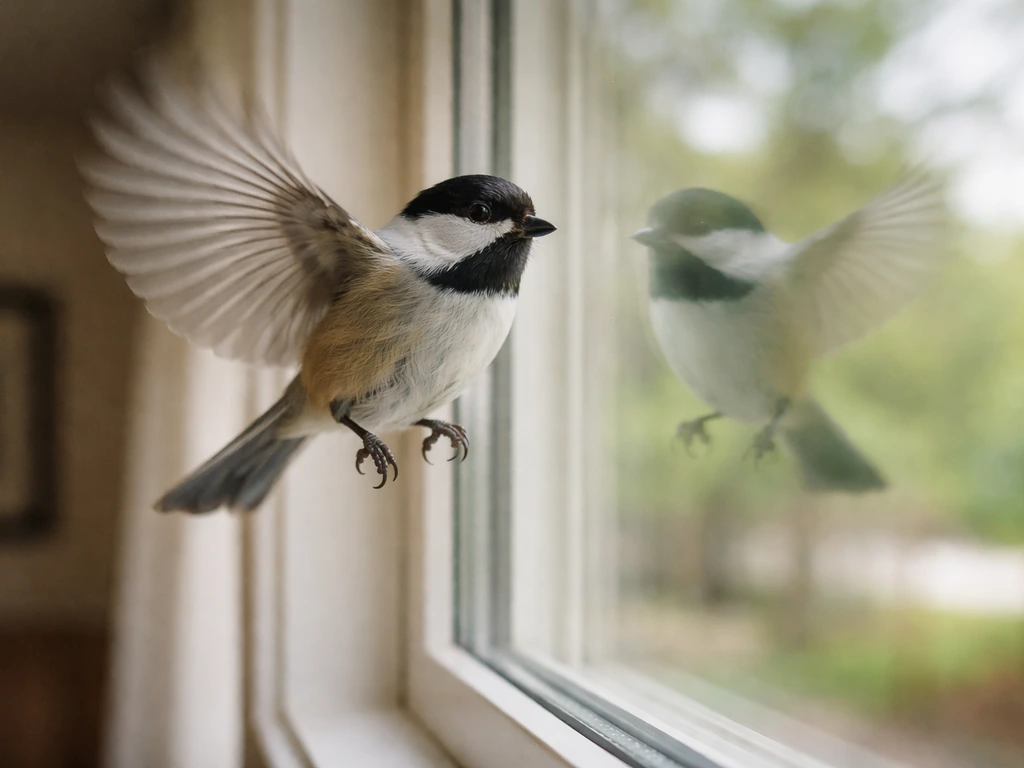
Tufts Wildlife Clinic explains that birds hit windows because they perceive the reflected landscape as real space. A bird that appears stunned or collapsed near a window may have sustained a serious concussion or internal injury even if there's no visible bleeding. Separately, the USGS documents that electrocution from power lines causes severe cardiovascular injury that is usually fatal, so a bird found near power infrastructure may have suffered an electrical injury rather than simply "gotten old."
How to assess an "old bird" problem safely
Before you touch the bird, take a few seconds to observe it from a distance. The Wildlife Center of Virginia lists the following as wildlife emergency signs that need urgent professional attention:
- Trouble breathing or open-mouth breathing
- Non-responsive or unresponsive to nearby movement
- Lying on its side
- Bleeding profusely
- Broken or dangling limbs
- Extensive visible wounds
- Seizures or uncontrolled tremors
- Inability to perch or stand
If any of these apply, this is a veterinary emergency. Do not wait to see if the bird "perks up." Call an avian vet or wildlife rehabilitator right now. If you are unsure whether the bird is wild or a pet, that doesn't change the triage: the signs above mean it needs professional help regardless.
If the bird is alert, can hold its head up, and doesn't show any of the emergency signs above but still seems "off," it still warrants a call to a rehabilitator. A bird that is easy to approach or pick up is almost always a bird in trouble, because healthy birds evade humans.
The RSPCA's advice is to take photos or video first if you haven't touched the bird yet, especially if you're concerned about infectious disease. This helps a professional assess the situation remotely and decide next steps without you having to handle the bird prematurely.
Vet vs. wildlife rehabilitator: which do you need?
| Situation | Who to contact |
|---|---|
| Pet bird (parrot, canary, cockatiel, etc.) | Avian veterinarian immediately |
| Wild bird with emergency signs listed above | Wildlife rehabilitator or wildlife vet |
| Wild bird found near a window | Wildlife rehabilitator, stabilize first |
| Multiple dead/sick birds in same area | Local wildlife authority or animal disease reporting line |
| Bird found near overheated cookware indoors | Avian vet immediately (suspected PTFE toxicosis) |
| Bird found near power lines or water bodies | Wildlife rehabilitator, do not touch without protection |
What to do right now if the bird is in distress
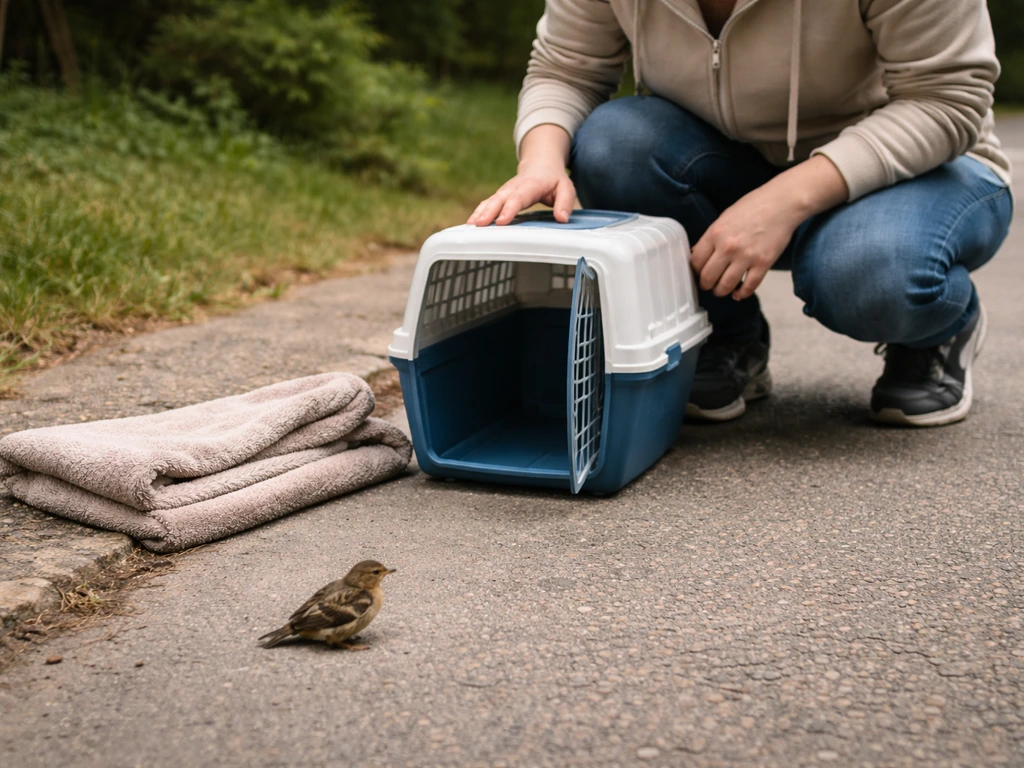
These steps are about stabilization, not treatment. Your job is to keep the bird calm and safe until a professional takes over. Do not try to diagnose or treat the bird yourself.
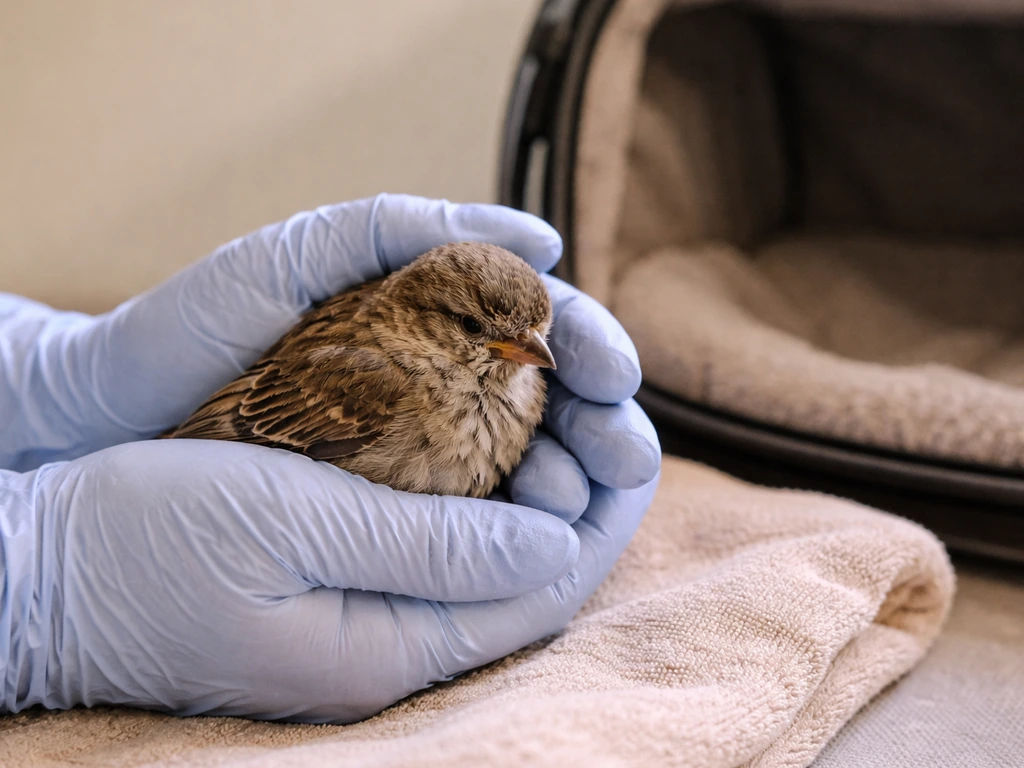
- Observe first. Before touching, spend 30 seconds watching the bird. Note what it's doing, where it is, and any obvious injuries. Take a photo or short video if you can.
- Wear gloves if possible. Biosecurity matters, especially for wild birds where avian flu is a concern.
- Prepare a container. Use a shoebox or a cardboard box with a lid. Line the bottom with a soft towel or paper towels.
- Warm one end of the box. Place a heating pad on the lowest setting under one half of the box, or use a warm water bottle wrapped in a towel. The bird needs to be able to move away from the heat if it gets too warm.
- Gently pick up the bird and place it in the box. Wrap it loosely in a lightweight cloth if it's struggling. Keep handling to an absolute minimum.
- Put the lid on. Keep the box in a warm, dark, quiet place away from children, pets, and noise.
- Do not give food or water. The USFWS, Virginia DWR, Mass Audubon, Tufts Wildlife Clinic, and the Wildlife Center of Virginia all agree: do not feed or water an injured bird before a professional has assessed it. This can cause aspiration, choking, or complications depending on the bird's condition.
- Call for help immediately. Search for a licensed wildlife rehabilitator in your area using your state's wildlife agency website, or call an avian vet directly.
That's it. Your goal is a warm, dark, quiet box and professional help on the way. Resist the urge to check on the bird repeatedly or offer food. Stress is a serious risk factor for birds in shock.
When euthanasia is the right call and how it actually works
Sometimes a bird is genuinely beyond recovery. An elderly pet bird with terminal organ failure, a wild bird with catastrophic injuries, or one suffering from a condition that cannot be treated humanely may be candidates for euthanasia. This is a compassionate, legitimate option. But it needs to be made by a veterinary professional, not by you alone. A similar DIY harm is also why you should not shoot or use weapons like a paintball gun on birds, since that can cause severe injury or death and create legal problems paintball gun kill a bird.
The AVMA frames euthanasia as a welfare decision that a vet makes when continued life would mean ongoing suffering without reasonable hope of recovery. The RSPCA describes it as necessary "to prevent an animal suffering when it cannot be saved or rehabilitated humanely." These are not casual decisions. A vet will assess the bird's condition, consider whether palliative care is an option, and if euthanasia is the right choice, administer it using humane, professional methods.
The standard method for birds, as described in AVMA euthanasia guidelines, involves an injectable euthanasia solution, typically sodium pentobarbital administered by a licensed veterinarian. The ASPCA emphasizes that proper death verification is also part of the process. It is not instantaneous in the dramatic sense, but it is typically very fast and causes no pain when done correctly.
In Colorado, for example, wildlife regulations specify that euthanasia of injured wildlife can only be performed by veterinarians or personnel specifically authorized by the wildlife division when no humane rehabilitation option exists. Washington state law requires sodium pentobarbital and restricts its use to authorized, registered agencies. These aren't bureaucratic hurdles: they exist because doing this wrong causes unnecessary suffering.
Emotionally, deciding to euthanize a pet bird you've had for years is genuinely hard. It helps to go in with clear information. Ask your vet directly: "Is this bird in pain right now? Is there a realistic path to recovery?" A good avian vet will give you an honest, evidence-based answer. If euthanasia is recommended, you can typically be present, and the vet will explain what to expect beforehand.
How to prevent this situation in the future
Most bird deaths that look like "old age" are preventable with some straightforward changes to the bird's environment and your own habits.
Remove household hazards
- Replace nonstick PTFE-coated cookware with stainless steel or cast iron, especially if you have pet birds in or near the kitchen
- Never use aerosol sprays, air fresheners, scented candles, or cleaning products with strong fumes near a bird
- Remove or secure any sources of lead: old paint, fishing weights, certain metal toys or cage hardware
- Keep toxic plants away from birds (avocado, onion, and many common houseplants are lethal to birds)
Reduce collision and environmental risks
- Apply window film, decals, or screens on large glass windows to reduce bird strikes
- Position bird feeders either very close to windows (under 3 feet, so birds can't build fatal velocity) or very far away (over 30 feet)
- Keep outdoor cats indoors or in enclosed runs: cats are responsible for billions of bird deaths annually in North America
Diet, hygiene, and monitoring
- For pet birds: provide a species-appropriate diet, not just seeds, which are nutritionally incomplete for most parrots and songbirds
- Clean food and water dishes daily to prevent bacterial and fungal contamination
- Clean and disinfect the cage or enclosure weekly
- Establish a relationship with an avian vet and schedule annual wellness checkups, because birds mask illness until they're seriously sick
- Monitor your bird daily for changes in droppings, posture, feather condition, vocalization, and appetite, since behavioral changes are almost always the first sign something is wrong
For wild birds in your yard, the same logic applies at a population level. The USDA APHIS notes that early detection and reporting are critical for managing diseases like avian influenza before they spread. If you see unusual numbers of dead or sick birds, report it to your state wildlife agency or USDA APHIS rather than handling the birds yourself. Clean your bird feeders with a 10% bleach solution monthly to reduce disease transmission between wild birds visiting your yard.
The bottom line is that an "old bird" dying in front of you is rarely just aging out. Something specific is almost always at work, and the faster you get professional eyes on the bird, the better the outcome for both of you.
FAQ
If the “old bird” is a pet, can I euthanize it myself to avoid suffering?
Don’t. Even when euthanasia seems compassionate, it should be performed by a licensed veterinarian (or authorized personnel for wildlife). DIY methods can cause prolonged pain, incomplete death, or lead to legal and safety problems. Ask the vet to evaluate pain and whether palliative care is a short-term option while you make plans.
What should I do right away if a wild bird seems like it’s dying but I’m not sure what’s wrong?
Set up a warm, dark, quiet container and limit handling. Then contact an avian vet or licensed wildlife rehabilitator immediately, and describe the bird’s behavior (ability to stand, breathing pattern, responsiveness). Avoid offering food or water until you get professional guidance, since some conditions worsen with swallowing or fluids.
Is it okay to check the bird’s eyes or mouth to see what’s causing the problem?
Usually no. Close handling increases stress and can spread infection if the cause is contagious. Instead, observe from a distance first. If you need to move the bird to a container, do it gently and only after you have a plan to contact a professional right away.
Should I take the bird to my regular vet or emergency clinic?
For the fastest appropriate help, prioritize an avian-experienced veterinarian or wildlife rehabilitator. If you can’t reach one quickly, an emergency clinic may stabilize while you arrange avian-specific guidance. Mention it’s a bird and note any suspected exposures (nonstick cookware, window strikes, power lines, pesticide use, lead hazards).
What counts as a “wildlife emergency sign” where I should not wait?
If the bird has open-mouth breathing, severe breathing difficulty, seizures, inability to stand, persistent weakness, paralysis, or it’s collapsed and not responding normally, treat it as urgent. The key decision aid is timing, if it looks like it could deteriorate further in minutes to hours, call immediately rather than monitoring.
Can I put the bird outside to “rest” if it seems old?
No. Outdoor conditions can worsen shock, exposure, and breathing problems, and you risk making the bird harder to rescue if it collapses nearby predators. Keep it warm and in darkness indoors while arranging professional help, unless a professional specifically instructs otherwise.
If I suspect bird flu, what should I do differently than usual?
Do not handle the bird beyond the minimum needed to secure it for professional pickup. Limit contact with other pets and people, wash hands, and avoid letting the bird’s droppings dry or be disturbed. If you already touched the bird, tell the rehabilitator and follow their biosecurity instructions.
What if there are multiple dead or sick birds nearby?
Don’t treat it as a random “old age” issue. Report the cluster to your state wildlife authority promptly, since it may indicate a contagious disease event. Also consider avoiding spreading contamination by cleaning tools afterward and not moving birds between locations.
How can I tell if the bird is wild or a pet without touching it?
Look for banding (leg bands), tameness level (unusually easy to approach), and whether it has traits like a clipped wing or captive markings. Even if you think it’s a pet, use emergency signs as the triage rule. If it appears disoriented, breathing poorly, or collapsed, treat it as an emergency either way.
If euthanasia is recommended, can I be present?
Often yes, and it can help you prepare emotionally. Ask the vet beforehand what the process will look like and how pain and stress are managed beforehand. Also ask whether the vet will provide aftercare options (such as cremation) if that matters to you.
What are common mistakes that make outcomes worse?
The biggest ones are assuming “it’s just old,” repeatedly checking and handling, offering food or water, and delaying contact with an avian vet or licensed rehabilitator. Another frequent mistake is failing to mention potential exposures, like overheated nonstick cookware, lead sources, or window/power-line incidents.
How do I reduce bird deaths around my home after this situation?
Start with prevention based on likely hazards. Clean feeders regularly (for example, a diluted bleach solution approach is commonly used), place feeders to reduce window strikes, and keep pets indoors if you’re seeing injured birds. If you notice unusual numbers of sick or dead birds, report promptly instead of trying to “relocate” them yourself.
Next Articles
Can 200 FPS Kill a Bird? Real-World Risk and What to Do
Whether 200 FPS can seriously injure or kill birds, what affects lethality, and what to do after a suspected impact.
Can a Nerf Gun Kill a Bird? Safety, Risk, and What to Do
Can a Nerf gun kill a bird? Learn real risk factors, signs of injury, what to do, and safer deterrent options.
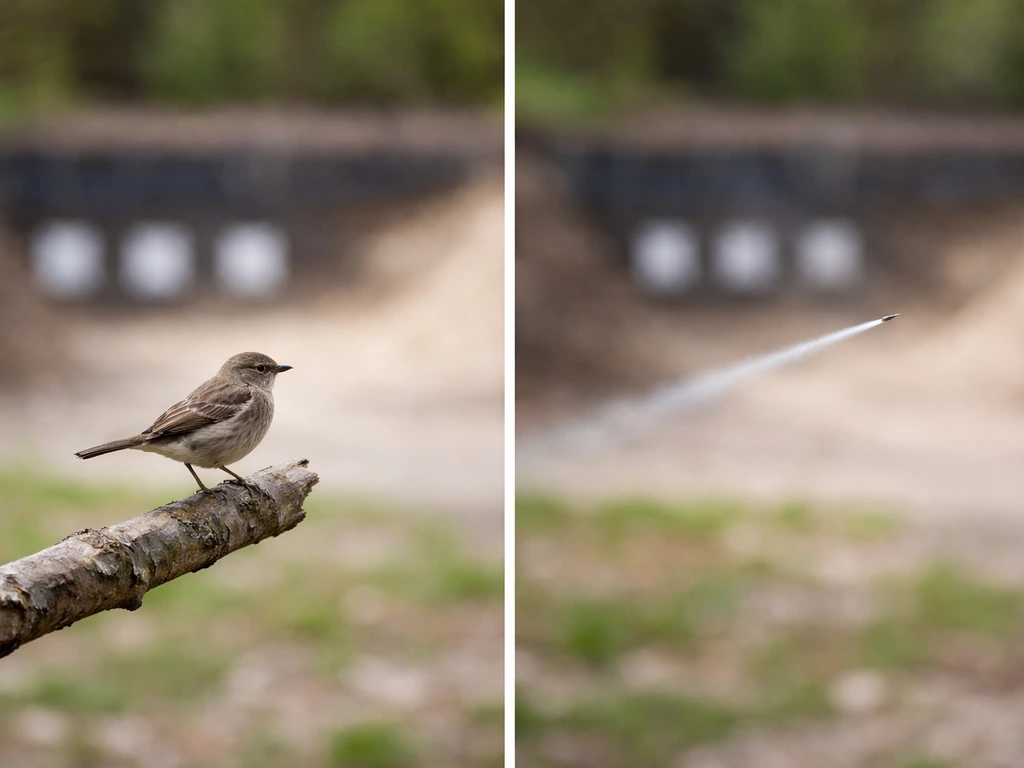
What FPS Can Kill a Bird: Why No Magic Number Exists
No magic FPS number: why impacts vary by species and shot, plus safe steps to prevent bird injury or get help.