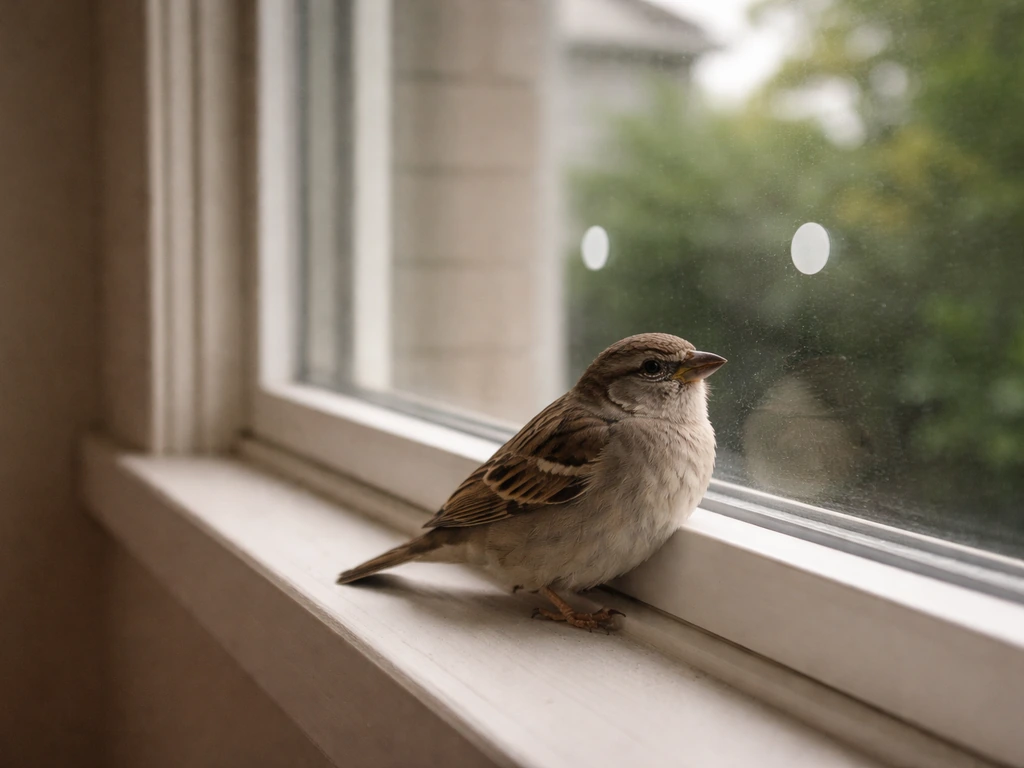
You cannot get a DUI simply because a bird was involved in a driving incident. DUI and DWI charges are based entirely on whether you were impaired by alcohol or drugs while operating a vehicle. A bird flying into your windshield, startling you, or being hit on the road does not create impairment in the eyes of the law. That said, if police are already suspicious of impaired driving and a bird incident is what prompted the traffic stop, the bird becomes irrelevant to the legal question. What matters is your condition, not the animal.
Can You Get a DUI on a Bird? What to Know Today

Maya Chen
14 May 2026
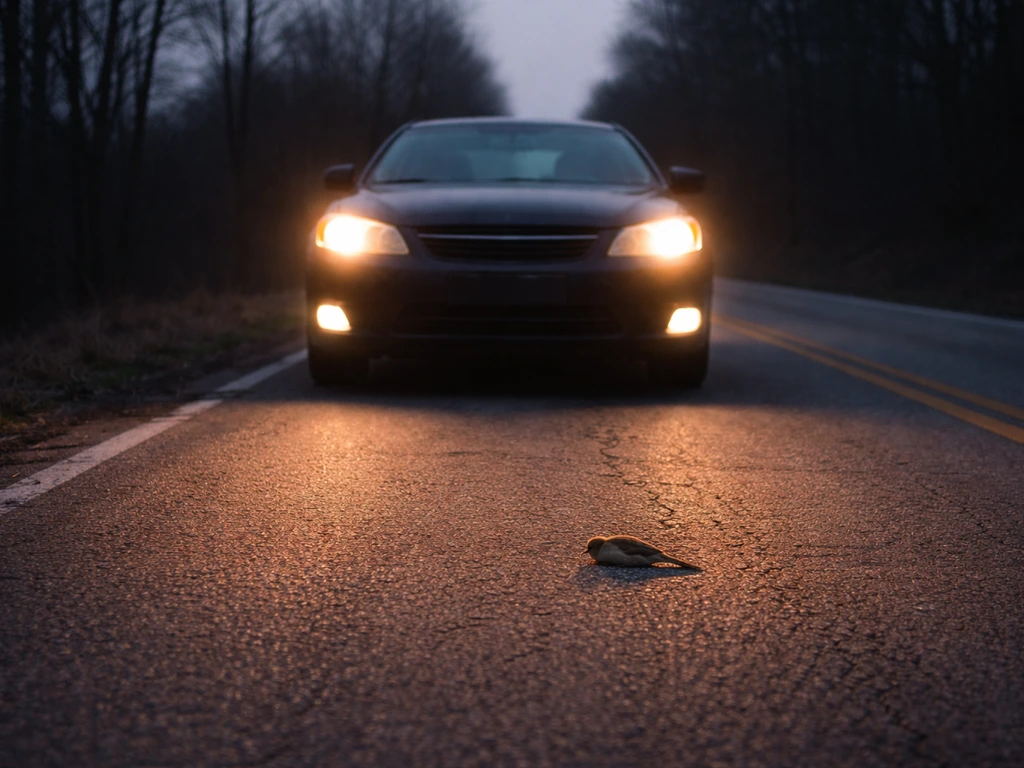
What people usually mean when they search this
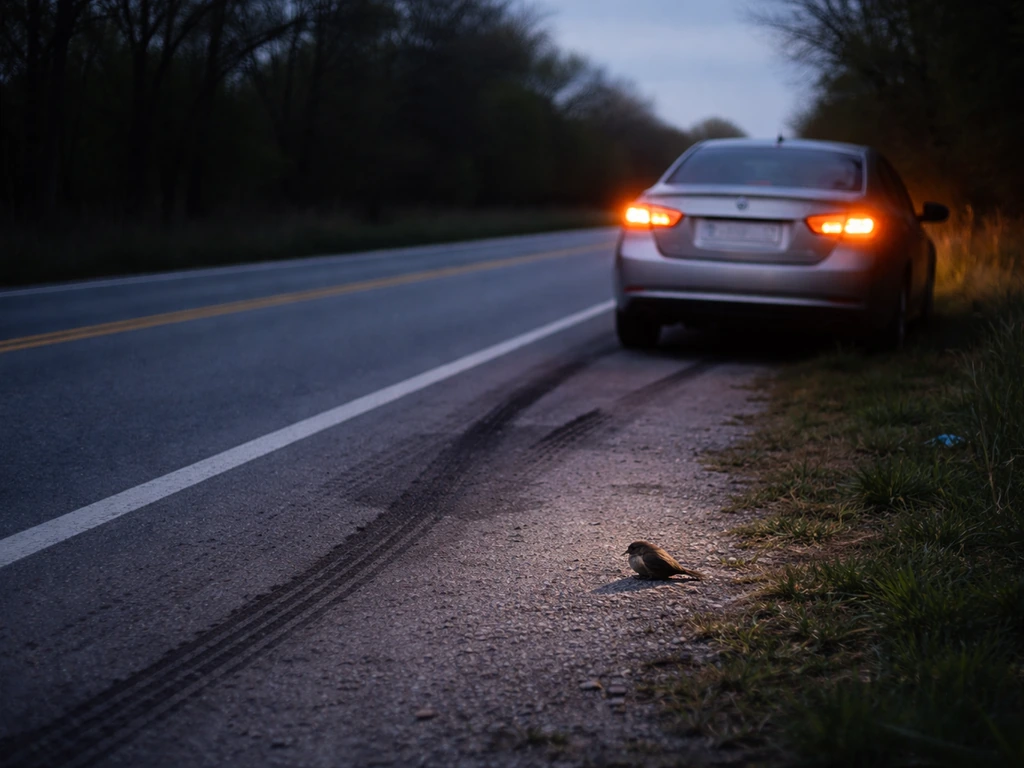
Most people searching "can you get a DUI on a bird" are asking one of a few different things. Some want to know if hitting a bird while driving can somehow trigger a DUI charge. Others are wondering if a bird caused them to swerve or brake erratically, and whether that driving behavior could lead an officer to suspect impairment. A smaller group is curious whether there are any wildlife-related laws that cross over into DUI territory. All of these are reasonable questions, and the answer to each is basically the same: DUI laws are about your internal state, not what's on the road.
It is also worth noting that people search questions like "can you go to jail for killing a bird" or "what happens if you kill a bird," which are separate legal concerns entirely, involving wildlife protection laws rather than traffic law. Wildlife protection rules may come into play for the specific act, so it helps to understand those laws separately from DUI issues what happens if you kill a bird. If you are asking can you kill the bird in raft, that usually involves wildlife or boating safety rules rather than DUI law. Those are real legal considerations in their own right, but they are different from DUI statutes.
How DUI and DWI are actually determined
DUI (Driving Under the Influence) and DWI (Driving While Intoxicated) laws exist in all 50 states and D.C., and every one of them centers on impairment by alcohol or drugs, not by external circumstances. NHTSA is clear that driving impaired by any substance is against the law everywhere in the country. A bird on the road is not a substance. A startling noise is not a substance. You cannot be legally impaired by a pigeon.
When an officer suspects impairment, they use a structured set of tools called Standardized Field Sobriety Tests (SFSTs). Officers have used these for more than 40 years. The three validated tests are Horizontal Gaze Nystagmus (HGN), Walk-and-Turn (WAT), and One-Leg Stand (OLS). Each one measures specific physical clues tied to impairment by alcohol or drugs, and officers are trained to document what they observe. A screening breath test (sometimes called a preliminary breath test, or PBT) is often used at roadside as well.
The legal threshold in most states for a per se DUI is a blood alcohol concentration (BAC) of 0.08 or above for drivers 21 and older. Washington State's implied consent law, for example, explicitly references this threshold and describes consequences for test refusal. Refusing to take a breath or blood test typically carries its own automatic penalties, which are separate from any DUI charge.
What actually happens when police get involved after a bird incident
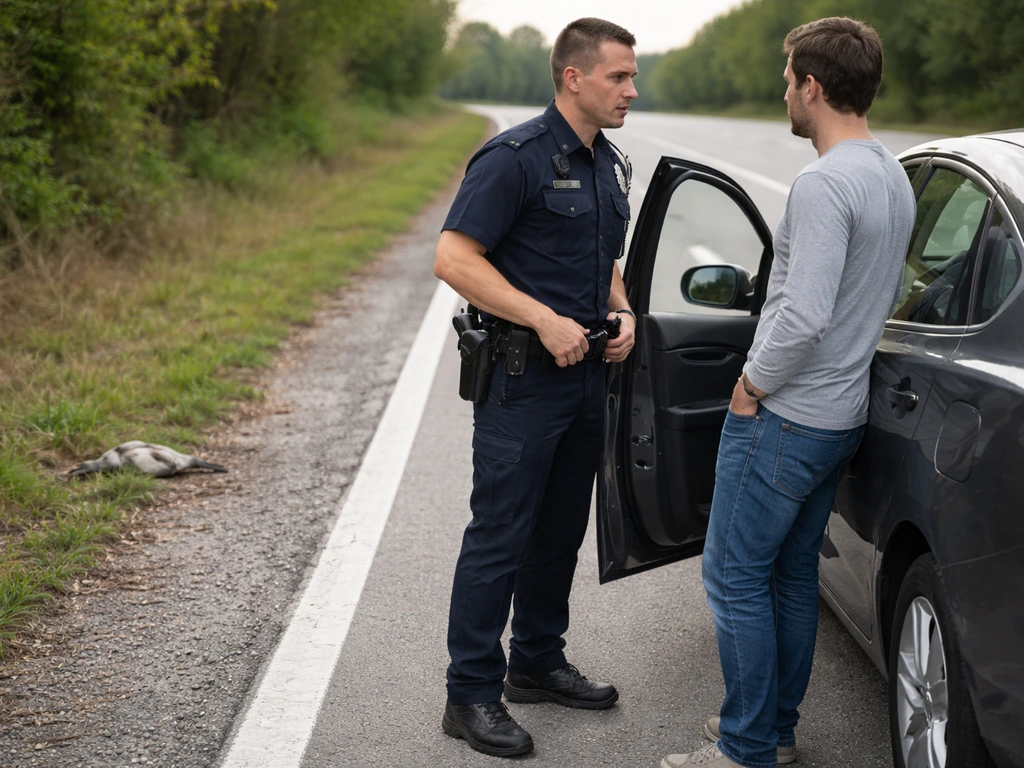
If you swerve to avoid a bird, brake hard, or pull over after hitting one, an officer who witnesses the driving behavior may pull you over. At that point, the bird is background context. The officer is observing you: how you speak, your eyes, your coordination, whether there is an odor of alcohol. If nothing raises suspicion of impairment, the stop is routine. You might be asked if you are okay, the officer notes the road hazard, and you move on.
If something does raise the officer's suspicion, they can conduct field sobriety tests. That process follows the SFST protocol regardless of what initially prompted the stop. The fact that a bird was involved does not protect you from a DUI charge, but it also does not create one. Many people also ask whether killing a bird is a sin, but that question is separate from DUI law and how impairment is proven is killing a bird a sin. The test results and any chemical test readings are what drive the legal outcome.
In rare cases involving a large bird (a hawk, an owl, a wild turkey), the collision itself can cause real vehicle damage or driver injury. In those situations, you would likely be dealing with an accident report rather than a DUI investigation, unless impairment signs are also present.
Myths vs. reality: birds, impairment, and DUI evidence
| Myth | Reality |
|---|---|
| Hitting a bird can result in an automatic DUI | No. DUI requires evidence of impairment by alcohol or drugs, not a wildlife collision. |
| Swerving for a bird proves you were driving erratically, which proves DUI | Erratic driving is a reason to investigate, not a conviction. Officers still need impairment evidence. |
| A bird flying into your car can "impair" you legally | Startlement is not legal impairment. It may explain a maneuver but doesn't trigger DUI statutes. |
| You can avoid a DUI by blaming the bird | If you are over the legal BAC limit or fail SFSTs, the bird explanation does not override test results. |
| Wildlife incidents are handled by DUI units | Bird or wildlife collisions are typically handled as accident reports or road hazard incidents, not DUI investigations, unless independent impairment evidence exists. |
The bottom line is that a bird cannot make you impaired in any way that counts under DUI law, and the presence of a bird does not add to or subtract from impairment evidence. Officers are trained to separate what caused a driving event from whether the driver was under the influence.
Immediate steps after a bird hit or animal incident while driving
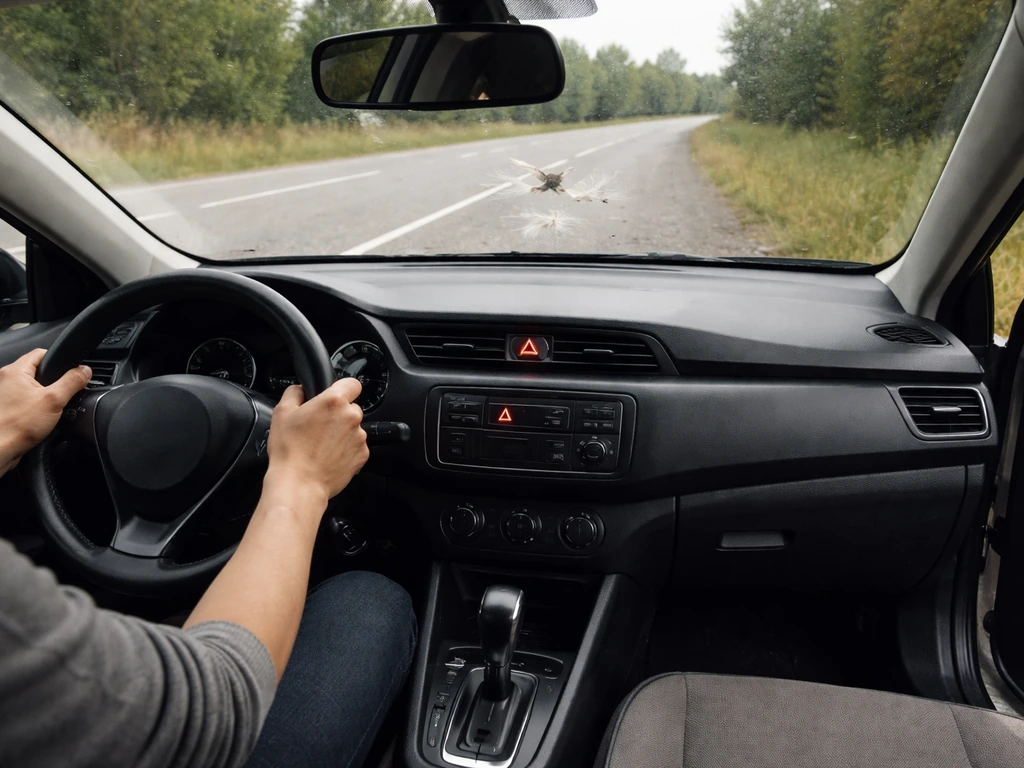
If a bird hits your windshield or you strike one on the road, here is what to do right away.
- Pull over safely if your visibility is impaired or you feel shaken. Use your hazard lights.
- Check yourself and any passengers for injury first.
- If the bird is in or on your vehicle, do not handle it with bare hands. This matters for health reasons covered below.
- Note the time, exact location (road name, mile marker, intersection), and direction of travel.
- Take photos of your vehicle, the road, any damage, and the bird if it is visible and safe to photograph without approaching.
- Look for witnesses. If other drivers saw what happened, try to get contact information.
- If an officer arrives, be straightforward: describe what happened, where the bird came from, and what you did in response. Do not speculate about impairment or volunteer excessive information.
- If the bird appears injured and is on the roadway, do not attempt to capture it. Note its location and contact your state wildlife agency or a licensed wildlife rehabilitator.
Documentation is your best protection in any ambiguous traffic situation. Photos with timestamps, a clear location record, and any witness contacts give you and any attorney you consult a factual foundation to work with.
Handling an injured wild bird safely: the health precautions that matter
If the bird involved in the incident appears injured, your instinct might be to help. That is understandable, but wild birds carry real disease risks and need to be handled correctly. The U.S. Fish and Wildlife Service recommends contacting a licensed wildlife rehabilitator before attempting to handle an injured adult bird, and Mass.gov similarly advises seeking professional guidance before trying to capture wild animals.
If you must move a bird for immediate safety reasons, such as it is in the middle of a lane, the CDC and OSHA both advise avoiding direct contact. Wear gloves if you have them. Do not touch your face. Afterward, wash your hands thoroughly with soap and water, or use hand sanitizer if soap is not available.
The disease risks from a roadside bird encounter are real but manageable with basic precautions. Avian influenza A and West Nile virus are both reasons the CDC advises against touching sick or dead wild birds with bare hands. Salmonella is another concern, particularly from birds that feed at communal sites. None of these risks are reasons to panic, but they are reasons to take a few seconds to protect yourself before acting.
- Never handle a sick or dead bird without gloves.
- Avoid touching your eyes, nose, or mouth after any contact.
- Dispose of or disinfect any PPE you use.
- Report sick or dead wild birds to your state wildlife agency (in Massachusetts, that is MassWildlife). Most states have a similar reporting line.
- Wash hands with soap and water as soon as possible after any bird contact.
If the bird is alive and clearly injured, the right call is to keep people and pets away from it, note the location, and call a licensed wildlife rehabilitator. Attempting to trap or carry an injured adult bird without experience can injure both of you and may not even be legal depending on the species involved.
When to talk to a lawyer and what to bring
If a bird-related incident leads to a DUI investigation, field sobriety testing, a breath test, or an arrest, you should talk to a DUI defense attorney as soon as possible. Even if you believe the situation was entirely caused by the bird and not by any impairment on your part, the legal process requires professional navigation.
When you contact an attorney, bring everything you documented at the scene. The more organized your facts are, the faster and cheaper the consultation will be. Here is what to have ready.
- Date, time, and precise location of the incident.
- Photos taken at the scene, including any vehicle damage and the road conditions.
- Names and contact information of any witnesses.
- A written account of exactly what happened, in your own words, written down as soon as possible while details are fresh.
- Any paperwork given to you by the officer (citation, accident report, test refusal documentation).
- The name and badge number of any officer involved, if you noted it.
- Any information about the bird: species if you could tell, where it came from, what happened to it after.
You do not need to have a clear legal strategy before calling an attorney. What you need is the facts. A good DUI defense attorney will assess whether the stop was justified, whether the field sobriety tests were administered correctly, and whether the bird incident provides any context that matters to your defense. Bird or no bird, the law is specific about what constitutes DUI evidence, and those details are worth reviewing with someone who handles these cases every day.
FAQ
If I hit a bird and my car swerved, can that still count as DUI even if I wasn’t drinking or using drugs?
Yes, it can lead to a DUI investigation if the officer believes your driving, speech, eyes, or coordination indicate impairment. The bird itself does not prove DUI, but the stop can happen because of how you drove right before and during the incident. Your best protection is to document exactly what happened (where you were, speed, lane position, impact details, and any witnesses).
Does a bird incident change the officer’s field sobriety testing procedure?
No. If the officer suspects impairment, they should still follow the standard SFST protocol regardless of the reason for the stop. A common issue is poor conditions for testing (bad lighting, uneven ground, moving traffic). If those conditions were present, ask your attorney to scrutinize whether the tests were administered and documented properly.
Will refusing a breath test have different consequences because a bird was involved?
Usually, no. Refusal consequences are typically tied to implied consent rules and state law, not to the trigger for the traffic stop. If you refused, your attorney will want to review the exact warnings given to you and whether the request and timing complied with state procedures.
If I tell the officer the bird startled me, will that prevent DUI charges?
It might help explain the event, but it does not automatically stop DUI enforcement. Officers evaluate impairment indicators separately, such as odor of alcohol, difficulty with balance, and eye findings during testing. If you mention the bird, make sure your account stays consistent and factual, and avoid adding speculation about what “must have” caused impairment.
Could the bird collision itself cause symptoms that look like impairment?
In rare cases, yes, especially if you had a brief loss of attention, shock, injury, or a sudden emergency maneuver. Physical effects like stress, adrenaline, or pain can sometimes resemble poor coordination. This is one reason to seek medical evaluation if you were hurt, since injury records can clarify alternative explanations for your behavior.
What if the officer claimed my braking or pulling over was “erratic” because I was avoiding the bird?
Erratic driving can still raise reasonable suspicion, even if the cause was a legitimate hazard. Your attorney will likely focus on whether the driving behavior matched normal avoidance of an animal (for example, braking patterns and lane position) and whether dashcam or bodycam footage supports that context.
Does the bird incident affect the BAC threshold or how per se DUI is charged?
Generally, no. The BAC threshold for per se DUI is based on the test result and statutory limits, not on the circumstances that caused the stop. However, the circumstances can matter for test admissibility, whether the correct procedures were used, and whether you were properly observed and tested.
If the bird was injured, do I still need to worry about DUI evidence or my right to remain silent?
Yes. Wildlife handling is separate from DUI law, but the incident can quickly turn into a law enforcement interaction. If police are investigating impairment, it is usually safer not to volunteer extra statements about alcohol or drugs beyond basic facts, and to request counsel as soon as practical.
Can I help the bird after being stopped without making the DUI situation worse?
Be cautious. If an officer is present and investigating impairment, leaving the scene or acting unpredictably can complicate the situation. If immediate safety requires moving people away, keep it minimal and safe, and focus on contacting a licensed wildlife rehabilitator after you address law enforcement instructions. Also avoid direct contact with wild birds.
What should I document if I think the bird caused the incident but I’m facing DUI allegations?
Capture date, time, and location, take photos of the road conditions and bird damage if possible, note weather and lighting, list witnesses, and preserve any video such as dashcam footage. If there were injuries, note them and consider medical follow-up. This helps your attorney separate the driving event from impairment evidence.
If a wildlife law issue comes up, could it combine with DUI charges?
It can happen procedurally, but they are legally different. DUI hinges on impairment evidence, wildlife offenses hinge on protected-species rules and how the animal was handled. Your lawyer can coordinate how to address both, since statements or actions taken during the bird incident can sometimes be misinterpreted in either context.
How quickly should I contact a DUI defense attorney after a bird-triggered stop?
As soon as possible, ideally immediately after you are released or after any arrest. Early action matters for getting bodycam or dashcam footage, preserving test-related evidence, and reviewing whether SFSTs and chemical tests were handled according to rules. Even if you believe the bird caused everything, the investigation timeline can move fast.
Next Article
Is Killing a Bird a Sin? What to Do in Real Situations
Moral guidance on killing a bird, with faith differences, intent and necessity factors, and humane steps for hazards and