
The "Bird Box monster" is a fictional, unseen entity from a 2018 Netflix film. It doesn't enter buildings because it isn't real. But if you're asking this question because something is getting into (or near) your actual bird box, that's a completely different and very solvable problem. Some people also ask a different question, wondering why the unsettling Bird Box premise might lead viewers to self-harm why do people kill themselves in bird box. What keeps predators, squirrels, and other animals out of a nesting box comes down to physical design: the size of the entrance hole, whether there are gaps or perches, how the box is mounted, and whether you've added a predator guard. USDA/NRCS guidance on nesting structures also discusses monitoring artificial nesting structures and notes entrance-hole size limits (such as no greater than 1 1/2 inches) along with using starling guards to help prevent unwanted access blank" rel="noopener noreferrer">whether you've added a predator guard.
Why Bird Box Monster Can’t Go Inside: Real Reasons

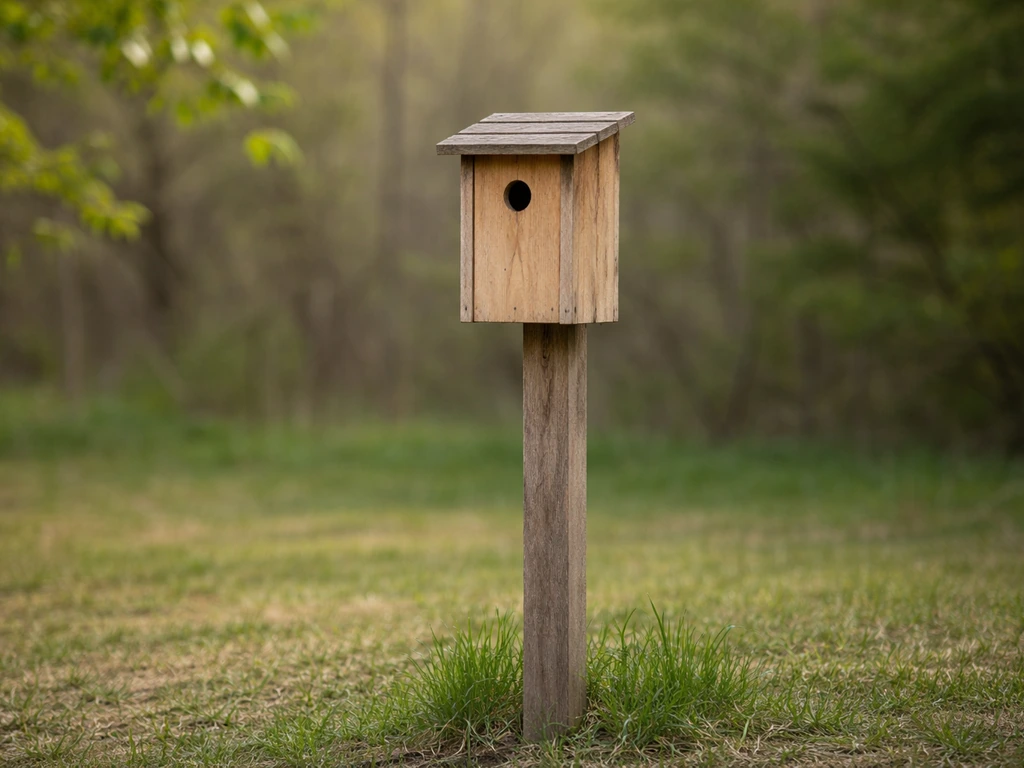
What people actually mean by "bird box monster"
In the film Bird Box, the creatures are deliberately never shown clearly. They're ambiguous, unseen threats that cause extreme psychological effects in anyone who looks at them. The whole point of the movie is that the danger is tied to sight, not to a physical creature that can walk through doors or squeeze through a gap. This ambiguity is exactly what made the film spawn so many memes and questions, including the literal "why can't it go inside? This is where many people ask why the creatures in Bird Box seem to kill or harm viewers why can't it go inside?. " interpretation that circulates online.
The answer within the film's own logic is that the creatures seem to have limited ability to operate in enclosed, sheltered spaces, but the movie never fully explains the mechanics. Fan theories abound. Some viewers believe doors and walls simply break line-of-sight, others think the creatures need open air to influence people. None of this is confirmed on screen. If you're here because you're curious about the film's lore, that's the honest answer: the rules are intentionally vague, and the "monster" is more of a psychological concept than a physical entity with defined abilities.
If you're here because something is actually bothering birds at your nesting box, the rest of this article is for you. The questions about why creatures in Bird Box kill, why some people aren't affected, and what the creatures actually look like are all fascinating film discussions, but the practical bird-safety question is about real animals and real barriers.
Why animals can't (or can) get into a bird box
Real bird boxes keep predators out through a combination of physical design choices. Access is purely mechanical. There's no magic, no instinct that stops a raccoon or a snake from entering a nest box. What stops them is a hole that's too small, a pole they can't climb, or a guard that blocks their reach. Remove those barriers and predators get in easily.
The entrance hole is the most critical factor. Each species of cavity-nesting bird needs a specific hole diameter, and that same diameter either allows or blocks other animals. A 1. The Oklahoma Department of Wildlife Conservation notes that a standard bluebird entrance hole is 1.5 inches in diameter, which can admit certain native birds while being too small for European starlings A 1.5-inch hole is right for a chickadee but too small for a starling.. 5-inch hole is right for a chickadee but too small for a starling. A 2-inch hole that fits a bluebird is also just large enough for a small native squirrel to squeeze through. The hole size isn't arbitrary; it's species-specific and doubles as your first line of defense.
Beyond the entrance hole, animals can exploit gaps, ventilation holes, drainage holes, and any warped wood that creates an unintended opening. Snakes, for example, can enter through openings as narrow as one-eighth of an inch. Squirrels will gnaw a too-small hole larger until they can fit. Raccoons can reach an arm through a hole several inches in diameter and pull out eggs or nestlings without ever fully entering the box.
The real "monsters" threatening your bird box
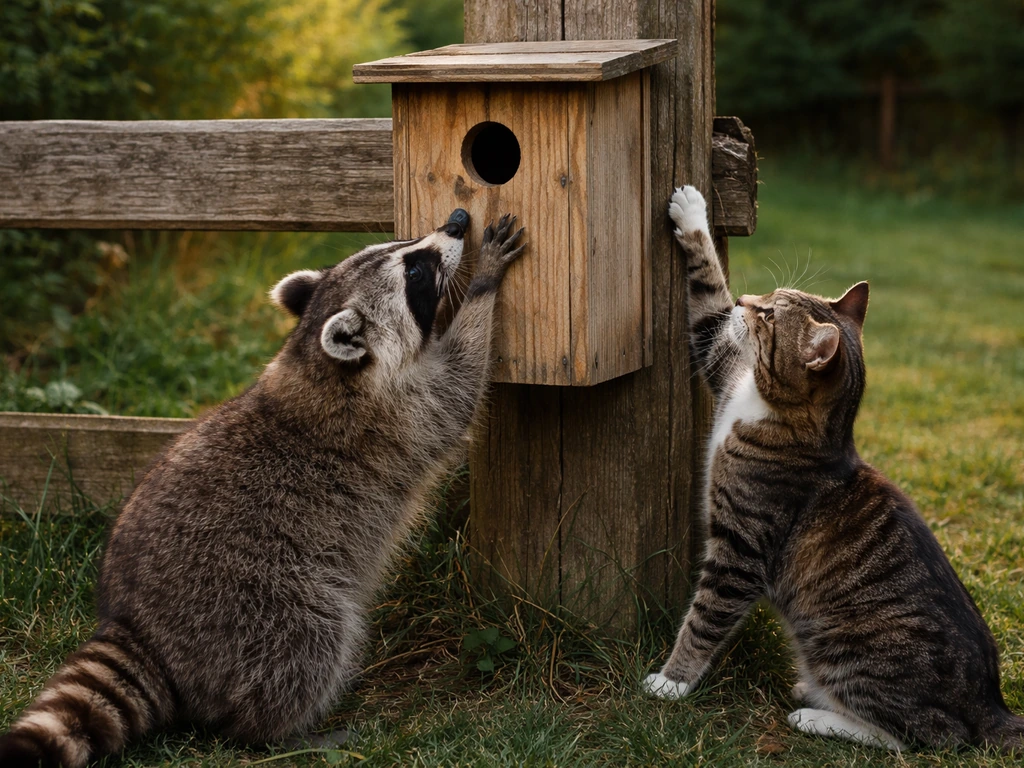
Understanding which animals are actually the problem helps you choose the right fix. The most common threats to nest boxes in North America break down into a few categories.
- Raccoons: Strong, persistent climbers. They can reach into entrance holes, enlarge them over time, and will raid a box repeatedly if there's no barrier on the mounting pole.
- Cats: Domestic and feral cats are significant predators of nesting birds. They can climb poles, jump to boxes mounted on fences or buildings, and wait near entrances.
- Snakes: Rat snakes and other climbing species can scale wooden poles and enter boxes through the front hole or small gaps. They can enter gaps as small as one-eighth of an inch.
- Squirrels: Small native squirrels can fit through holes around 2 inches in diameter. Eastern gray and fox squirrels are larger but will chew a wooden entrance hole to baseball size if they want in badly enough.
- House sparrows and European starlings: Non-native invasive birds that compete with native species for cavities. They can enter any hole large enough and will evict or kill native birds and their young.
- Mice and rats: Rodents can enter very small gaps and will nest in unused or active bird boxes, especially during fall and winter.
Each of these animals has different behaviors and physical capabilities. A fix that stops a raccoon (a baffle on the pole) won't necessarily stop a House Sparrow from entering the front hole. That's why a layered approach works better than any single solution.
How to inspect your bird box right now
Before you add any guards or make repairs, do a quick physical audit of your box. This takes about ten minutes and tells you exactly where the vulnerabilities are.
Entrance hole
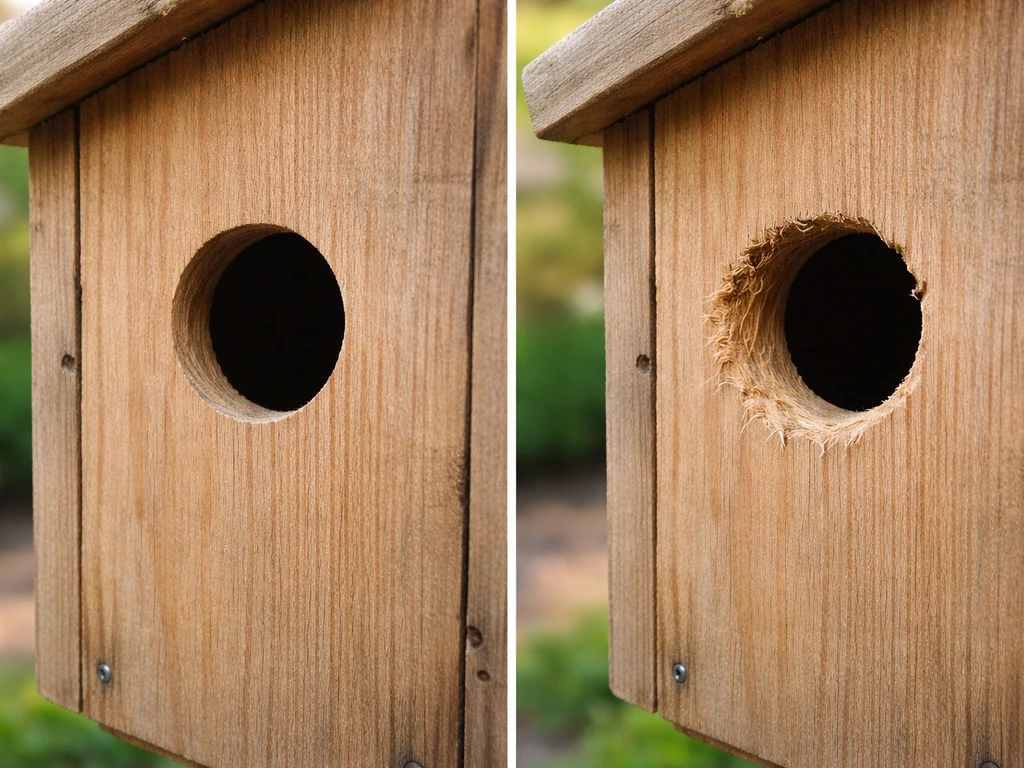
Measure the diameter of the entrance hole and compare it to the recommended size for the species you're trying to attract. If the hole is larger than intended or has been chewed, that's your first repair. Also look at whether the hole has been enlarged, whether the wood around it is splintered or gnawed, and whether there's an outside perch attached. Perches help predators (and invasive species like House Sparrows) access the hole and should be removed if present.
Gaps, seams, and weatherproofing
Check every seam and joint on the box. Wood shrinks and warps over seasons, creating gaps that weren't there when the box was new. Run your fingers along the corners, around the roof join, and along the floor edges. Any gap larger than one-eighth of an inch is a potential snake entry point. Small gaps up to half an inch can be sealed with exterior caulk and then covered with a gnaw-resistant material such as hardware cloth.
Drainage and ventilation holes
Good birdhouse design includes small drainage holes in the floor (around one-eighth of an inch) and ventilation holes near the top of the sides or just under the roof overhang. These are intentional and necessary for bird health. They should not be large enough to allow entry by predators or rodents. Check that these holes haven't been enlarged by insects or weathering. If ventilation holes are near the top and measure about one-eighth of an inch, they're doing their job without creating a security risk.
Mounting and placement
Note what the box is mounted on and how high it is. A box on a smooth metal pole with a baffle is much harder to access than one screwed to a wooden fence post or tree. Placement near overhanging branches gives squirrels and raccoons a launch point that bypasses any pole guard entirely. If the box is within jumping distance of a tree or fence, the pole guard alone won't be enough.
Prevention fixes that are safe for nesting birds
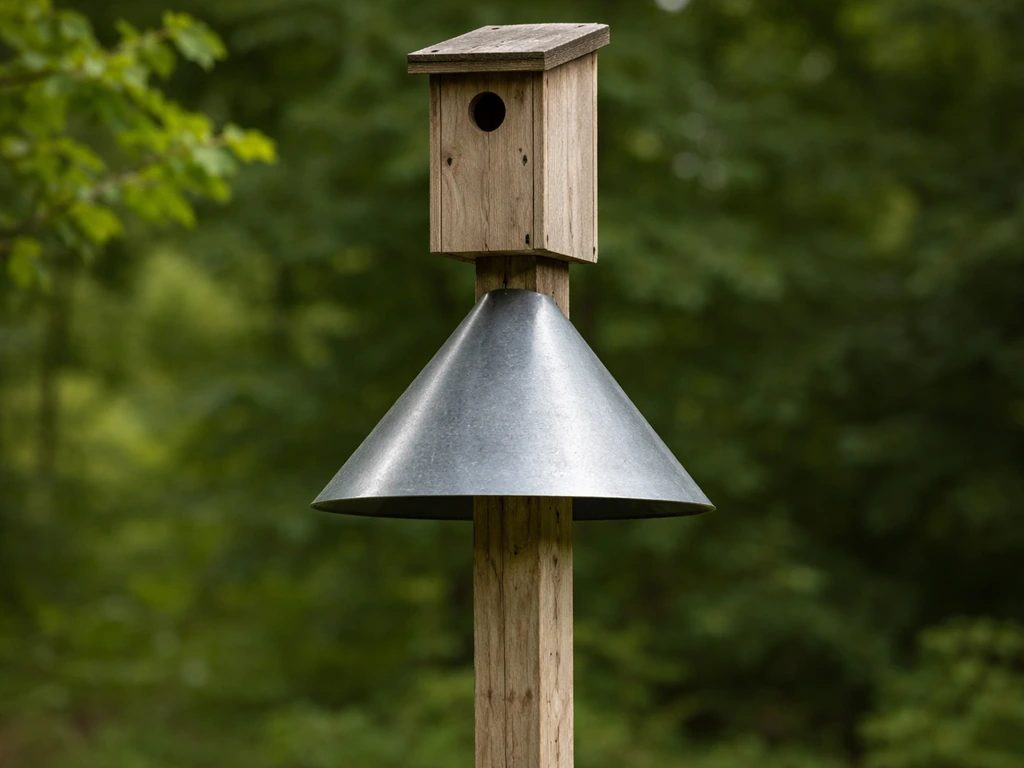
Once you've identified the weak points, these are the most effective and bird-safe fixes you can make.
| Problem | Fix | Notes |
|---|---|---|
| Raccoon/cat climbing the pole | Install a stovepipe or cone-shaped pole baffle below the box | Position baffle at least 4 feet off the ground; ensure no branches within 8 feet |
| Entrance hole too large or being enlarged | Attach a pre-drilled metal hole guard plate over the entrance | Match the hole diameter to the target species; metal resists gnawing |
| Snake climbing wooden or metal poles | Use a suspended snake guard (cylinder baffle) on the mounting pole | Different design from raccoon baffle; designed to prevent upward climbing by snakes |
| Small gaps in box seams | Seal with exterior-grade caulk; cover with hardware cloth if in a gnaw-prone area | Do not seal intentional drainage or ventilation holes |
| Box mounted on tree or fence post | Relocate to a smooth metal pole in an open area | Eliminates climbing advantage for most predators |
| Outside perch present | Remove the perch entirely | Perches assist predators and invasive species; native cavity nesters don't need them |
| House sparrows using the box | Use a species-specific entrance hole size and monitor regularly | Some managers use sparrow-resistant entrance designs; consult local guidelines |
When choosing materials for sealing or modifying a box, stick to untreated wood, exterior-grade caulk, and galvanized or stainless hardware cloth. Avoid any treated lumber, paint on interior surfaces, or chemical repellents inside or near the box. These can harm eggs, nestlings, and adult birds.
If something has already gotten in
First, confirm whether any birds or other animals are currently using the box before you do anything. This matters both for the birds' safety and for legal reasons. The Migratory Bird Treaty Act prohibits removing or destroying the active nest of a migratory bird, including its eggs or young, except in specific circumstances. If a native bird is actively nesting, leave it alone until the young have fledged.
If the box has been taken over by an invasive species like a House Sparrow or European starling, check your local and state regulations, as management options are different for non-native species. Local birding organizations and wildlife agencies can advise on what's permitted in your area.
If the box has been vacated and you find an old nest with fecal matter, clean it out thoroughly. The recommended approach from NestWatch is to remove the old nesting material and then disinfect the interior with a solution of one part bleach to ten parts water. Let the box dry completely before closing it back up. Only do this when there is absolutely no sign of active breeding or current use.
For a mammal (like a squirrel or mouse) that has taken up residence, a practical eviction method involves lightly blocking the entrance with a loose material (like crumpled newspaper) that the animal has to push aside to exit. Once the animal leaves, it has to work to reopen the block. If the barrier remains undisturbed for three days during fair, dry weather, the animal has likely moved on and you can make permanent repairs. This three-day check is a good practical rule before you seal anything.
After cleanup, wear gloves and a dust mask. Some rodents and birds carry pathogens in their nesting material and droppings. While Bird Box fiction gets discussed online, the real-world “virus” concern is usually about biological pathogens that can be present in bird droppings and nesting material. Bag old nesting material in sealed plastic before disposal. Wash your hands thoroughly afterward.
When to call in a professional
Most bird box issues are DIY-fixable, but a few situations call for outside help.
- A snake is inside the box and you can't safely identify or remove it. Venomous snake identification is not something to guess at. Contact your state's wildlife agency or a licensed wildlife control operator.
- A raccoon or other mammal has young inside. Separating a mother from dependent young creates a welfare and noise problem and may be restricted under state law. Professionals know how to handle family evictions humanely.
- You're unsure whether the bird currently using the box is a native species protected under the MBTA. When in doubt, don't disturb. Your local Audubon chapter or state wildlife agency can help you identify the species.
- Repeated predator activity despite guards suggests a structural problem with the mounting site that may need a full relocation.
- Any situation involving bats. Bats have their own set of federal and state protections and require specialized exclusion techniques during specific times of year.
Timing matters a lot. The best time to do major repairs, add guards, and clean boxes is in late fall or early winter, after the breeding season has ended and before birds start scouting for nesting sites in late winter or early spring. If you're reading this in spring or summer and birds are already active, monitor first and make any non-disruptive changes (like adding a pole baffle) without touching the box itself.
For locating a licensed wildlife control operator, the National Wildlife Control Operators Association maintains a directory. Your state's department of fish and wildlife is also a good first call, especially for questions about what's legally permitted before you remove anything. Remember that federal statutes like the Migratory Bird Treaty Act and the Lacey Act carry real consequences, so confirming legality before acting is always worth the five-minute phone call.
FAQ
In the movie’s logic, what prevents the creature from entering a building even if doors are open?
Because in the film, the creatures are not operating by normal physical rules, the “can it go inside?” question is really about line of sight and psychological threat, not entry mechanics. The movie intentionally never confirms how their senses or mobility work in enclosed spaces.
If I change only the entrance hole size, will that stop all predators from getting into a bird box?
Bird box threats are usually not solved by one magic barrier. If you only fix the entrance hole, animals can still exploit roof edges, ventilation or drainage openings, warped wood, or gaps at seams. A fast audit should check every potential opening, then you apply layered fixes for the specific animal you see or find signs for.
What if I suspect a raccoon or snake, but the box keeps getting taken over by an aggressive bird?
Sometimes the “problem animal” seems to be a predator but it is actually an invasive competitor. House Sparrows and European starlings often enter through the normal entrance hole if it matches their capabilities, so you need species-appropriate management and you may need to use entrance-hole sizes that favor native cavity nesters.
Can I block access to my nesting box right away if I see signs of an animal inside?
If you seal or repair while birds are still actively nesting, you can harm the nest and you may violate laws protecting active migratory bird nests. Wait until the breeding effort has ended and young have fledged, or consult your local wildlife agency if you are unsure whether a nest is active.
Is it safe to clean and disinfect the box if there is an old nest but no obvious eggs right now?
Yes, “active use” matters. An old nest with no current eggs or nestlings is usually treatable, but you should still clean only when you are confident the box is not being used. If you find new nesting material or birds present, pause and monitor before disinfecting or sealing anything.
How should I do the three-day eviction check, and what if the animal does not leave quickly?
The three-day eviction check is mainly for mammals you can safely exclude temporarily. It assumes fair, dry weather and a loose, removable block at the entrance, and that the animal can exit but cannot easily regain access. If you cannot reliably confirm the animal left after three days, get help instead of sealing the box.
Will a predator baffle on the pole always solve the problem, even if the box is near a tree or fence?
Yes, placement can create vulnerabilities that no guard fully fixes. If the box is mounted where squirrels or raccoons can jump from nearby branches or fences, they may bypass pole guards. Move the box or address the access route, not just the entrance.
My box has ventilation and drainage holes, how do I make sure they are not creating entry points?
Not necessarily. Ventilation and drainage holes should be sized for bird health, but if they are enlarged by insects, weathering, or gnawing, they can become entry points. Re-measure and inspect every small hole, especially after storms or when you see insect damage around them.
What materials should I avoid when sealing gaps or repairing my bird box?
Some repairs can be harmful if they affect airflow, heat, or residue exposure. Avoid treated lumber and avoid chemical repellents inside or near the box, and when sealing gaps use exterior-grade caulk and gnaw-resistant mesh where needed.
How can I tell which animal is actually getting in so I choose the correct fix?
For most entry issues, the most reliable signal is physical evidence, not guessing. Look for enlarged entrance edges, chewed wood, scratch marks at seams, and droppings or nesting debris near specific openings to match the threat to its likely access method.
If my entrance hole seems “about right,” how do I know whether it’s sized correctly for the birds I want?
Yes, if the hole is the wrong size for your target native species, you can reduce predation and still fail to attract birds. Use the recommended entrance diameter for the cavity-nesting bird you want, because the same dimension can exclude the wrong competitors and predators.
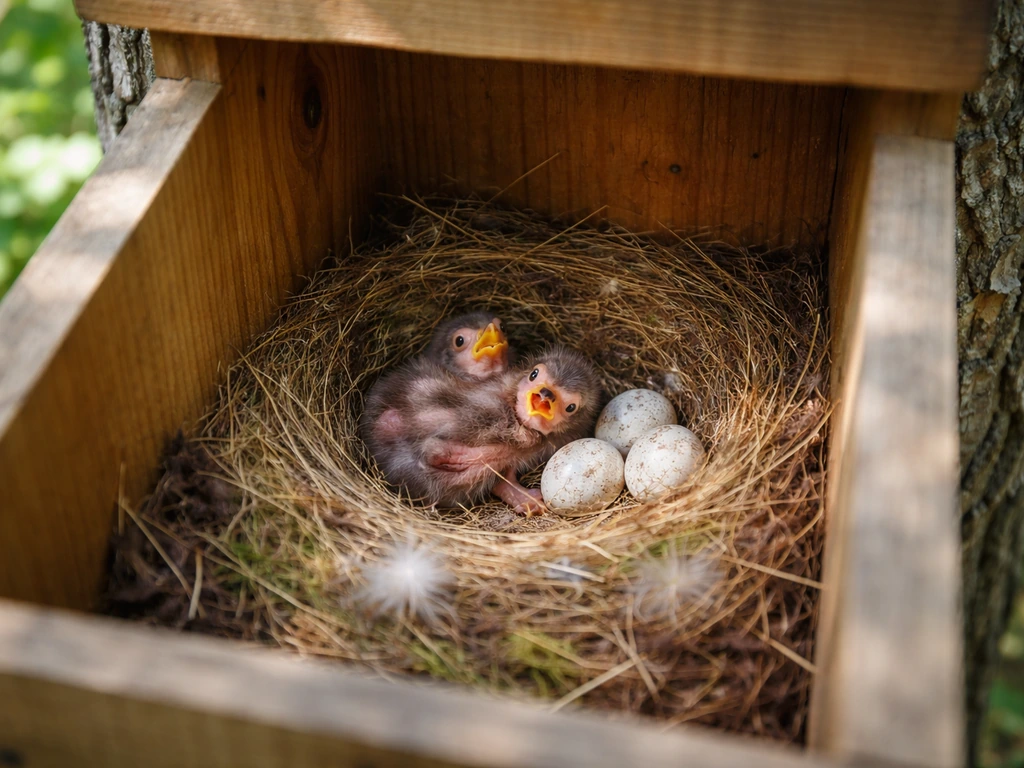
Bird box monster myth explained: real causes of nestling deaths like overheating, predation, starvation, disease, and en
Why some survive Bird Box myths and what real factors affect bird-related death risk and safety steps
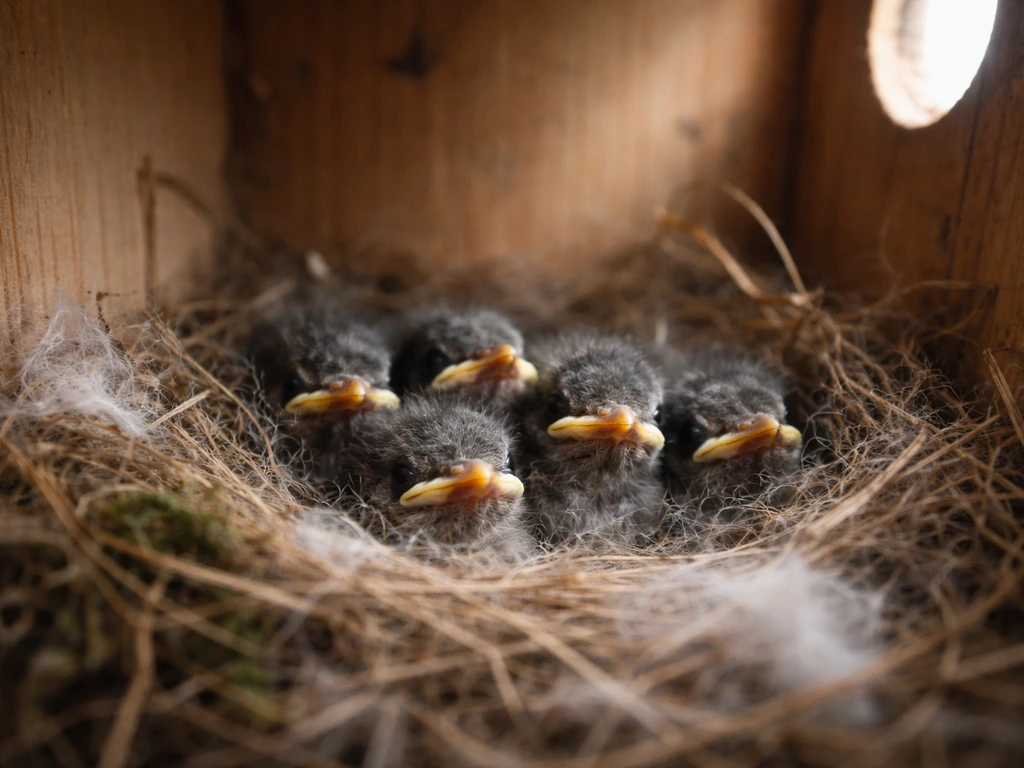
Why some birds in bird boxes survive: exposure, age, health, ventilation, hygiene, parasites, and disturbance, plus fixe