The birds most likely attacking your pigeons are peregrine falcons, Cooper's hawks, and sharp-shinned hawks. Peregrine falcons are the biggest threat in cities, where pigeons make up a large portion of their diet. Iowa DNR also lists pigeons among peregrine falcon prey items, alongside species like starlings and blackbirds pigeons make up a large portion of their diet. Cooper's hawks are the usual suspect in suburban and mixed urban areas. Sharp-shinned hawks hit smaller birds most often but will take a pigeon-sized target under the right conditions. Kestrels occasionally prey on small birds too, but they're a distant fourth on the suspect list for pigeon attacks.
What Bird Attacks Pigeons? How to Identify and Stop It

Maya Chen
16 May 2026
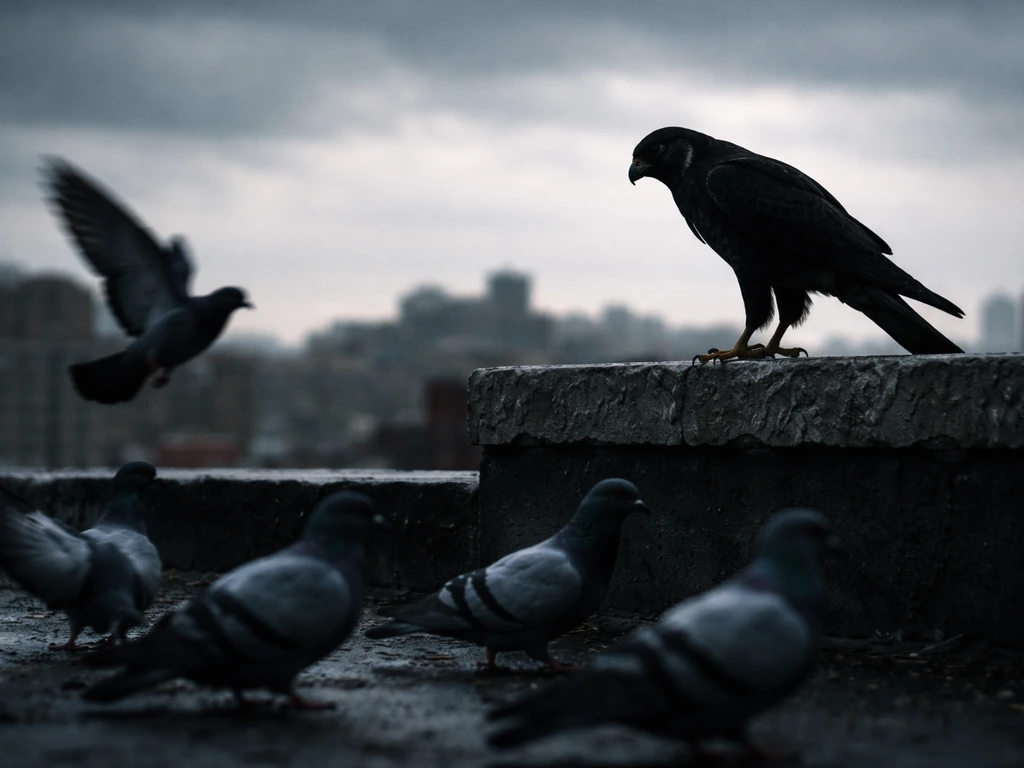
The birds most likely attacking pigeons
Peregrine falcon
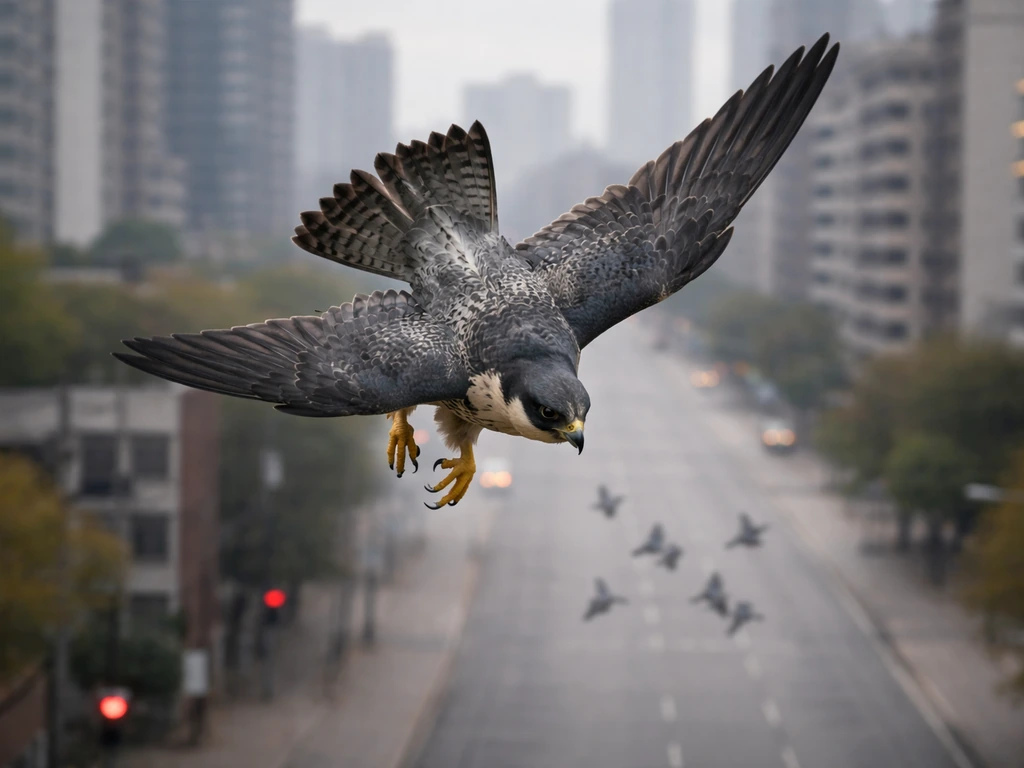
If you're in or near a city and something is picking off pigeons consistently, the peregrine falcon is your most likely culprit. Birds rarely attack without a reason, so if you are wondering why would a bird attack a human, it usually comes down to threat, confusion, or territorial behavior. Pigeons (Columba livia) are among their primary prey in urban environments, not incidental catches. Peregrines hunt by gaining altitude, then stooping into a near-vertical dive at speeds documented between roughly 39 and 51 meters per second. That's fast enough that the pigeon rarely has a chance to react. The falcon strikes mid-air, often killing instantly with the impact, then circles back to retrieve the carcass.
Cooper's hawk
Cooper's hawks are the ambush predators of the raptor world. They don't stoop from height like peregrines. Instead, they use stealth: moving through dense cover, darting between buildings, and pouncing with a short burst of speed. The Iowa DNR specifically notes that Cooper's hawks dart between buildings to take pigeons and doves in urban areas. They catch prey by surprise more than raw speed, so attacks happen close to cover and often feel sudden and unpredictable if you're watching a loft.
Sharp-shinned hawk
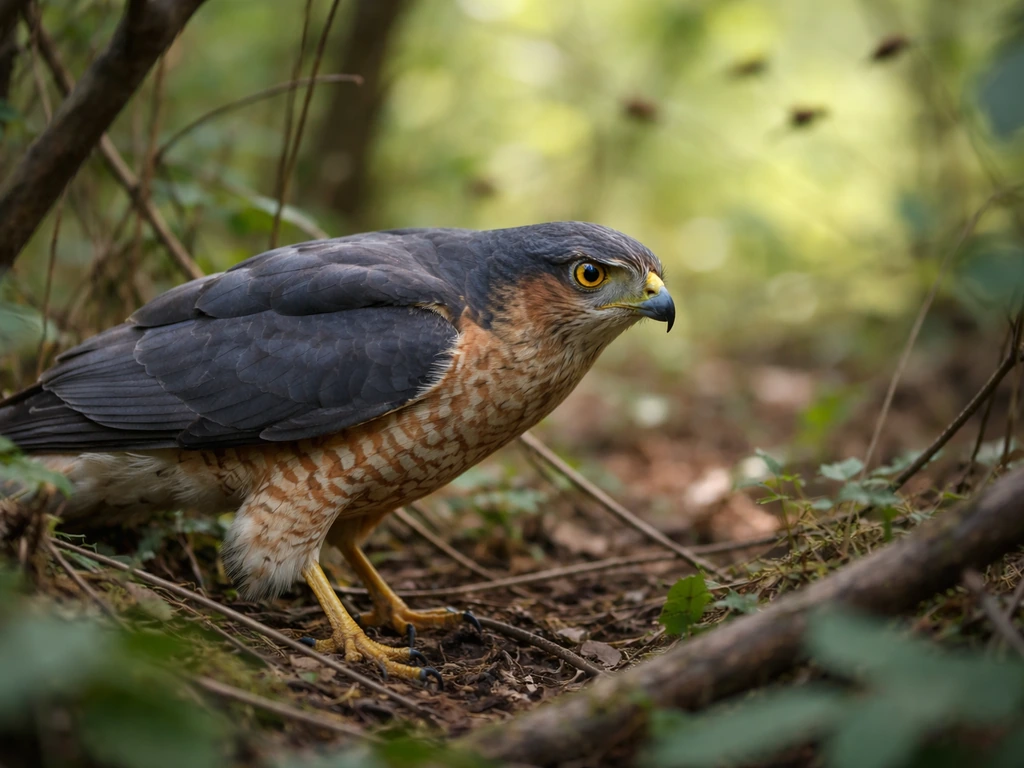
Sharp-shinned hawks are the smaller cousin to the Cooper's hawk and are also classic ambush hunters. They primarily target sparrow-sized birds, so adult pigeons are on the large side for them. That said, juveniles or smaller pigeons can absolutely be targets. If you're losing smaller birds from your loft and can rule out the others, the sharp-shin is worth considering.
American kestrel
Kestrels are mainly insect and small mammal hunters, but they do take small birds. Their signature hunting behavior is hovering in place while scanning the ground below, which is very different from the diving stoop of a peregrine or the ambush dash of a Cooper's hawk. A kestrel attacking a full-grown pigeon would be unusual. If you're losing very small doves or juvenile birds and you're seeing a small, hovering falcon nearby, a kestrel is a possibility, though not the most likely answer.
How to tell which predator is responsible
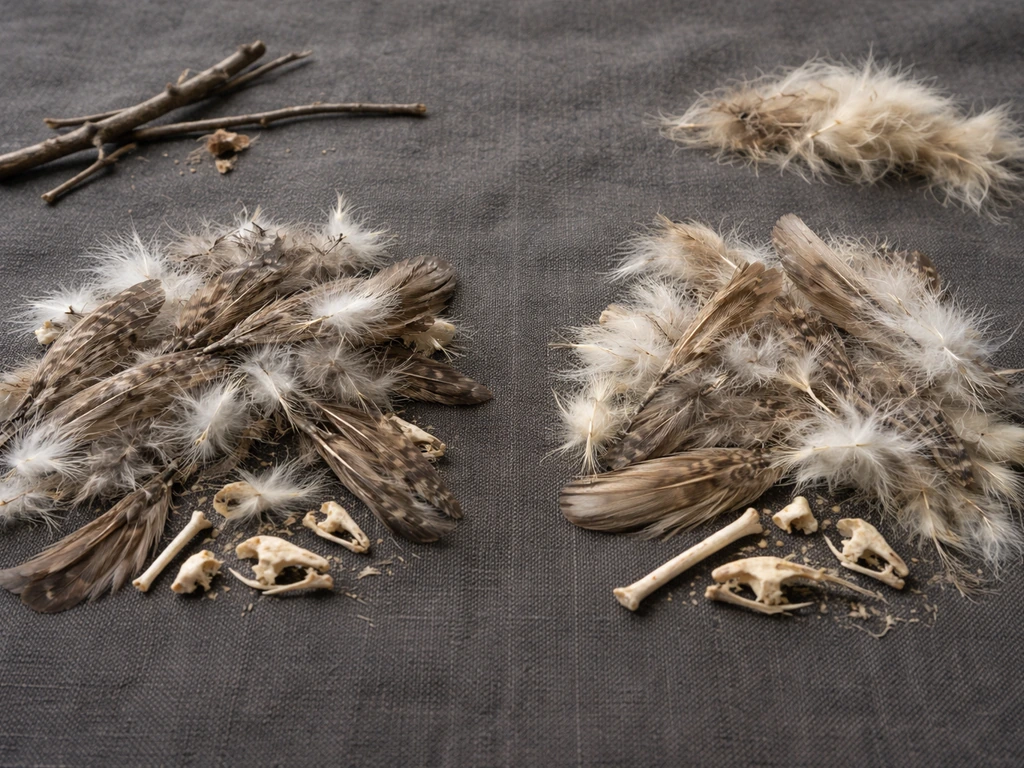
You can usually narrow down the attacker based on three things: where the attack happens, what the remains look like, and when attacks occur. Different predators can look similar at first, so if you want to identify what bird attacks other birds, compare the attack pattern and the remains. Each predator leaves a different signature.
| Predator | Attack style | Where it strikes | Remains/scene clues |
|---|---|---|---|
| Peregrine falcon | High-speed stoop dive from above | Open airspace, rooftops, bridges | Clean kill, feathers scattered at impact point, carcass may be partially eaten nearby |
| Cooper's hawk | Ambush through cover, short chase | Near buildings, trees, ledges, tight spaces | Feathers near cover, prey seized and carried; may return repeatedly to same spot |
| Sharp-shinned hawk | Sneak attack from cover | Forest edges, dense vegetation near loft | Similar to Cooper's but smaller feathers; smaller birds targeted first |
| American kestrel | Hover-then-drop | Open fields, low perches near ground | Very small prey; hovering bird visible beforehand |
If you're finding feathers in an open area with no cover nearby and birds seem to be dying mid-flight or vanishing in the air, that's peregrine behavior. If birds are disappearing close to walls, trees, or the loft entrance and you're finding scattered feathers near a building edge, Cooper's hawk is the most likely explanation. Repeated attacks from the same direction at the same time of day are a Cooper's hawk signature because they're creatures of habit.
What to do right now to reduce attacks
If birds are being attacked today, here's how to cut the immediate risk before you put longer-term measures in place.
- Bring birds inside. If you have a loft or enclosed housing, get the birds in and keep them there until you've assessed the situation. A raptor that has found a reliable food source will return.
- Remove any dead or injured pigeons from open view immediately. A carcass or a struggling bird advertises the location as a feeding ground.
- Block open landing perches near the loft temporarily. Raptors, especially Cooper's hawks, will sit and watch a loft from nearby perches before striking. Removing convenient vantage points disrupts their hunting routine.
- Don't attempt to trap, harm, or remove the raptor yourself. Most raptors, including all the species listed above, are protected under the Migratory Bird Treaty Act. Interfering with them is a federal offense regardless of the damage they're causing.
- Document what you're seeing. Note the time, direction of approach, size of the attacking bird, and attack style. This helps you identify the predator accurately and is useful if you end up contacting wildlife authorities.
Long-term protection: enclosures, deterrents, and access control
Physical exclusion is the most reliable approach
Properly installed netting or wire mesh over a loft and any outdoor flight areas is the most effective long-term solution. The USDA APHIS recommends netting as a primary engineering control for bird exclusion, and it applies in reverse here: you're keeping predators out rather than keeping pest birds in. Make sure edges of any netting extend fully to prevent a raptor from slipping underneath. Avoid loosely hung mesh, which can entangle birds and create additional problems.
For open rooftop or ledge areas where pigeons rest, a single wire stretched tightly over the area can prevent raptors from landing and launching an attack from that surface. Metal mesh or chicken wire used to enclose nesting surfaces on structures is another option supported by FWS guidelines for protecting birds from access-based threats.
Hazing and deterrents
Visual and noise deterrents like predator decoys, reflective tape, or hazing devices can help, but they have a critical weakness: raptors habituate to stationary or predictable deterrents quickly. FWS guidance specifically notes that hazing equipment needs to be moved frequently, ideally daily, to remain effective. If you set a decoy owl on a post and leave it there for a week, most raptors will be ignoring it by day three. Rotate positions, vary the type of deterrent, and combine approaches.
Reduce attractants and improve the environment
Raptors are opportunists. If your location offers a reliable, easy food source and convenient nearby perches, they'll keep coming back. Trim back branches and remove perch points near the loft. Don't let sick or weak pigeons linger in open areas. Keep food sources enclosed so wild birds don't congregate nearby and attract hunting raptors to the general area. The goal is to make your loft look like a harder, less rewarding hunting ground than the next option.
Health and disease risks after a predator attack
Predator attacks create real health hazards beyond the immediate injury to the bird. If you want the broader context on dangerous encounters beyond pigeons, see what bird attacks humans for a wider look at which species pose the biggest risk to people. If a pigeon survives an attack with wounds, those injuries can become infected quickly. Bite and scratch wounds from raptors carry bacteria, and open wounds in birds deteriorate fast. Any survivor with visible lacerations, punctures, or bleeding needs to be isolated from the flock and seen by an avian vet as soon as possible.
Carcasses left on the ground pose a different set of risks. If you also mean why bird attacks happen in the first place, it usually comes down to hunting behavior and available opportunities near people why bird attack human. Pigeon droppings and remains can carry histoplasmosis (a fungal lung infection), and blank" rel="noopener noreferrer">disrupting dried droppings or feathers during cleanup can aerosolize spores. The CDC recommends wetting surfaces before cleaning to reduce aerosolization, and wearing disposable gloves, a mask (N95 if splashing or stirring is likely), and eye protection when handling carcasses or cleaning contaminated areas. If a predator attack ever gets too close to humans, seek medical advice right away, especially after any eye injury which bird attack human eye. Double-bag any dead birds before disposal.
Psittacosis (from Chlamydophila bacteria) is another disease associated with pigeons and their droppings. The CDC advises using gloves and appropriate masks when cleaning birds or cages, and washing hands thoroughly afterward. The overall risk from a single cleanup is low if you take basic precautions, but skipping PPE because it seems like overkill is how exposure actually happens.
- Wear disposable gloves and a mask when handling injured birds or carcasses
- Wet the area before sweeping up feathers or droppings to reduce airborne dust
- Double-bag dead birds and dispose of them in sealed trash
- Disinfect any surfaces contaminated with blood or droppings
- Wash hands and exposed skin thoroughly after any contact
- Isolate injured survivors immediately and monitor for signs of infection
When to call in a professional
Contact an avian vet if any pigeon is injured from an attack. Even wounds that look minor can involve internal damage or infection that isn't visible. An avian vet can assess the bird properly and prescribe antibiotics if needed. Don't wait to see if the bird 'recovers on its own' from a puncture wound.
Contact your local USDA APHIS Wildlife Services office or state wildlife agency if attacks are frequent, severe, or impacting a commercial flock. Wildlife Services can assess the situation, confirm the predator species, and advise on legal, permitted options for deterrence or, in limited cases, depredation permits. This is the correct route if you feel like you need more than passive deterrents.
Report the attacks if you believe a protected raptor is being harmed or that someone else is interfering with it. The Migratory Bird Treaty Act protects virtually all native raptors, and violations carry serious federal penalties. If you witness any attempt to trap, poison, or kill the attacking bird, that's worth reporting to the U.S. Fish and Wildlife Service.
If you're unsure whether what you're dealing with is a raptor at all, a licensed wildlife rehabilitator or local bird banding station can often help identify the species from photos, feathers found at the scene, or behavioral descriptions. If you are also dealing with predation on larger birds, see what bird attacks eagles to compare hunting habits and likely culprits. Accurate identification is the starting point for every practical decision that follows, including deterrent choice, enclosure design, and whether professional intervention is warranted.
FAQ
How can I tell if the attacker is a raptor versus a cat, raccoon, or another animal?
Not all pigeon deaths or missing birds are raptor work. Look for punctures from a beak or talons, a pattern of feathers that are scattered in a way consistent with a strike, and whether attacks cluster at predictable perch points or loft edges. If you find eggs, nestlings, or signs of chewing in addition to feather fragments, that suggests a different predator category (often mammals), and your deterrents should change.
What’s the quickest way to distinguish Cooper’s hawk activity from sharp-shinned hawk activity?
Sharp-shinned and Cooper’s hawks can both show up near buildings, so the safest way to confirm is by the location of the remains plus timing. Cooper’s hawks more often take prey close to walls, trees, or loft entrances, and they tend to attack repeatedly from the same general direction during similar parts of the day. Peregrines are more likely when you see birds disappear mid-air without nearby cover to launch from.
Can a sharp-shinned hawk really take adult pigeons, or is it only smaller birds?
Yes, especially if you have young pigeons, smaller doves, or plenty of perching spots. Sharp-shinned hawks frequently prefer smaller birds, but adult pigeons can still be targeted when they are most vulnerable, such as juveniles, birds that are separated from the group, or pigeons that are resting low where an ambush can happen quickly.
At what point should I stop assuming it’s “one-off predation” and contact wildlife officials?
A single missing bird can be normal predation, but consistent daily or near-daily losses from the same area are the key trigger to escalate. If attacks continue for more than about a week despite basic exclusion efforts, or if you see the same attack direction and time window repeatedly, contact an avian vet for flock health checks and your state wildlife agency for species confirmation and next-step guidance.
What should I do first on day one to reduce attacks before I build a long-term enclosure?
Start by reducing easy perches within your working radius, then fully exclude predators from all areas the birds can access. If you do only one thing immediately, install barrier coverage on every roof, ledge, and run-out space, with edges sealed so there are no gaps underneath or around hardware. Avoid relying on decoys alone, because many raptors habituate quickly to stationary targets.
What are the most common netting mistakes that still leave pigeons vulnerable?
Yes. If you loosen netting or leave it hanging with slack, a raptor can get underneath or tug enough to create an entanglement risk. Netting should be taut, secured along all edges, and extended to prevent entry points, including along corners, posts, and where the net meets walls or roofs.
Do scare devices and noise deterrents work if I keep them running every day?
If you use noise devices, don’t expect them to be effective long term. Raptors can learn that the sound has no consequence, especially if it doesn’t appear unpredictable. If you try hazing equipment, plan on frequent movement and variety, ideally daily, and pair it with physical exclusion so birds cannot be reached even when deterrents fail.
What’s the safest way to clean after an attack when there are feathers and droppings?
Cleaning can increase exposure if you disturb dried droppings or feather material. Wet the contaminated area first, use gloves plus a mask rated for dust or splash situations (an N95 if stirring or splashing is likely), and eye protection. Avoid dry sweeping or power washing without controls, and bag debris promptly for disposal.
If a pigeon survives, how do I decide whether it needs immediate veterinary care?
Isolate any pigeon with punctures, bleeding, lacerations, or obvious breathing difficulty even if it seems alert. Small raptor wounds can hide internal damage, and delayed infections are common. An avian vet can assess for deeper puncture tracks and may recommend antibiotics based on the wound pattern.
Why do attacks keep happening even after I put up a few deterrents?
Yes, raptors can return to the same place because the environment stays rewarding. If you keep providing perches, open access points, or nearby food sources that attract pigeons and other prey, deterrents alone often fail. Removing perch points, enclosing feeds and water, and eliminating landing zones are usually what makes the difference.
What information should I gather to help identify the bird accurately from photos and feather remains?
If you photograph the scene, include the area around the remains, the nearest wall or cover, and any visible perches. If you can safely do so, note the time of day and direction of the missing-bird activity, these details help differentiate stoop-style attacks from ambush behavior. A wildlife rehabilitator or bird banding station can often use that information plus images to narrow the species.
Can I legally trap or poison the bird that’s attacking my pigeons?
Legally, don’t trap or poison raptors. Many native raptors are protected, and interfering with them can create serious legal risk even when you believe you’re preventing harm to pigeons. If attacks are severe or ongoing, use your state wildlife agency or USDA APHIS Wildlife Services for permitted deterrence or, in rare cases, depredation-permit pathways.
Next Article
Which Bird Attacks the Human Eye and What to Do Now
Learn which birds peck near eyes and the exact first aid steps, plus when to get urgent eye care.